An evidence audit of mushrooms and body weight, separating the food claim from the supplement claim, explaining energy density as the whole mechanism, giving the compensation finding that makes a lower-calorie swap actually stick, reporting a one-year randomized trial in full including its industry funding, assessing the pooled supplement evidence at the certainty it was graded, naming the cooking habit that reverses the effect, and describing the specific swap that was tested.
The mushroom research on body weight is real, and almost none of it is about the capsules being sold against this search.
The trials that produced actual numbers fed people chopped mushrooms in a bolognese. That is a different claim from the one on a bottle, and it has different evidence behind it.
Two different claims share this search
Type this question into a search box and you get two products wearing one answer.
| The claim | What it means in practice | What evidence exists |
|---|---|---|
| Eat mushrooms | Mushrooms replacing a denser food in ordinary meals | Feeding studies and a one-year randomized trial with weight outcomes |
| Take mushroom capsules | A dried or extracted powder swallowed daily | A pooled analysis with one body composition finding, graded very low certainty |
| A mushroom that burns fat | Nothing | No approved treatment and no mechanism anybody has demonstrated |
Only one of those three rows describes something anybody has measured in people over a year.
The first row is where the useful evidence sits, and it is not a supplement finding at all.
No regulator has approved any mushroom product as a weight loss treatment. A benefit claim on a capsule carries a required disclaimer precisely because no agency evaluated it before it went on sale.
That does not make the third row a lie so much as a category error. Nobody has shown a mushroom compound that increases fat oxidation in people, and the effect the trials measured does not need one.
It is worth reading a weight loss capsule label next to its advertising once. The advertising talks about fat and metabolism, and the panel underneath states a species, a quantity and a disclaimer saying the claim was never evaluated.
Those two pieces of text are doing different jobs, and only one of them is regulated.
Consider the meal substitution before looking at supplement claims.
Medicinal MushroomsLion's Mane Benefits: What Human Trials Actually FoundEnergy density is the whole mechanism
There is nothing exotic here. The effect comes from what a mushroom is mostly made of.
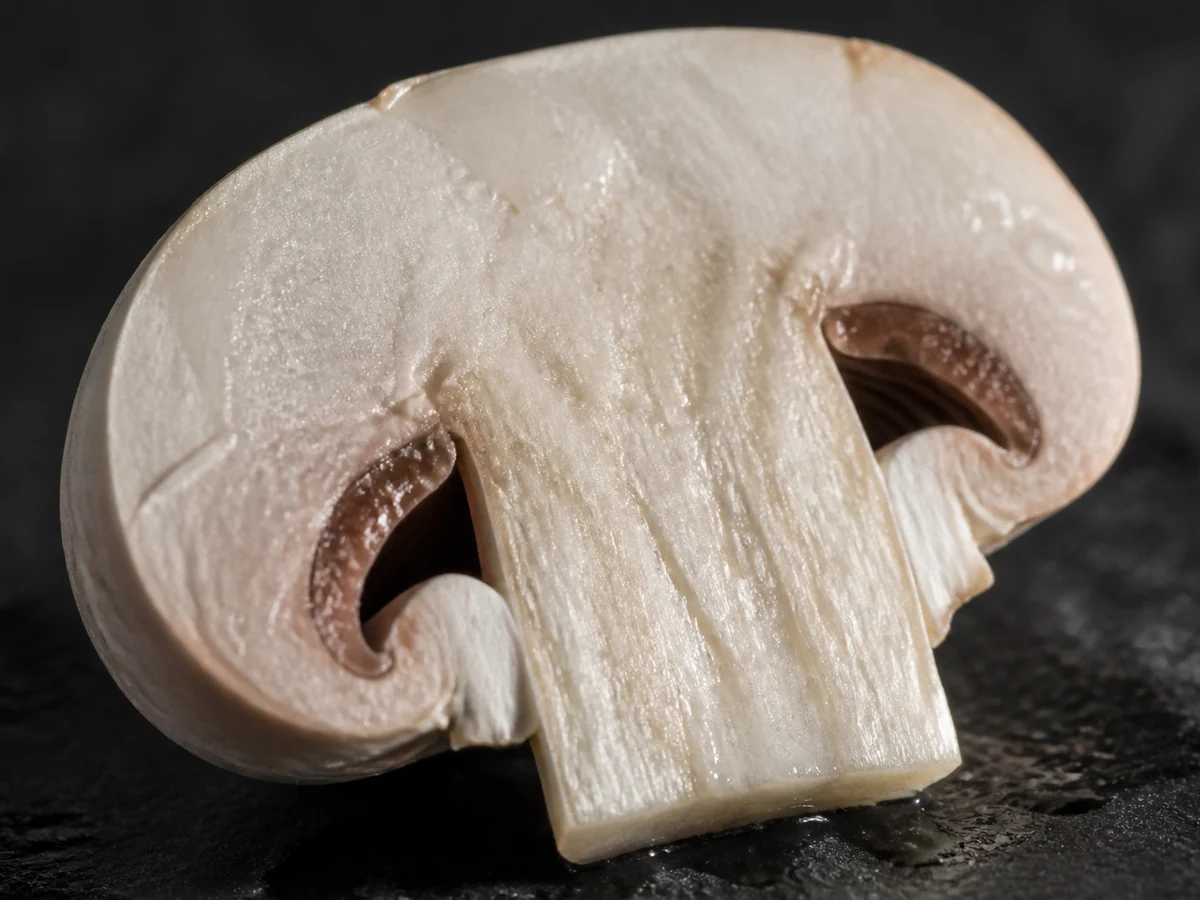
A fresh mushroom is roughly ninety percent water by weight.
Energy density is calories per gram, water carries none of them, and that arithmetic puts mushrooms at the bottom of the scale for anything you would put in a pan.
The change comes from the meal, not a special effect on metabolism. Nothing here is happening to your metabolism.
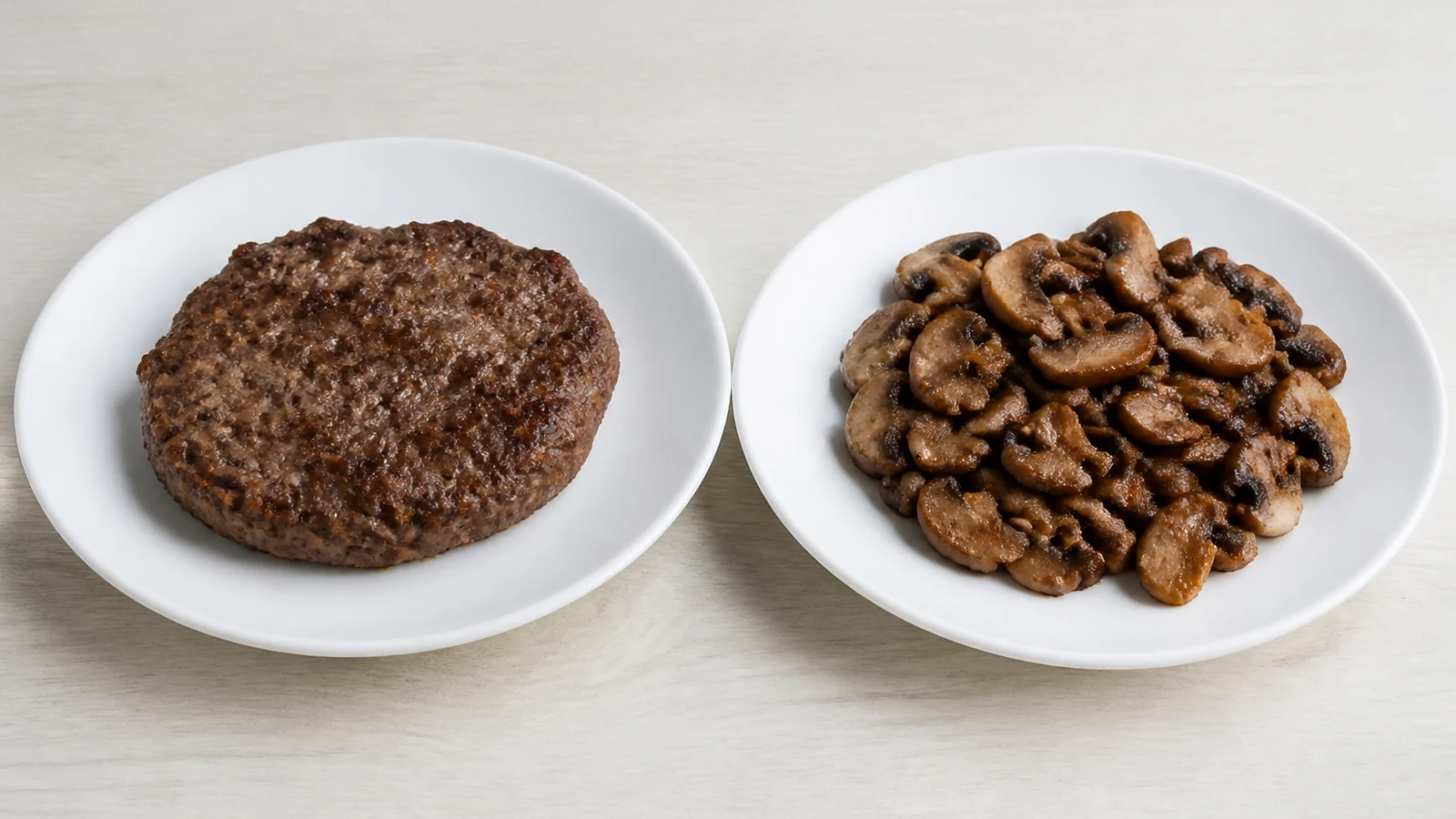
The feeding study that established the size of the effect made the comparison fair in one specific way, which was to hold the volume of the two lunches constant and let the energy differ.
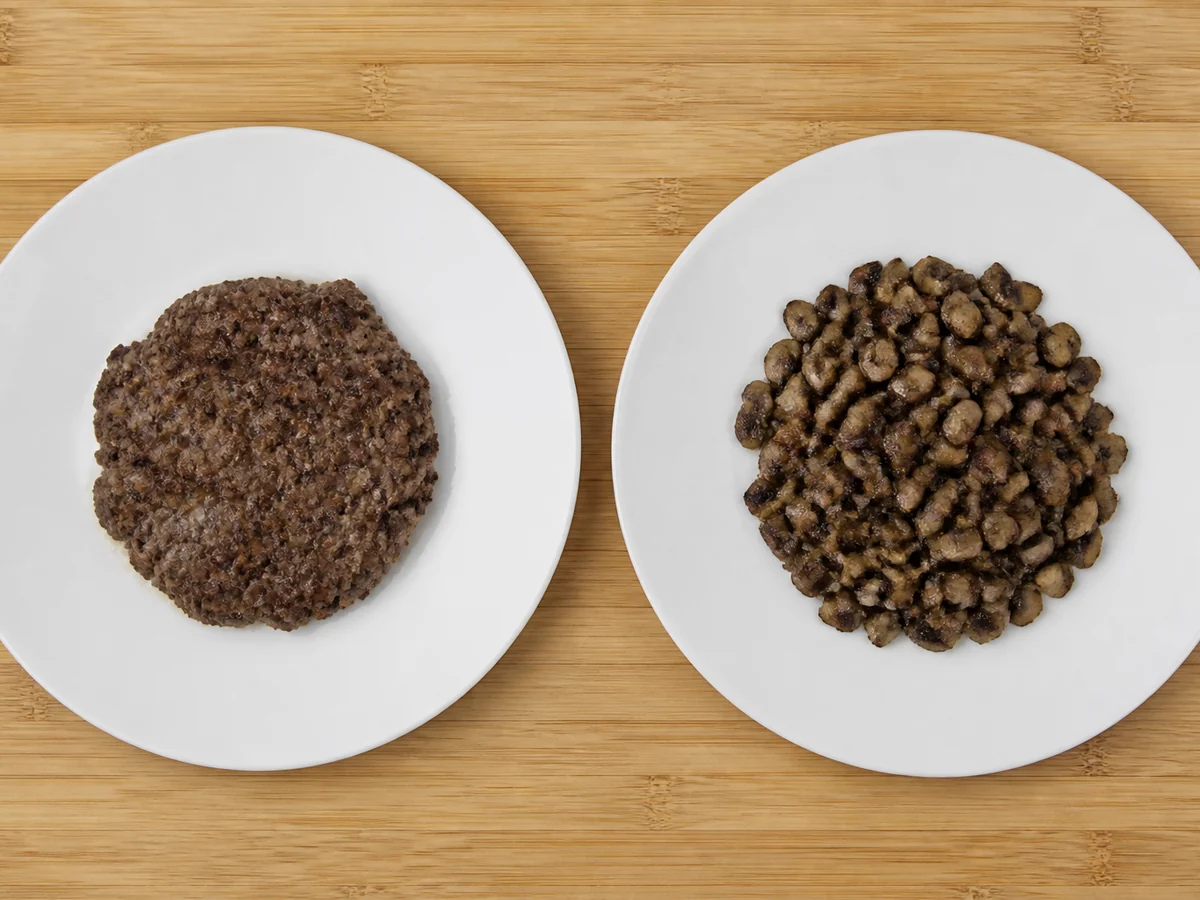
Matched for volume, the meat lunch carried 783 calories and the mushroom lunch carried 339. Same space on the plate, same recipe otherwise, less than half the energy.
Put it in units people cook with and the gap is easier to hold on to. Raw white mushrooms sit at roughly twenty-two calories per hundred grams, and cooked lean ground beef sits somewhere near ten times that.
So a hundred grams swapped is a couple of hundred calories that never arrive, without the portion getting any smaller.
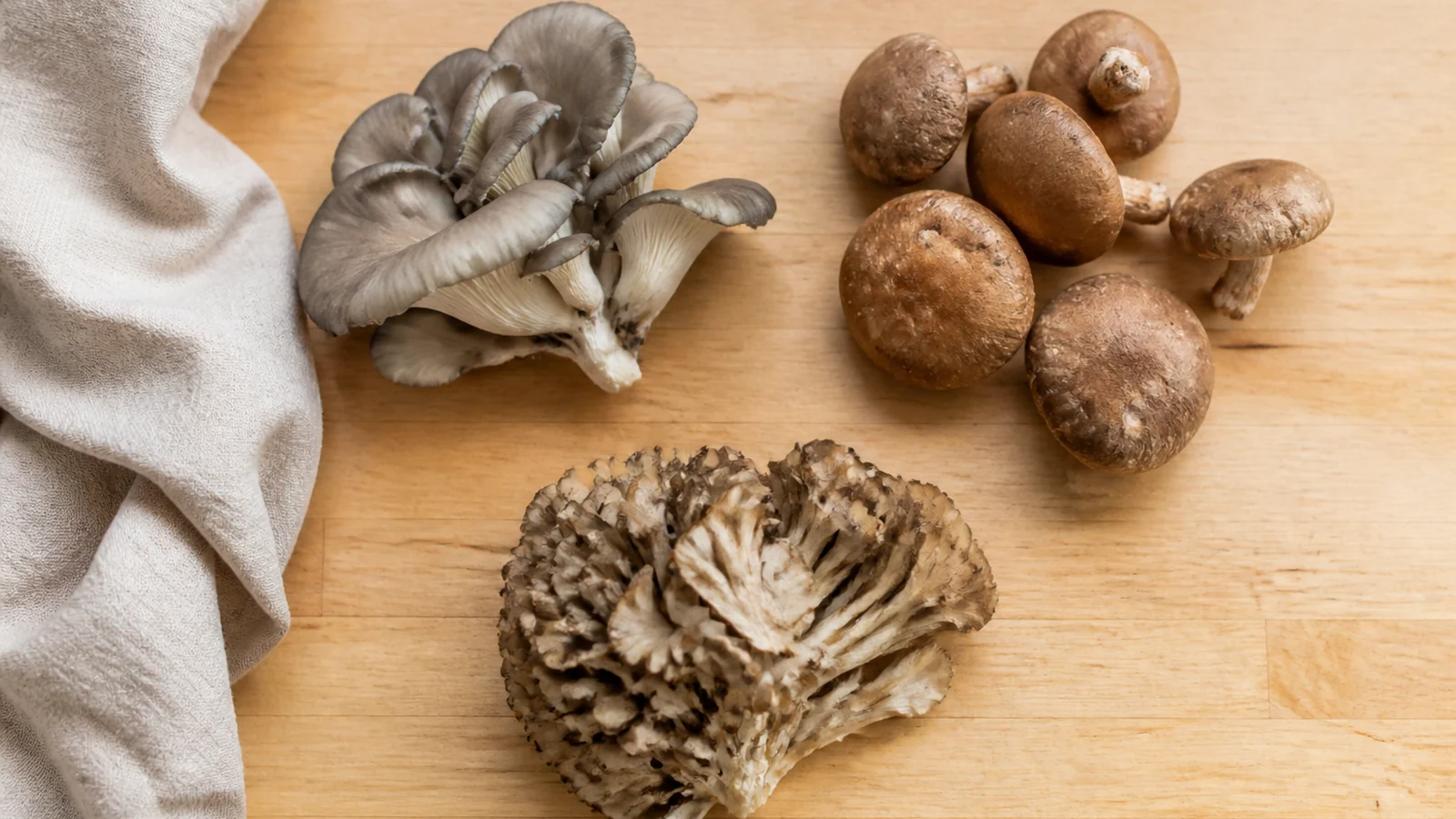
Notice what this mechanism does not depend on. It does not require a particular species, a particular compound, or an extract of anything, which is why the trials used plain white button mushrooms from a supermarket.
You do not eat the difference back
The obvious objection arrives immediately. Cut four hundred calories at lunch and surely you make them up by dinner.
The study tested that objection directly.
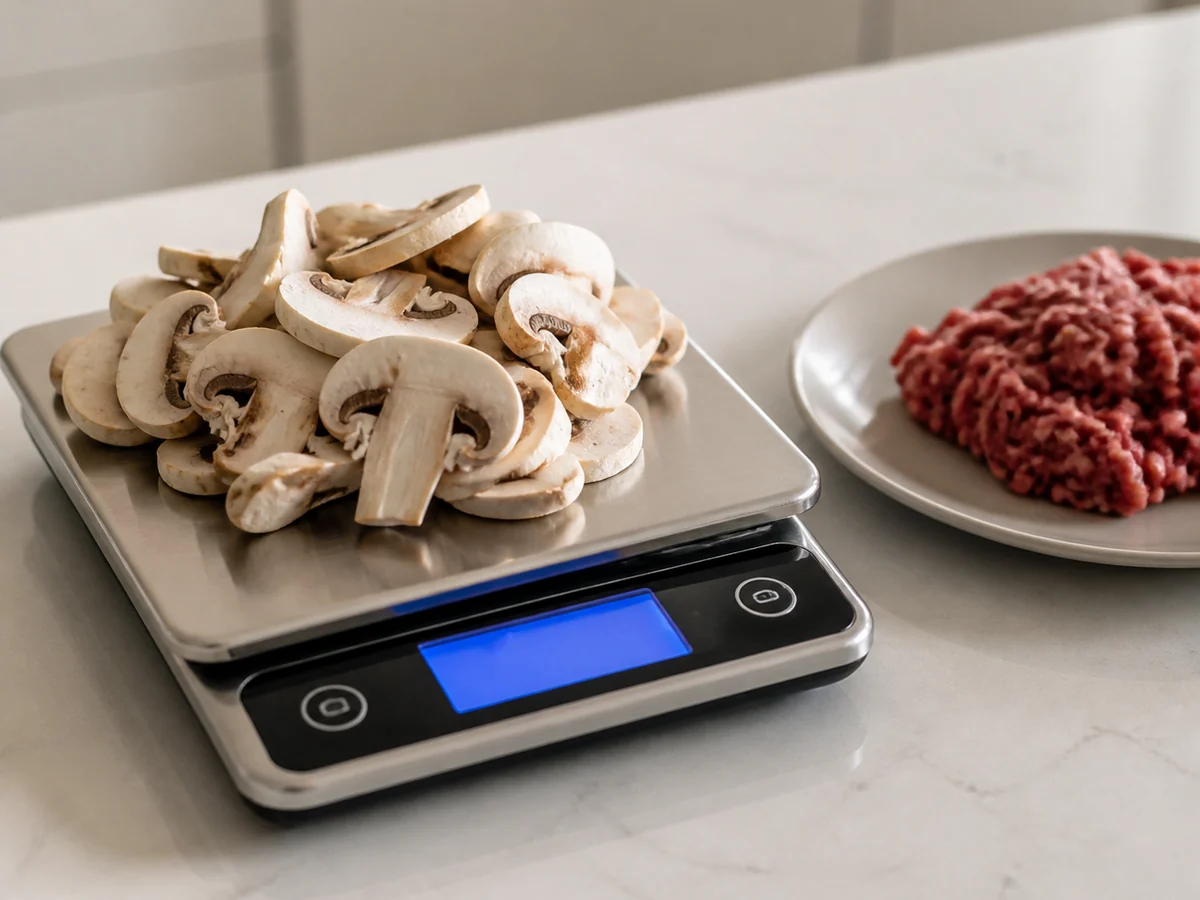
The study that produced it was small, controlled and boring in the best way.
Read that last sentence again. It is doing more work than the calorie figures are.
People did not report being hungrier on the mushroom lunches, or rate them as less pleasant, or feel less full afterwards.
They simply ate several hundred fewer calories and their bodies barely reacted.
Eleven percent compensation is very low. Most calorie reductions get eaten back far more completely than that, which is why so many swaps look good on paper and change nothing on a scale.
It is worth knowing what a normal compensation figure looks like, because eleven percent only means something against a baseline.
When people are given a lower-calorie version of a food they usually recover a substantial share of the shortfall within a day or two, often most of it. A swap that leaves nearly nine tenths of the reduction standing after four days is unusual.
The likeliest reason is that nothing about the meal signaled a reduction. The plate looked the same, the dish tasted the same, and the participants rated their fullness the same.
Four days is still four days, and a crossover study in a laboratory is not a year in a real kitchen. What it did was justify running the longer trial.
Medicinal MushroomsWhich Reishi Benefits Hold Up in Human Studies?What a year of substitution produced
That longer trial ran for twelve months and is the strongest single piece of evidence on this topic.
- Who
- 73 obese adults, 64 women and 9 men
- Design
- Randomized, mushrooms substituted for red meat against a standard diet
- Structure
- Six months of prescribed weight loss followed by six months of maintenance
- Measurement
- Anthropometric measurements and seven-day food records at four points
Against the standard diet group, the mushroom group came out ahead on every measure the trial recorded.
Three things about that result deserve saying out loud.
The first is the size. Seven pounds across a year is a real effect and a modest one, and anybody selling this as dramatic is selling something else.
The second is that it held. The maintenance phase is the part most weight studies fail, and this group kept what they had lost through six months of it.
The third is who paid for it.
Warning
Grant funding for that trial came from the Mushroom Council and the Australian Mushroom Growers Association. That does not make the result wrong, and the study design is sound, but industry funding is associated with results that favor the sponsor across nutrition research generally. Hold the figures as real and as coming from an interested party.
One methodological point belongs alongside the funding one. Intake was captured with seven-day food records, which are self-reported, and self-reported intake is known to under-record across every population it has been tested in.
That mainly affects the calorie figure rather than the weight figure. Bodies were weighed and measured directly, so the seven pounds is an observation rather than a report.
The lipid and inflammatory improvements are worth noting separately, because a diet swap that lowers blood pressure and improves a lipid panel is doing several things at once rather than only shrinking a number on a scale.
Medicinal MushroomsMushrooms for Brain Health, Ranked by EvidenceThe supplement side of the same search
Now the other row of that opening table, treated on its own terms.
The supplement literature for these species is mostly not about body weight at all. It concerns immune markers, fatigue, blood glucose and a scattering of other outcomes, and body composition appears in it almost incidentally.
Reishi is the species with enough trials behind it to pool at all, which is why it is the one being discussed here rather than whichever species a given product happens to contain.
That is worth holding on to when a blend of six species cites research done on one of them. The citation is real and it is about a different jar.
There is one pooled result worth reporting, and it comes with a grade attached.
A body mass index reduction with no matching change in body fat or waist circumference is a strange result to build a purchase on.
Those three measures usually move together. When one shifts and the other two do not, the honest reading is that the signal is weak rather than that something interesting happened to a specific tissue.
- The certainty grade is a formal judgment, and very low means further research would very likely change the estimate
- The dose range across those trials spans a factor of fifty-six, so there is no consensus amount behind the finding
- The trials ran between one and twenty-four weeks, which is short against a year-long dietary trial
- None of this is a reason to say the capsules do nothing, and none of it is a reason to buy them for this
There is a structural reason to be cautious with any pooled supplement figure in this literature. Small trials that find nothing are published less often than small trials that find something, which tilts every pooled estimate upward before anybody does the arithmetic.
None of that makes the finding fabricated. It makes it the kind of result that a larger and better designed trial would be expected to shrink.
If you are looking at a jar anyway, what is actually inside one and how to judge a seller are separate questions with their own answers.
The way to undo all of it
There is one cooking habit that reverses the entire mechanism, and it is the way most people like mushrooms best.
Mushroom tissue is porous. It absorbs fat readily and enthusiastically, which is exactly why fried mushrooms taste as good as they do.

The arithmetic is unkind. A single tablespoon of oil carries roughly as many calories as several hundred grams of raw mushroom, so a generous pan hands back the whole saving and then some.
Key takeaway
Dry-fry first. A hot dry pan drives the water out of the mushrooms and browns them properly, and a small amount of fat added at the end gives most of the flavor for a fraction of the energy. Adding the fat at the start means the mushrooms drink it before they have released their own water.
That cooking step matters whether or not weight is your reason for changing the meal.
Other methods sit at different points on the same scale.
- Dry-frying or grilling adds nothing and concentrates the flavor as the water leaves
- Roasting with a light coating of oil is a reasonable middle, since the coating is measured rather than poured
- Sauteing in butter from cold is the expensive one, because the mushrooms absorb before they release
- Deep frying converts a low energy density food into a high energy density one outright
If your usual method involves a lot of butter, the swap can still work. You are now running two changes at once though, and only one of them is the one the trials tested.
How to actually use this
The intervention is narrower than the search term suggests, and knowing exactly what was tested is more useful than a list of species.
The last of those four is the one people get wrong. It is a swap inside a plan, not a plan.
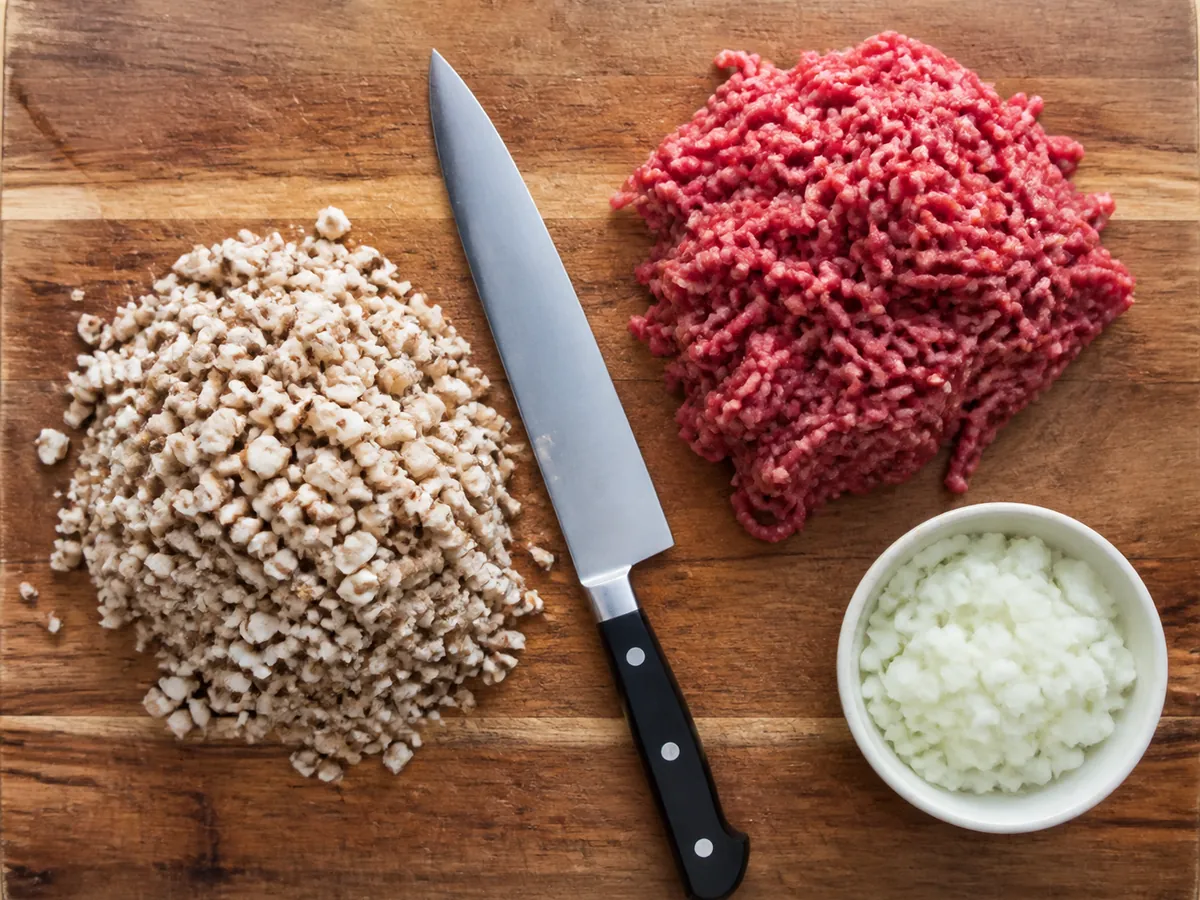
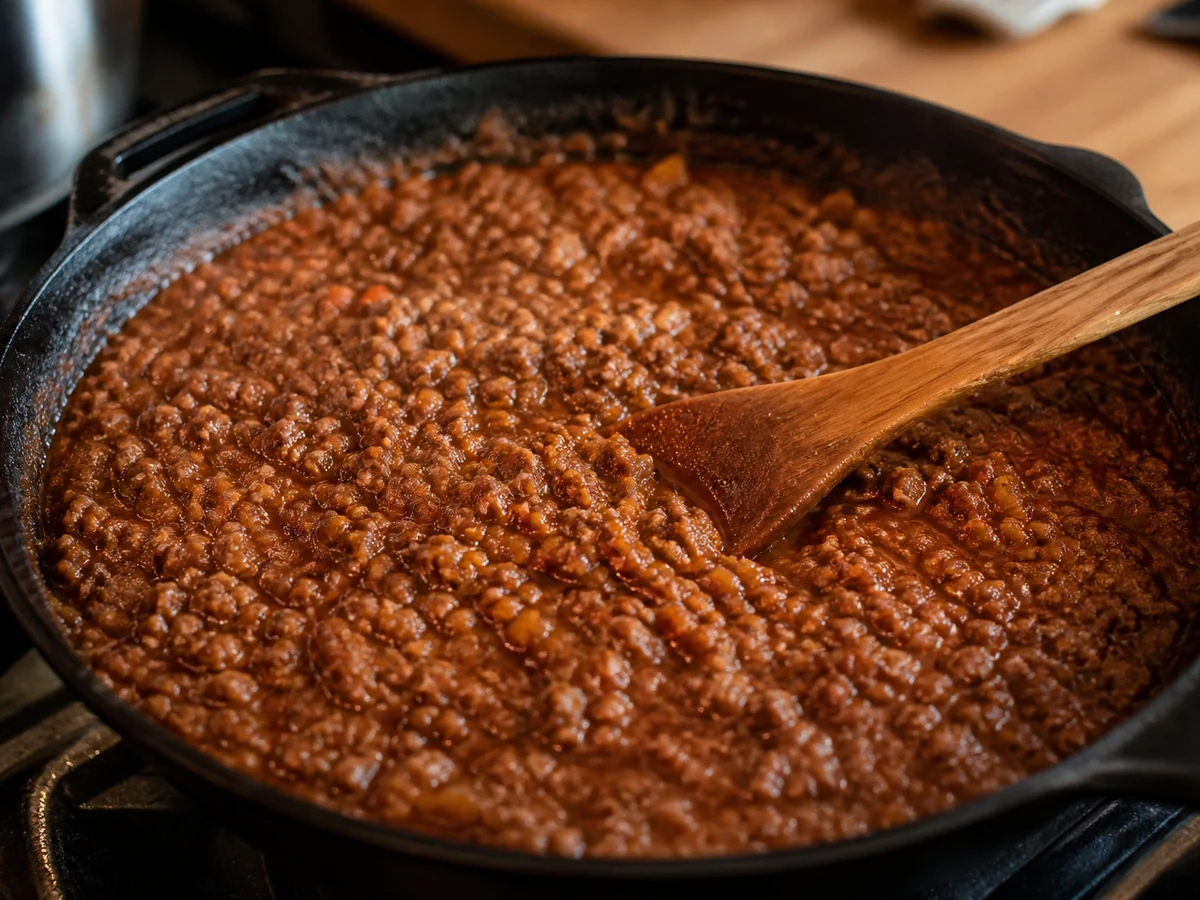
Mixed dishes hide the substitution best, which is why the research used things like bolognese, chili and burgers rather than asking anybody to eat a plate of mushrooms.
- Start by replacing half the meat rather than all of it, since a half swap survives contact with a family
- Chop rather than slice, because the texture match is what stops anybody objecting
- Brown the mushrooms separately and add them in, so they do not stew in the meat juices
- Salt them late, since salt pulls water out early and stops them browning
A reader who already eats little red meat is in an awkward position here, and it is worth saying so rather than pretending otherwise.
The saving comes from the gap between what goes out and what comes in, so replacing something that was already low in energy density saves very little. Somebody swapping mushrooms for chicken breast is trading one modest number for a slightly smaller one.
That does not make mushrooms a worse food for them. The lever is simply smaller in their kitchen.
One caveat matters more than all of that. The year-long trial ran inside a supervised calorie deficit, so nobody was told to eat mushrooms and otherwise carry on.
The substitution was a lever within a plan rather than a plan by itself.
It is also worth being clear about what was not tested. The trials swapped mushrooms for red meat specifically, so swapping them for rice or bread is an extrapolation rather than a finding.
That distinction matters when a page tells you to add mushrooms to your diet.
The logic of energy density would predict a similar direction for any dense food replaced by a mostly-water one. Predicting is not the same as measuring, and the trials measured one swap.
Nobody in that study lost weight because mushrooms did something to them. They lost weight because they were eating less, and the swap made eating less easier to keep doing than it usually is.
That is a modest claim, it is supported by real numbers, and it is considerably more than most things sold against this search can say.
Sources & References
- Lack of energy compensation over 4 days when white button mushrooms are substituted for beef, Appetite (2008) The matched-volume energy figures of 783 against 339 calories, measured intake of 730 against 310, the 11.4 percent compensation over four days, and that appetite and satiety ratings did not differ.
- Positive effect of mushrooms substituted for meat on body weight, body composition, and health parameters. A 1-year randomized clinical trial, Appetite (2013) The design, population and every outcome of the one-year trial, and its grant funding from the Mushroom Council and the Australian Mushroom Growers Association.
- The Nutritional Significance of Ganoderma lucidum on Human Health, a GRADE-assessed systematic review and meta-analysis, Food Science and Nutrition (2025) That seventeen pooled trials covering 971 participants found a significant body mass index reduction and no change in body fat or waist circumference, with certainty rated very low across all outcomes.
- US Food and Drug Administration, Questions and Answers on Dietary Supplements That supplements are not approved before marketing and that a structure and function claim carries a required disclaimer.