Overview
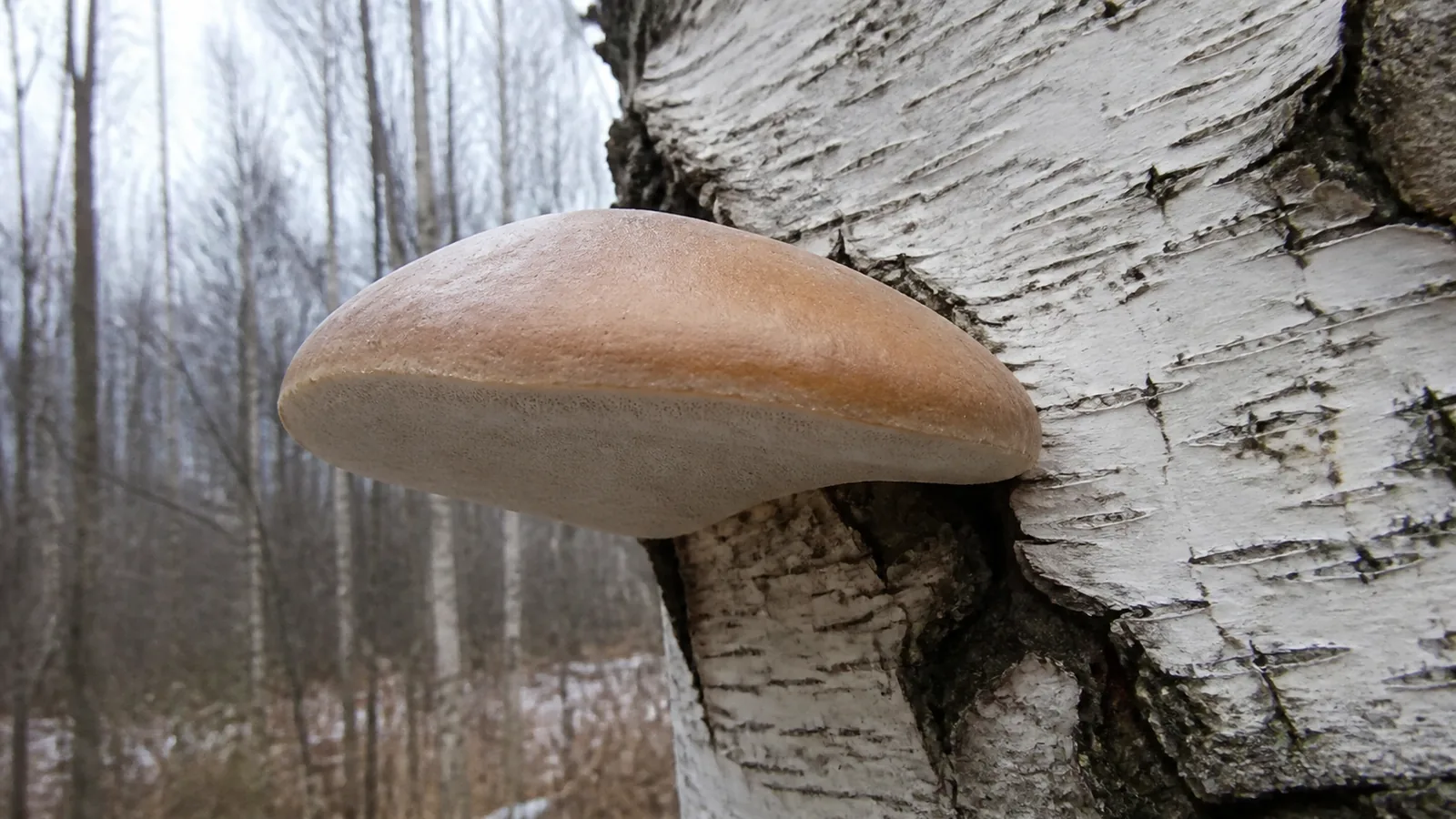
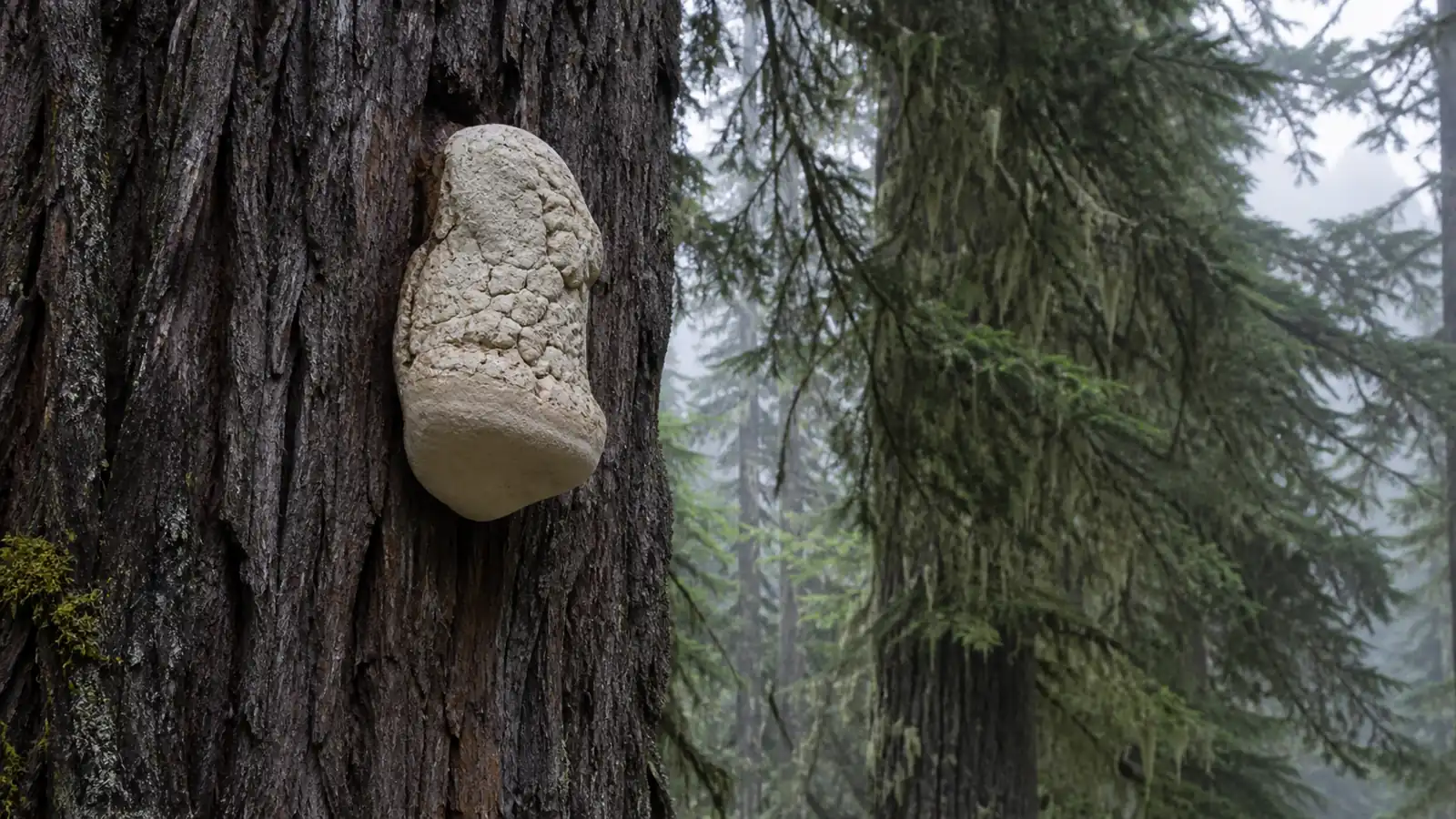
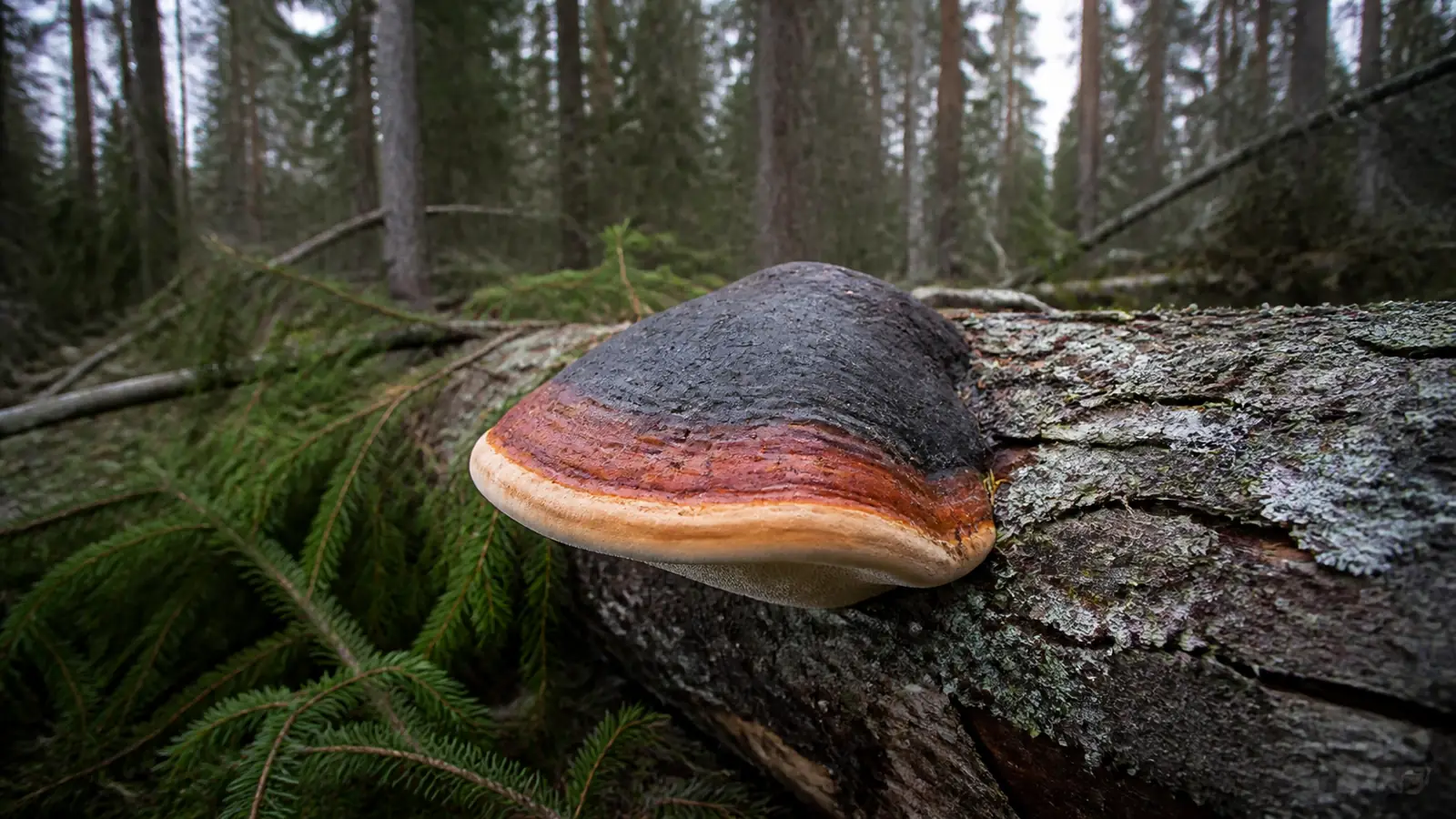
The name red-belted conk describes a recognizable field form rather than one globally uniform species. The bracket starts pale and rounded, develops a reddish resinous zone, and becomes darker and more hoof-shaped as new tube layers accumulate.
A mature fruit body may remain attached for years. Each active season can add a new pore layer beneath the older tubes, so a cut specimen often shows stacked strata rather than the uniform flesh of a soft annual polypore.

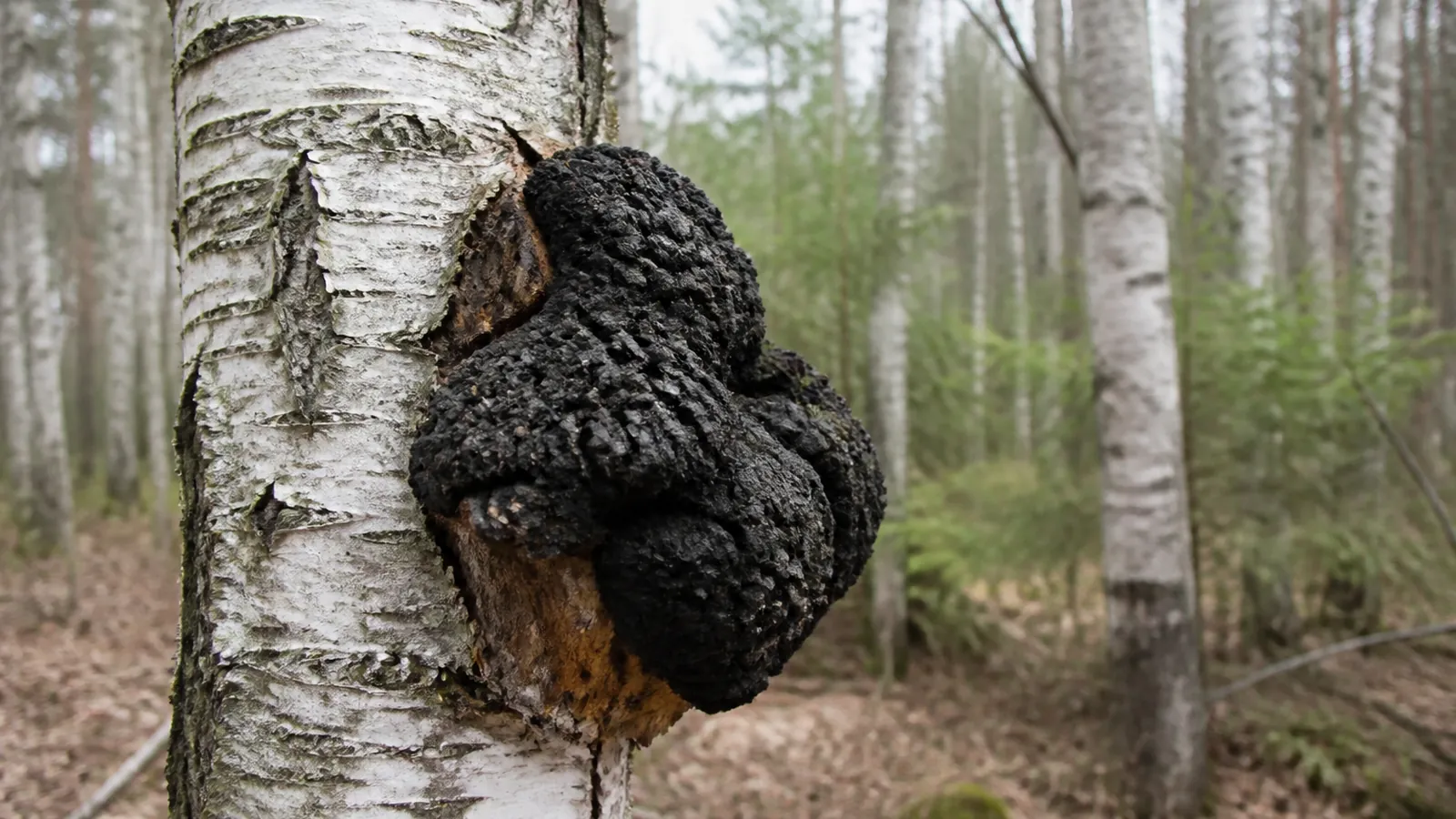
Age changes nearly every obvious surface character. Young brackets can be cream colored and wet with amber droplets, while old ones may retain only a narrow trace of red beneath a blackened crust.
| Character | Fresh active growth | Older bracket | Identification value |
|---|---|---|---|
| Margin | Thick, cream, rounded | Thin, dingy, or eroded | Supports active growth state |
| Belt | Orange to red and resinous | Darker or partly obscured | Helpful field clue, not species proof |
| Upper crust | Glossy and zoned | Dull, cracked, gray to black | Shows age and weathering |
| Pore surface | Pale, sometimes with droplets | Buff to brownish | Separates pores from gills, but not close species |
How do you identify a red-belted conk?
A thick shelf or hoof, commonly 5 to 30 centimeters across, with a hard zoned crust. Fresh growth often shows a pale margin outside an orange-red belt, while old upper surfaces darken toward gray or black.
No gills. The underside is cream to pale yellow with a dense layer of small round pores that may discolor with age.
No true stem. The bracket attaches broadly and directly to dead or weakened wood.
The context is tough, corky, and pale tan. Fresh specimens may smell resinous or slightly sour, but odor is variable and should not carry an identification.
Start with the substrate and attachment. Red-belted conks grow as broad, stemless brackets from wood, most often conifer logs, stumps, or standing dead trees, rather than from soil.
Examine the whole color sequence before touching the surface. A typical active bracket has a pale outer edge, an orange-red band behind it, and a progressively darker zoned crust toward the point of attachment.

The underside bears several small round pores per millimeter, not gills or teeth. Fresh pore surfaces can exude amber guttation droplets, but other polypores also weep, so photograph the droplets without treating them as a deciding test.
A vertical cut reveals a hard pale context above distinct annual tube layers.
The combination matters more than any red band. Record host, region, pore size, cap crust, section, and spore measurements before assigning a species name.
Can you eat red-belted conk?
Do not taste a specimen to separate lookalikes. Surface microbes, degraded wood, environmental contaminants, and a mistaken identity remain relevant even when the fungus itself is not known as a lethal species.
Never eat a wild polypore based on a red band or an image match. If illness follows mushroom ingestion, contact the regional poison center and retain the specimen, meal remains, and photographs.
What looks like a red-belted conk?
Several hard brackets can show red, brown, or varnished zones. Resinous polypores may have soft pale margins and colored exudates, while artist's conks have a white pore surface that marks brown when scratched.
The hemlock varnish shelf and other Ganoderma species can look lacquered, but their cap construction, spores, and white-rot ecology differ. Old red-belted conks may lose the bright belt that made the common name seem straightforward.
Close relatives within the Fomitopsis pinicola complex are the hardest comparison because their field characters overlap. Geography can narrow the candidates, but DNA and microscopic evidence may be necessary for a defensible name.
Do not force every dark red-zoned conk into Fomitopsis pinicola. In North America, that label often preserves an older broad concept rather than the strict Eurasian species.
A field photo also hides pore size, spore dimensions, tube layers, and host condition. Use a regional key and preserve a specimen whenever the distinction affects a survey, herbarium record, or ecological conclusion.
Is North American red-belted conk really Fomitopsis pinicola?
For much of the twentieth century, red-belted conks across the Northern Hemisphere were grouped under Fomitopsis pinicola. DNA studies showed that this broad treatment contained multiple lineages with geography, host associations, spore measurements, and subtle morphology separating them.
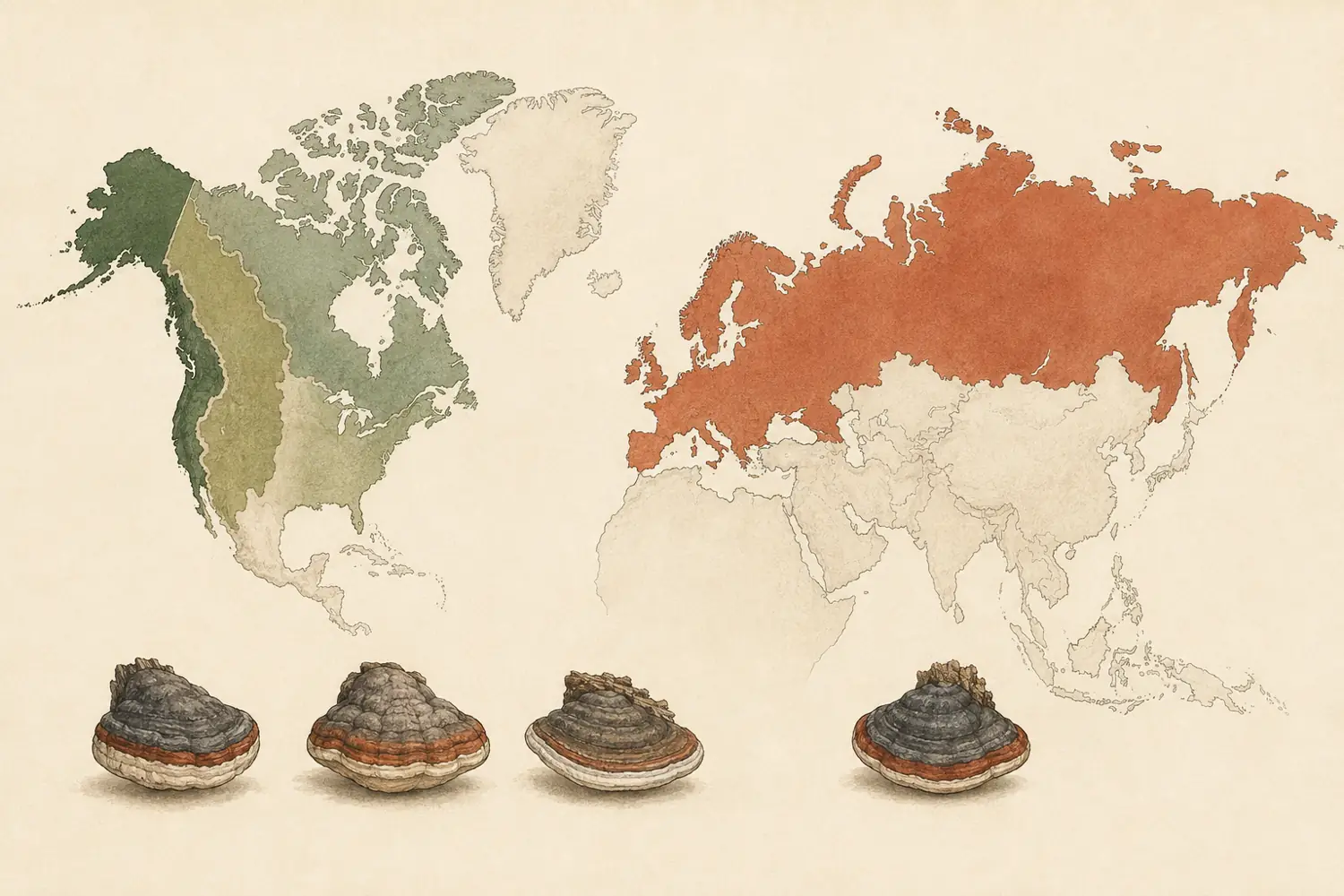
In the strict modern sense, F. pinicola is Eurasian. North American work recognizes species including F. mounceae and F. schrenkii, while F. ochracea adds another similar regional taxon.
Use the collection locality before choosing the Latin name. A North American observation can reasonably use “red-belted conk complex” when the specimen lacks the microscopic or molecular evidence needed for a narrower identification.
What do red-belted conk studies actually test?
Laboratory studies of fungi labeled Fomitopsis pinicola have examined polysaccharides, triterpenoids, antimicrobial activity, and antioxidant assays. Older papers may have used the broad species concept, which means the organism behind an extract is not always clear under current taxonomy.
| Research detail | Why it matters |
|---|---|
| Voucher and collection region | Indicates which member of the complex may have been tested |
| Extract solvent | Changes which compounds enter the preparation |
| Cell or enzyme assay | Measures a controlled response, not a patient outcome |
| Animal model | Cannot establish a human dose or benefit |
| Finished-product lot | Determines whether a commercial powder matches the studied material |
A result belongs to the identified specimen and preparation used in that experiment. It should not be transferred automatically to every red-belted conk tea, tincture, or capsule.
There is not enough clinical evidence here to recommend wild-collected material for treating infection, cancer, inflammation, or another condition. Discuss any concentrated product with a clinician when medicines, pregnancy, surgery, or chronic disease are involved.
Can red-belted conk be cultivated?
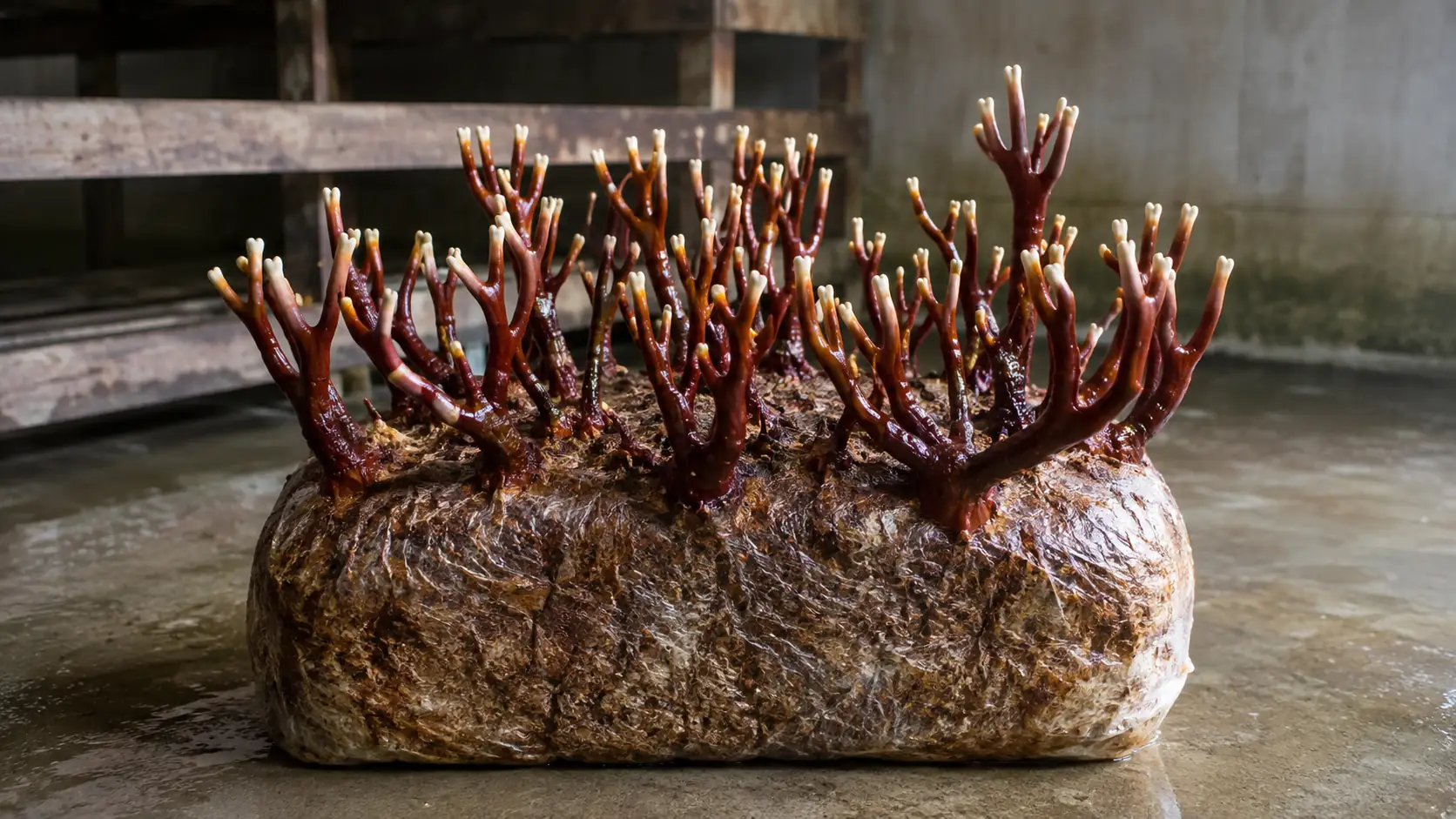
Red-belted conk is a wood-decay fungus, so cultivating it means managing a durable polypore on woody substrate rather than producing a quick flush from pasteurized straw. A verified culture and documented host are essential because several members of the complex look similar.
This species group is studied more often for decay biology and chemistry than as a conventional crop. A bracket with the expected colors does not authenticate the strain, especially when commercial cultures use an outdated name.
Does red-belted conk have a culinary use?
The woody context does not soften into a normal edible texture, and red-belted conk is not a table mushroom. Long boiling may extract color, bitterness, and soluble compounds, but it does not turn an uncertain specimen into food.
Some traditions use hard conks as tea material, fire carriers, dyes, or decorative objects. Those uses involve different exposure and quality questions, so a historical mention of tea should not be shortened to an edibility claim.
For kitchen decisions, leave the specimen out of the meal. A positive species identification would still not change the hard texture or supply a well-established culinary use.
Do nutrition claims fit a woody conk?
Standard food-composition tables are not a useful guide for this hard conk because it is not normally eaten as a serving of fresh mushrooms. The dry fruit body contains structural polysaccharides, lignin-associated material, minerals, and extractable compounds in proportions that vary with age and substrate.
A supplement panel may report total polysaccharides, but that number is method-dependent and is not interchangeable with beta-glucan content. Starch carriers can also inflate a nonspecific polysaccharide result.
Evaluate an extract through identity, fungal part, extraction method, carrier ingredients, contaminant tests, and lot-specific results. Nutrient language should not be used to imply a clinical effect.
What does red-belted conk do to a log?
Red-belted conks colonize dead wood and can also occur on stressed or injured living trees. Conifers are frequent hosts, although members of the complex can occur on hardwoods depending on species and region.
The fungus causes brown rot. It removes much of the cellulose and hemicellulose that give wood tensile strength, while modified lignin remains as dry brown blocks that crumble along cubical cracks.
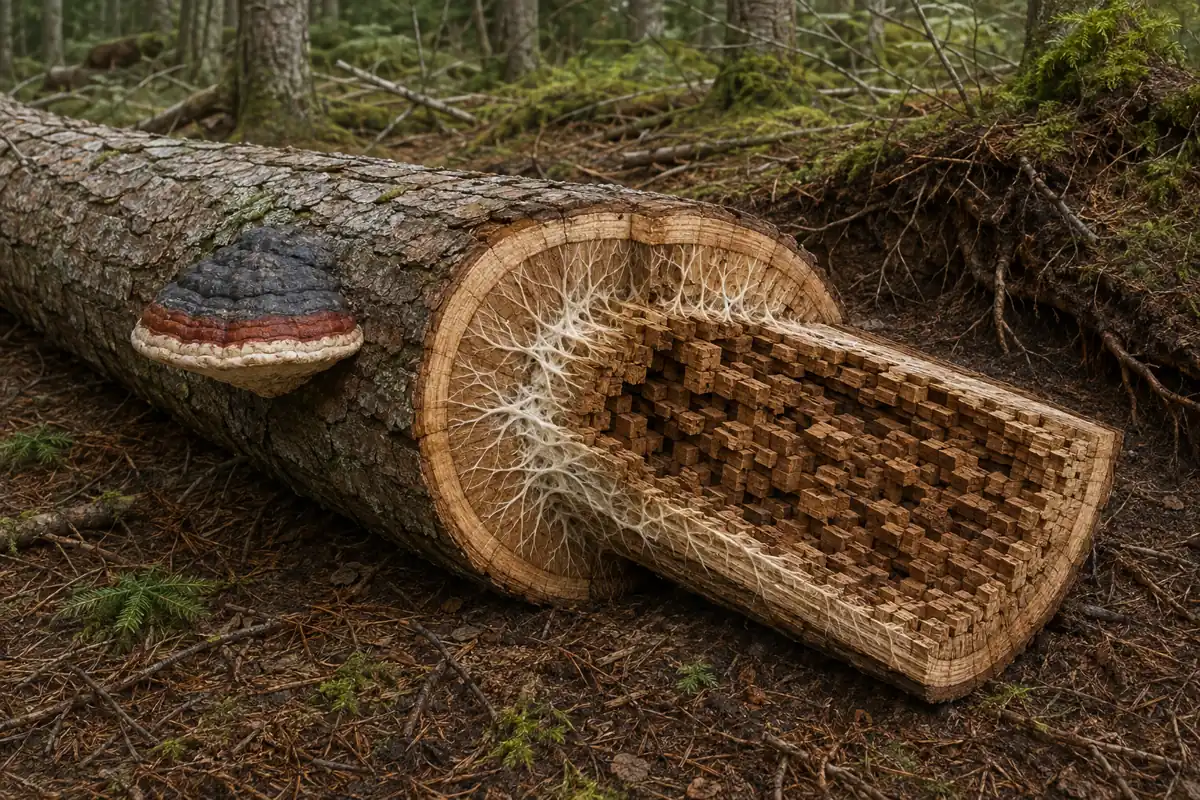
This decay returns carbon and nutrients to forest soils and changes the log into habitat for invertebrates, microbes, seedlings, and other fungi. Removing a conk does not remove the organism, because its mycelium is already established inside the substrate.
On a managed tree, a bracket indicates advanced internal decay rather than a superficial blemish. The fruit body cannot tell you how much sound wood remains, so decisions about a tree near people or structures require a qualified arboricultural assessment.