What is agarikon and why does it matter?
Agarikon is easier to understand as an old-forest organism than as a supplement label. Laricifomes officinalis forms large perennial conks on conifers and causes brown heart rot while the host may remain standing for many years.
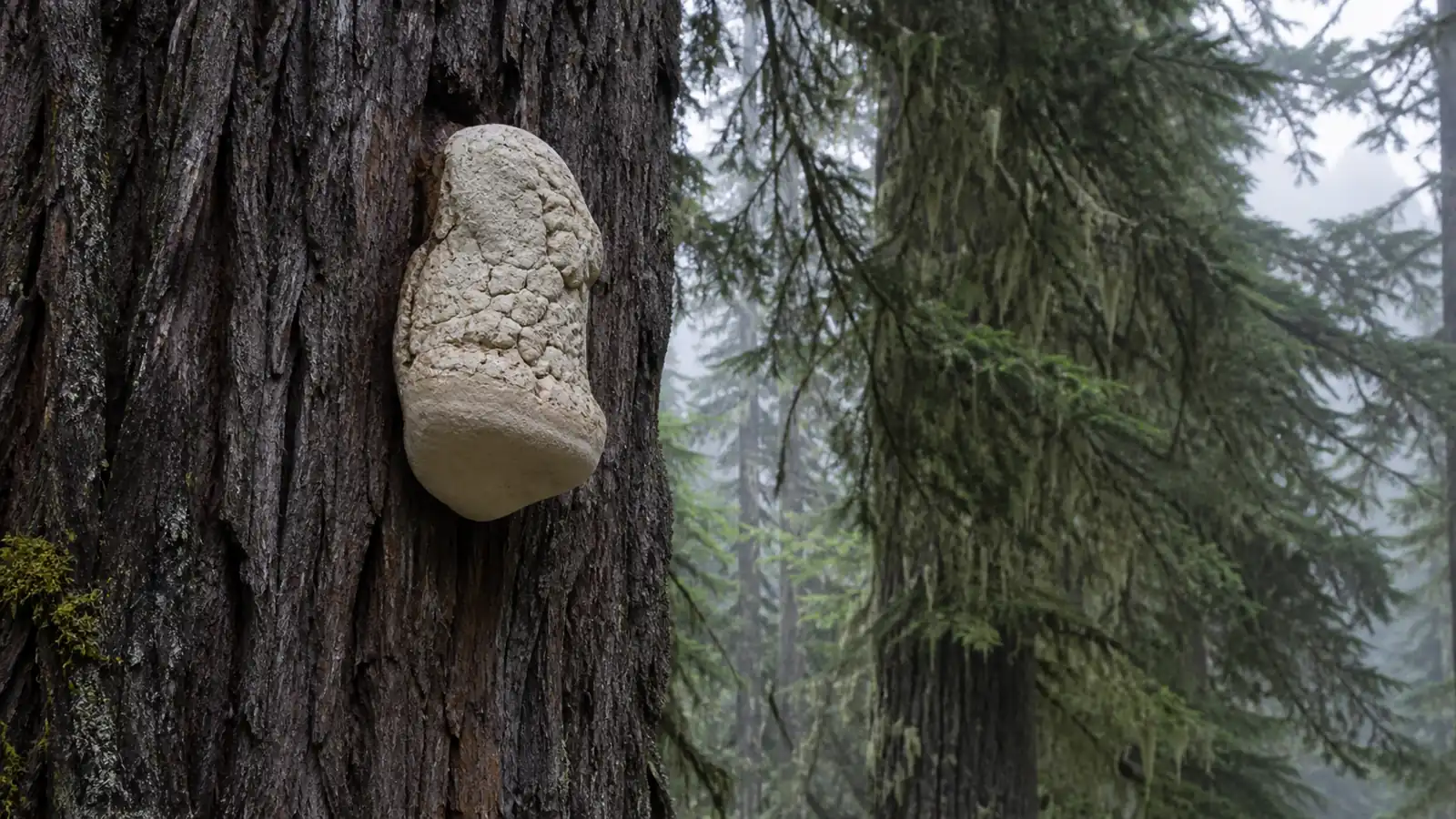
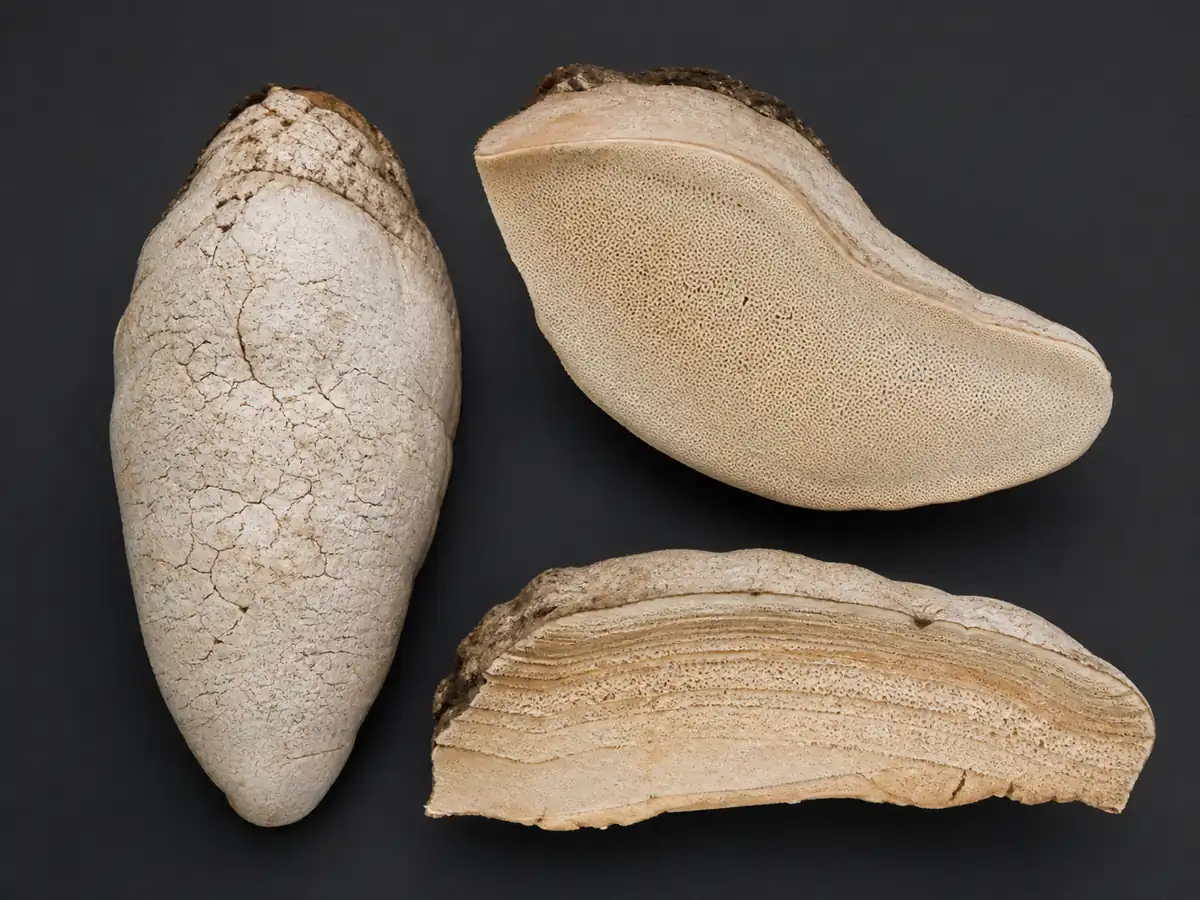
The conk can begin as a pale rounded mass, then build annual tube layers into a hoof, cylinder, or tall irregular column. Its surface is chalky white when young and becomes tan, gray, cracked, and weathered with age.
Its reputation comes from a long record in European, Middle Eastern, and Asian traditional medicine.
Historical texts describe agarikon for respiratory, digestive, and other complaints, while modern laboratory studies have isolated triterpenes and tested extracts against biological targets.
That history is not clinical proof. Reviews repeatedly call for controlled pharmacologic work and human trials, so documented traditional use and established treatment remain separate claims.
Key takeaway
A wild agarikon is more valuable left on its host. Photograph the conk and tree, record the location through an appropriate conservation channel, and avoid removing a rare perennial fruiting body.
The accepted name also matters. Fomitopsis officinalis appears throughout older medical and forestry literature, but phylogenetic work places the species in the separate monotypic genus Laricifomes.
Historical records from Iranian, Greek, and European traditions describe agarikon for cough, tuberculosis, digestive complaints, and many unrelated conditions.
Modern researchers have isolated lanostane-type triterpenes and tested extracts in antiviral, antibacterial, anti-inflammatory, enzyme, and cell assays, but those experiments do not establish clinical benefit in people.
Laricifomes officinalis is the only accepted species in Laricifomes. Older sources may list Fomitopsis officinalis or Polyporus officinalis, and some databases retain an older family placement.
A large conk represents more than one season of growth. Each new pore layer adds to a structure that can persist for years, while the fungus occupies heartwood and the old tree continues to provide standing habitat for birds, insects, and other fungi.
That time scale changes the value of collection.
Removing one mature conk can erase years of spore production and a rare locality record, while a careful telephoto series can document form, host, height, condition, and changes across later visits.
The medicinal story is broad because historical sources used agarikon for unrelated complaints. Breadth is not proof of versatility, and a list that combines cough, infection, digestive problems, and cancer can conceal how little controlled human evidence exists for any one outcome.
Product identity adds another layer. Powders and extracts may use old scientific names, may not disclose the fungal material or extraction method, and may contain cultured mycelium rather than a wild conk, so a Latin name alone does not standardize the contents.
How can you recognize an agarikon conk?
A large perennial hoof-shaped to columnar conk, chalky white when young and aging tan to gray-brown, often deeply cracked.
No gills. The pale underside has small round to angular pores arranged in annual tube layers.
No distinct stem. The conk attaches directly to the trunk, usually high on an old conifer.
White to cream, chalky and crumbly rather than woody, with an intensely bitter taste that should not be tested in the field.
Look upward on mature and old conifers. Agarikon often fruits well above ground, where a telephoto photograph may be safer and more informative than an attempt to reach the conk.
The upper surface is pale and unvarnished rather than glossy.
Young growth can look white and smooth, while older portions turn tan or gray and develop deep cracks, algae, and weather stains.
| Character | Agarikon pattern | Common source of error |
|---|---|---|
| Texture | Chalky and friable inside | Old weathered conks can harden at the surface |
| Color | White young growth, tan or gray with age | Algae and rain obscure the original surface |
| Shape | Hoof-like to tall and columnar | Shape varies with age and trunk position |
| Pores | Pale, small, and layered through years | Ground-level photos may not show the underside |
| Host | Old conifer | Host species must be identified independently |
A white spore print offers little practical help because many polypores release pale spores and high conks cannot be sampled responsibly. Microscopic spores are smooth, colorless, and cylindrical to ellipsoid, but specialist confirmation should use a complete set of characters.
Do not use bitterness as a field test. Taste adds no reliable separation and conflicts with conservation when it requires damaging the conk.
Annual growth can be visible as differences in the pore layers and surface condition.
The newest margin may look paler and cleaner, while the older upper crust becomes cracked, gray, algae-marked, or broken by weather.
Estimate size from a fixed object in the frame instead of climbing. Host diameter, a measuring pole used from the ground, or repeated photographs from the same position can establish change without placing a person or the conk at risk.
A damaged surface can hide the chalky texture.
Look for an unvarnished pale crust, small pores, thick whitish context, and a columnar or hoof-like body together, then record every conflicting feature rather than explaining it away.
Host identification needs its own evidence. Bark, cones, needles, branching, and location should agree because larch, fir, spruce, pine, hemlock, and Douglas-fir do not carry the same diagnostic weight in every region.
When a rare occurrence matters, a local herbarium, forest pathologist, or conservation mycologist can decide whether remote evidence is sufficient or whether a permitted sample is justified. Casual cutting is not the first confirmation method.
When should you avoid an agarikon product?
Do not use agarikon in place of vaccination, antivirals, antibiotics, cancer treatment, or respiratory care. Anyone considering a supplement should first discuss anticoagulants, immune-modifying medicines, liver treatment, pregnancy, and planned surgery with a qualified clinician.
Which perennial conks resemble agarikon?
Agarikon is confused with other pale conks because trunk height and age obscure its useful details. The strongest combination is an old conifer host, a chalky white to tan perennial body, a pale pore surface, and a crumbly interior that lacks the hard resinous crust of many Fomitopsis conks.
A photograph from the ground rarely proves the species. Host identity, fresh pore detail, internal texture, microscopy, and regional records may all be needed.
Do not cut a suspected agarikon conk merely to confirm it. The species is rare or threatened in parts of its range, and a large fruiting body may represent decades of growth on a living old tree.
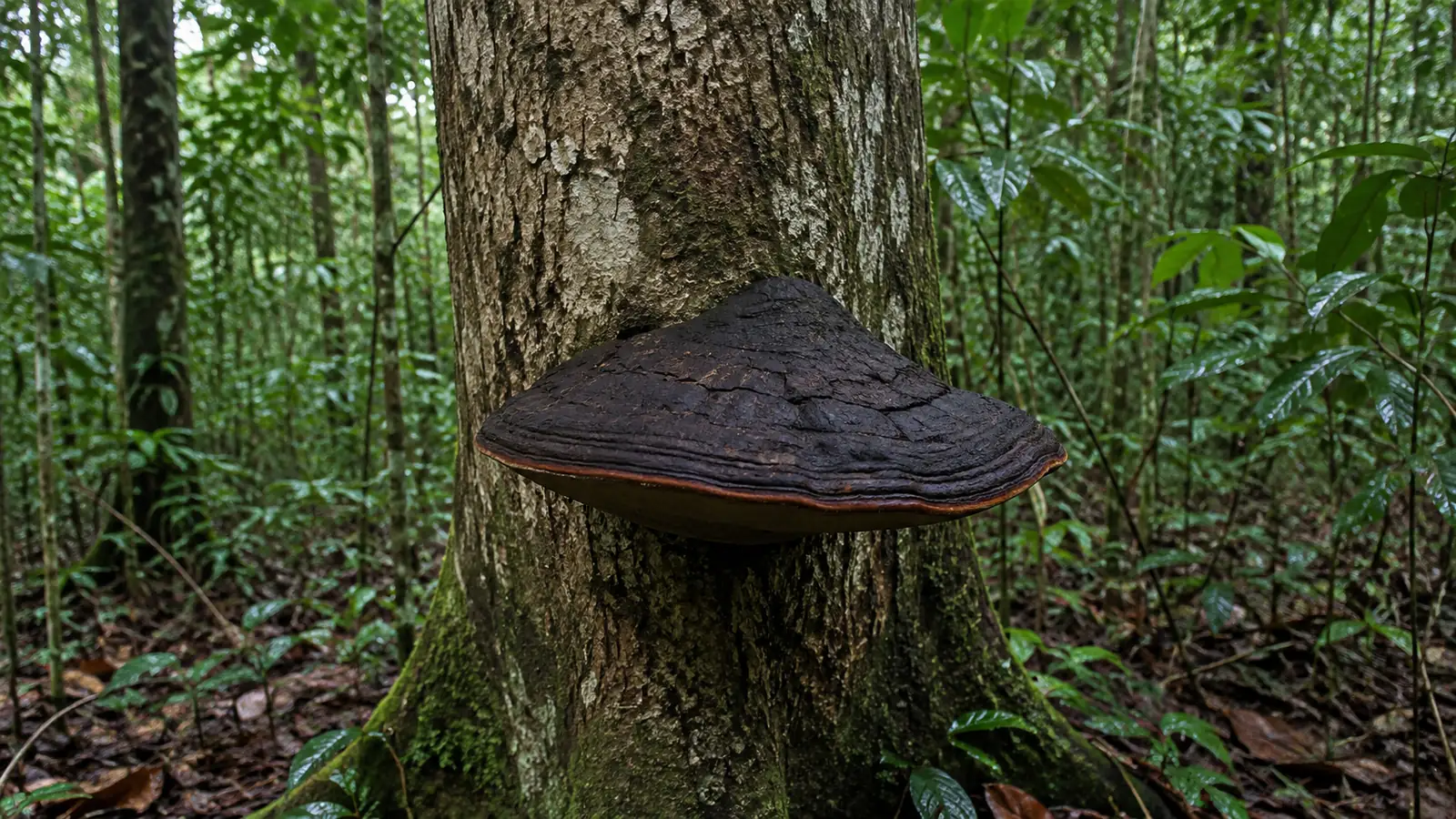
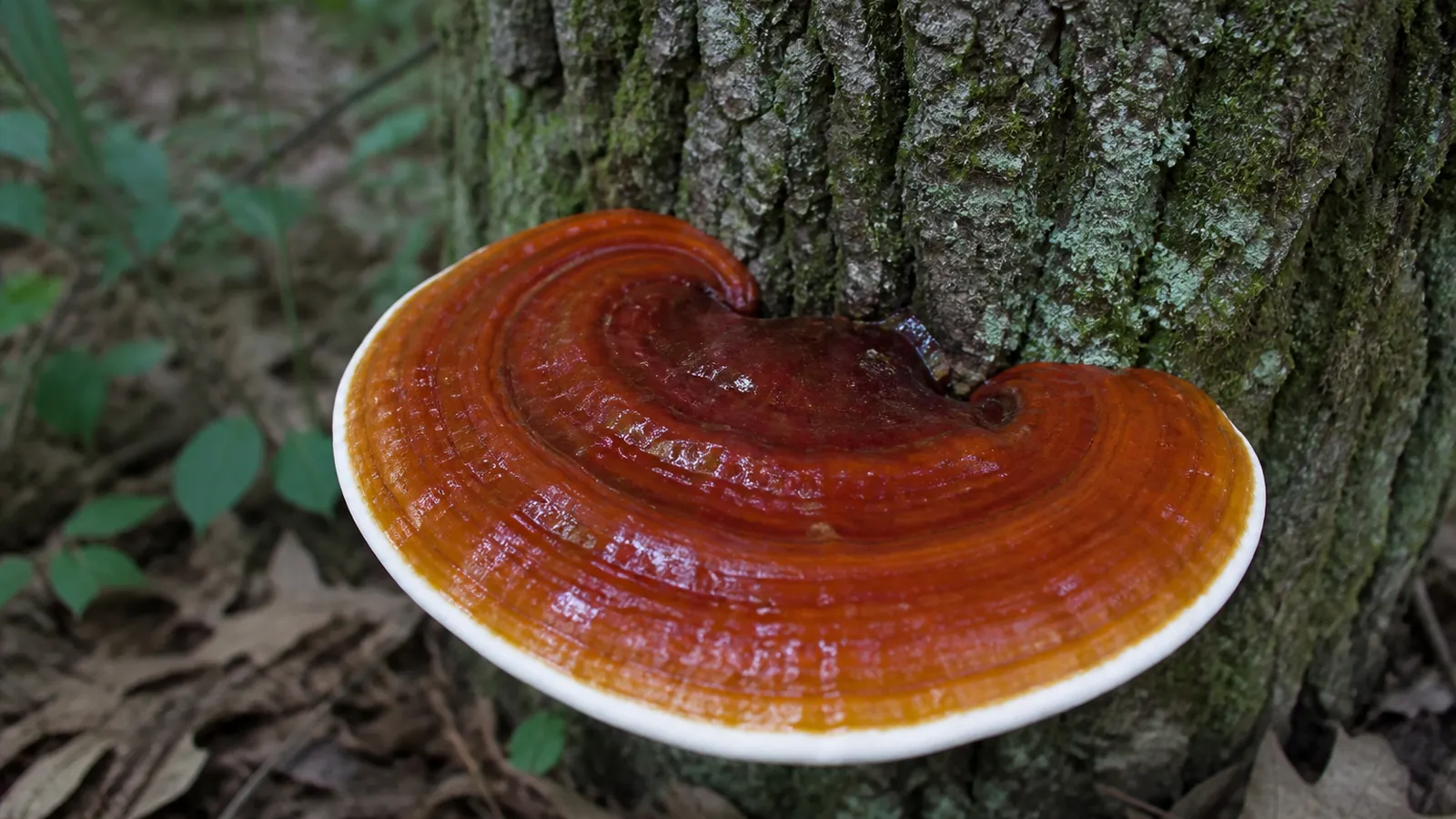
Red-belted conks and related Fomitopsis species are generally harder, more woody, and often show reddish or dark crusted bands. Agarikon is characteristically chalky and can become columnar or hoof-like with a pale cracked surface.
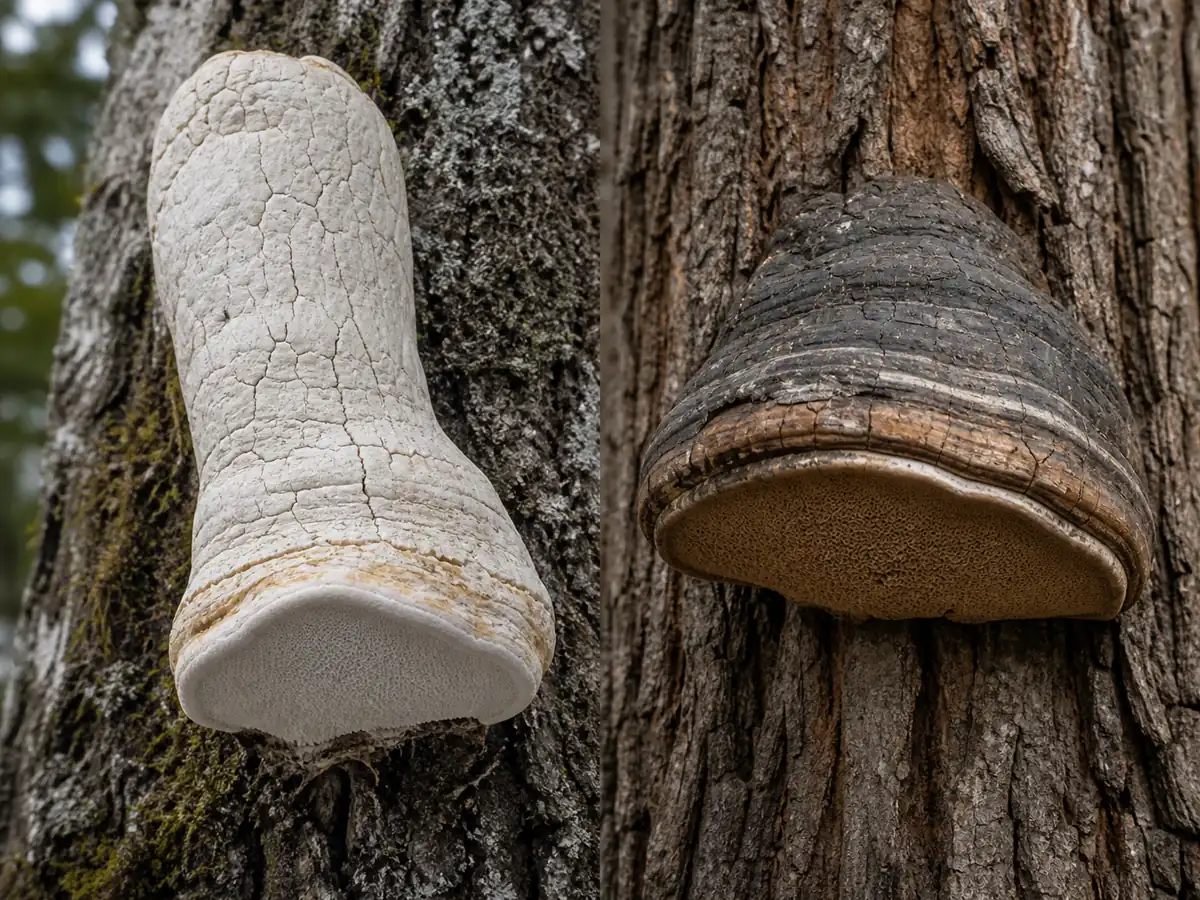
Host alone is not decisive. Several polypores occupy larch and other conifers, while agarikon itself is not restricted to one tree species everywhere.
Red-belted Fomitopsis can begin pale at an active margin, then develop reddish, brown, or black zones and a hard woody context. A top-view photograph that hides those bands or the pore surface can make it look closer to agarikon than a full record would.
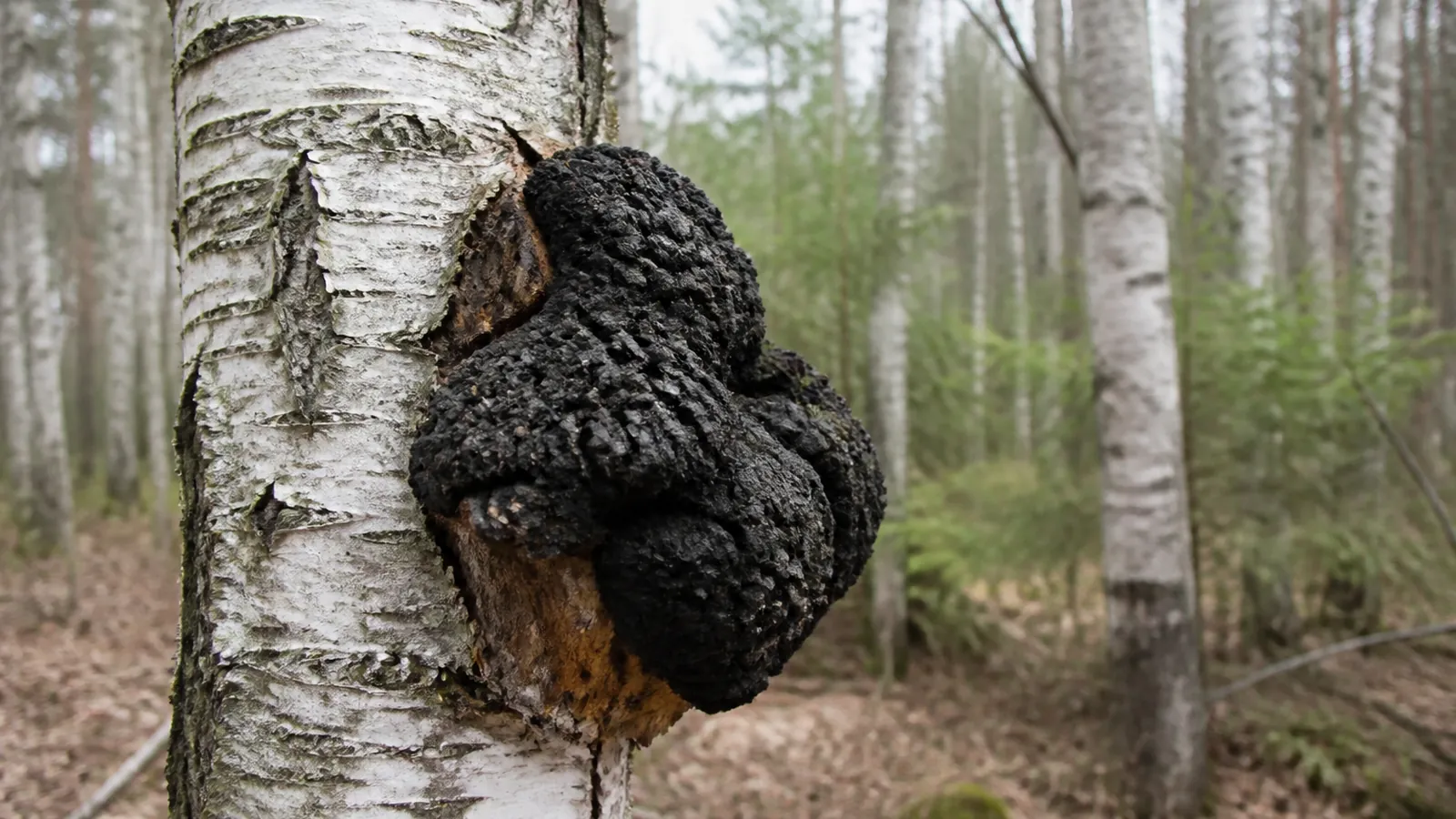
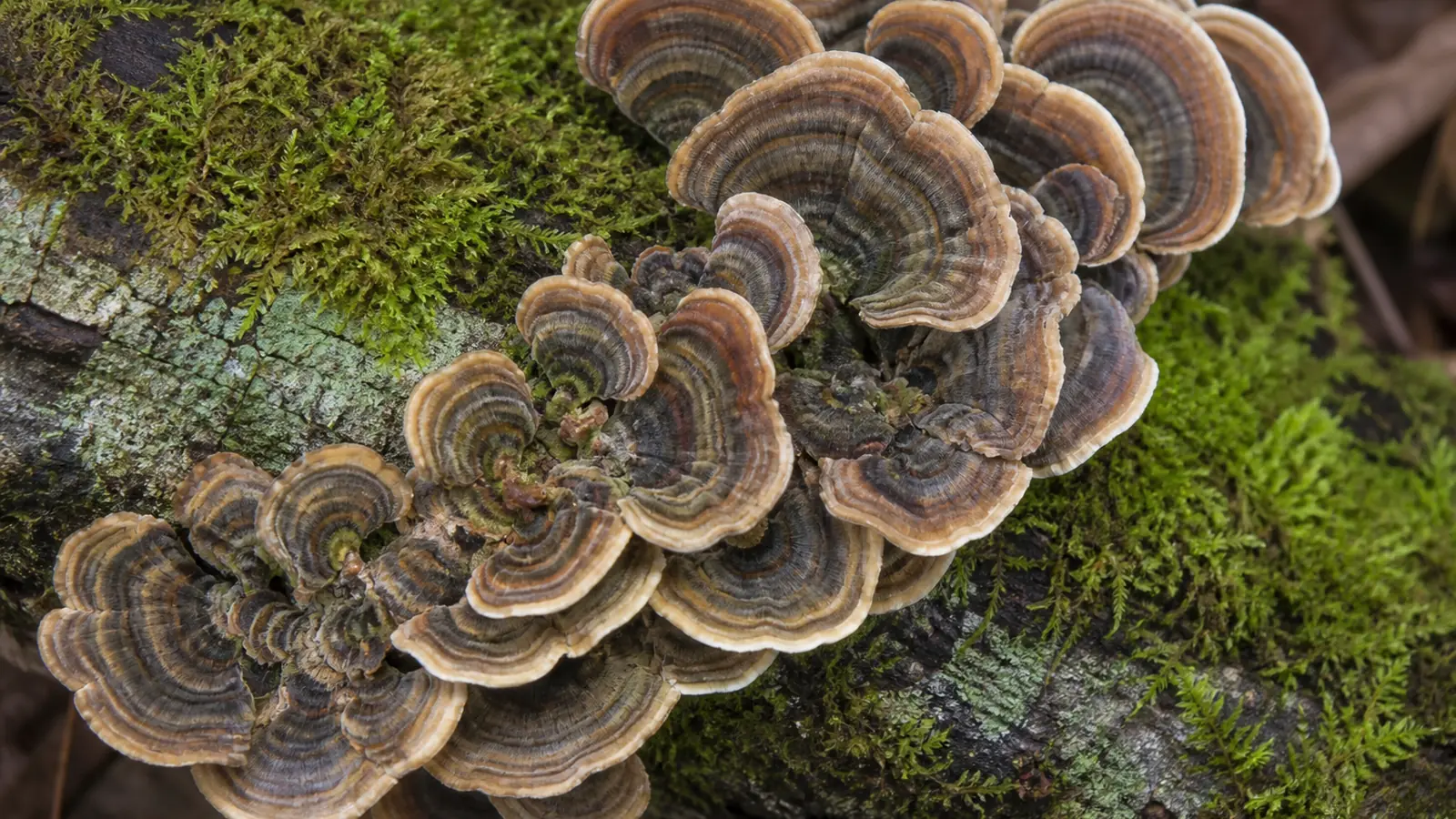
Tinder conks and other perennial brackets also build hoof-shaped bodies on older trees. Their denser context, darker crust, growth zoning, and host preferences help narrow the field, but age, algae, fire scars, and height can obscure all of those clues.
A pale conk on larch is therefore a candidate, not a completed identification. The conservation decision does not need to wait for a Latin name because leaving an old perennial conk in place protects every plausible rare or ecologically important outcome.
What does the medical evidence actually show?
Agarikon has a substantial traditional record and an incomplete clinical record. Iranian, Greek, European, and other historical sources describe preparations for cough, tuberculosis, digestive complaints, and many unrelated conditions.
Modern researchers have isolated lanostane-type triterpenes and tested extracts in antiviral, antibacterial, anti-inflammatory, enzyme, and cell assays.
These experiments identify compounds and possible mechanisms, but most do not show that a product treats disease in people.
- Traditional evidence
- Documents how communities used the fungus and which preparations they valued.
- Laboratory evidence
- Shows that an extract or compound changes a target under controlled conditions.
- Clinical evidence
- Must demonstrate benefit, dose, harms, and interactions in people. This level remains insufficient for broad treatment claims.
The distinction matters because serious illnesses named in historical sources require modern diagnosis and proven care. Agarikon should never replace vaccination, antivirals, antibiotics, cancer treatment, or respiratory care.
Supplements can also interact with medicines or vary in composition.
Ask a clinician or pharmacist before use, especially during pregnancy, before surgery, or when taking anticoagulants, immune-modifying drugs, or treatment for liver disease.
A product may contain fruiting body, cultured mycelium, grain-grown biomass, or a blend, and those materials are not analytically interchangeable. A useful label identifies the species, fungal part, extraction ratio, batch, and contaminant testing before it makes any health claim.
Laboratory studies have isolated lanostane-type triterpenes and exposed cells, microbes, or enzymes to agarikon preparations. Those designs can identify chemical activity and research leads, but they do not establish absorption, effective human dose, long-term safety, or benefit against a diagnosed disease.
Extracts are not interchangeable.
Solvent, temperature, fungal strain, culture substrate, fruiting body versus mycelium, and storage can change which compounds reach the final product, so a published assay cannot be transferred automatically to a retail capsule.
Human evidence also needs an outcome and comparator. A testimonial, historical indication, or change in a laboratory marker cannot answer whether patients improve more than they would with standard care or placebo.
The safest product decision starts with identity, lot testing, preparation details, and a clinician who knows the person's medicines and diagnoses. Pregnancy, liver disease, immune treatment, anticoagulants, and planned surgery deserve specific review because uncertainty is not evidence of no interaction.
Where does agarikon grow?
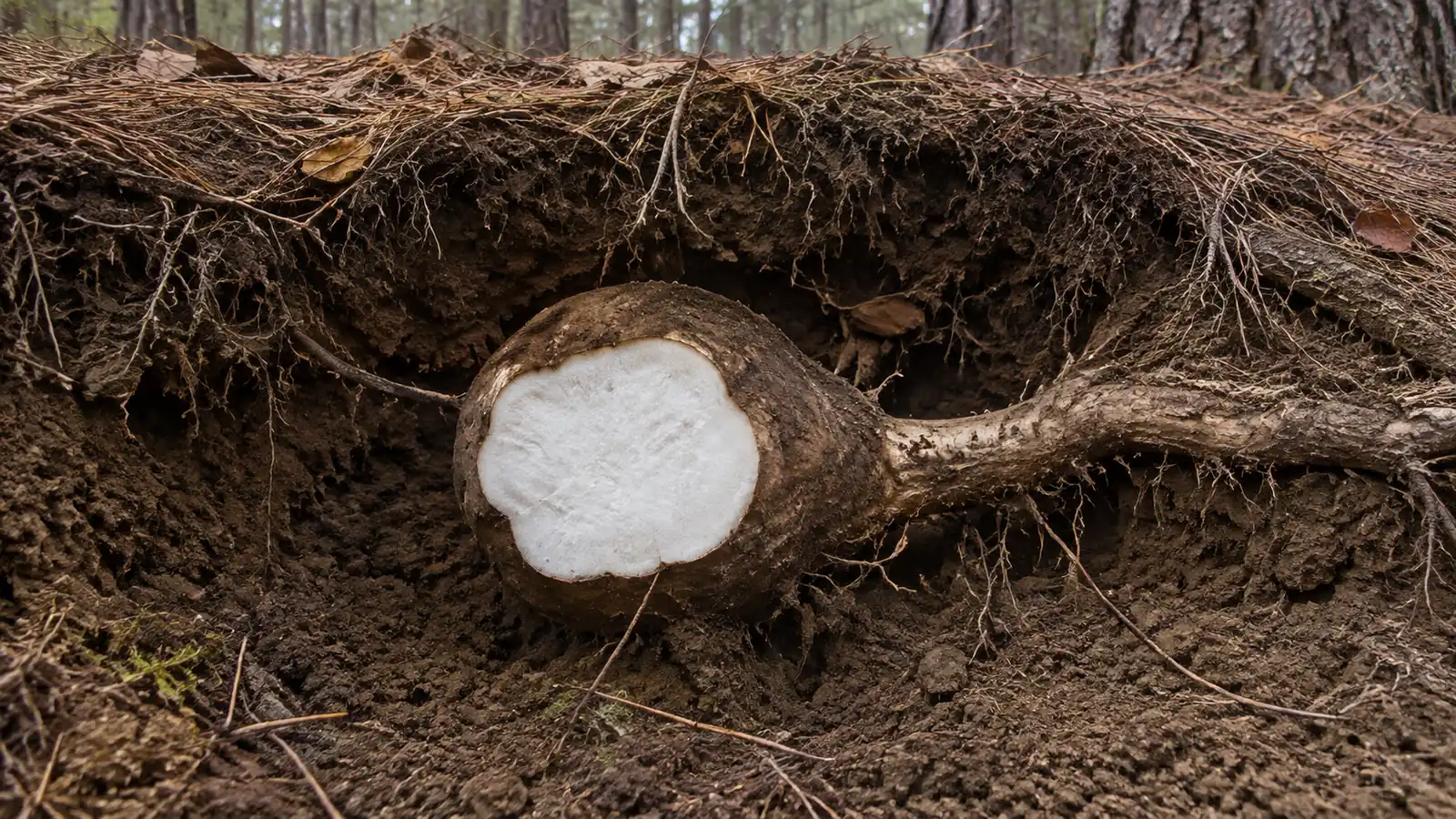
Agarikon is a brown-rot fungus of conifer heartwood. It can live in a standing tree and continue on dead wood, removing cellulose and leaving a brown, cubical residue inside the trunk.
Larches are its signature hosts across Eurasia. North American forestry records also associate it with old western larch, pine, fir, spruce, hemlock, and Douglas-fir, depending on region.
The connection with old trees is important.
Large trunks supply stable heartwood and enough time for a slow perennial conk to develop, while each visible fruiting body produces spores over repeated seasons.
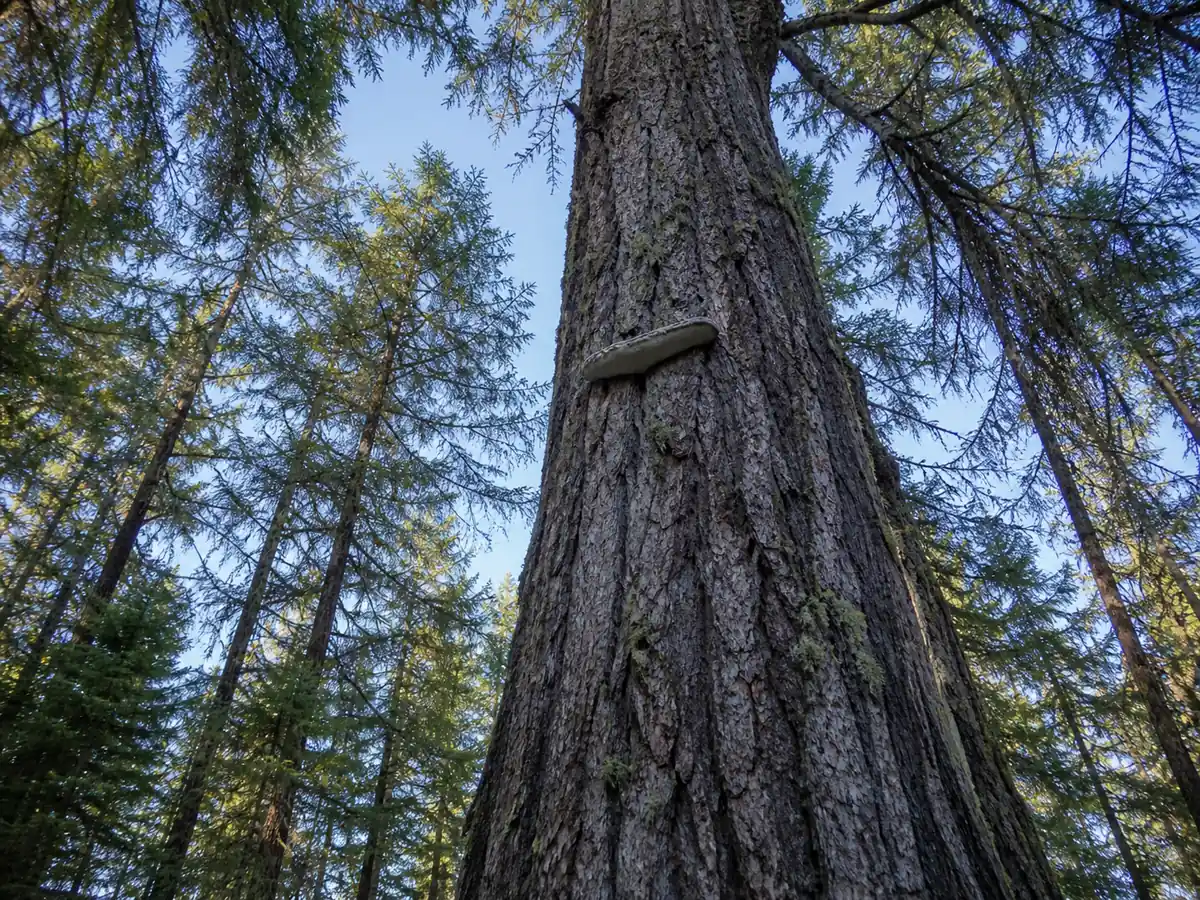
Forest removal and direct collecting both reduce known populations. European conservation recommendations specifically protect old larch stands, and North American forest guidance recognizes the decay as a feature of old habitat trees.
Finding a suspected conk is therefore a documentation job.
Record the tree species, approximate height, aspect, forest age, GPS location, and clear photographs without publishing a sensitive location where commercial harvesting is a concern.
Pure cultures grow under controlled media and temperatures, but a laboratory colony does not quickly become a mature perennial conk. Conservation cultures can preserve genetic material without cutting wild fruiting bodies, while retention of safe old trees and large dead wood protects the habitat that naturally supports the fungus.
Heart rot is hidden long before a conk appears.
The fungus breaks down structural wood inside the trunk, and the host can retain a living outer shell while cavities and altered wood develop within.
That combination creates both habitat and risk. Far from roads or buildings, a decayed old tree can supply nesting and feeding sites, while the same tree beside a trail may need a professional assessment that considers defects, targets, wind exposure, and remaining sound wood.
A visible conk does not date the original infection. Its size and repeated tube layers show persistence, but they cannot reveal the full decay column or prove when the fungus entered the tree.
Forest continuity matters because slow colonization and slow conk development need time. Retaining old living conifers, safe standing dead trees, and large down wood maintains more of that process than protecting one photographed fruiting body in an otherwise simplified stand.
Can agarikon be cultivated responsibly?
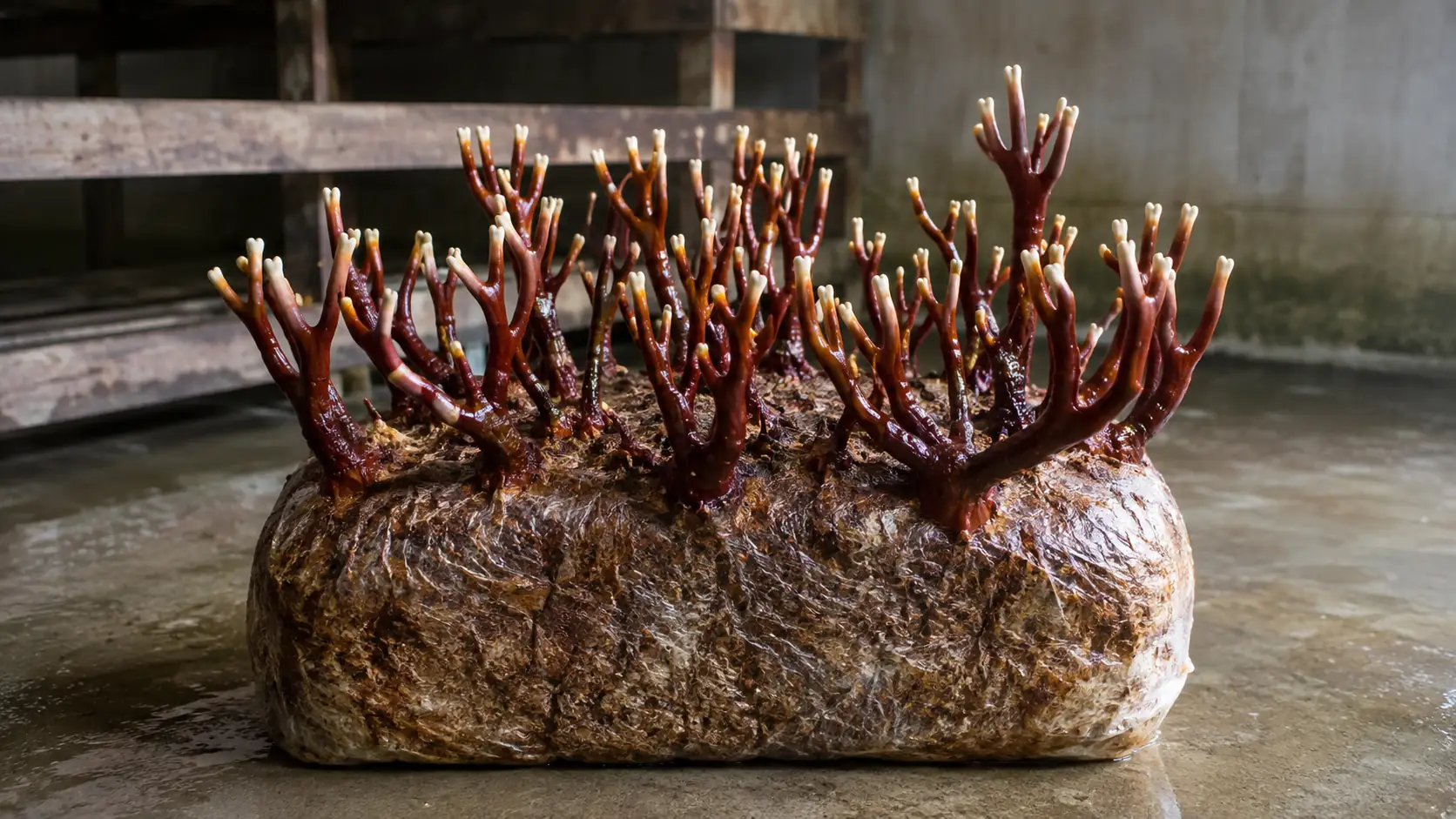
Agarikon culture belongs mainly to conservation, research, and controlled fungal production. Replicating a decades-old conifer habitat is different from fruiting an oyster mushroom on a household bag.
Pure cultures can be maintained in laboratories, and researchers have measured mycelial growth under different media and temperatures.
A successful plate does not imply that a mature perennial conk will form quickly or that a home-grown extract has a known composition.
Conservation collections can protect genetic material without stripping wild conks. Any collection from a protected site or rare population should follow land rules, permits, voucher standards, and a documented conservation purpose.
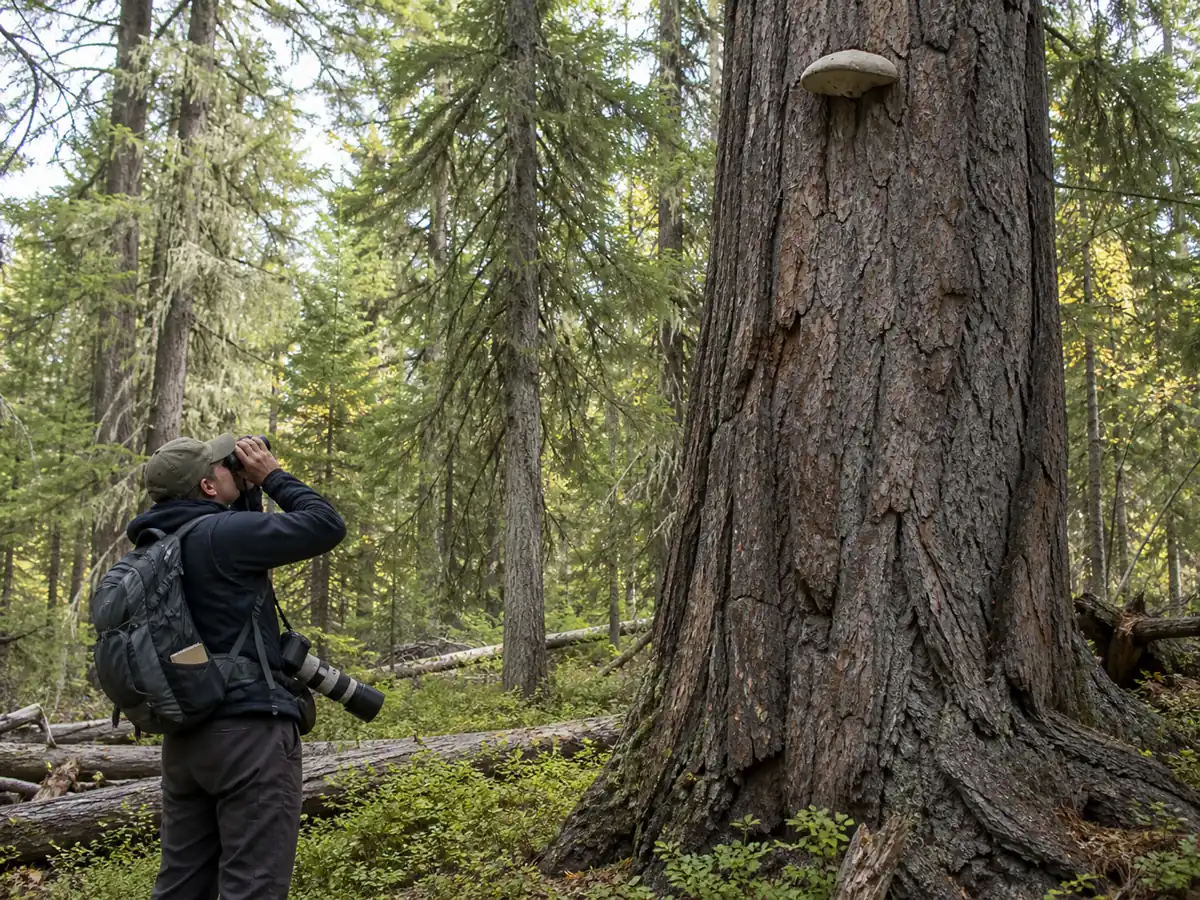
For landowners, retaining safe old habitat trees and large dead wood supports more ecological value than trying to inoculate an ornamental tree. A tree with heart rot may require assessment near buildings or trails, but risk management should preserve habitat where it can remain safely.
Starting a clean culture requires documented material and contamination control. A plate that grows white mycelium can preserve a strain, but visual growth alone does not verify species identity or predict the chemistry of a future extract.
Fruiting is a separate biological problem. Temperature, host wood, moisture, aeration, strain, and years of development interact, and a method that expands mycelium does not reproduce the architecture or chemistry of an old conifer heart.
Ex situ culture makes the most sense when it supports a voucher, genetic record, conservation collection, or transparent research question.
Commercial production should rely on legal source material and authenticated cultures instead of creating demand for untracked wild conks.
Landowners have a different decision. Preserve suitable old-tree habitat where risk allows, document suspected conks, and seek a tree-risk assessment near occupied areas rather than drilling or inoculating valuable conifers as an experiment.
Why is Fomitopsis officinalis now Laricifomes officinalis?
Laricifomes officinalis is the only accepted species in Laricifomes in a recent broad phylogenetic treatment of brown-rot Polyporales. The genus is separated from Fomitopsis by DNA evidence and by its chalky, crumbly context without a resinous crust.
Older names include Fomitopsis officinalis, Polyporus officinalis, and several earlier combinations. EPPO lists Laricifomes officinalis as the preferred name and retains Fomitopsis officinalis as a scientific synonym.
Family placement has also shifted as brown-rot lineages were revised. This profile follows the modern Laricifomitaceae treatment while acknowledging that databases and older references may retain Fomitopsidaceae.
Agarikon questions
Is agarikon edible?
Does agarikon cure infections?
What trees does it grow on?
Why should wild agarikon be left in place?
Is Fomitopsis officinalis the same fungus?
How old can an agarikon conk become?
Sources & References
- EPPO Global Database Preferred name, synonyms, common names, and taxonomic placement.
- Fungal Diversity, brown-rot Polyporales classification Phylogenetic placement, monotypic genus, and diagnostic morphology.
- Iranian Journal of Medical Sciences review Traditional uses, experimental research, and the stated need for clinical trials.
- USDA Forest Service old-tree science review Old conifer habitat and Laricifomes-associated heart rot in retained trees.