The value of a matsutake is a volatile aroma that sits in the skin and outer flesh, so water strips it and heat drives it off. Wipe rather than wash, cut only the soil off the base, tear it along the grain immediately before cooking, and use a foil parcel, a lidded pot or rice so the aroma has nowhere to go.
Somebody has given you a matsutake, or you have paid an alarming amount for one, and the instinct is to treat it like the firm meaty mushroom it obviously is.
That instinct will cost you almost everything you paid for. What you are holding is a smell with a mushroom attached, and heat is what spends it.
You are cooking a smell
Nobody buys a matsutake for its flavor or its texture, both of which are perfectly good and neither remarkable. If that were all it offered nobody would pay these prices.
Volatile is the word that matters. A flavor compound sits in the food and gets tasted, and a volatile aroma compound leaves the food and gets smelled, which means anything that encourages it to leave is a loss.
Heat encourages it to leave, and so does water, time on a counter, and cutting the mushroom into small pieces well before you cook it.
Pine is the reason it cannot be farmed, since the fungus lives on live tree roots and that partnership has never been reproduced commercially, which is covered on our matsutake mushroom profile.
The kitchen version is short. You have bought a finite quantity of smell, and every decision from here spends some of it.
Almost every mistake people make with matsutake is the same mistake, which is treating the substance as the ingredient and the aroma as a bonus.
Cooking MushroomsHow to Cook Cauliflower Mushroom Without Trapping GritHeat spends it
There is a straightforward trade here and no way around it.
Key takeaway
Every minute of heat drives off some of the aroma. A hard sear will remove most of it and leave you with a firm, faintly sweet, entirely unremarkable mushroom that cost more than a good steak.
One to two minutes is the usual target. That is enough to soften the flesh slightly and to release the aroma into whatever is around it, and not enough to send most of it into the extractor fan.
Some heat is genuinely necessary, since raw matsutake is firm to the point of being unpleasant and the aroma is oddly muted until a little warmth gets at it.
Three things carry the aroma away and only one of them is obvious:
- Heat, which is the one everybody knows about.
- Water, which does more damage in seconds than heat does in minutes.
- Time, since a mushroom sitting on a counter is quietly perfuming your kitchen.
The window is therefore narrow at both ends. Under a minute and it has not opened up, past four or five and the best of it has gone.
A closed vessel retains more of the aroma during cooking.
Never wash one
This is the rule that gets ignored most often, and the reason for it is specific rather than fussy.
The aroma is concentrated in the skin and the first millimetre or two of flesh. Water strips exactly that, and thirty seconds under a tap does more damage than two minutes in a pan.
There is a related instinct that does even more damage than the tap, and it is the peeler, since a matsutake stem looks slightly rough and smoothing it removes the layer the whole thing is valued for.
Our guide to cleaning mushrooms argues against water for most species on the grounds that it waterlogs them. Here the reason is different and stronger, since the water carries the aroma away with it.
The one exception is a mushroom that came out of wet ground and is genuinely muddy. Even then, wipe rather than rinse, and accept that you are paying for the cleanliness.
Cooking MushroomsHow to Cook Black Morels: Halve Them, Never Slice ThemTear it, do not slice it
Matsutake flesh has a lengthwise grain. It comes apart along that grain cleanly and along nothing else.
The second and third of those are the two that people do not believe until they have lost a mushroom to a sink.

A torn surface is irregular and slightly fibrous where a cut one is smooth and sealed. That roughness releases aroma more readily, which is the opposite of what you would want from a mushroom you were trying to brown.
There is a second reason and it is the stem, since a knife pressed through one crushes as much as it cuts and crushed flesh loses aroma faster than torn flesh does.

Slicing is right for exactly one thing, which is paper-thin rounds served nearly raw with a little citrus, the only case where a clean cut surface beats a torn one.
Raw beyond that thin is not worth attempting, which our page on eating matsutake raw covers. The texture is the problem rather than any safety question.
Size decides how far you can take this. A large matsutake tears into six or eight strips comfortably, and a small one is better halved and left at that, because more surfaces mean more places for the aroma to leave from before it reaches the pot.
Tear it immediately before it goes into the pan. Torn strips left sitting on a board for twenty minutes have been quietly spending their aroma into your kitchen the whole time.
The three preparations
Look at the classic matsutake dishes and a pattern appears that nobody points out.

Foil grilling is the simplest, with strips onto a sheet of foil, a squeeze of citrus, the parcel folded shut over heat for a few minutes and opened in front of whoever is eating it.
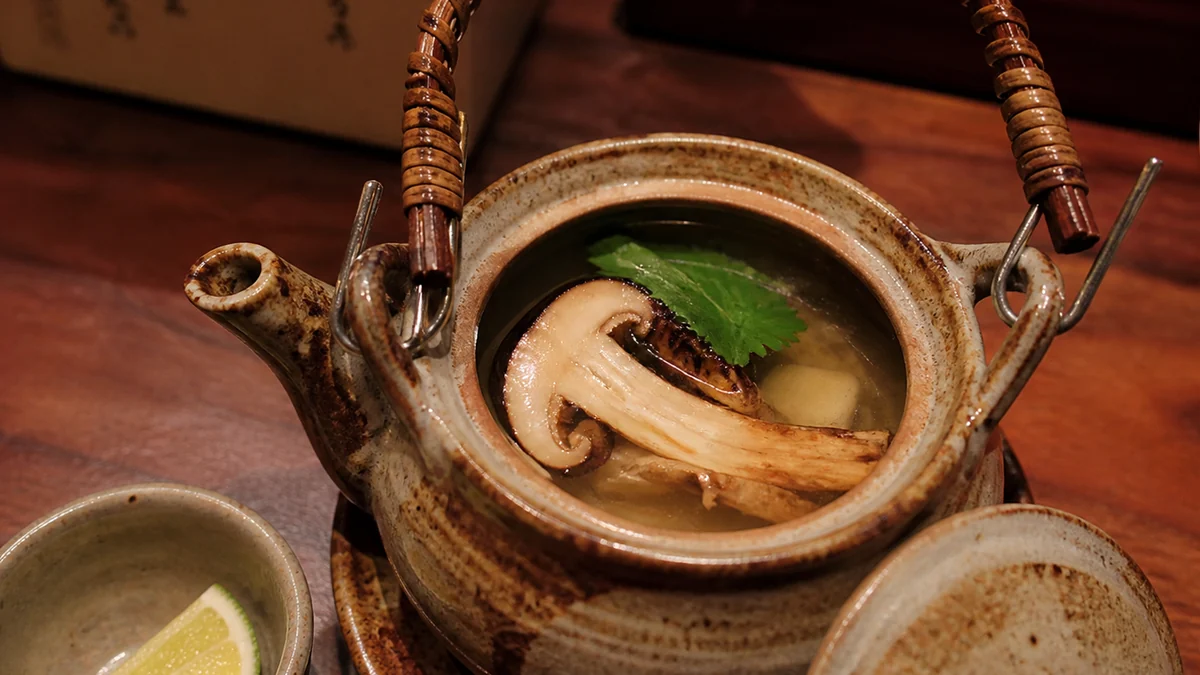
Dobin mushi is the most deliberate of the three. Matsutake and a little chicken or fish go into a small teapot of dashi, the lid goes on, and it is served with the lid still on so that the first thing the diner does is release the steam.
Matsutake gohan is the one most people would actually make at home. Torn strips cook with the rice in a covered pot, the aroma has nowhere to go except into the grain, and a small mushroom flavors a meal for four.
Only the fourth of those steps is a real discipline, since lifting a lid to check is exactly the instinct a cook has to override.

All three are containers. That is not a coincidence and it is not tradition for its own sake, since a sealed vessel is the only way to keep a volatile aroma near the food long enough to be eaten rather than smelled across a room.
Once you see it, the rule generalises. If a preparation traps steam, it suits matsutake, and if it lets steam go, it does not.
Cooking MushroomsHow to Cook Black Truffle Without Losing Its AromaWhat it actually smells like
Cinnamon, pine resin, something faintly sweet, and something a good number of people describe less kindly.
The unkind descriptions are worth repeating rather than hiding. Old socks, dirty gym kit and cheesy come up regularly in Western tasting notes, and they are describing the same compounds that Japanese writers describe as the smell of autumn.
Whether you like it is not a matter of sophistication, since a significant number of people simply do not enjoy it and learning that with an expensive mushroom in front of you is a bad way to find out.
Timing within a meal matters more than with any other mushroom here. A matsutake course served ten minutes after it left the heat has lost the part everybody was waiting for, which is why the traditional dishes all arrive covered.
Flavor, as opposed to aroma, is mild and slightly sweet with a firm crisp bite. It is a perfectly nice mushroom by itself and it is not what anybody is paying for.
The classic partners are all quiet:
- Dashi, which carries the aroma without adding anything.
- Plain rice, which is a carrier rather than a competitor.
- Sake, in the pot or in the glass.
- A little yuzu, sudachi or lemon, added at the end rather than during.
Compare it with cooking shiitake mushrooms and the difference is clear. Shiitake gets deeper and better with long cooking, and matsutake only gets quieter.
Anyone eating it more than once a season will find the figures on our matsutake nutrition record.
What not to do with it
The failures rank cleanly. What separates them is how much of the price each one wastes.
Deep frying is the worst, since batter, hot oil and several minutes remove essentially all of the aroma and leave a firm slice of something in a crust.
Cream and butter come second, because both are excellent carriers for a black trumpet and both simply cover a matsutake, the aroma being delicate where fat is loud.
Long braising is third, because a matsutake in a stew for half an hour is still there as texture while everything you were paying for went into the extractor twenty-five minutes ago.
Freezing it raw is the quiet disaster. Ice crystals rupture the surface flesh, which is where the aroma lives, and what thaws is a firm bland mushroom with a slightly watery edge.
Those four failures share a mechanism, and they rank cleanly by how much of the price each one wastes:
- Deep frying, which removes almost all of it.
- Cream and butter, which mask it.
- Long braising, which outlasts it.
- Freezing raw, which is the most expensive of the four.
Drying is not on that list because it belongs in a category of its own. Dried matsutake keeps a thin version of the aroma and is used in Japan as a stock ingredient rather than as a substitute for the fresh mushroom, which is a fair use rather than a waste.
If you must keep one beyond a few days, cook it into rice first and freeze that, since the rice holds what the mushroom would have lost.
Grades, and what you are paying for
Two matsutake that look similar can differ fourfold in price. The reason is on the underside.
| Grade | Veil | Aroma | What it costs |
|---|---|---|---|
| Top | Closed, cap still domed | Strongest | The highest price by a wide margin |
| Middle | Just breaking | Strong | Noticeably less |
| Open | Fully open, gills showing | Fading | A fraction of the top grade |
| Imported | Any of the above | Same rules apply | Well below domestic Japanese |
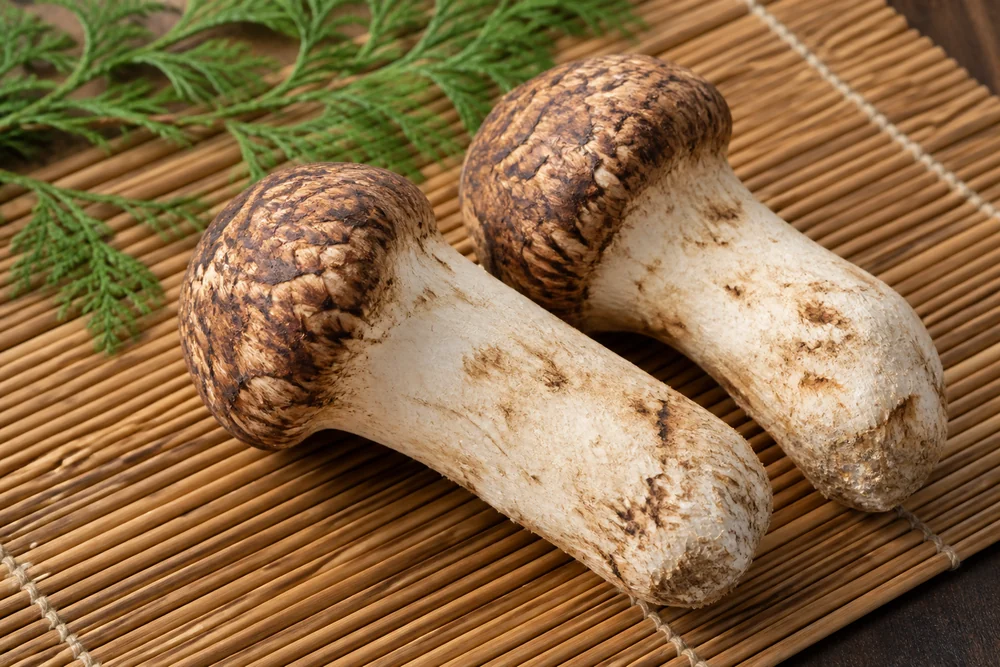
A closed veil means the mushroom has not begun to release spores, and the aroma is at its peak. That is the single biggest driver of grade, ahead of size and well ahead of appearance.
Origin is the other lever, since domestic Japanese matsutake commands several times the price of the same species imported from Korea, China, North America or Scandinavia, and much of that gap is provenance.
For eating rather than gift-giving, an open-veil mushroom is often the better buy. It has less aroma per gram and it costs a small fraction as much, so it buys more total smell for the money, which is the calculation nobody makes out loud.
Season is short and regional, and our page on matsutake season covers when the North American flush arrives, while matsutake substitutes works through what comes closest if the price has decided the matter.
Quantity per person is smaller than the price makes people assume. One medium mushroom is enough for a pot of rice for four, and two are generous for dobin mushi for the same table.
Nothing on that list is a spoilage timeline. The mushroom stays perfectly edible for a week and simply stops being worth what you paid for it.
Two mushrooms get sold as a matsutake substitute and neither really is. The North American Tricholoma species that share the name have a fraction of the aroma, and the price difference reflects that honestly rather than being a bargain anyone is missing.
Three things are worth checking on any mushroom sold as matsutake:
- Smell it through the wrapping, since the aroma should reach you before the mushroom does.
- Look at the veil, which sets the grade and most of the price.
- Press the stem, which should be firm to the point of feeling unripe.
None of those needs any expertise. A matsutake that does not smell strongly at arm's length is not worth what is being asked for it, whatever the label says.
Buy it as close to eating it as you can. Our page on storing matsutake has the detail, and the short version is that it starts spending its aroma the moment it comes out of the ground.
Sources & References
- Tricholoma matsutake, the matsutake (Fungi Atlas) Species reference used for the firm white stem, the brown fibrillose cap, the partial veil whose state defines the commercial grades, and the mycorrhizal association with pine.
- Volatile aroma compounds of Tricholoma matsutake (Journal of Agricultural and Food Chemistry) Food chemistry reference used for the volatility of the characteristic aroma compounds, their concentration near the surface, and their loss under heat and washing.
- Matsutake (Forager Chef) Cook and forager reference used for the practice of wiping rather than washing, tearing along the grain, the foil and covered-pot preparations, and the divided reactions to the aroma.