
Raw-eating advice differs between mushroom species. This one answers yes, and the yes is the reason it needs the longest identification section of any of them.
Matsutake is one of a very small number of wild mushrooms that people eat raw on purpose, sliced thin and barely dressed.
It is also confused, in the same forests, with a mushroom that causes kidney failure.
Can you eat matsutake raw?
Yes. In Japan matsutake is served raw in sashimi and sushi, and it is one of the few wild mushrooms treated that way rather than as a compromise.
The reason is aroma rather than texture.
Matsutake is bought and hunted for its smell rather than its taste, and heat takes some of that smell away. Eating it raw is the only preparation that keeps all of it.
A yes raises the bar rather than lowering it, which is worth saying plainly.
Cooking is a delay and a second look. Slicing something raw at the table removes both of those, so everything that would have been caught in the kitchen has to be caught in the woods instead.
That is not an argument against eating it raw. It is an argument for reading the rest of this page before doing it, and for knowing that one phone call is the right response to any doubt afterward.
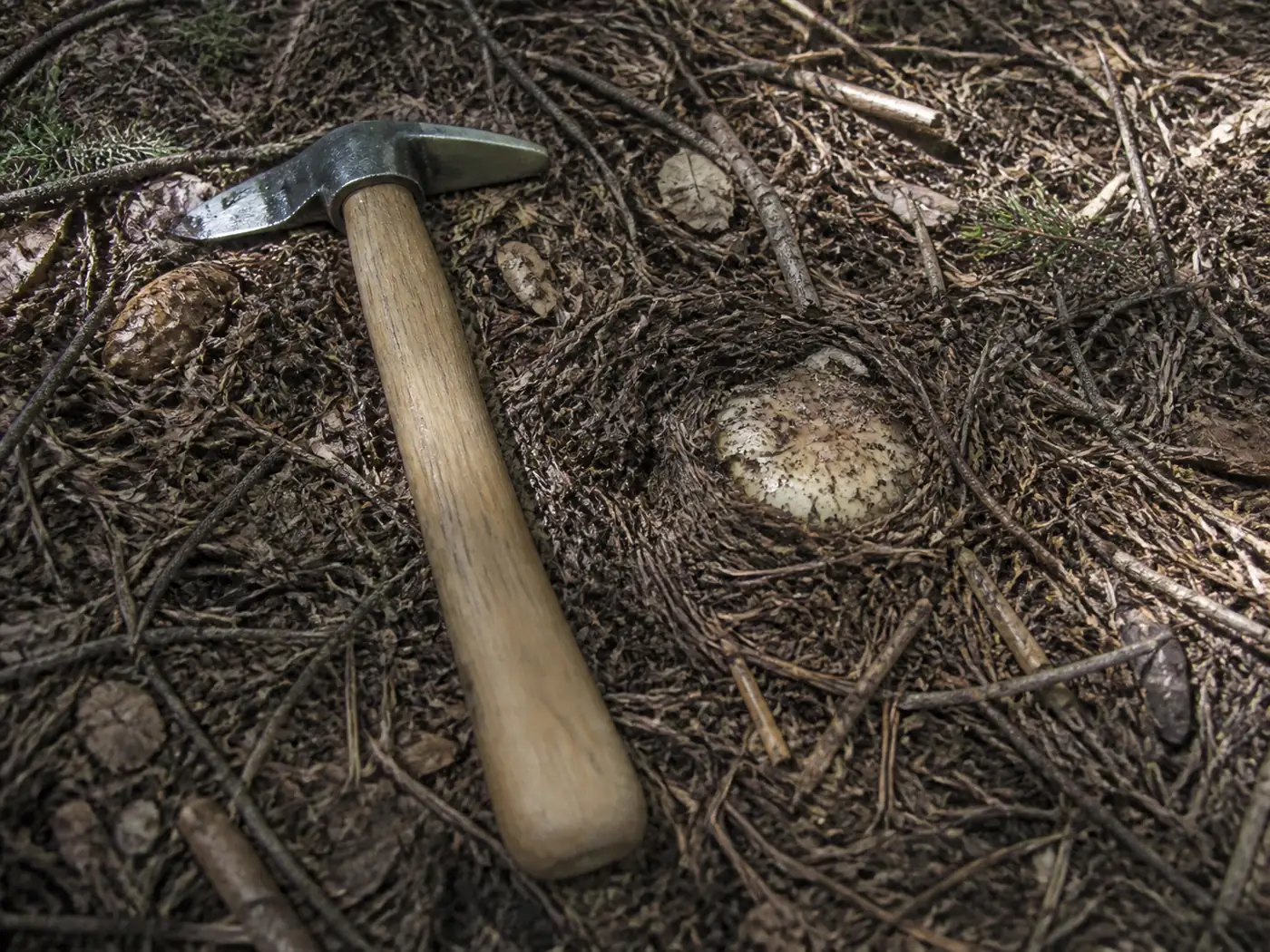
The species is rated a choice edible wherever it is written about, and it earns the rating.
It is also among the most expensive mushrooms in the world, which changes how people handle it. Nobody experiments carelessly with something that cost this much, and that instinct happens to be the correct one for a different reason.
SafetyCan You Eat Bay Bolete Raw? The Blue Stain Is Not the ReasonWhat raw keeps and what cooking takes
The trade is not subtle once it is laid out.
| Raw, sliced thin | Lightly grilled | Simmered in broth | |
|---|---|---|---|
| Aroma | All of it | Most of it | Passes into the liquid |
| Flavor | Subtle and clean | Fuller, slightly sweet | Spread through the dish |
| Texture | Firm and crisp | Yielding | Soft |
| Reported note | None | Faintly fishy | None |
The fishy note in the middle column is worth explaining rather than leaving as a curiosity.
Several sources describe cooked matsutake as picking up a faintly fishy aroma that the raw mushroom does not have. It is not spoilage and it is not a fault, but it is a change, and people who love the raw version are usually the people who dislike that change.
The smell divides people, and that is worth knowing before spending money.
Published descriptions of it include spicy, musty, fruity and like old gym socks, which are not four attempts at the same thing. Plenty of people meet a matsutake and find the smell unpleasant, and eating it raw is the version that gives them the most of it.
People who are unsure should cook their first one.
The first surprise for anybody who gets past the smell is that raw flavor is milder than cooked.
The taste is subtle where the smell is loud, so a raw slice is a quieter mouthful than a grilled one and a much louder noseful. Anybody expecting intensity on the tongue is going to be disappointed by their first slice.
That mismatch is the reason for the dressing.
Salt sharpens what little flavor there is and a good oil carries the aroma, which is why the standard treatment is those two things and nothing that would compete.
SafetyCan You Eat Beech Mushrooms Raw? Not Poisonous, Just BitterHow it is actually served raw
The preparation is short enough to give in full.
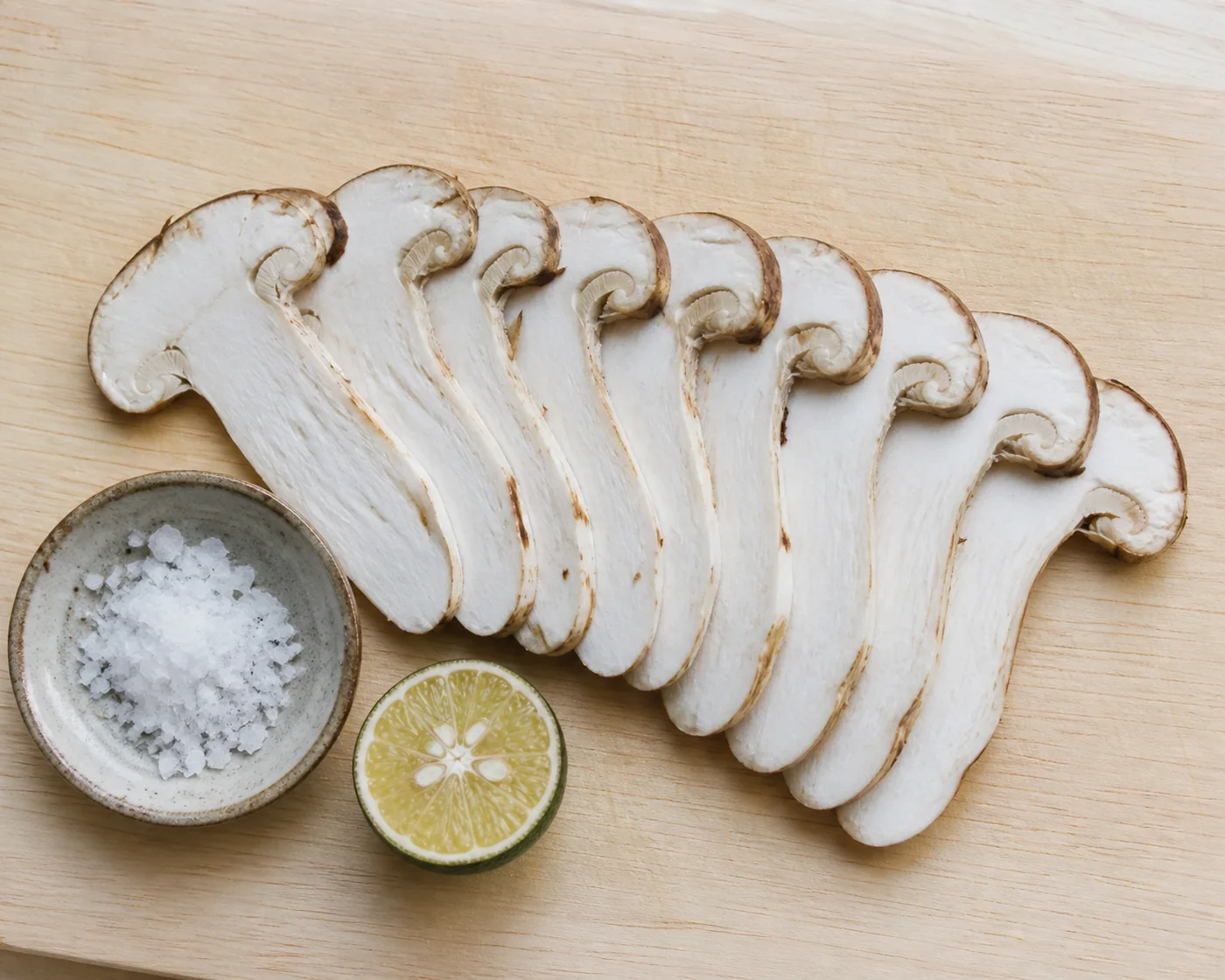
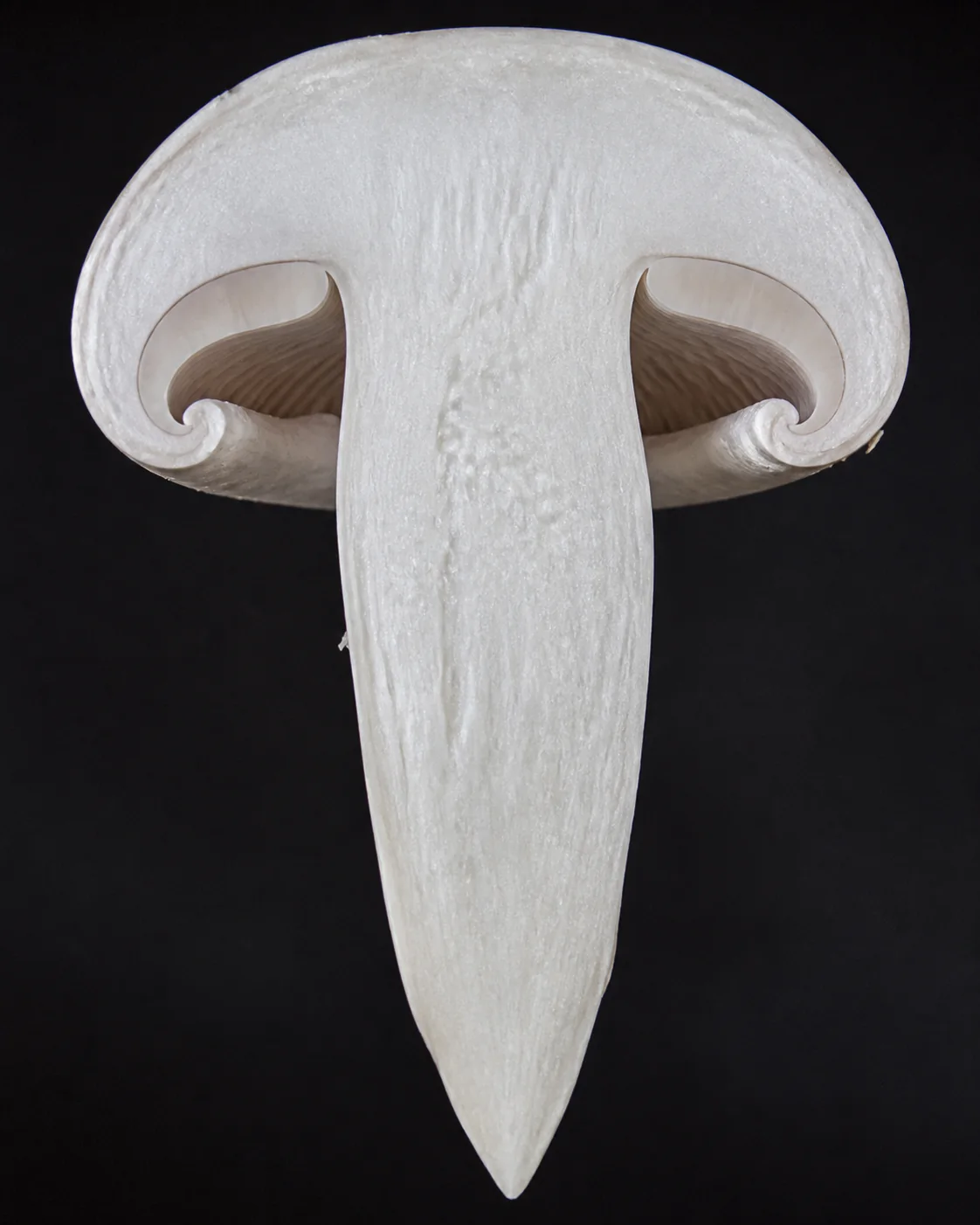
Slice the mushroom lengthwise, from the top of the cap down through the stem, as thinly as you can manage. Each slice should carry the outline of the whole mushroom in one piece, cap and stem together, which is what makes the dish look the way it does.
Thin matters more than neat here.
A thick slice of raw matsutake is a chewy, largely flavorless object, because the texture is firm and the flavor is quiet. Paper-thin slices are what make the aroma arrive before the texture does.
- Cut
- Lengthwise, through cap and stem in one piece
- Thickness
- As thin as the knife allows
- Dressing
- A good nut or seed oil and a pinch of flaky salt
- Alternative
- A squeeze of sudachi or yuzu instead of the oil
- Serving size
- One or two mushrooms for several people
- Not done
- Peeling, marinating, or anything with a strong flavor of its own
The last line of that list, about flavor, is the one people argue with.
A raw matsutake dish has nowhere to hide, so anything added with a flavor of its own becomes the dish. Soy, garlic and vinegar all do this, which is why the traditional dressings are limited to a fat and an acid and a little salt.
The skin of the matsutake stays on, and that is not laziness.
Most of the aroma sits in the outer surface of the cap and stem, so peeling a matsutake throws away the reason for buying it. The same logic rules out scrubbing it hard, which is where the cleaning argument later on comes from.
Portion sizes look mean until the aroma is in the room.
One or two matsutake will serve four or five people as a raw course, because a few thin slices carry an enormous amount of aroma. That is also, conveniently, what the price forces on most people anyway.
The other classic matsutake preparation is worth naming as a contrast.
Dobin mushi is a clear broth steamed in a small teapot with matsutake in it, poured into a cup and finished with a squeeze of sudachi. The mushroom is sliced or quartered, sprinkled with sake, and barely cooked at all, which tells you that even the cooked tradition is trying to lose as little aroma as possible.
Both preparations are arguments for restraint rather than against heat.
The mushroom that causes kidney failure
Everything above assumes the mushroom is a matsutake. Discard specimens that fail those checks.
Warning
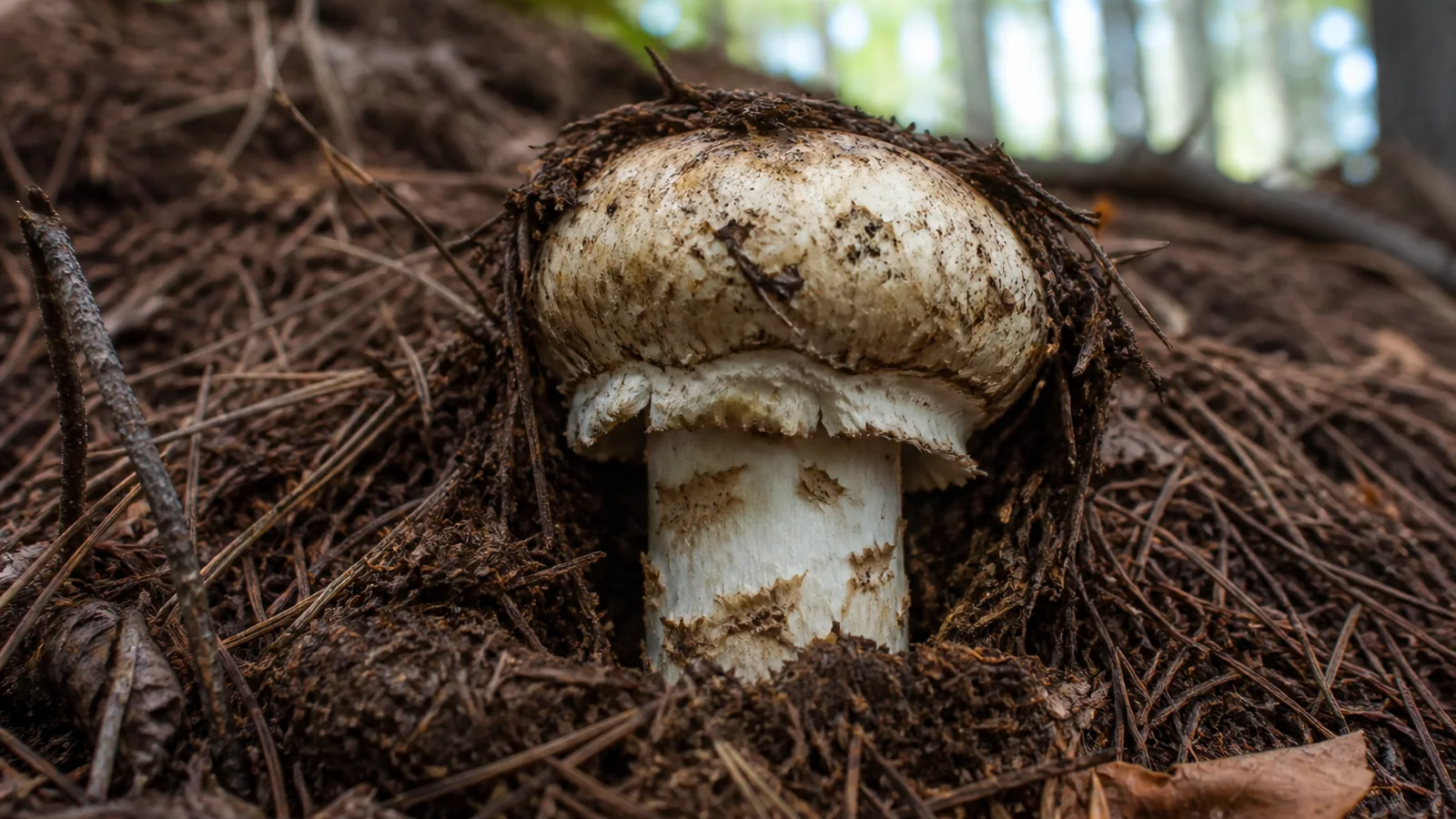
Amanita smithiana is mistaken for the pine mushroom in the same Pacific Northwest forests, at the same size, in the same color and in the same habitat. Its toxins are allenic norleucine and chlorocrotylglycine rather than amatoxins, and they attack the kidneys. Reported cases involve one to six mushrooms, including one caused by a single large cooked cap.
The timeline that mushroom produces is unusual and worth knowing on its own.
Gut symptoms arrive four to eleven hours after the meal, which is late enough that people stop connecting the two. Kidney failure then develops over the following one to four days, by which time the mushroom is long forgotten.
That delay is what makes it dangerous rather than the dose.
A poisoning that starts in fifteen minutes gets treated immediately, and one that waits most of a day gets called food poisoning and slept off. By the time it is diagnosed, hospital treatment for the renal stage can mean dialysis.
Five features separate them, and the first one is free.
Matsutake smells overwhelmingly of spice and cinnamon. A regional mycological society puts that difference in a single line.
A distinctive characteristic of the Pine Mushroom is its very strong spicy cinnamon-like smell.
A mycological society, on the separation that works before a mushroom is even picked
The same society describes the lookalike smell as an unpleasant one, like ham gone bad.
Anybody who has smelled a real matsutake once is unlikely to be fooled by that, which is exactly why the smell is worth learning before the season rather than during it.
The veil is the second separation and it is visible before anything gets smelled twice.
Amanita smithiana carries a white crumbly powdery coating on the stem and around the cap edge, and matsutake has nothing of the kind. That powder is the single most reliable thing to look for after the smell.
The stem is the third, and it is a hand test.
A matsutake stem is tough and cartilaginous and resists being crushed between finger and thumb. The lookalike's stem crushes easily, which is a difference nobody has to interpret.
The base is the fourth, and it is decided when the mushroom comes out of the ground.
Matsutake stems rise from a gray ashy layer and the whole base usually lifts out intact and tapering. Amanita smithiana is rooted deep into the mineral soil below, and its base is bulbous rather than tapered.
The fifth separation from matsutake is the strangest, and it works at a distance.
Amanitas are strongly geotropic, meaning the stem bends to keep the cap level as the mushroom grows against a slope. Matsutake does not do this, so a curved stem on a hillside is a question that needs answering.
There is a sixth test that only works on a mushroom already in the hand.
Matsutake flesh pulls apart in fibrous strings, the way string cheese does, and the Amanitas are brittle and snap instead. Tearing a small piece off a stem is a two second check and it is hard to misread.
None of this would matter if the two grew apart, and they do not.
Both come up under conifers in the same forests at the same time of year, at the same six to twelve centimeter size, in the same white to buff colors. The overlap is close enough that field guides warn about it directly rather than listing it among general cautions.
Those white Amanitas are a family worth reading about separately.
The destroying angel group and its relatives share these forests, and the poisonous species index is a better place to meet them than a basket is.
SafetyCan You Eat Beefsteak Polypore Raw? Yes, If You Slice It ThinNever soak it, whatever the cleaning guides say
The cleaning advice you will find is directly contradictory, and one side of it is wrong.
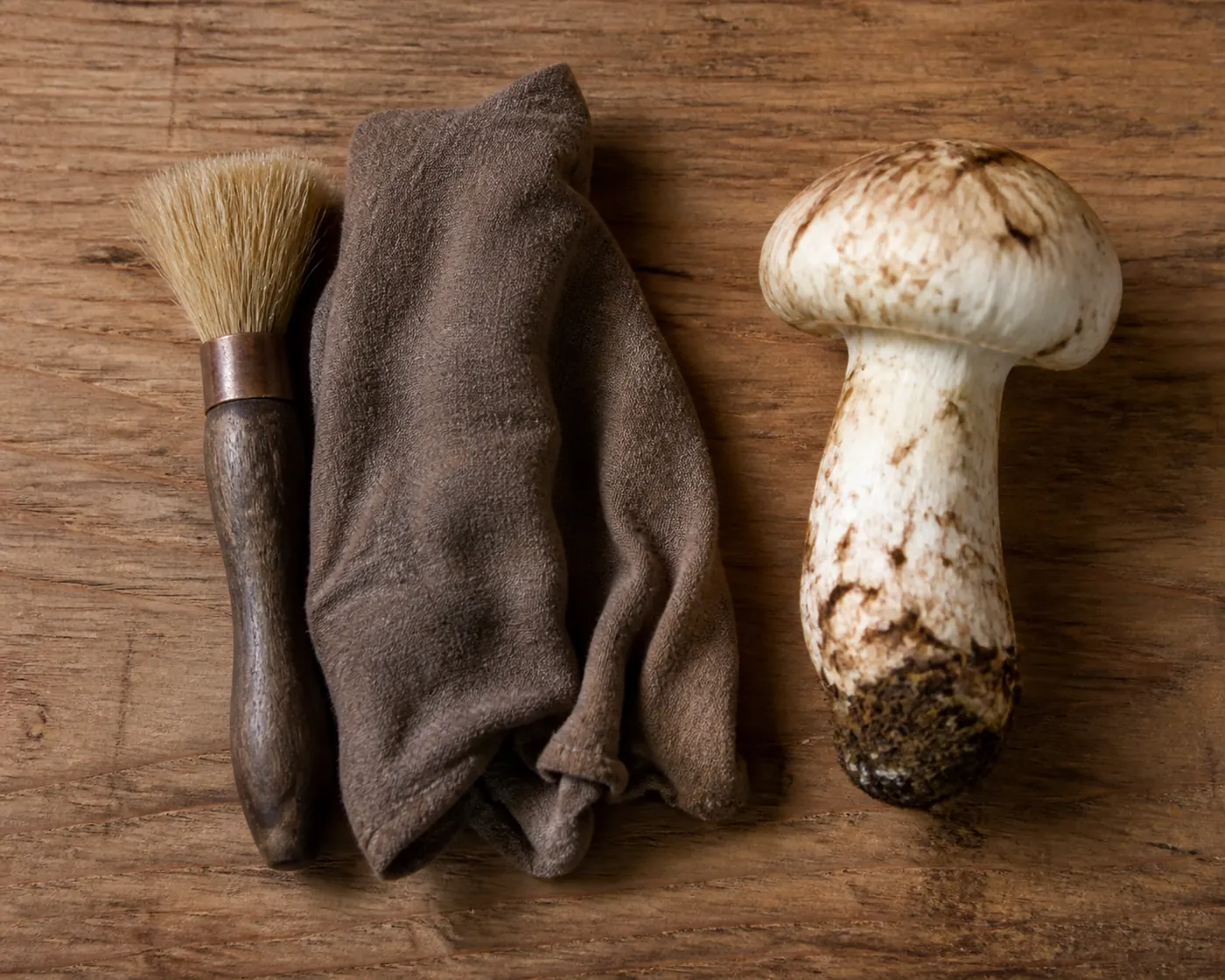
Japanese practice is a damp cloth or a soft brush and no running water at all. The mushroom is wiped gently, pressed rather than rubbed, and the skin is never scraped off, because that surface is where the aroma is concentrated.
The tough base gets handled separately.
Scrape the thin outer layer of the lower stem away with the back of a paring knife, and trim the very end diagonally, the way a pencil is sharpened. That removes the soil without removing anything worth keeping.
Against that, at least one published cleaning guide recommends soaking.
It says to soak matsutake in cold water for ten to fifteen minutes to loosen dirt trapped in the gills, then rinse thoroughly under cold running water. That advice appears on a foraging site and it is the opposite of every Japanese source and every serious cooking guide.
Soaking a matsutake is not a matter of preference here.
Soaking leaves the mushroom waterlogged, costs it its firmness, and strips out the volatile aroma the whole preparation exists to deliver. For a raw dish that is not a small loss, because there is nothing else in the dish to hide behind.
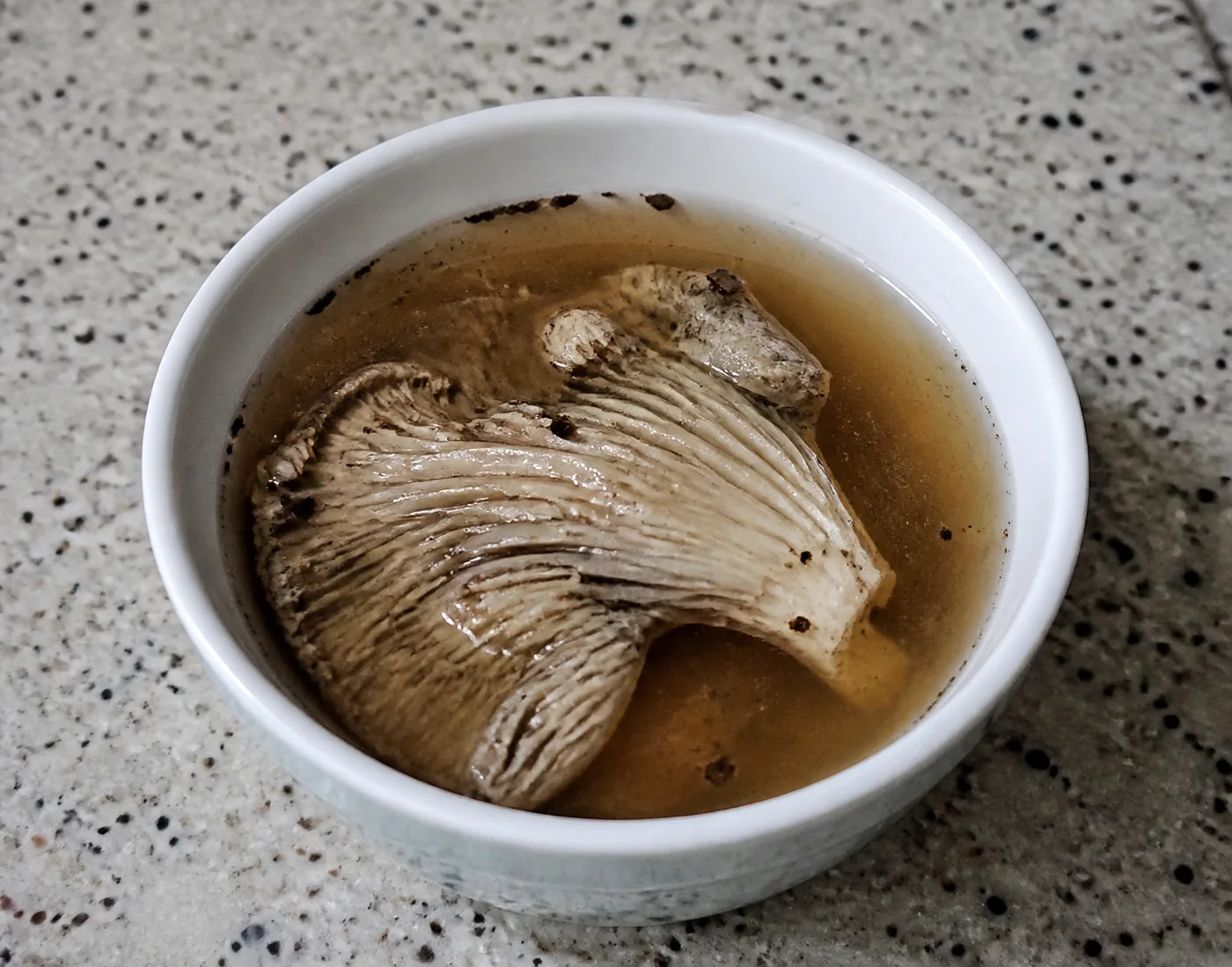
There is one more thing in that guide worth quoting, because it warns against soaking too long.
That is a fair description of the trap. Do not use soaking to rescue a mushroom that has failed the freshness checks.
There is a right answer for a mushroom that fails one check and looks fine otherwise.
It goes in a paper bag, on its own, and it gets shown to somebody who knows the species before anything else happens to it. A single doubtful mushroom kept separate costs nothing and settles the question properly.
What that doubtful mushroom must not do is go in the same bag as the good ones.
Fragments travel between mushrooms in a basket, which is reason enough on its own. More importantly, a mixed bag means the doubtful mushroom gets forgotten and cooked with the rest of them that evening.
Seven checks before anything goes in uncooked
Use the checks together before deciding whether to keep a specimen.
Failing one check is enough on its own, and that is the whole rule.
These are not seven pieces of evidence to be weighed against each other. Any single failure means the mushroom does not get eaten, and certainly does not get eaten raw, because being wrong here costs a kidney rather than an evening.
One habit that protects people elsewhere does not protect them here.
The standard advice across this cluster is to eat a small amount the first time and wait a day before eating more. Against this poisoning that produces a false all-clear, because the gut phase can start at four hours and the kidney damage begins quietly on the second day.
A small portion is still a smaller dose, which is worth something.
What it is not is a test, and treating it as one is how somebody eats the rest of the basket on day two while their kidneys are already in trouble.
Season is the check people skip, and it should not be.
The season runs through fall and into midwinter in some places, so a large white gilled mushroom found well outside that window in a pine wood deserves more suspicion than the same mushroom in October. The seasonal calendar settles that in a few seconds.
The rest of the toxic species worth knowing deserve reading before the season starts rather than during it.
That is true for every mushroom on this site and it is more true here, because the raw answer removes the step where somebody normally has time to reconsider. Learn the smell, learn the veil, and the yes at the top of this page is a good one.
Sources & References
- Amanita smithiana, Vancouver Mycological Society The source for the lookalike and the separations. States that this mushroom causes serious poisoning when mistaken for the highly desired pine mushroom, gives the toxins as allenic norleucine and chlorocrotylglycine, an onset of 4 to 11 hours with nausea, vomiting, possible diarrhea, abdominal pain, possible myalgia and delayed polyuria, oliguria and kidney failure, and cases from one to six mushrooms including one large cooked mushroom. Gives the separations directly, the pine mushroom's strong spicy cinnamon-like smell against an odor like ham gone bad, the white crumbly powdery veil on the stem and cap edge that the pine mushroom lacks, the tough cartilaginous stem against one that crushes easily, the gray ashy layer the pine mushroom lifts out of against a lookalike rooted deep in mineral soil, and the strong geotropism that bends Amanita stems and does not occur in pine mushrooms.
- The Highly Prized Matsutake Mushroom, Eat The Planet The source for the aroma descriptions and the string cheese test. Describes the aroma as spicy, musty, fruity or like old gym socks, notes that the flesh peels similar to string cheese, states that they can be eaten raw or cooked but are best prepared simply so as not to destroy the aroma, and names Amanita bisporigera, ocreata, phalloides, smithiana and silvicola as lookalikes separated by the absence of the matsutake aroma, more brittle flesh and a bulbous base rather than a tapering one.
- Matsutake Mushroom, Lively Table States that in Japan matsutake mushrooms are enjoyed raw in sashimi or sushi dishes, that the smell is strong and spicy and that cooked they have a bit of a fishy aroma, and then advises wiping them with a damp cloth or giving them a quick rinse in cold water.
- From Farm to Fork, The Definitive Matsutake Guide, Forward Plant Gives grilling, steaming, broths and sauteing across 13 headings, advises against washing under running water because it diminishes the fragrance and makes the mushroom waterlogged, recommending a soft brush or damp cloth instead, and contains no lookalike warning and no mention of raw.
- How to Clean Matsutake Mushrooms, Foraged The source of the contradicting cleaning advice quoted here. Recommends soaking the mushrooms in cold water for 10 to 15 minutes to loosen dirt trapped in the gills and then rinsing thoroughly under cold running water, while also warning that soaking them for too long causes them to absorb too much water and compromises texture and flavor.
- Matsutake Dobin Mushi, preparation practice The source for the Japanese handling. Gives wiping with a soft damp cloth without rubbing or peeling the skin because that is where most of the aroma is concentrated, scraping the thin outer layer of the stem with the back of a paring knife, trimming the tough stem end diagonally, slicing lengthwise, sprinkling with sake, and finishing the steamed broth with a squeeze of sudachi or yuzu.