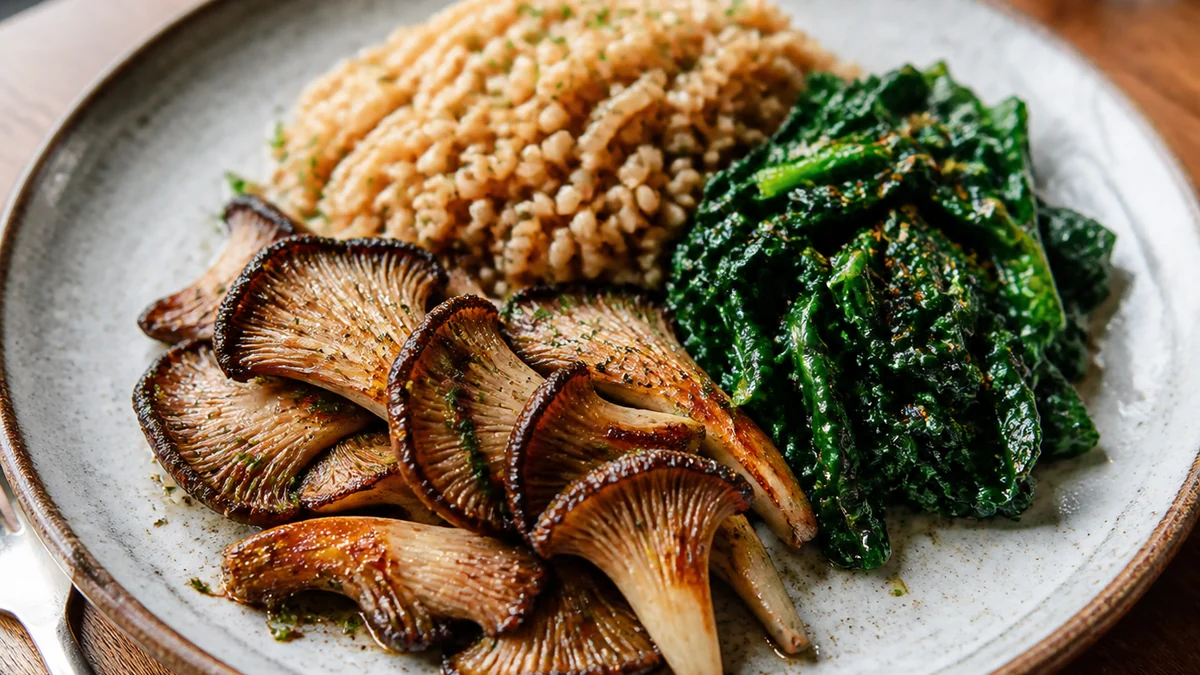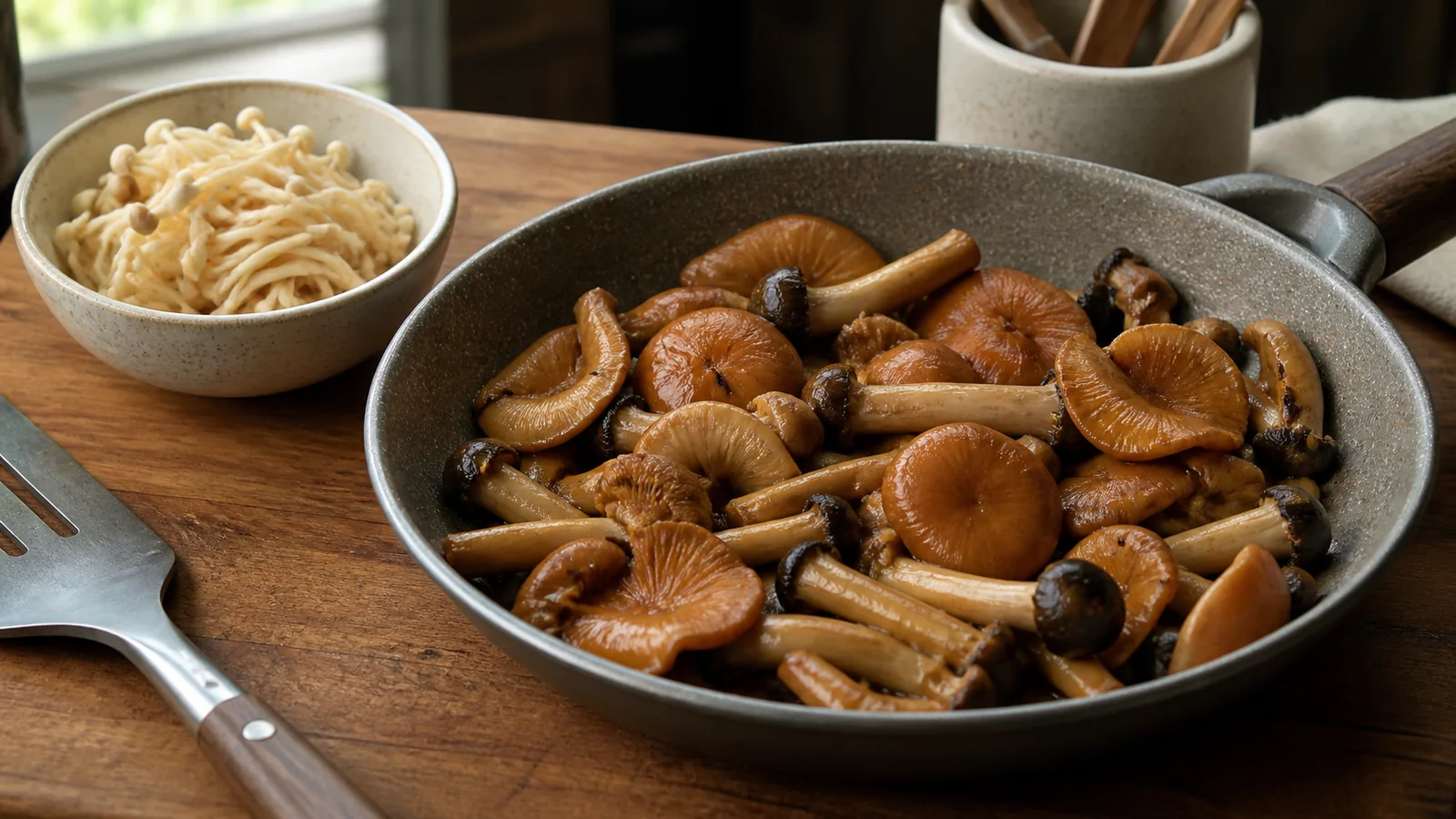
Verified wild velvet shank and packaged cultivated enoki need different trimming, but both benefit from thorough cooking. Keep raw retail clusters away from ready-to-eat food and never use cooking as an identification test for a wild collection.
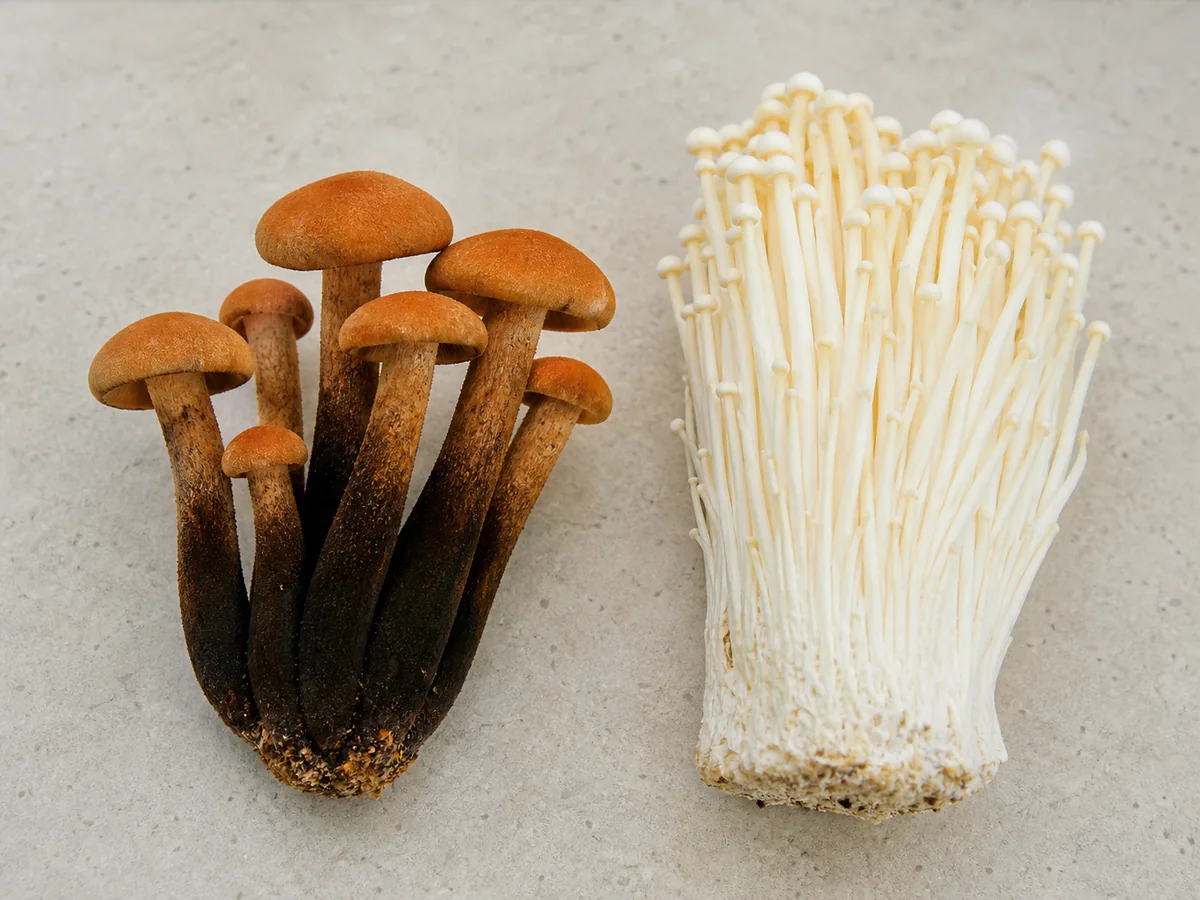
Velvet shank can reach the kitchen as a verified wild cluster with orange-brown caps and dark velvety stem bases, or as a packaged bundle of long pale enoki.
Those forms need different trimming and handling before they share one firm rule, cook them thoroughly.
Do not use a recipe to identify a wild collection. For packaged enoki, contain raw contact from wrapper to sink, then clean the work area before cooked food returns.
Name the form before choosing a knife
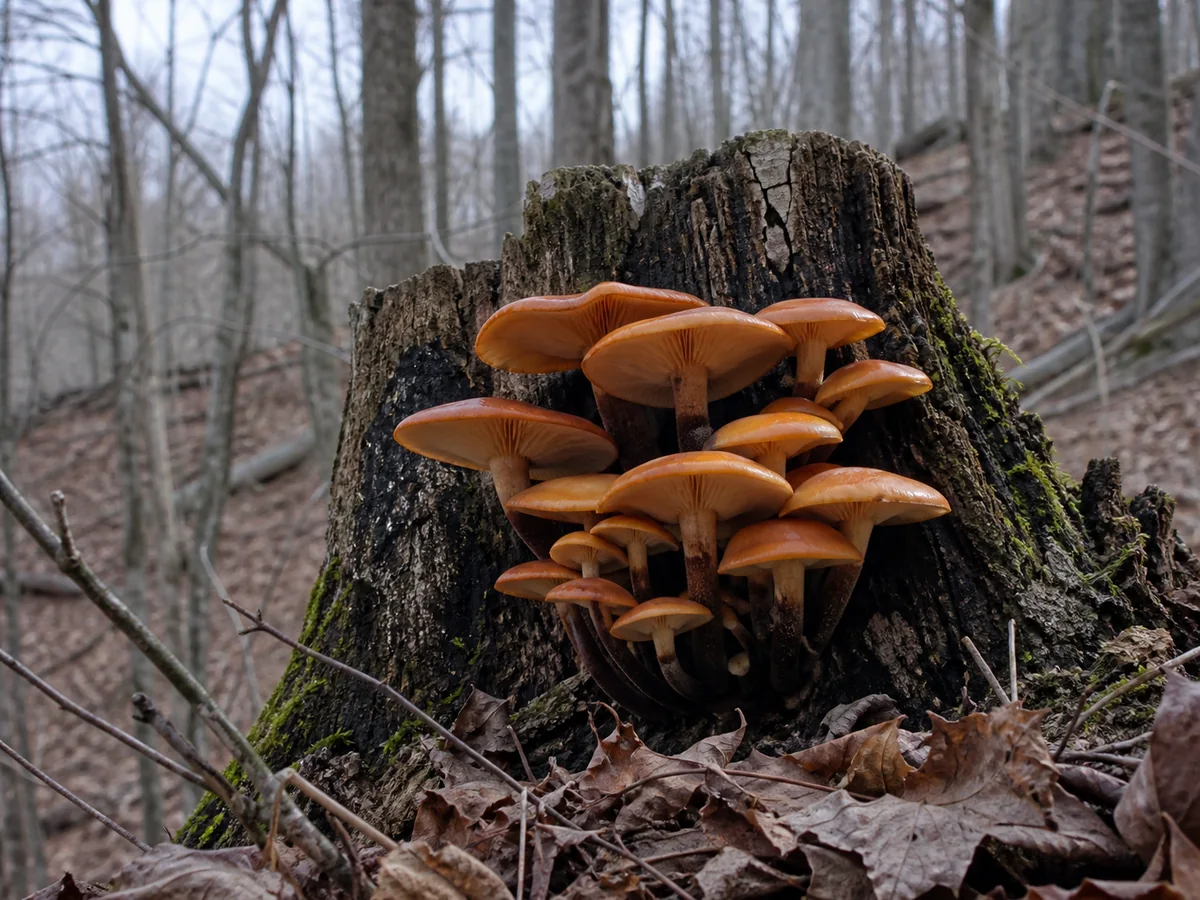
Wild velvet shank commonly refers to Flammulina velutipes, a wood-growing mushroom whose mature stem becomes dark and velvety toward the base.
Cultivated enoki sold in tight pale bundles belongs within the broader Flammulina food group, but its compressed root end and long fine stems create a different prep job.
Source and form decide the first cut because a verified wild cluster is separated cap by cap while a retail cluster stays together long enough to remove its compact base cleanly.
Read the package before opening it because a recall notice or cooking instruction overrides a general method. Discard a pack that is swollen, leaking, slimy, sour-smelling, or past a relevant recall instruction.
Keep the product label until the meal is complete because it preserves the producer, lot, origin, and date information needed if a recall or illness question appears later.
A wild collection needs a reliable identification completed before it reaches the board. The cooking method begins only after that safety decision has been made by someone qualified to make it.
Do not combine separate wild collections in one bowl. Keeping batches apart preserves the connection between each specimen, its substrate, and the identification that cleared it.
| Material | Useful part | First preparation |
|---|---|---|
| Verified wild velvet shank | Sound caps and tender upper stems | Separate, inspect, and bend-test each stem |
| Packaged cultivated enoki | Clean separated stems and caps | Cut off compressed base while bundled |
| Unknown wild cluster | None for the kitchen | Stop and seek expert identification |
| Recalled or spoiled retail pack | None | Follow recall or disposal instructions |
This source split keeps retail food-safety controls from being mistaken for a wild identification method.
A saucepan cannot settle a wild identity
Velvet shank has dangerous wild lookalikes, including the deadly funeral bell.
Browning, boiling, smell, taste, or a change in water color cannot prove which species entered the pot.
Do not sample a small bite as an identification test. A toxin does not need to produce an immediate taste or sensation to cause severe harm later.
Photography can support an expert discussion, but a single cap photograph omits the substrate, stem surface, gills, attachment, spore evidence, and full cluster context. Keep the intact collection available for examination and keep it away from food.
This stop rule also applies when a friend supplies a bag labeled only with a common name. Confidence from the collector does not replace the missing evidence once stems, substrate, and cluster arrangement have been discarded.
Warning
Never cook a wild mushroom merely because it resembles cultivated enoki or a photograph of velvet shank. Obtain an expert local identification first.
Heat changes texture, not identity, so the correct cooking time is zero when the name remains uncertain.
Trim by bend, not by color alone
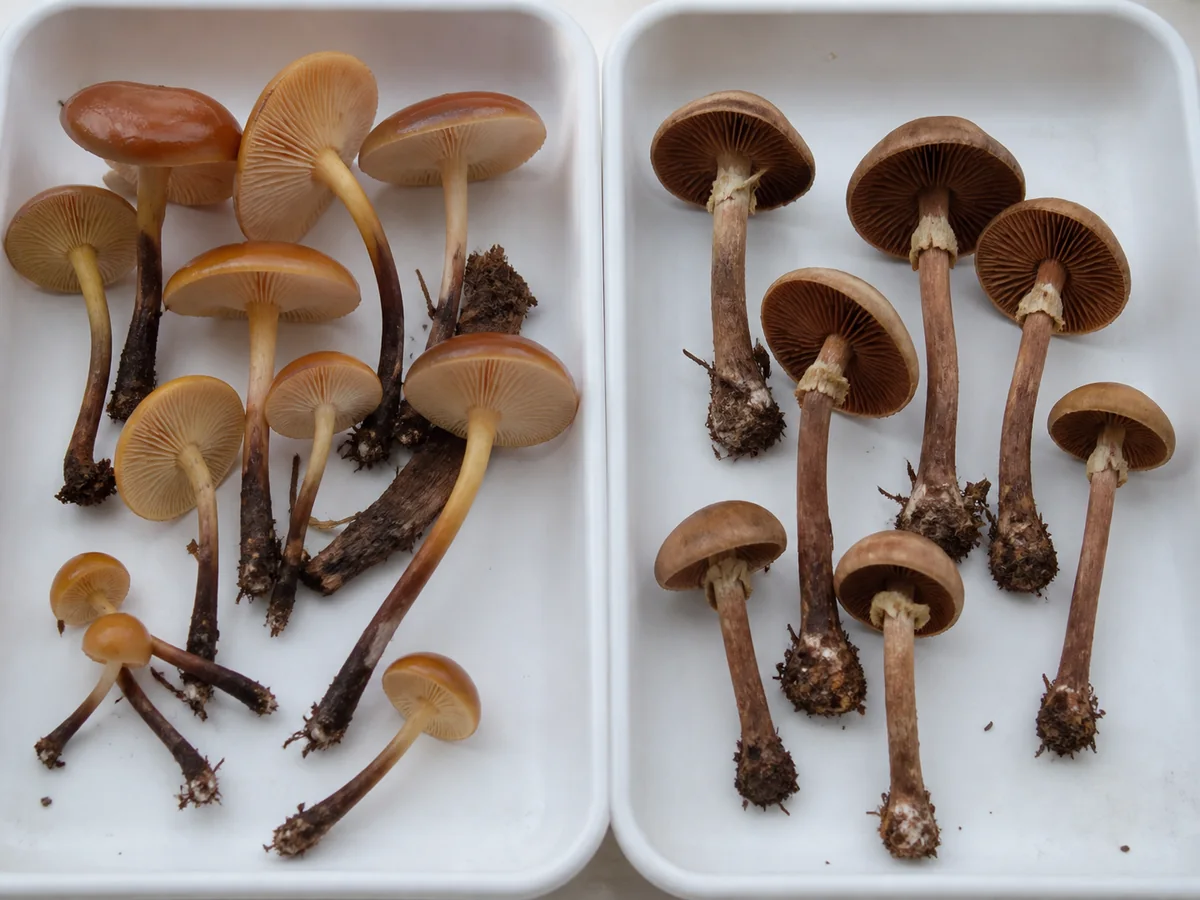
The dark lower stem of a mature wild velvet shank can remain fibrous after the cap is tender.
Color helps locate that region, but a gentle bend gives better information about where supple tissue changes to a stringy base.
Hold the cleaned stem near the cap and bend it gradually lower down. Keep the portion that flexes and snaps cleanly, then trim the part that folds like cord or resists the knife.
Young wild stems may stay tender farther toward the base, while older clusters need a larger cut when dryness and maturity extend the tough zone upward.
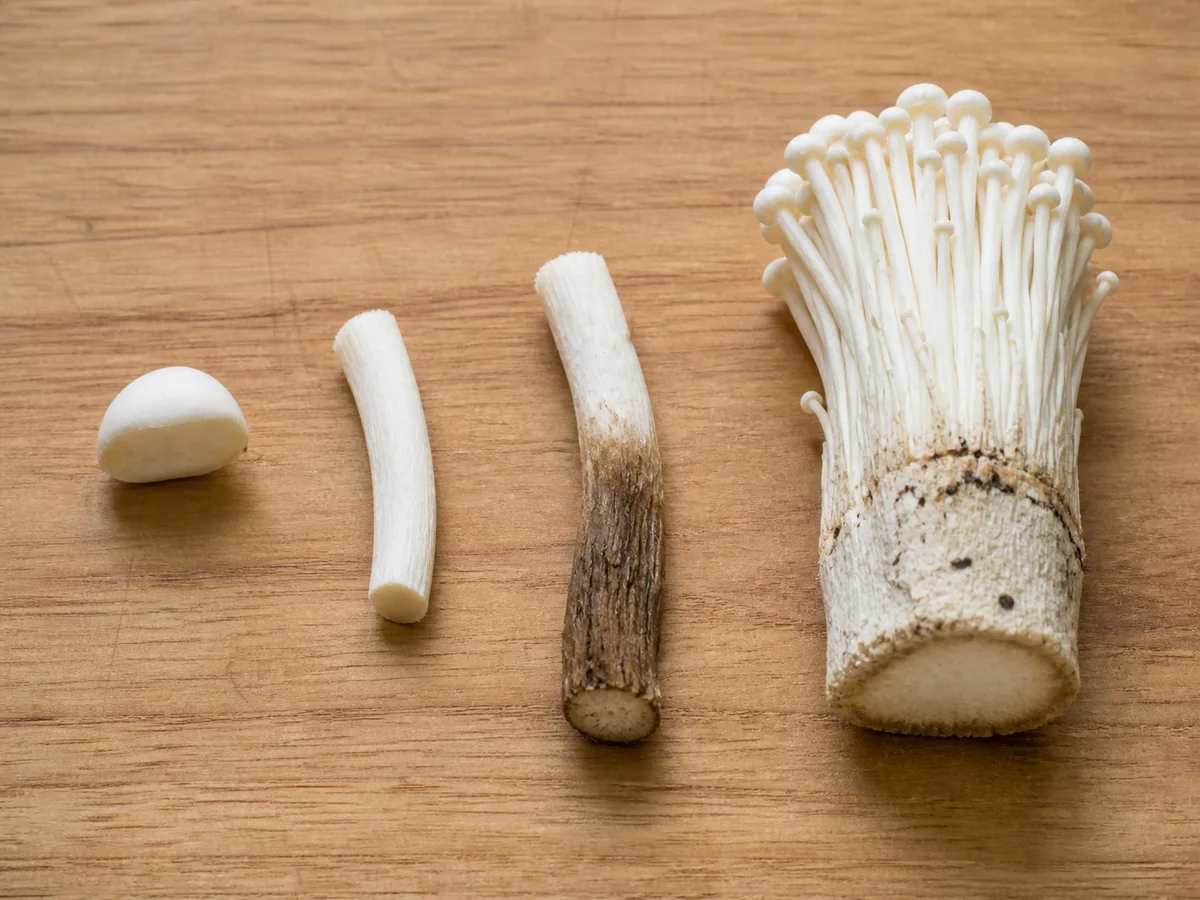
For packaged enoki, leave the bundle wrapped or held together and slice across the compact root mass above any discolored or debris-filled tissue. Separate the remaining stems with clean fingers so heat can reach the center.
Use the trim test in this order:
- Remove the compact retail base before separating strands.
- Bend each verified wild stem from the cap downward.
- Keep the portion that flexes and cuts cleanly.
- Reject internal slime or sour odor rather than trimming around it.
Inspect the newly cut base before pulling the cluster apart. Dark wet channels or sour odor inside the bundle can reveal deterioration that was invisible through the wrapper.
Reset the raw zone before the pan heats
FDA outbreak guidance treats raw packaged enoki as a cross-contamination concern as well as an ingredient that needs thorough cooking.
Plan its path so a wrapper, cluster base, rinse water, or used knife does not touch salad, garnish, bread, or a finished plate.
Open the package beside the sink, cut the base on a dedicated board, and move the usable strands into a clean bowl. Put the wrapper and base into the waste before rinsing so they do not travel around the counter.
Rinse briefly under cool running water only when debris remains, then drain immediately. Washing removes visible material but does not replace cooking.
Wash hands with soap and clean the knife, board, sink rim, faucet handle, and nearby work surface. Use a fresh towel and clean utensils for the cooked mushrooms.
Note
The highest-risk oversights are objects touched between opening and handwashing.
- Refrigerator and drawer handles
- Faucet controls and soap dispenser
- Spice jars opened with raw-product hands
- Phone or camera used during preparation
Clean every contacted hard surface before service, and replace a contaminated cloth instead of spreading rinse water over a larger area.
The reset happens before cooked food returns, preventing a well-heated cluster from landing back on a contaminated board.
Dry pieces before they meet fat
Separated mushrooms heat more evenly than a dense cluster because steam can move between the stems. Spread them on a clean towel and blot surface water rather than twisting the delicate caps.
Wild caps can be left whole when small, while larger caps may be halved so their thickness matches. Keep tender stem pieces near the same length to reduce the chance of scorched tips beside cool thick pieces.
A crowded sauté pan traps released water and lowers surface temperature, so use batches or a wide pan when the goal is light browning rather than a soft braise.
Add only enough oil to coat the pan, then arrange one loose layer. Once the mushrooms release moisture, turn them so both surfaces meet heat and continue until the raw rigidity has gone.
Before the pan heats, confirm three texture controls:
- Thick caps are halved to match the batch.
- Dense retail bundles are fully separated.
- Surface water no longer beads between the stems.
Season after the released water begins to evaporate. Early salty sauces add liquid and can hide a cool compact center inside a mound of stems.
Drying improves texture and reduces splatter, but it does not make a raw product safe. The center still needs sufficient heat and time.
Cooking MushroomsHow to Cook Black Truffle Without Losing Its AromaPan and soup methods solve different textures
For sautéing, heat a wide pan over medium heat, add a thin film of oil, and spread the mushrooms in one layer.
Cook until they release moisture, soften fully, and become steaming hot throughout, then season and allow light browning at the edges.
Do not chase a dark crust while the center of a bundled cluster remains cool. Separate strands first and adjust the batch size so every piece has direct access to heat.
For soup, bring the broth to an active simmer before adding separated mushrooms and keep it simmering until the stems are tender, then serve with a clean ladle rather than the raw-prep utensil.
Wild caps become silky and the usable stem sections should bite cleanly without stringing. Cultivated stems lose their stiff raw snap and become supple, but they can retain a pleasant chew.
Thick wild caps may need a splash of water and a brief covered interval after browning begins. Remove the lid again so that added moisture can evaporate before seasoning.
- Pan cue
- Released water has cooked away and every piece is tender
- Soup cue
- Broth returned to a steady simmer and stems bend easily
- Service cue
- Cooked mushrooms touch only clean utensils and plates
Doneness combines heat and texture because visible steam is weak evidence when a cold compact center has never been separated.

The habitat explains the wild shape
Wild velvet shank develops in exposed clusters on hardwood during cool weather, so light, air, and its wood substrate shape a compact brown cap and a toughening dark stem base.
Retail cultivation produces the familiar long pale form under controlled conditions.
That difference explains why recipes written for enoki strands may mishandle a mature wild stem. It also explains why a photograph of supermarket enoki is a poor identification shortcut for a brown wild cluster.
The habitat belongs in the kitchen only as context from a verified collection. Wood type, season, and cluster form support identification work, but no single feature provides a cooking permission slip.
One trim rule cannot serve both forms because cultivation changes the stem length, color, cluster density, and base presented to the cook.
Serve only after identity, separation, and heat agree
The final check has three parts. The wild species must already be verified or the retail product properly labeled, raw contact must be contained and cleaned, and every separated piece must be thoroughly cooked.
If one gate fails, more seasoning does not solve it. Unknown wild material stays out, a recalled pack follows the recall, and a contaminated cooked plate is replaced after the work area is cleaned.
Taste for texture only after the mushrooms are fully cooked. Add acid, herbs, butter, or soy at the end so the final seasoning does not distract from the safety sequence.
- Identity
- Verified wild collection or sound labeled retail product
- Separation
- Fibrous base removed and dense clusters opened
- Heat
- Tender and steaming hot throughout
- Service
- Clean plate and clean utensil after the raw-zone reset