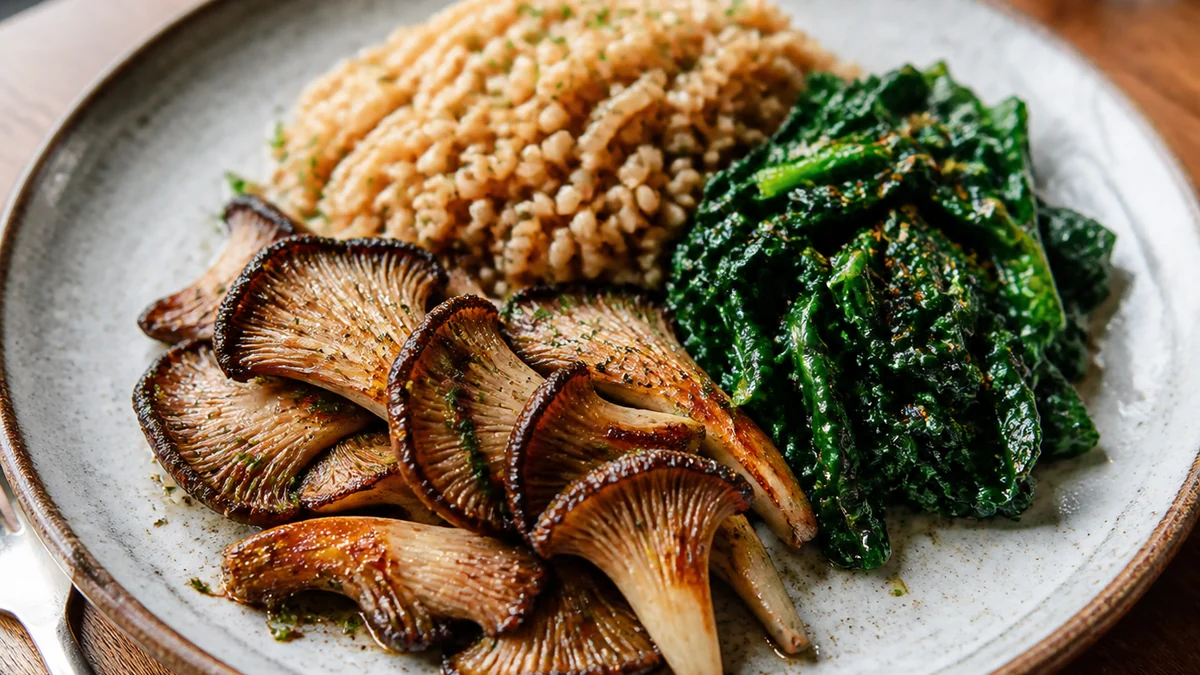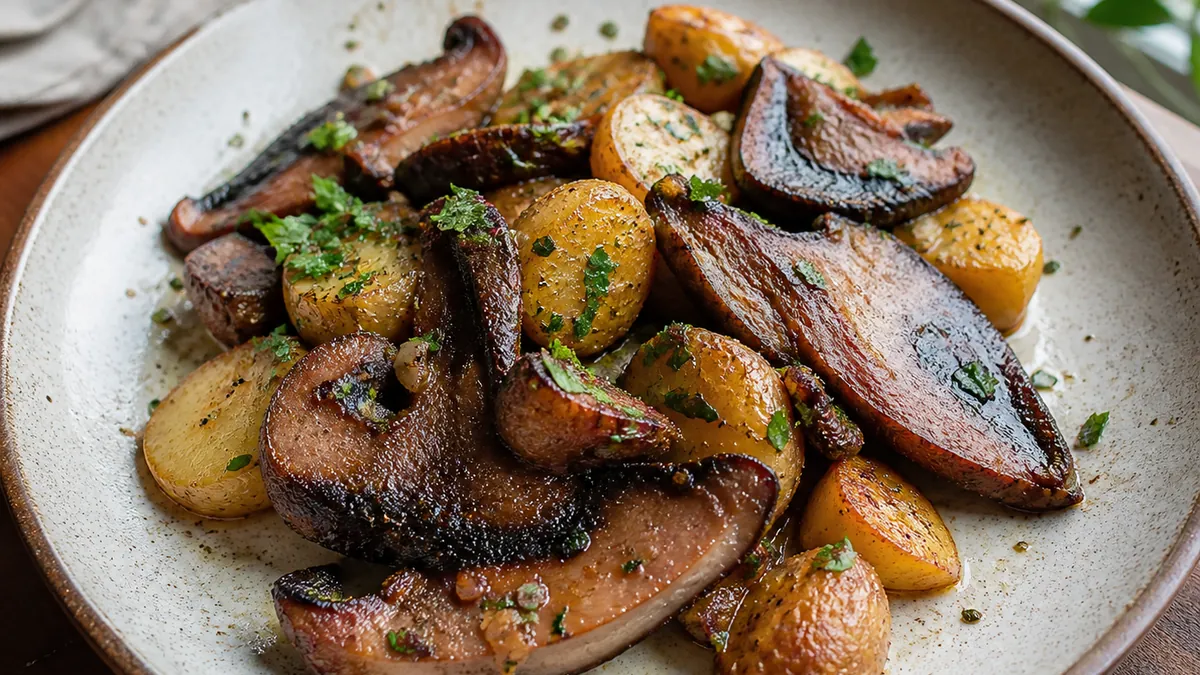
A wine cap changes from a dense pale button to a soft dark-gilled open cap in about three days, and the two stages want opposite methods. Slice buttons thick and sear or roast them hard, and send open caps to soups, stews or a duxelles where softness is no fault.
You went out to the bed this morning and came back with a basket holding two quite different mushrooms, some of them tight wine-red buttons and some flat plates the size of a hand.
They are the same species and about three days apart, and they want opposite treatment.
It is two mushrooms, not one
Nobody says this, which is why wine caps have a reputation for being inconsistent.
Only the last of those four is a genuine loss, and even that one has a use. The other three are all worth cooking, just not in the same way.
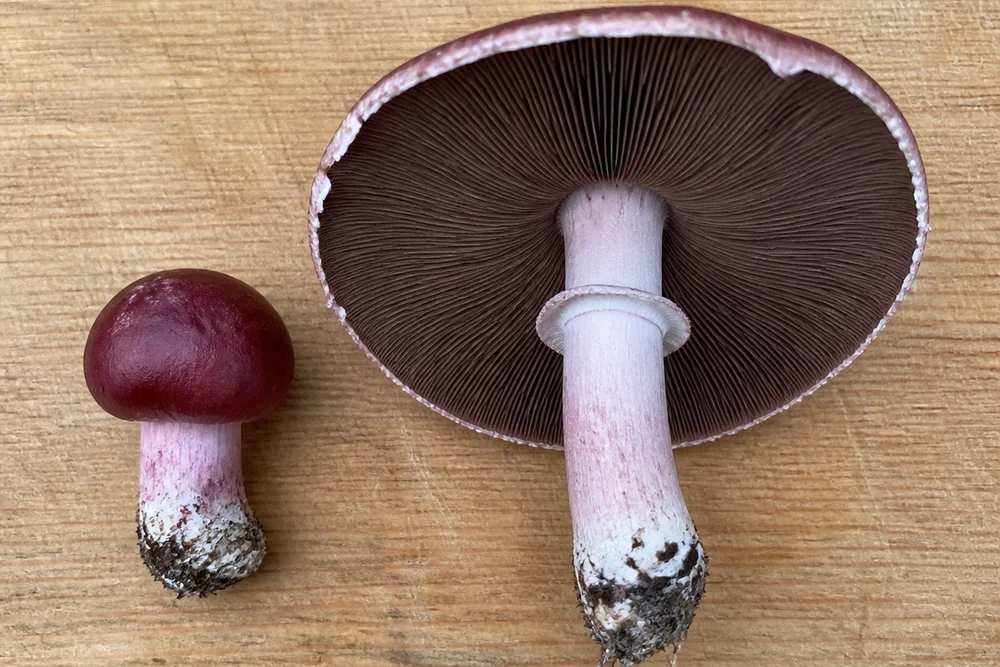
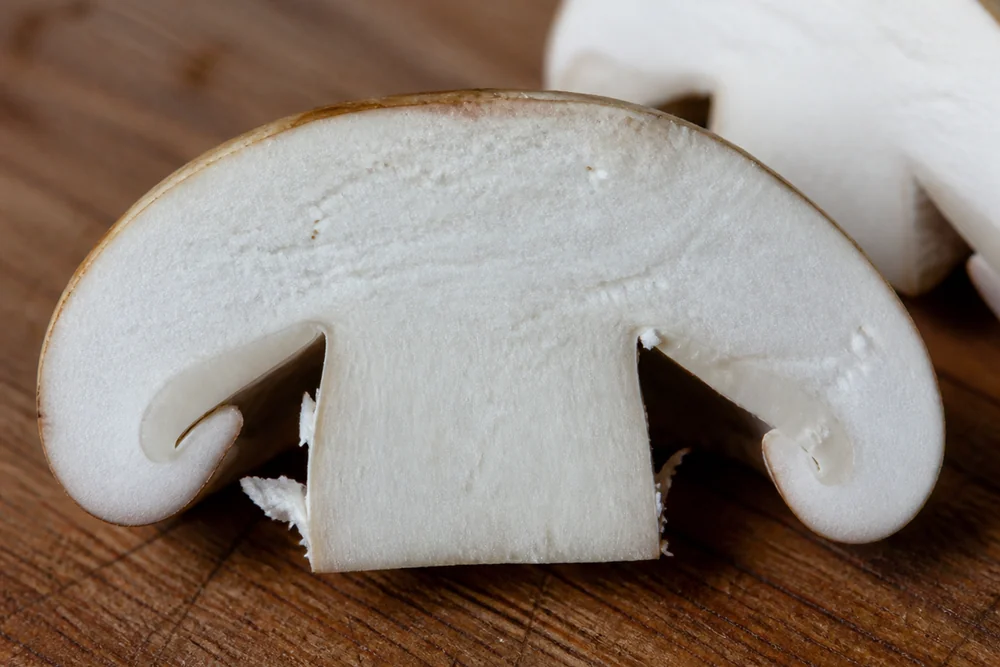
A closed button is dense and pale the whole way through, with flesh that resists a knife and a cut face that looks more like a root vegetable than a mushroom.
An open cap two or three days later is a different object, with thinner flesh, gills darkened from gray to near black, and a body soft enough to tear by hand.
Warm wet weather moves them from one state to the other in under two days, which is why a bed produces both at once.
Age is the only variable that matters here, and everything else about the wine cap mushroom profile is background to it. Outside a garden the same two stages turn up in woodchip landscaping, which is where foraging wine caps picks the subject up.
Sorting the basket by stage is the first thing to do, before washing, slicing or deciding on a dish. Everything below assumes you have two piles.
Cooking MushroomsHow to Cook Cauliflower Mushroom Without Trapping GritCooking the buttons
This is the stage that makes the species worth growing.
The third step reads oddly if you are used to oyster mushrooms. A wine cap button holds its water rather than dumping it, so a crowded pan gives you pale mushrooms instead of a puddle.
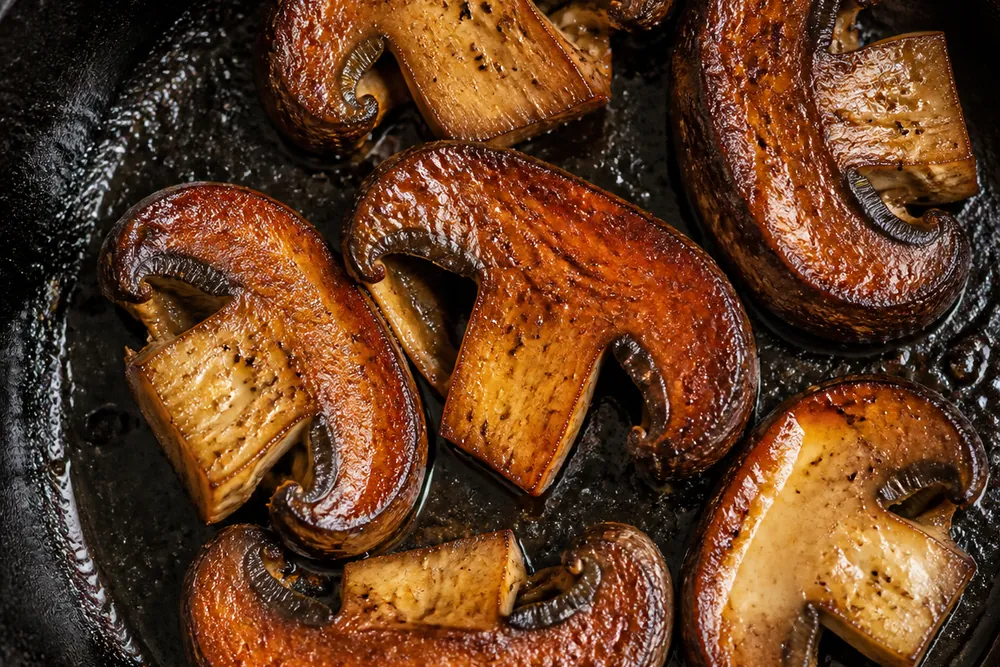
Three things separate a button from every other cultivated mushroom in the pan:
- It holds its water rather than releasing it, so a crowded pan goes pale rather than wet.
- It keeps its shape through a full sear and a turn.
- It takes a crust, which almost no gilled mushroom of that size does.
Oil matters less here than with a thin mushroom. A button releases very little water, so a dry pan will brown it perfectly well and the fat is there for flavor rather than for heat transfer.
Roasting works just as well and is better for a large quantity. Halve or quarter them, toss in oil, and give them twenty minutes at a high heat with one turn halfway.
The comparison that fits is a waxy potato rather than a mushroom, since buttons stay in distinct pieces, take a crust, and hold up where a soft mushroom would disappear.
Both methods want more heat than feels right at first. A wine cap does not shrink dramatically or spit the way a thinner mushroom does, so the pan looks calm long after it should have been turned up.
Undercooked they are simply bland, which is the commonest disappointment with this species. Give them real color and the flavor arrives with it.
Raw is not on the table, incidentally, which our page on eating wine caps raw covers properly.
Cooking the open caps
The big flat ones are not past it. They are a different ingredient, and the mistake is trying to sear them.
Key takeaway
An open wine cap will never brown the way a button does, because the flesh has already thinned and softened. Put it where softness is an advantage instead, which means soup, stew, or anything minced.
Sliced into a stew they hold together for the first twenty minutes and then relax into it, which is what a wet dish wants and which buttons never do because they stay firm and give nothing up.
Minced is the other direction worth taking. A chopped open cap gives a stuffing, a pie filling or a ragu something a button cannot, because it breaks down and carries flavor through the whole dish rather than sitting in it as pieces.
Long cooking is where they beat a button outright. Left in a stew for an hour, an open cap softens into something that carries the sauce, while a button is still sitting there as a firm cube long after everything around it has come together.
The dark gills are the one real drawback, and only in pale dishes, since a handful of open caps will turn a cream sauce gray within minutes.
Scraping the gills out with a teaspoon fixes it. You lose a little flavor and gain a dish that looks like it was meant to.

A duxelles is where the largest caps genuinely belong, chopped fine and cooked down with shallot until nearly dry, concentrating into something with far more flavor than the fresh mushroom ever had.
Woodchips make them dirty
Wine caps push up through mulch, so the cap arrives wet with chips and soil stuck to it. This is not a species where the usual advice about never washing survives contact with reality.
| Situation | What to do | Why |
|---|---|---|
| Chips stuck to a wet button cap | Wipe, or rinse briefly | The flesh is dense enough to take it |
| Soil at the stem base | Cut it off | Faster than cleaning and loses nothing |
| Grit in the gills of an open cap | Rinse, or scrape the gills out | It will not brush out, ever |
| A cap that is merely dusty | Brush it | No water needed |
Our guide to cleaning mushrooms makes the general case against water and it holds for most species, though a button wine cap is dense enough to be an exception and a gritty open cap gives you no other option.
Cutting the stem base off is the move that solves most of it in one go. That is where the mulch actually clings, and there is nothing there worth saving.
Drying afterwards still matters. Ten minutes on a towel before the pan, or the sear you were planning turns into a steam.
Cooking MushroomsHow to Cook Black Morels: Halve Them, Never Slice ThemThe stems change with the cap
The stem follows the cap through the same three days, and it changes more dramatically.
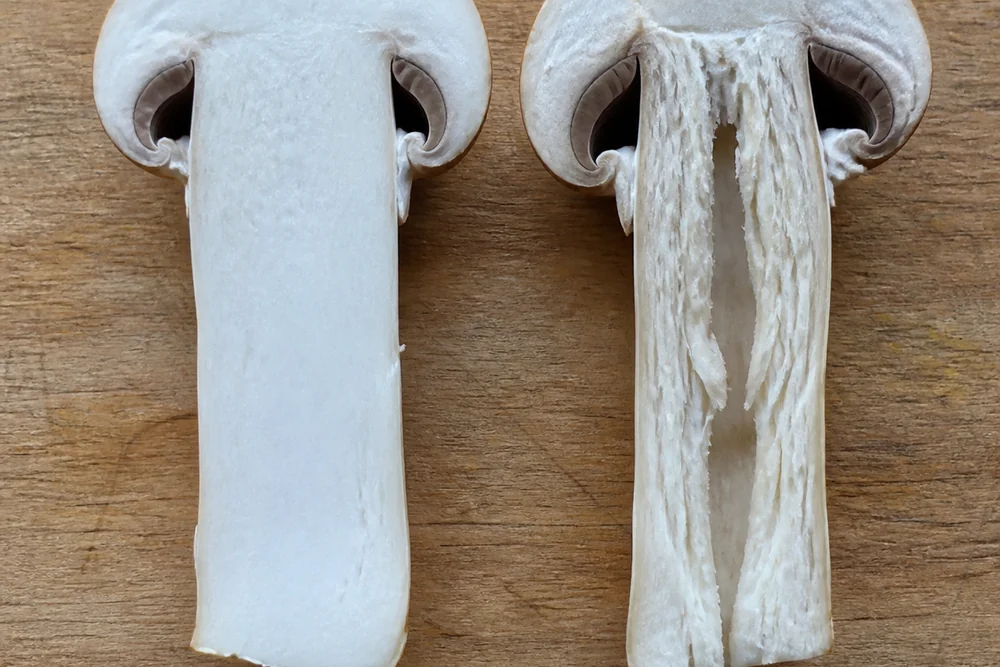
A button stem is solid, white and as dense as the cap above it, which means it slices into the same discs and sears the same way. There is no reason to separate the two.
Cut a mature stem lengthwise and it has usually gone hollow and stringy in the middle. That flesh does not soften with cooking and it will not brown, so a slice of it in an otherwise good pan is a piece nobody wants.
The middle stage is the judgement call, and the knife tells you.
If the blade goes through without catching then the stem goes in the pan, and if it drags then that stem goes in the stock pot instead.
Trim the very base regardless of age. Wine caps grow through mulch and the bottom centimetre is where the woodchips are actually attached.
What they taste like
Mild, nutty and slightly earthy, with more character than a cremini and less than a shiitake.
The potato comparison keeps coming up because it is genuinely the closest thing. People who dislike the texture of mushrooms often eat wine cap buttons happily, which is not true of many species.
There is a reason the species suits people who cook for children, since it is mild and firm, does not smell strongly, and looks like a vegetable on the plate rather than like a mushroom.
Salt late with the buttons, for the same reason it works on any dense mushroom. Salt at the start pulls water to the surface exactly when you want that surface dry and in contact with hot metal.
Age shifts the flavor as well as the texture. A three-day-old cap tastes noticeably more of forest floor than a button picked that morning, and in a stew that is an advantage.
Anyone eating them all season will find the figures on our wine cap nutrition record, and between flushes wine cap substitutes works through what comes closest for each of the two stages.
Cooking MushroomsHow to Cook Black Truffle Without Losing Its AromaWhat to do with a whole flush
A productive bed does not produce politely. It gives you four kilos over three days and then nothing for a month.
Sort by stage before you do anything else, because the two piles go to completely different places, and the buttons are the ones worth eating fresh as well as the ones worth freezing.
Cook the buttons first, then freeze them. Raw frozen wine caps come out watery and limp, and cooked ones come out very close to how they went in.

Pickling deserves a mention because it suits this species better than most. A firm button holds its shape in vinegar where a softer mushroom turns to pulp, and a jar of them keeps for months.
The open caps go to duxelles, which is the honest answer to volume. Two kilos of open caps reduce to a jar of something intensely flavored that will improve a dozen later meals.
Four things work on a glut, in rough order of how much they are worth:
- Cook the buttons and freeze them, which is the best return on the effort.
- Reduce the open caps to duxelles and jar it.
- Give away the middle-stage ones, which are excellent and keep badly.
- Pickle a few buttons, which suits their firmness better than most species.
- Confit a jar of buttons in oil, which suits their firmness and keeps for weeks.
Drying is the option to skip. The texture never comes back properly and the flavor is not strong enough to be worth having as a powder.
There is a reason so many people end up with this problem rather than another one. Wine caps are grown in woodchip beds among vegetables rather than in a fruiting room, so the harvest arrives on the weather's schedule and not on yours.
Slugs are the one competitor worth knowing about, since they find a bed before you do, and a cap with a grazed edge is perfectly good food once the damage is cut away.
Cooking the whole basket together is the error that makes this species look inconsistent. Buttons and open caps go into one pan, the buttons are still firm when the open ones have collapsed, and two ingredients get judged as one.
Our page on storing wine caps has the timings and containers, and if the bed is new, growing wine caps covers what to expect from it across a season.
Do you have to cook them
Yes, and the reason is flavor rather than danger.
Tip
Raw wine cap is bland and hard to digest, like most gilled mushrooms. A few minutes of heat is the minimum, and buttons want a good deal more than that before they taste of anything.
There is no toxin involved and no special preparation. The species is simply uninteresting raw, and the whole flavor of it appears somewhere between three and seven minutes in a hot pan.
The digestion point applies to most gilled mushrooms and is not special here, whereas what is specific to wine caps is how much flavor sits locked behind proper browning.
That is why undercooking is the commonest complaint about wine caps. People treat a dense button like a delicate mushroom, pull it off the heat early, and taste almost nothing.
Picking at the right moment
You control the supply here, which is unusual. The best eating window is before the veil breaks, and a bed checked daily during a flush gives you mostly buttons.
Three signs tell you where a mushroom is in that window:
- The veil is intact and the cap is still domed, which is a button.
- The veil has just torn and the gills are pale gray, which is still excellent.
- The cap has flattened and the gills have darkened, which is the open stage.
None of those three requires cutting anything open. They are all visible from above, which is what makes a daily walk past the bed worth the two minutes it takes.
Warm wet weather compresses all of that into under two days, while in cool weather a bed can be left for three or four days and still hold buttons.
Weather is the only thing that changes the schedule. A cool dry week stretches every one of those rows out, and a warm wet one collapses the first three into a single day.
Picking a little early is the safer error. A slightly undersized button is better eating than an oversized one, and leaving them to grow gains volume at the cost of the thing that made them worth growing.
Sources & References
- Stropharia rugosoannulata, the wine cap (Fungi Atlas) Species reference used for the wine-red cap, the thick partial veil and annulus, the gill color change from pale gray to near black with age, and the woodchip substrate habit.
- Wine Cap Stropharia in Garden Beds (Penn State Extension) Extension reference used for woodchip bed cultivation, the flush behavior that produces a large harvest over a few days, and the temperature dependence of the button-to-open transition.
- Wine Cap Mushrooms (Forager Chef) Cook and forager reference used for the potato comparison in young buttons, the duxelles use for mature caps, and the recommendation to cook before freezing rather than freezing raw.