Why a large pale cap can mislead
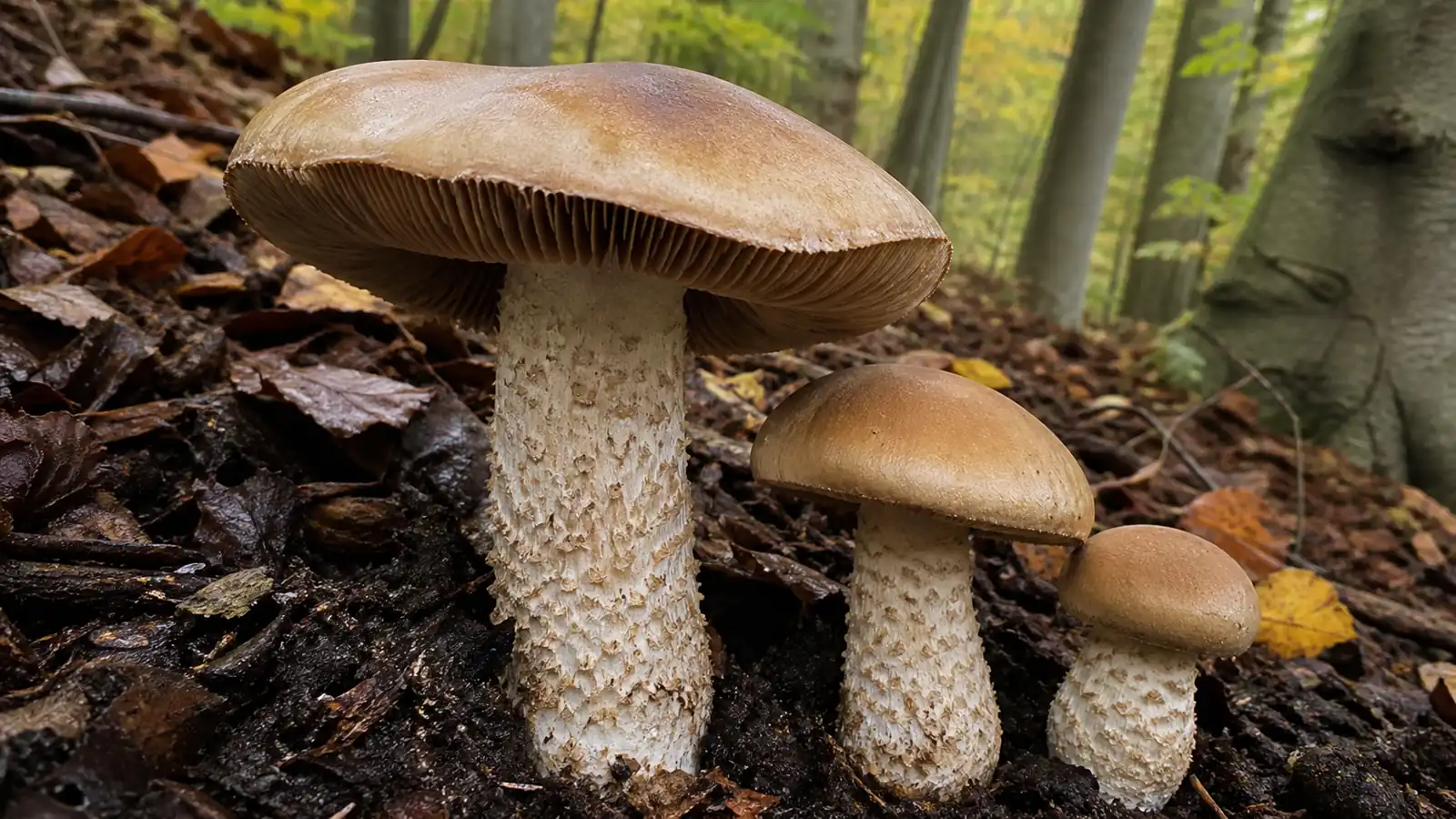
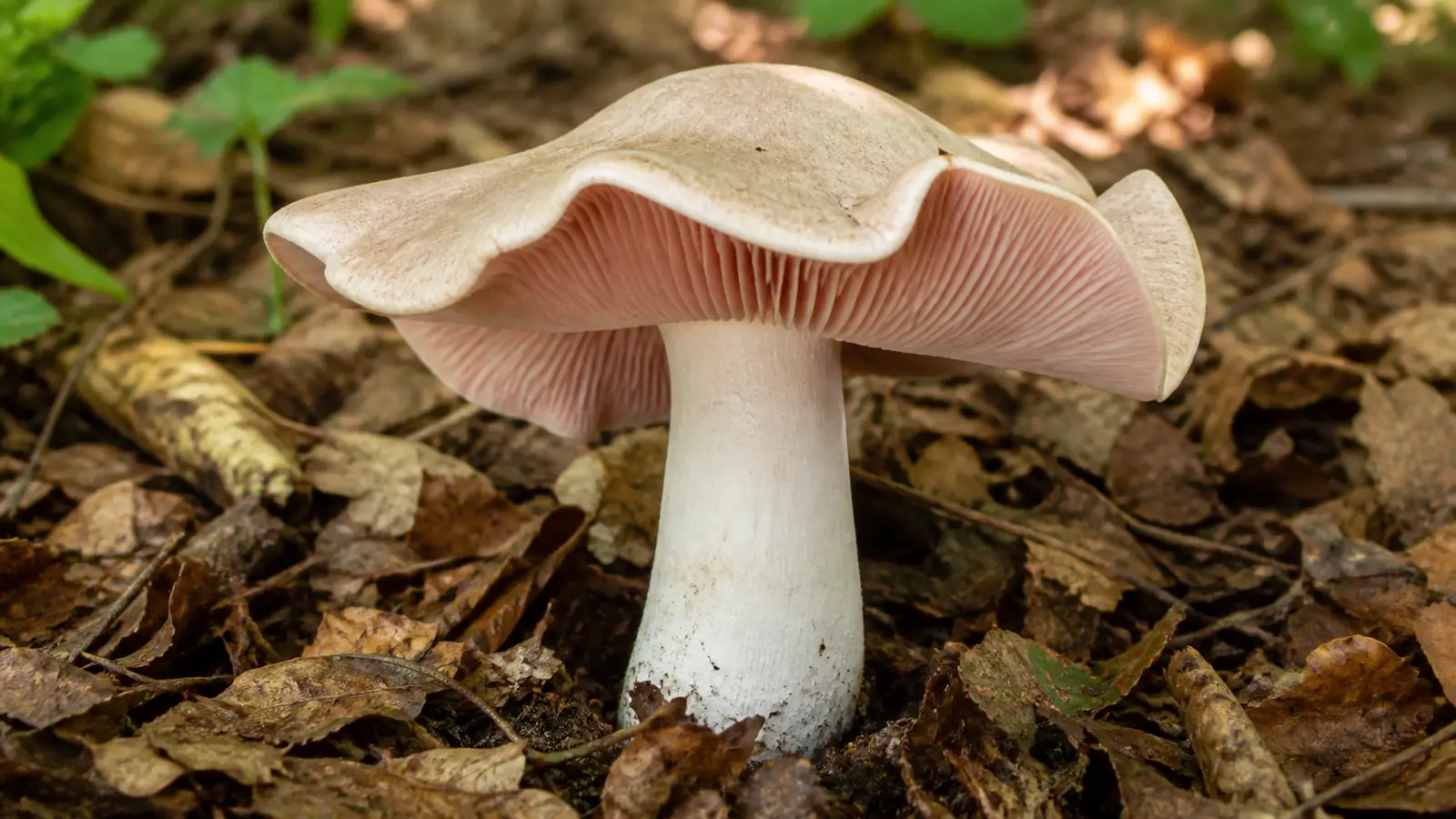
Livid pinkgill is substantial enough to look like a desirable edible mushroom. Its pale cap can reach 15 cm, and sturdy fruiting bodies rise from soil in deciduous woodland and old parkland during summer and autumn.
The cap begins convex or conical, often with a broad blunt bump, then flattens and develops an uneven or wavy margin. Damp young caps may feel slightly sticky before the surface dries.
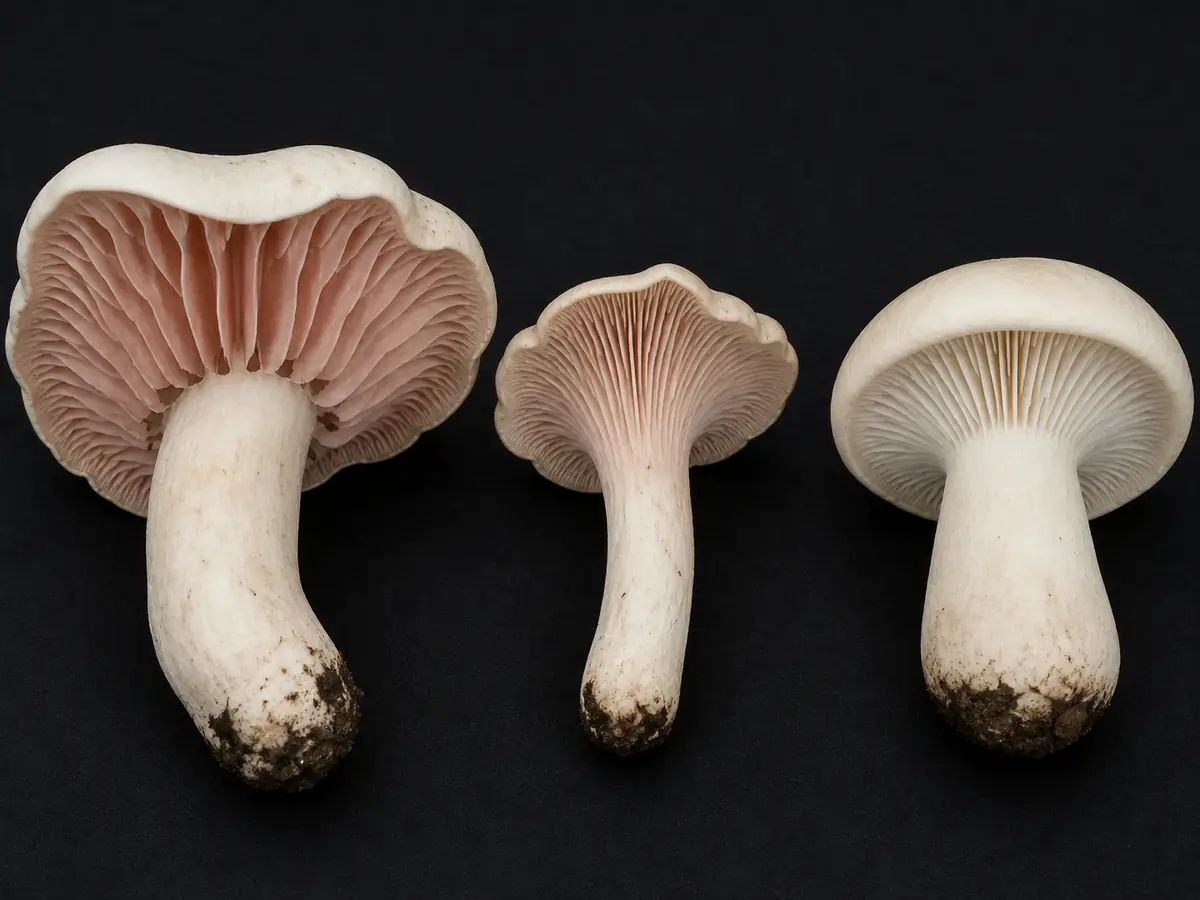
The gills carry the identity story. They start cream to yellowish white, attach to the stem through a distinct notch, and become salmon pink as the angular spores mature.
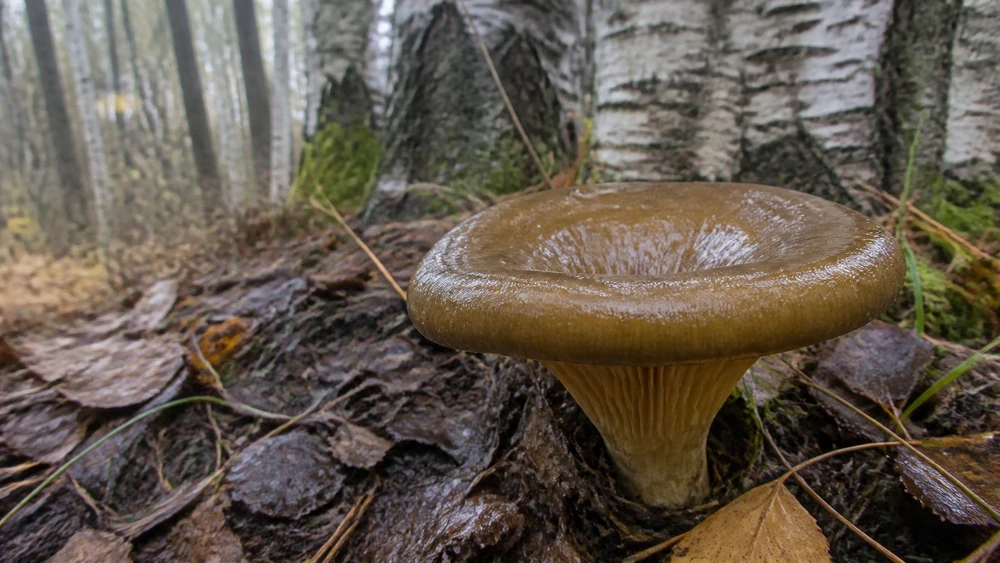
A young specimen can hide its pinkgill signal. Comparing only young mushrooms invites confusion with St George's mushroom, clouded funnel, or other pale woodland species.
The stem is smooth, pale, and ringless, with no volva at the base. The odor is variable and cannot decide edibility.
Warning
Do not wait for a perfect species name before responding to illness. A severe gastrointestinal syndrome after a wild mushroom meal requires poison-center or medical assessment.
How does maturity reveal the pinkgill?
Large, usually 6 to 15 cm across, ivory, cream, grayish buff, or pale ochre, initially conical or convex and later flatter with a broad blunt umbo and often a wavy lobed margin.
Broad, crowded, and sinuate, beginning yellowish white and becoming salmon pink as angular spores mature.
Robust, smooth, ivory to white, usually 3 to 10 cm long, sometimes swollen toward the base, and without a ring or volva.
Firm pale flesh with a faint mealy or unpleasant odor that can strengthen with age. Never taste it.
Collect several ages when documentation is safe. The yellowish-white gills of a young livid pinkgill become distinctly salmon pink at maturity, and a print reveals the same pink spore color.
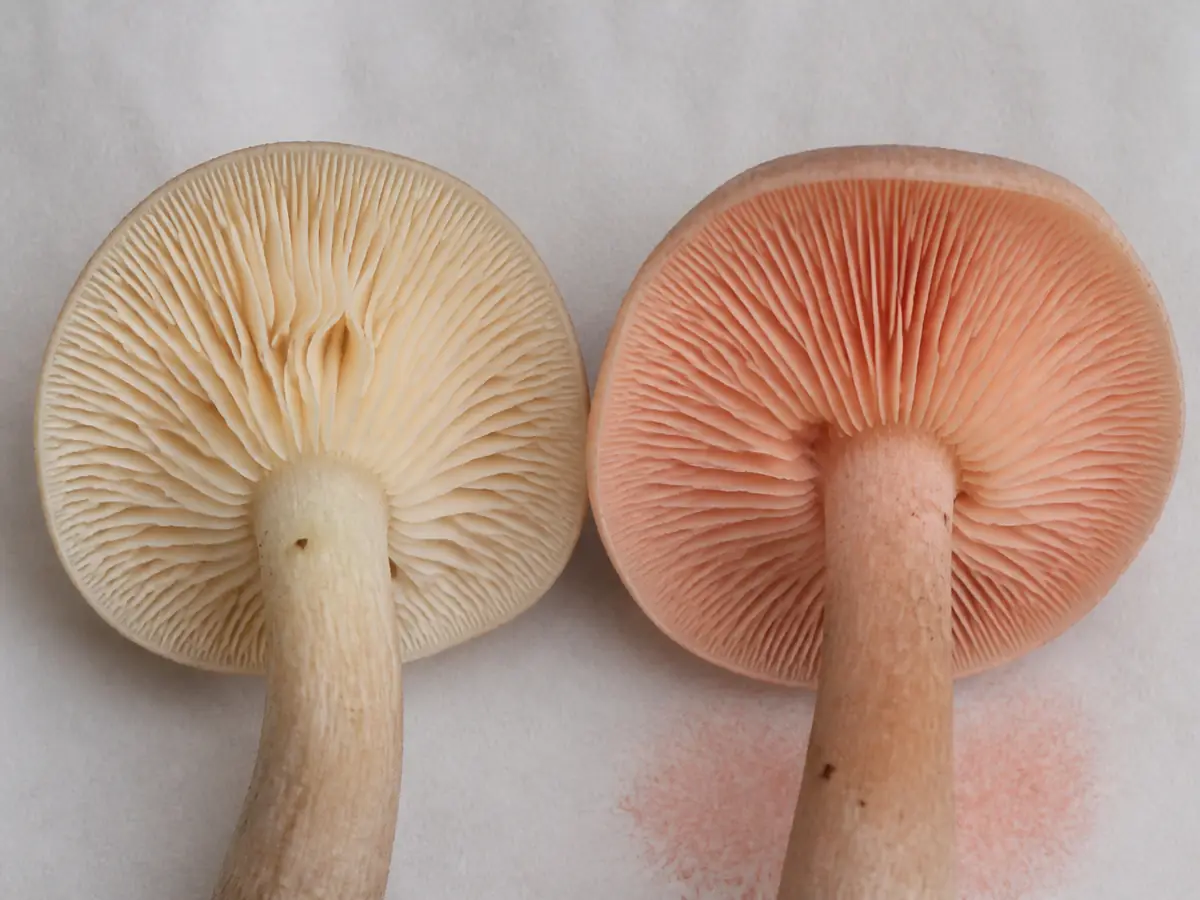
Caps usually measure 6 to 15 cm, with ivory, gray-buff, cream, or pale ochre tones. A broad umbo and irregular lobed margin become more obvious as the cap expands.
The gills are broad and crowded. Their inner edge curves upward before meeting the stem, producing the sinuate or notched attachment that separates them from gills running down a funnel stem.
The robust white to ivory stem lacks both ring and volva. *Pink spores plus angular microscopic shape support Entoloma***, but species-level confirmation still needs a regional key and often microscopy.
| Age | Cap and gills | Main mistake |
|---|---|---|
| Young | Convex pale cap, cream or yellowish gills | Pink spore evidence has not appeared |
| Expanding | Broad umbo, notched gills beginning to blush | Color can look merely tan in poor light |
| Mature | Wavy margin and salmon-pink gills | Old gills may be stained or damaged |
| Decaying | Dull cap and unpleasant odor | Useful color and texture become unreliable |
A pink print separates the species from white-spored clouded funnels and St George's mushrooms, and from brown-spored Agaricus. It does not separate livid pinkgill from every other Entoloma.
Never taste an unidentified pinkgill. The odor and flavor reported in field descriptions have too much variation to justify exposure.
If someone may have eaten this mushroom, act now. Call Poison Control at 1-800-222-1222 (US) or emergency services before symptoms appear, and save a piece of the mushroom for identification.
What should happen after a suspected meal?
If someone swallowed a suspected specimen, contact Poison Control or local medical services promptly. Save uncooked mushrooms and meal remains, note the time and amount, and photograph young and mature gills, the stem base, habitat, and nearby trees.
Persistent vomiting and diarrhea can cause dangerous dehydration and electrolyte loss. Seek urgent care for weakness, faintness, confusion, reduced urine, blood in vomit or stool, or symptoms in a child, older adult, or medically vulnerable person.
Which pale woodland mushrooms look closest?
Livid pinkgill overlaps pale woodland edibles in both size and season. The safest comparison follows gill attachment and mature spore color rather than asking which cap looks whiter.
Compare specimens at the same stage. A mature pinkgill beside a young edible can create a false distinction, and a young pinkgill may not yet be pink.
The miller, Clitopilus prunulus, also produces a pink print, but its gills run down the stem and its cap is usually smaller with a strong mealy odor. Because odor varies, the attachment and microscopic spores carry more weight.
| Lookalike | Feature pointing away from livid pinkgill | Failure case |
|---|---|---|
| The miller | Decurrent gills, smaller build, mealy odor | Both produce pink spores and pale caps |
| St George's mushroom | Spring season, crowded white gills, white print | Late spring and cool summer conditions can blur timing |
| Clouded funnel | Gills run down the stem and print is white | Old gills can take on dirty pinkish tones |
| Field mushroom | Free gills, stem ring, and brown mature print | Young gills may begin pale |
| Other Entoloma | Differences depend on cap, spores, habitat, and microscopy | Some are also toxic or poorly known |
St George's mushroom normally fruits in spring and smells strongly mealy, while livid pinkgill is a summer-to-autumn species. Season supports a conclusion but should never override pink spores and notched gills.
Key takeaway
Reject pale woodland mushrooms when mature gill color, attachment, or print has not been checked. Size and a familiar meal-like shape provide no safety evidence.
Can a mixed pale-mushroom basket be salvaged?
Livid pinkgill is poisonous and has no culinary use. Reports of severe gastrointestinal illness make experimentation, parboiling, and small taste portions unsafe.
Do not sort a mixed pale-mushroom basket in the kitchen. Pinkgill fragments and young specimens can be difficult to match back to their stems once caps are detached.
Keep a whole uncooked specimen for identification after a possible exposure. Do not rely on sautéed color, odor, or flavor because cooking removes field evidence without proving toxin removal.
Where does the lead poisoner fruit?
Livid pinkgill is associated with broadleaf trees and is generally treated as mycorrhizal. Fruiting bodies rise from soil in deciduous woodland, old parks, woodland edges, and other established tree settings.
Oak and beech are recurring host clues in European records, and the species often favors base-rich or calcareous ground. A park lawn beside old trees can still be woodland habitat below ground.
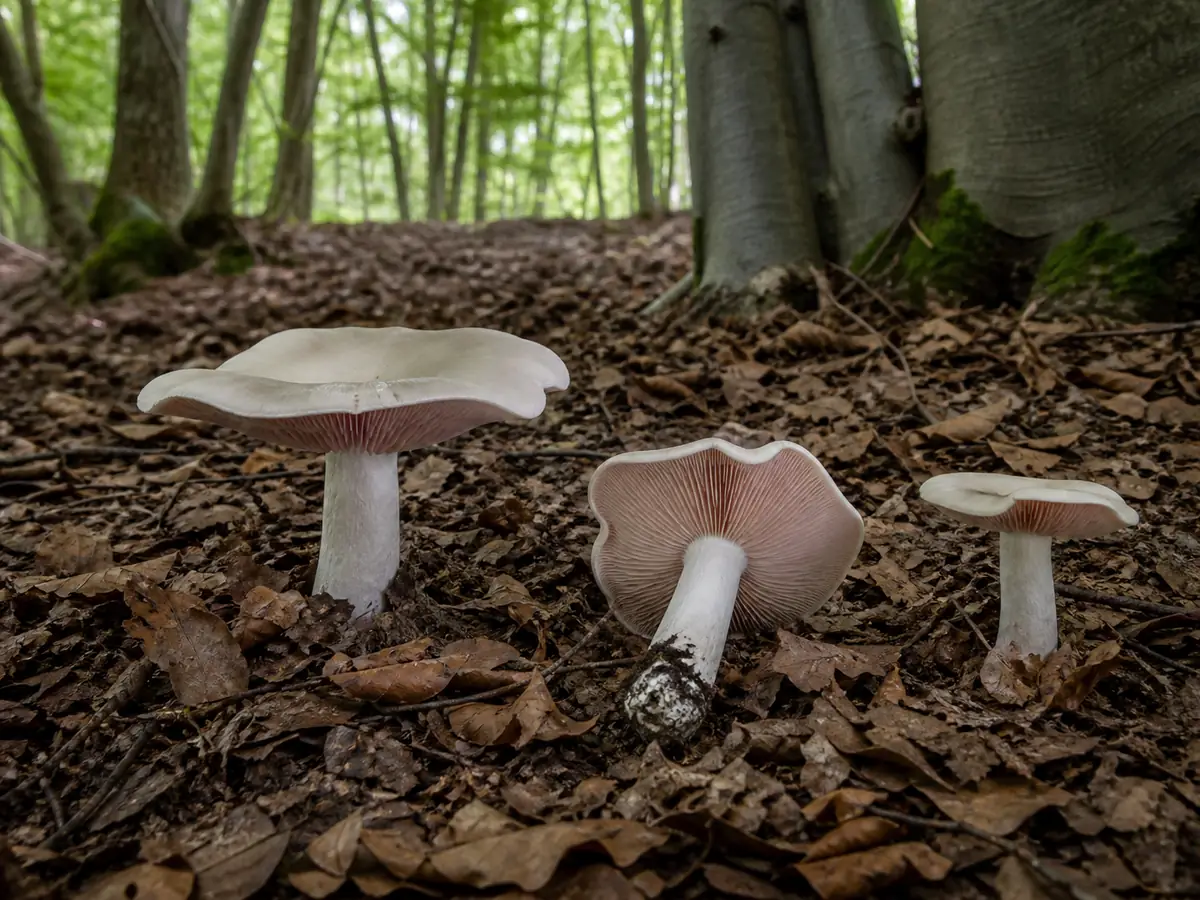
The species may appear in small groups or arcs rather than tight fused clusters. Photograph the spacing and surrounding trees before moving specimens.
Removing fruiting bodies reduces immediate access but does not remove the underground fungus. In public or household spaces, revisit the tree root zone after later rain when children or pets are present.
What is known about its poisoning syndrome?
The compounds responsible for livid pinkgill poisoning have not been resolved as cleanly as amatoxin, orellanine, or muscarine syndromes. Clinical descriptions center on severe gastrointestinal irritation rather than a reliable named toxin.
Nausea, abdominal pain, repeated vomiting, and diarrhea can begin within hours. Fluid and electrolyte loss can become the immediate danger, especially for children, older adults, and people with kidney or heart disease.
Uncertain toxin chemistry does not mean uncertain medical risk. Treatment is based on symptoms, hydration, laboratory findings, and poison-center advice.
There is no established home antidote and no medicinal use for the mushroom. Laboratory speculation about Entoloma compounds should not be translated into a supplement or therapeutic claim.
Why do older guides say Entoloma lividum?
Entoloma sinuatum belongs to Entolomataceae, a family recognized by pink spores that are angular under magnification. The notched gill attachment explains the name sinuatum, referring to the curved or wavy approach to the stem.
Older literature often uses Entoloma lividum, which supplied the common name livid pinkgill. The synonym explains historical reports but does not define a separate safe mushroom.
The broad common name lead poisoner also reflects the dull pale cap rather than a metal toxin. This profile covers E. sinuatum, while planned pairwise pages will treat the miller and St George's mushroom comparisons in greater depth.
Livid pinkgill questions
Is livid pinkgill edible?
When do its gills turn pink?
How is it different from the miller?
How is it different from St George's mushroom?
What should I do after possible ingestion?
Is Entoloma lividum a different species?
Sources & References
- First Nature Cap, gill, stem, spores, habitat, season, synonyms, poisoning, and lookalikes.
- Mushroom poisoning updated review Clinical framework for gastrointestinal mushroom poisoning.
- Human poisoning review Forensic and clinical context for mushroom poisoning and specimen evidence.
- Toxicological profiles of mushrooms Poisonous mushroom syndrome categories and treatment context.