Why one stump can produce a deceptive mix
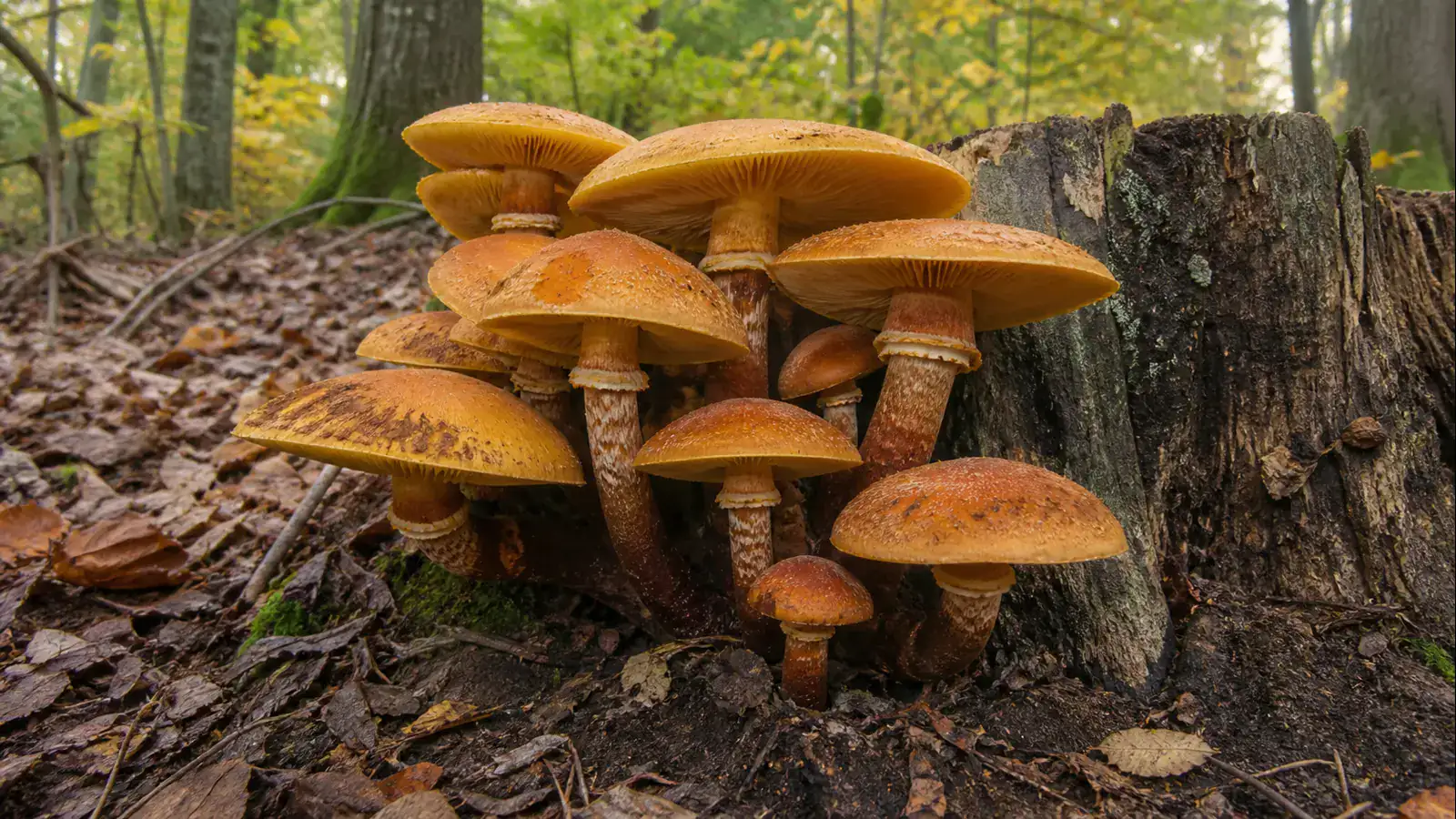
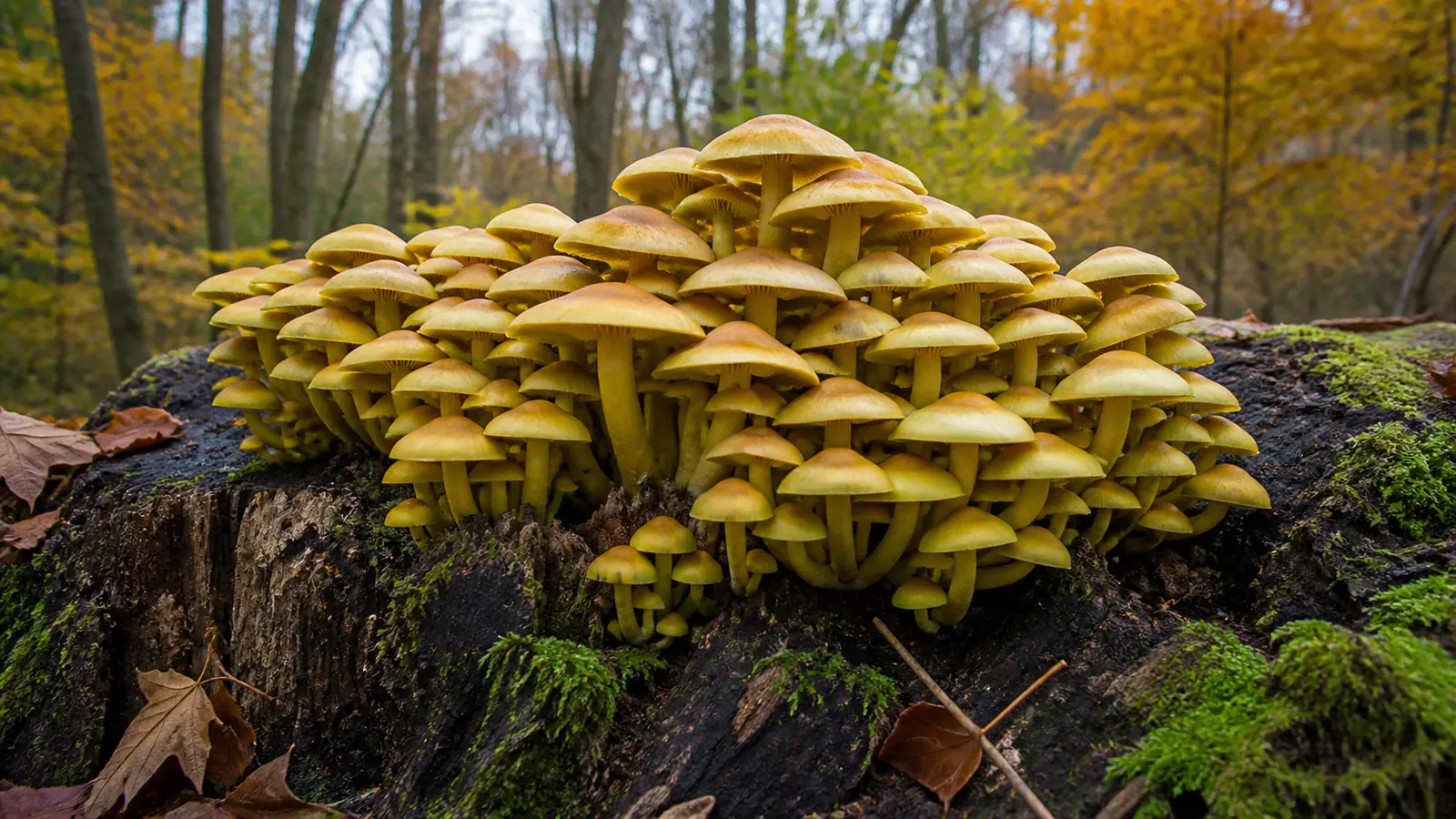
Sulphur tuft is one of the most conspicuous mushrooms on decaying wood. Dozens of slender yellow stems can erupt from one stump or buried root, carrying caps that are brightest at the margin and warmer orange-brown in the center.
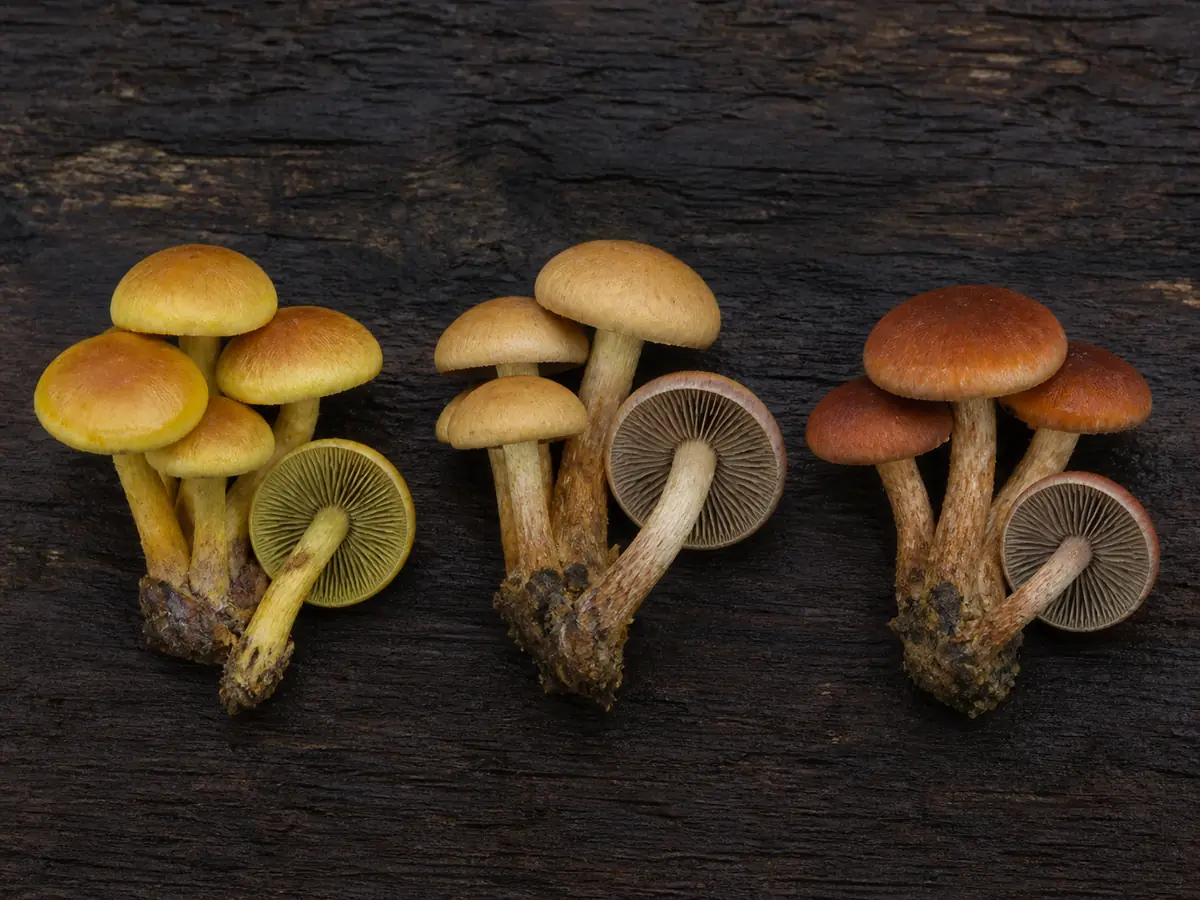
The crowded gills provide the critical maturity sequence. They begin yellow, develop an olive or green cast, then darken under a heavy purple-brown spore deposit.
A young cap may retain dark fragments of the partial veil around its margin, but the stem does not develop a durable skirtlike ring. Older clusters often look dirtier and darker as falling spores coat the caps below.
Growth form and substrate matter as much as color. Sulphur tuft is a wood decomposer, even when the fruiting bodies appear to rise from lawn or forest soil because buried roots can hide the food source.
The species can recur on the same stump over several seasons. Removing one flush reduces immediate exposure but leaves the decaying wood and underground mycelium in place.
Warning
Several useful edible and deadly mushrooms also grow in clusters on wood. A yellow cap or clustered habit cannot carry an eating decision.
How do gills change from yellow to olive?
Sulphur yellow with an orange-brown or tan center, usually 2 to 7 cm across, convex then flatter, often with dark veil fragments along the margin when young.
Crowded and attached to the stem, beginning yellow, turning olive green, then becoming dark purple-brown as spores mature.
Slender, yellow above and browner toward the base, usually 5 to 12 cm long, without a persistent ring, and fused with neighboring stems in dense tufts.
Yellow flesh with a mushroom-like odor and an intensely bitter taste. Do not taste a wild specimen to test the identification.
Begin by tracing the cluster to wood. Exposed stumps and logs make this easy, while lawn clusters may require checking for a buried root, old stump line, or wood chips beneath the surface.

Caps usually span 2 to 7 cm and move from convex toward flatter forms. The yellow margin surrounds a tan to orange-brown center, and young margins can carry small dark veil remnants.
Turn over specimens at different ages. Olive-green gills in the middle stage are a high-value warning, because conifer tuft usually develops smoke-gray gills without that green cast.
The slender stems are yellow near the cap and browner below. Several often join at the base, and none should carry the persistent ring expected on many honey fungi.
| Evidence | What to record | Why it matters |
|---|---|---|
| Substrate | Exposed or buried dead wood | Separates wood decay from soil-root partnerships |
| Mixed ages | Young, middle, and old gills | Reveals the yellow-to-olive transition |
| Stem surface | Ring presence and color gradient | Helps separate honey fungi and Galerina |
| Spore deposit | Caps below and a formal print | Confirms purple-brown rather than white or rusty spores |
A spore print supports the genus-level pattern but does not make the mushroom edible. Brick cap and conifer tuft can also produce dark prints, so cap color, gill transition, substrate, geography, and microscopy still matter.
Do not taste for bitterness. Field guides record a strongly bitter flavor, but tasting an unresolved poisonous mushroom is unnecessary exposure and bitterness can vary with condition.
If someone may have eaten this mushroom, act now. Call Poison Control at 1-800-222-1222 (US) or emergency services before symptoms appear, and save a piece of the mushroom for identification.
What should happen after ingestion?
If someone swallowed a suspected sulphur tuft, contact Poison Control or local medical services promptly. Save the mushrooms and meal remains, note the time eaten, and photograph the clustered growth, substrate, cap, gills, and stem.
Do not assume a quick stomach illness is harmless, and do not induce vomiting unless a poison specialist directs it. Children and pets should be kept away from recurring clusters around stumps and buried roots.
Which clustered wood mushrooms look closest?
The hardest comparisons are other Hypholoma species growing in the same clustered form. Honey fungi and funeral bell add different spore colors and ring structures, but old or damaged fruiting bodies can blur those signals.
Compare a range of ages from the same cluster. One old cap loses the gill transition that makes sulphur tuft distinctive.
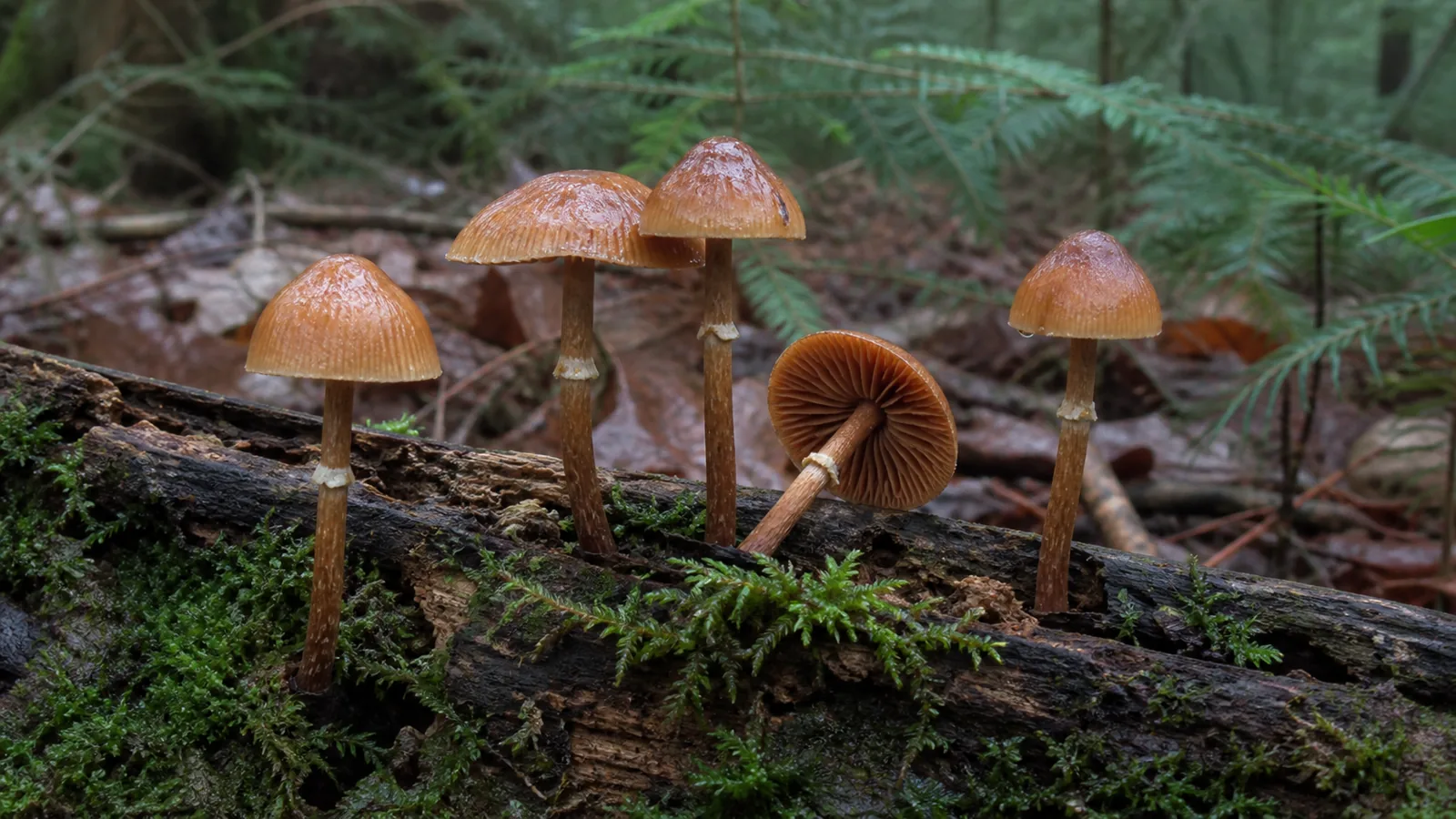
Conifer tuft, Hypholoma capnoides, favors conifer wood and develops pale gray to smoky gills without the strong olive-green stage. Brick cap, Hypholoma lateritium, has a brick-red center and gills that move toward gray-brown rather than green.
| Lookalike | Feature pointing away from sulphur tuft | Failure case |
|---|---|---|
| Conifer tuft | Smoky gray gills, no green stage, usually conifer substrate | Substrate alone is not enough on mixed or unknown wood |
| Brick cap | Brick-red center and gray-brown mature gills | Faded caps can lose much of the red |
| Honey fungus | White spore print and often a persistent stem ring | Ringless honey fungi exist, so the white print matters |
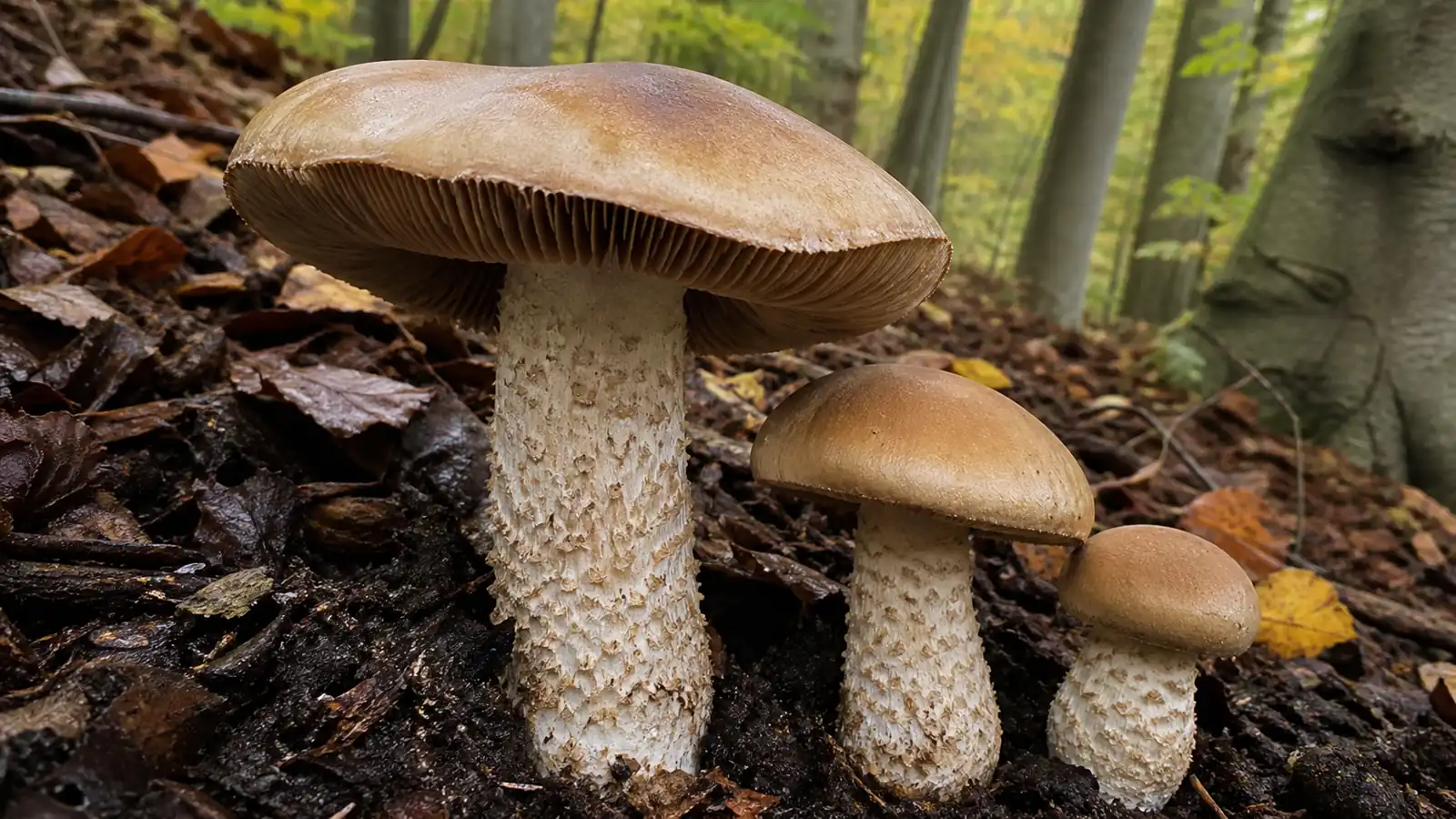
| Funeral bell | Brown cap, ring zone, and rusty-brown spores | Weathered specimens can lose the ring |
Funeral bell is a deadly amatoxin mushroom. Its rusty print differs from sulphur tuft's purple-brown deposit, but both can fruit in overlapping clusters on decaying conifer wood.
Key takeaway
Do not harvest a mixed stump by selecting caps that look right. Separate every stem to its base and reject the collection when multiple species or unresolved stages share the wood.
Why can it appear to grow from a lawn?
Sulphur tuft is saprotrophic, breaking down dead wood and returning its nutrients to the forest. It fruits on hardwood and conifer stumps, logs, buried roots, and woody debris.
Dense tufts form because many stems arise from the same colonized wood. A cluster in a lawn may look terrestrial, but buried roots often explain the apparent soil growth.
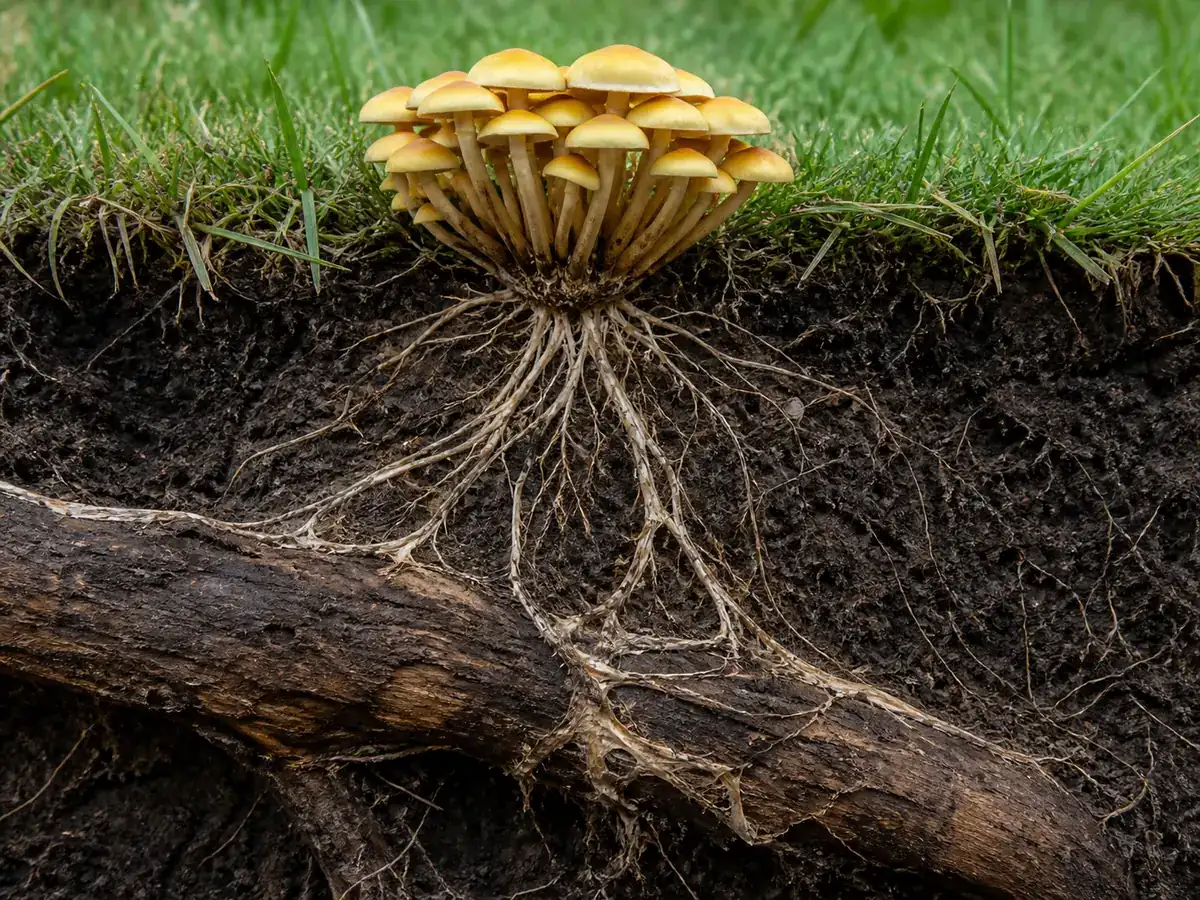
The species is widespread across temperate regions and can appear in woodland, parks, gardens, and old tree sites. Landscape location does not reduce the poisoning risk.
Removing mushrooms is useful when children or pets can reach them, but the cluster may return until the wood is exhausted. Reinspect after rain and address accessible decaying wood where practical.
Can bitterness or cooking make it safe?
Sulphur tuft is poisonous and has no culinary role. Its bitterness does not protect a diner because the mushroom may be mixed into a larger dish or mistaken for a milder clustered species.
Discard the entire mixed collection when identity is uncertain. Cooking cannot turn a separation error into a safe meal, and parboiling is not an accepted detoxification method.
Keep suspected samples apart from food and label the substrate and collection site. Those details can help a poison specialist or mycologist assess an exposure.
What does sulphur tuft poisoning cause?
Sulphur tuft poisoning is usually described as a gastrointestinal syndrome, with nausea, vomiting, cramps, and diarrhea developing within hours. The precise toxin profile and severity are less predictable than the simple label stomach irritant suggests.
Clinical reports and toxicology reviews include more serious outcomes, so dehydration, persistent vomiting, weakness, confusion, or abnormal vital signs require medical assessment. Rapid symptoms still deserve a poison-center call.
There is no home antidote. Treatment is guided by symptoms, hydration status, coexisting illness, the amount eaten, and confirmation of the mushroom when possible.
Do not use this species medicinally. Laboratory findings about fungal compounds do not establish a safe dose or cancel the poisoning record of the whole mushroom.
What defines Hypholoma fasciculare?
Hypholoma fasciculare belongs to Strophariaceae. The specific name reflects its bundled or fascicled growth, while the common name describes the sulfur-yellow color of fresh caps.
Older books may place related clustered wood mushrooms under different combinations, but the practical identity depends on the full fruiting sequence. Greenish gills, purple-brown spores, and dense growth on dead wood belong together.
Compare the gills, spore print, and deadwood growth together when distinguishing sulphur tuft from similar clustered mushrooms.
Sulphur tuft questions
Is sulphur tuft edible?
How do you recognize sulphur tuft?
How is it different from conifer tuft?
Can sulphur tuft grow from soil?
What should I do if someone ate it?
Does sulphur tuft come back after removal?
Sources & References
- First Nature Cap, gill maturation, stem, print, habitat, season, and Hypholoma lookalikes.
- Mushroom poisoning updated review Clinical grouping and management of mushroom gastrointestinal poisoning.
- Toxicological profiles of mushrooms Poisonous mushroom toxin categories and clinical context.
- Michigan wild mushroom brochure Public identification and poisoning-safety context for clustered woodland mushrooms.