
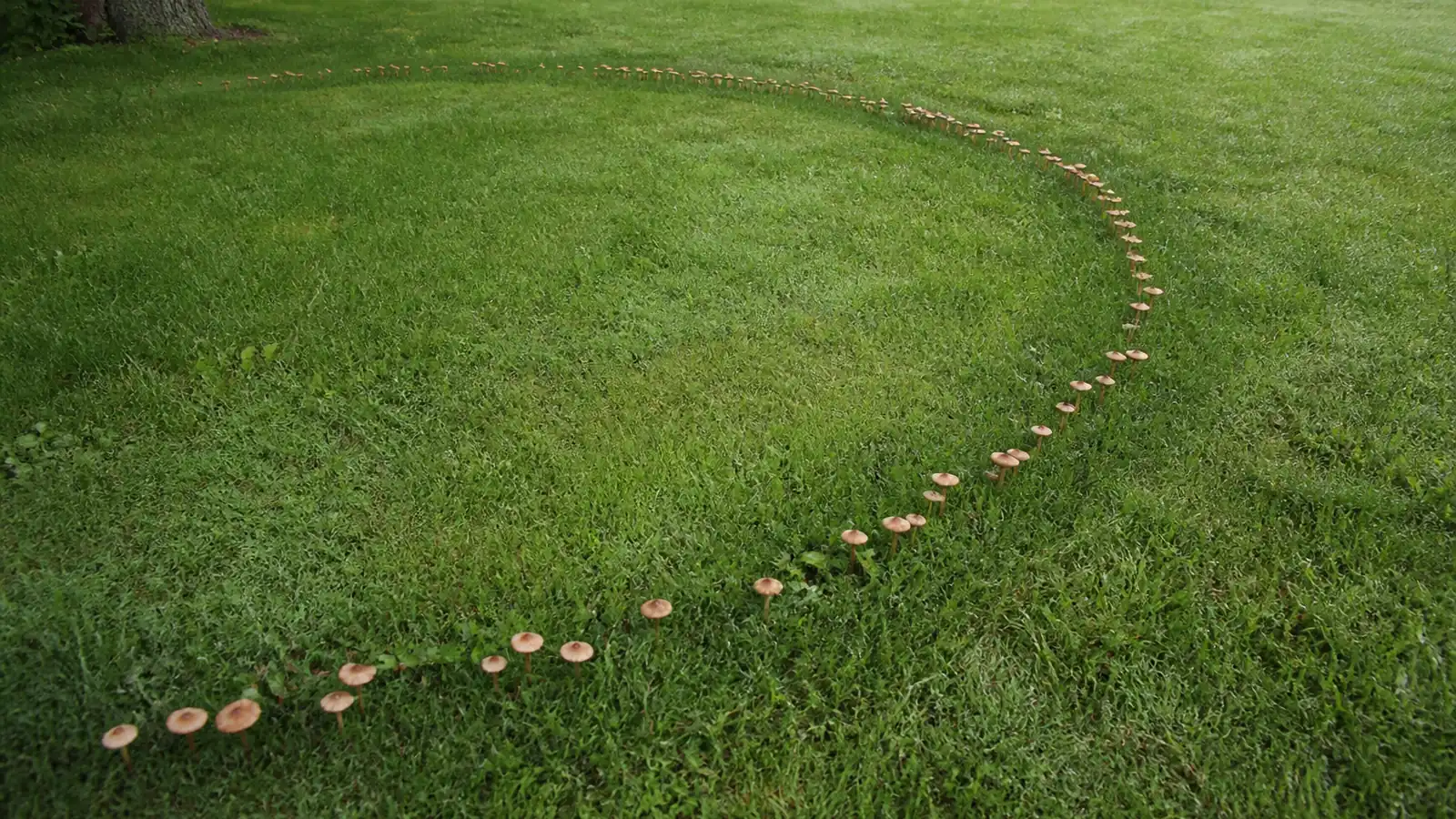
A ring of small tan mushrooms in a mown lawn is the most inviting thing in grassland foraging. They are easy to see, easy to gather in quantity, and every field guide calls them a choice edible.
Not one of those guides says whether you can eat them raw.
That silence is doing some work. The answer is no, there is a documented chemical reason behind it, and the chemical reason is the less important half of the story.
Can you eat fairy ring champignon raw?
No, and the two reasons behind that answer are nothing like the same size.
The first of those two reasons is chemical, and the mushroom itself is cyanogenic. It carries a compound that breaks down into hydrogen cyanide when the tissue is torn, which is precisely what chewing does to it.
That is the smaller of the two reasons.
The larger one is standing in the same ring. A mushroom called the fool's funnel fruits in the same lawns, in the same arcs, in the same months, and it carries potentially deadly levels of muscarine.
Warning
Clitocybe rivulosa, the fool's funnel or sweating mushroom, forms fairy rings in the same lawns and meadows as the fairy ring champignon across Europe and North America. It contains potentially deadly levels of muscarine and symptoms start within fifteen to thirty minutes. Anyone who has eaten a lawn mushroom and begun sweating should make one phone call rather than wait and see.
Those two reasons sit in that order for a reason of their own. Nobody has been hospitalized by eating a single raw fairy ring champignon, and people are hospitalized every year by eating the thing growing next to it.
The raw question and the identification question are not really separable here.
A raw mushroom gets swallowed before anything has been checked, and that is the actual hazard in tasting one in the field. Cooking is a delay as much as it is a chemical process, and on this species the delay is worth as much as the heat.
There is a reason people want to taste this particular mushroom.
It tastes sweet and nutty, close enough to cinnamon that some writers reach for that word, and the flavor survives drying better than most. A mushroom that good, in that quantity, standing on a lawn somebody mows, does not feel like a decision that needs care.
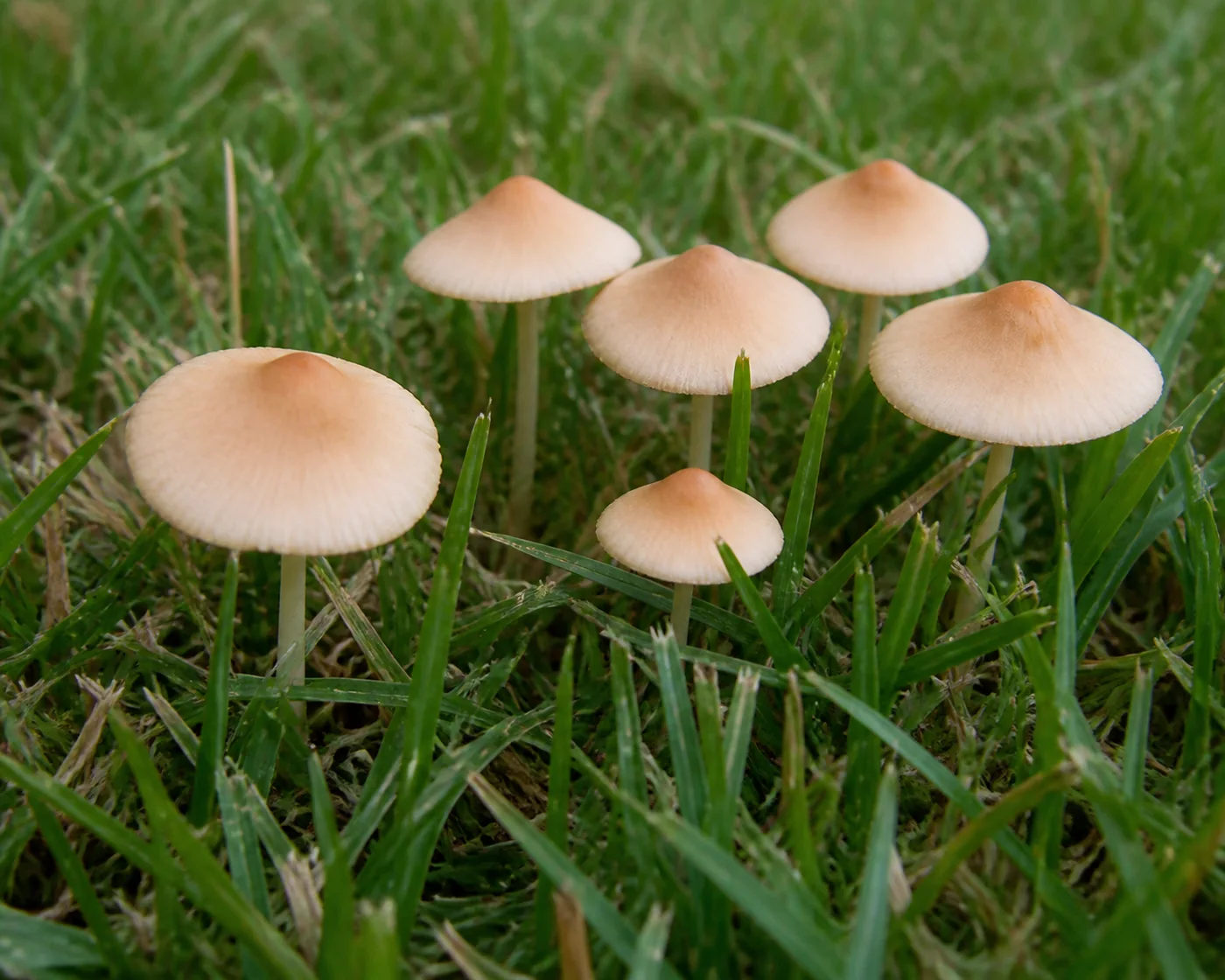
The caps are small enough that quantity is the whole appeal, and quantity is where anything careful gets abandoned.
A cap runs from half an inch to two inches across, on a stem an inch and a half to three inches long and barely thicker than a matchstick. Filling a bag means picking a hundred of them, and picking a hundred of anything is where attention slips.
Some people should simply leave this one on the lawn.
Anybody who is not going to run four checks on every single cap in a bag of a hundred is better served by a species where one careless cap does not matter. This is a mushroom for people who enjoy the checking, not for people who tolerate it.
SafetyCan You Eat Bay Bolete Raw? The Blue Stain Is Not the ReasonWhy it smells faintly of almonds
One of the odor descriptions attached to this species in the reference literature is bitter almonds.
Another entry in the same list is hydrocyanic acid. Those two descriptions are pointing at the same molecule, and none of the pages that print them explains what it is doing in the mushroom.
The molecule is a weapon.
Work published in 2015 identified the defence as a free cyanohydrin of glyoxylic acid, sitting intact and harmless inside the undamaged mushroom. When the tissue is injured, that compound comes apart into glyoxylic acid and hydrogen cyanide.
The trigger is damage, which is the entire point of the design.
A fungus cannot run away and it cannot fight back, so it waits until something starts eating it and then releases a respiratory poison directly into the wound. Chewing a raw cap is the exact stimulus the mechanism evolved to answer.
Hydrogen cyanide as a respiratory poison is worth one plain sentence.
It shuts down the machinery cells use to turn oxygen into energy, which is why it is described as a respiratory poison even though it has nothing to do with breathing. That is a serious mechanism at dose and a trivial one well below it.
Proportion matters here as much as mechanism does.
A cultured colony of this fungus was measured releasing around forty nine parts per million of hydrogen cyanide over a day, which is a great deal to a grass root and very little to a person. Do not equate one raw cap with a confirmed cyanide poisoning.
That is the honest version, and it cuts in both directions.
Nobody should tell you a raw fairy ring champignon will poison you, because the published record does not support it. Nobody should tell you the compound is absent either, because it is there, and it is there specifically to harm whatever is chewing.
This species is not alone in carrying the trick.
The same cyanohydrin of glyoxylic acid turns up as the precursor of hydrocyanic acid in several other cyanogenic fungi, so the fairy ring champignon is one example of a strategy rather than an oddity. What makes it the useful example is that people eat it by the bagful.
The same chemistry explains the ring you are standing on.
Cyanide concentrations in the soil are highest right at the mushrooms and drop away steeply within about two feet, and at those levels they hold back grass roots. The dark and bare arcs that fairy rings cut into turf are partly the fungus poisoning its own lawn.
SafetyCan You Eat Beech Mushrooms Raw? Not Poisonous, Just BitterThe ring is shared with a deadly one
The fool's funnel goes by three names and two of them are useful.
It is also called the false champignon, which tells you what it gets mistaken for, and the sweating mushroom, which tells you what it does. The second one is worth remembering.
Its main toxin is muscarine, and it carries potentially deadly levels of it.
Muscarine poisoning does not upset the stomach in the ordinary way. It switches on the body's secretions all at once, which produces a symptom picture that looks nothing like food poisoning.
That picture is worth memorizing precisely because it is so unlike the others.
Almost everything else that makes foragers ill opens with nausea somewhere between one and three hours after the meal. Sweating and salivation inside half an hour is a signature, and it points at one class of toxin rather than a general upset.
Speed works in both directions when a meal goes wrong this fast.
Fifteen minutes is frightening, and it also means nobody has to work out which meal caused it. That is more than can be said for the poisonings that wait six or eight hours before announcing themselves.
There is a nasty detail in when the lookalike is hardest to read.
A moist fool's funnel cap has a brownish translucent look that gives it away, and that look disappears as the cap dries. Dry weather is exactly when a lawn is pleasant to walk across with a basket, so the conditions that make picking attractive are the conditions that strip one identifying feature out.

Muscarine itself is not rare among grassland mushrooms.
It is the toxin behind a whole group of small white and brown species that come up in the same short grass, which is why the sweating signature is worth knowing on its own rather than as one species fact. Recognizing the symptom is more durable than recognizing every mushroom that causes it.
Two species sharing the same ring is not a coincidence of habitat.
Both species are grassland saprobes feeding on the same dead organic matter in the same mown turf, and both push outward in a circle as the mycelium spreads underground. Two rings in one lawn can cross, and a picker working around an arc at ankle height is not examining every cap.
Free gills, a bump, and a stem that bends
Four features separate them, and the test most people would reach for first is not one of the four.
Both mushrooms drop a white spore print. Taking one costs an evening and settles nothing at all here, which is the reverse of how that test behaves on most lookalike pairs.
The gills are the first real check and the strongest of the four.
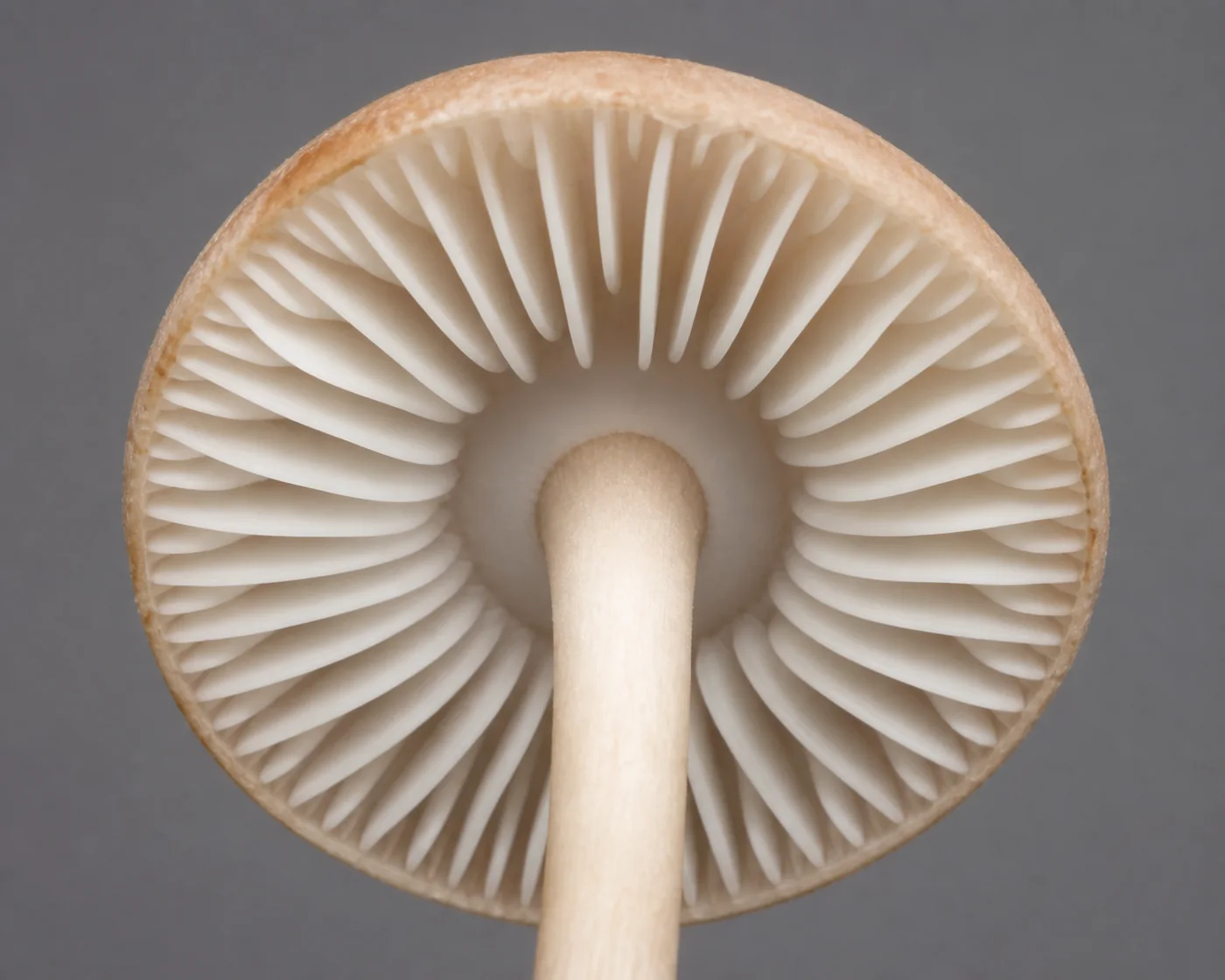
Fairy ring champignon gills stand noticeably far apart and stop short of the stem instead of joining it, and one identification reference calls that an important feature. The fool's funnel has crowded gills that run down onto the stem.
Distant and free against crowded and running down is a difference visible at arm's length.
It also survives the mushroom being knocked about, which matters in short grass. Gills are the last thing that mowers and boots damage.
The cap shape is the second check.
A fairy ring champignon opens out flat and leaves a broad low bump in the middle of the cap. The fool's funnel is convex or slightly dished with no bump at all, and one reference separates the two species on that single word.
Color deserves the same warning as the spore print.
Both of these mushrooms are hygrophanous, which means the cap changes color as it loses water. A fairy ring champignon is orange-ochre or tan when damp and dries to buff or pale cream, and the fool's funnel runs from white to ochre brown, so the two color ranges overlap and neither is fixed.
A tan cap in the morning and a cream cap in the afternoon can be the same mushroom.
The edge of that same flat cap adds a third.
The lookalike's margin usually stays curled inward even after the mushroom has opened, which gives it a tucked-under look around the rim. The champignon opens flat and stays that way.
One more difference is worth a look while the cap is upside down.
The lookalike often carries faint pink flecking across its crowded white gills, which the champignon never shows. It is a small thing on a mushroom three or four centimeters across, and it is one more reason to turn every cap over rather than glance at the tops.
The stem is the fourth check, and it is the one you run with your fingers.
A champignon stem is tough but pliant, so it bends a long way before it gives and behaves more like wire than like a twig. The fool's funnel stem is much stiffer and snaps.
None of those four checks is difficult, and none of them is like the others enough to be redundant.
Together the four take about ten seconds, which is nothing set against what they are separating.
The reason to run all four rather than the one you like best is that a mushroom eaten raw in a field has been decided about before anybody could check the work. There is no second opinion available at ankle height in somebody's garden.
SafetyCan You Eat Beefsteak Polypore Raw? Yes, If You Slice It ThinThe lawn is the second problem
Passing the identification does not finish the job on this species.
Almost every fairy ring that anybody finds is in a lawn, a verge, a park or a golf course, and all of those are managed surfaces. Mown turf gets fertilized, and a good deal of it gets sprayed.
A mushroom growing in a treated lawn or park takes up what is in the ground.
Fertilizer is generally not the worry. Herbicide is, and a fairway or a municipal park is far more likely to have had some on it than a horse paddock is.
Some ground is better than other ground, and it is worth being specific about which.
Pasture that carries animals, old permanent grassland and coastal dunes are all managed lightly or not at all, and they hold rings as well as a lawn does. A garden you mow yourself is the one lawn whose spraying history you actually know.
It is a pet question before it is a person question, and a garden lawn is where that starts.
A ring in a back garden sits at nose height for a dog and well within reach of a cat, and poisoning in pets usually starts on a lawn rather than in a forest.
Then there is the mushroom's own trick, which makes age unreadable.
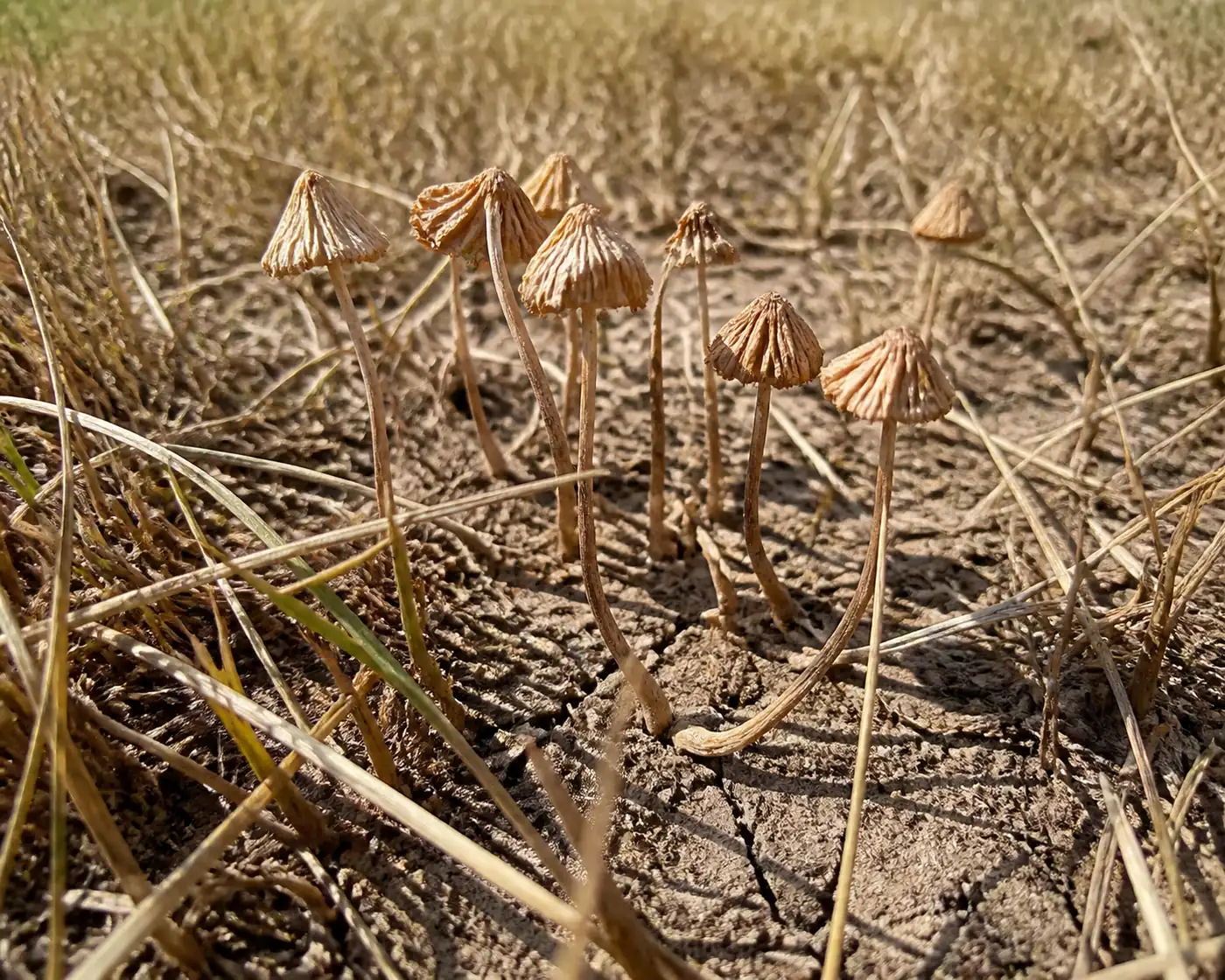
This species dries out completely in hot weather, stands there shrivelled for weeks, and reflates when rain finally soaks it, recovering its shape and its color. The revived cap resumes producing spores as though nothing had happened.
- Cap
- Half an inch to two inches across, tan drying to buff, with a broad low bump
- Gills
- Distant, white to cream, free of the stem
- Stem
- An inch and a half to three inches, thin, tough and pliant
- Spore print
- White, the same as the dangerous lookalike
- Season
- Spring into late autumn, longer than most of the grassland calendar
- Habitat
- Short grass, lawns, verges, pasture and coastal dunes
What that revival costs the picker is the freshness test, and nothing else replaces it.
A cap that looks plump and new may have been standing in the ring since the previous month. Nothing about its appearance will say so, which is one more argument for heat.
One last thing is worth knowing about the ring itself.
The arc is a single organism growing outward from where it started, so a wide ring is an old ring and the mushrooms on it are the visible edge of something that has been in that ground for years. Rings measured in yards across are ordinary in old pasture.
That is why a productive ring is worth marking rather than remembering.
It will be in the same place next year, a little wider, and a patch of ground watched across two seasons tells you more about what gets sprayed on it than any single visit can.
Scissors first, then a long cook
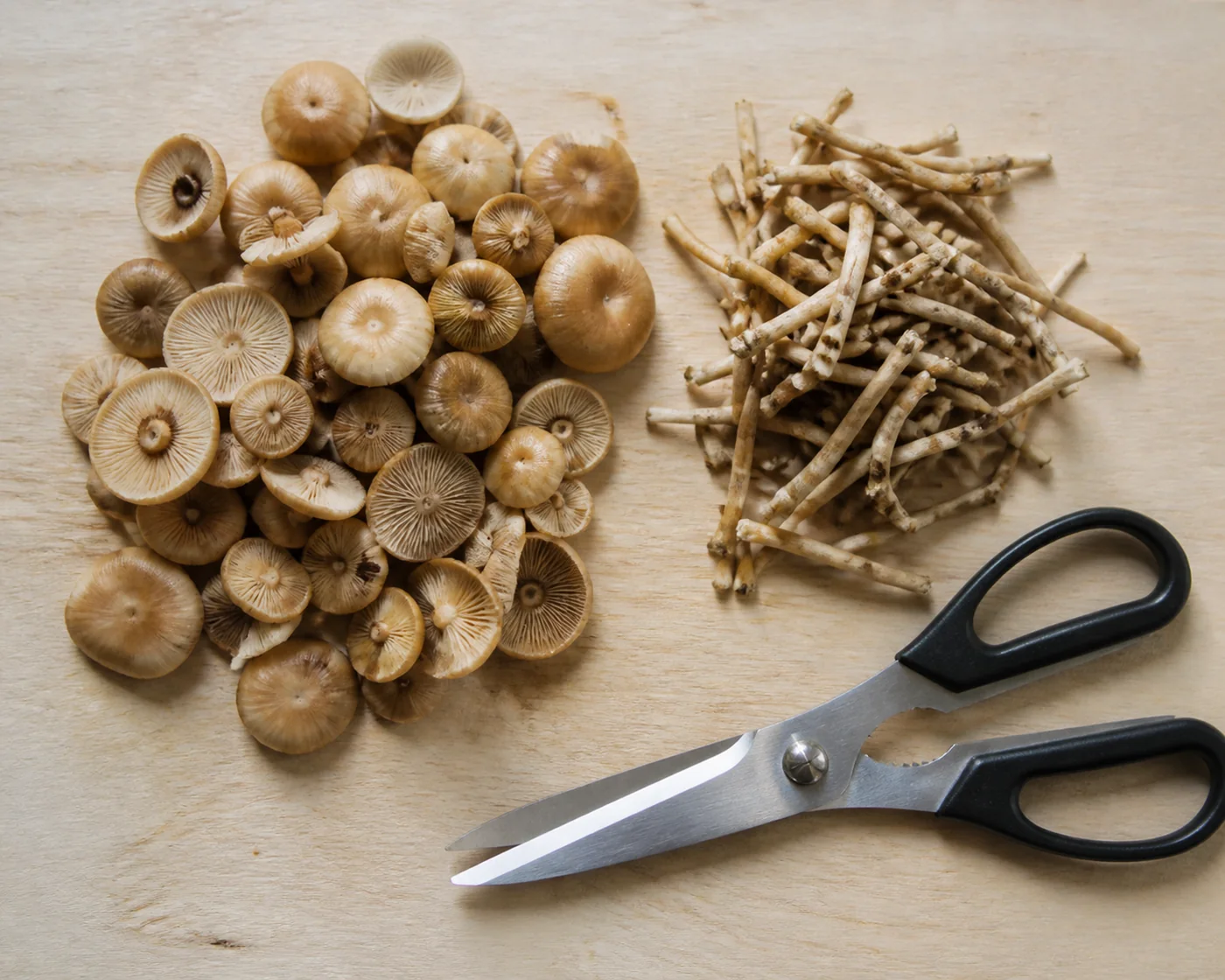
Preparation begins before the mushrooms leave the ring, and it begins with scissors.
The stems are too tough to eat and they never soften, so they come off and go in the bin. One cookbook gives the instruction in two flat sentences and does not elaborate on it.
Remove the fibrous stems with scissors and discard. They are too tough to eat.
A mycological society cookbook, on the one preparation step that is not optional
That is about as much ceremony as the question deserves.
That is a bigger loss than it sounds for a mushroom shaped like this.
The stem is most of the height and almost none of the food, so a full bag of picked mushrooms turns into a surprisingly small bowl of caps. Cutting them in the field rather than at home saves carrying the waste back.
The caps take far more cooking than their size suggests.
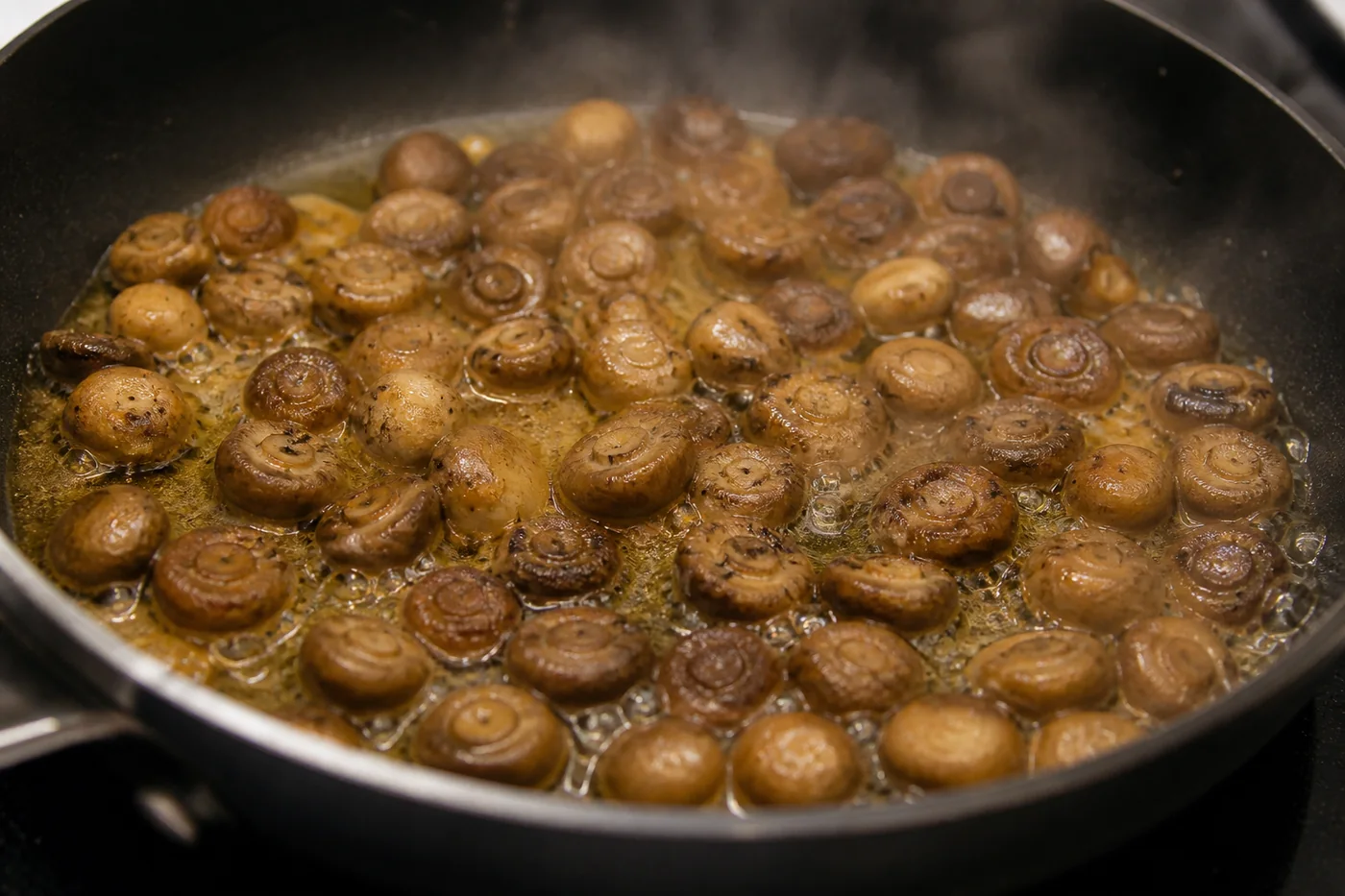
They are firm and they tolerate a long cook, which is unusual for something you could fit four of on a spoon. One cookbook recommends a fifteen minute simmer in water with butter and lemon juice before they go anywhere near a dish.
| Raw | Briefly fried | Simmered, stewed or dried | |
|---|---|---|---|
| Cyanogenic compounds | Released by chewing | Destroyed | Destroyed |
| Texture of the cap | Tough and rubbery | Still firm | Soft enough to enjoy |
| What the sources recommend | Nothing, they skip it | Rarely | This, every time |
The cookbook method for drying them is as low technology as the rest of this.
One cookbook threads the dried caps onto a string with a button tied at the bottom to stop them sliding off, and hangs the string somewhere warm to finish drying. A hundred caps take up almost no room done that way, which matters when a single ring can produce that many in a morning.
Drying is where this species is genuinely excellent, and it needs no long cook at all.
The caps are thin, they dry fast, they keep for a long time, and they go straight into a soup without needing to be soaked first. Very few wild mushrooms make drying that easy.
The revival trick has one practical consequence for soaked caps in the kitchen.
Dried caps that are soaked and then left sitting will start to come back to life rather than simply softening, because the same machinery that reflates them in the grass works in a bowl. Rehydrate them and cook them the same day rather than leaving them overnight.
Caps that dried themselves on the lawn are a different proposition.
One cookbook says sun-dried specimens found in the grass are safe to use and simply not as good as mature caps dried properly at home. That is a fair summary of most things about this mushroom, which rewards a little effort and forgives almost none of the shortcuts.
There is one more reason drying suits them.
The published chemistry says that drying above about a hundred and twenty degrees Fahrenheit destroys the cyanogenic compounds outright, so a jar of dried caps has already settled the question this page opened with.
It is worth learning, with the ring itself as the condition attached.
As an edible mushroom it is nutty, sweet and strong enough to carry a soup on its own, and it returns to the same patch of grass year after year. The price of that reliability is that something with a fifteen minute onset is using the same lawn.
Sources & References
- Marasmius oreades, Fairy Ring Champignon, First Nature The identification reference used here. Gives the 2 to 5 cm hygrophanous cap flattening to a broad umbo, orange-ochre or tan drying to buff, the distant gills that are adnexed or free, the 4 to 8 cm stem that is tough and pliant, the white spore print, the mild slightly nutty taste, the June to November season and the grassland habitat. Names Clitocybe rivulosa and Clitocybe dealbata as the white-spored grassland lookalikes that also form rings, separating them by the absence of an umbo and by much stiffer, less pliant stems. Also records that dried out fruit bodies reflate and regain their shape and color when rain soaks them.
- Fairy Ring Champignons, Wild Food UK Identification reference distinguishing the lookalikes, stating that the gills of C. rivulosa run down the stem and those of the fairy ring champignon are not attached to it, and that the edge of the C. rivulosa cap mainly stays in-turned even when the mushroom has opened out. Calls the free gills an important identification feature. Also gives the ring and semi-ring habit in short grass on lawns, verges, parks and pasture.
- Clitocybe rivulosa, Wikipedia The source for the lookalike's toxicity. Gives the common names false champignon, fool's funnel and sweating mushroom, states that its main toxin is muscarine and that it contains potentially deadly levels of it, that symptoms appear within 15 to 30 minutes and include greatly increased salivation, perspiration and lacrimation with abdominal pain, severe nausea, diarrhea, blurred vision and labored breathing in severe cases, and that death is rare but may result from respiratory failure. Also that it grows in lawns, meadows and other grassy areas in Europe and North America where it can often form fairy rings, has decurrent crowded gills, and that its moist cap has a brownish translucent aspect that disappears when dry.
- A free cyanohydrin as arms and armour of Marasmius oreades, Caspar and Spiteller, ChemBioChem, 2015 The source for the chemistry. Identifies the wound-activated chemical defense of this species as the free cyanohydrin of glyoxylic acid, which is degraded to hydrocyanic acid and glyoxylic acid upon injury, and reports the same cyanohydrin as the precursor of hydrocyanic acid in several other cyanogenic fungi.
- Hydrocyanic acid in mushrooms, with special reference to wild-growing and cultivated edible species, Stijve and de Meijer The source for what preparation does to those compounds. Reports that mild processing such as drying at temperatures over 50 degrees celsius and culinary preparation including cooking and frying completely destroyed the cyanogenic compounds, so that hydrocyanic acid in edible mushrooms does not present a health hazard to the consumer.
- Wild About Mushrooms, Fairy-Ring Mushroom, Mycological Society of San Francisco The source for the preparation. States that the fibrous stems are removed with scissors and discarded because they are too tough to eat, that the caps are quite firm and tolerate long cooking, that they can be simmered beforehand for 15 minutes in water with butter and lemon juice, that the thin caps dry quickly and go into soups without pre-soaking, that they are strung on a thread with a button at the bottom and hung somewhere warm, and that sun-dried specimens found on the lawn are safe but not as good as mature caps dried at home.