
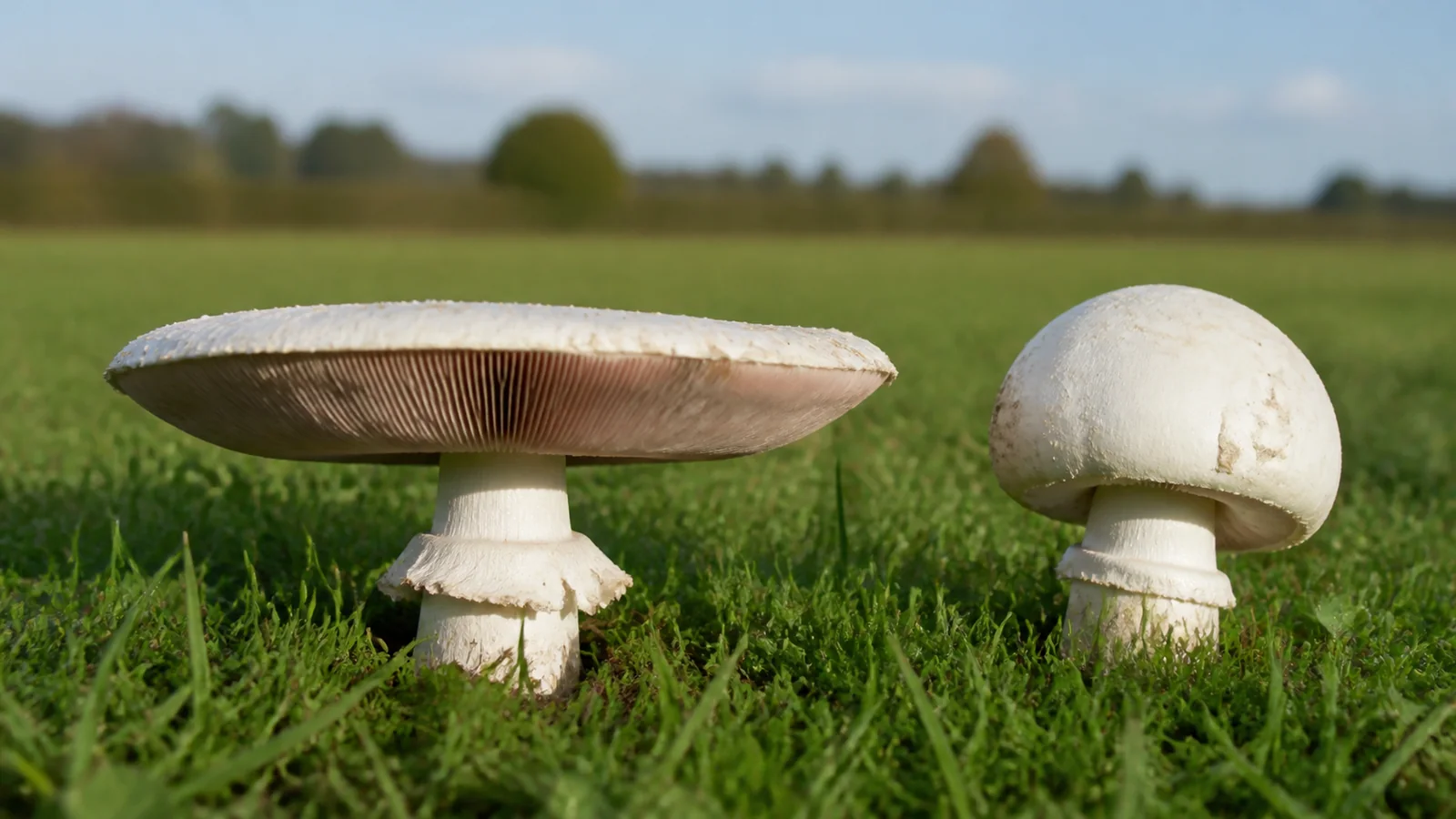
You cut into a big white mushroom out of a meadow and the flesh went yellow. Somewhere in the back of your mind is a rule that says yellow means poisonous, and now the mushroom is on the table and you are not sure.
The rule is real, the yellow is real, and the rule does not work on this species.
Can you eat horse mushroom raw?
No, and for once the reason has almost nothing to do with the mushroom.
Pay particular attention to that last identification check. Nobody worries about slicing a shop mushroom into a salad, and the wild members of the same genus are treated with much more caution for a reason that lives outside the mushroom entirely.
The reason is that in a shop, somebody else already did the identification. Out in a meadow the white gilled mushroom in your hand is one of several things, and only some of them are dinner.
Horse mushrooms are among the better wild edibles when they are the right mushroom. Firm, large, with an almond smell that survives the pan, and they come up in numbers on ground most people walk straight past.
Cooking does not fix a misidentification either.
What cooking does is buy time, because it is the step where most people slow down, look again and change their mind. Raw removes that step, which is the whole argument for not tasting wild Agaricus in the field.
Why the yellow bruise test fails here
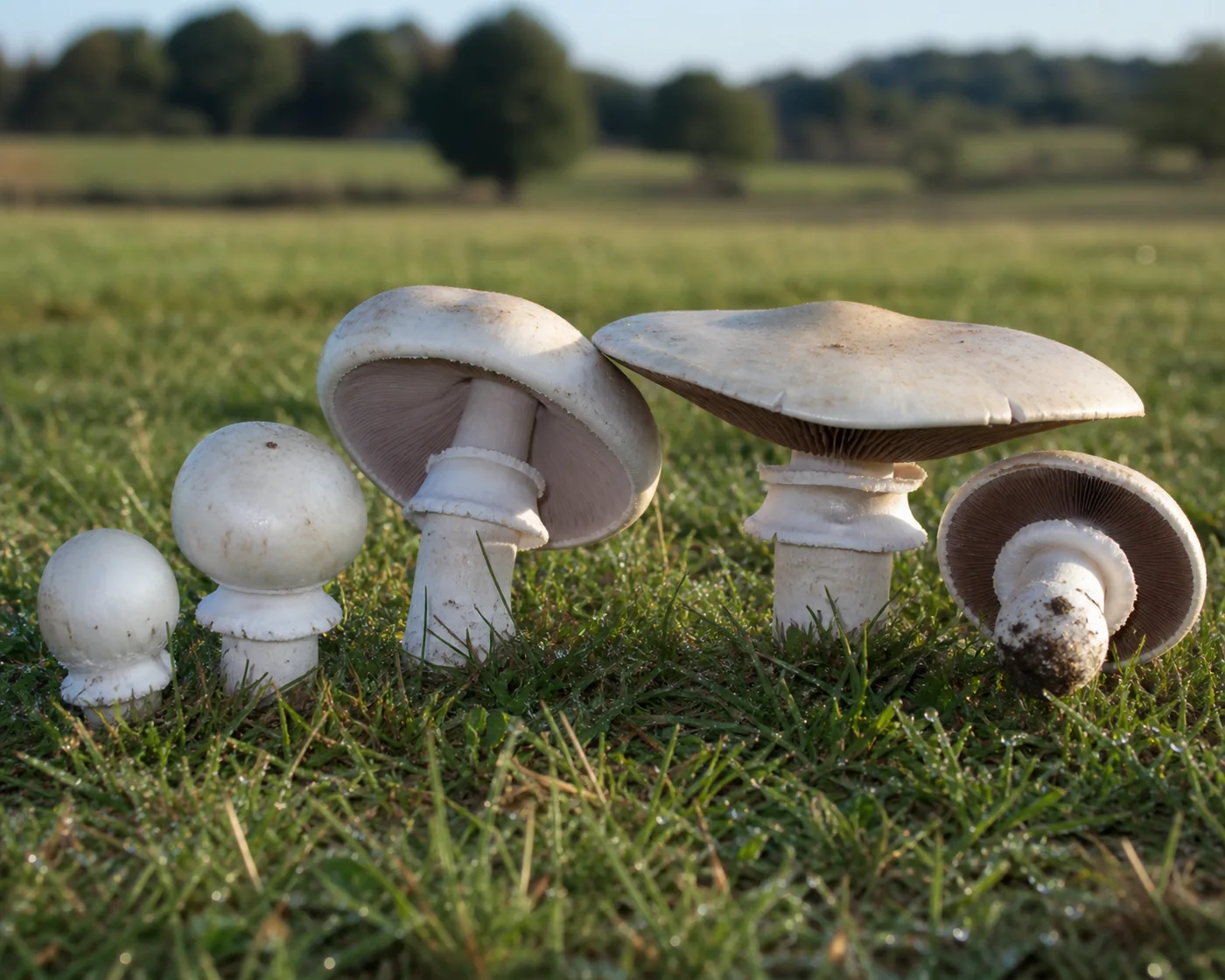
Here is the uncomfortable part. Horse mushroom bruises yellow, and so does the mushroom it is confused with.
- Horse mushroom flesh
- Bruises slightly yellow where cut or handled
- Horse mushroom cap
- Yellows gradually as the whole mushroom ages
- The yellow stainer
- Turns bright chrome yellow when cut or bruised
- What the stainer does
- Vomiting, diarrhea, stomach cramps and sweating
- What the test tells you
- Almost nothing, because both answers are yes
Most beginner guidance reduces this genus to one line, which is that yellow bruising means leave it. That line came from somewhere true and it has been sanded down until it stopped working.
The rule was not invented out of nothing.
Across the wider genus there are species where an instant chrome yellow at the stem base really is decisive, and the horse mushroom is the case that breaks the shortened version of the rule rather than the original one.
Both species yellow, so the presence of yellow separates nothing.
What separates them is how much, how fast, and where, and none of those three survives being compressed into a rule short enough to remember on a walk. Check the speed and location of yellowing along with the other identification features.
The good news is that the replacements are easy, and one of them does not involve looking at a color at all.
What actually separates the two
Smell first, because it is the one check that gives two completely different answers.
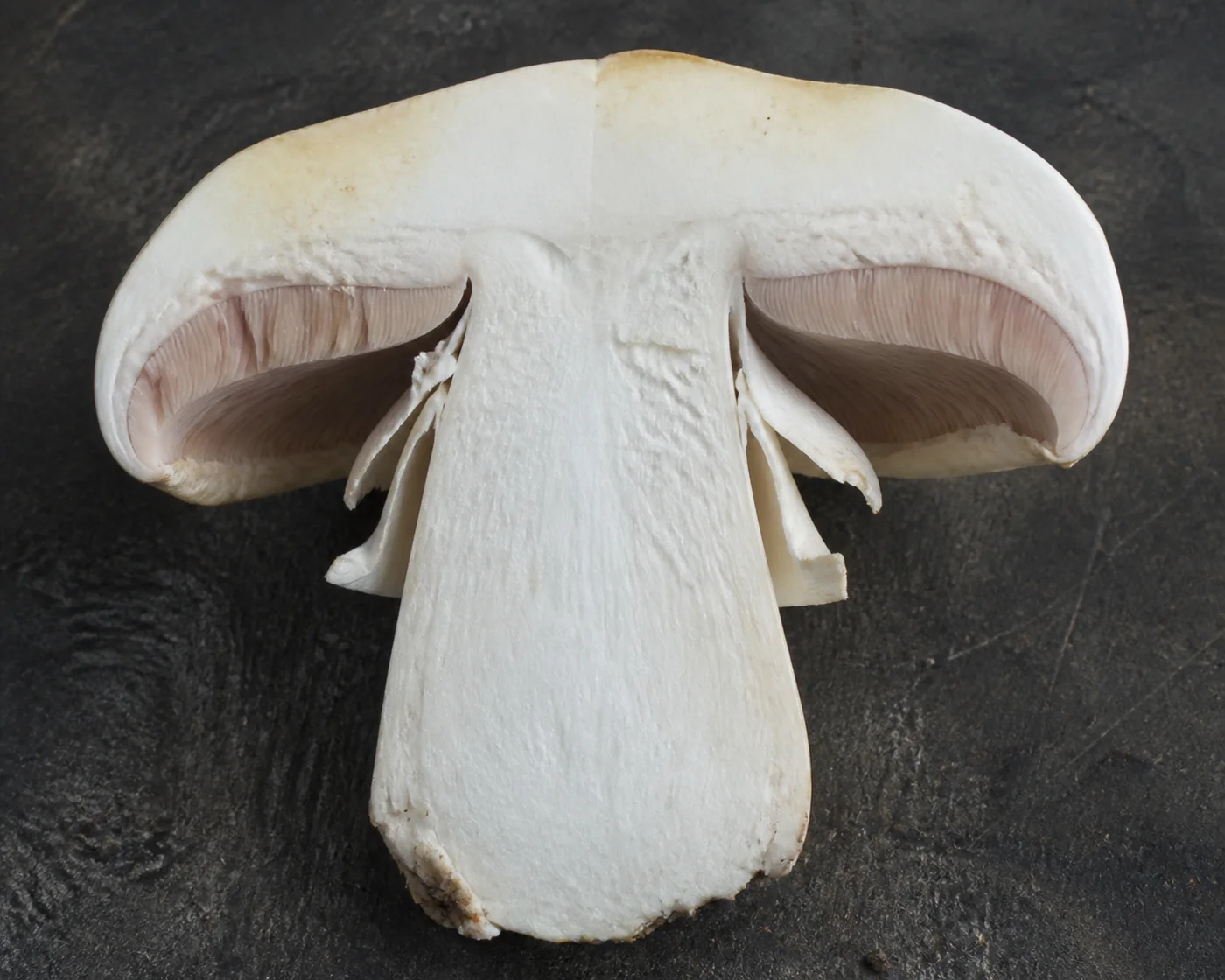
Cut the very bottom of the stem and watch it for half a minute before you smell anything. A yellow stainer goes an unmistakable chrome yellow there, quickly and brightly, and a horse mushroom does not do that at the stem base whatever the rest of the flesh is doing.
Then smell the cut. Aniseed is a pleasant, obvious, almondy smell and nobody who has met it confuses it with the inky phenolic smell of the other species, which people reach for words like hospital corridor to describe.
The ring is the third check and it is the one that does not depend on judging a shade.
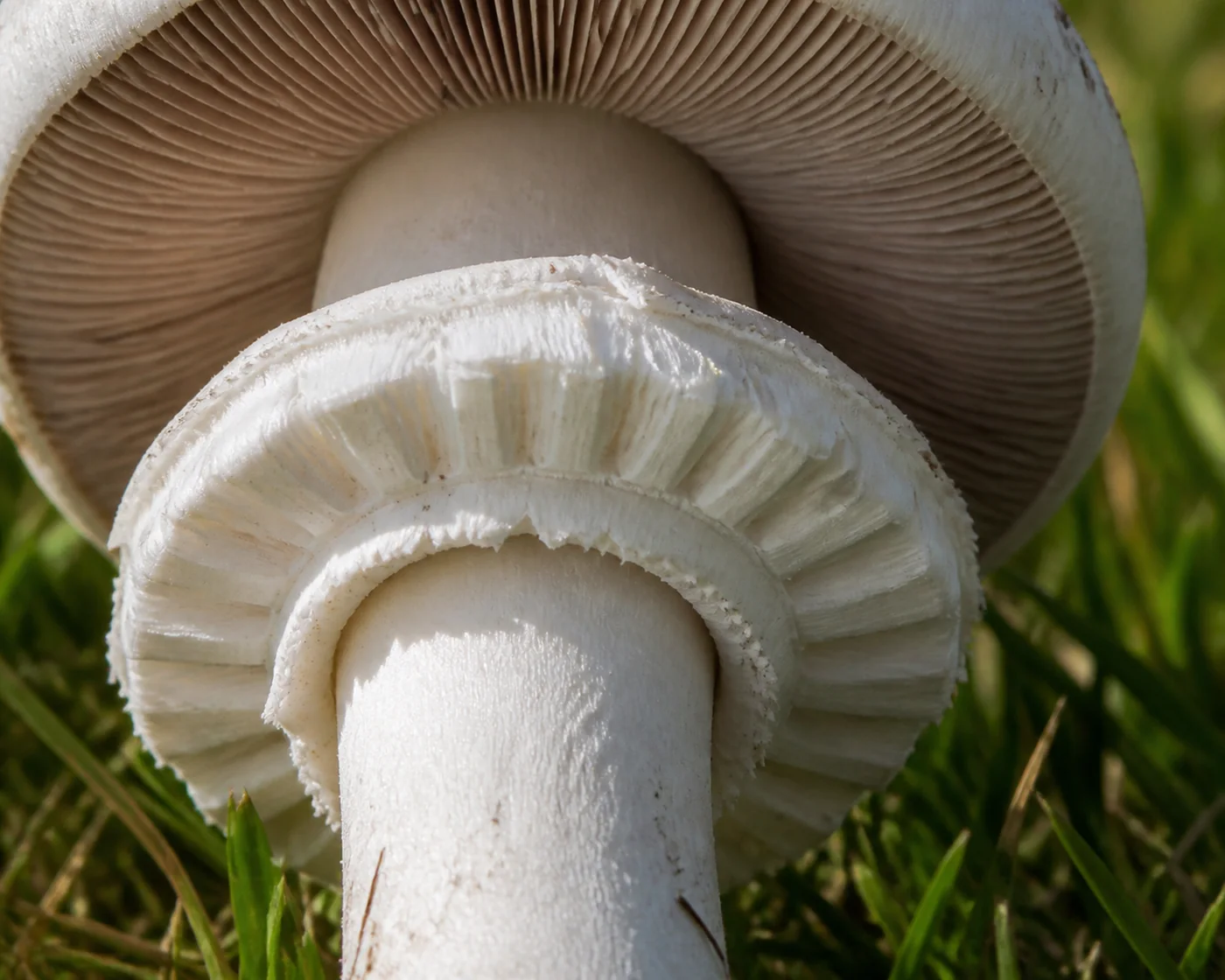
A horse mushroom carries a big double ring that droops from the upper stem, and the underside of it is patterned with thick radiating segments that get described as a cog wheel. It is a structure rather than a color, which makes it the easiest of the three to be certain about.
One caution about the ring. It tears easily and often shrinks to a narrow band on older specimens, so a damaged ring is not evidence against a horse mushroom, it is a ring that has had a week of weather.
Any one of those three would probably do. All three together take about a minute and settle it completely.
What happens if you get it wrong
Two different mistakes are possible in that field and they are not remotely the same size.
Warning
The likely mistake is a yellow stainer, which gives most people several unpleasant hours of vomiting, cramps and sweating and then ends. The rare and serious mistake is a young destroying angel, which is white, grows in grass, and contains amatoxins. It has gills that stay white rather than turning pink and then brown, and a bag-like sac at the base of the stem that a horse mushroom never has.
Some people eat yellow stainers and feel nothing at all, which is exactly why the species keeps its reputation as harmless among the people it has never troubled.
That variation is worth knowing about because it explains why you will find confident advice in both directions. Somebody who has eaten a stainer and been fine will tell you the warnings are overdone, and they are describing their own stomach rather than yours.
The second mistake has no version where you are fine. That is the one worth checking the base of the stem for, and it takes the same three seconds as everything else on this page.
SafetyCan You Eat Beefsteak Polypore Raw? Yes, If You Slice It ThinThe reason to eat it less often than you find it
There is one more thing about this species that foraging pages almost never mention.
The gap between those middle two lines is the part worth sitting with.
There are reports that this edible and greatly prized mushroom tends to accumulate heavy metals such as copper and cadmium.
A field reference, in one sentence about one mushroom
Greatly prized and accumulates cadmium is an unusual pair of things to say about the same mushroom. Both halves are in that sentence for a reason, because the species is genuinely worth eating and genuinely worth rationing.
Horse mushrooms fruit in rings and they fruit large, so a good field can produce more in one morning than a household would sensibly eat in a month. That is exactly the situation in which this matters.
Nothing here says a meal of them will hurt you.
It says that a species which concentrates cadmium is a poor candidate for the thing foragers do with a glut, which is to eat it every night until it stops appearing. Dry the surplus, give it away, or leave some standing.
Where you pick does most of the work. A mushroom out of clean grazed pasture is a very different proposition from one on a verge beside a main road, and the difference is invisible on the plate.
How it sits against the rest of the field
Almost every other page in this series answers a question about the mushroom, and this one answers a question about the picker.
| Species | Why not raw | Where the problem sits |
|---|---|---|
| Horse mushroom | The identification is not closed | In the field |
| Cremini | Nothing, it is fine raw | Nowhere, once it is fresh |
| Chicken of the woods | A share of people react even cooked | In the mushroom |
| Morel | Hydrazine compounds in the raw flesh | In the mushroom |
Two of those rows describe a compound and two describe a situation. Horse mushroom is the clearest case on the site of a mushroom that is genuinely good to eat and still not something to taste in a field.
That distinction is worth carrying into the rest of the series. When the problem is in the mushroom, cooking usually solves it, and when the problem is in the field, only slowing down does.
Cook it, and eat it less often than a good meadow will let you.
Sources & References
- Horse Mushroom, Agaricus arvensis, Wild Food UK Gives the instruction to cook it before consumption, the ten to sixteen centimeter cap, the white flesh bruising slightly yellow, the aniseed smell as a good way to identify it, the gills running from almost white through pale pink-gray to brown, the cog-wheel ring, the pasture and meadow habitat, and the yellow stainer staining chrome yellow with a smell of Indian ink, hospitals or iodine and causing vomiting, diarrhea, stomach cramps and sweats.
- Agaricus arvensis, Horse Mushroom, First Nature Gives the reports that this prized mushroom accumulates heavy metals such as copper and cadmium and should be considered an occasional treat rather than a food-for-free bonanza, the advice to avoid roadside specimens, the strong aniseed odor, the flesh yellowing where bruised, the robust double ring with a cog-wheel form underneath, the eight to twenty centimeter cap, and the point that A. arvensis does not rapidly yellow at the stem base where the yellow stainer does.