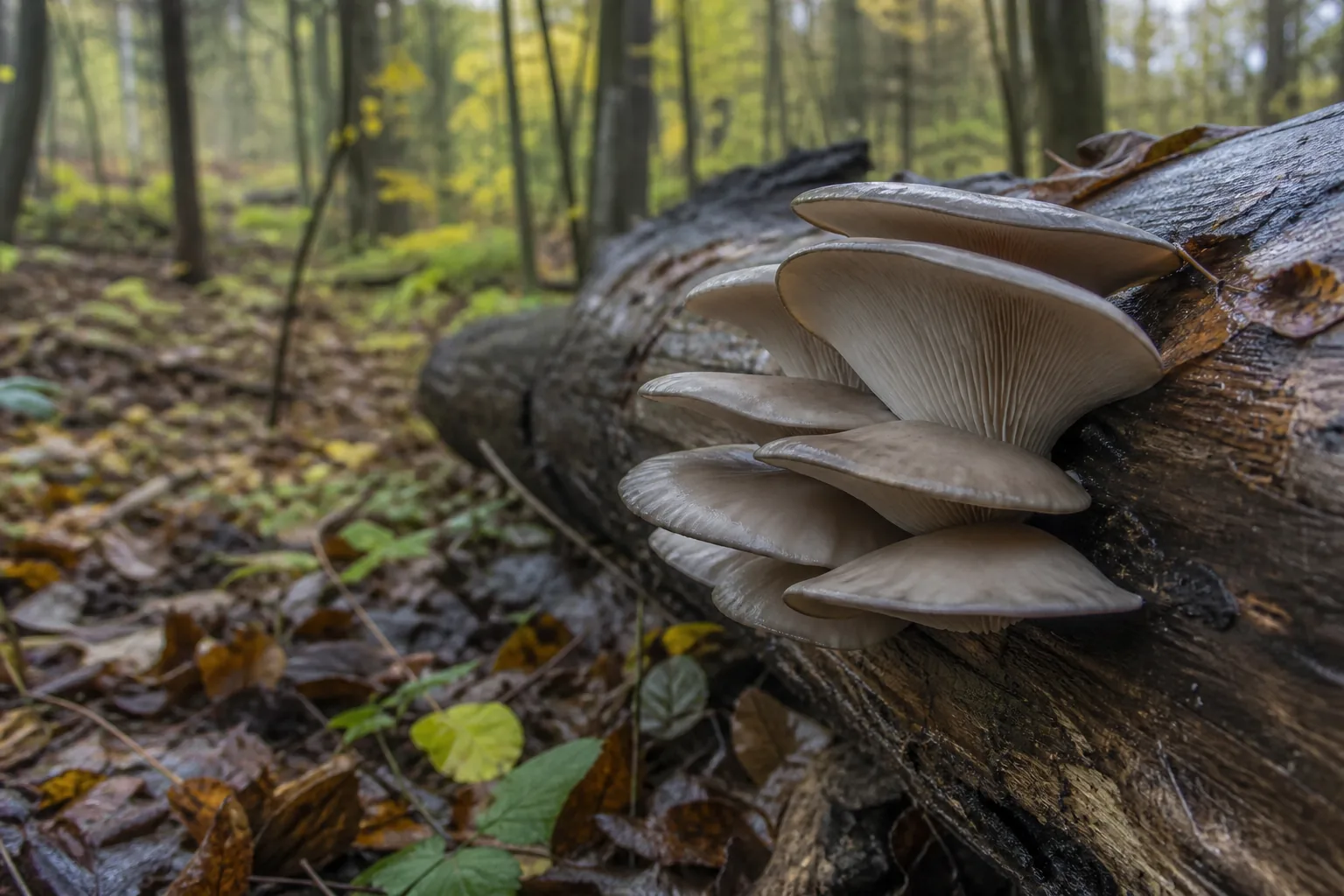
Cool-fruiting oyster mushrooms are often strongest from fall into early winter, while warmer Pleurotus species can fruit in spring and summer. Use the local species, hardwood host, recent moisture, and temperature trend together rather than relying on a month alone.
Oyster mushroom season is usually strongest from fall into early winter for cool-fruiting oysters, while warmer species can appear from late spring through summer. Those ranges are only a starting point because the local species, hardwood host, and previous week of weather decide whether a particular log fruits.
A suitable host with moist wood, a species that matches the temperature, and a recent shift toward humid conditions make a useful scouting case, while a date on its own does not.
When oyster mushrooms fruit by region
Broad regional windows help you decide when to start watching known trees, but they cannot promise a flush. Elevation, distance from the coast, urban heat, drought, and the oyster species present can move the useful window by weeks.
| Setting | Most useful starting window | What can move it |
|---|---|---|
| Cool northern and inland climates | Late summer through fall, with some fruiting during mild winter spells | Early freezes, autumn rain, sheltered valleys, and cool-fruiting species |
| Temperate eastern and mid-latitude forests | Spring pulses and a stronger fall to early winter period | Hardwood moisture, storm tracks, and alternating warm and cool weeks |
| Maritime climates | Fall through winter, sometimes extending into spring | Persistent humidity, limited hard freezes, and wind exposure |
| Warm southern and lowland climates | Cooler wet periods, plus warm-season species in spring and summer | Heat, rainfall distribution, and the local Pleurotus group |
| Mountain landscapes | A moving window that follows elevation | Snowmelt, slope exposure, nighttime cooling, and host distribution |
The same region can hold more than one season. A warm-tolerant oyster may fruit during humid summer weather, then a cool-fruiting species can appear on a different hardwood after autumn temperatures fall.
Latitude alone cannot settle the window because continental and coastal climates distribute moisture differently. A northern city with irrigated park trees may produce an isolated warm-season cluster, while a southern forest in drought can miss a month that normally supports fruiting.
The regional calendar also shifts when pruning, storm damage, and tree decline expose wood at different elevations, changing where suitable colonized substrate may support future observations without creating an immediate oyster crop.
Elevation creates another local calendar because cooler nights can start fruiting high on a mountain before the valley responds, then end the upper window while lower hardwoods remain productive.
Use the table to open a watch period, not to schedule a harvest. A known log that produced last October deserves attention when similar moisture and temperature return, but a dry log can remain quiet through the correct month.
For a state-level prediction, compare observations from the same climate division rather than opposite ends of the state. Note elevation and the reporting date because a coastal county, mountain county, and heated urban corridor can occupy different fruiting windows during the same week.
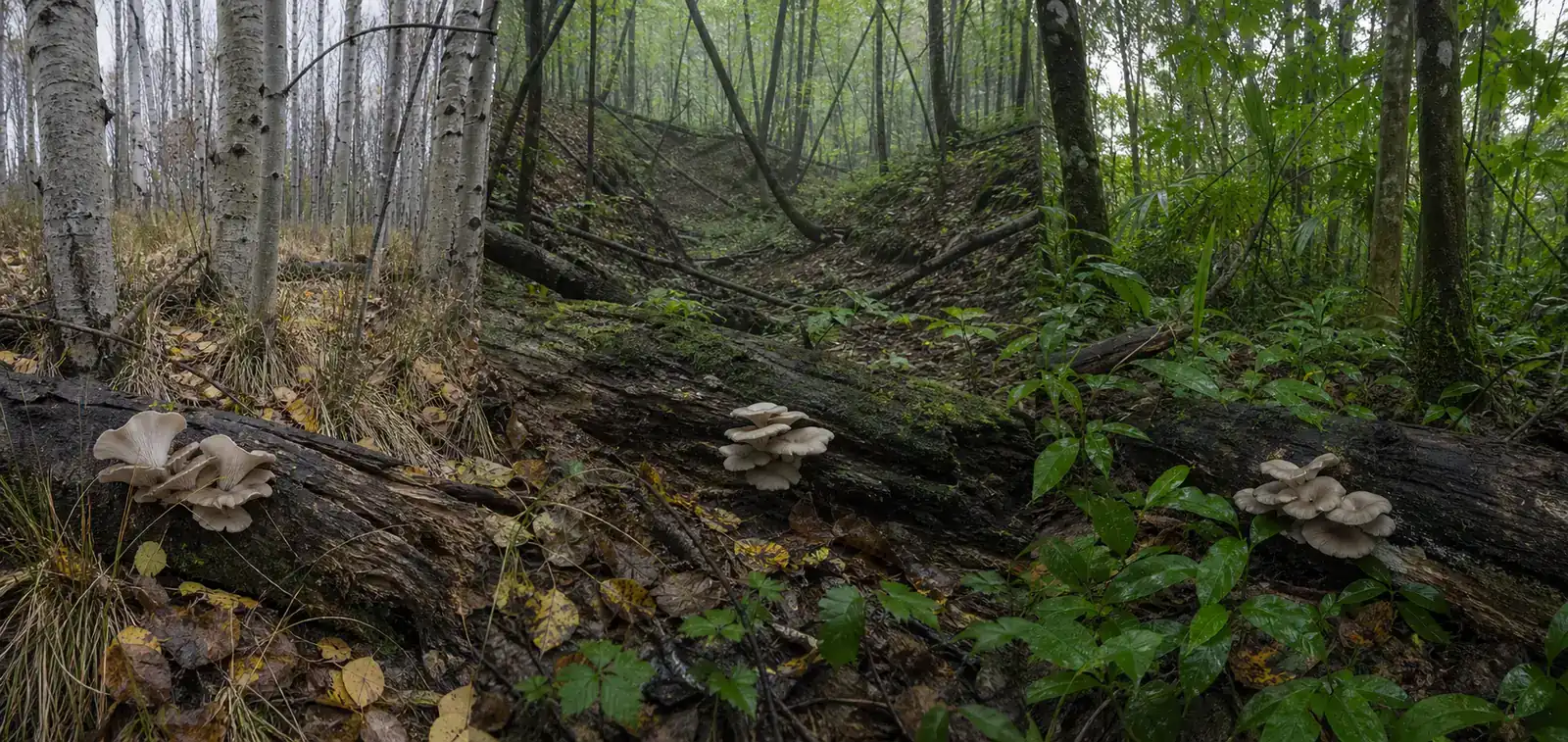
Oyster species set different calendars
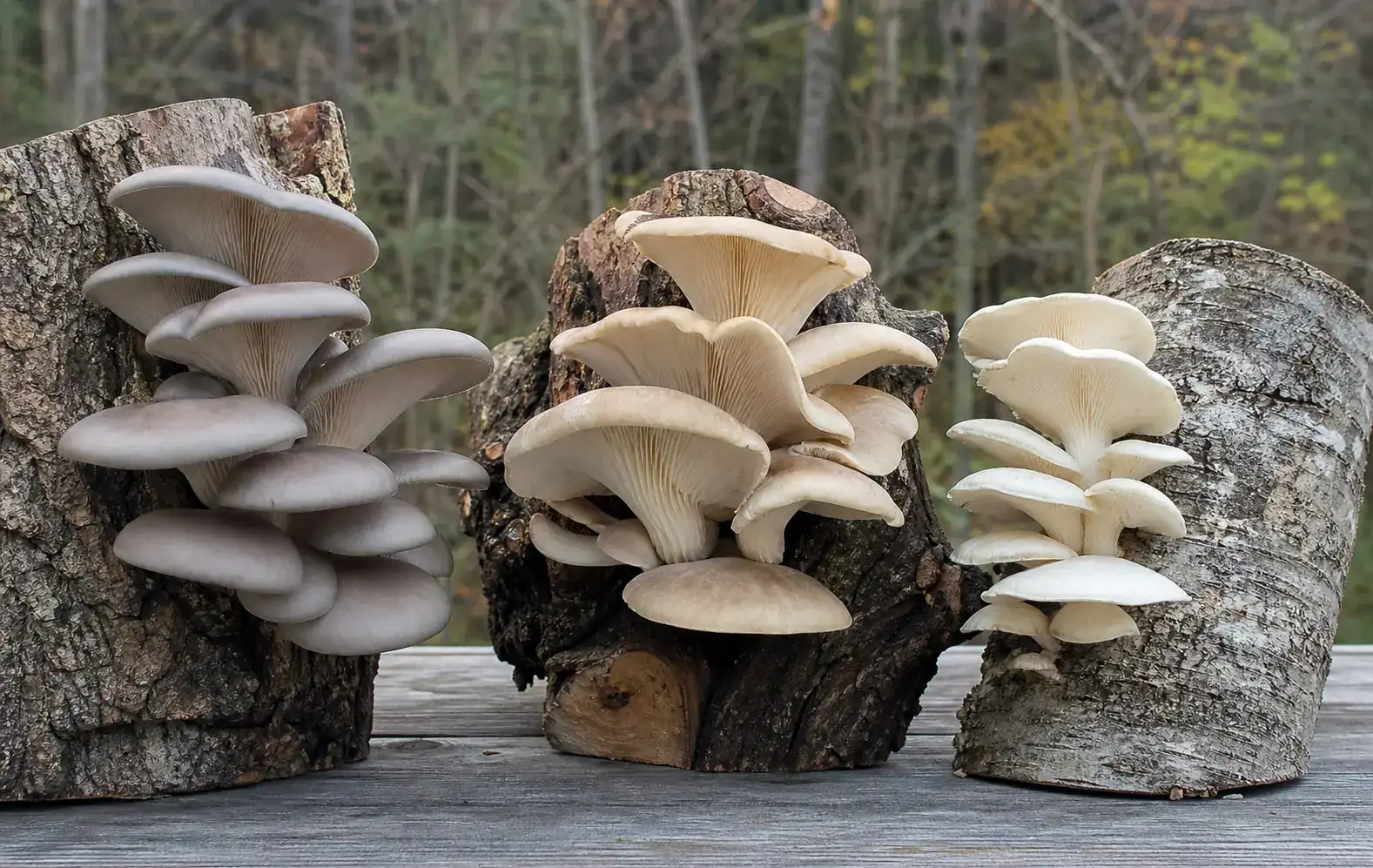
The name oyster mushroom covers several Pleurotus species with different host and temperature preferences. Treating them as one organism is the main reason simple month lists contradict one another.
Pleurotus ostreatus is the classic cool-weather oyster in much of temperate North America, often fruiting after autumn cooling and returning during a mild winter interval when colonized hardwood remains moist and unfrozen.
Pleurotus pulmonarius is commonly associated with warmer fruiting. A summer oyster report can therefore be biologically reasonable even when a nearby cool-weather site remains inactive.
Pleurotus populinus is closely tied to aspen and is reported from summer into fall, so its calendar does not transfer cleanly to a beech or oak log occupied by another species.
- Cool-weather pattern
- Pleurotus ostreatus often responds to autumn cooling and mild winter periods
- Warm-weather pattern
- Pleurotus pulmonarius can extend oyster hunting into warmer months
- Aspen signal
- Pleurotus populinus is associated with aspen and commonly fruits from summer into fall
- Identification limit
- Temperature and host support an identification but cannot establish it alone
Species names are not labels to assign from season alone. Photograph the cap, underside, attachment, stem area, substrate, and the whole cluster, then combine those characters with spore evidence and local expertise.
Common names also shift between regions and field guides. Record a confirmed scientific name when possible, and preserve uncertainty when the evidence supports only a Pleurotus group, because a mistaken species label can distort every later season note from that site.
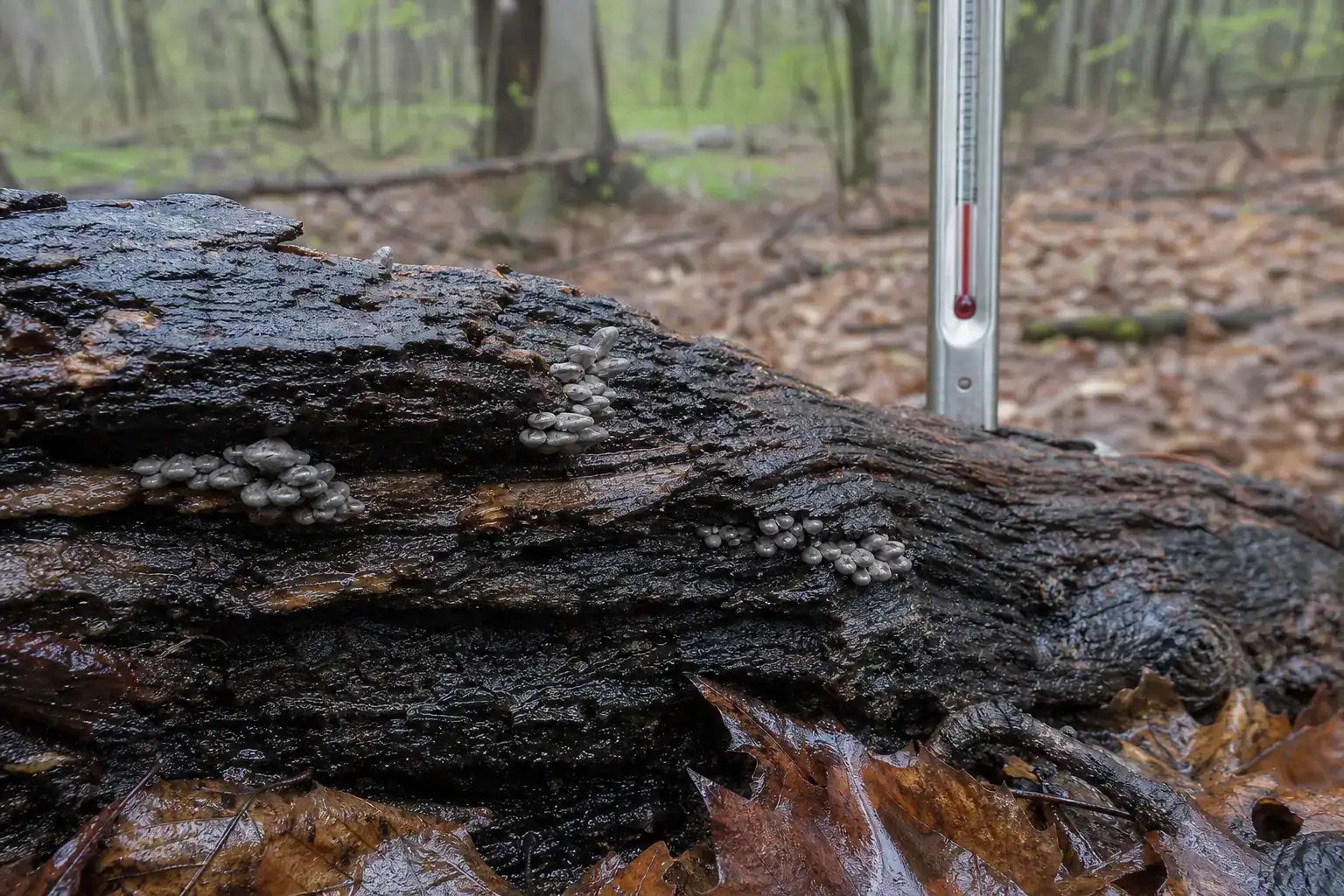
Rain, cooling, and the fruiting lag
Rain matters when it restores moisture to colonized wood and the air stays humid enough for developing mushrooms. A brief shower that wets bark but leaves the interior dry may produce no visible response.
Temperature often works as a change signal because cool-fruiting oysters may respond after nights become colder, while warm-fruiting species remain active at temperatures that would leave a fall oyster dormant.
The sequence is more useful than the daily forecast. Sustained rain or high humidity, a temperature trend that suits the local species, and several calm days with limited drying wind give pins a better chance to expand.
Visible mushrooms lag behind the weather because the fungus must initiate and expand fruit bodies. Check known wood over several days rather than expecting mature caps the morning after rain.
A field log can reveal that lag without pretending it is constant. Record the last substantial wet period, daily high and low temperature trend, wind exposure, first pin date, and first mature cluster date, then compare several flushes from the same host.
A hard freeze can stop expansion or damage exposed tissue without erasing the fungus inside the wood, so another mild and wet interval may support later fruiting when the species and substrate remain viable.
Where the season shows up first
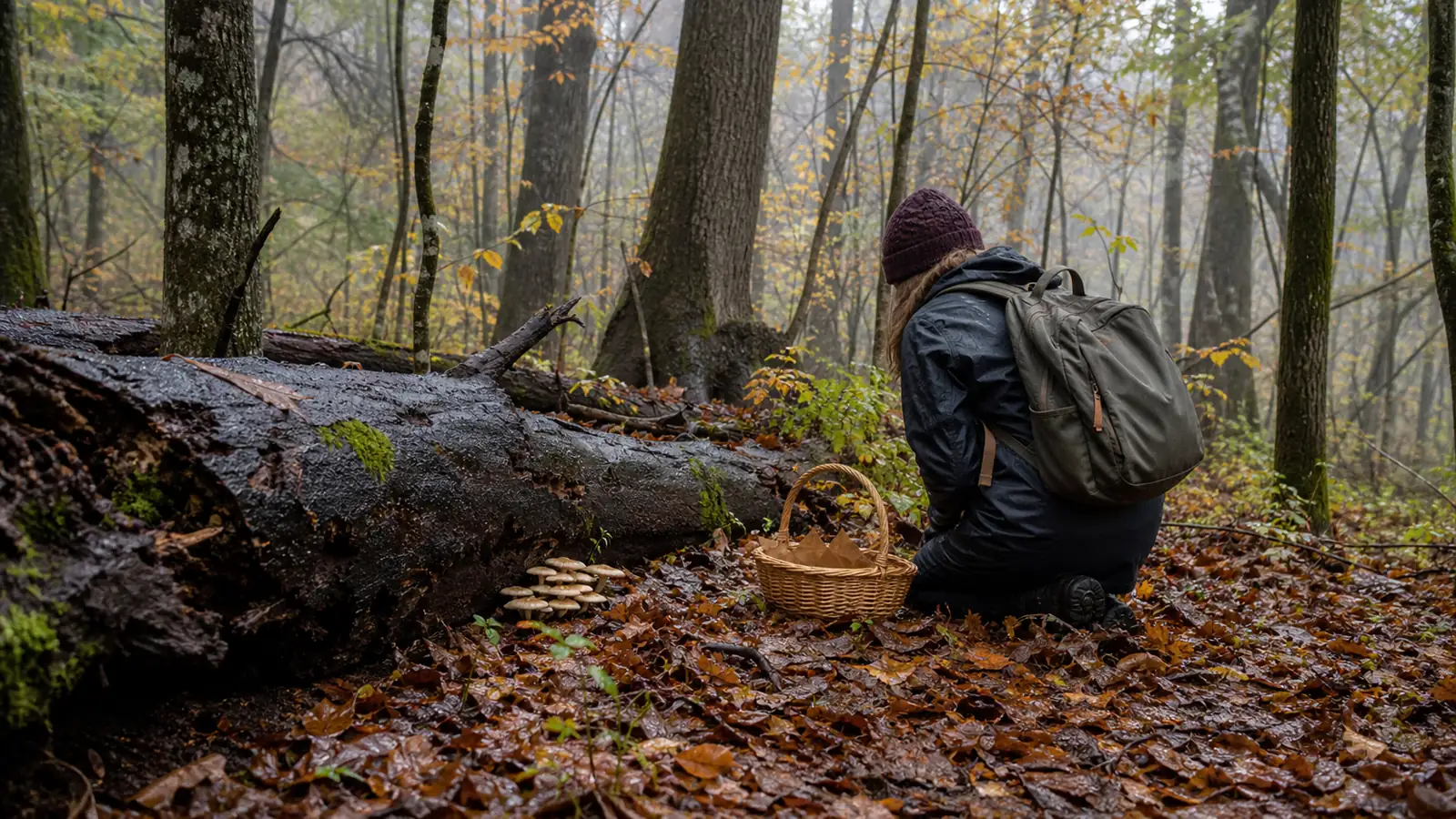
Start with dead or declining hardwood rather than open soil. Oyster mycelium decomposes wood, although fruiting from buried roots can make a cluster look as if it grew from the ground.
Standing snags, fallen trunks, large limbs, stumps, and buried root systems can all hold colonies, so records from confirmed local finds are more useful than a universal favorite-tree list.
Shaded wood retains moisture longer than an exposed log. Creek bottoms, protected ravines, the damp side of a trunk, and the underside of a fallen limb may begin or preserve a flush after sunny edges have dried.
Tip
Revisit a confirmed host after a comparable weather sequence. Record tree type, exact attachment point, temperature trend, rainfall pattern, and cluster condition so the next visit is based on the site rather than the calendar.
The first productive place is not always the wettest place. Waterlogged wood, flooded ground, or stagnant conditions can damage tissue, while a well-drained site with moist internal wood may support cleaner development.
Wood size affects how long a site holds a fruiting opportunity because a large trunk buffers rapid temperature and moisture changes, while a thin branch can wet quickly after rain and dry before pins complete their growth.
The colony also has its own history. Recently fallen wood, old logs, and standing dead trees offer different stages of decay, and only wood already occupied by oyster mycelium can respond with an oyster flush.
A productive host can also pause for a season as moisture, available wood, or competing fungi change. Keep a quiet log in the record when its habitat remains suitable, but widen the route instead of assuming yesterday's producer must fruit after every comparable rain.
Checking ten known hardwoods across different shade and elevation bands usually teaches more about the local season than covering a large area without a substrate plan.
Fresh clusters show where the flush stands
Cluster condition tells you whether you arrived near the start, peak, or end of a flush. Young oysters often have firm tissue and margins that remain rolled inward, while expanding caps flatten and expose more of the decurrent gills.
Freshness is more than size. A compact cluster can already be dry or insect-damaged, and a broad cap can remain sound in cool, humid weather.
Thin cluster margins reveal drying early through curling, cracking, browning, or a papery feel even when the thicker base still looks substantial.
Older clusters often soften, yellow, collect debris, develop odor, or hold insect larvae. Heavy white spore deposits on lower caps show that the cluster has matured, but spores do not by themselves make the tissue spoiled.
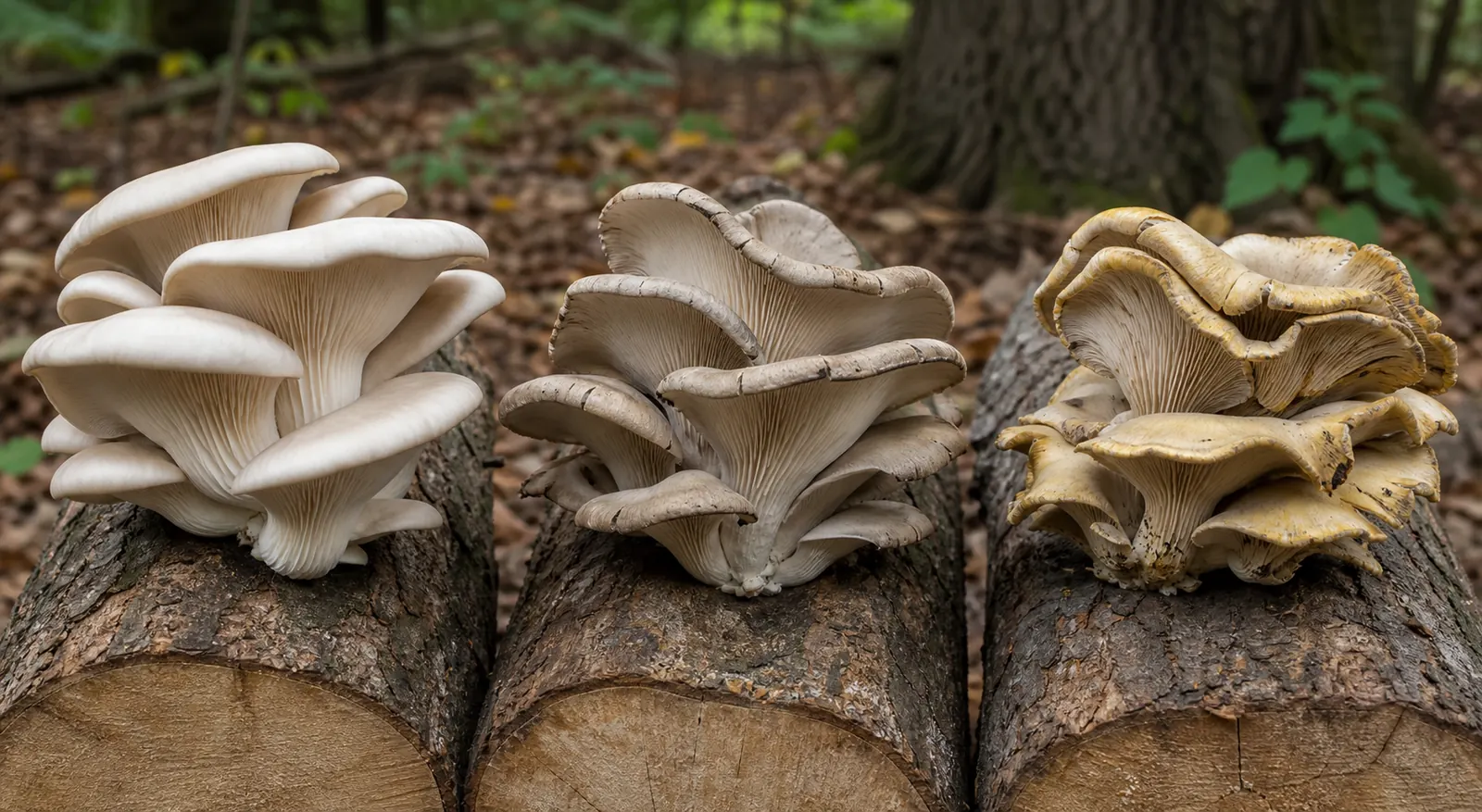
A mix of pins and mature caps can indicate continuing production, so leave uncertain small clusters undisturbed and return later to photograph their development.
Condition also reveals microclimate. If shaded clusters remain supple while exposed clusters on the same log are cracked, drying conditions rather than a regional end date may explain the difference.
ForagingWhere to Find Fall Mushrooms After the First Cool RainsWinter fruiting is a local exception
Yes, cool-fruiting oysters can appear during winter in places where colonized wood thaws and air temperatures remain mild enough for development. Maritime climates, sheltered valleys, urban heat, and south-facing warmth can create short fruiting intervals inside a cold season.
Winter fruiting does not mean normal growth through every freeze because exposed caps can become water-soaked, translucent, brittle, or discolored, then deteriorate faster after temperatures rise.
Snow can insulate low wood while also hiding the substrate and creating unsafe footing. A cluster beside snow is evidence of local conditions, not proof that snow triggered it.
Judge the recent temperature sequence and the mushroom itself because new growth after several mild days differs from a persistent cluster with dry margins, freeze injury, or advanced spores.
Winter also narrows the host check. Leafless trees can make bark and branching structure easier to see, but dead wood is harder to identify confidently, so record multiple tree characters and avoid relying on one patch of bark.
The safest conclusion is local and temporary. A winter observation tells you that this species and this piece of wood responded to this weather window, which is enough to guide a revisit without turning the event into a permanent calendar rule.
Distinguish a newly expanding cluster from one preserved by cold. New caps usually show active margins and consistent texture, while an older cluster may carry debris, heavy spores, freeze injury, or drying that began before the latest mild spell.
Which field checks come before harvest
Season never identifies a mushroom because several pale, shelf-forming fungi appear on wood, and even a convincing oyster shape needs an underside, attachment, substrate, texture, odor, and spore assessment.
Angel wings are a particularly important comparison for pale lateral clusters. Their conifer association, thin delicate flesh, and different form must be evaluated with the complete specimen and local knowledge rather than reduced to one visual cue.
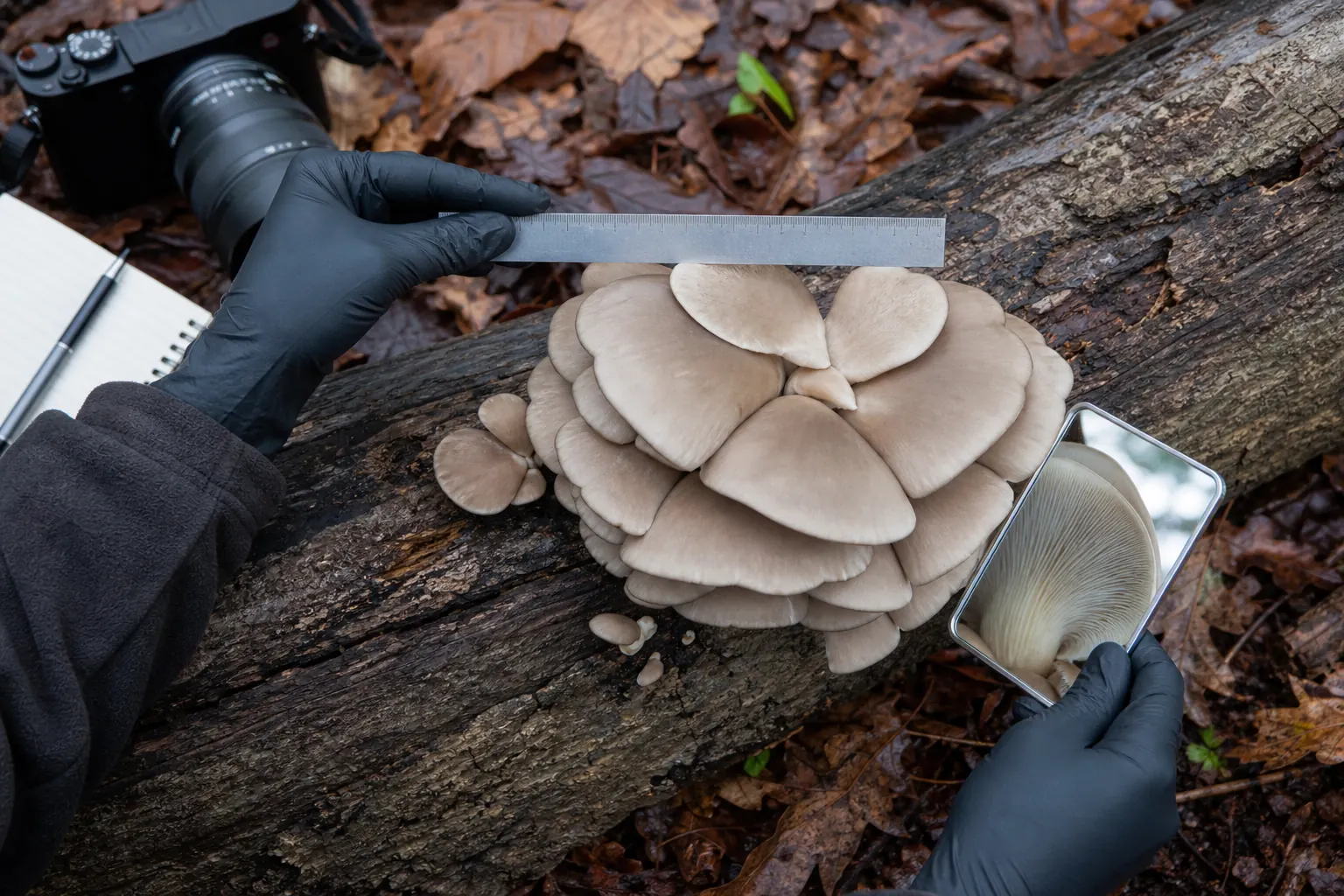
Do not use an app result, one photograph, or a seasonal match as an edibility decision, and ask a local expert to review complete evidence before an identification is used for food.
Check local land rules before collecting because parks, preserves, private property, and commercial harvest areas can apply different permissions. A legal collection still requires restraint, since taking every young cluster removes the chance to observe development and leaves no intact evidence if the identification is questioned.
Leave degraded clusters and any specimen growing where collection is prohibited. Also inspect the standing tree or overhead limbs because dead hardwood can create a falling-branch hazard independent of the mushroom.
Why cultivated timing follows a different clock
A cultivated oyster block can fruit outside the wild season because its calendar begins with colonization and controlled moisture, fresh air, light, and temperature rather than regional rainfall.
- Wild clock
- Species, host wood, weather, and microclimate must align outdoors
- Cultivated clock
- A colonized block responds to managed humidity, air exchange, and temperature
- Shared biology
- Both systems still depend on a Pleurotus strain with a suitable fruiting range
- Practical boundary
- A kit schedule cannot predict when a forest log will fruit
Indoor production therefore does not disprove a local wild season. A warm room can support one strain while outdoor hardwood remains too dry, frozen, or occupied by a different oyster species.
The comparison isolates the missing field signals by asking whether the wood is colonized and moist, the local species matches the temperature, and wind or freeze interrupted development.
Stop scouting when repeated checks show unsuitable wood moisture or deteriorated old clusters and no new pins across the best hosts. Begin again when a new weather sequence changes those conditions, not when the next calendar page turns.
Sources & References
- https://www.fs.usda.gov/nrs/pubs/gtr/gtr_nrs79r.pdf
- https://research.fs.usda.gov/treesearch/download/5106.pdf
- https://namyco.org/interests/toxicology/mushroom-poisoning-syndromes/