
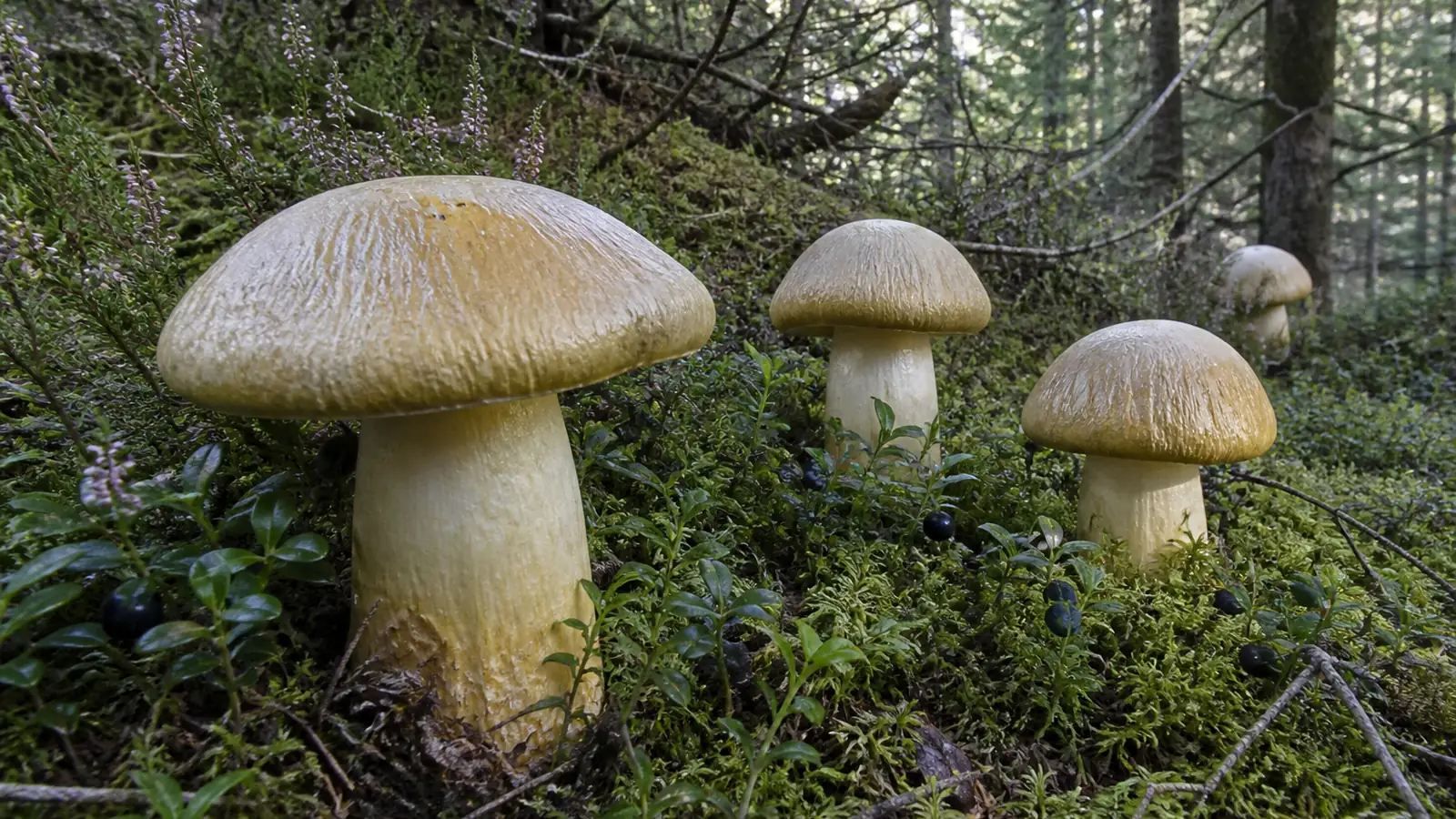
For most of the last century this mushroom was called Rozites caperata, and then genetic work moved it into Cortinarius.
That reclassification is the most useful thing anybody can tell you about it.
Cortinarius is the genus that contains the mushrooms which destroy kidneys three weeks after the meal, and the gypsy mushroom now sits inside it.
Can you eat gypsy mushroom raw?
No, and this part is mild. Raw gypsy mushroom is reported to cause gastrointestinal discomfort in some people, and cooking deals with it.
- The verdict
- No, but the reason is comfort rather than danger
- What raw does
- Mild stomach upset in some people
- What fixes it
- Ordinary cooking
- Cooked flavor
- Mild and nutty with a meaty texture
- Standing
- A prized choice edible where it fruits in numbers
The raw-eating question does not settle the identification risk.
Something odd turned up while checking the sources on this mushroom. Three separate pages describe this mushroom in detail, and not one of them mentions cooking at all, which is unusual for a species reported to upset stomachs uncooked.
Preparation still matters after identification.
A raw fragment is very unlikely to do anything at all, and the people who report discomfort are describing a real meal rather than a taste. Ordinary cooking removes the question entirely and there is no argument in the sources about the cooked mushroom.
Something else is missing from all three of those sources as well.
None of them names a single dangerous lookalike. That is a strange omission for any wild mushroom and a remarkable one for this particular mushroom, for reasons the next section is about.
The question comes up because the mushroom looks so reassuring.
It is pale, firm, ringed, clean and unremarkable, with none of the features that make people hesitate. Its ordinary appearance can encourage someone to skip the identification checks.

The taste and smell of the mushroom offer no help either.
Both are described as mild and not distinctive, so a species that some people identify by nose gives nothing away. Check the full structure before assigning a name.
SafetyCan You Eat Bay Bolete Raw? The Blue Stain Is Not the ReasonThe genus it was moved into
Cortinarius is an enormous genus and a small number of its members are among the most dangerous mushrooms in the world.
Warning
Cortinarius contains the deadly webcaps, including Cortinarius rubellus and Cortinarius orellanus, which carry orellanine. Orellanine attacks the kidneys and the failure it causes is often irreversible. These species occupy the same northern conifer woodland the gypsy mushroom grows in.
The size of the genus is part of the problem.
Cortinarius is one of the largest genera of gilled mushrooms in existence, running to thousands of described species, and a great many of them cannot be named to species without a microscope. A forager who narrows a find down to Cortinarius has usually finished narrowing.
That is why this species stands out inside it.
The gypsy mushroom has a distinctive feature useful in field identification. A damaged specimen that has lost it is harder to distinguish from its relatives.
The name change is not a piece of trivia.
For decades this species sat in its own genus, which let field guides describe it without ever mentioning webcaps. The genetic work that moved it did not change the mushroom, but it did change which shelf it belongs on, and the neighbors on that shelf are worth knowing.
Nothing about that makes the gypsy mushroom itself dangerous.
It is a good edible with a long record behind it and it carries no orellanine. What it has is relatives, and the toxic species to know is a better introduction to them than a basket is.
The habitat these species share is the part that matters practically.
Both this species and the deadly webcaps come up in northern conifer forest, in the same months, on the same mossy ground among the same low shrubs. Nothing about where you are standing separates them.
SafetyCan You Eat Beech Mushrooms Raw? Not Poisonous, Just BitterOrellanine takes days, not hours
The reason orellanine poisoning is so dangerous has very little to do with the dose.
Compare that with everything else answered on this site.
A gut irritant announces itself in one to three hours and a muscarine mushroom in fifteen minutes. Two days to three weeks is a different category of problem, because by the time anything happens the meal is not a candidate explanation any more.
Nobody connects a Tuesday dinner to a Friday headache the following week.
That is the entire mechanism by which this poisoning does its damage. It is not that the toxin is unusually potent, it is that the onset window removes the connection between cause and effect for long enough that nobody seeks help until the kidneys have already gone.
The delay does more than hide the cause.
Most poisonings have a window in which treatment can limit the damage, and orellanine runs its course through that window unopposed while the person feels entirely normal. By the time anything is noticed there is no early intervention left to make.
That is why the outcomes are described the way they are.
Kidney failure from orellanine is often permanent rather than something recovered from, which puts people on long term dialysis or a transplant list. It is not the number of deaths that makes this genus frightening, it is what survival looks like.
That changes what a sensible response looks like.
On most pages here the advice is to act on symptoms. Here the advice is to act on doubt, because waiting for symptoms means waiting a fortnight, and hospital treatment started after kidney failure has begun is a very different proposition from advice given the same evening.
It is worth being concrete about what dialysis and a transplant actually involve.
Long term dialysis means several sessions a week, indefinitely, and a transplant means major surgery followed by a lifetime of medication. Neither is a footnote to a mushroom meal and both are ordinary outcomes of this particular poisoning.
Set against surgery and a lifetime of medication, the cost of being wrong in the other direction is nothing.
Leaving a doubtful Cortinarius in the woods costs one mushroom. There will be more of them next month and more again next year.
If a meal involved a mushroom from this genus and anything about it was uncertain, say so early rather than waiting.
That means a phone call while everybody still feels perfectly well, which feels absurd and is exactly right.
The people taking that call would far rather hear about a mushroom nobody needed to worry about than meet the symptoms a fortnight later. It is the one poisoning on this site where feeling fine proves nothing at all.
A real ring against a rusty ring zone
The separation is a single structure and it is genuinely reliable.
Cortinarius is named for the cortina, which is a fine web of radial fibers stretched across the gills of a young mushroom. One of the ranking pages explains this and then goes no further with it.
Cortinarius caperatus is an exception and has a membranous partial veil.
A species page, one sentence after explaining that cortina means curtain
That sentence is the separation, written by somebody who then named no lookalike at all. The gypsy mushroom is the exception in its own genus, because it carries a thick membranous ring instead.
| Gypsy mushroom | Deadly webcaps | |
|---|---|---|
| The veil | A thick white membranous ring | A cobweb of fine radial fibers |
| What is left on the stem | A persistent band of tissue | A rusty ring zone of trapped spores |
| Where it sits | Just above the midpoint | Wherever the cobweb collapsed |
| Spore print | Rusty brown to ochre brown | Rusty brown |
The second row of the table, about the stem, is the one to memorize.
A cortina does not leave a ring, it collapses onto the stem and catches falling spores, which stains a rust colored zone into the fibers. That zone can look like a ring from a distance and it is nothing like one in the hand.
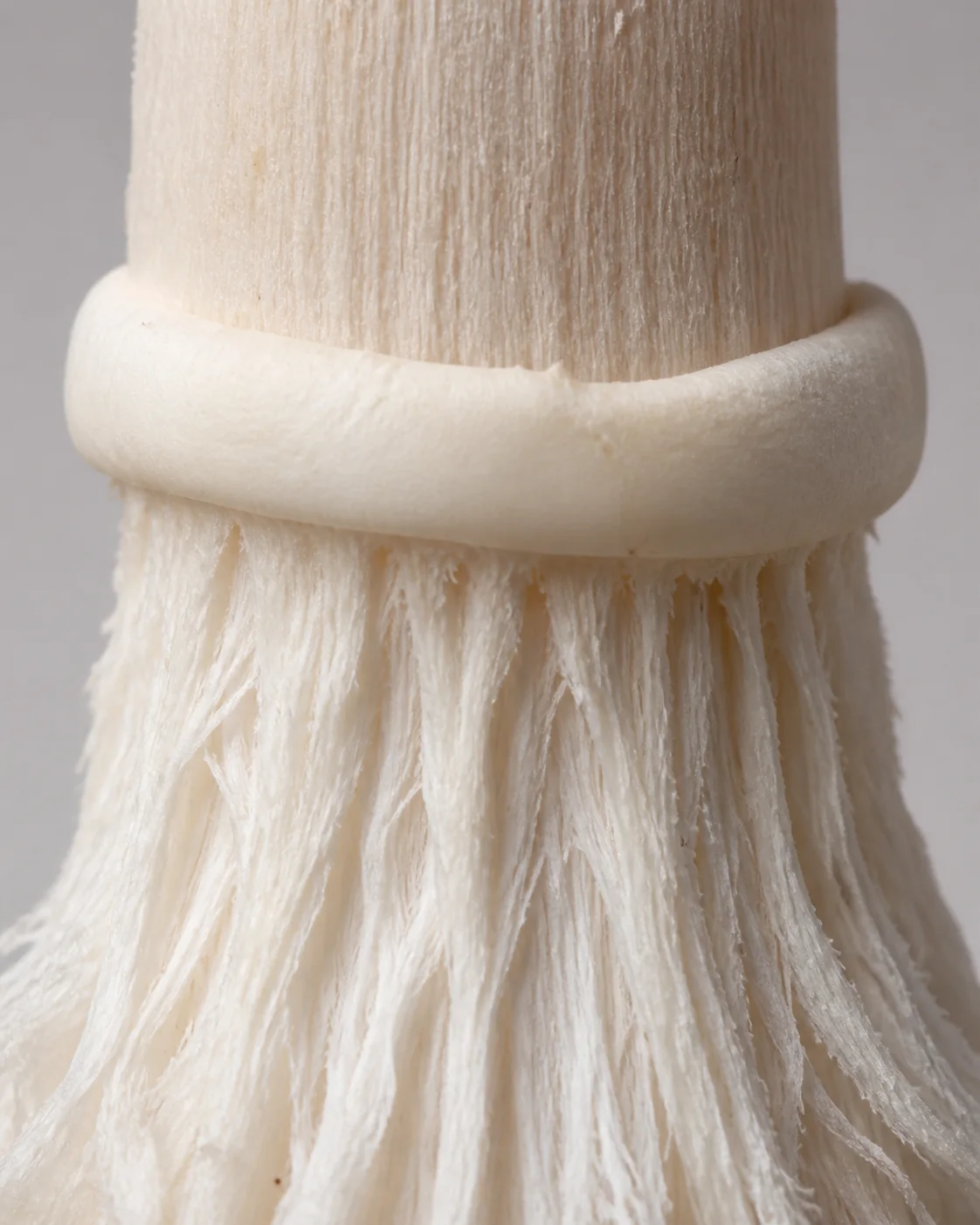
A real ring can be lifted, slid or torn, because it is a piece of tissue.
A rusty ring zone cannot, because it is a stain. That is a two second check and it does not depend on judging a color or matching a photograph.
There is an honest problem with relying on the ring, and it is visible above.
An older gypsy mushroom can lose its ring completely, leaving a bare stem with a faint scar where the tissue tore away. A specimen in that state has lost the one feature that separates it from its lethal relatives, and the correct response is to leave it standing rather than to reason around it.
There is no substitute for the ring to reach for in that situation.
Cap color, size, gill color, habitat and season all overlap with mushrooms in the same genus, so none of them can carry the separation on its own. A ringless specimen is not a harder identification, it is an identification that cannot be completed in the field.
The same applies to a mushroom somebody hands you.
A bag of gypsy mushrooms picked by another person is a bag of mushrooms whose rings you never saw, and in this genus that distinction is worth being awkward about.
SafetyCan You Eat Beefsteak Polypore Raw? Yes, If You Slice It ThinWhat else confirms it
Four features confirm a gypsy mushroom once the ring has done the separating.
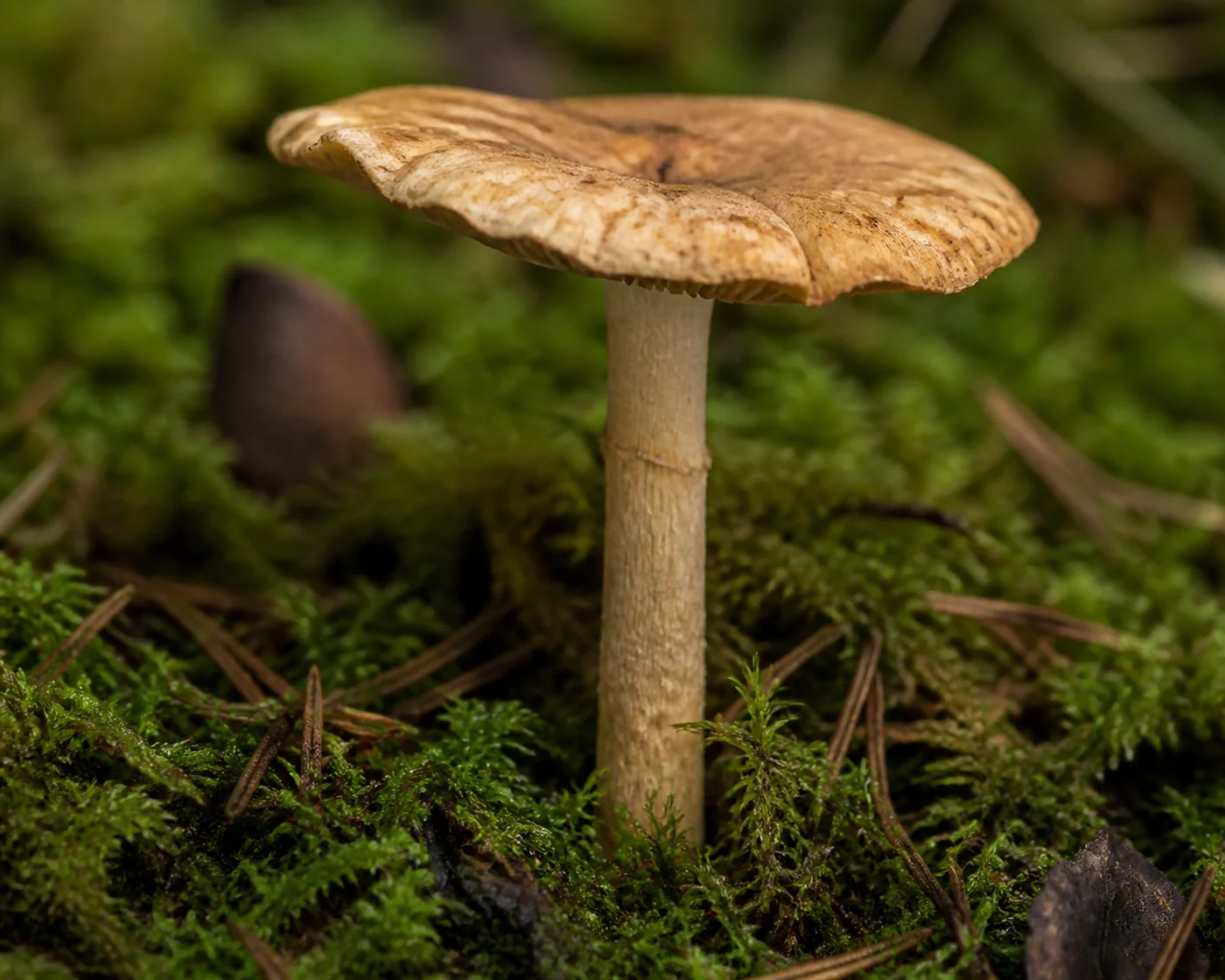
The cap is the first, and it is distinctive once seen. It runs seven to fourteen centimeters, yellowish buff to brownish ochre with a paler margin, and it develops fine wrinkles across the surface when fully expanded, with a broad raised umbo and a pale silvery sheen of fibers.
That wrinkling is worth dwelling on because it is unusual.
Few mushrooms of this size develop fine radial creases across a fully expanded cap, and combined with the silvery fibrous sheen it gives mature specimens a slightly frosted, crumpled look that is easy to recognize once it has been seen once.
The gills are the second and they change with age.
They start a pale clay color and darken steadily as the spores mature, ending mid brown or cinnamon. A young specimen with pale gills and an old one with brown gills look like different mushrooms.
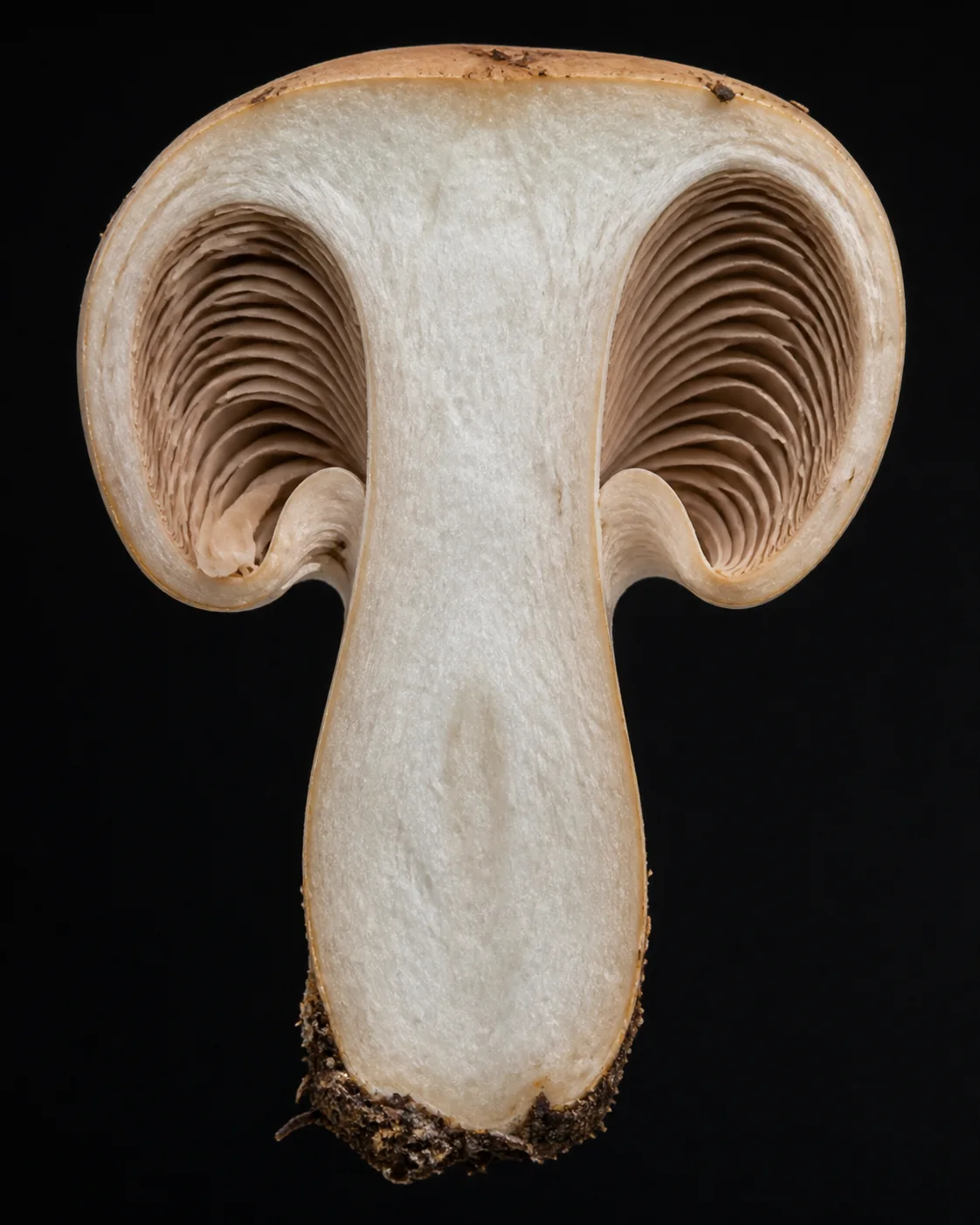
The pale stem is the third, and the shagginess is the detail worth having.
It is white to very pale buff with fine white longitudinal fibers, and those fibers get noticeably larger and shaggier toward a slightly swollen base. The flesh inside is firm and white.
The spore print is the fourth thing people check and it is the one that must not be trusted here.
A gypsy mushroom drops a rusty brown to ochre brown print. So do the deadly webcaps, so a spore print on this species confirms that you are in Cortinarius and tells you nothing whatsoever about which Cortinarius you are holding.
That is worth stating plainly because the habit is so strong.
On most pages a print settles the question, and here it settles the genus and then hands the question straight back. The ring is doing all of the work.
One more thing separates this genus from most of the others answered here.
With a death cap or a panther cap, somebody who eats one knows within a day that something is wrong. With a webcap the first indication can be a blood test ordered for an unrelated reason a fortnight later, which is why the picking rule matters more than the response plan.
The rule is short. Every mushroom from this genus gets its ring checked before it goes in the bag, and anything without one stays in the wood.
It is worth saying what this ring rule is not arguing.
The gypsy mushroom is a good edible with a long record, it carries no orellanine, and people have eaten it safely for a very long time. Nothing here says avoid it.
What it says is that one check does all the work.
On most pages in this series a reader can be wrong about a feature and still be fine, because the consequence is an evening rather than a kidney. In this genus the ring is not one check among several, it is the check, and that is a different way to hold a mushroom.
Cooking it, and where it grows
Cooking is straightforward once the identification is finished.
The thick slicing is worth taking seriously rather than treating as a preference.
The flesh is firm enough that thin slices shrink into nothing in a hot pan, and the meaty texture people value is only there if the pieces have enough substance to keep it. Halves and quarters suit this mushroom better than a fine dice.
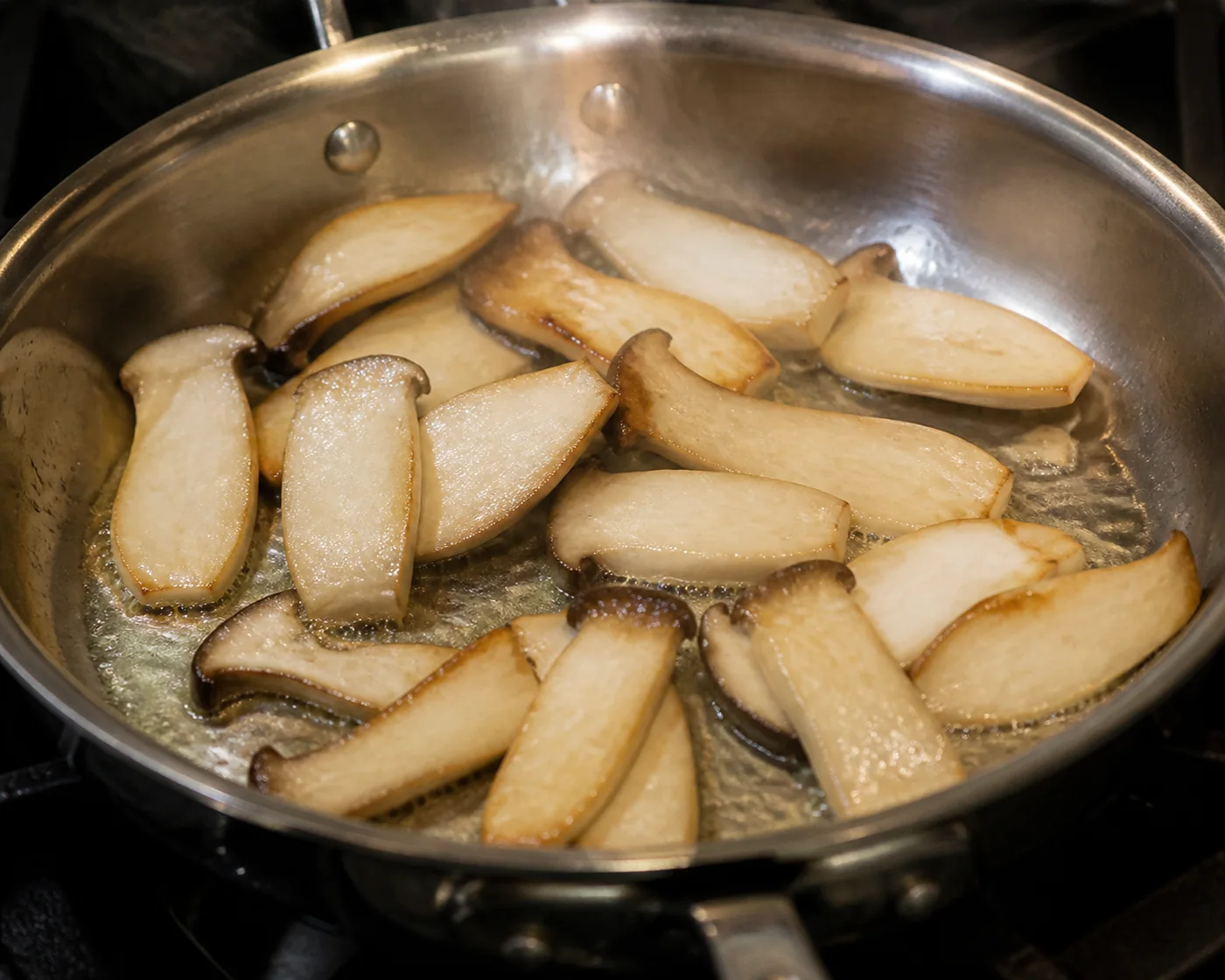
The pan matters more than the recipe with a mushroom this firm.
A hot pan with room to brown beats a crowded one where the slices steam in their own liquid. The meaty texture is the whole point of this mushroom and steaming turns it rubbery.
Cooked properly the texture holds its shape in a sauce or a stew for a long time, which is unusual for something this pale and soft looking.
This mushroom dries and freezes well, which suits how it is usually found.
A few caps at a time is the normal harvest, so most people accumulate them rather than cooking a pile in one evening. Sliced and dried, or cooked and frozen, they keep until there is enough to matter.
The list of trees and shrubs it partners with is longer than most and is worth reading properly.
This is one of the mycorrhizal mushrooms, and its partners include not just conifers and beech but heather and bilberry, which is why it turns up in open moorland edges and heathy woodland rather than only under trees. Low shrubby ground in a northern conifer wood is the search image.
Beech is the detail that catches people out in the south.
Most descriptions lead with conifers, so a pale ringed mushroom under beech gets ruled out by people who only half remember the habitat. It belongs there too, and the ring check applies exactly as it does under spruce.
The season overlaps with the webcaps completely.
August to November is also when the dangerous members of the genus fruit, so the calendar offers no protection either. Habitat, season and spore print all fail to separate them, which leaves the ring.

Most people who eat mushrooms from this genus treat this one as an addition rather than a target.
It tends to be gathered a few at a time and added to a meal of more plentiful woodland species, which is a sensible way to handle a good mushroom that grows in a genus like this one. The raw question, in the end, is the least interesting thing about it.
Sources & References
- Cortinarius caperatus, Gypsy Mushroom, First Nature The identification reference used here. Gives the 7 to 14 cm cap, at first domed and closed by a substantial fleshy membranous ring, yellowish buff or brownish ochre with a paler margin, pale fibers and fine wrinkles when fully expanded with a broad umbo, the crowded adnexed gills that start pale clay and darken to mid brown or cinnamon, the 6 to 12 cm white or very pale buff stem with fine white longitudinal fibers becoming shaggier toward a slightly swollen base, the persistent ring just above the stem midpoint, the rusty brown to ochre brown spore print, the undistinctive odor and mild taste, the August to November season, and the ectomycorrhizal habit with conifers, beech and ericaceous plants including heath, heather and bilberry. Calls it a prized edible in countries where it occurs in numbers, gathered to add to a meal of more plentiful edible woodland fungi. Names no lookalike species.
- Cortinarius caperatus, The Ultimate Mushroom Guide, Ultimate Mushroom The source of the quotation on this page. Describes the thick white ring at the midsection, explains that the generic name Cortinarius refers to the partial veil or cortina, meaning a curtain, that covers the gills when caps are immature, and states that Cortinarius caperatus is an exception and has a membranous partial veil where most of the genus produces a fine web of radial fibers. Names no lookalike and gives no cooking guidance.
- The Complete Guide to Gypsy Mushroom, Shroomer Gives the thick white ring in the midsection and the rusty brown spore print, notes that Cortinarius mushrooms have a partial veil like a delicate web, and warns only in general terms that these could easily be confused with a non-edible version without naming a species. Says nothing about eating them raw or about cooking.
- Cortinarius rubellus, deadly webcap, and orellanine poisoning The source for the lookalike and the timeline. Gives Cortinarius rubellus as the deadly webcap, native to high-latitude temperate to subalpine forests of Eurasia and North America, carrying orellanine, a nephrotoxin that targets the kidneys. Records symptom onset delayed by two days to three weeks, with early signs including thirst, dry mouth, nausea, back pain and decreased urination followed by flu-like symptoms, headache and vomiting, and renal failure after that which is often irreversible and can be fatal without treatment. Records that Cortinarius orellanus carries the same toxin.