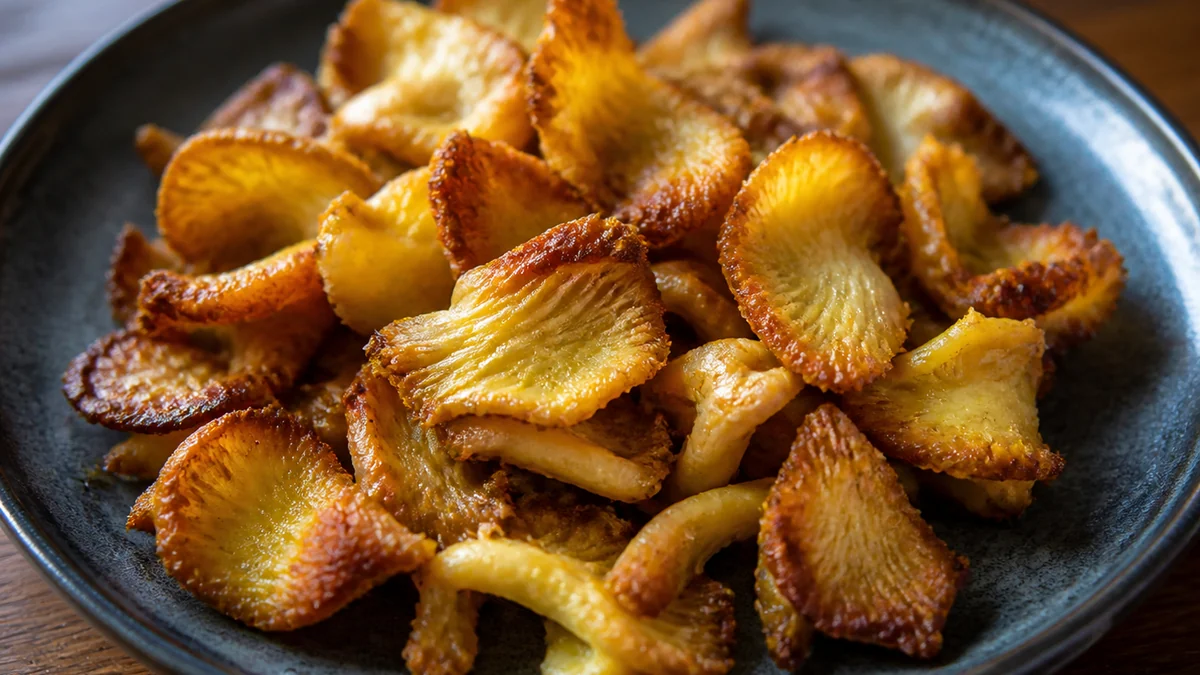
Golden oysters have thinner flesh and more water than a gray oyster, so they fail in two opposite directions. Undercooked they are spicy and bitter rather than bland, and overcooked they collapse into limp gray rags, with about a minute between the two at high heat. Heat the pan dry and empty, add the clusters whole rather than torn, leave them undisturbed for two minutes while the water leaves, add fat only once the pan is dry again, and stop when the edges have browned while the centres are still yellow. Buy at least half again what the recipe weight suggests, because most of the volume disappears.
You followed an oyster mushroom recipe and got something bitter. It happens often enough that most people blame themselves.
The recipe was not wrong. It was written for a different mushroom, and the golden oyster has the shortest window of any oyster in the shop.
Why this oyster is not like the others
Thinner flesh and more water in it.
Thin flesh and water release determine how quickly the pan moves from browning to steaming. Everything else is about how to stay between them.
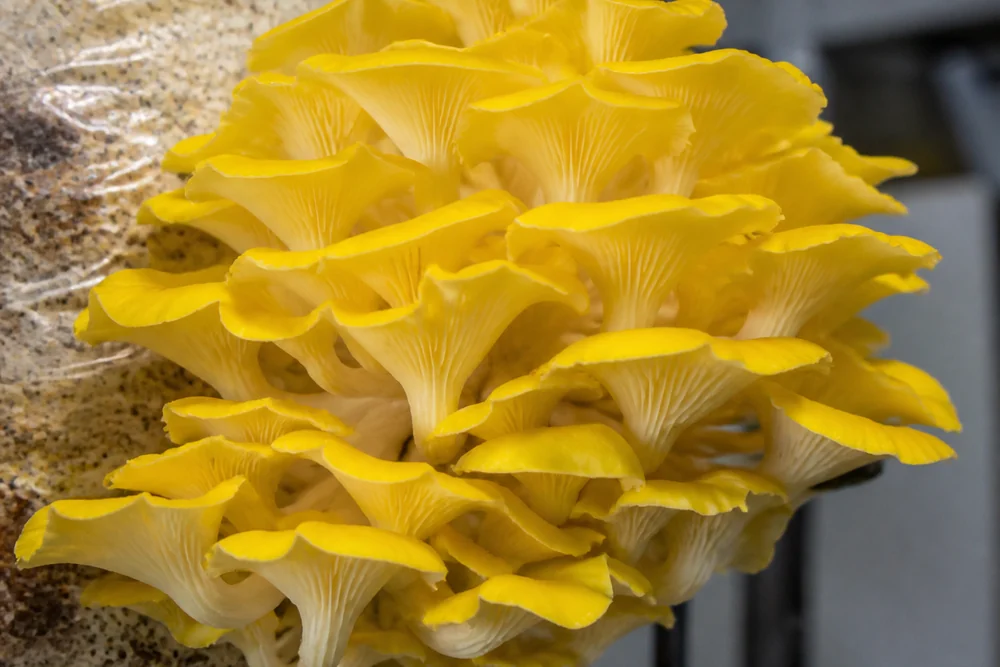
A gray oyster has enough flesh to forgive a slow start, and a golden oyster does not.

The other half is water. Thin flesh with a high water content releases everything it has quickly, and once that liquid is in the pan the mushroom is boiling rather than browning.
Both properties push in the same direction. The mushroom needs real heat and very little time, which is the opposite of how most people cook a delicate-looking ingredient.
Two properties do all the work here:
- Thinner flesh, so heat reaches the middle almost immediately.
- More water in that flesh, so the pan floods sooner than you expect.
- Fragile caps, which break in the bag and then cook on a different timer.
The two ways it goes wrong
Bitter, or limp. They are different mistakes needing opposite corrections.

Undercooked golden oyster tastes spicy and faintly acrid rather than merely bland, and most reports of the species being bad are really reports of this.
Overcooked is the more common failure among people who have read about the first one. Having been warned about bitterness they cook the pan an extra two minutes, and the mushroom collapses instead.
The corrections pull apart, which is why the diagnosis matters. One says apply more heat and the other says apply it for less time, and applying both at once is what actually works.
Cooking MushroomsHow to Cook Cauliflower Mushroom Without Trapping GritThe window, and how to hit it
Dry pan first and fat later, and stop when the edges brown.

Five steps. The third is the one people cannot leave alone.
Those five steps have one thing in common, which is patience with an empty pan.
Fat at the start is the mistake that produces most limp results, because oil in a wet pan means the mushroom stews in its own liquid until the flesh has already gone.
Three things go wrong at the start rather than the end:
- Fat in the pan before the water has left, which stews them.
- Too many in the pan at once, which does the same thing more slowly.
- Torn strips instead of whole clusters, which exposes every surface at once.
Pan temperature is the variable people underestimate, and it is easy to check. Flick a drop of water in before the mushrooms go anywhere near it, and if it beads and skates the pan is ready while a drop that sits and boils means it is not.
The difference that makes is not marginal. A cluster meeting a properly hot pan starts coloring in under a minute, and the same cluster on a merely warm one sits in its own liquid for three or four minutes and never recovers.
Cook them in clusters rather than tearing them apart. The intact cluster gives the centres a little protection while the exposed edges take the heat, which widens a narrow window into a manageable one.
They shrink more than you expect
Buy far more than the recipe weight suggests.
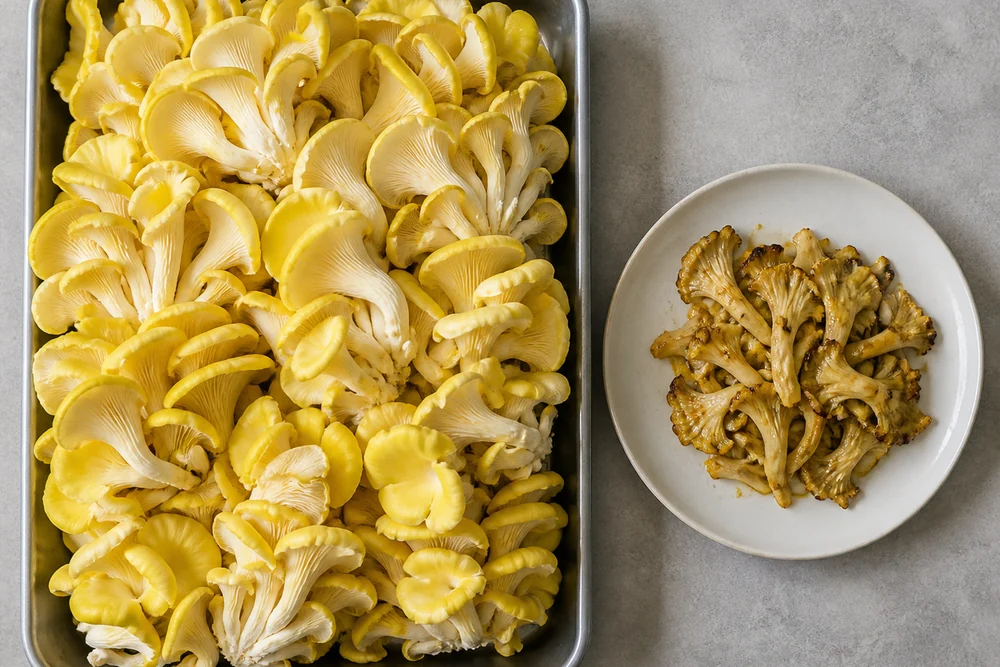
Thin flesh with a lot of water in it has very little left once the water has gone. A tray that looks like enough for four people is a side dish for two, and the loss is more dramatic than with any other oyster.
Key takeaway
Buy at least half again what a recipe calls for by weight, and more if the golden oysters are the center of the dish rather than an addition. This is the single most common disappointment with the species and it happens before the pan is even hot.
Weighing once is worth more than any rule of thumb here.
Put a tray on the scale before and after cooking and the number is usually somewhere near a third of what went in, which is a figure most people do not believe until they have seen it.
That also changes what they cost in practice. Priced per pound they look comparable to other specialty mushrooms, and priced per plate they are noticeably more expensive.
Batch size is the practical limit on all of this. A pan that is comfortably full of gray oysters is overloaded with golden ones, because the extra water has nowhere to go and the temperature falls further than it would otherwise.
Cook in two batches rather than one crowded pan, because three extra minutes is the difference between the window and the collapse.
Cooking MushroomsHow to Cook Black Morels: Halve Them, Never Slice ThemThe color question
Some of it survives. That is more than the pink oyster manages, and more than most people expect.
| Method | Color retained | Notes |
|---|---|---|
| Fast dry sear | Most of it in the centres | A hot pan and a dry surface favor browning |
| Stir fry | Some | Depends how long it stays in |
| Roasting | Little | Long dry heat takes it |
| Anything wet | None | Soup and braise remove it entirely |
The yellow is not stable, and it is not as fragile as the pink oyster's color either. Cook them fast and hot and the centres stay noticeably golden while the edges go brown.
Long cooking reduces the color as well as changing the eating texture.
Color also depends on what else is in the pan. Anything acidic dulls the yellow within a minute or two, so a squeeze of lemon belongs on the plate rather than in the pan if the look matters to you.
Dried golden oyster is worth a mention because it sidesteps the whole problem. Dried and rehydrated the texture question disappears, the bitterness does not survive the process, and what is left is the nutty flavor in concentrated form.
That makes drying a genuinely good answer for a glut rather than a consolation prize. It is the one preparation where the short window stops mattering.
The wild ones are the same mushroom
If you found these on a dead log in the Midwest, they are not native and they cook identically.
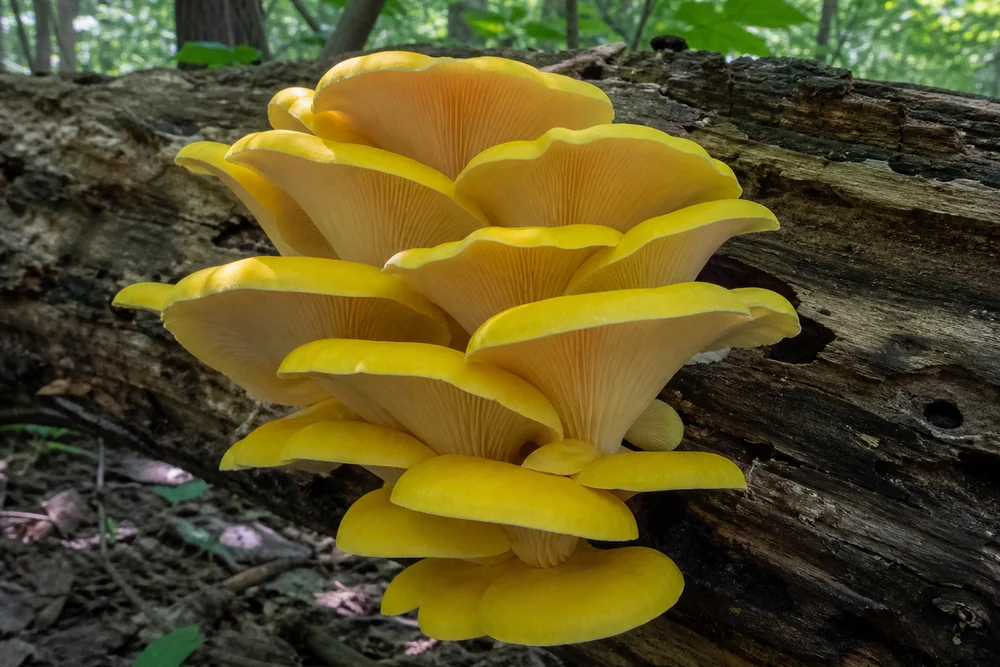
Golden oyster is native to eastern Asia. It has escaped from cultivation in North America and now spreads through hardwood forests in the Midwest, the east and into Canada, which means foragers meet it where it has no business being.
For a cook that changes nothing, since a wild golden oyster has the same thin flesh and the same short window as one from a cultivated block.
Season is the other thing a wild find brings with it, since golden oysters fruit in warm weather rather than autumn. That surprises people who have learned to look for oyster mushrooms in the cold months.
It is worth knowing about the spread even so, because anyone who finds a productive log will find it again when an escaped population fruits from the same dead wood for several years.
What they are good at
Fast dry heat suits them. Wet methods do not, so searing, stir frying and a quick roast are the whole list.
The cooked flavor is genuinely distinctive, and closer to a maitake frond than to anything else in the oyster family. People compare it to cashew or almond, and it is more assertive than a gray oyster, which is unusual for something this delicate-looking.
That flavor survives fast cooking and disappears into anything wet. A golden oyster in a braise contributes texture that has already collapsed and a flavor that has already gone, which is the worst of both.
That principle narrows the useful dishes to a short list, all of which are quick:
- Scrambled or fried eggs, added in the last minute.
- On toast, with the pan juices poured over.
- Folded through plain rice or soft polenta at the table.
- Anything stir fried, provided the pan is genuinely hot.
- Noodles finished in the pan, where the mushroom goes in last of all.
Pair them with things that do not compete. Eggs, plain rice, soft polenta and toast all work, and anything with a strong sauce simply buries them.
Acid works the same way for a different reason, so a splash of vinegar or lemon in the pan stops the surface browning and anything sharp belongs on the plate instead.
One thing not to do is salt them early. Salt draws water out of thin flesh immediately, and on a mushroom that is already fighting to get dry it turns a short window into no window at all.
Season after they come out of the pan. Keep added liquid away from the surface until browning has happened.
Cooking MushroomsHow to Cook Black Truffle Without Losing Its AromaCleaning a cluster without wrecking it
Barely touch them. This is the most fragile mushroom on the shelf and the cleaning does more damage than the pan usually manages.
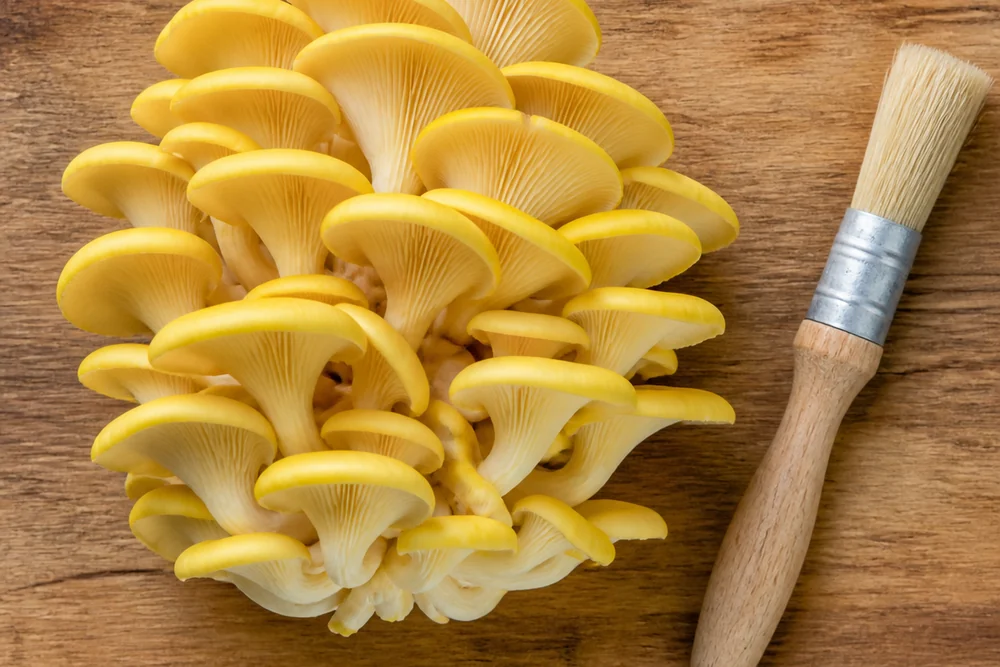
Golden oysters are grown indoors on sterile blocks, so what arrives on them is a little substrate at the base, no grit to chase and no reason to reach for water.
Trim the bottom centimetre where the block was and leave the rest alone. If a cap has picked something up, a dry brush or a fingertip takes it off without costing you the mushroom.
Water is the specific thing to avoid rather than a general caution, because thin flesh with a high water content has nowhere to put more and a rinsed cluster arrives in the pan already carrying the liquid that was going to ruin it.
If a cluster genuinely needs rinsing, our guide to cleaning mushrooms sets out the fastest way to do it and dry it. On this species the honest advice is to buy a cleaner cluster instead.
Handling counts as cleaning with a mushroom this delicate, since every transfer between bowl, board and pan breaks a few cap margins. Broken pieces then cook on a different timer to whole ones.
Can you eat them raw
No, and the reason is taste before anything else.
Tip
Raw golden oyster is unpleasantly spicy and acrid, which is the same compound problem that makes an undercooked one taste bitter. Heat is what removes it, and there is no preparation that gets around that.
There is no version of this mushroom that rewards skipping the pan.
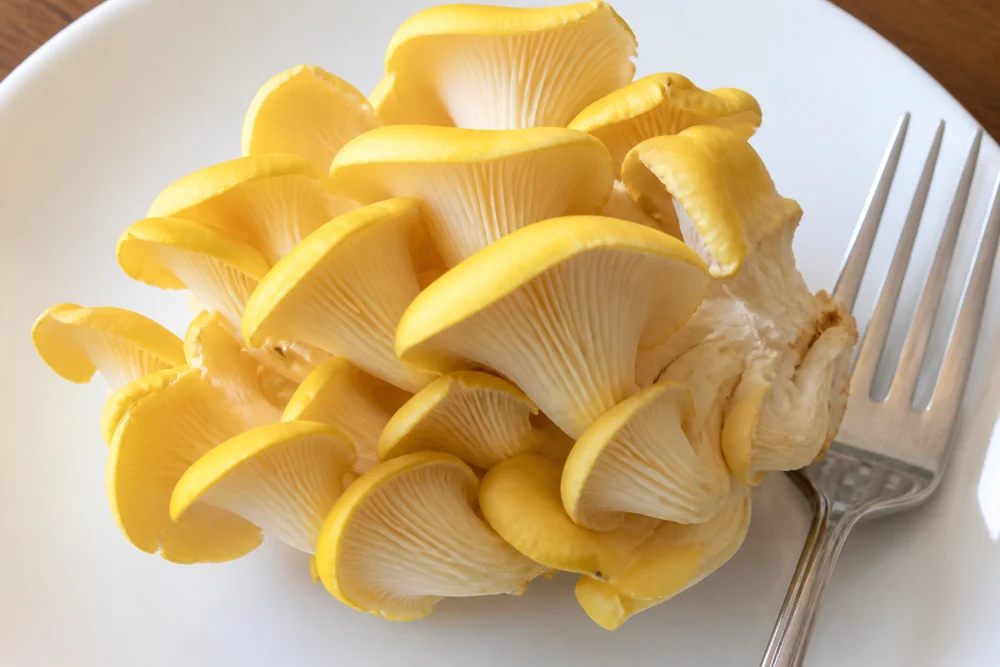
This is worth stating plainly because oyster mushrooms in general get sliced raw into salads more often than they should. Our page on eating golden oyster raw goes through the digestion side as well.
Use a hot pan and real heat for the stated cooking time, rather than letting the mushrooms warm slowly in liquid.
Anyone eating them regularly rather than once will find the figures on our golden oyster nutrition record. As a cooking matter they behave like a thin, high-water mushroom, which is what every instruction here assumes.
Buying and keeping them
Bright, dry and unbroken. Then use them quickly, because this is not a mushroom that waits.
Fresh clusters are vivid yellow with intact cap margins. Browning at the thin edges is the first sign of age, and it appears sooner on this species than on a gray oyster.
- Fresh
- Bright yellow, dry surface, unbroken cap edges.
- Going over
- Brown edges, limp caps, a damp patch under the tray.
- Realistic life
- A few days refrigerated, shorter than gray oyster.
- Do not
- Wash them, since thin flesh takes up water immediately.
- If in doubt
- Cook them today rather than tomorrow.
If you end up with more than you can cook, drying them keeps the nutty flavor even though it takes the color.
Trays sold with the block still attached keep noticeably better than loose clusters. The mushroom goes on living until you cut it, and a cluster still joined to its substrate is not yet losing water from a cut surface.
Handle them gently on the way home. The caps break easily and broken pieces cook faster than intact clusters, which puts half your pan on a different timer from the other half.
A basket picked wild rather than bought behaves the same way in the kitchen, though sorting a foraged haul comes first.
Cost per usable gram is the number worth thinking in. A tray that loses two thirds of its weight in the pan is three times the shelf price by the time it reaches the plate, which is worth knowing before you plan a dish around them.
Buying them at all is the harder problem in most places. Golden oyster is grown commercially but sold irregularly, so a shop that has it one week often has none the next, and a bag of dried is the only reliable supply outside a farmers market.
The mistake that puts people off this species usually happens in the shop. You buy the weight the recipe asks for, lose two thirds of it in the pan, and conclude the mushroom is disappointing when what you actually cooked was a third of a portion.
Beyond that they follow the ordinary rules, and storing fresh mushrooms covers the paper bag and the fridge drawer better than a species page can.
Sources & References
- Pleurotus citrinopileatus, the golden oyster mushroom (Fungi Atlas) Species reference used for the identity and native range of Pleurotus citrinopileatus in eastern Russia, northern China and Japan, and for the thin-fleshed fruiting body structure that underlies the cooking window described here.
- Foraging Golden Oyster Mushrooms (Forager Chef) Cook and forager reference used for the reported bitterness of undercooked golden oyster, for the severity of shrinkage relative to other oysters, and for the nutty cooked flavor compared to cashew.
- Golden oyster mushroom, non-native spread in North America (Mushroom Mountain) Cultivation and species reference used for the escape of the species from cultivation and its spread through Midwestern and eastern North American hardwood forests.