Canned straw mushrooms are already cooked, so drain them, rinse the brine off, blanch them for thirty seconds if they still taste tinny, and give them one to two minutes of heat at the end of the dish. Fresh ones need three to five minutes, a same-day deadline and room temperature rather than a refrigerator.
Almost everyone cooking straw mushrooms outside the tropics is cooking a can, and the can changes the entire job.
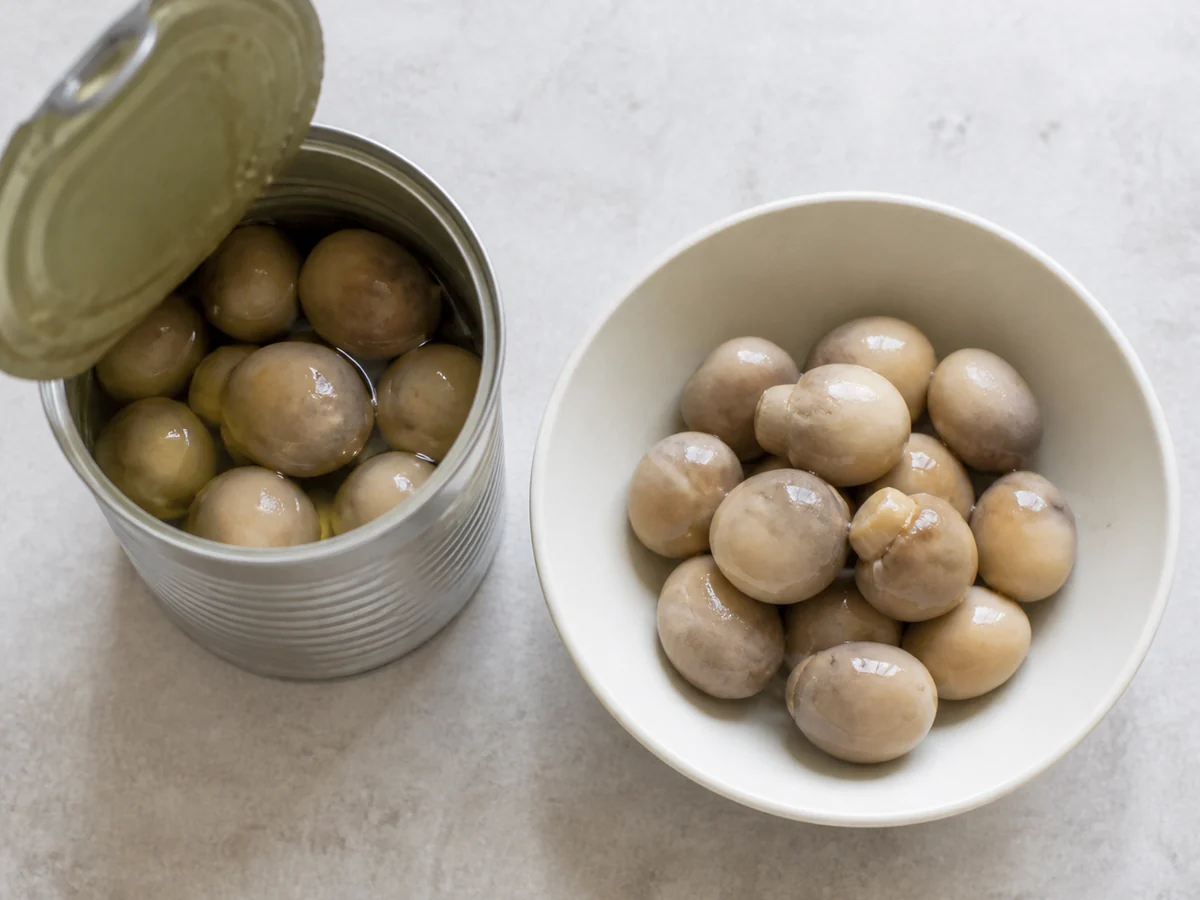
What is inside was cooked when the tin was sealed. Avoid unnecessary extra cooking of canned mushrooms and drain their brine before use.
If yours are fresh from a warm-country market, the two sections that matter most are the one on cold and the one on cleaning, because that is where fresh ones are usually lost.
Canned or fresh decides everything
One species, Volvariella volvacea, reaches kitchens in two states. They have almost nothing in common at the stove.
| Canned | Fresh | |
|---|---|---|
| What you have | Cooked in the tin, sitting in brine | Raw, harvested as a closed egg |
| Preparation | Drain, rinse, sometimes blanch | Rinse, halve, use today |
| Time over heat | One to two minutes | Three to five minutes |
| Where you find it | Any Asian grocer and most large supermarkets | Warm-country markets, and almost nowhere else |
The canned ones are already cooked, which is the single fact that most recipes leave out and the reason so many bowls end up with rubber in them.
Fresh ones are a tropical crop, grown on rice straw and cotton waste in countries warm enough to keep a bed above thirty degrees, and our guide to growing paddy straw mushrooms covers what that takes.
They are harvested as firm closed eggs, which is a stage almost no other cultivated mushroom is sold at, and our record for the paddy straw mushroom has the species detail.
The name causes its own small confusion in shops. Straw mushroom, paddy straw mushroom and Chinese mushroom all mean this species, and a can may carry any of the three.
They turn up dried occasionally in specialist shops, wanting twenty minutes in hot water first and coming back with more flavor than the canned version but never with the snap.
If a shop near you stocks neither form, our page on a paddy straw mushroom substitute covers what comes closest, though nothing reproduces the texture exactly.
The reason the West sees tins and not baskets is not import law or demand. It is that this mushroom collapses in transit at the temperatures used to ship every other vegetable.
Peeled or unpeeled on the label
Two words appear on straw mushroom cans. No tin has ever explained either of them, and the shelf label rarely helps.
Unpeeled means the whole egg, still wrapped in the outer sack the mushroom grew inside. They are smooth ovals, they hold their shape in liquid, and they are the ones you have seen bobbing in a coconut soup.
Peeled means that sack has been taken off, which uncovers a small cap on a short stem and makes the thing look like a mushroom rather than an egg.
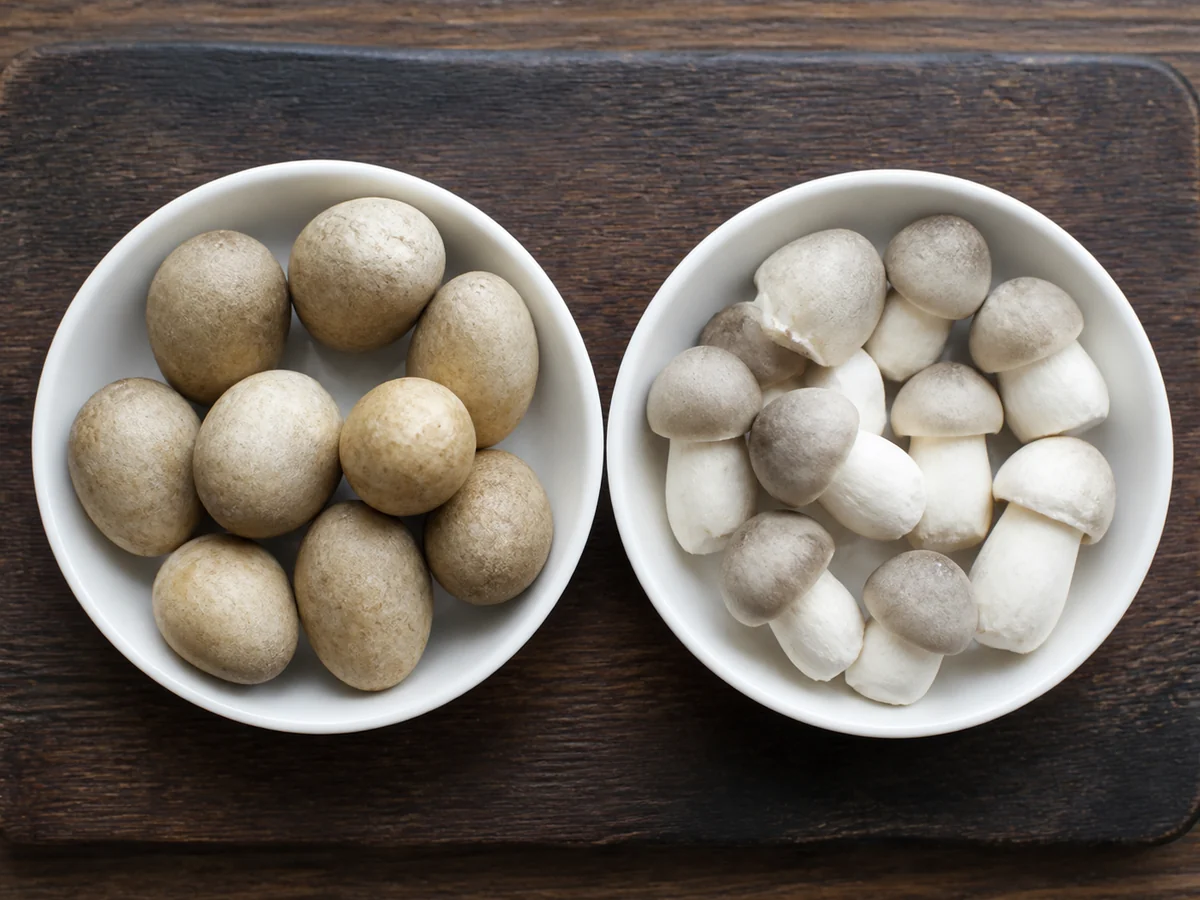
Which one to buy comes down to three things:
- Unpeeled for anything wet, because the sack holds the shape in a broth.
- Peeled for anything sauced, because there is more surface and no skin over it.
- Either one halved, when you want a cut face in a soup and a shape on the spoon.
Neither is better than the other and neither costs more, which is why no can bothers to argue for one.
There is a size grading underneath the two words that matters more than either. Small ones stay firm and large ones have more space inside, so a can of large unpeeled mushrooms goes soft sooner in a broth than a can of small ones.
If a shop only stocks one kind, buy it. The difference decides how they look on the spoon rather than whether the dish works.
Cooking MushroomsHow to Cook Cauliflower Mushroom Without Trapping GritGetting the can taste out
The tinny taste that people blame on the mushroom is not the mushroom.
Only the third step is optional, and it is the one worth adding when a can has been on the shelf a long time.
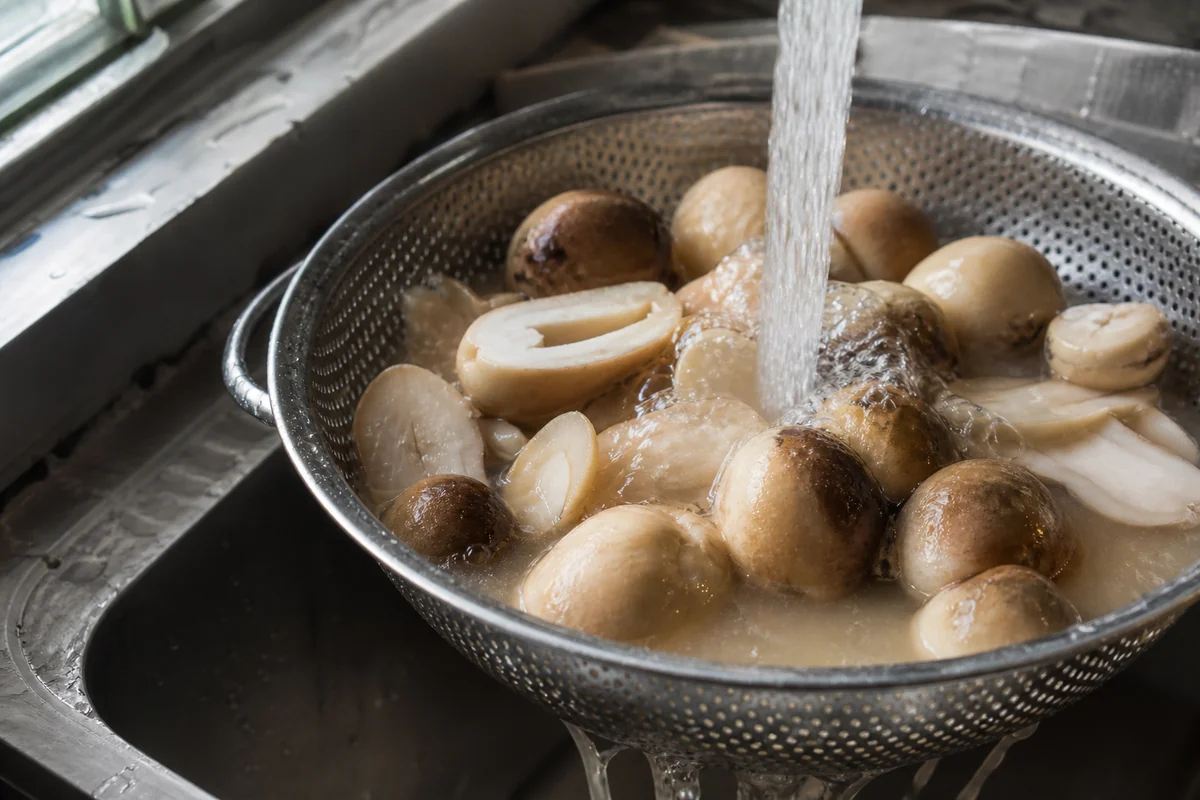
That brine is salt and citric acid and it soaks into the outside of every mushroom over months on a shelf. Rinsing takes out the bulk of it in about thirty seconds.
The blanch is the step people skip and the one that finishes the job. It costs half a minute and removes the last of the metallic edge that a rinse leaves behind, and it does not cook them further in any way that matters.
Drying afterwards is not optional if the mushrooms are going into a dry pan, and a salad spinner does it faster than any amount of patting.
One number on the can is worth reading before you buy several. Net weight includes the brine, and the drained weight is usually a little over half of it, so a large-looking tin holds less than it appears to.
What the rinse cannot do is put anything back. Canning costs the mushroom some of its firmness and most of its aroma, which is why a fresh one tastes noticeably cleaner even after identical cooking.
Warning
A dented, leaking, rusted or bulging can is thrown away unopened. No amount of rinsing addresses a seal that has failed, and this applies to every canned food rather than to mushrooms in particular.
How much heat they actually need
Two numbers cover almost every dish here. Which one applies depends entirely on whether the mushrooms came out of a tin.
The fourth and fifth steps are the whole difference between the two products, and everything around them is identical.
A canned straw mushroom that has been in the pan for five minutes has gone from firm to squeaky to rubbery, and there is no way back from the third stage.
Fresh ones behave more like an ordinary mushroom, but they still finish faster than a button, because the flesh is thin over a hollow interior.
Overcooking has a visible signature in both cases. They shrink, wrinkle, and let go of a thin gray liquid that dulls whatever sauce they are sitting in.
Wet mushrooms in hot oil are the other thing to plan for. A drained tin still holds water in the hollow middle, and tipping it straight into a wok produces a burst of spitting that a minute in a colander would have avoided.
Halved ones behave better than whole ones in a dry pan. A cut face sits flat on the metal and browns, where a whole egg rolls and only ever touches at one point.
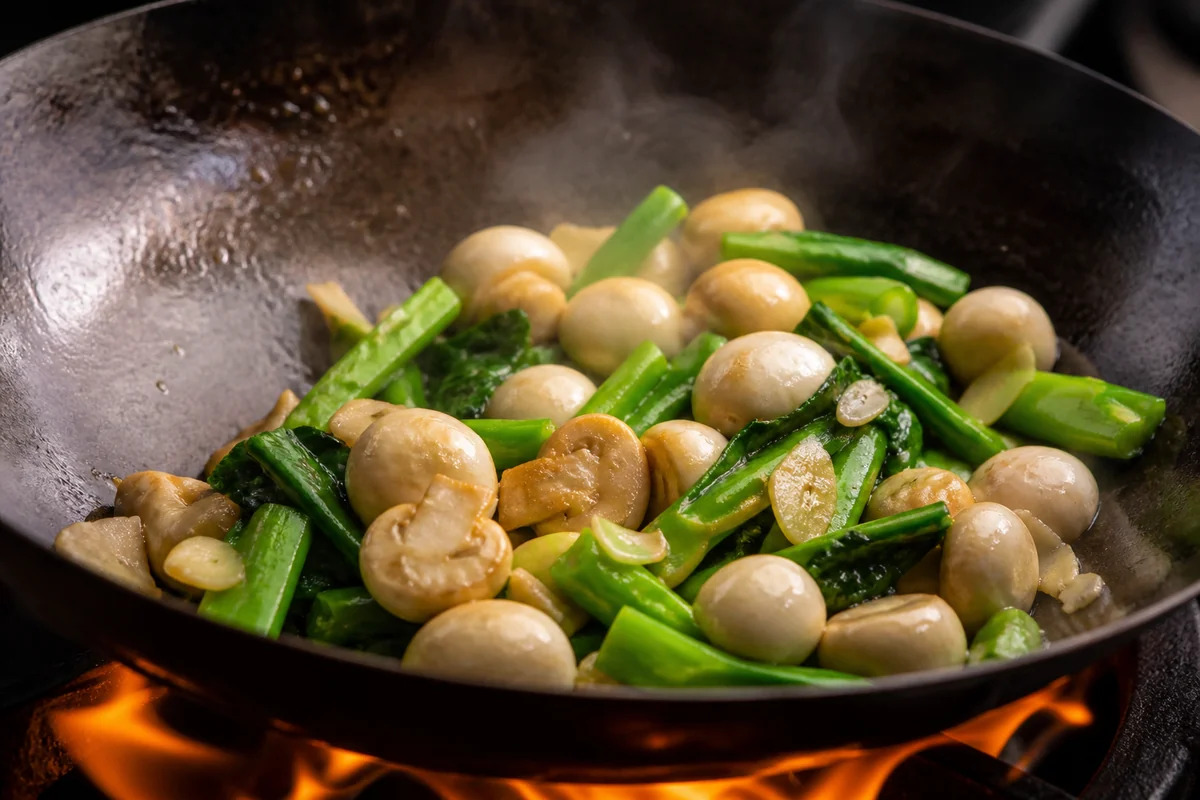
In a mixed stir-fry they go in near the end rather than at the start, after the harder vegetables have had their time and before the sauce goes down.
Cooking MushroomsHow to Cook Black Morels: Halve Them, Never Slice ThemWhen to add them to a soup or a hot pot
More straw mushrooms end up in soup than in a wok. A pot poses a different timing problem from a pan, because the pot is already hot when they arrive.
| Dish | When they go in | Why |
|---|---|---|
| Coconut or lemongrass soup | Last two to three minutes | They only need heating, and the broth is already made |
| Clear broth or noodle soup | Last two minutes | Long simmering clouds a broth that was kept clear on purpose |
| Hot pot at the table | Small batches, as you eat | Anything left in the pot keeps cooking |
| Braise or stew | Last five minutes | The dish is long, the mushroom is not |
Only the third row is about attention rather than a clock, because a hot pot never finishes.
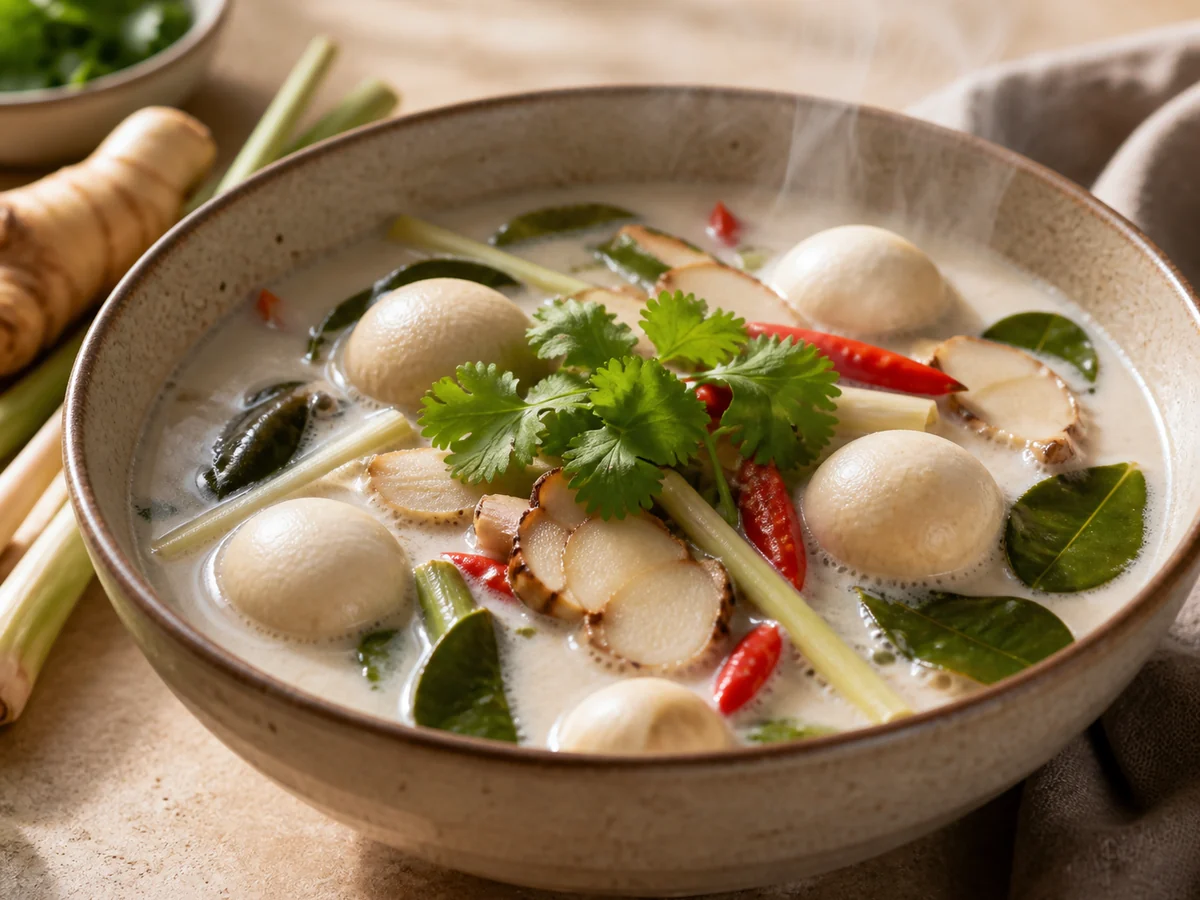
The rule underneath all four rows is that the mushroom is never the thing the pot is waiting for. Everything else finishes, and then they go in.
Three things go wrong when they go in early:
- They shrink to about two thirds and stop looking like the thing on the menu photograph.
- They give up liquid that turns a clear broth cloudy.
- They soften all the way through and lose the snap that was the reason for adding them.
A hot pot is the one case that needs managing rather than timing, because the pot stays on. Adding a handful at a time keeps the last ones as good as the first, and tipping a whole tin in at once guarantees the opposite.
The hot pot failure has a name in most households that eat them. Someone finds the last four at the bottom of the pot half an hour later, and by then they have the texture of a pencil eraser.
Tip
They soak up broth quickly and carry salt with it, so season the pot after they have gone in rather than before.
Cleaning fresh ones
This is the one mushroom on this site where a quick rinse is not a mistake.
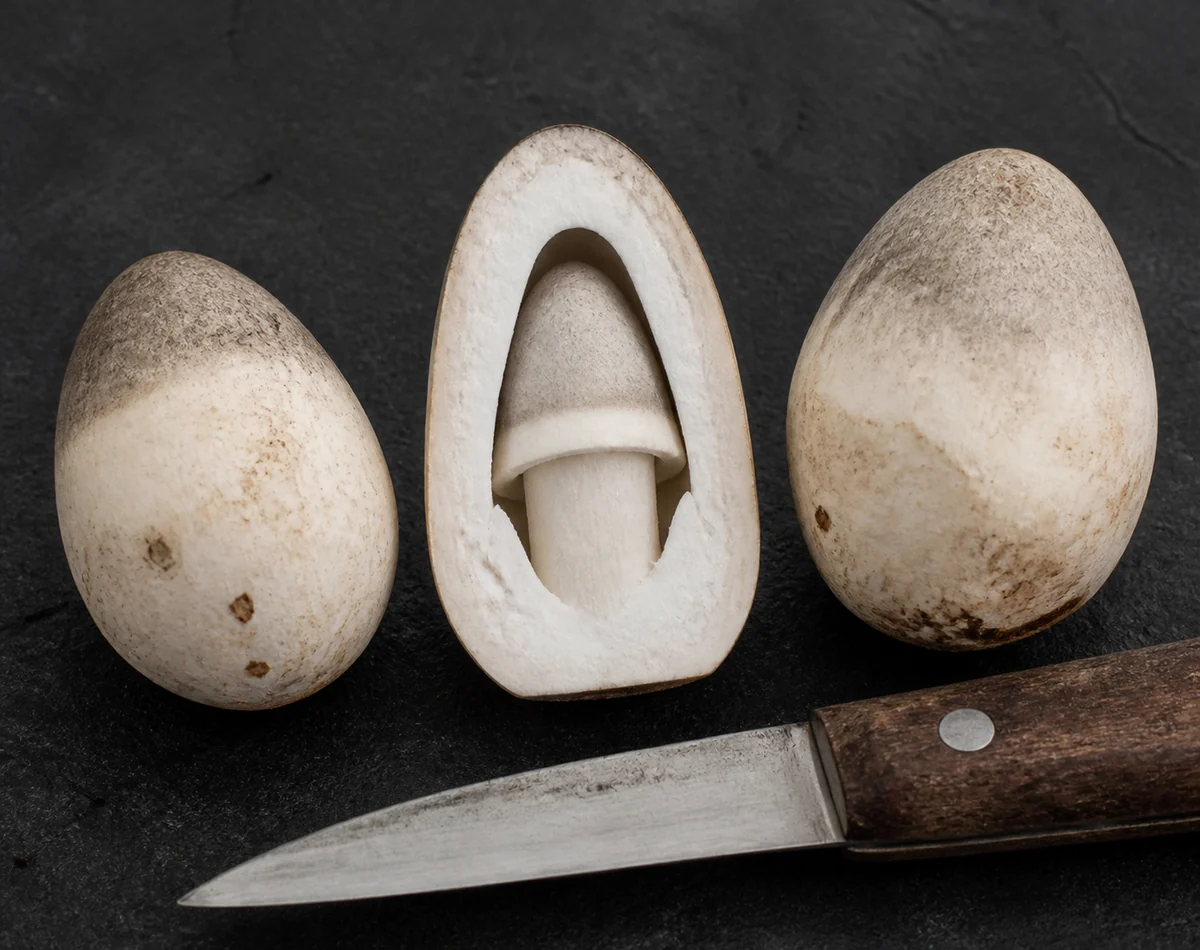
They grow in straw and compost, they are picked by hand out of a warm bed, and they arrive with bits of both stuck to the outside.
The reason water is allowed here and forbidden elsewhere on this site is the destination. Straw mushrooms mostly end up in wet dishes, so a surface that carries a little moisture costs nothing.
Grit hides in the folds of the outer sack rather than under gills, because at the egg stage the gills are still sealed inside.
Some of what a market sells will have opened already. The sack splits, a small gray cap pushes out on a short stem, and what you have is a normal-looking mushroom rather than an egg.
Opened ones are perfectly good and often cheaper, but they cook faster and go soft sooner, so they belong in a stir-fry rather than a slow pot.
Halving them is worth doing even when they are small enough to leave whole. A firm white interior is a good mushroom, and a brown mushy one is a mushroom that spent a night somewhere cold.
Never put fresh ones in the fridge
Every instinct says the fridge. That is the one place fresh straw mushrooms genuinely cannot go.
Warning
This is a tropical species. Refrigeration does not slow it down, it breaks it down, and a bag put away at four degrees is often ruined by morning.
Research on postharvest handling documents tissue breakdown at ordinary refrigerator temperature rather than the slow ageing that cold produces in a button mushroom.
One preservation study compared holding them at fifteen degrees against four and found the warmer temperature kept them longer, which reverses everything a home cook has been taught about vegetables.
The practical version is short. Keep them at room temperature, in a paper bag or an open basket, and cook them today.
This is also why the markets that sell them fresh keep them in open baskets on a counter, which looks careless to anyone raised on chilled produce aisles and is the correct handling for the species.
If today is genuinely impossible, cook them now and refrigerate the cooked dish, which keeps perfectly well. Our page on storing paddy straw mushrooms goes through the options in more detail.
Cooking MushroomsHow to Cook Black Truffle Without Losing Its AromaDo you have to cook them
Yes. Unusually for this question, the answer here is specific to the species rather than a general caution about mushrooms.
Fresh straw mushrooms are not eaten raw in any cuisine that uses them, and they carry a protein that heat breaks down and a raw mushroom does not.
Key takeaway
Fresh straw mushrooms are always cooked. Canned ones were cooked in the tin, so a cold canned straw mushroom in a salad is not a raw mushroom.
Two minutes of real heat is the working minimum for fresh ones, and any of the methods on this page comfortably clears it.
The canned exception is worth stating plainly because it comes up constantly. Cold, rinsed, canned straw mushrooms are a normal salad ingredient across Southeast Asia and there is nothing to worry about in that.
Canning does the job thoroughly rather than partially. The tins are heated well past boiling under pressure, which is more heat than any pan at home will apply.
Our page on eating mushrooms raw covers where the line sits for the rest of the species on this site, most of which are less clear-cut than this one.
The egg that has killed people
Buying a labeled cultivated product and collecting a wild specimen require different identification decisions.
A straw mushroom is sold as a closed white or gray egg sitting in a sack at the base. A young death cap is also a closed egg sitting in a sack at the base, and so is a young destroying angel.
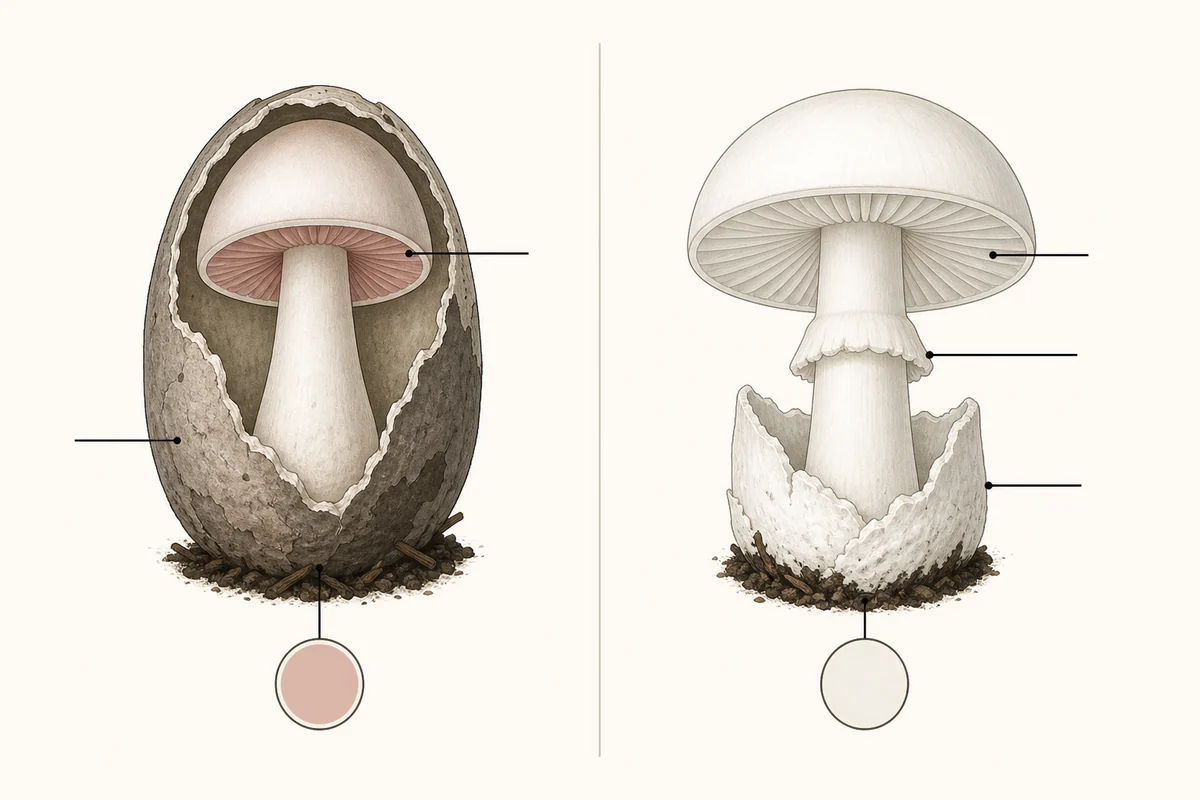
That resemblance is not a curiosity. It is one of the best documented patterns in mushroom poisoning, and it repeats wherever people who grew up eating straw mushrooms meet Amanitas that do not grow at home.
| Test | Straw mushroom | Deadly Amanita |
|---|---|---|
| Ring on the stem | Absent | Usually a skirt-like ring |
| Sack at the base | Present | Present |
| Mature gill color | Turns pink | Stays white |
| Spore print | Pink to salmon | White |
Two of those four rows are useless on a closed egg, which is exactly the problem. The ring and the gills only declare themselves once the mushroom has opened, and the egg is the stage a straw mushroom is picked at.
The page on mushrooms with a volva gathers the species that share the sack, and it is worth reading before any of them go in a basket.
There is a second trap inside the first one. Familiarity with the shape is what makes the mistake possible, so the people most at risk are the ones who have handled real straw mushrooms for years in a country where no deadly Amanita grows.
Buy them from a reliable source. Treat an unidentified wild egg-shaped mushroom in a sac as potentially dangerous until a competent identification establishes what it is.
What they taste like
Nobody buys a straw mushroom for its flavor. That is a description rather than a complaint.
Readers eating them often will find the numbers on our paddy straw mushroom nutrition page, which is a more useful place for them than a paragraph here.
The texture is the reason they have a permanent place in Southeast Asian cooking. The outside is smooth and a little slippery, the inside gives way with a small snap, and nothing else in the aisle does both at once.
Our roundup of the best mushrooms for stir-fry sets them against the mushrooms that bring more flavor to the same hot pan.
That combination has a short list of homes. These four cover almost everything they are used for:
- Coconut and lemongrass soups, where the texture stands out against a soft broth.
- Clear broths and noodle bowls, where nothing else provides a snap.
- Hot pots, where they are added and eaten in the same minute.
- Fast brown stir-fries with oyster sauce and something green.
Where they do not belong is a dish built on mushroom flavor alone, since a cream sauce or a mushroom soup asks for something they simply do not have.
Quantity is easy to misjudge because they shrink less than most mushrooms. A drained tin serves two people generously as part of a mixed dish, which is more than the same weight of button mushrooms would.
Used for what they do rather than what they are not, they are one of the easiest things in the aisle to get right. A tin, a colander, a hot pan and about ninety seconds is the whole of it, which is not a sentence that can be written about many mushrooms.
Sources & References
- Paddy Straw Mushroom Cultivation FAQ Species reference used for the rice straw substrate, the tropical temperature range and the closed-egg harvest stage that the canned product preserves.
- Low-Temperature Autolysis Proteomics Postharvest research used for the statement that refrigerator temperature triggers tissue breakdown in Volvariella volvacea rather than slowing it.
- Volvariella Storage at 15 C Preservation study used for the comparison that held straw mushrooms better at 15 C than at 4 C.
- Amanita phalloides Mushroom Poisonings, Northern California Public health reference used for the documented pattern of deadly Amanita poisoning among people familiar with edible egg-stage mushrooms.