Chaga does not soften into food. This guide turns labeled chunks into a measured, strained decoction and explains when reuse, dark color, powder, or personal kidney risk changes the decision.
Chaga does not cook into a tender mushroom because the hard material gives color, aroma, and water-soluble compounds to a decoction, then every solid piece comes back out of the pot.
Start with traceably labeled coarse chunks rather than an unknown black growth or an unlabeled powder. Weigh the dry material, measure the water, simmer gently, and record how much liquid remains before deciding whether the batch needs dilution.
The saucepan can control heat and concentration, but it cannot authenticate a forest find or establish a medical dose.
Those four controls matter because a dark cup can look consistent while the material, dose, or final volume changes.
Which chaga belongs in a saucepan?
Chaga is the corky sterile conk produced during infection by Inonotus obliquus, not a cap-and-stem mushroom or the fungus's ordinary spore-producing fruiting body.
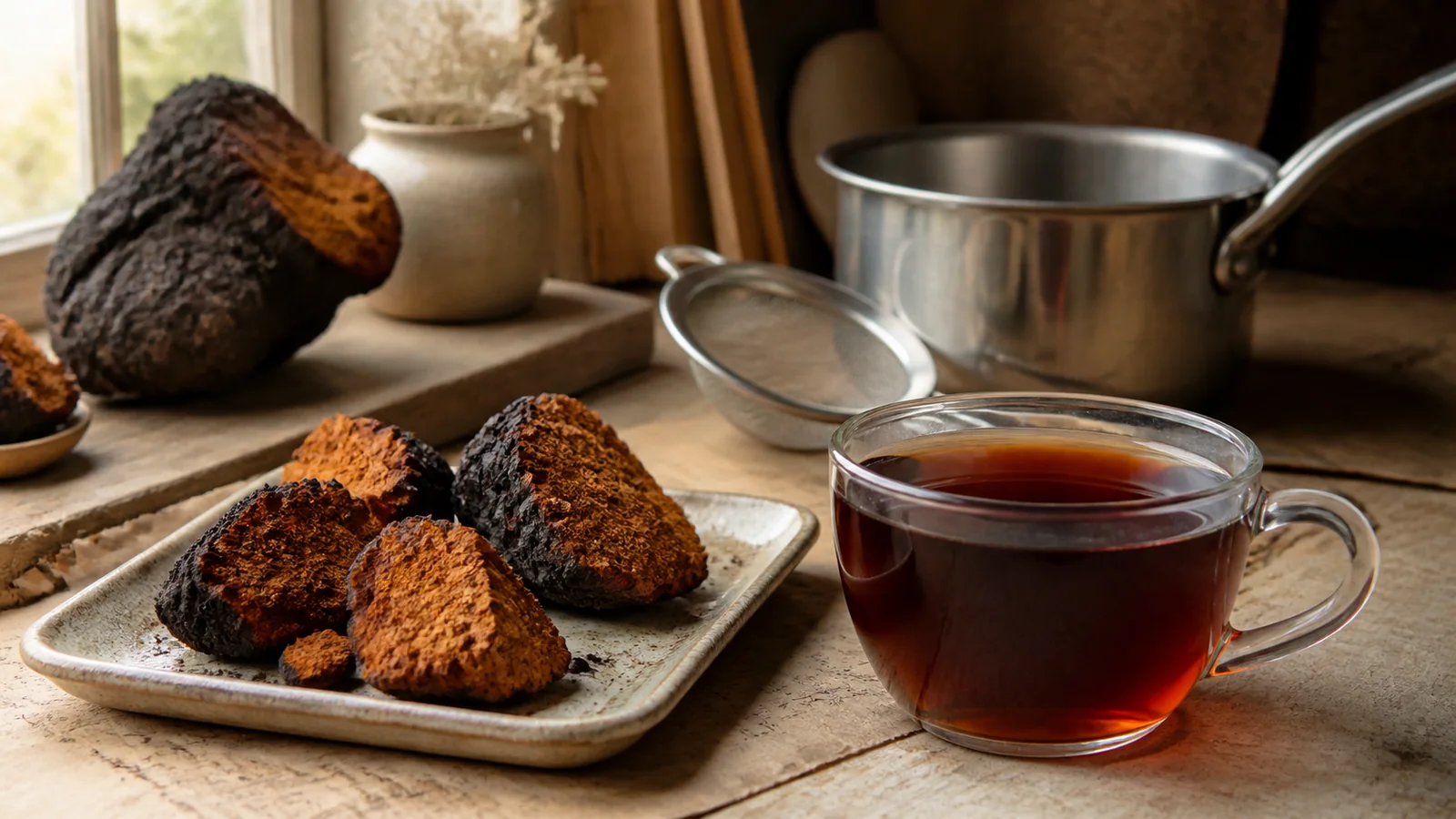
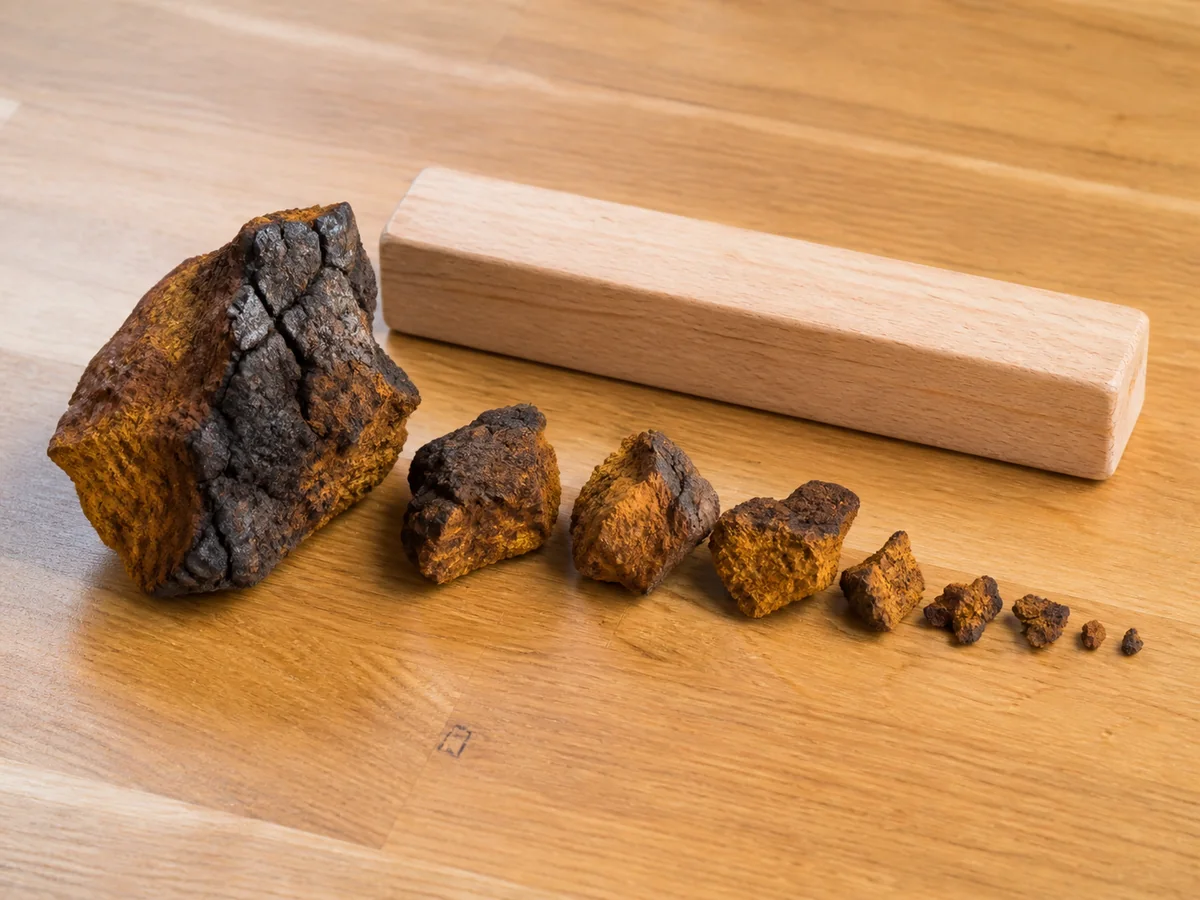
Government forest references describe a cracked, charred-looking exterior over a hard orange-brown to rust-brown interior. That contrast is useful when inspecting intact labeled chunks because bark, a smooth birch burl, and burned wood do not reproduce the same complete structure.
Visible coarse chunks preserve the evidence the kitchen needs. You can check both surfaces, remove foreign wood, weigh the material, and recover it after simmering.
Powder changes that situation. A uniform brown or black powder no longer shows the cracked exterior, orange interior, attached bark, insect channels, or fuzzy deterioration that a whole piece can reveal.
Coarse retail pieces can vary in the amount of black crust they carry, so inspect several pieces instead of accepting one orange chip as proof for the whole bag.
An extract is another product again because a manufacturer has already changed the material through water, alcohol, concentration, drying, or a combination of processes. Follow its label rather than converting this chunk method into spoonfuls.
Note
These entry checks keep uncertain material out before heating.
- The package names Inonotus obliquus and identifies the contents as chaga chunks or coarse pieces.
- Several pieces expose the characteristic orange-brown interior rather than consisting only of loose black crust.
- The batch smells mildly earthy or woody, with no musty, sour, chemical, or smoky odor.
- No piece shows fuzzy growth, damp softness, insect waste, paint, glue, or an unknown wood treatment.
Unknown wild material remains unknown after boiling. A black growth on a tree can be a burl, wound response, another fungus, charred tissue, or chaga in unsuitable condition, so heat is not the final identification test.
Traceability matters even when the material looks convincing because a seller can identify the species, harvest source, processing form, and intended food use in ways a loose market scoop cannot.

Break hard chaga before water reaches it
Large dry chaga pieces resist ordinary kitchen knives, so reduce them on a stable surface before water hides cracks and foreign matter or a blade glances from the black crust.
Brush loose grit and bark dust away first. A brief wipe with a damp cloth can lift remaining surface dirt, but soaking a whole chunk before inspection darkens everything and makes dry defects harder to judge.
The safest tool depends on the starting piece, with a small mallet applied through a folded clean towel for a very hard chunk and a sturdy cleaver pressed into an existing fracture line.
Do not hold the chunk in one hand while striking or chopping it. Keep fingers outside the break path and stop if the tool begins to glance off the curved black surface.
Aim for coarse walnut-size fragments because they expose more surface to water without creating suspended dust that a normal mesh strainer cannot remove cleanly.
Keep the black exterior attached when the underlying orange-brown tissue is sound, since scraping every dark surface away wastes usable material and does not improve identity.
Weigh the cleaned dry pieces after trimming. A scoop or handful changes with every fracture pattern, while grams remain comparable across a bag of large chunks and a bag of smaller fragments.
A scale reading also exposes retained water, which is why a briefly wiped piece should dry at the surface before it is weighed against a fully dry batch.
A long low simmer makes a decoction, not a meal
Published chaga extraction research uses widely different temperatures, times, ratios, and laboratory endpoints, showing that water, heat, and particle size matter without turning one experimental condition into a household serving instruction.
For a first kitchen trial without product directions, 5 grams of dry coarse chaga in 500 milliliters of water gives a modest amount that is easy to record. This is a repeatability starting point rather than a treatment dose.
Bring the water toward a simmer slowly, then lower the heat and set the lid slightly ajar once small steady bubbles reach the surface.
Starting in cool water makes the initial level easy to mark and prevents the timing record from beginning halfway through an unmeasured boil.
The chunks will remain hard and irregular even after a long simmer. Their surface may look wetter and their interior may darken, but they do not become a chewable garnish.
Continue past 45 minutes only while the liquid is developing usefully and the pot still holds enough water for the intended drink or dish. Add measured hot water when evaporation is running ahead of the flavor rather than letting the saucepan boil toward an accidental concentrate.
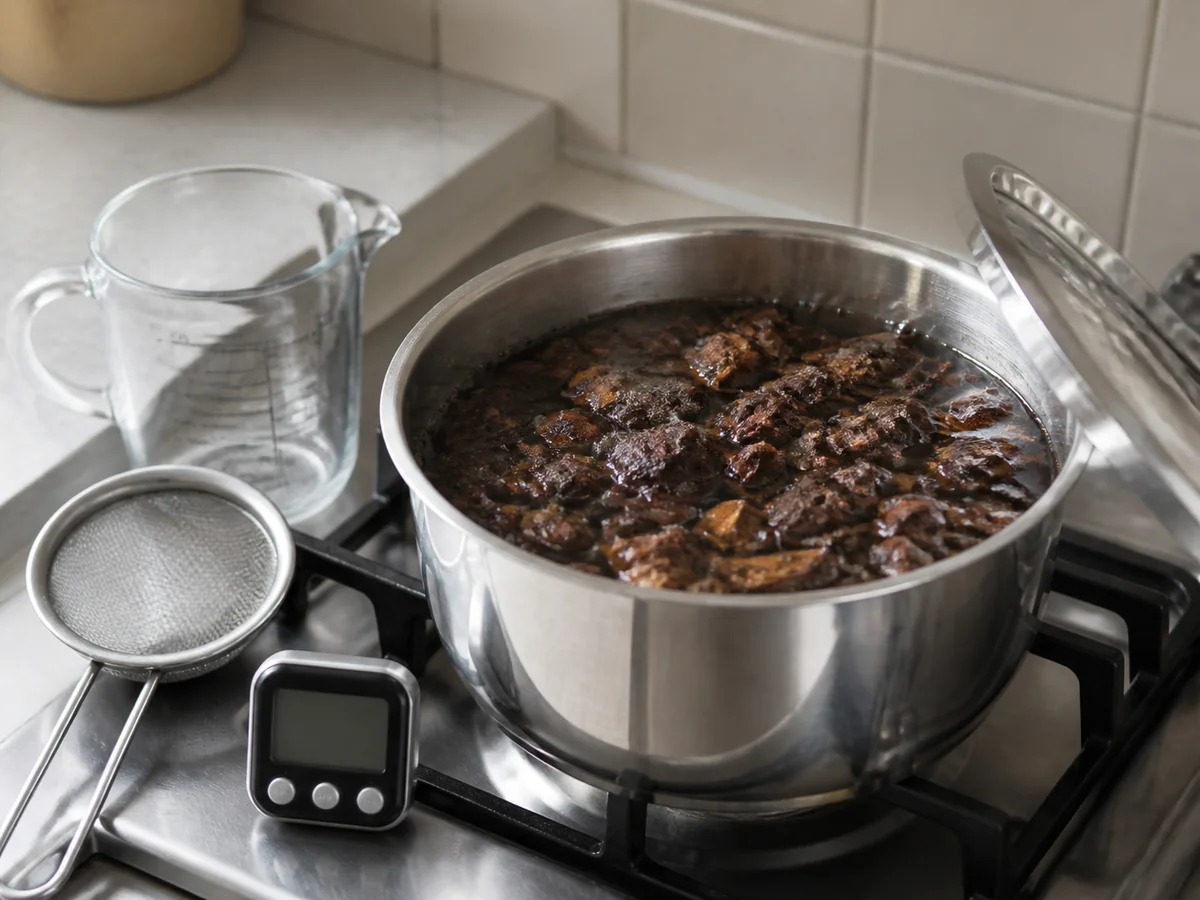
Use stainless steel, enamel, or another nonreactive pot whose interior lets you see the waterline, and avoid a vessel so large that the shallow liquid evaporates across a broad surface.
Fine particles can escape coarse mesh. Let the strained liquid stand briefly when sediment remains, then pour the clearer upper portion without scraping the bottom into the serving cup.
Cool any portion not used immediately in a shallow clean container before refrigeration, since a covered hot pot can stay warm for much longer than a small measured serving.
Final water volume tells you more than the clock
Two pots can simmer for one hour and finish as different drinks. A wide uncovered pan may lose twice as much water as a narrow covered saucepan, leaving the same chaga weight in a much smaller volume.
Suppose 500 milliliters goes in and 340 milliliters comes out. The 160-milliliter loss has concentrated everything that moved into the water, so a harsh result may reflect evaporation rather than an unusually active piece of chaga.
Record the water that remains, not time alone. That number lets you dilute the current batch and adjust the next one without guessing.
- Starting control
- Dry chaga weight and measured cool water
- Heat control
- Small steady bubbles rather than a rolling boil
- Concentration control
- Finished liquid volume after straining
- Sensory control
- Color, aroma, clarity, and cooled taste
Pot geometry deserves a place in the notes because a broad surface releases steam faster and a lid set fully aside behaves differently from one left slightly ajar.
A transparent measuring jug is more useful than estimating by the height in a tapered mug because the same vertical drop represents different volumes at different widths.
Change one variable when repeating the method because increasing chaga weight, reducing water, and extending time together leaves the darker second cup unable to show which change mattered.
A weak batch is also information. Keep the final volume stable on the next attempt, then adjust either piece size or simmer time instead of compensating with three changes at once.
Dark color is a kitchen signal, not a potency meter
Chaga water can move from amber through reddish brown to nearly opaque brown as piece size, black outer crust, loose powder, simmer time, and final water volume change.
Color therefore confirms that the water changed, but it does not identify how much of one compound is present. It also cannot show whether a retail extract, a coarse conk piece, and a laboratory fraction are equivalent.
A cooled spoonful gives better kitchen information than shade alone because near-boiling liquid hides aroma detail and can make ordinary astringency feel more severe.
Look for a mild woody, earthy taste without sourness, smoke, chemical notes, or gritty residue. Dilute a clean but overconcentrated batch with measured hot water, then record the corrected final volume.
Note
A darker decoction can result from less water or more fine black crust. It is not evidence of a stronger health effect, a standardized dose, or a safer product.
Cloudiness needs its own diagnosis. Very fine chaga, dirty material, and a strainer with openings that are too large can all produce sediment, so more boiling is not the remedy.
Rub a cooled drop between clean fingers when grit is hard to see, then improve filtration on the current batch instead of returning settled debris to the boil.
If the strained drink smells musty or sour, discard both liquid and solids. Sweetener and spices can cover a bad signal, which is why the first taste should happen before either is added.
Cooking MushroomsHow to Cook Black Truffle Without Losing Its AromaUse the liquid as an ingredient, not a dose
Taste the strained liquid plain before deciding where it belongs. A mild batch can be served warm, chilled after rapid cooling, or used as part of the water in a savory preparation.
Dilution is the cleanest adjustment because it reduces concentration while preserving the batch's actual flavor, unlike heavy sweetening that makes an overdone cup harder to diagnose.
Ginger, cinnamon, or a strip of citrus peel can join the final minutes of simmering for aroma, while honey or another sweetener belongs after straining so nothing sticky interferes with judging the liquid or cleaning the mesh.
Tip
Choose a kitchen application from the strength you actually made.
- Serve a mild portion warm after tasting it unseasoned.
- Replace part of the water in oats or another grain when the woody note suits the dish.
- Add a restrained amount to mushroom broth rather than reducing it into a bitter concentrate.
- Chill promptly and use a small amount in a blended drink whose other ingredients do not hide spoilage.
Complete recipes have their own quantities and flavor balance. This method ends once you have a clean strained liquid whose weight, water, time, and taste are known.
Measure the amount that enters another dish so the successful dilution can be repeated rather than disappearing into an unrecorded splash.
Frequency sits outside the saucepan decision because an enjoyable color does not establish a daily amount or override kidney history, medication, and a product label.
Rebrew chunks only while they still change the water
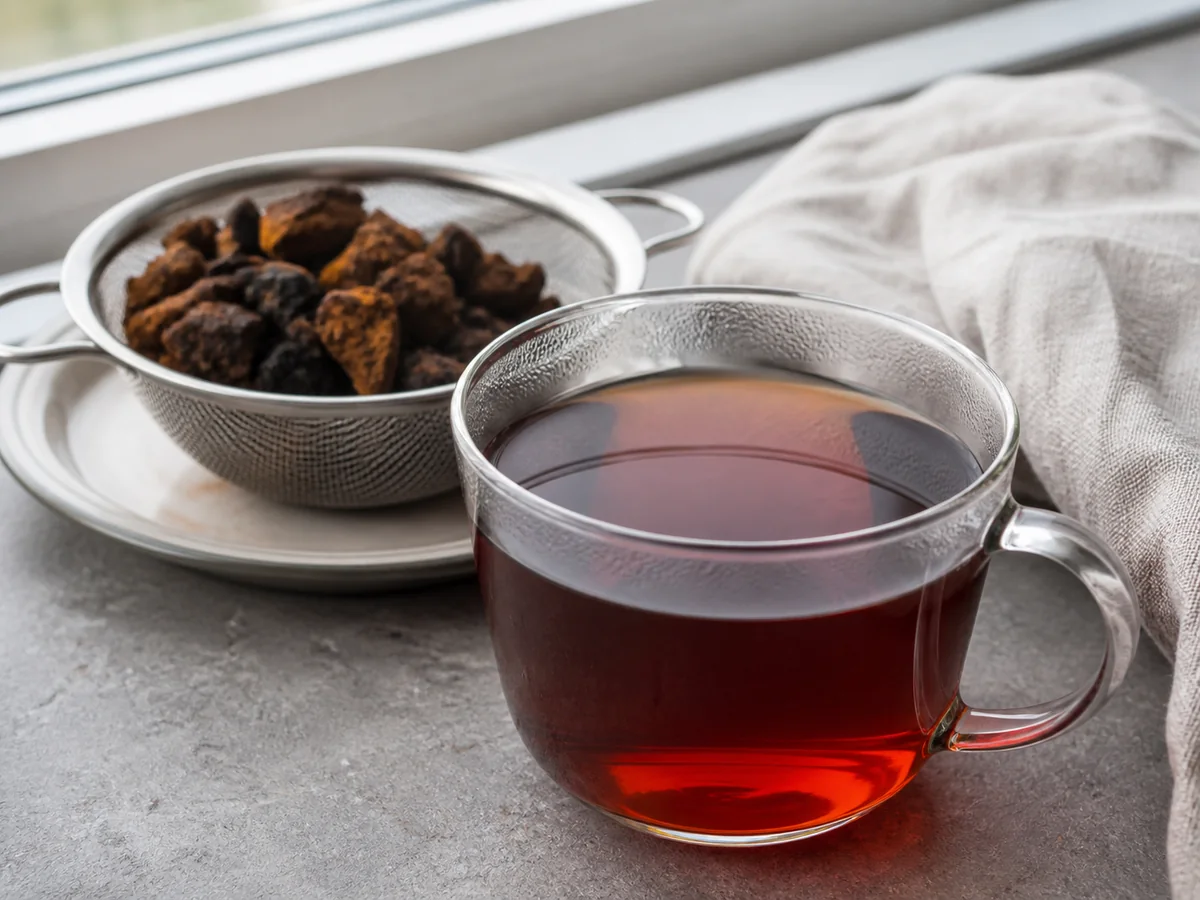
Coarse chunks can be recovered because they remain visible and solid after straining. Powder cannot be reused on the same terms because it disperses, traps sediment, and is difficult to separate from the first liquid.
Test a second batch separately rather than pouring it into the first. Fresh measured water and a shorter early taste check reveal whether the used chunks still contribute useful color, aroma, or flavor.
The second simmer often develops more slowly. That does not make it inferior, but it means copying the first batch's full time without observation can waste heat for almost unchanged water.
Mark reused chunks in a separate clean container so they are not confused with dry unused material whose weight and extraction history are different.
Note
This stop sequence keeps a weak second batch separate from wet solids that should be discarded.
- Keep the chunks when they remain clean and the new water develops a noticeable change.
- Shorten the check interval when the color and aroma appear weaker than the first batch.
- Keep the second liquid separate until both batches have been tasted.
- Discard the chunks when fresh water stays nearly colorless and flavorless.
Wet chaga is now perishable kitchen material. Do not leave spent chunks sealed at room temperature while deciding whether to reuse them.
Drying and longer storage need controlled airflow and a verified dry endpoint, so discarding wet pieces is safer than saving an uncertain third batch when refrigeration only buys a short pause.
Oxalate risk changes who should skip chaga
Published medical reports describe oxalate kidney injury after prolonged intake of substantial amounts of chaga powder. One case involved several teaspoons daily for months, and another investigation measured very high oxalate in the remaining product.
Those reports do not prove that one modest culinary batch injures every healthy person. They do show why concentrated powder, repeated use, and a history of kidney disease or stones deserve more caution than a familiar tea color suggests.
Simmering is the preparation method, not a proven oxalate-removal step, so the risk question cannot be answered by cooking the same product longer.
Kidney history changes the decision before the pot starts. Ask a clinician or pharmacist about chaga when you have chronic kidney disease, recurrent calcium oxalate stones, fluid restrictions, or advice to limit dietary oxalate.
Pregnancy, breastfeeding, upcoming surgery, cancer treatment, and medicines that affect blood sugar, bleeding, or immune activity also move the question beyond routine cooking. Bring the exact package because chunks, powder, and concentrated extracts do not create the same exposure.
Memorial Sloan Kettering notes that human evidence for claimed treatment effects is limited and records interaction and adverse-event concerns. A household decoction should never replace prescribed care or be described as a cancer treatment.
The final decision is simple when any key input is missing.
| What you know | Kitchen decision |
|---|---|
| Labeled coarse chunks, clean condition, no personal contraindication | Make a measured batch and keep intake modest |
| Powder or extract with complete directions | Follow the label rather than this chunk method |
| Kidney disease, stone history, pregnancy, complex medication, or treatment | Ask a clinician or pharmacist before use |
| Unknown wild growth, burl-like material, mold, chemical exposure, or missing label | Do not put it in food or drink |
Any unresolved row in that table is a stop condition, not a reason to test a smaller batch.
Warning
Do not simmer an unknown black growth, deteriorated chaga, or a product whose form and directions you cannot interpret. Stop using the drink and seek medical advice for persistent vomiting, flank pain, reduced urination, swelling, breathing trouble, or another serious reaction.
The kitchen can document material, weight, water, time, and flavor. It cannot convert uncertainty into identity or dark water into a medical result.
That boundary keeps an ordinary decoction measurable without asking the cup to answer questions that belong to the label, the identifier, or a clinician.
Sources & References
- Alaska Plant Profiles: Chaga / Clinker Conk Identity and structure of the sterile conk.
- Maine Forest Service Chaga FAQ Forest-health identity and wild-harvest boundary.
- Inonotus obliquus polysaccharide extraction review Hot-water extraction conditions and their variability.
- Chaga mushroom-induced oxalate nephropathy Case evidence for high-dose powder risk.
- Long-term Chaga ingestion and end stage renal disease Oxalate measurement and chronic-use caution.
- Memorial Sloan Kettering Chaga Mushroom Clinical cautions and treatment limits.