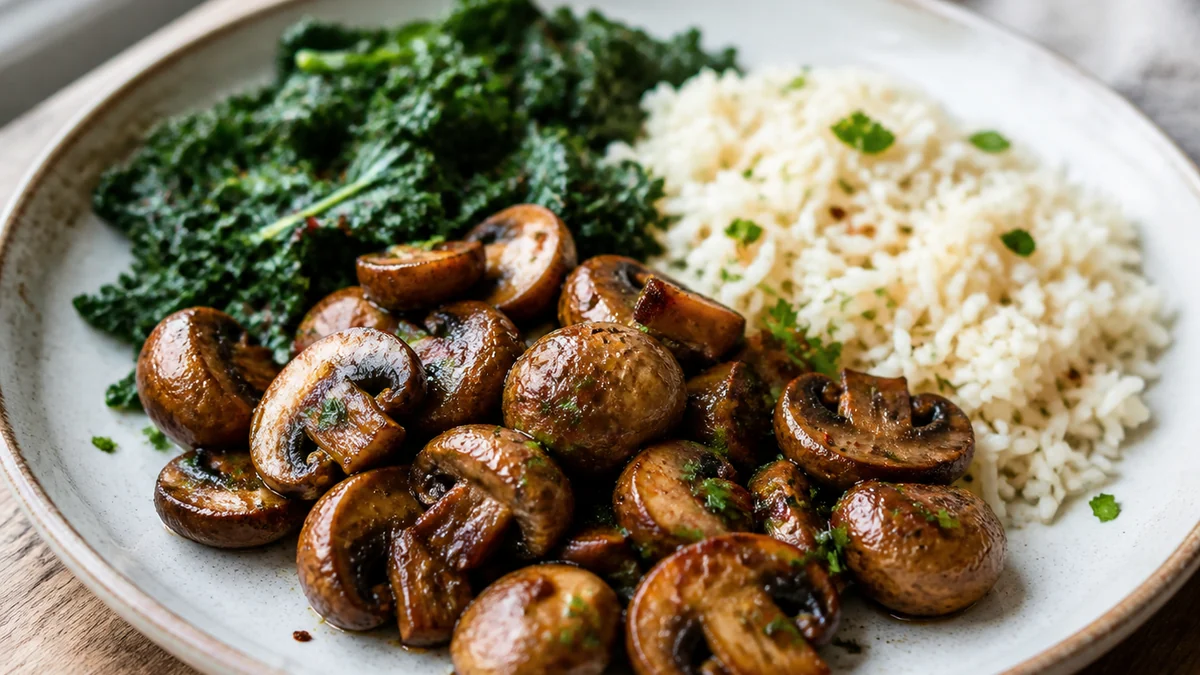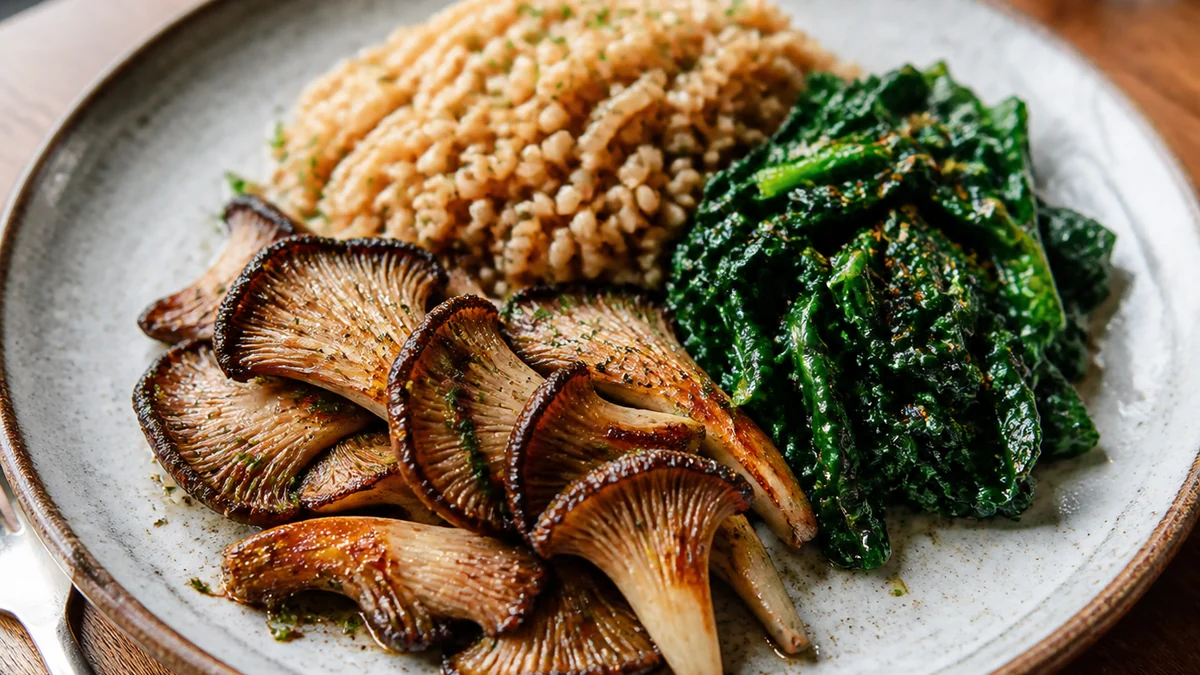
Blue oyster is a cold-weather strain with thicker, denser flesh than a gray oyster, so it takes a hard sear and survives a short braise. Cut the thick stem bundle into rounds across the grain and sear them like scallops instead of throwing the base away.
Almost every oyster mushroom recipe tells you to tear the cluster into strips and throw the tough base away, and on a blue oyster that instruction costs you the best part of what you bought.
The base of a blue oyster is not a tough stub. It is a bundle of thick, dense, faintly sweet stems that browns better than the caps do and holds its shape long after they have gone soft.
How they differ from a gray oyster
Same species, different build.
| Property | Gray oyster | Blue oyster |
|---|---|---|
| Cap flesh | Thin, flexible | Noticeably thicker |
| Water content | High | Lower |
| Stem base | Thin, fibrous, discarded | Thick, dense, worth keeping |
| Behavior in liquid | Softens fast | Holds shape through a short braise |
| Best method | Fast dry heat | Hard sear, and it tolerates wet dishes |
Blue oyster is a cold-weather selection of the same mushroom, and you can read the full record on our blue oyster profile if you want the identification side of it.
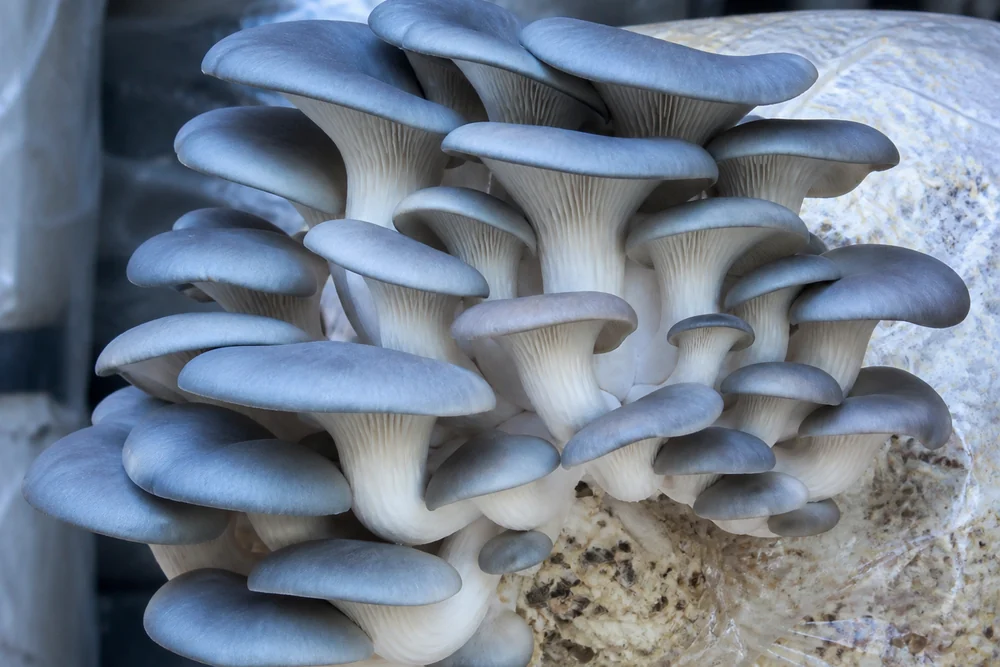
The practical consequence of denser flesh is that it browns sooner and collapses later, because less water means the pan stays hot when the mushrooms go in and a crust forms well before the mushroom starts falling apart.
That gives you a wider margin than any other oyster in the shop. You are not racing a one-minute window here, which is the situation on a golden oyster and part of why people find that species frustrating.
The extra density affects three parts of preparation:
- The pan stays hot when the mushrooms go in, so browning starts almost immediately.
- The interior holds together long after a thin cap would have gone soft.
- The stem base is thick enough to be treated as an ingredient in its own right.
None of that makes the method complicated, but the advice written for a thin gray oyster is leaving something on the table, and most of what it leaves is sitting at the bottom of the cluster.
Cooking MushroomsHow to Cook Cauliflower Mushroom Without Trapping GritDo you have to cook them first
Yes, and the reason is digestion rather than danger.
Mushroom cell walls are chitin, the same material an insect shell is made of, and human digestion does very little with it. Heat breaks those walls down, which is what releases the flavor and what makes the mushroom sit comfortably.
Raw oyster pieces tossed through a salad are the usual cause of an upset stomach that gets blamed on the mushroom being off, and the general case is covered on our page about eating oyster mushrooms raw, where nothing about the blue strain changes the answer.
There is no toxin involved and no special preparation to learn, and the instruction to cook them is about comfort and flavor rather than safety, which is a different situation from the mushrooms that genuinely need heat before they are edible at all.
The good news is that this species tolerates far more heat than the answer requires, so two minutes is the floor and no ceiling arrives in any hurry.
Cleaning a cluster
Less work than you have been told. A blue oyster cluster arrives cleaner than almost anything else in the produce aisle.
Most of the cleaning advice you will find was written for foraged mushrooms, and almost nobody buys blue oysters foraged.
That cluster came off a block, so it carries a little substrate at the very base, no woodland grit anywhere, and no reason at all to handle it like something picked off a log.
The blanket never-wash rule exists because thin-fleshed mushrooms soak up water and then steam instead of browning, while dense blue oyster flesh absorbs far less in the few seconds a rinse takes, so a quick pass under the tap is not the disaster it would be on a thin cap.
The last step is the one that matters. Whatever water is sitting on the outside will hit the pan first, drop the temperature, and turn the first two minutes into steaming.
Our broader guide to cleaning mushrooms goes through the same logic for the species where the rule is stricter. Here the rule is loose and the drying is what you have to respect.
Cooking MushroomsHow to Cook Black Morels: Halve Them, Never Slice ThemThe stems are the best part
Keep the tender stems when you separate the caps, and trim away the tough base.
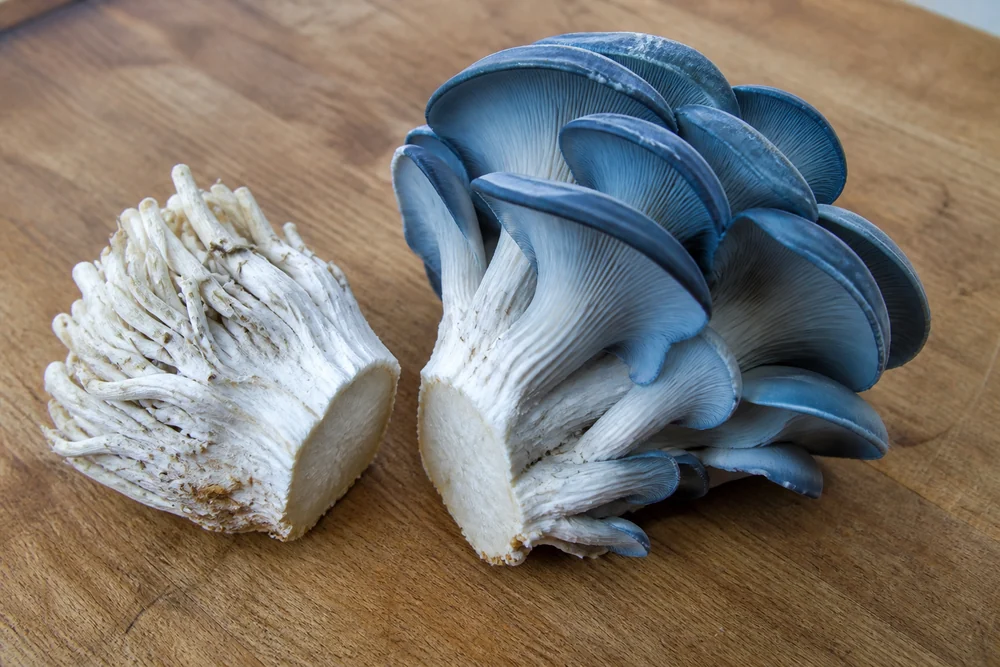
On a gray oyster the base really is thin and stringy, which is where the advice comes from. A blue oyster grows a bundle of stems that are thick enough to slice, dense enough to hold a crust, and sweeter than the caps.
Cut across the grain rather than along it. A round of stem gives you two flat faces that sit on the pan and brown evenly, where a lengthwise strip has no flat surface and cooks into a curl.

Three rules cover the whole stem question:
- Cut across the grain, never along it, so every piece has a flat face.
- Give the rounds a minute or two longer than the caps, because they are denser.
- Cook them separately if you are being careful, since they finish on a different timer.
The comparison people reach for is the king oyster, where the stem is effectively the entire mushroom and the cap is an afterthought. That case is argued in full on our guide to cooking a king oyster, and a blue oyster stem behaves like a smaller, softer version of it.
The general question of which mushroom stems are worth eating is a wider one, and our page on oyster mushroom stems covers where the answer changes by species. Blue oyster sits at the keep-them end of that range.
What the firmness lets you do
Two things a gray oyster cannot manage.
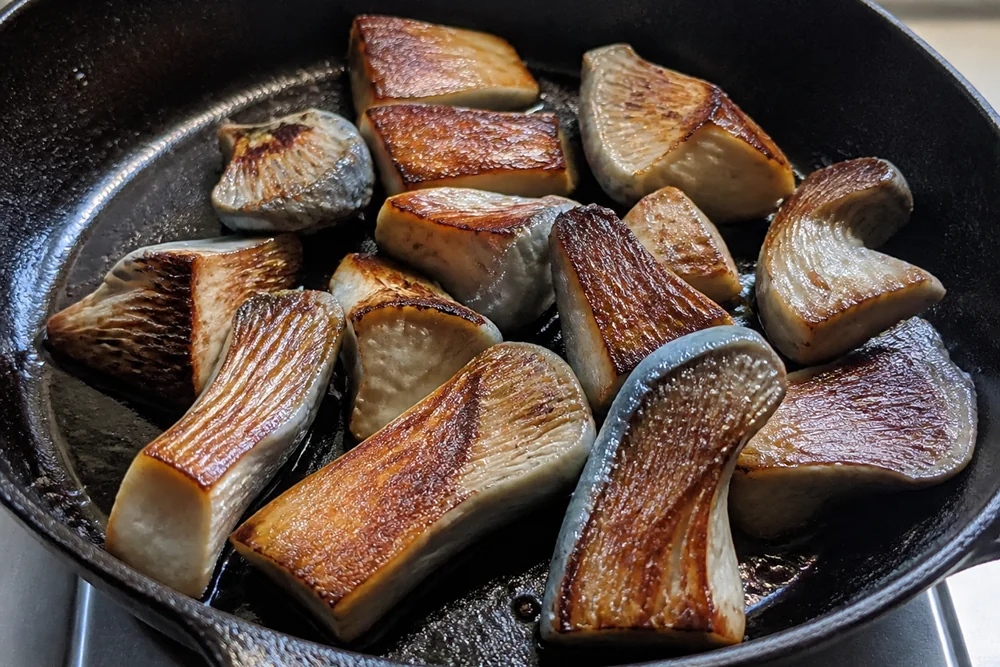
The first is a genuinely hard sear. Get a heavy pan properly hot, put the pieces down cut face first, and leave them for three or four minutes without touching them.
Thin oysters have to be moved constantly or they burn on one side and stay raw in the middle, while blue oyster flesh is thick enough to conduct heat through as the outside crusts, which is why it can take a steakhouse-style treatment.
The second is liquid. A gray oyster dropped into a curry or a stew dissolves into soft ribbons within about ten minutes, and blue oyster pieces come out of the same pot still recognizable.
Those three steps are the whole difference between a mushroom that survives a sauce and one that disappears into it. Searing first also builds the brown flavor that the liquid will otherwise wash straight off.
So the methods that suit them are the ones that need a mushroom to stay in one piece, which is a longer list than any other oyster manages:
- Seared as a side or a centrepiece, cut thick and browned hard on both faces.
- Stir-fried over high heat, where the pieces stay separate instead of matting together.
- Simmered briefly in curries, stews and noodle broths, added in the last fifteen minutes.
- Roasted at high heat, which the thicker caps take without shrivelling to nothing.
- Grilled in large pieces, since they are firm enough not to fall through the bars.
- Skewered, which almost no other oyster survives being pushed onto a stick.
- Skewered, which almost no other oyster survives being pushed onto a stick.
Wet dishes are where the difference is most obvious to somebody who has cooked both. A gray oyster gives a sauce its flavor and then vanishes, and a blue oyster is still something you can put a fork into.
Tip
Firm is not the same as indestructible. Blue oysters still overcook, they just do it twenty minutes later than the alternatives, and by then they have given up the texture that made you buy them.
Grilling is the last of those and it deserves a sentence of its own, because it is where the firmness pays off most visibly.
A blue oyster cut into thick pieces goes straight onto a grate that would destroy a gray one, and the smoke reaches flesh that has not collapsed into itself.
Weight is the buying signal that separates the oysters in the case. A blue cluster feels heavy for its size and a gray one feels like almost nothing, and that difference in the hand is the same difference you will meet in the pan.
The method to compare against is the one on our page for cooking a gray oyster, which is built entirely around speed. Almost everything there still works here, with the difference that you have room to be less careful.
Cooking MushroomsHow to Cook Black Truffle Without Losing Its AromaThe blue does not last
The color is a shopping signal, not a serving one.
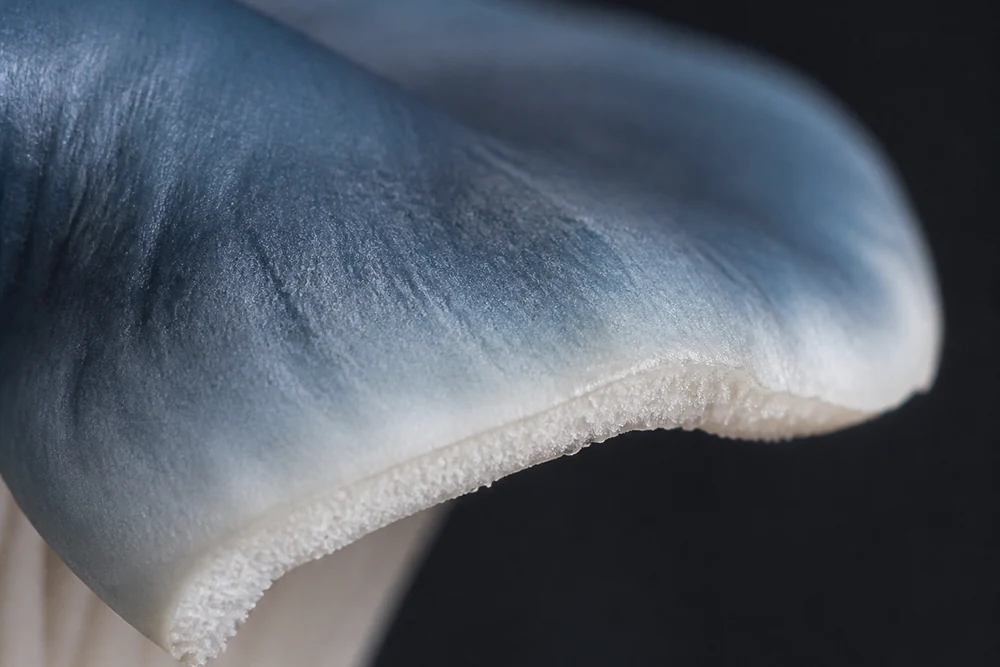
Blue oyster caps are strongly colored when young and fade toward ordinary gray as they age on the shelf. The pigment is on the cap surface only, so the flesh underneath was never blue in the first place.
Nothing you do in the pan preserves it. That is a genuinely different situation from the pink oyster, where people go to some trouble with low heat to keep a bit of the color on the plate.
Here there is nothing worth protecting, so cook them hard.
Trying to preserve the blue costs you the browning and buys you nothing, because it will have gone by the time the plate reaches the table anyway. The one useful thing the color tells you is how long the cluster has been sitting, which matters at the point of buying rather than the point of cooking.
What they taste like
Mild, faintly sweet, and it all depends on the browning. That last part is doing most of the work.
The base flavor is gentle and slightly sweet, closer to a gray oyster than to anything strong like a shiitake. On its own that is not much to work with.
Some people find a faint anise or seafood note in blue oysters, more often in older clusters than fresh ones, and while it is neither universal nor a fault it is why the species gets called shellfish-like by some cooks and bland by others.
What the mushroom actually gives you is texture plus whatever the crust develops. A deeply browned blue oyster tastes savory in a way an underbrowned one simply does not, and that gap is larger here than on most mushrooms because the flesh can take the heat needed to get there.
So do not treat it as a delicate ingredient. Pair it with butter, soy, garlic, or a hard sear and something acidic afterward, and it becomes the center of a plate rather than an addition to one.
Salt matters more than usual too. Salting after the crust has formed rather than at the start keeps the water inside the mushroom while the outside browns, and that is where the sweetness comes from.
Buying and keeping them
Buy the darkest cluster in the case.
Deep blue-gray means young, and pale gray means the cluster has been sitting.
Cold is what produces that color in the first place, since blue oyster is a cool-weather strain whose pigment develops most strongly at low fruiting temperatures.
A summer cluster from a warm growing room is often paler than a winter one of exactly the same age. Both cook fine, and the darker one gives you more days before you have to use it.

Look for caps that are intact rather than shattered and a base that is dry rather than slimy, since broken caps cook faster than whole ones and leave you with a pan of mixed doneness even though they are no safety problem.
The base is the honest part of the cluster. A dry, firm stem bundle means the cluster is sound even if the caps look tired, and a wet or darkening base means it is going regardless of how the tops look.
They keep better than any thin-fleshed oyster because there is less surface area relative to flesh, and the stem bundle outlasts the caps by a couple of days. If the caps have gone limp, cut them off and use the base.
Weight tells you the same thing from the other direction, since a cluster that feels light for its size has been drying on the shelf whatever color it still has.
Four checks cover a cluster at the counter:
- Color, which is age rather than quality.
- Weight in the hand, which should feel like more than it looks.
- The cut base, which wants to be dry and pale.
- Cap edges, which should be whole rather than shattered.
None of those needs the pack opened. All four are visible through the film on a supermarket tray, which is where most people are standing when they have to decide.
Most first attempts fail at the knife rather than the pan. The cluster gets torn into strips out of habit, because that is what every oyster recipe says, and the thing that was supposed to sear like a scallop comes out looking like any other oyster.
Our page on storing blue oyster goes through the container question and what freezing does to them. And if you would rather grow your own than shop for them, growing blue oyster at home is the easiest of the oyster strains to start with in a cool room.
Sources & References
- Pleurotus ostreatus var. columbinus, the blue oyster (Fungi Atlas) Species reference used for the identity of the blue oyster as a cold-weather strain of Pleurotus ostreatus and for the fruiting body structure that underlies the firmness described here.
- Oyster Mushrooms: Cultivation and Handling (Penn State Extension) Extension reference used for the cool-temperature fruiting behavior of the blue strain and for the substrate contact at the stem base that determines how much of it needs trimming.
- Chitin and mushroom digestibility (Journal of Agricultural and Food Chemistry) Food chemistry reference used for the chitinous cell wall structure of edible mushrooms and for why heat treatment improves digestibility and flavor release.