
Amanitaceae
Amanitaceae holds the mushrooms behind most fatal poisonings on earth. Until you can read the family cold, treat every member as dangerous.
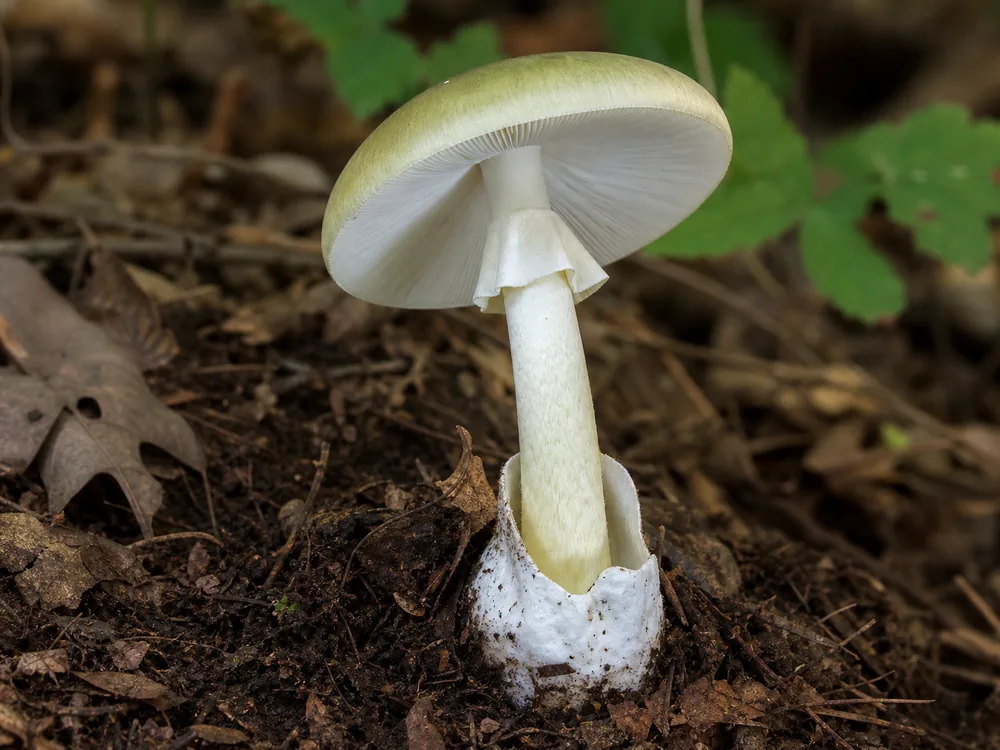
What defines Amanitaceae
Amanitas grow from an egg-like universal veil. As the mushroom expands it tears that veil, and the remains are the family's signature.
- A volva, a cup or sac around the swollen stem base
- Often a ring, or skirt, left on the upper stem
- Free gills that do not touch the stem
- A white spore print in most species
The deadly members
The death cap and the destroying angels carry amatoxins. A few grams can destroy the liver, and there is no antidote you can rely on.
The cruelty is the timing. Symptoms often wait 6 to 12 hours, then fade, then the organ damage sets in.
How to read an Amanita in the field
The single most missed feature is the base, because people snap the stem instead of digging. Lift the whole mushroom and look for the sac.
Warning
If a pale gilled mushroom has a sac at its base and a white spore print, assume Amanita and do not eat it. Beginners should skip this family entirely.
Not every Amanita is deadly
Some Amanitas are edible and even prized, but they sit beside lethal relatives that fool experienced foragers. The risk to reward here is worse than in almost any other family.