
Cantharellaceae
Chanterelles are a fine place to start foraging. The family has a clear signature and one lookalike you must learn.
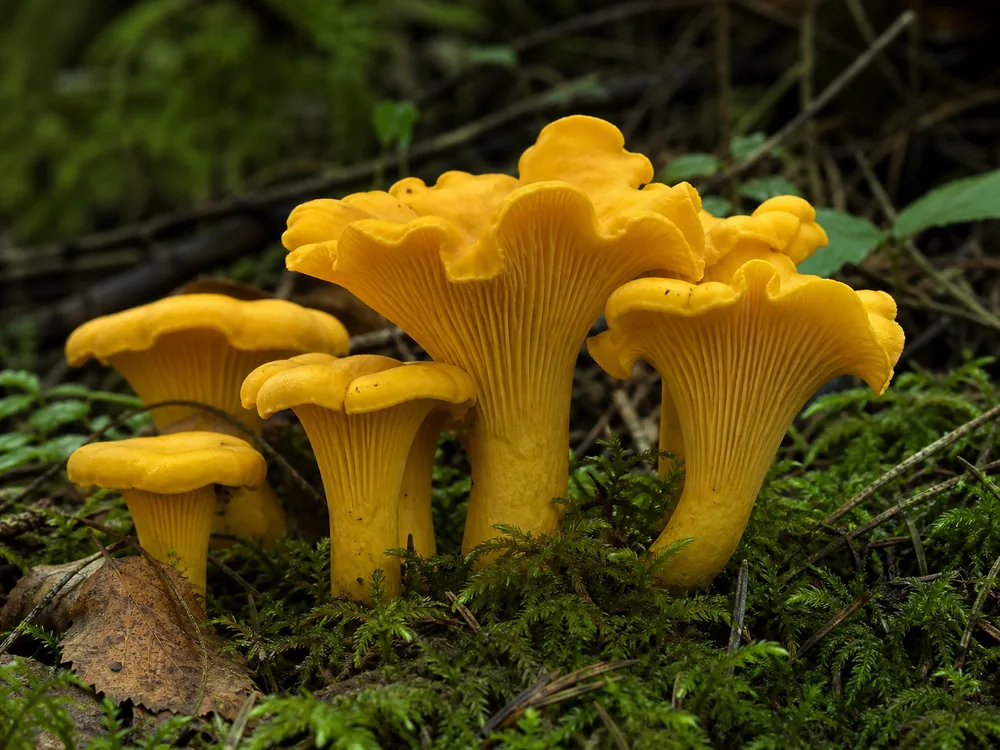
What defines Cantharellaceae
Chanterelles do not have true gills. They have false gills, blunt forked ridges that run down the stem and feel more like folds than blades.
Most are warm yellow to orange, smell faintly of apricot, and tear in strands rather than snapping.
The lookalike that matters
The jack o'lantern is the classic trap. It grows in dense clusters on wood, has true sharp gills, and is toxic.
A real chanterelle grows from soil, usually alone or scattered, with ridges you could almost rub away. Learn that difference before you pick.
Warning
True gills plus a clustered habit on wood means jack o'lantern, not chanterelle. When the gills look like real blades, put it down.
Where they grow
Chanterelles are mycorrhizal, tied to tree roots, so they come back in the same patches year after year. Note a good spot and it can feed you for seasons.
In the kitchen
They hold their texture and take to butter, cream, and eggs. Cook them dry first to release their water, then finish with fat.