
Pleurotaceae
Oyster mushrooms are forgiving to identify and easy to grow. For many people this family is where wild-mushroom confidence begins.
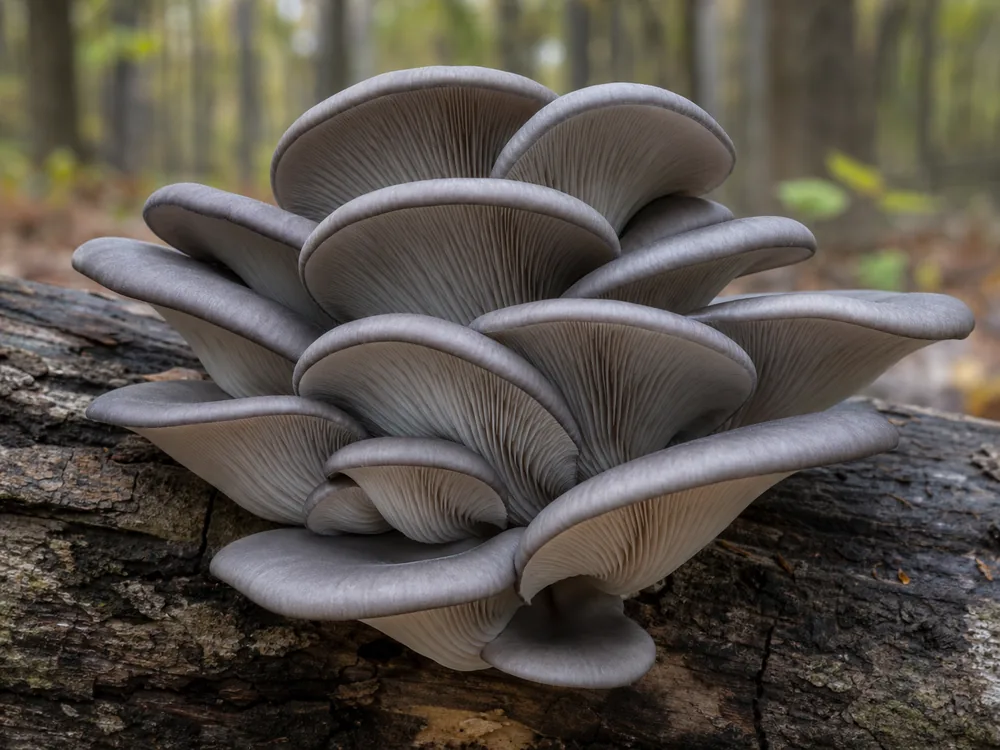
What defines Pleurotaceae
Oysters grow straight out of wood in shelving, overlapping clusters. The cap is smooth and fan-shaped or oyster-shaped, with no true stalk in the usual sense.
- Decurrent gills that run down onto the stub of a stem
- Colours from white and grey to tan, brown, or a soft lilac
- A whitish to lilac-grey spore print
Wild versus cultivated
The oysters you buy and the ones on a dead log are close relatives. That is why oysters are the classic first grow, forgiving on straw, sawdust, and even coffee grounds.
Lookalikes worth knowing
In most regions oysters have no deadly twin, which is part of their appeal. Still check the growth on wood, the decurrent gills, and the pale spore print before eating.
Warning
A few pale, gilled, wood-growing mushrooms can mislead a careless eye. Confirm the oyster features, and when unsure, throw it out.
Growing at home
An oyster grow kit fruits in a couple of weeks and shows every stage of the life cycle. It is the best way to learn what healthy mycelium looks like.