
Hericiaceae
Few mushrooms are as easy to know as Hericium. It wears white spines instead of gills, and nothing dangerous looks quite like it.
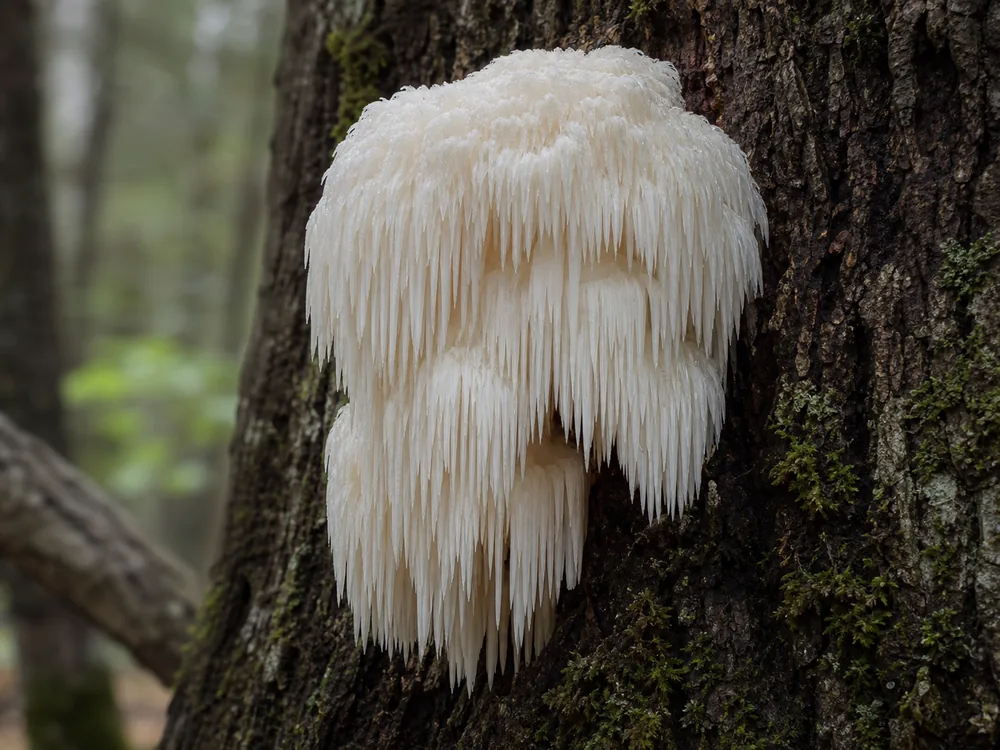
What defines Hericiaceae
Instead of gills or pores, Hericium mushrooms carry soft white spines that hang down and release the spores. The fruit body can look like a pom-pom, a frozen waterfall, or a coral.
They grow on hardwood, often high on a wounded or dying tree.
Why it is beginner-safe
The toothed, white, wood-growing form has no toxic twin in most regions. That combination makes lion's mane one of the safest wild mushrooms to learn.
Kitchen and interest
Cooked well, lion's mane is dense and mild, often compared to crab or lobster. It is also the family behind much of the interest in functional mushrooms.
Note
Interest in a mushroom's health effects is not medical advice. Talk to a clinician before using any mushroom to treat a condition.
Where to find it
Look on standing hardwoods and fallen logs, most often in late summer and autumn. A single find can be large, so you rarely need more than one.