
Morchellaceae
Morels are among the most sought wild edibles. Their family also teaches the two habits that keep morel foragers safe.
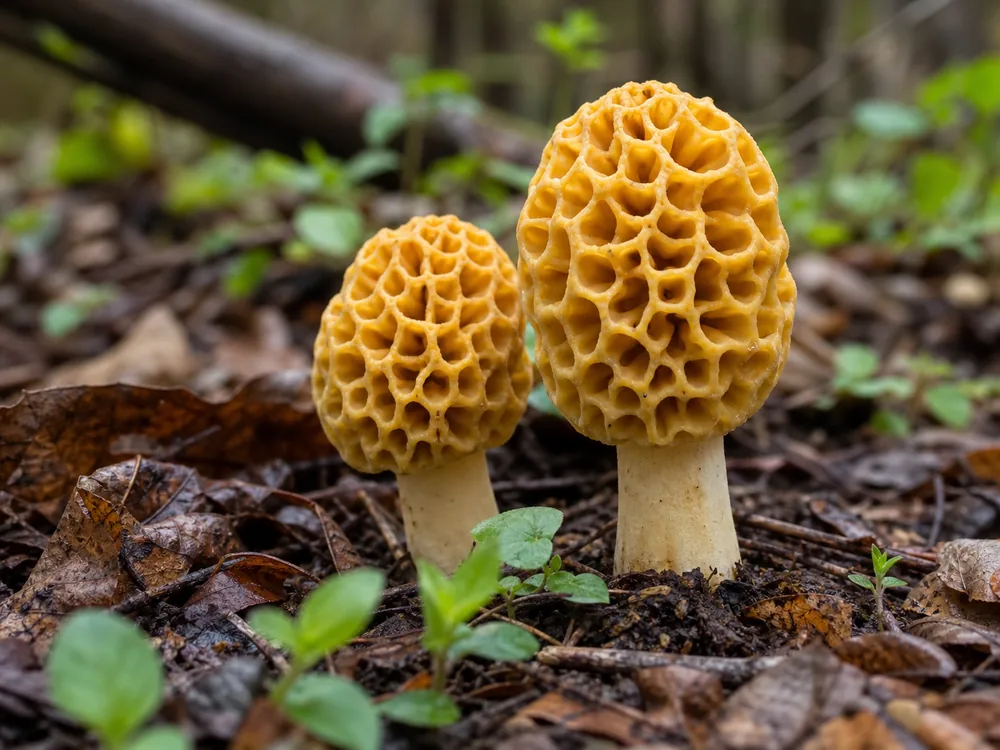
What defines Morchellaceae
True morels, genus Morchella, have a pitted cap that looks like a honeycomb. The pits and ridges are attached directly to the cap.
Cut one lengthwise and it is completely hollow, one clean chamber from the tip of the cap to the base of the stem.
The hollow test
The hollow test is the fastest way to separate a true morel from a dangerous false morel. A true morel is empty inside. A false morel is chambered, wispy, or stuffed with cotton-like tissue.
Cook them, every time
Raw or undercooked morels upset the stomach even when correctly identified. Cook them thoroughly, and skip the alcohol the first time you try a new patch.
Warning
Never eat a morel raw, and never trust a morel that is not hollow inside. Confusing it with a false morel can be fatal.
Season and habitat
Morels are a spring mushroom, often near ash, elm, and old apple, and in the year after a burn. They vanish as the soil warms, so the window is short.