
Discinaceae
Discinaceae holds the false morels. It is the family that turns a prized-morel hunt into a hospital visit when a forager rushes.
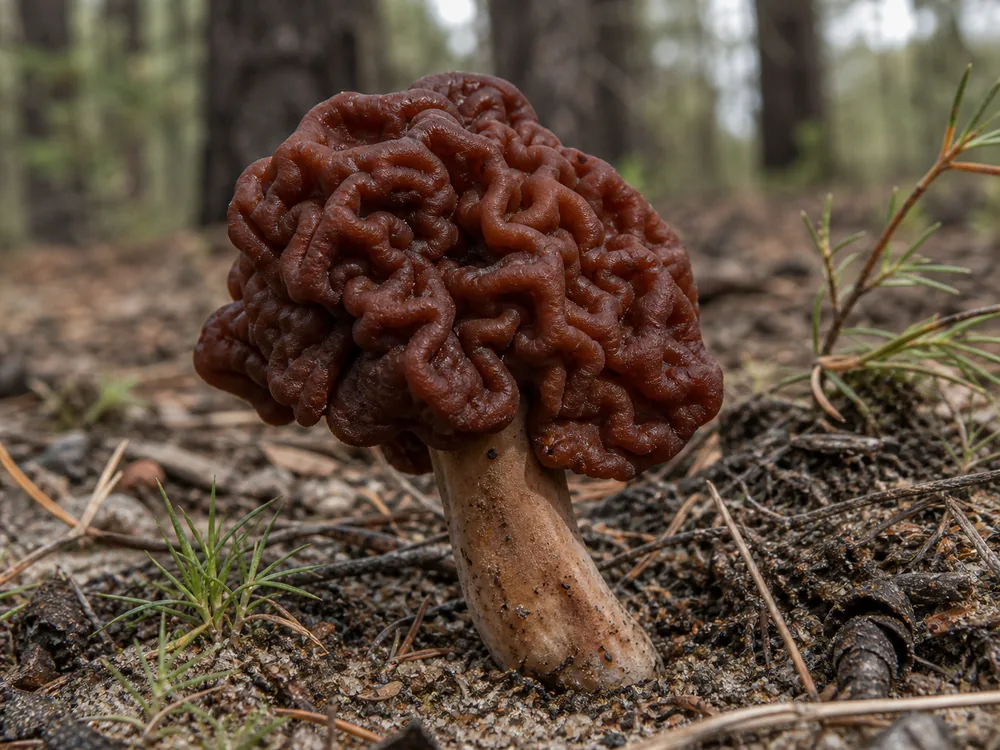
What defines Discinaceae
False morels, mainly the genus Gyromitra, have a cap that looks brain-like or saddle-shaped, wrinkled and lobed rather than neatly pitted.
Cut one open and it is not a single clean chamber. It is stuffed, chambered, or wispy inside.
Gyromitrin, the hidden toxin
False morels contain gyromitrin, which the body converts to a compound related to rocket fuel. It can damage the liver and the nervous system.
Cooking and drying lower the toxin but do not reliably remove it, and the vapour alone has harmed people.
Warning
We rate false morels as dangerous. Do not treat any preparation method as a guarantee of safety.
False morel versus true morel
The true morel is hollow from tip to base and pitted like a honeycomb. The false morel is chambered inside and wrinkled like a brain. When the inside is not one clean hollow, walk away.
Why we rate this family down
Some people eat false morels by tradition. The toxin varies by region and individual, and reactions are unpredictable, so a food that is fine one year can poison the same forager the next.