
Sauteed Chanterelles That Brown Instead of Steam
The classic way to cook foraged chanterelles: butter, shallots, done.
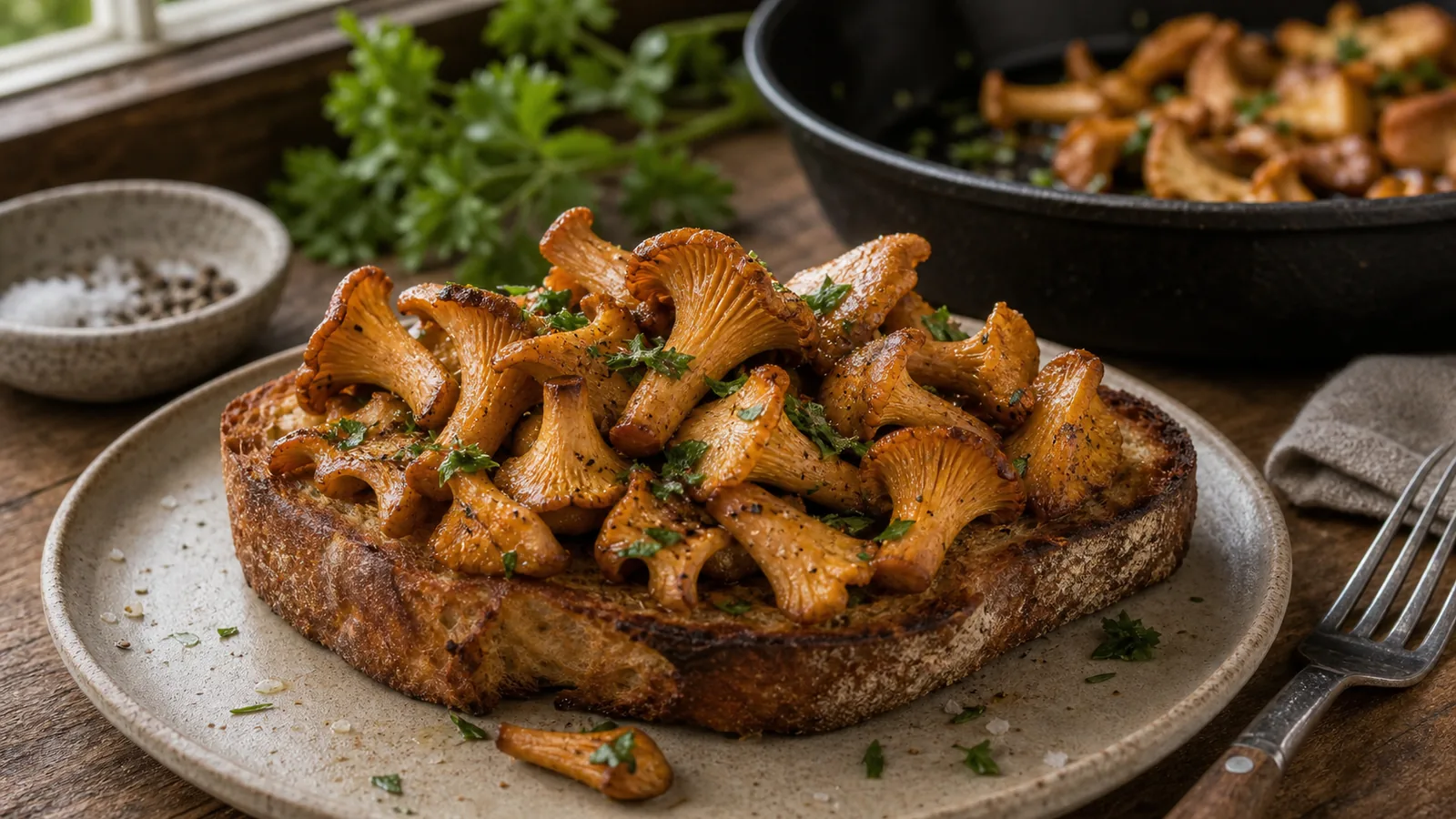
Wild chanterelles hold a lot of water, so the trick is to dry-saute them first, then finish in butter. Never eat them raw.
Ingredients
- 250g fresh chanterelles, cleaned and torn
- 2 tbsp butter
- 1 shallot, minced
- 1 clove garlic, minced
- Fresh parsley or thyme
- Salt and black pepper
- Toast or pasta, to serve
Method
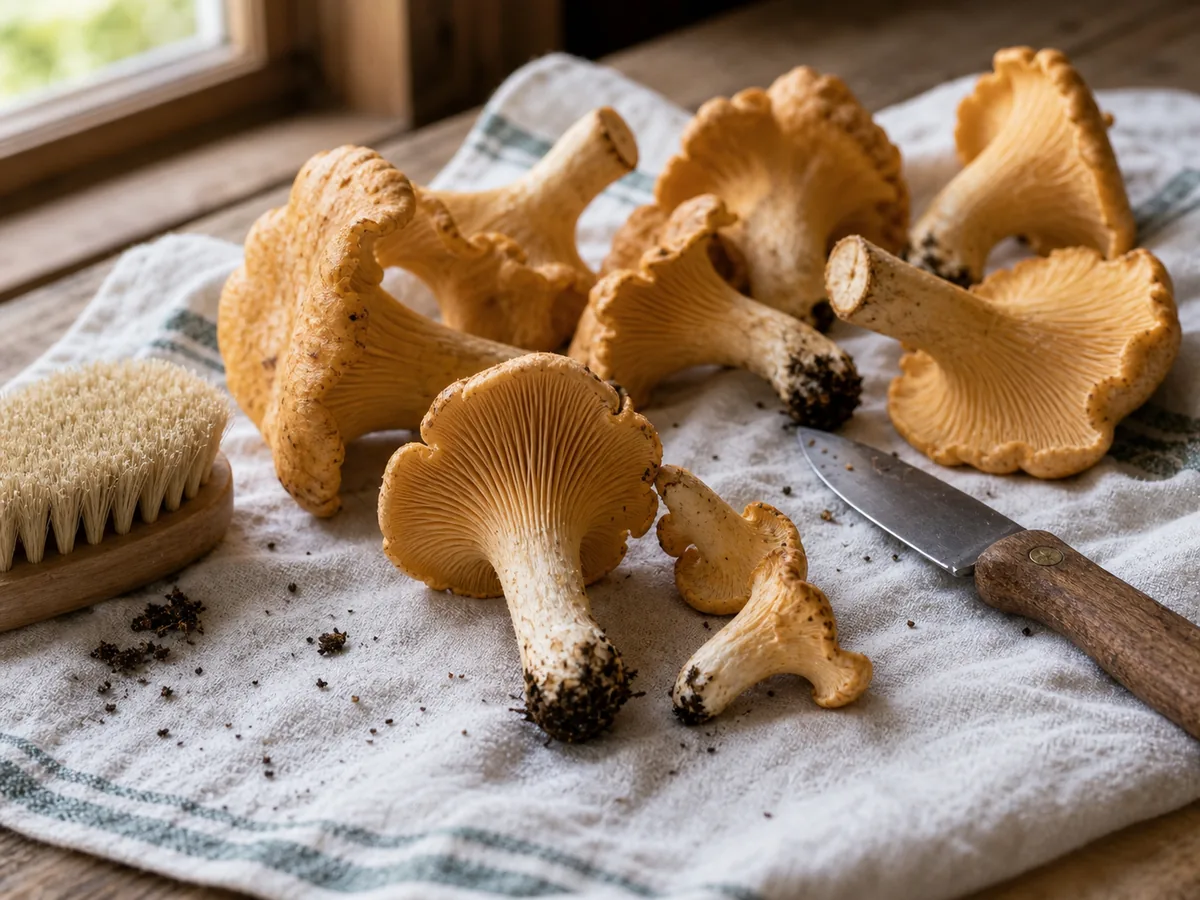
- Brush or wipe the chanterelles clean, then tear large ones lengthwise.
- Dry-saute in a hot pan with no fat for 3-4 minutes until they release and reabsorb their water.
- Add the butter, shallot, and garlic, then cook until fragrant and golden.
- Season, stir through fresh herbs, and serve over toast or tossed with pasta.
Start with the ID
This recipe starts after identification, not before it. Chanterelles need blunt false gills, solid pale flesh, and the right habitat before they belong in the kitchen.
If the mushroom has true gills, orange flesh, or clustered wood growth, stop before cooking. The chanterelle Jack O'Lantern contrast turns on underside structure, not color.
Warning
Do not cook an uncertain orange mushroom. Butter and heat do not make a Jack O'Lantern safe.
How should you clean them?
Brush off dry dirt first. Use a small knife for dirty stem bases, then tear large chanterelles lengthwise so hidden grit and insects are easier to see.
When sandy chanterelles need water, rinse them briefly, drain them well, and allow extra dry-saute time for the surface moisture to leave.
Why dry-saute first?
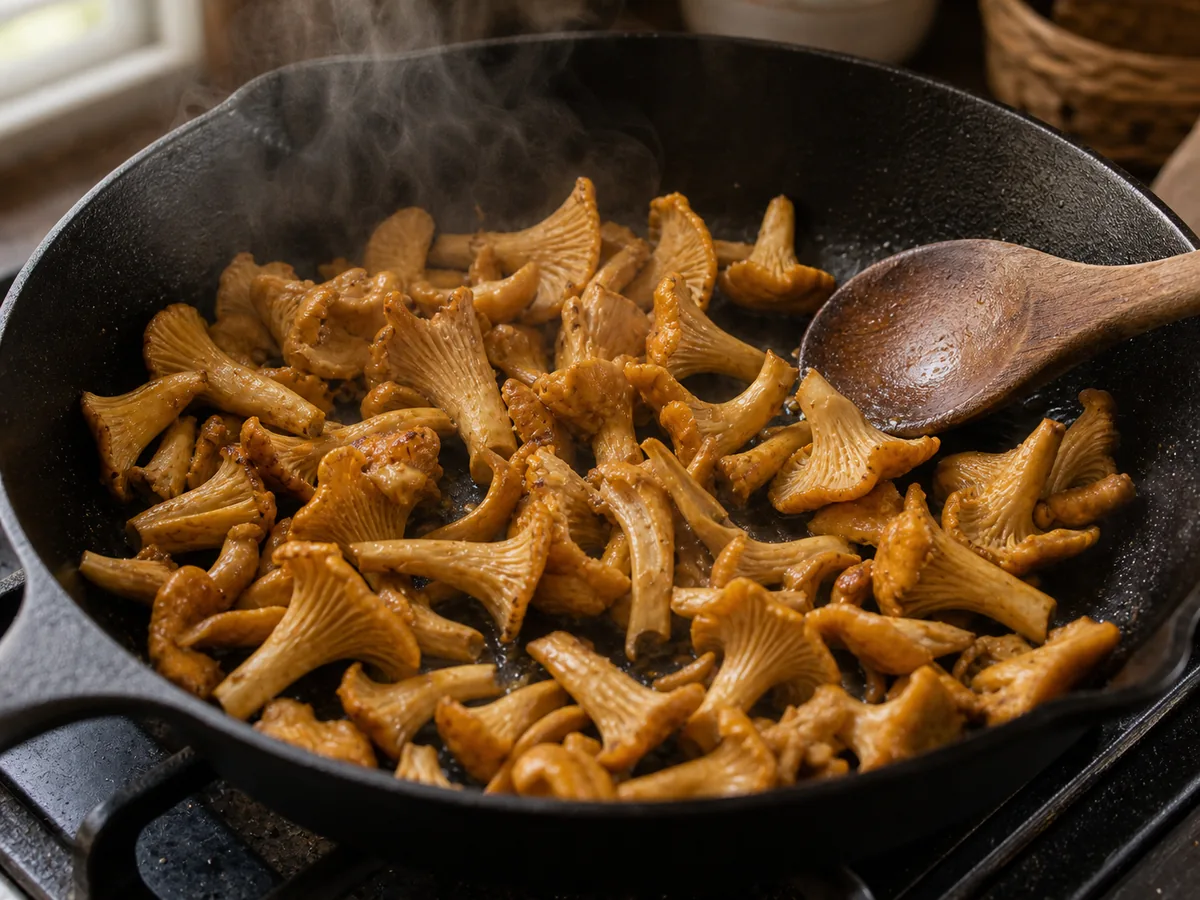
Chanterelles release water as soon as they hit heat. If butter goes in too early, that water dilutes the fat and the mushrooms simmer instead of browning.
In a hot dry pan, chanterelles squeak and release moisture before the pan dries and the mushroom surfaces begin to look glossy again.
When does butter go in?
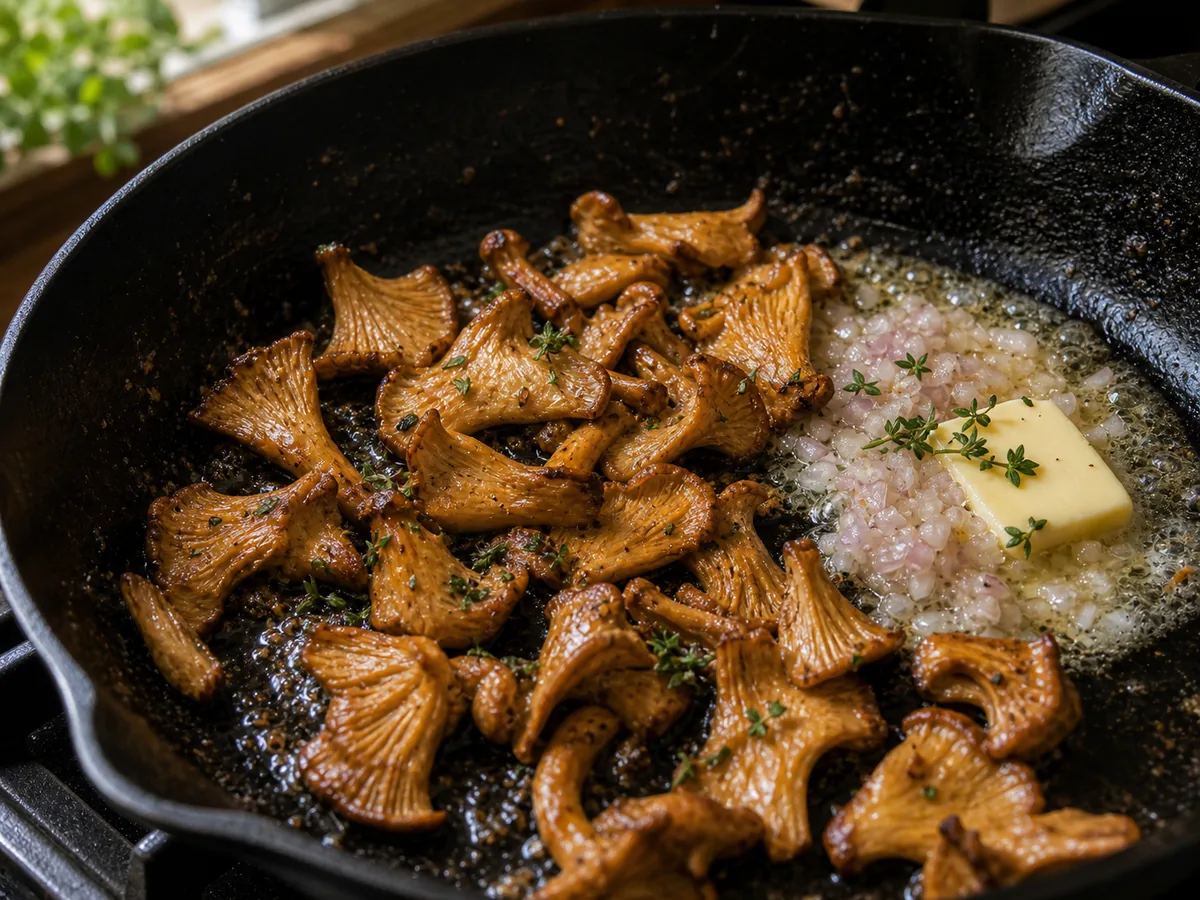
Add butter after the pan looks mostly dry. Then add shallot, garlic, and herbs so they flavor the fat without burning during the watery stage.
Clean chanterelles should smell nutty and woodsy, so discard a batch that smells sour, old, or muddy instead of trying to cover it with butter.
What texture should you aim for?
Good sauteed chanterelles are tender, not limp. The edges should pick up a little color while the thickest pieces stay juicy.
- Dry stage
- Pooled water has evaporated before butter enters the pan.
- Brown stage
- Edges color while the centers stay tender rather than rubbery.
- Serving stage
- The mushrooms are hot through and served soon after cooking.
Deep browning is the wrong target because high heat can make delicate chanterelle edges leathery before the thick centers taste cooked.
What pan size works best?
Use a pan wide enough to hold the mushrooms in a loose layer. A crowded pan traps steam, which stretches the dry-saute stage and makes the texture dull.
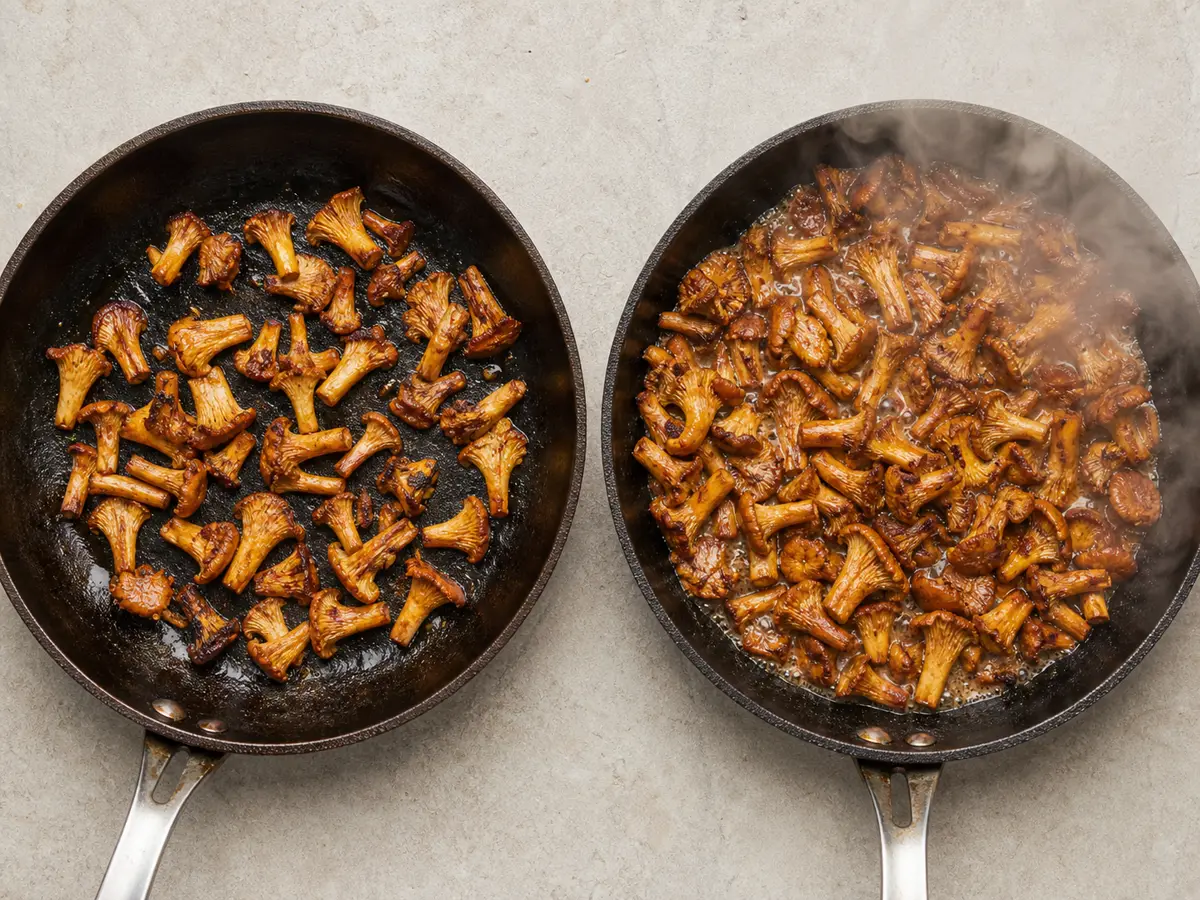
With a small skillet, cook two batches and return the rested first batch only when the second batch is dry enough to receive the butter.
What if the mushrooms are wet?
Wet chanterelles need patience. Start them in a dry pan over medium-high heat and wait for the water to cook off before adding fat.
Hard towel pressure bruises wet chanterelles and breaks their edges, so shake off water, pat lightly, and let the pan finish the drying.
What should you serve them with?
Toast is the easiest serving because it catches the butter and mushroom juices. Eggs, pasta, roast chicken, and simple rice also work.
Keep smoke, hot chile, and garlic restrained on the first serving because strong seasoning hides chanterelle aroma and can also mask an off batch.
How do you know the pan is ready for butter?
The clock varies with pan width and mushroom moisture, so watch the liquid rather than waiting a fixed number of minutes. The pan is ready when pooled water has disappeared and a spatula dragged across the surface leaves a dry trail for a moment.
At that point, lower the heat slightly before adding butter because dry mushroom edges can scorch while the shallot softens. This visible cue also makes the broader chanterelle cooking guide useful across small and large batches.
Can you store leftovers?
Cooked chanterelles keep best in a covered container in the refrigerator for a short window. Reheat gently in a pan, not in a microwave until rubbery.
Discard leftovers that smell sour or feel slimy because a change in condition is enough reason to stop eating a wild mushroom dish.
What if you want a cultivated version?
The same dry-pan idea works with cultivated mushrooms, though oyster mushrooms cook softer and faster while shiitake tastes deeper and chewier. Neither result has the apricot aroma of chanterelles.
If the goal is a safe weeknight toast, cultivated mushrooms are the easier choice. If the goal is chanterelle flavor, the true chanterelle ID has to be settled first.
Can you scale the recipe?
Yes, but use a wider pan or cook in batches. Doubling the mushrooms in the same small skillet traps water and weakens the dry-saute step.
Season only after the water cooks off because early salt draws more moisture into an already crowded pan.
Keep identification before cooking
This is still a wild mushroom recipe, so safety comes before butter. Wild mushroom safety happens in the field before species traits reach the skillet.
Cultivated oyster mushroom clusters carry the butter-and-herb method without wild mushroom risk, though their flavor remains distinct from chanterelles.
Use this as a light pan method
This is a simple pan method, not an identification shortcut. The mushroom should already be confirmed before the skillet comes out.
Use this method when chanterelles are fresh, firm, and clean enough to judge. If they are soggy, sour, or too old to show their ridges clearly, the better cooking decision is to skip them.
The finished mushrooms can top toast, eggs, polenta, pasta, or a small steak, but keep the sauce light enough to preserve their apricot-like aroma.
A morel pan sauce needs the morel cooking method because morels carry a stricter cook-through rule.
Featured mushroom: Choice Chanterelle