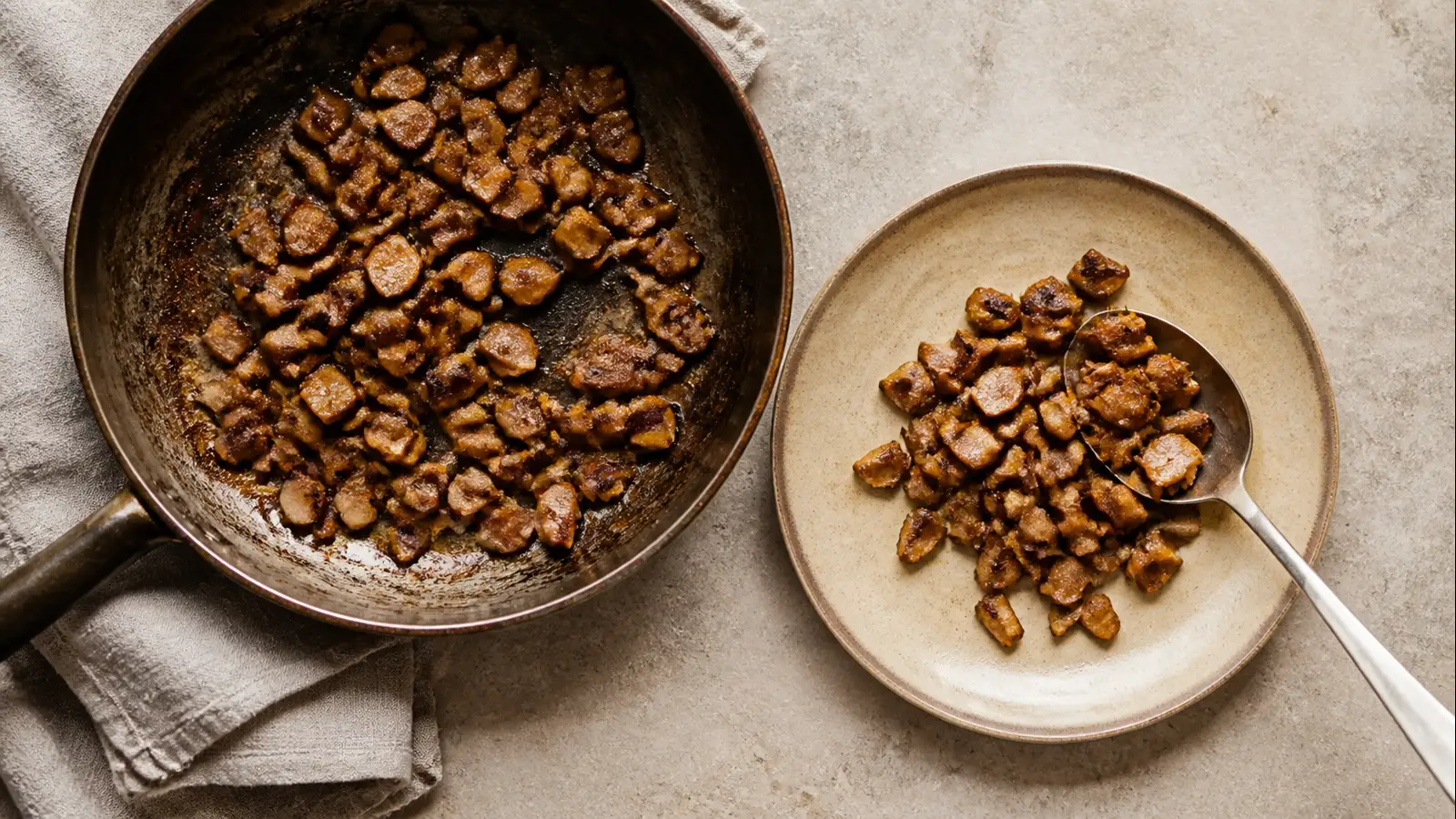
Morels need a safety check before they hit the pan. Halve them, confirm a hollow interior, clean out grit, then cook them through.
Safety before flavor
Cook true morels thoroughly and never serve them raw. Heat matters even after a correct ID because undercooked true morels can still upset people.
Raw morel risk is a cooking problem, not an identification problem. Slice, clean, and heat morels through before tasting.
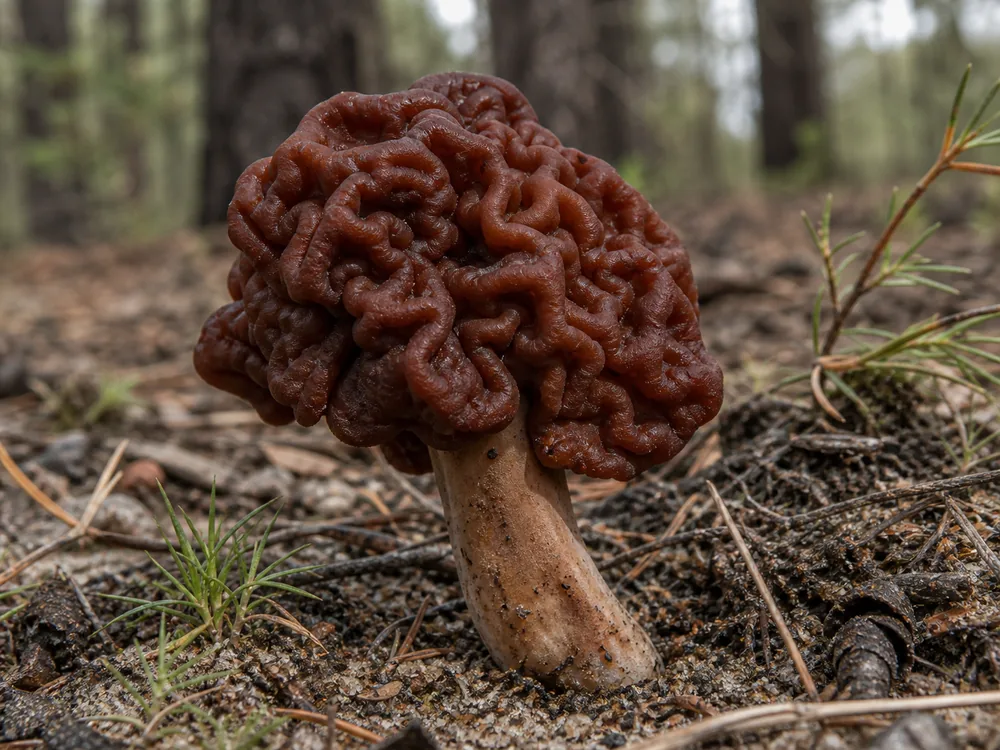
False morels are a separate safety problem because normal kitchen cooking does not make them safe, so the cut check comes before every recipe step.
A hollow interior moves a morel into the cooking stage. It does not make it ready to eat.
Warning
If a morel is not fully hollow, do not cook it. Put it aside as a false-morel suspect or discard it.
That puts morels on the cautious side of the mushroom edibility ladder.
They are edible after a correct ID and thorough cooking, not edible by appearance alone.
Cut before cleaning
Slice every morel from tip to base. A true morel is hollow through the cap and stem, while a false morel is chambered, cottony, or folded inside.
The complete cut is the safety check that decides whether the mushroom belongs in the pan.
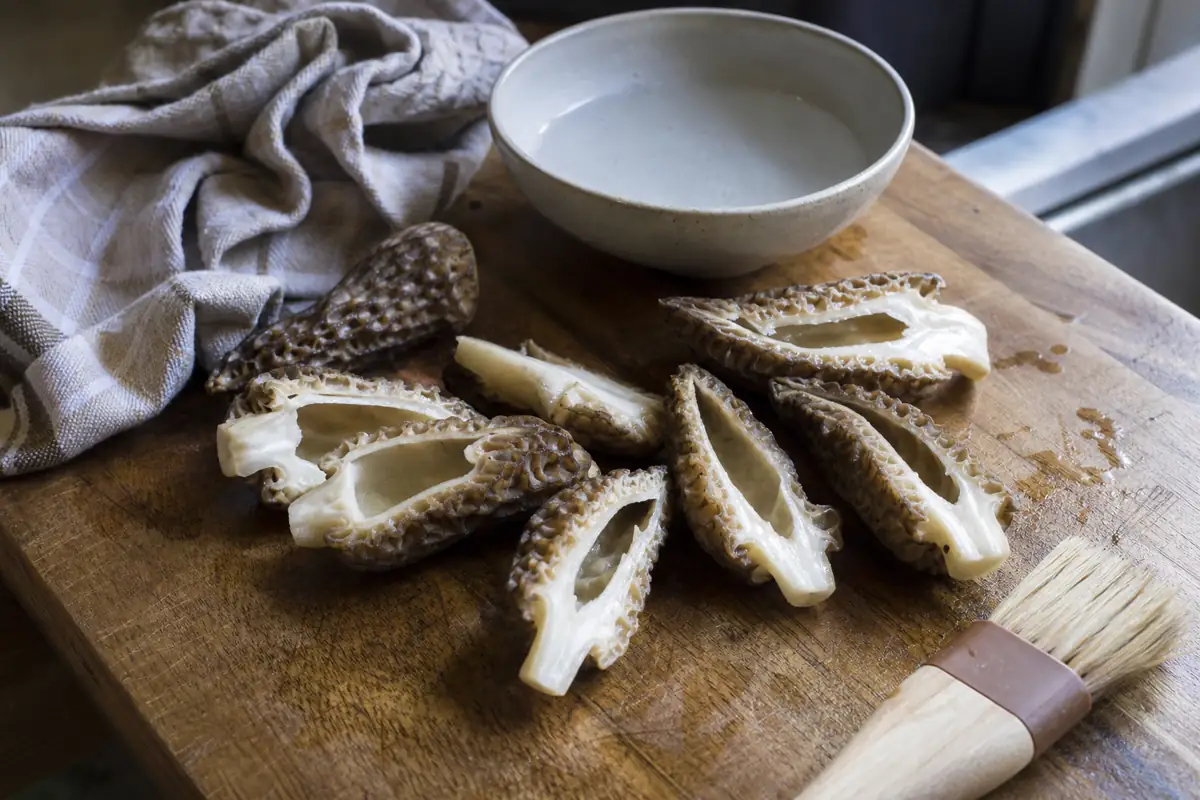
How should you clean morels without waterlogging them?
Brush off dry grit first. Then rinse only where dirt or insects are trapped inside the hollow body.
- Use a short salt-water soak only for buggy morels.
- Keep the soak brief, about 5 to 10 minutes.
- Lift morels out of the water instead of pouring grit back over them.
- Pat them dry before they touch hot fat.
Sandy morels can need a second quick rinse. They should not soak all afternoon because wet morels steam before they brown.
Cleaning is easier after the safety cut because the hollow center is visible. You can remove grit without guessing what is hidden inside the cap.
Choose the cooking method
Morels brown best after they release water, so use a wide pan and small batches when the skillet would otherwise trap steam.
| Method | Best use | Safety note |
|---|---|---|
| Butter saute | Toast, eggs, steak, pasta | Cook until hot through and lightly browned |
| Cream sauce | Pasta, chicken, spring vegetables | Brown first so sauce does not hide raw centers |
| Dried morels | Soups, risotto, pan sauces | Rehydrate, rinse, filter liquid, then cook |
| Simple roast | Larger clean halves | Use steady heat and check texture before serving |
Butter goes in after the water leaves, or it burns while the morels are still steaming.
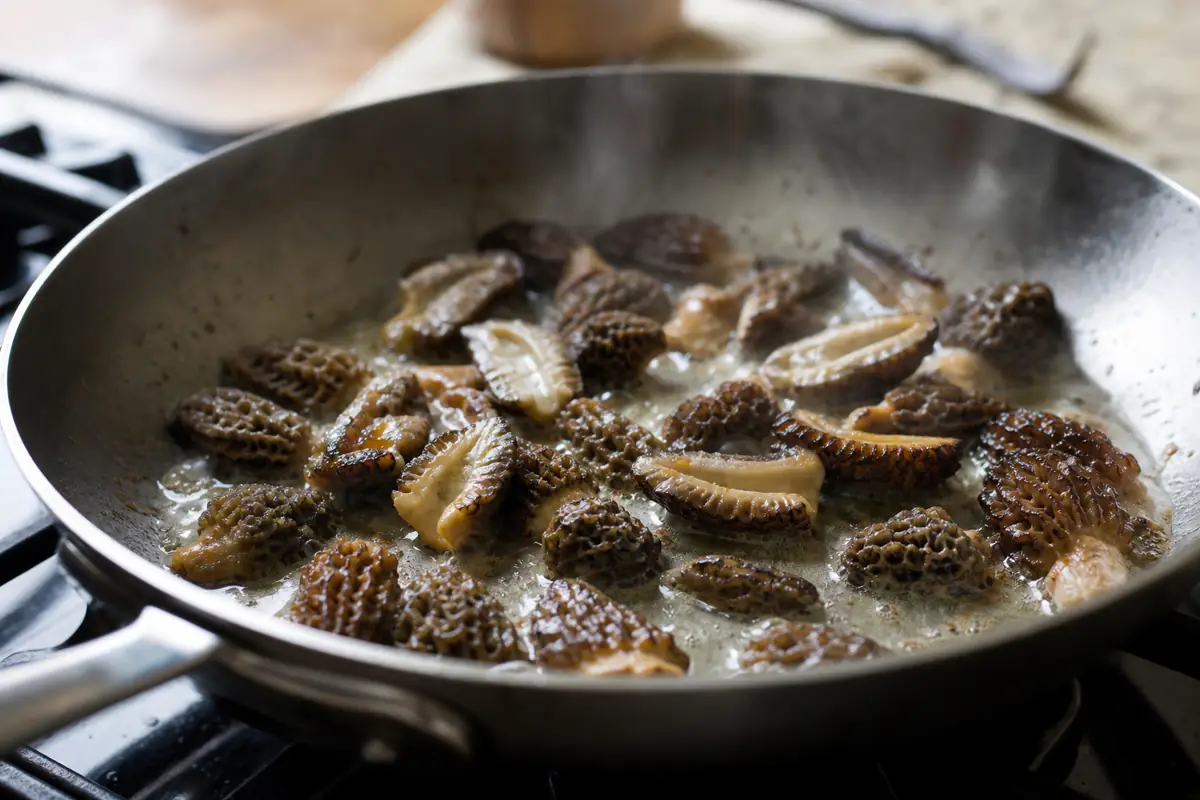
Pan order for a safer saute
The cooking sequence is simple because morels carry water and grit. Dry the cut pieces first, start with enough heat to drive off moisture, then add butter once the pan is no longer flooding.
This order keeps the safety check visible. A sauce should finish the morels, not hide a rushed pan.
Mistakes to avoid
Do not rely on a quick toss in warm butter. Thick yellow morels and large pieces need real pan time.
Because some people react badly when morels and alcohol are eaten together, keep a first meal small, simple, and alcohol-free.
Wild morels bring foraging safety rules into the kitchen. If they came from a friend, ask where they were found and whether every piece passed the hollow check.
Do not cook a loose pile of wild morels when identification questions remain unanswered because a safe meal starts with whole specimens, source notes, and visible cut surfaces.
Dangerous mushroom lookalikes use the same stop-rule thinking for other high-risk pairs. A recipe should never be the place where an identification doubt gets settled.
Dried morels need rinsing
Dried morels taste concentrated and often hold grit, so cover them with warm water until pliable and lift them out without pouring the sediment back over them.
Strain the soaking liquid through a coffee filter or fine cloth if you want to use it. Sand and forest grit settle at the bottom.
- Rehydrate until the morels bend without cracking.
- Rinse the inside after soaking.
- Cook rehydrated morels fully, just like fresh ones.
- Use filtered liquid in risotto, cream sauce, or soup.
Pairings that stay quiet
Morels do not need loud seasoning. Butter, cream, eggs, asparagus, chicken, toast, pasta, and mild herbs let the nutty aroma stay clear.
Avoid heavy smoke, hot chile, or too much garlic the first time you cook them. Strong seasoning can hide both the morel aroma and the warning signs of undercooking.
When spring morel flavor is optional, cultivated shiitake gives steady texture in cream sauces while creamy mushroom risotto keeps oyster mushrooms softer with lower identity risk.
IdentificationHow to Take a Spore Print You Can Actually ReadWhen are morels fully cooked?
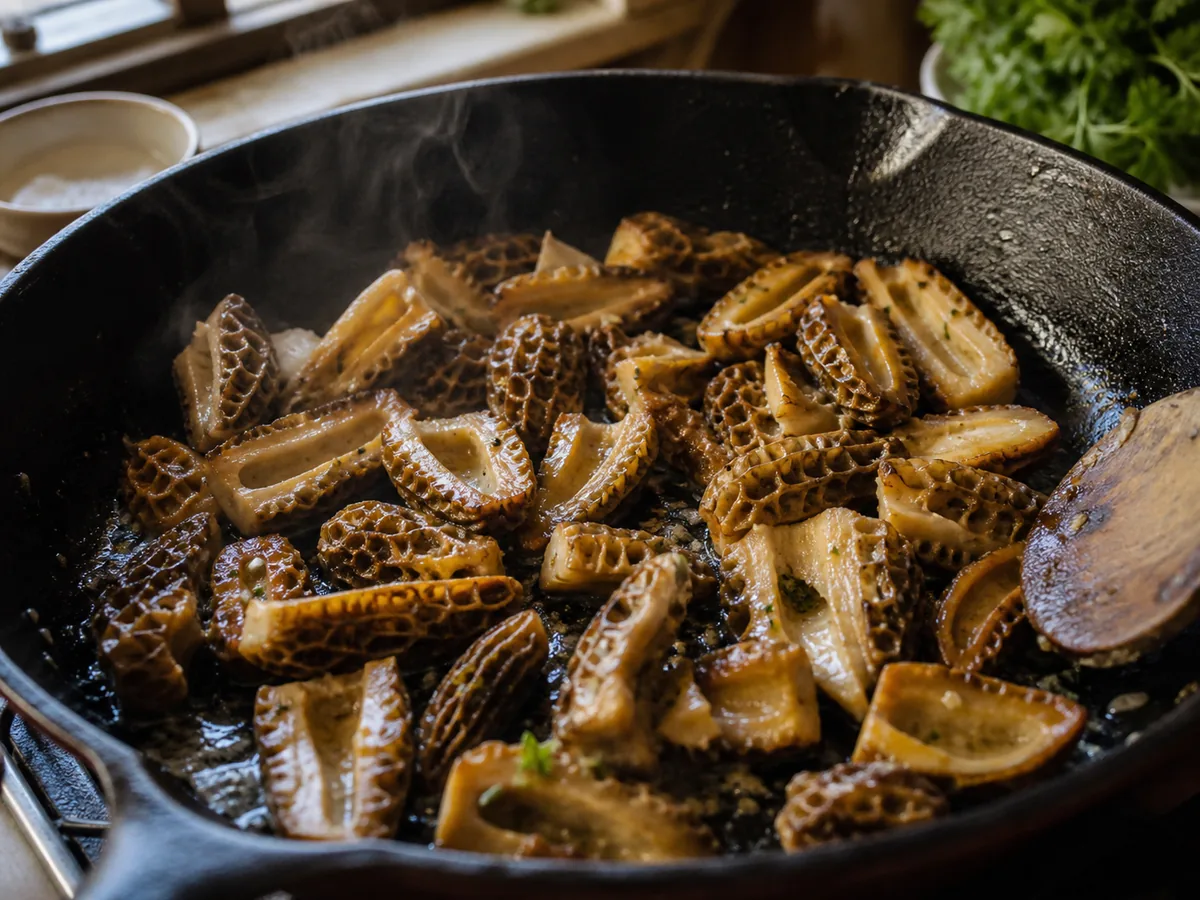
Cook morels until they are hot through, softened, and lightly browned. Five minutes can be enough for small pieces in a hot pan, but thick halves and cream sauces often need longer.
Watch morel texture in the hot pan rather than trusting the clock alone. Properly cooked pieces lose their raw spring, smell nutty, and begin to brown before sauce enters.
If you add cream, stock, or wine too early, the pan cools and the morels simmer before they brown. Brown them first, then build the sauce.
Use a wide pan because crowding traps water, extends cooking time, and hides whether the morels have heated through.
If the morels are going into eggs or pasta, cook them first and add the other ingredients after the mushroom texture changes. That keeps the dish from carrying half-cooked centers.
Do not use garnish timing for morels.
Serve new eaters carefully
Serve a small portion and keep the rest of the meal simple. Even properly cooked morels can upset some people, especially when the serving is large or the mushrooms were old.
Tell guests they are eating wild morels so anyone with a mushroom sensitivity can decline before serving.
Questionable mushroom exposure is a poisoning first aid problem, not a cooking problem.
What should you do if cooked morels taste bitter?
Stop and check the batch. Bitterness can come from old mushrooms, burned butter, dirt, or a species problem that should have been caught before cooking.
Do not fix a questionable wild mushroom dish with cream or salt. If the flavor seems wrong and the ID was not solid, throw it out.
A morel substitute solves the nutty, woodsy flavor problem when the dish does not require a wild spring mushroom.
Final pan check
Every piece should be identified, cleaned, and cooked through. Sauce should not hide raw-looking folds, and the pan should smell nutty and savory.
Serve morels hot. If you cook them ahead, reheat them fully rather than treating them like a garnish.
Spring meal planning should include the false morel split split before the pan comes out.
Heat should drive off water
Use enough heat to drive off water before adding butter, with medium-high heat working for most fresh morels in a wide uncrowded pan.
If the pan is quiet and watery, the morels are steaming. Keep cooking until the liquid reduces and the edges begin to brown.
If the butter browns too fast, lower the heat and give the mushrooms more time. Burned butter can make a safe batch taste bitter.
Safety guideForaging Safety Rules That Keep Wild Mushrooms Off Your PlateLarge morels need extra time
Large morels need more time because the folds hold moisture. Cut them lengthwise, then cut very large pieces again so the thickest parts heat through.
Do not judge a large morel by a browned exterior because the thick interior must also lose its raw spring and become tender.
Keep large morels split lengthwise so heat can reach the hollow center from the pan side and the open side. A whole morel can brown around the cap while cool moisture remains trapped inside.
Turn thick halves after the first side releases its water and takes color, then give the open interior direct contact with the pan. Add butter only after the active steaming slows, or the milk solids can brown before the mushroom has finished cooking.
When one specimen is much larger, start it first or cut it into smaller lengthwise pieces so the final pan check measures uniform pieces instead of one timer across every size.
Cream sauces need extra care because liquid hides texture. Brown the morels first, then add cream or stock after the mushrooms already smell nutty.
Tiny morels need restraint
Tiny morels cook fast and dry out fast. Keep them whole only when they are clean and clearly hollow.
For gritty small morels, a quick split is still worth it. You lose the perfect shape, but you gain a safety check and a cleaner bite.
Small morels belong in simple dishes such as toast, eggs, or light pasta where their texture remains visible.
Can you reheat cooked morels safely?
Cooked morels should cool quickly and go into the refrigerator. Reheat them fully before serving again.
Do not treat cooked morels like a cold garnish. The safety rule is cooked through, and reheating should respect that rule.
If leftovers smell sour, bitter, or old, discard them. Morels are too expensive to waste, but they are not worth eating when condition is questionable.
Guest timing
Cook morels close to serving time so they reach the table hot, dry at the surface, and browned at the edges.
Before serving guests, complete identification, cutting, cleaning, and condition checks. Once they arrive, the hot pan should be the only unfinished cooking task.
Do not rush the pan to match the rest of the meal. Morels set the timing, and several extra minutes over steady heat are safer than undercooked centers.
Sources behind the safety advice
The raw-morel warning is supported by Poison Control and CDC outbreak reporting, which connect illness with preparation, serving amount, and individual sensitivity.
This safety sequence keeps a morel meal narrow without making every meal risky. Confirm true morels, cut them open, clean them, cook them fully, then serve a small first portion.
Change the meal when identity, condition, or cooking time cannot be checked by using cultivated mushrooms, a morel substitute, or a non-mushroom sauce.
That is the practical reason this guide stays strict. Morels are worth cooking carefully, but no spring mushroom is worth serving when the safety evidence has already been lost.