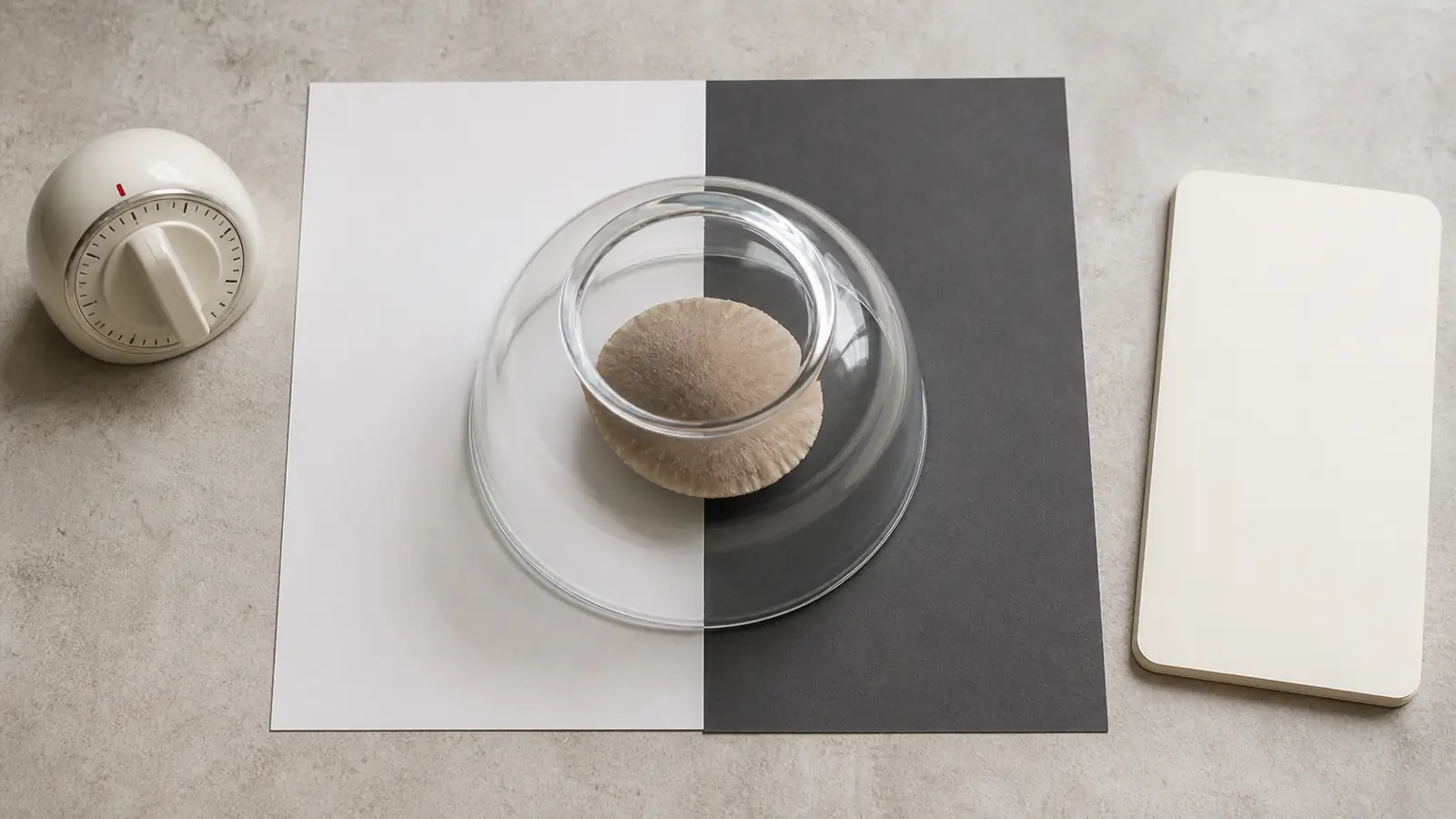
A spore print shows the color of released spores. It helps narrow an ID, but it never proves a mushroom is edible by itself.
A spore print narrows color, not identity
A spore print helps when underside color could change the identification path, especially with gilled mushrooms, little brown mushrooms, pink-spored groups, and pale-spored mushrooms where a mistake can be serious.
It does not prove edibility. A print tells you the color of released spores, then the rest of the mushroom still has to match.
Skip the print when the specimen is too young, waterlogged, dried out, or already dropping spores all over the basket because a damaged cap produces a weak or misleading result.
A split background gives the clearest spore color
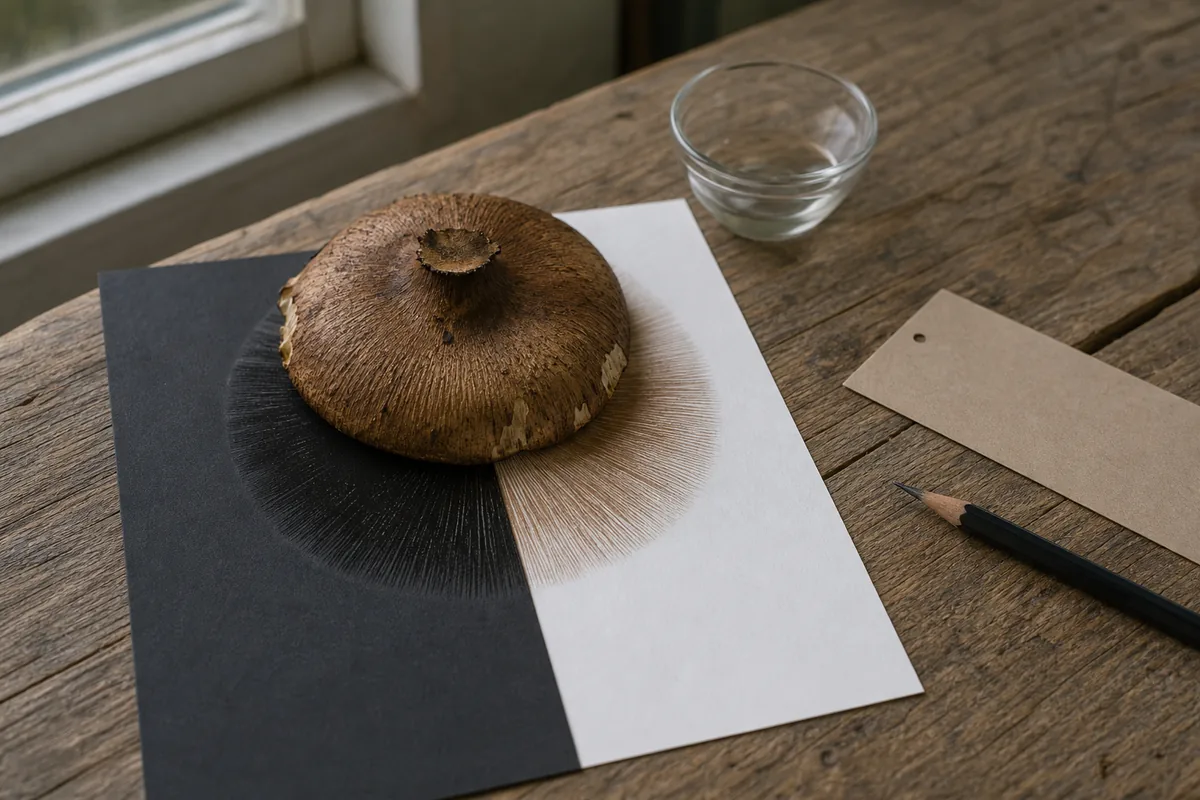
Use a mature cap and two backgrounds. Half white paper and half dark paper make pale spores and dark spores easier to see without guessing under kitchen light.
| Material | Best use | Watch out for |
|---|---|---|
| White paper | Brown, black, purple-brown, and pink prints | White spores disappear |
| Black paper | White and cream prints | Very dark spores lose contrast |
| Aluminum foil | Portable prints for a field notebook | Reflections can shift pale colors |
| Glass slide | Microscope work or clean storage | Harder to label in the field |
Using both backgrounds at once removes the guesswork about which one a given cap needs.
How do you take the print?
Cut the stem close to the cap. Place the cap gill-side or pore-side down across the two-color surface, then cover it with a bowl or cup so air movement does not scatter spores.
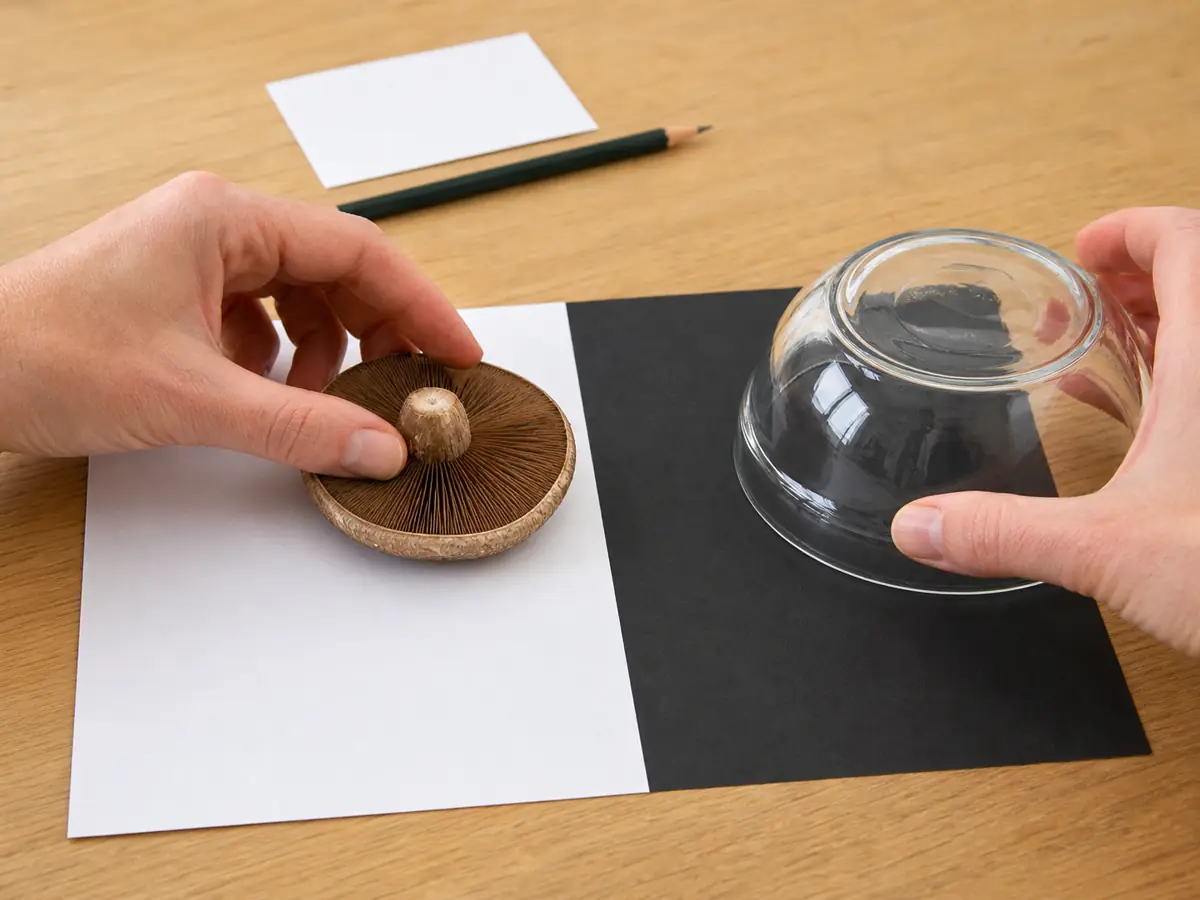
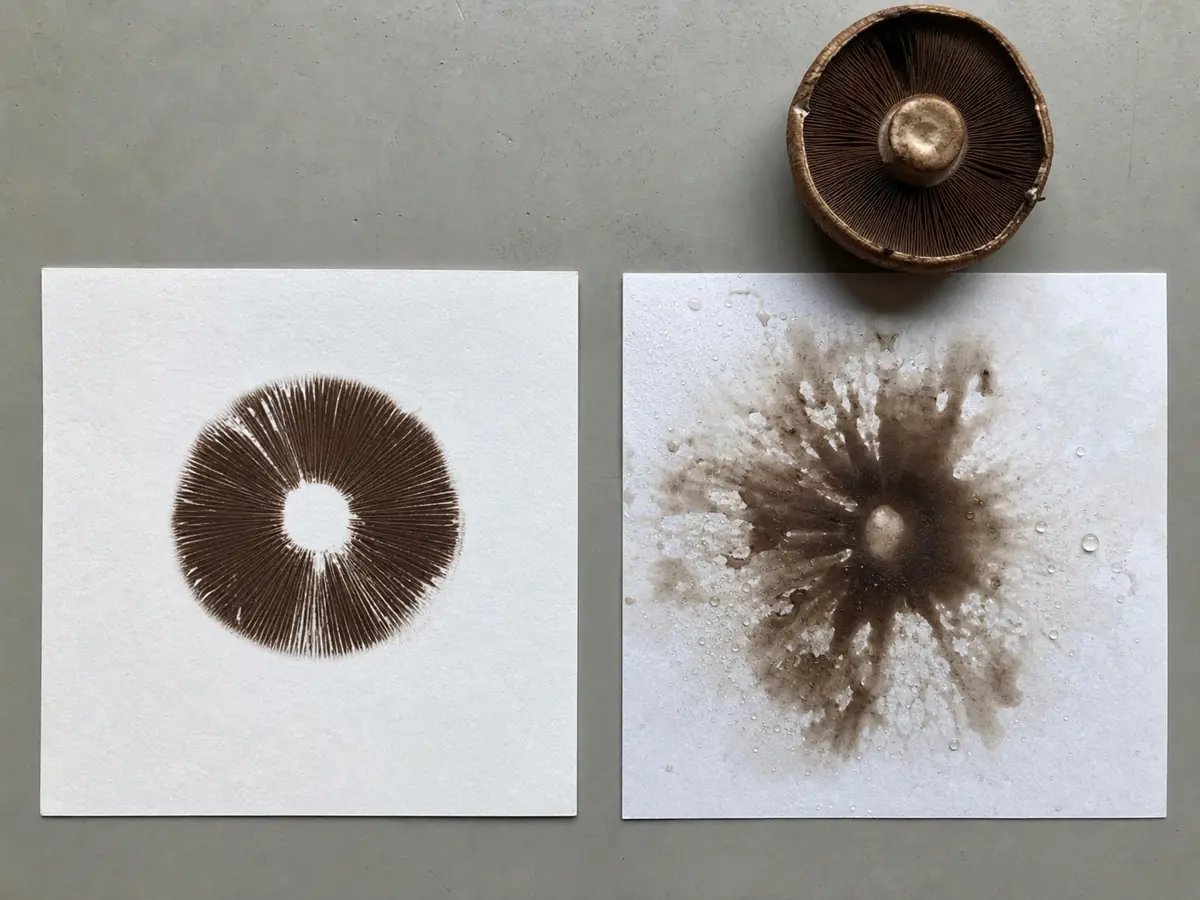
A dry cap can take one tiny drop of water on top, not on the gills. Too much water smears the print and turns color into a stain.
- Leave fresh gilled mushrooms for 2 to 12 hours.
- Give dry or firm caps longer, up to 24 hours.
- Do not move the cap while the print forms.
- Label the print before lifting the cap.
- Photograph the print beside the mushroom.
How long should you wait?
Most fresh, mature caps show a readable print overnight, although fast-dropping mushrooms can show color within two hours and reluctant caps may need up to 24 hours.
Do not rush the first print just because a faint ring appears. The early dusting often shows shape before it shows reliable color, which is why pale prints get misread under warm kitchen light.
Timing also depends on the question you are trying to answer. A broad light-versus-dark result may appear early, but separating white from cream or brown from purple-brown needs a thicker deposit.
Safety guideDangerous Mushroom Lookalikes That Cause Deadly MistakesHow should you read the color?
Read the color in natural light if you can. Cream can look white at night, pink can look tan on cardboard, and a thin dusting can look lighter than the real spore color.
Look at the thickest part of the print first because the edge can be too thin to judge, especially with cream, pale pink, or rusty deposits.
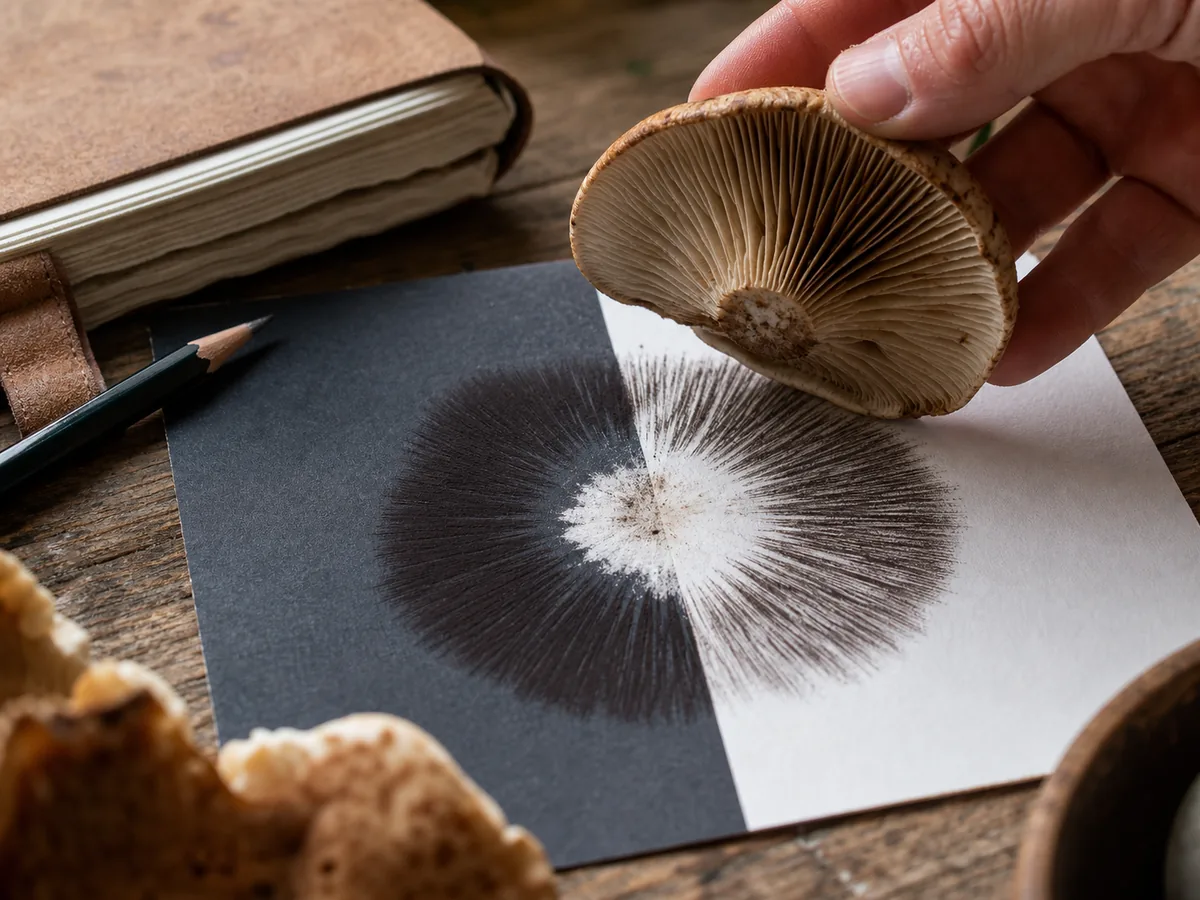
A print color is one line of evidence, and it carries less weight than the features you can see on the mushroom itself. Two unrelated species can drop the same color.
Warning
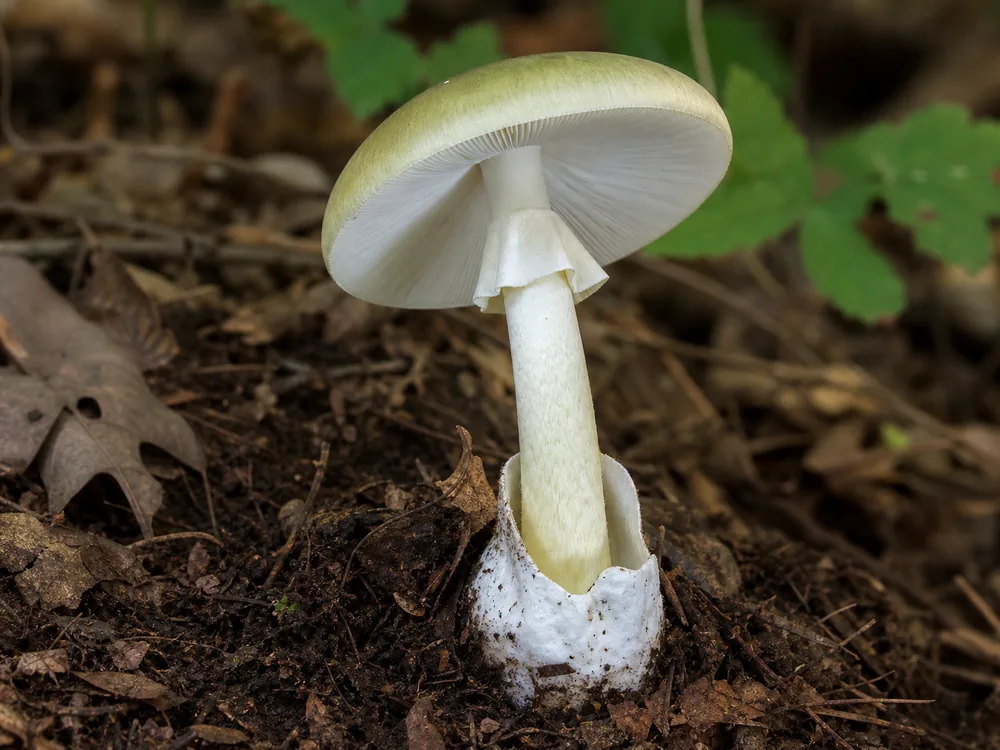
A spore print is one ID feature only. A white print does not prove an edible mushroom, and death cap risk should slow down any Amanita decision.
What should the print look like?
A useful print has a visible deposit, not a few random specks.
You should be able to see where the gills, pores, or teeth released spores onto the surface.
The print does not need to be perfect, but it must show enough color to compare with the mushroom's other features. If the paper shows only condensation or one dusty edge, repeat the print with a fresher cap.
Moisture changes the result because a wet cap can smear the deposit into a stain, while a dry or immature cap may release almost nothing. When the paper looks glossy or the spores form streaks, the setup was too wet.
What do common colors suggest?
Spore color usually narrows a group rather than a species because white spores can point toward Amanita, Russula, Lactarius, oyster mushrooms, and many other unrelated groups.
Pink spores can move a mushroom toward Pluteus, Entoloma, or Volvariella groups. Brown and purple-brown prints can separate many lawn and wood-chip mushrooms from pale-spored species that look similar when fresh.
| Print color | What it can help separate | Safety caution |
|---|---|---|
| White or cream | Amanitas, oysters, Russula, Lactarius | White is common and never proves safety |
| Pink | Pluteus, Volvariella, Entoloma | Some pink-spored groups include toxic species |
| Brown | Agaricus, Cortinarius, many little brown mushrooms | Small brown mushrooms still need expert care |
| Black | Ink caps and related groups | Alcohol reactions matter with some ink caps |
| Purple-brown | Some cultivated and wood-chip mushrooms | Color shifts as prints get thick |
Judging color is easier with a thick deposit, because a thin print reads pale whatever the spores actually are.
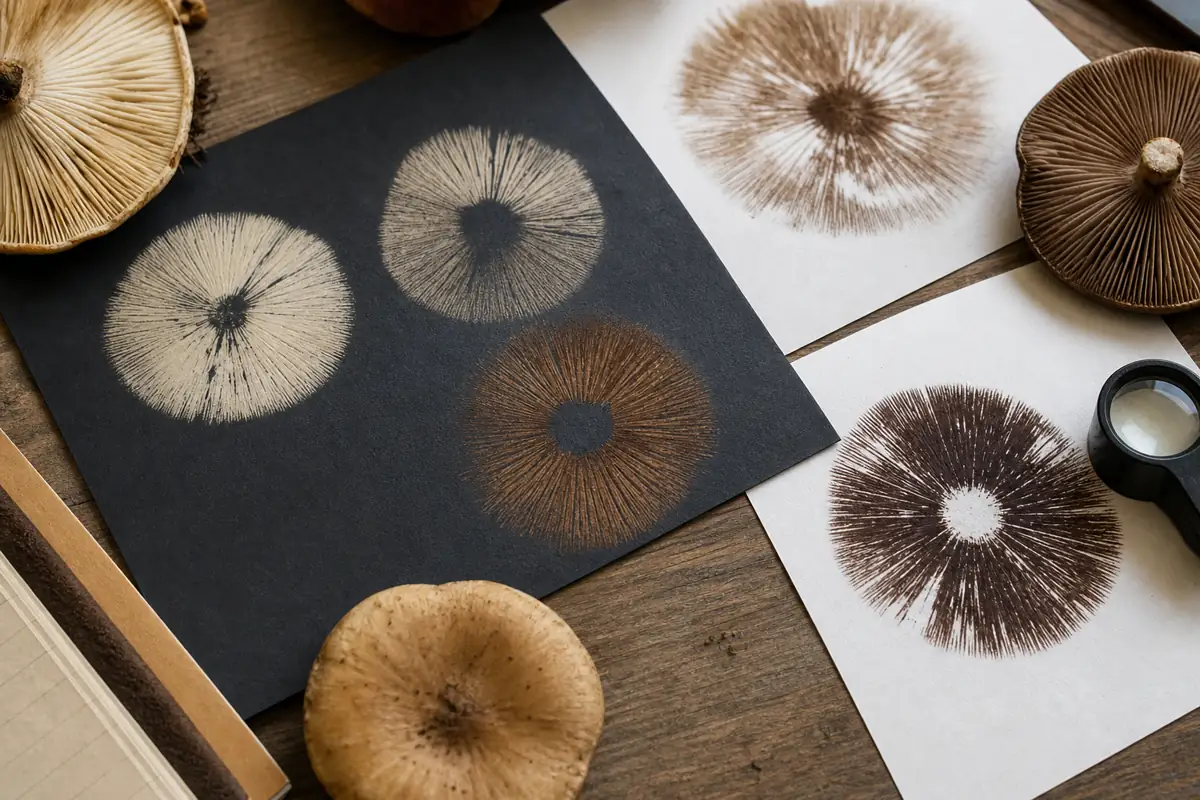
Moisture and movement can ruin a spore print
The most common mistake is using an immature cap, which may not release spores yet and can make a productive species look blank.
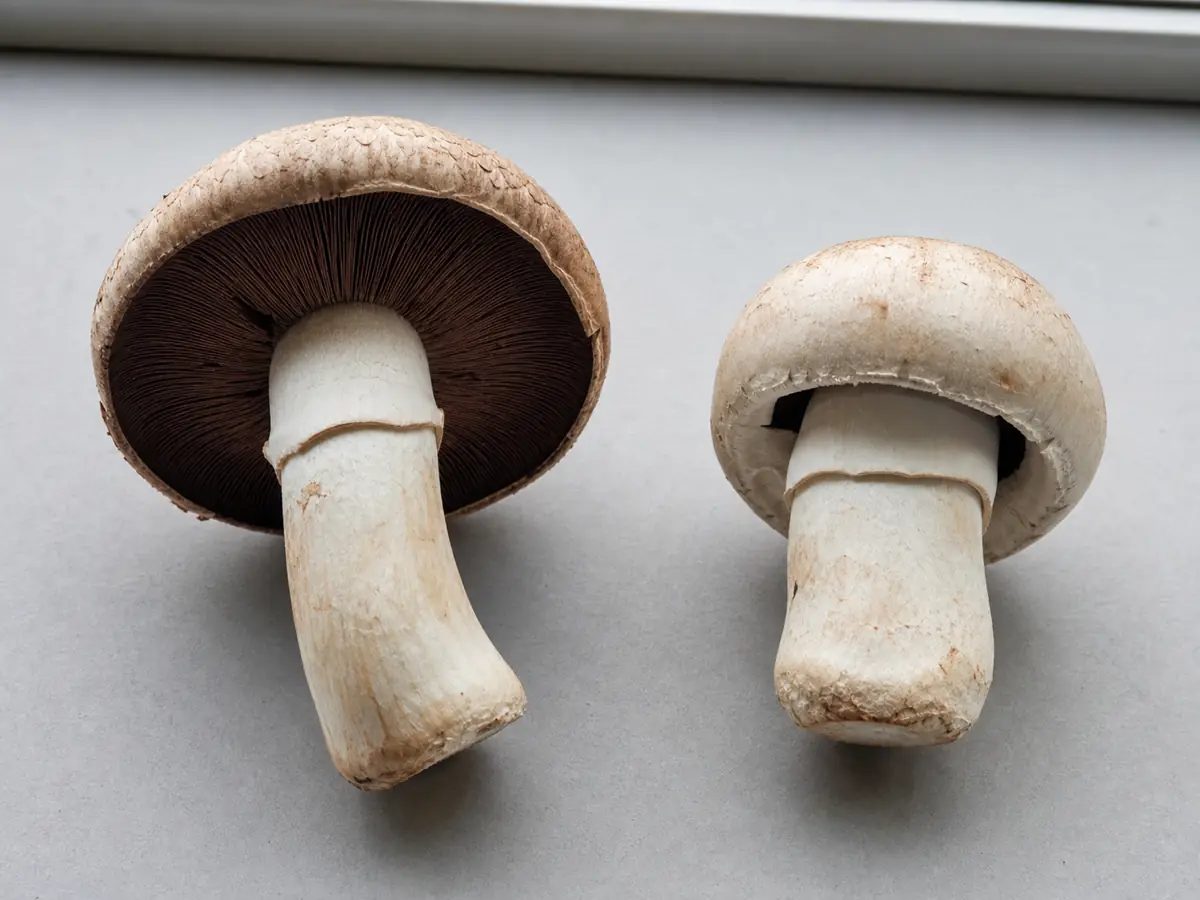
The second mistake is using one background. Pale cream can vanish on white paper, while dark brown can look almost black on a dark plate.
- Do not refrigerate the cap during printing.
- Do not put the cap in direct sun.
- Do not use newspaper or colored cardboard.
- Do not call a faint smudge a final color.
- Do not eat a mushroom because the print matches one edible description.
How do you label and store prints?
A print is useful only if you know which mushroom made it, so label the paper before lifting the cap and keep that label with the specimen.
Write the date, location, habitat, tree association if known, and the photo number from your phone. If you printed several mushrooms from one patch, label each specimen separately.
Once the print is dry, fold the paper or slip it into a small envelope so it stays flat and protected from moisture.
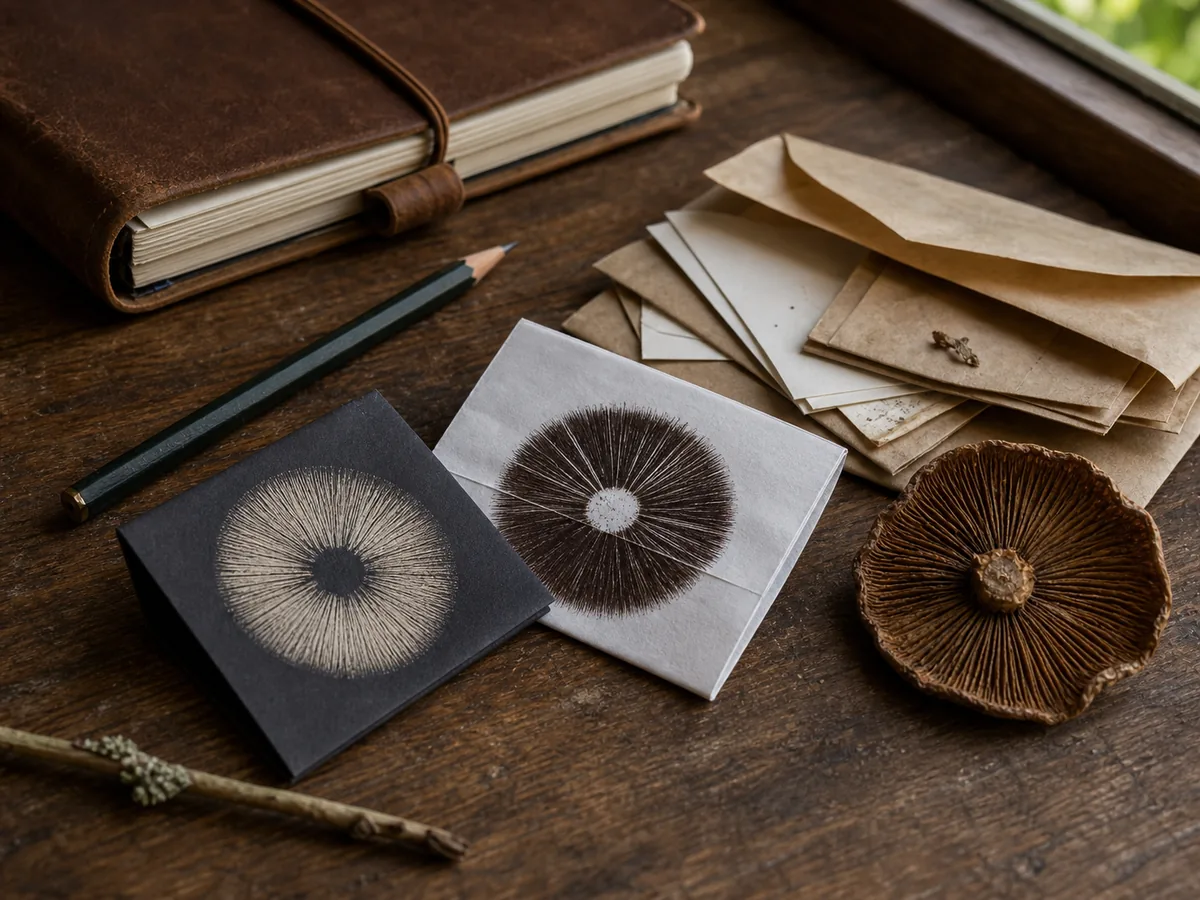
How do you avoid mixing prints?
Print one specimen at a time when the ID matters. Two similar caps from the same patch can still be different ages, and a mixed table makes it too easy to assign the wrong color to the wrong mushroom.
Use a simple chain of custody in which the bag label, phone photo, print paper, and notebook entry all share one number. That number prevents a white print from being assigned to the wrong pale mushroom later.
Do not stack caps under one bowl because loose spores can drift from one specimen to another in the shared space. Give each cap its own paper and cover when the identification matters.
What does spore color not answer?
Spore color cannot tell whether a mushroom is safe to eat or replace cap texture, gill attachment, stem base, habitat, odor, bruising, and a complete lookalike check.
Spore color works only beside the rest of the mushroom. A shelf-forming candidate still needs oyster-like gills and wood habitat, while a white-gilled mushroom with a cup at the base still demands an Amanita check.
A broad print color needs stop signs and vocabulary, not confidence. White spores also occur among poisonous mushrooms, so color cannot clear a meal by itself.
What if the print is unclear?
Do not force a color from weak evidence. Try a fresher mature cap, a darker and lighter background, and a longer covered rest.
If the second attempt is still blank, record that as no useful print and move to other features instead of guessing a color.
When the print conflicts with the mushroom in your hand, trust the conflict because a supposed morel does not become one through a dark deposit and an oyster candidate with a rusty-brown print needs a different identification path. Recheck the specimen label before changing the name.
Can a print identify dinner?
No. A spore print can rule groups in or out, but many unrelated mushrooms share the same print color.
That matters most with safety decisions because white prints occur in edible oysters, brittle Russulas, and deadly Amanitas, while rusty-brown prints occur in groups with very different risks. The print changes the next question, not the food decision.
Think of the print as a traffic sign that directs the next identification check without claiming you have arrived at a safe species.
Cooking guideHow to Cook Morels Safely and Brown Them WellWhen should you skip eating?
Skip eating when the rest of the mushroom does not match the print-based path. A clean white print does not help if the cap has a ring and a buried cup.
Also skip eating when the print came from one mushroom but the meal includes several. Each specimen needs to belong to the same species and condition class.
Use the result with the whole mushroom. Compare underside structure, stem base, habitat, odor, season, and the mushroom edibility category before any food decision.
How does print thickness change color?
A thin print can mislead because pale spores nearly disappear at the edge and dark spores can look lighter where only a few landed.
Judge the thickest part of the print first. If the print is too faint, repeat the print with a fresher cap instead of choosing the color you expected.
Thick prints can also darken as spores pile up. That is why the background matters less than a mature cap, still air, and patient timing.
How does the print connect to gill attachment?
Spore color works best when it answers a specific question about a mushroom that already has a documented habitat, underside, stem, and cap.
For oyster-like mushrooms, a white print belongs beside decurrent gills, shelf growth on wood, tender flesh, and a mild smell. For a mushroom with a ring and a cup-like base, the same white print points toward danger.
That contrast is why a print should narrow the next check, not end the process.
What should a beginner practice?
Practice prints on grocery mushrooms first so you can learn the method with specimens that are safe to handle and mature enough to drop spores.
Then print wild mushrooms you will not eat. Label them, photograph them, and compare the print against a field guide after you already wrote down habitat and structure.
This practice builds patience. The print becomes one piece of evidence instead of a shortcut to a meal.
Sources behind the spore-print method
The method here follows practical spore-print advice from MushroomExpert.com and the safety limits emphasized by Poison Control.
That distinction matters in practice. A spore print helps you choose the next identification branch, while the final decision still comes from the whole mushroom and its lookalikes.