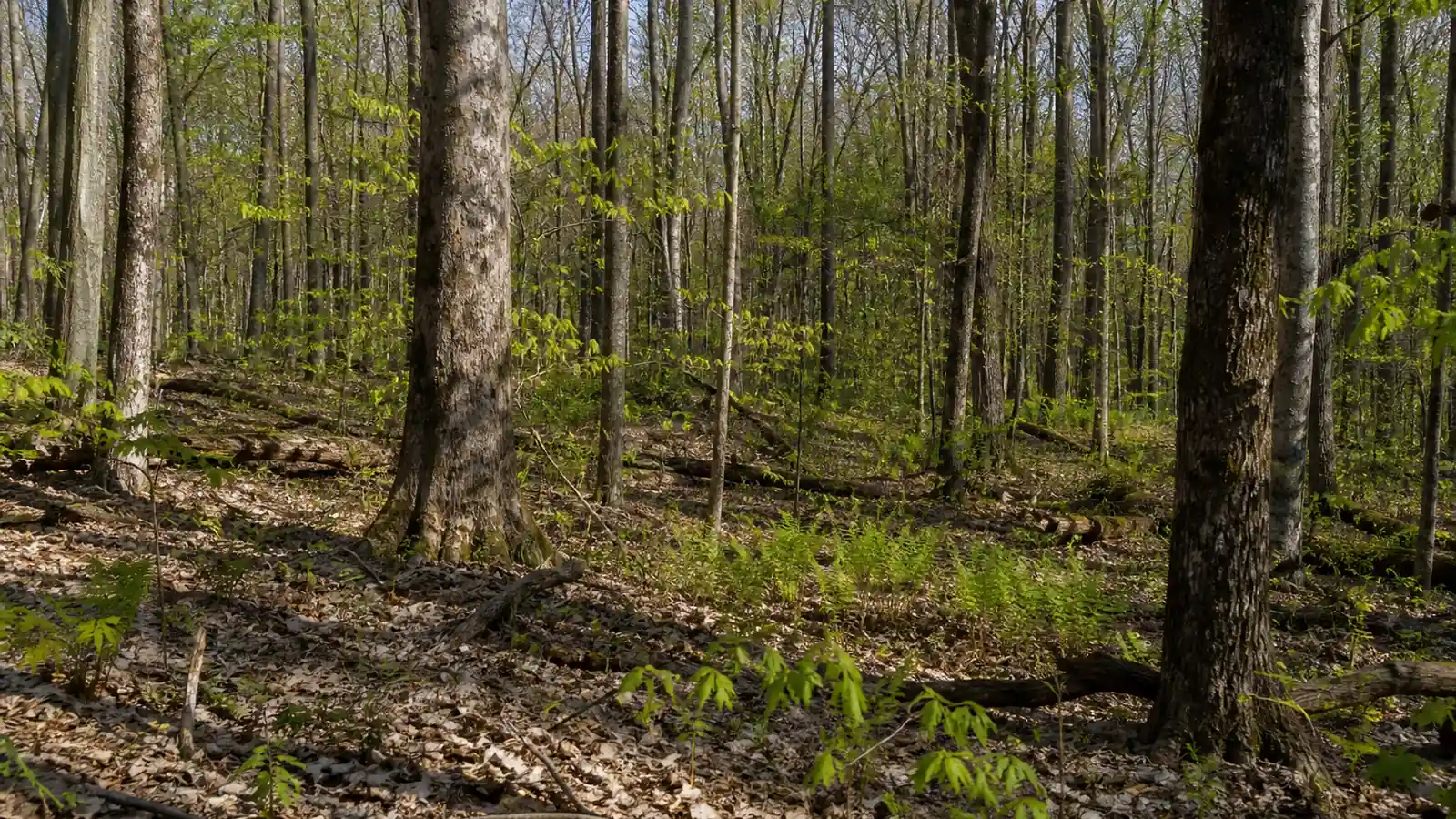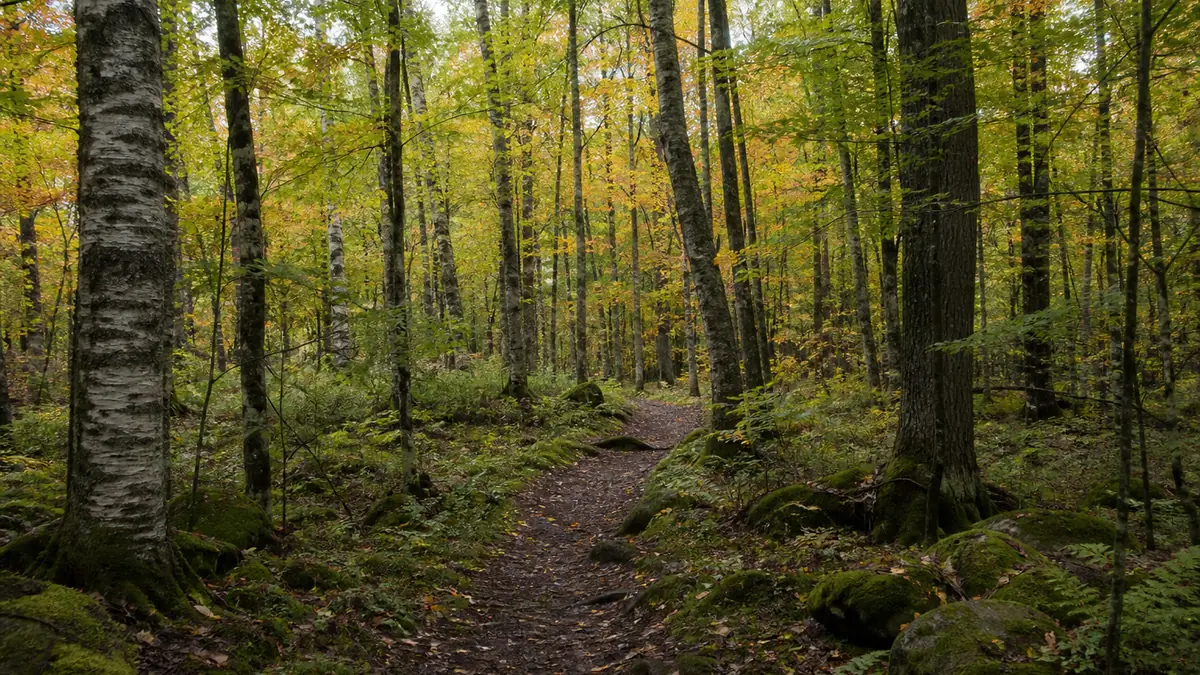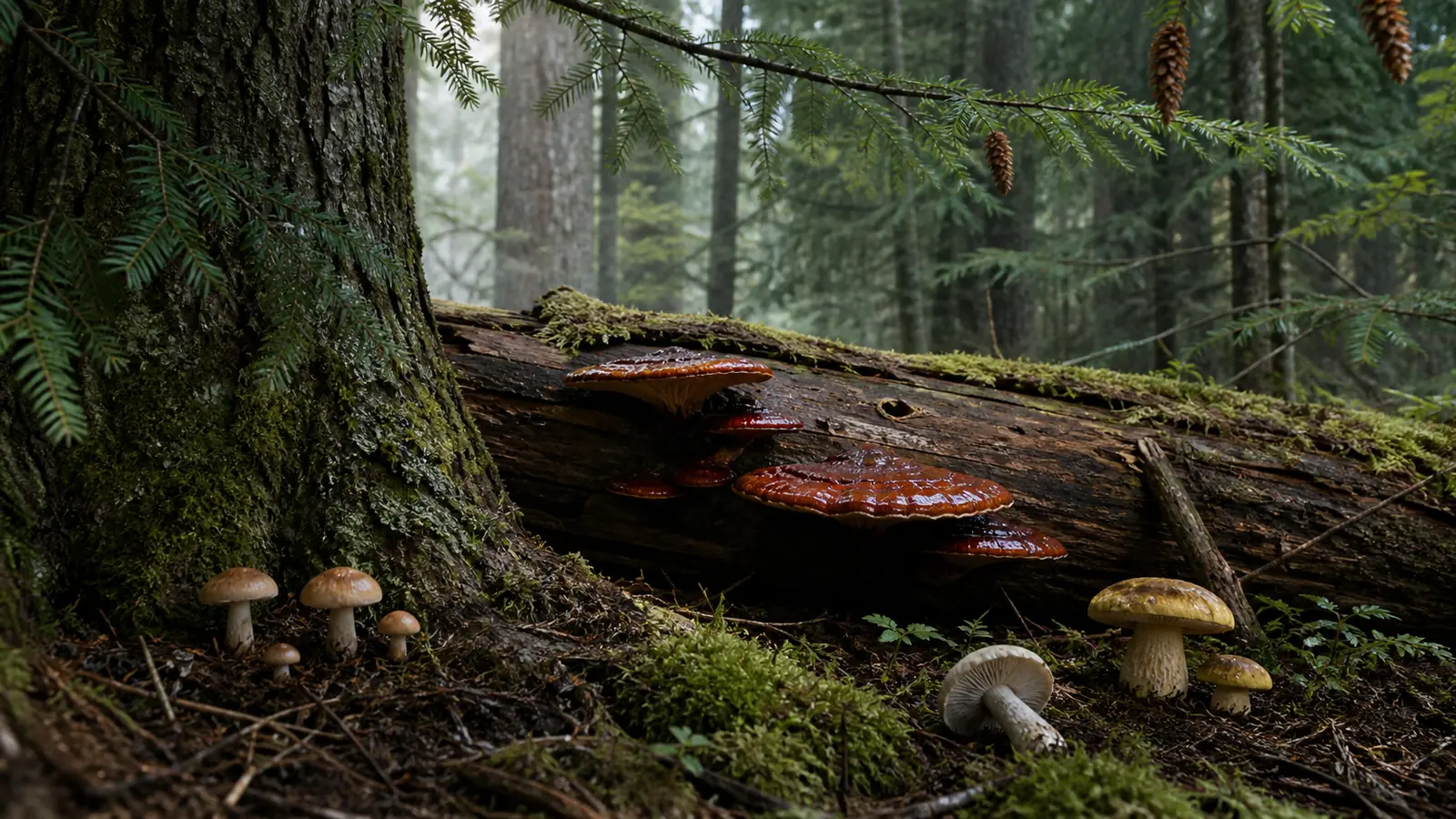
Hemlock varnish shelf and other decomposers use hemlock stumps, logs, roots, and damaged trunks. Boletes, brittlegills, Amanitas, and other root partners fruit from soil beneath living hemlocks.
Confirm a Tsuga tree with attached needles and cones, then prove whether the mushroom touches wood or rises from soil. Host, region, underside, context, complete base, and tree condition must agree.
Hemlock supports two broad fungal communities, with varnished brackets and other decomposers using wood while boletes, brittlegills, Amanitas, and other root partners fruit from soil beneath living trees.
The first useful distinction is wood versus soil. A cap rising through moss beside a log may be attached to buried wood, while another cap a few feet away may belong to the living root community.
Here, hemlock means evergreen Tsuga trees rather than poison hemlock, the poisonous flowering plant in the carrot family.
Confirm the Hemlock and the Growth Point Together
Eastern hemlock and western hemlock occupy different regions, but both carry short flat needles with pale bands beneath. Needles attach singly rather than in pine bundles, and the small hanging cones differ from the upright cones of true firs.
Eastern hemlock twigs often look delicate and feathery, with needles of uneven length arranged in a flattened spray. Western hemlock commonly has a drooping leader and similarly unequal needles, although local tree keys should settle the species.
The combined twig, cone, crown, and attachment view tests both the tree name and the fungus's true substrate.

Do not identify the host from loose needles directly beneath a mushroom because wind, slope, squirrels, forestry work, and overlapping crowns can place several conifer species in one patch.
ForagingMushroom foraging laws in France: what the five liter rule meansHemlock Varnish Shelf Uses Conifer Wood
Hemlock varnish shelf, Ganoderma tsugae, forms glossy red-brown to mahogany brackets on hemlock and other conifer wood. Young growing margins can show white, yellow, and orange zones before the upper surface darkens.
The underside is a pale pore surface rather than gills. Fresh pores bruise tan to brown, and a lateral stalk may be present, but form varies enough that a shiny red cap is only a starting point.
Together, these views test the lacquered cap against pores, pale context, and a proven conifer attachment.
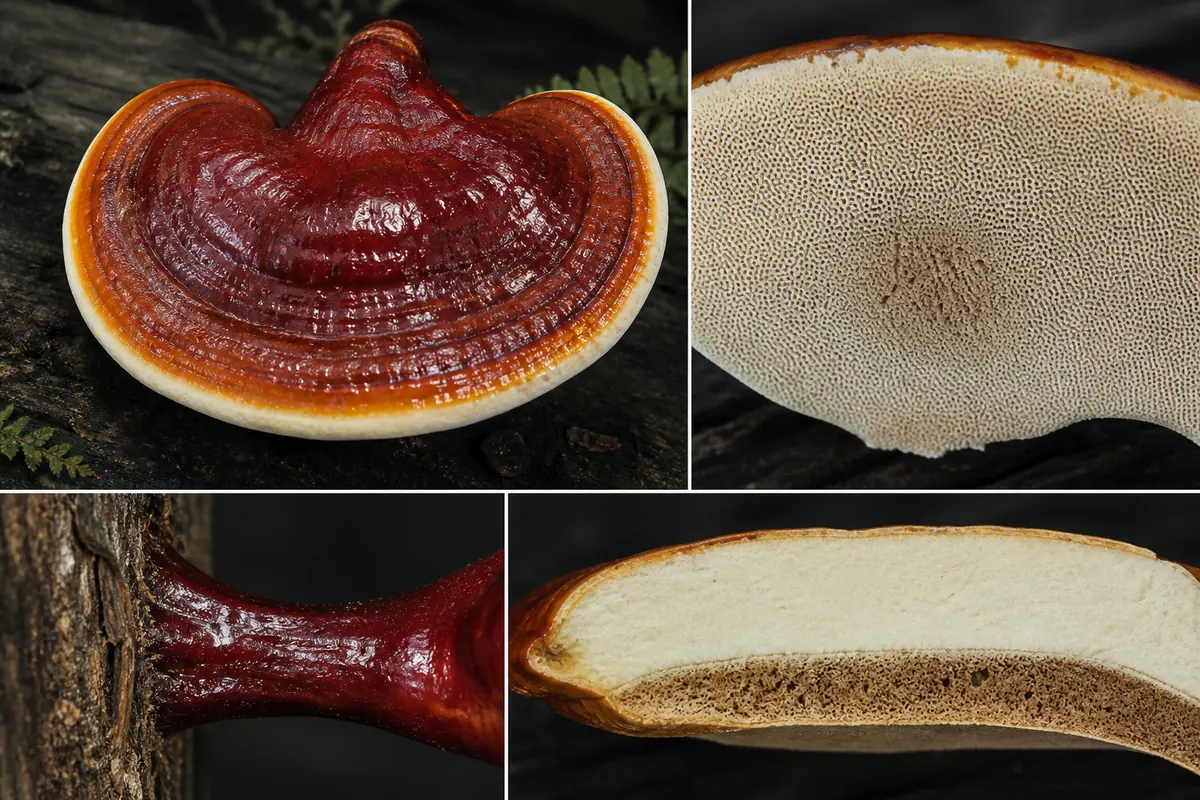
In eastern forests, host is especially useful because several lacquered Ganoderma species favor hardwoods while G. tsugae is strongly associated with hemlock and other conifers. Western North America has additional conifer-associated Ganoderma, so the regional species set changes.
Finding a varnished shelf on hemlock does not establish product identity, dose, purity, or a medical benefit because Reishi is a commercial and traditional-use label applied to more than one Ganoderma.
ForagingMushroom foraging laws in Germany: protected species and small quantitiesWhy Hemlock Can Change an Edibility Decision
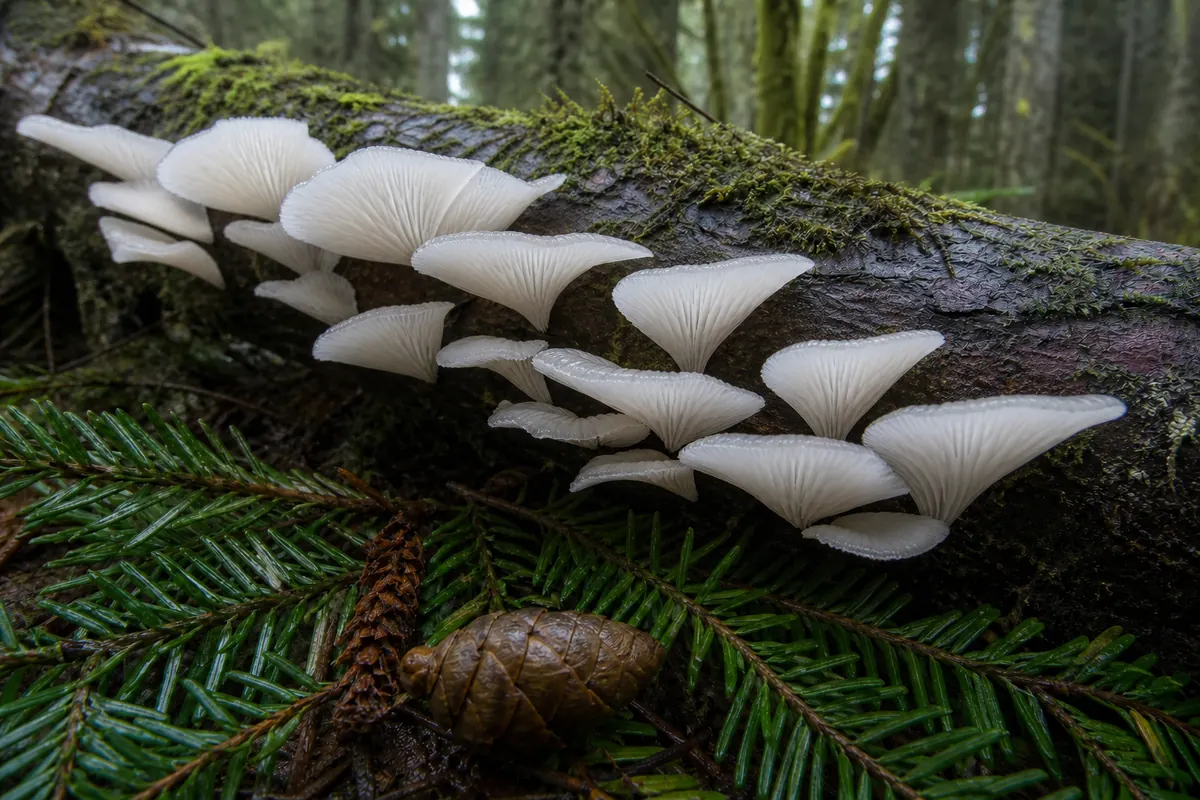
White overlapping fans on a hemlock log should not be called oyster mushrooms from a distant cap view. Angel wings, Pleurocybella porrigens, favor conifer wood and are especially reported from hemlock logs and stumps in the Pacific Northwest.
Angel wings are thin, white to ivory, and often nearly stemless, with crowded narrow gills and translucent striations near the margin when fresh. Typical oyster mushrooms are fleshier, but age and weather can erase that contrast, so hemlock substrate raises the burden of proof instead of settling the name.
Warning
Do not eat a white fan because it resembles an oyster | Angel wings have been associated with fatal poisonings. Keep white fans from conifer wood out of the kitchen unless a qualified regional identifier has ruled out dangerous alternatives from complete fresh specimens.
The field view needs to preserve thickness, attachment, underside, and the hemlock wood in the same record.
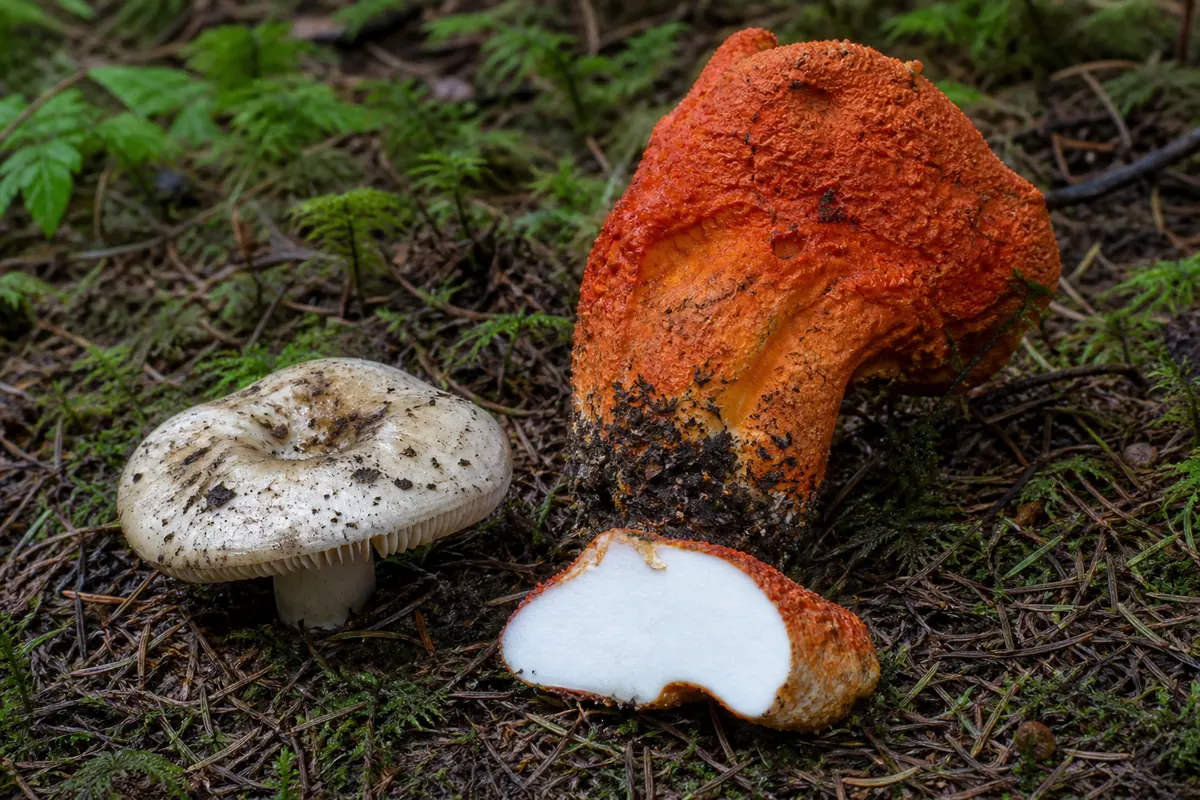
Lobster mushroom presents a different hemlock question because it fruits from soil and begins as a Russula or Lactarius host transformed by Hypomyces lactifluorum. The orange to red crust can deform the cap and obscure the original gills, so the finished mushroom cannot be understood as a species that grows directly on hemlock wood.
Hemlock may be part of the surrounding conifer forest where the host mushroom lived, but tree association does not reveal the original host or prove that every orange malformed mushroom is a lobster. Cut surfaces should be clean and white inside, and rotten, partly transformed, or unidentifiable specimens should be rejected.
Other Hemlock Wood Fungi Tell Different Decay Stories
USDA Forest Service accounts list several fungi in eastern hemlock wood and roots. Some cause heart rot or root disease, while many simply decompose stumps and old logs after the tree has died.
A single bracket cannot reveal how much sound wood remains, while fruiting height, repeated conks, cavities, crown condition, root movement, and nearby people or structures all change the practical concern.
| Field form | Likely place in the tree | What to document |
|---|---|---|
| Varnished annual shelf | Stump, log, wound, or lower trunk | Gloss, pore bruising, context color, host, and wood condition |
| Dull thick conk | Heartwood or long-standing decay | Pores, annual layers, cracking, attachment height, cavity evidence |
| Rosette near the base | Roots, buried wood, or lower stem | True origin below moss, crown health, root plate movement |
| Small clustered caps | Soft stump, log, or buried woody debris | Gills or pores, full bases, spore deposit, and separate collections |
These four wood-attachment patterns separate the decay location, and basal fruiting among them deserves the tree-safety check that follows.
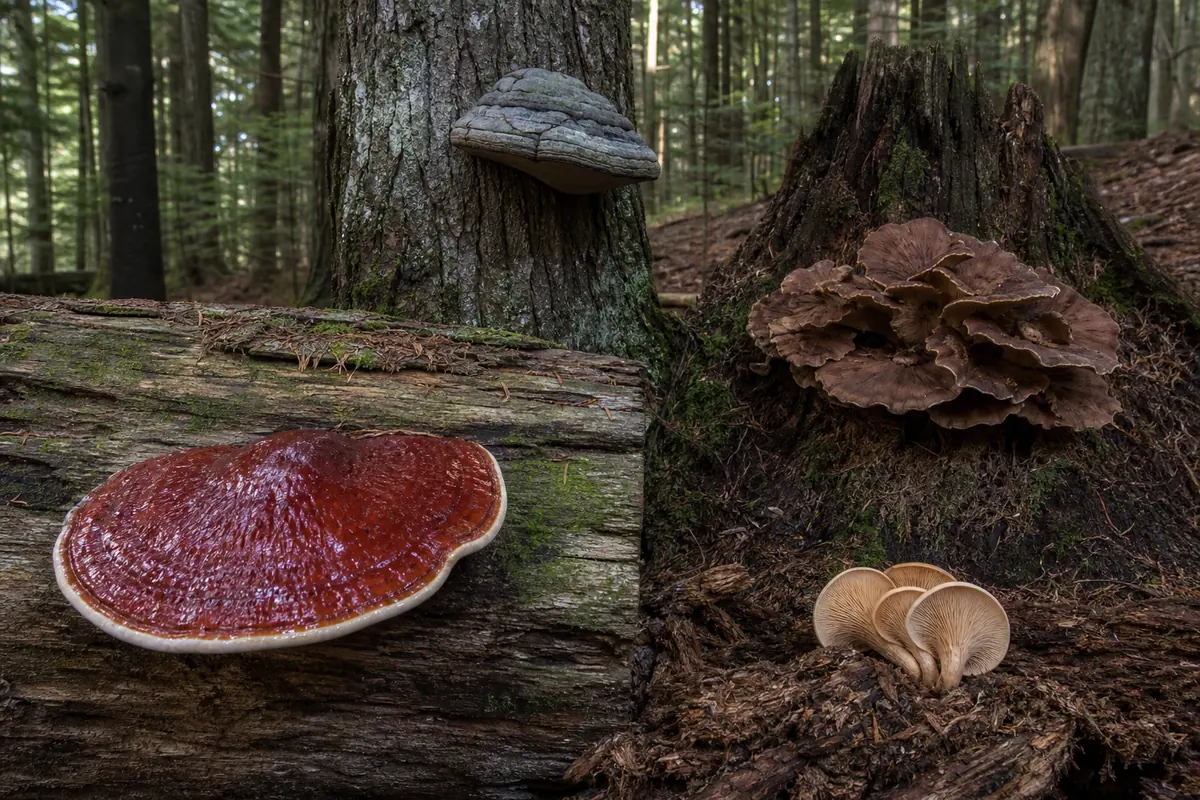
Basal fruiting becomes a separate safety problem when defects and occupied ground lie within reach of the tree.
Warning
Treat basal fruiting on a standing hemlock as a tree question too | Keep clear and arrange qualified assessment when mushrooms occur with cavities, root movement, cracks, a thinning crown, or dead limbs above a path, building, campsite, or vehicle.
Hemlock woolly adelgid can thin and kill eastern hemlock crowns, creating deadwood later used by fungi. White cottony masses at needle bases help investigate the insect, but they do not identify a mushroom on the same tree.
ForagingMushroom foraging laws in the UK: what is actually legalSoil Mushrooms Belong to the Living Root Community
Living hemlocks form mycorrhizal partnerships with fungi on fine roots. The visible mushrooms may appear scattered through moss and duff without touching the trunk, and several nearby conifers can share the same underground zone.
Boletes bring pores, brittlegills include Russula and Lactarius forms, and Amanitas bring a critical complete stem base, but these remain broad groups rather than an edible shortlist.
The cutaway makes the decisive ecological split visible beneath a forest floor where moss hides both roots and wood.
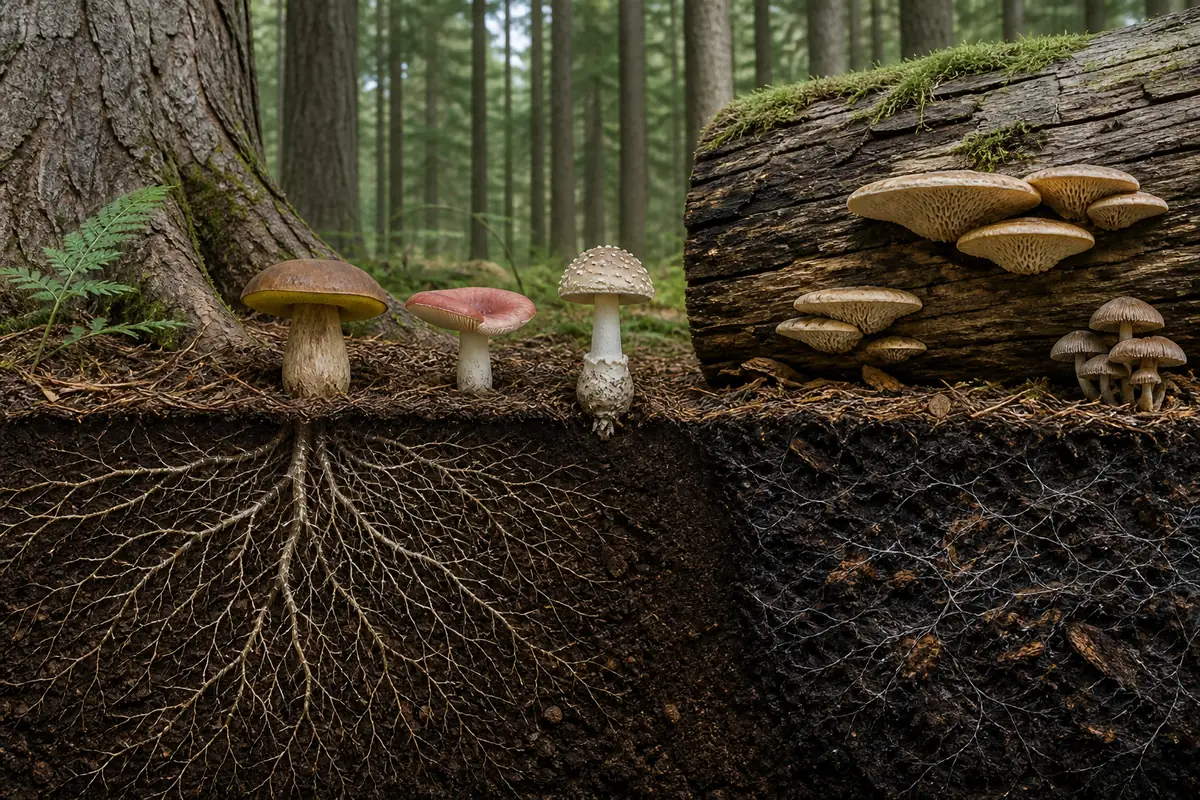
One tree name rarely identifies a root partner because neighboring spruce, fir, pine, birch, or hardwood roots may enter the same soil. Record the complete tree community before calling the mushroom hemlock-associated.
Preserve the Evidence Before Moss Hides It Again
Start with a wide photograph that shows slope, forest composition, the hemlock, and the fruiting position. Then take a close attachment view before lifting moss or duff.
Identification from a high bracket may be impossible without unsafe access. Use binoculars or a zoom lens and leave the tree undisturbed rather than climbing a decayed trunk.
Never eat a mushroom because it grew under hemlock or resembles a familiar product photo. Complete the identification with a current regional source and qualified local help, then apply species-specific safety guidance.
Sources & References
- USDA Forest Service Eastern hemlock fungi and decay.
- North Carolina State University Ganoderma tsugae characters and habitat.
- University of Florida IFAS Laccate Ganoderma identification.
- Ohio Department of Natural Resources Hemlock reishi field guide.