What is a copper roll rim?
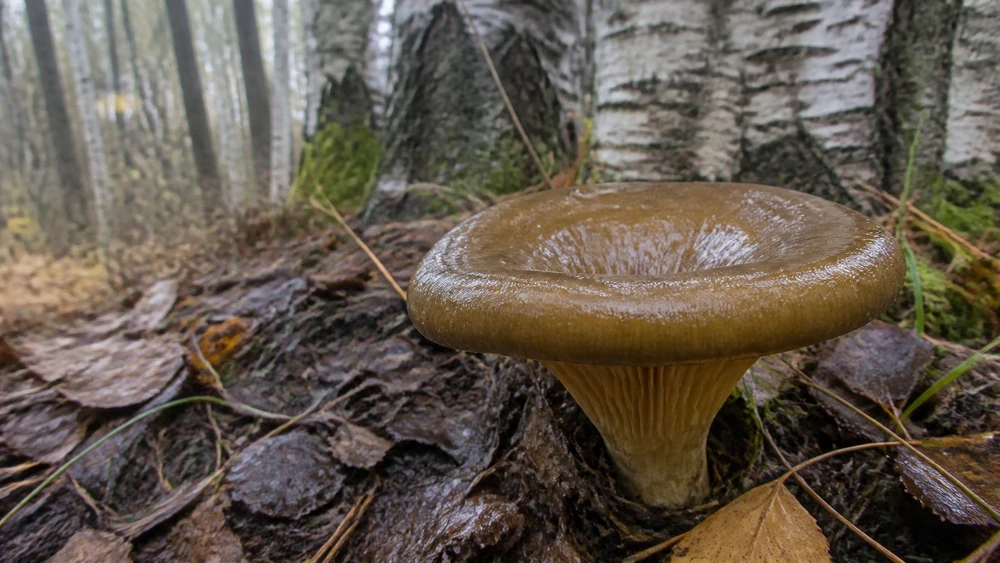
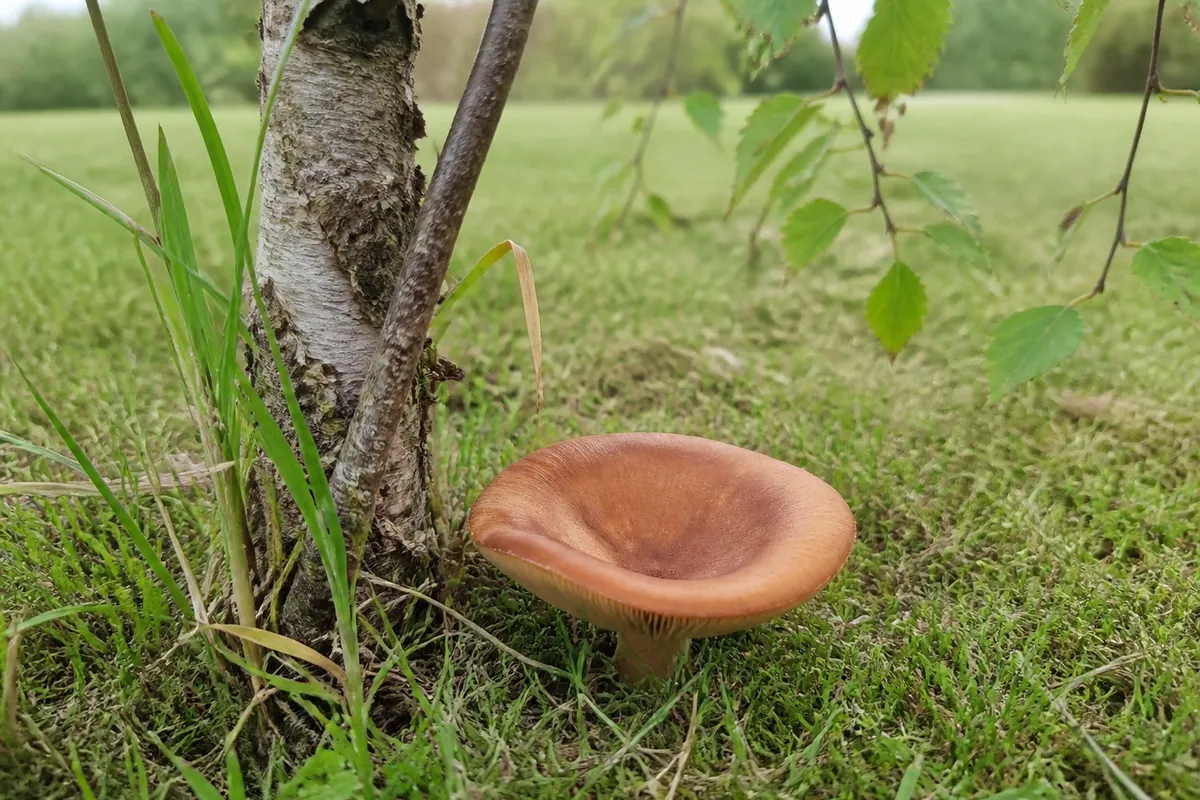
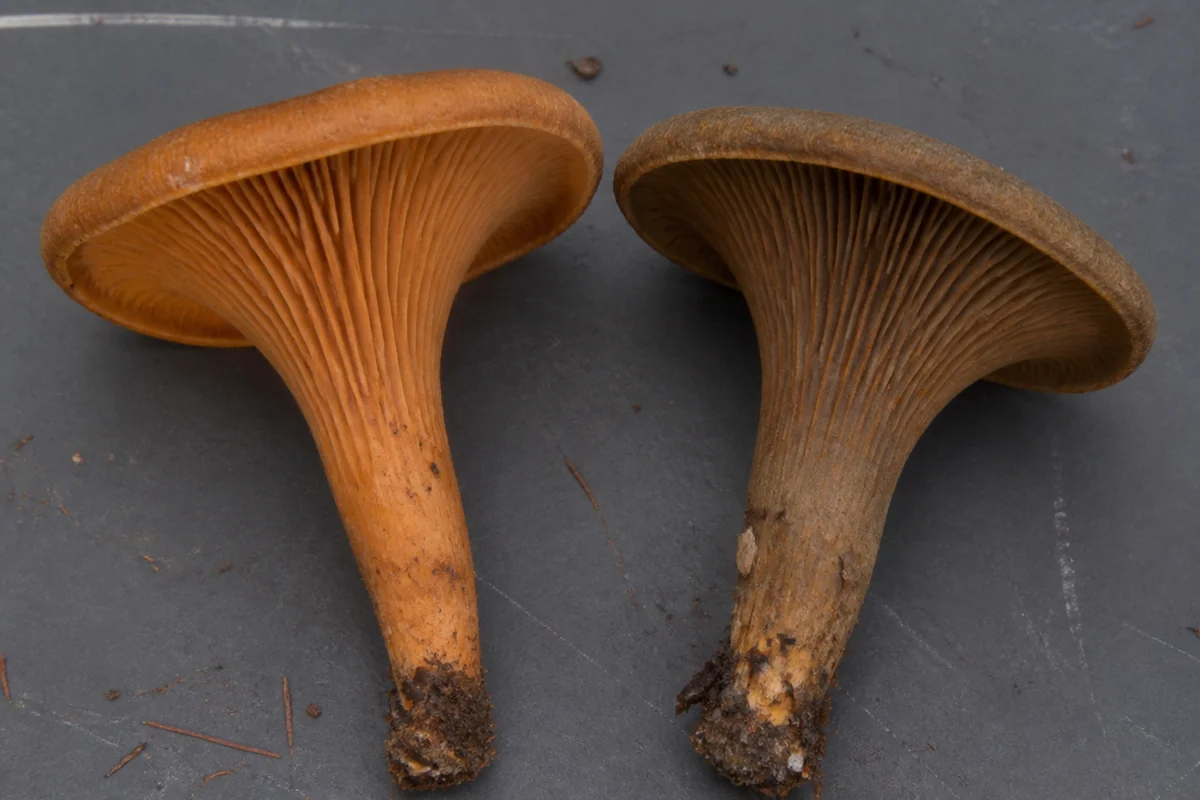
A copper roll rim is a stout brown gilled mushroom with a shallowly funnelled cap, a tightly inrolled margin and gills that run down the stem.
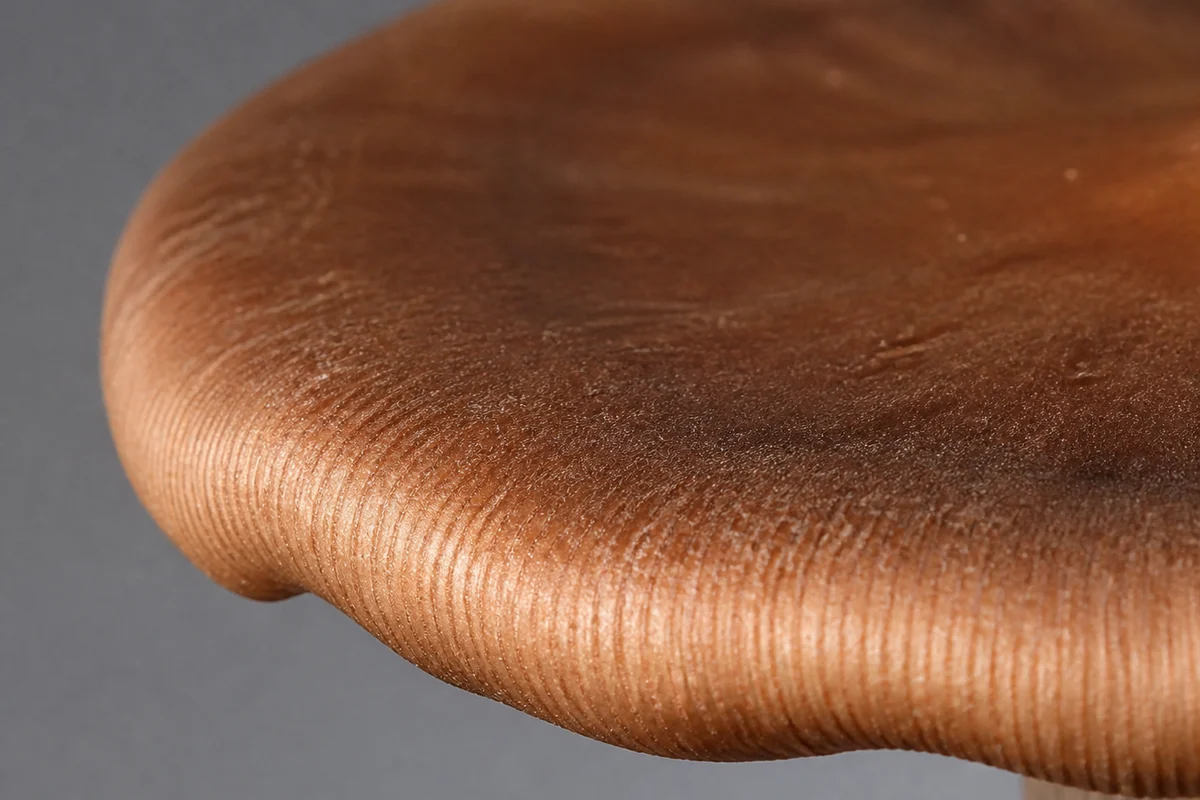
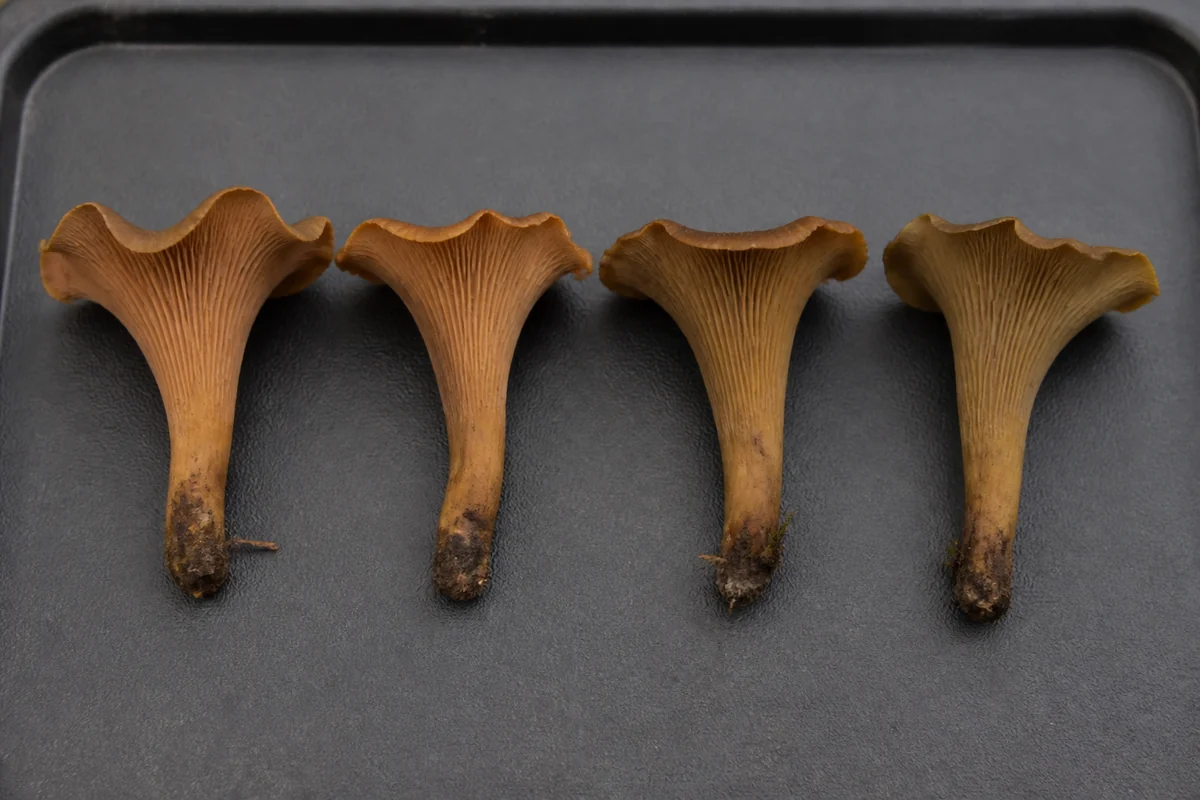
The color is what the name records. It deepens toward a warm coppery orange brown as the mushroom ages, which is more distinct than the duller olive brown of its closest relatives.
It turns up on mown grass under planted birch as readily as in woodland, which puts it in parks, gardens and roadsides where people walk dogs and children play.
The whole Paxillaceae group shares a structure that is easy to learn and worth learning for rejection rather than for the table.
Learning it well is cheap and pays off in an odd way. Recognizing the group takes a few seconds and it removes a whole category of brown funnel-shaped mushrooms from consideration for good.
How do you identify a copper roll rim?
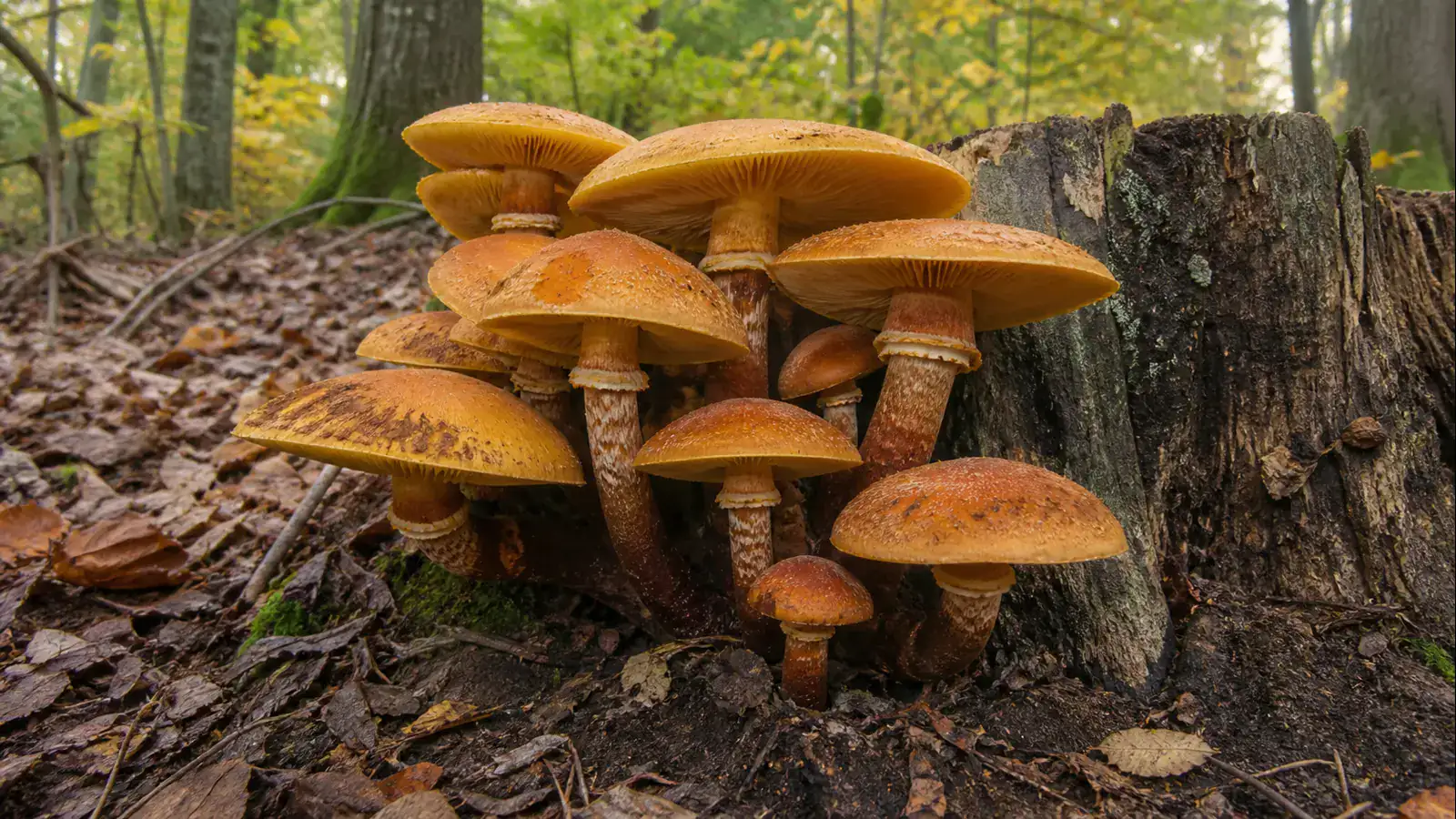
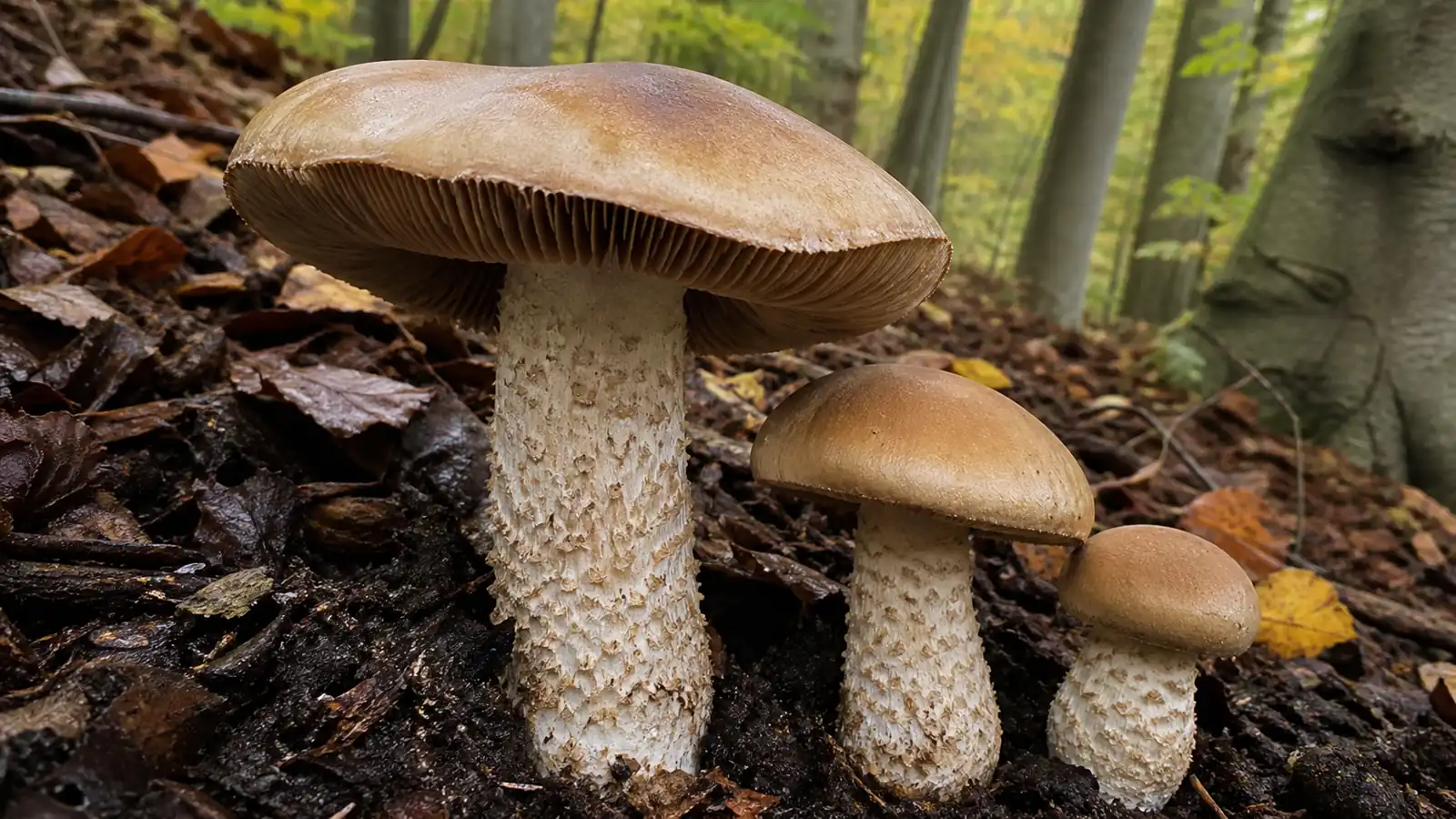
Warm coppery orange brown, deepening with age, 3 to 10 cm across, convex then flattening with a depressed center and a margin that stays rolled tightly under.
Pale ochre, running down onto the stem, bruising dark brown where pressed, and separating easily from the cap flesh with a thumb.
Short and stout, 3 to 7 cm tall and 15 to 25 mm across, colored like the cap or a little paler.
Pale yellowish, softening with age, bruising brown, with a faintly sour smell.
Three characters name the group and none of them is the color.
The rolled margin, the decurrent gills and the brown bruising are what a reader should carry, and the copper tone then places a specimen inside the group.

The peeling is the character most people have never tried and it is the most convincing one. Gills in this family sit on the cap rather than being part of it, so a thumb drawn sideways lifts them off in a sheet.
| Character | Copper roll rim | Note |
|---|---|---|
| Cap | 3 to 10 cm, coppery orange brown | Depressed center, rolled margin |
| Gills | Decurrent, pale ochre | Bruise brown, peel off easily |
| Stem | 3 to 7 cm, stout | Colored like the cap |
| Spore print | Ochre to reddish brown | Not white |
| Host | Birch | Including planted birch on lawns |
The spore print is ochre to reddish brown rather than white, which places the mushroom firmly outside the white-spored families people usually worry about.
That is worth knowing because it removes a common wrong turn. A brown funnel with decurrent gills makes some people think of the milkcaps and the funnel caps, and a brown print rules both of those out.
These features do not separate it from its close relatives in the field.
If someone may have eaten this mushroom, act now. Call Poison Control at 1-800-222-1222 (US) or emergency services before symptoms appear, and save a piece of the mushroom for identification.
How is it different from a brown roll rim?
The lookalikes here are its own siblings, and they cannot be separated by eye.
The brown roll rim is the name everybody knows and the page that carries the poisoning story in detail.
Warning
Every member of this group is treated as dangerous. Separating them changes what to call a specimen and changes nothing about whether to eat one, which is never.
Color separates them on average and overlaps in practice. A weathered coppery specimen and a fresh olive one can meet in the middle, and neither reading is worth acting on.
The host and the setting are a better clue than the color. This species is strongly associated with birch in open places, so a roll rim on a lawn under a planted birch fits it more closely than one deep in mixed woodland.
Fitting more closely is not identifying. A field association is a probability statement, and probability statements are the wrong tool for a mushroom nobody should be eating anyway.
A history of eating them safely is not evidence about the next meal.
Why this group is unlike every other page here
Warning
Do not eat any roll rim. The group causes an immune reaction that can develop after somebody has eaten the mushroom safely many times before, which means a personal history of eating them is not evidence of anything.
Where do copper roll rims grow?
The copper roll rim is mycorrhizal with birch, and that partnership is the strongest thing known about where it lives.
What separates it from its relatives ecologically is the openness. It favours open temperate places rather than closed woodland, which in practice means parks, gardens, roadsides and lawns with planted birch.
- Host
- Birch, including planted urban birch
- Setting
- Open ground, parks, lawns, roadsides
- Season
- Late summer through autumn
- Habit
- Scattered or in groups, often in numbers under one tree

That urban habit is the reason this species matters more than its obscurity suggests. A dangerous mushroom growing in a wood is met by foragers, and one growing on a lawn is met by everybody.
Birch is planted widely in towns for its bark and its size, so the tree brings the fungus into gardens and streets across a much wider area than the fungus would reach alone.
It fruits in numbers under a single tree rather than singly, which makes a find look abundant and inviting.
Abundance is its own kind of argument, and a bad one. A dozen identical mushrooms under one tree feels like confirmation and is only ever one mushroom repeated twelve times.
Can you eat a copper roll rim?
There is no safe way to eat any member of this group, and cooking is not the variable.
The brown roll rim page sets out the mechanism and the case record, and the short version is that the reaction is immune rather than toxic.
Note
An immune reaction behaves differently from a poison. Repeated meals can build sensitivity, so somebody can eat the mushroom for years without trouble and then react severely, and the reaction can attack their own red blood cells.
That is why a personal history is worthless as evidence here. Every other page on this site can say that somebody who ate a mushroom safely has learned something, and this group is the exception.
These mushrooms were eaten in parts of Europe well into the twentieth century, which is how the pattern was eventually recognized at all.
The tradition ended because the evidence arrived, and that is the honest reason to leave a familiar-looking mushroom alone.
It is worth being clear that this was not superstition giving way to science. People were eating a mushroom that mostly did nothing to most of them, which is exactly the pattern a slow immune reaction produces.
Anybody who feels unwell after eating any mushroom from this group needs medical assessment rather than reassurance, because the serious form of this reaction attacks blood rather than the gut.
Can copper roll rims be cultivated?
The copper roll rim cannot be cultivated, because it fruits only from a living partnership with birch roots. Nobody would attempt it either.
A dangerous mushroom with no food or medicinal use has no reason to be grown.
Is there any medicinal use?
There is no medicinal use of the copper roll rim.
The genus appears in immunology and toxicology literature because of the reaction it causes, which is the opposite of a therapeutic interest.
That literature is genuinely useful and it is useful to doctors rather than to eaters. Understanding how a food can train an immune system to attack its own blood cells matters well beyond mushrooms.
Is there any nutritional information?
No nutritional information is worth reporting for this species.
Nutrition tables describe foods, and this mushroom is not one under any preparation or in any quantity. The useful thing to know about it is where it grows, because that determines who meets it.
A mushroom in a mown lawn may be encountered by children or pets as well as foragers. Keep it out of reach and seek professional advice after suspected ingestion.
Why was the brown roll rim split into four species?
The interesting part of this mushroom is what happened to its name. A study published in 2014 examined the brown roll rim complex across Europe using three separate nuclear DNA regions, and confirmed four species inside what had been treated as one.
Paxillus cuprinus was described in that work and named for the coppery color it develops with age. Its low genetic diversity lined up with stable structure and with a consistent ecological preference for birch in open temperate sites.
Key takeaway
A species can be real, well supported and completely unhelpful at the same time. The evidence that separated these four is molecular, the poisoning record that matters is historical, and the two cannot be matched up after the fact.
That mismatch is worth understanding because it recurs across mycology.
Poisoning records are gathered from hospitals and from memory, they name whatever the guide of the day called the mushroom, and no sample was kept.
So when a name splits, the old case reports do not split with it. They stay attached to a group, and the only safe reading is to apply them to every member of that group.
There is a reasonable argument that the deaths belong to one or two of the four rather than all of them. There is no evidence that settles it, and a reader would be betting their kidneys on which way it goes.
The wider lesson is worth carrying to other pages here.
A name splitting is a normal event in mycology, it happens faster than the medical literature can follow, and the safe reading of an old case report is always the broadest one.
Frequently Asked Questions
Is the copper roll rim poisonous?
How is it different from a brown roll rim?
Why was the group split into four species?
Does the split make any of them safe?
Where would I meet one?
What does the roll rim name mean?
Sources & References
- The Paxillus involutus complex in Europe: genetic diversity and morphological description of the new species Paxillus cuprinus Study used for the confirmation of four European species in the complex from three nuclear DNA regions, for the description and naming of Paxillus cuprinus after the coppery color it develops with age, and for its low genetic diversity lining up with stable structure and a preference for Betulaceae in open temperate sites.
- Paxillus cuprinus General account used for the cap dimensions and depressed center with inrolled margin, the adnate to decurrent gills, the stem dimensions, the ochre to reddish brown spore print, the birch association in both forests and cities, and the statement that the species is poisonous through an immune reaction against red blood cells.