
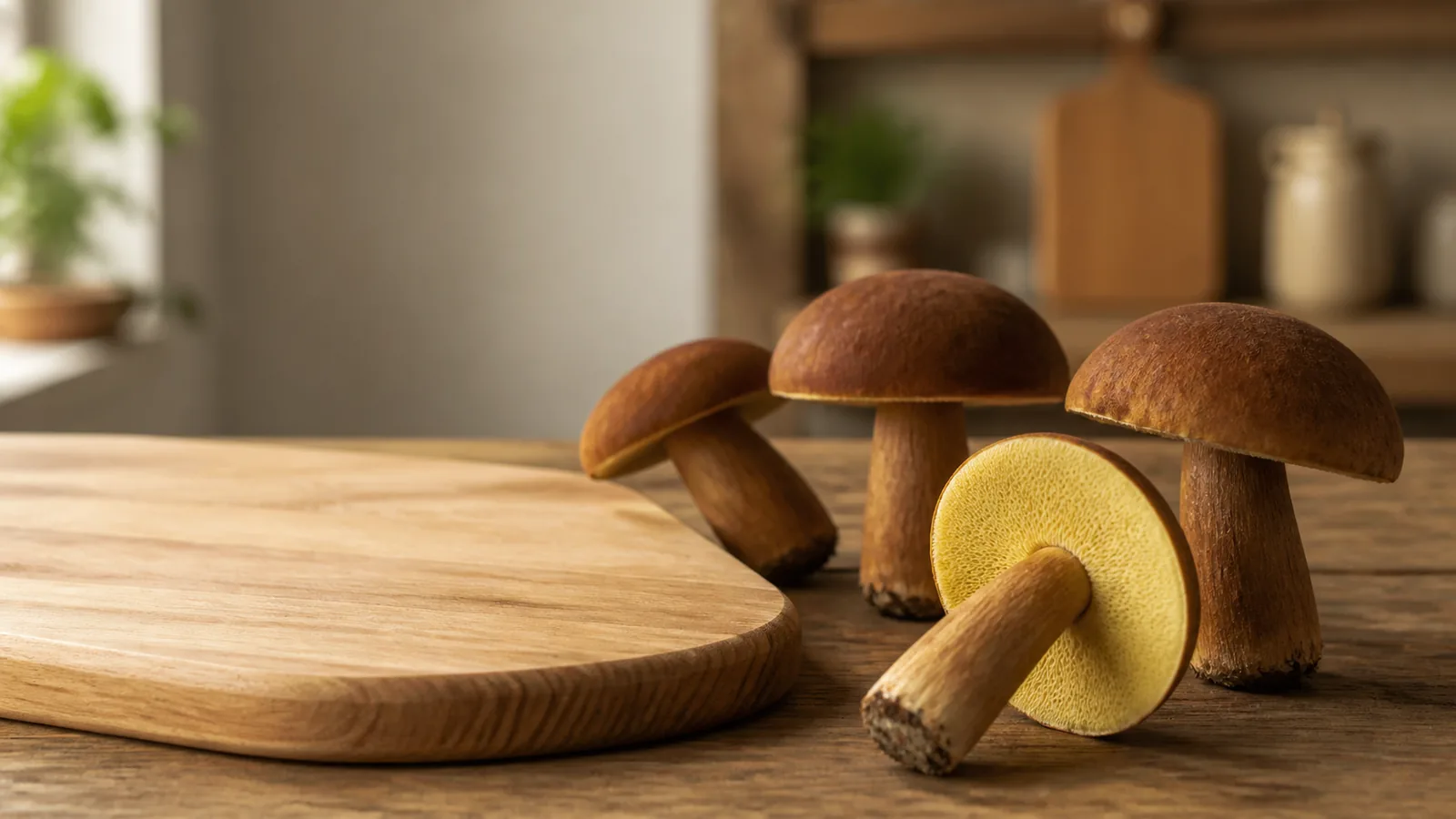
Yes, verified bay bolete can be a reasonable occasional pregnancy food when the collection source is accountable and every sound piece is thoroughly cooked. Skip an uncertain blue-staining bolete, a roadside or restricted-site harvest, an anonymous gift, and any raw or partly cooked portion.
No controlled human pregnancy study specific to Imleria badia was identified. The practical answer combines pregnancy food hygiene with species identification and environmental studies showing that this mushroom can reflect elements present where it grew.
The collection place matters before the mushroom reaches the pan.
Cooking controls the raw mushroom, but it cannot reconstruct a missing location or prove that the ground was suitable for food collection.
The collection place can veto the meal
Bay bolete is classed among edible mushrooms, but that category describes a correctly identified species under suitable conditions. It does not certify every fruit body collected under the name.
A 2017 study compared Imleria badia from polluted and non-polluted sites. Concentrations in the soil were reflected in the mushrooms, and fruit bodies from polluted sites contained significantly more of every element the researchers measured.
That result does not prove that every mushroom beside a road exceeds a food limit.
It establishes a simpler decision rule, which is to choose a known low-concern site rather than ask a frying pan to solve an environmental question.
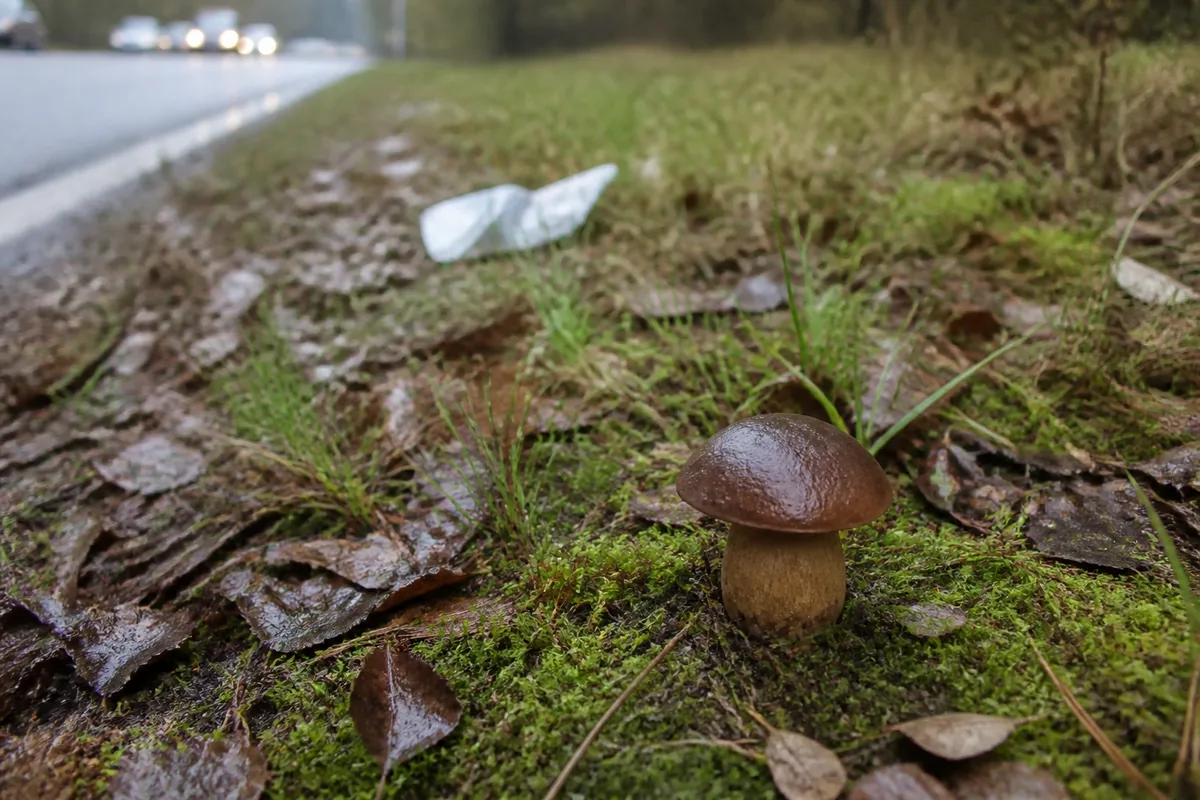
Use a commercial seller who can identify the product and supplier, or a collector who can name the exact place and show the intact specimens. A country name, forest label, or claim that the woods looked clean carries less information than a specific collection record and current local advice.
General mushroom foraging safety also requires permission, complete specimens, separate storage, and an expert who knows the local species. Those controls protect the source record before pieces from several mushrooms become mixed.
Reject mushrooms from roadsides, mine or smelter land, industrial boundaries, waste sites, chemically treated verges, and places under radiological or wild-food restrictions. After a wildfire, flood, or contamination event, follow the public-health or land-manager notice for that exact area.
At a restaurant, ask whether the mushroom was cultivated, commercially sourced, or wild collected and whether it was cooked into the dish.
Choose another item when the server can offer only the common name or cannot confirm complete cooking.
When does a blue bruise help rather than mislead?
Warning
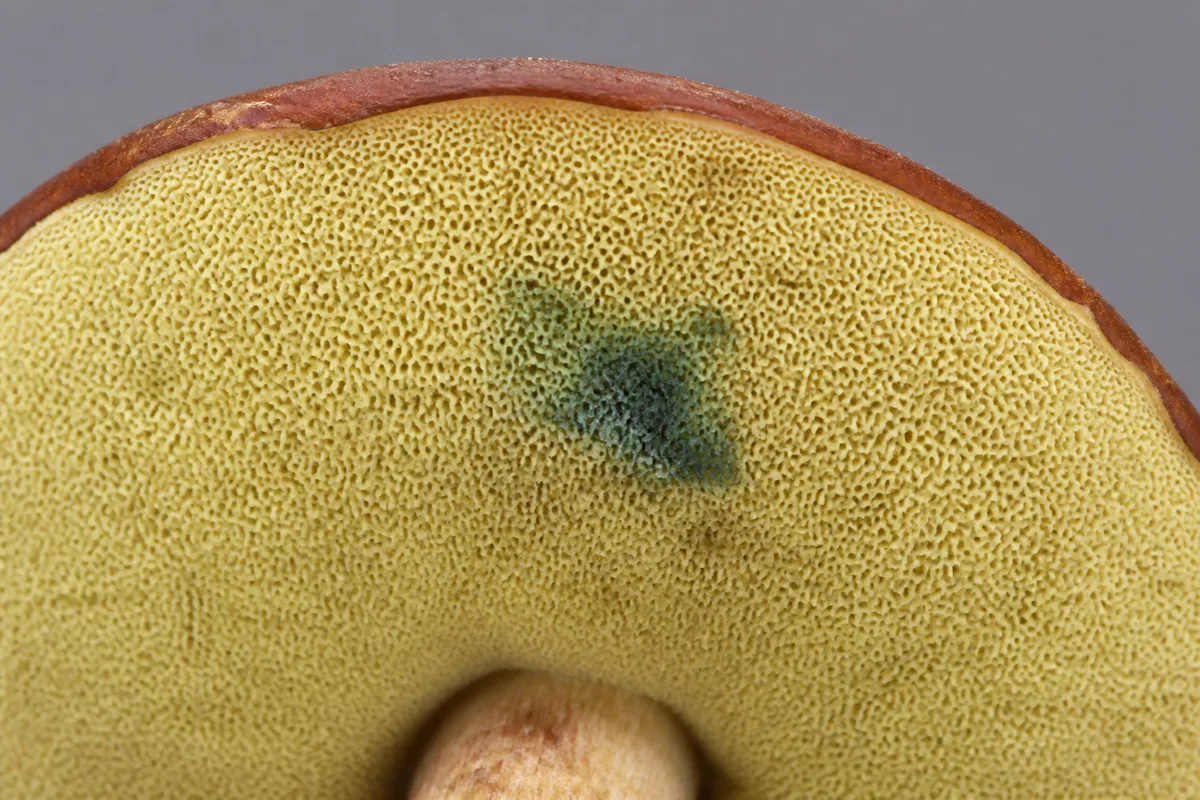
Bay bolete pores often bruise blue-green after pressure or cutting. That reaction can support an Imleria badia identification, but blue staining occurs in edible and poisonous boletes, so it never grants permission to eat a wild mushroom by itself.
A likely bay bolete has a bay-brown to chestnut cap and a sponge-like pore layer rather than gills. The pores begin pale yellow and can turn blue-green where handled.
- Underside
- Tiny sponge-like pores, not blade-like gills
- Cap
- Smooth to slightly velvety bay-brown or chestnut surface
- Bruise
- Yellow pores can develop a blue-green mark after pressure
- Stem
- Brownish, solid, without a ring and without the stout pale netting of classic porcini
- Decision
- The complete specimen, habitat, cut response, and regional expert must agree
Taken together, those features describe a candidate for expert review rather than a household eating test.
Color reactions are useful when they narrow a complete assessment.
They become dangerous when a memorable feature replaces the cap, underside, full stem, stem base, cut flesh, habitat, and nearby trees.

Red or orange pores, red coloring on the stem, gills, a ring, an unfamiliar odor, or a cut reaction that conflicts with the expected pattern should stop the food decision. An old, insect-damaged, waterlogged, or moldy mushroom should also be discarded even if someone once identified it correctly.
Do not nibble a wild bolete to test the flavor during pregnancy. A mild taste cannot prove identity, and tasting creates exposure before the mushroom has cleared the identification and cooking steps.
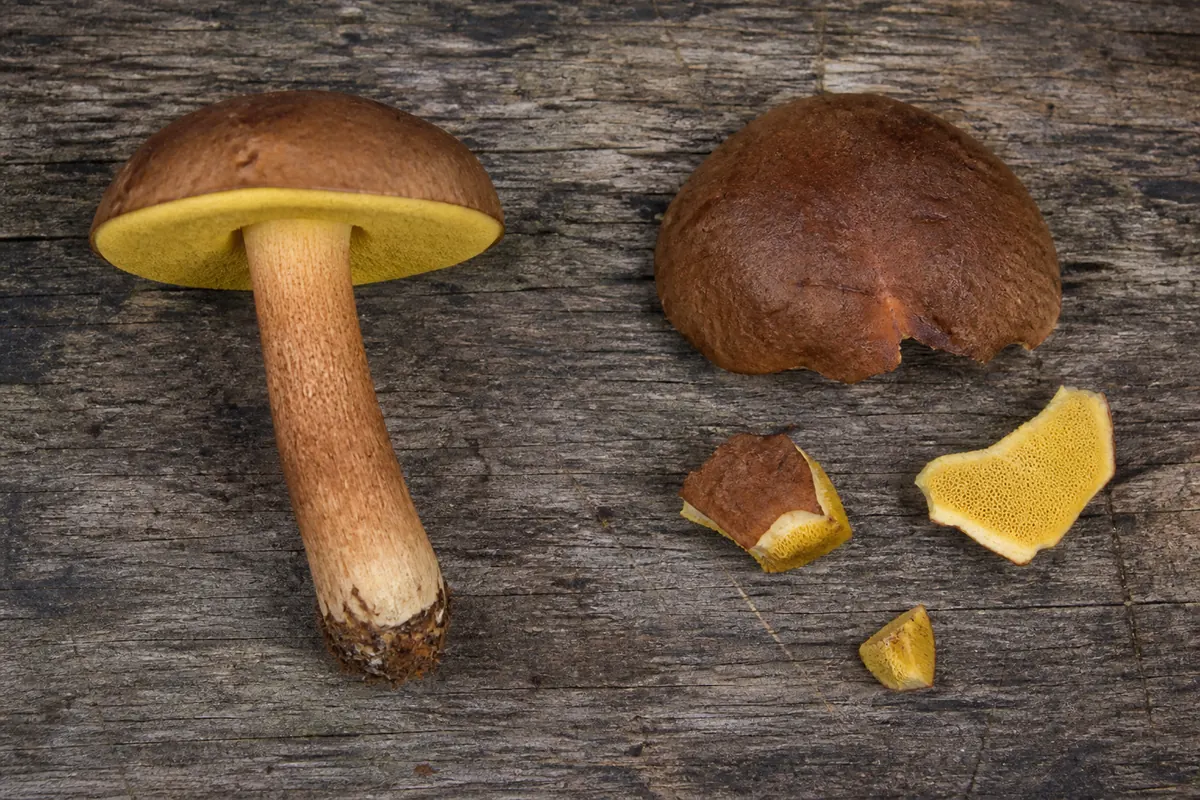
Because those household checks do not settle identity, have a qualified regional identifier examine every specimen in the batch. Keep doubtful mushrooms in a separate container because one correctly named bay bolete does not identify a neighboring cap or a fragment at the bottom of the basket.
Even so, a photograph can support that conversation.
It loses texture, odor, subtle color changes, and the connection to the substrate, so preserve the whole mushroom and several views rather than sending one picture of a brown cap.
SafetyAre Hedgehog Mushrooms Safe During Pregnancy?What the soil can leave in a bay bolete
Environmental measurements vary by country, site, soil, year, species, and fruit-body part. They explain why source matters, but they cannot turn one study result into a laboratory report for your meal.
A Czech study found that Imleria badia strongly accumulated rubidium, cesium, and silver at the site examined.
It also showed an ability to accumulate copper and zinc, while the researchers expected no considerable health effect under their study conditions because these mushrooms were eaten as a delicacy rather than a major part of the diet.
A separate half-century study followed four wild edible species in Polish forests from 1974 through 2019. For all four species, measured soil concentrations increased over time and correlated with concentrations in the fruit bodies.
That long study recorded bioconcentration factors above one for several elements, including cadmium and mercury. Its authors advised against frequent, regular wild-mushroom consumption because it can add exposure to selected toxic elements.
Mercury work from Slovakia adds another caution. Soil influenced mercury in mushroom tissues, and measured exposure differed among locations and between caps and stems.
These papers do not supply a pregnancy-specific portion limit for bay bolete.
They support occasional modest use from an accountable source instead of frequent large servings from one wild site.
The site question also extends beyond metals. Radiocesium requires local interpretation because fallout patterns and official restrictions are geographic.
Check the food-safety, environmental, forestry, or radiation-monitoring authority for the collection region rather than applying a result from Poland, the Czech Republic, or Slovakia to another country.
Washing removes grit from the surface, and cooking changes texture and raw-mushroom exposure.
Neither step proves that an unknown site was acceptable, so source uncertainty remains a reason to reject the batch after the pan is hot.
SafetyAre Oyster Mushrooms Safe to Eat During Pregnancy?How should one verified batch reach the pan?
Begin with whole mushrooms, the source record, a clean board, a small brush, a knife, a colander, and a separate discard bowl. Inspection comes before washing and slicing because water and fragments can hide the evidence you still need.
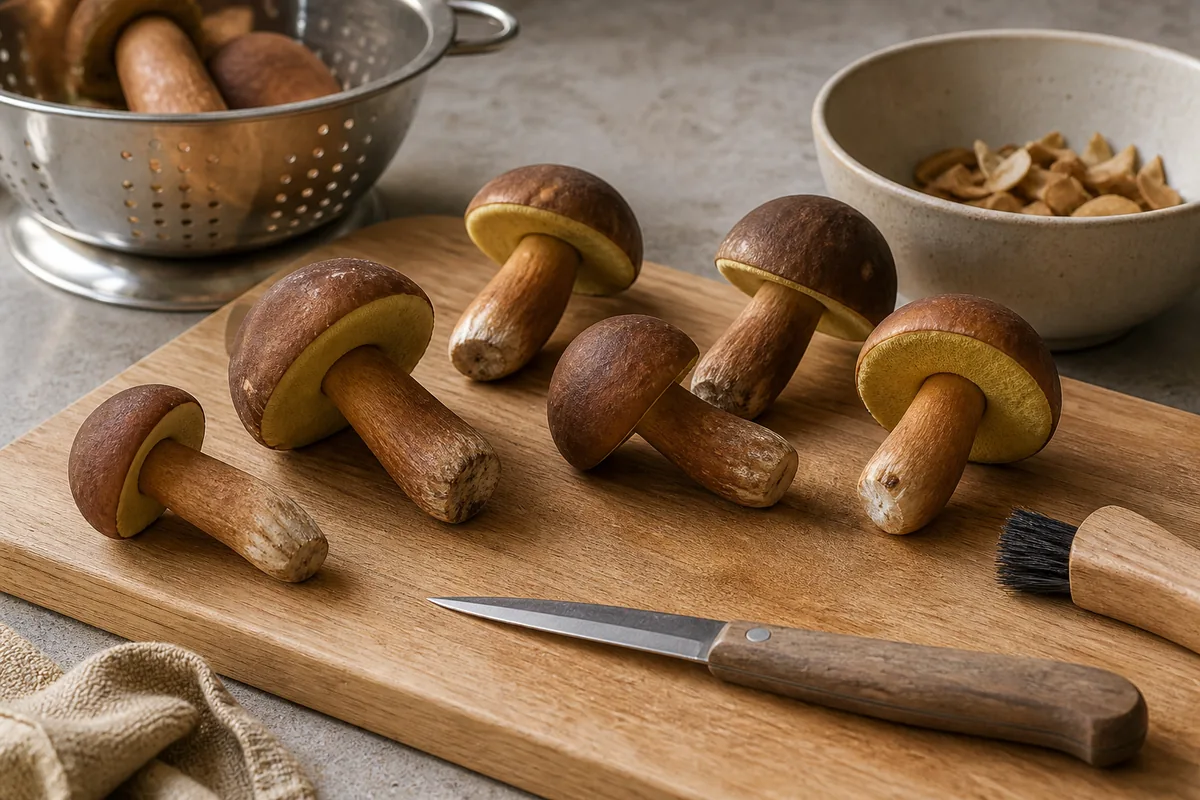
Check the cap, pores, stem, base, and cut flesh again under good light. Trim soil and insect channels, then discard any mushroom with slime, mold, sour odor, extensive tunneling, waterlogging, or unexplained discoloration.
Rinse accepted mushrooms under cool running water and use a soft brush where soil remains. FDA produce guidance says not to wash produce with soap, detergent, or a commercial produce wash.
Slice the caps and stems evenly so hidden damage remains visible and heat can reach each piece.
Then keep the raw mushroom knife and board away from food that will be served without further cooking.

Once the tools are separated, use sustained heat until every piece is hot and tender through the center. Do not reserve raw slices as garnish or assume that browning one side has cooked a thick center.
No official source used here publishes one universal bay bolete time or internal temperature. Thickness, water content, pan load, and cooking method change the path, so visible steam plus tenderness throughout is more honest than an invented number.
| Stage | What to do | What should stop the meal |
|---|---|---|
| Source | Confirm seller or collector, location, date, and local advice | Anonymous, roadside, industrial, mine, waste, fire, or restricted origin |
| Identity | Keep each specimen whole until a regional expert and all features agree | Mixed fragments, missing base, gills, red pores, or conflicting features |
| Condition | Inspect, trim, rinse under running water, and slice evenly | Mold, slime, sour odor, waterlogging, or extensive insect damage |
| Cooking | Apply sustained heat until every piece is hot and tender | Raw garnish, cold center, or a quick surface sear |
| Serving | Start with a modest portion and keep the source record | Large first portion or several unfamiliar wild species in one meal |
| Storage | Serve promptly or refrigerate leftovers in a shallow covered container | Long room-temperature holding or unknown storage history |
Once every earlier stage has cleared, the finished portion should show complete cooking rather than add a raw garnish for appearance.
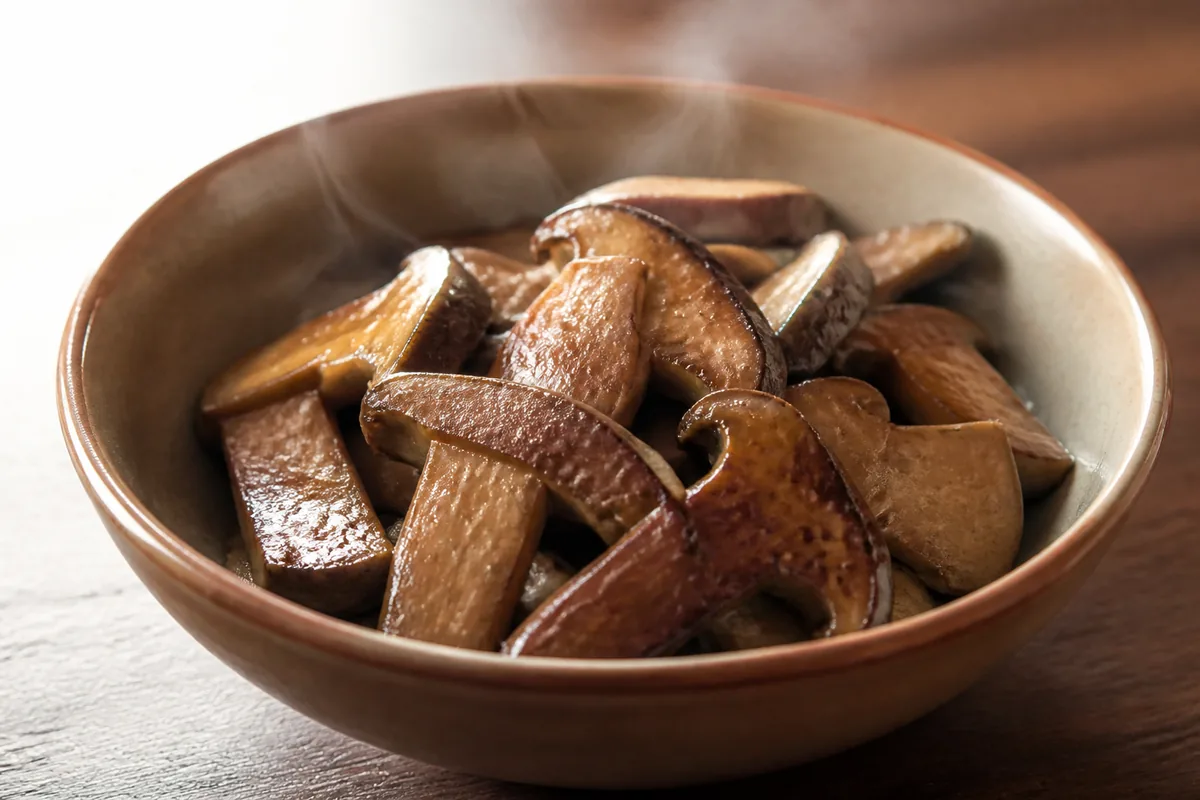
If bay bolete is new to you, start with a modest serving and do not introduce several unfamiliar wild mushrooms in the same meal.
This makes an adverse reaction easier to connect to one batch and avoids making wild mushrooms a frequent dietary exposure.
Chill leftovers promptly in a shallow covered container. Thorough cooking completes one safety step, while poor holding can still create an ordinary foodborne-illness risk.
After a suspect meal, preserve the evidence
Nausea, vomiting, abdominal pain, or diarrhea after a bay bolete meal warrants an immediate response.
Call Poison Control in the United States at 1-800-222-1222, or the local poison service. State the pregnancy during the first call and do not wait for another diner to develop symptoms.
Symptoms can begin quickly or after a delay, depending on the mushroom or other exposure. A late start can be especially important, so the time since the meal should never be used at home to declare the batch harmless.
Do not induce vomiting or use a home remedy unless a clinician directs it. Use emergency services for collapse, seizure, severe confusion, breathing trouble, inability to wake, or signs of severe dehydration.
Save the uncooked specimens, cooked leftovers, trimmings, package, receipt, seller details, and photographs.
Record the exact collection location when the batch was wild because it can help with both identification and environmental assessment.
| Moment | Action | Evidence to preserve |
|---|---|---|
| At the first symptom | Call the poison service and state the pregnancy | Meal time, portion, preparation, and symptom start |
| During the call | Follow the specialist's instructions | Whole specimens, underside and cut photographs, and source location |
| For a purchased batch | Keep the food cold and do not discard the wrapper | Package, lot, seller, receipt, and country of origin |
| For severe symptoms | Use emergency services immediately | Names and symptoms of every diner |
| After assessment | Follow the clinician's advice before using the batch again | Written advice and any laboratory or identification result |
A symptom-free companion does not clear a mixed wild batch because servings can contain different fragments. The safe endpoint is the assessment of a poison specialist or clinician who can use the identity, source, timing, cooking history, and pregnancy information together.
Sources & References
- Imleria badia from non-polluted and polluted areas, Journal of Environmental Science and Health
- Accumulation of risk and essential elements in edible mushrooms, Chemistry & Biodiversity
- Half-century monitoring of wild edible mushrooms, Chemosphere
- Mercury in wild-growing edible mushrooms, Journal of Fungi
- Safer Food Choices for Pregnant Women, CDC
- Selecting and Serving Produce Safely, FDA
- Poisonous mushrooms in Denmark, Danish Veterinary and Food Administration
- Wild Mushroom Warning, Poison Control