
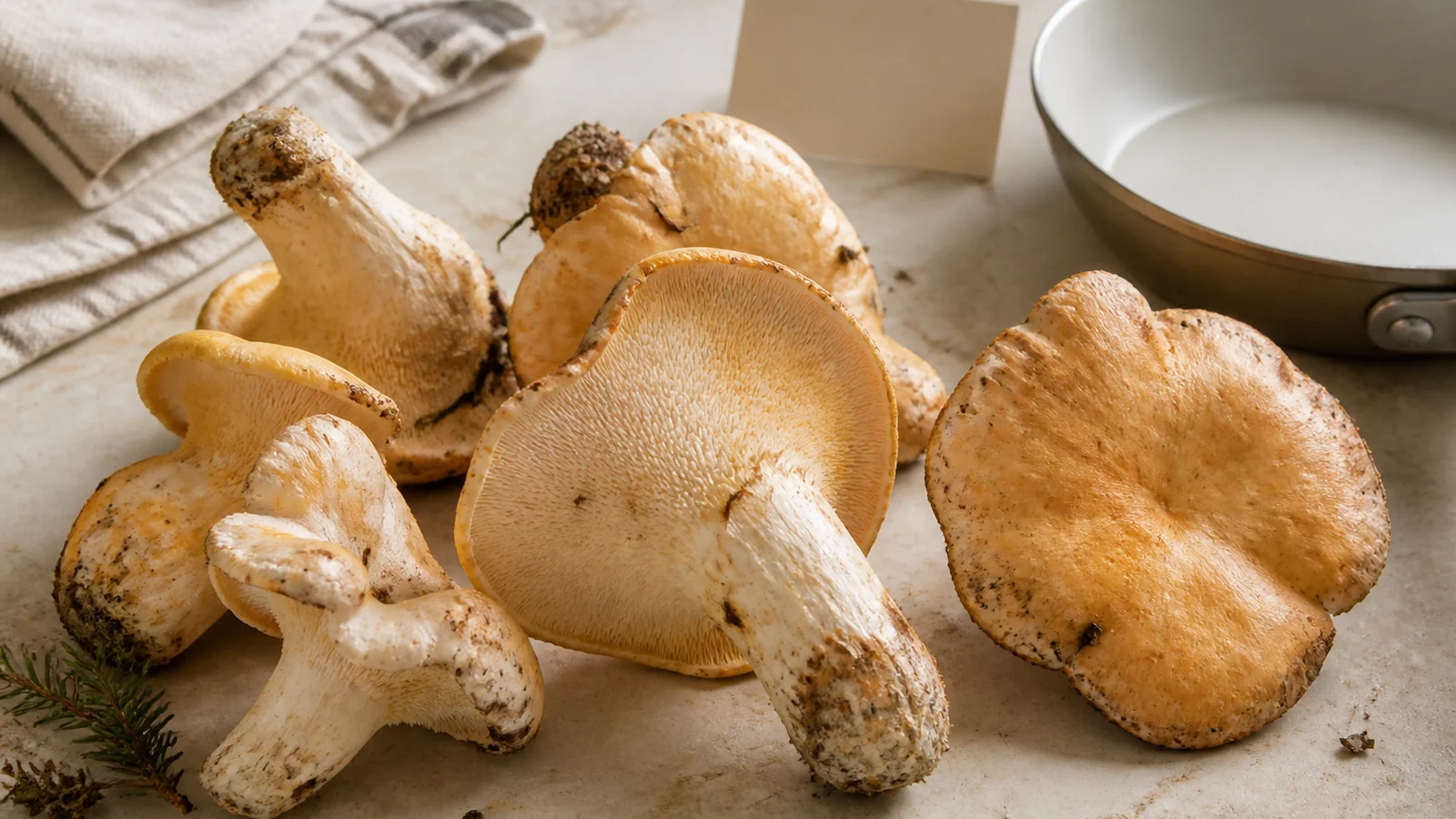
Hedgehog mushroom can fit a pregnancy meal when a qualified seller or regional identifier has established that the whole specimen is an edible Hydnum species. Skip a self-identified collection, a mixed basket, or a chopped serving whose identity cannot still be checked.
The memorable tooth-covered underside helps with recognition, but it does not clear the meal by itself. The useful decision combines documented identity, an intact sound specimen, careful cleaning, complete cooking, and prompt chilling.
What does hedgehog mushroom identify?
Hedgehog mushroom most often refers to Hydnum repandum, a pale cream to orange-tan woodland mushroom with brittle spines beneath the cap instead of gills or pores. The smaller Hydnum umbilicatum and several closely related Hydnum species also reach markets under the same common name.
| Name used for food | Useful whole-form clue | What the name cannot prove |
|---|---|---|
| Hydnum repandum | Broad irregular cap with pale teeth that may run slightly down the stem | Source, freshness, and freedom from contamination |
| Hydnum umbilicatum | Usually smaller cap, often with a central depression, above a toothed underside | That every mushroom in a mixed collection is the same species |
| Hedgehog mushroom | A commercial or regional name for edible Hydnum | That any unrelated mushroom with teeth is edible |
USDA Forest Service field guides describe both named Hydnum species as edible.
Those guides also show why “toothed mushroom” is too broad for a food verdict, since other spine-bearing fungi can be tough, poor eating, or unrelated to the edible group.
The pregnancy answer therefore covers a whole culinary mushroom identified as edible Hydnum. It does not cover powders, extracts, medicinal doses, unidentified teeth broken from a cap, or a woodland mushroom matched from one photograph.
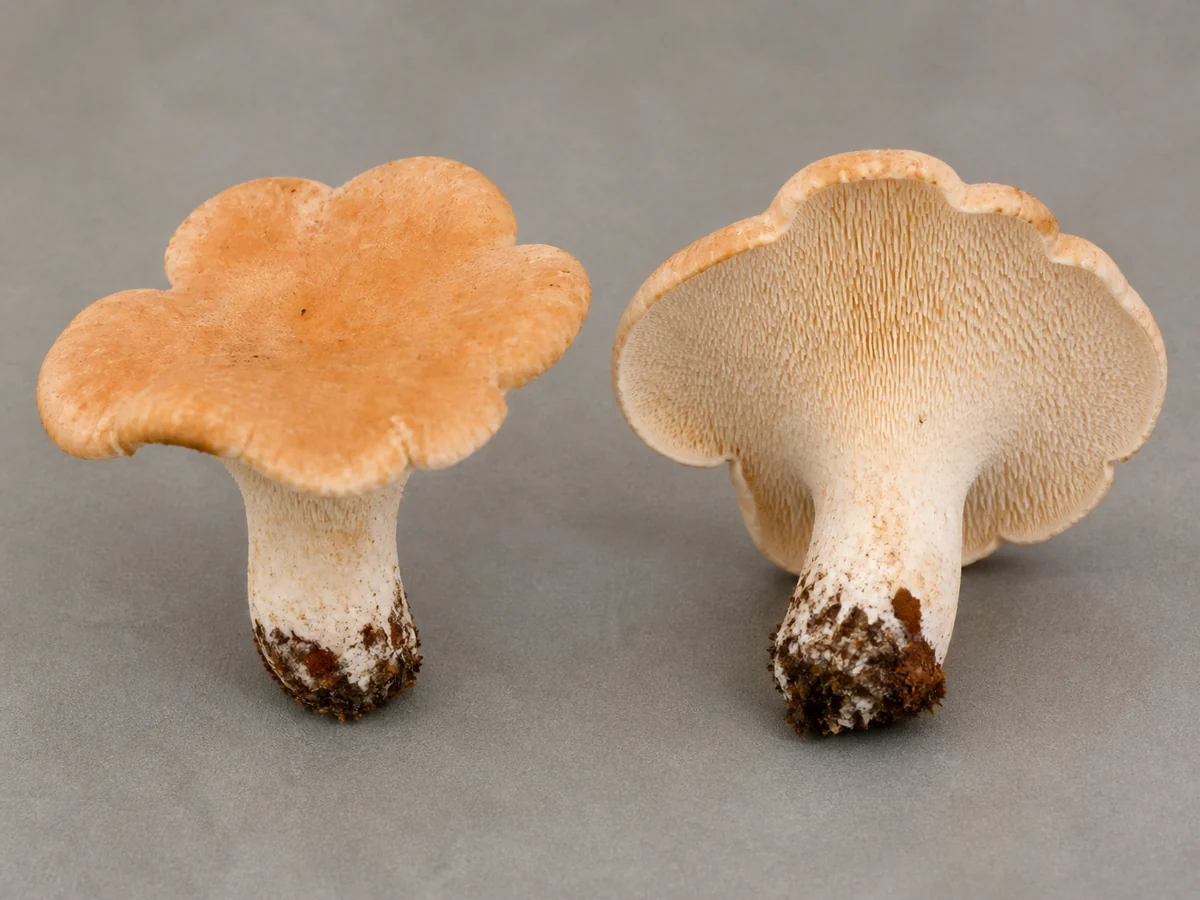
An intact specimen matters because the cap, underside, stem, base, texture, and habitat work together.
Once a cook trims off the base and scrapes away the fragile teeth, some of that evidence is gone.
SafetyAre Golden Oyster Mushrooms Safe During Pregnancy?A seller's evidence decides whether it belongs in the meal
A documented commercial batch gives you a practical route to yes. Ask for the scientific name, who identified the mushrooms, where they were collected or cultivated, when they were harvested, and how they stayed cold before sale.
Some regulated wild-mushroom sales programs require approved identifiers and records for the mushrooms they accept. A confident common name from an anonymous collector does not provide the same evidence.
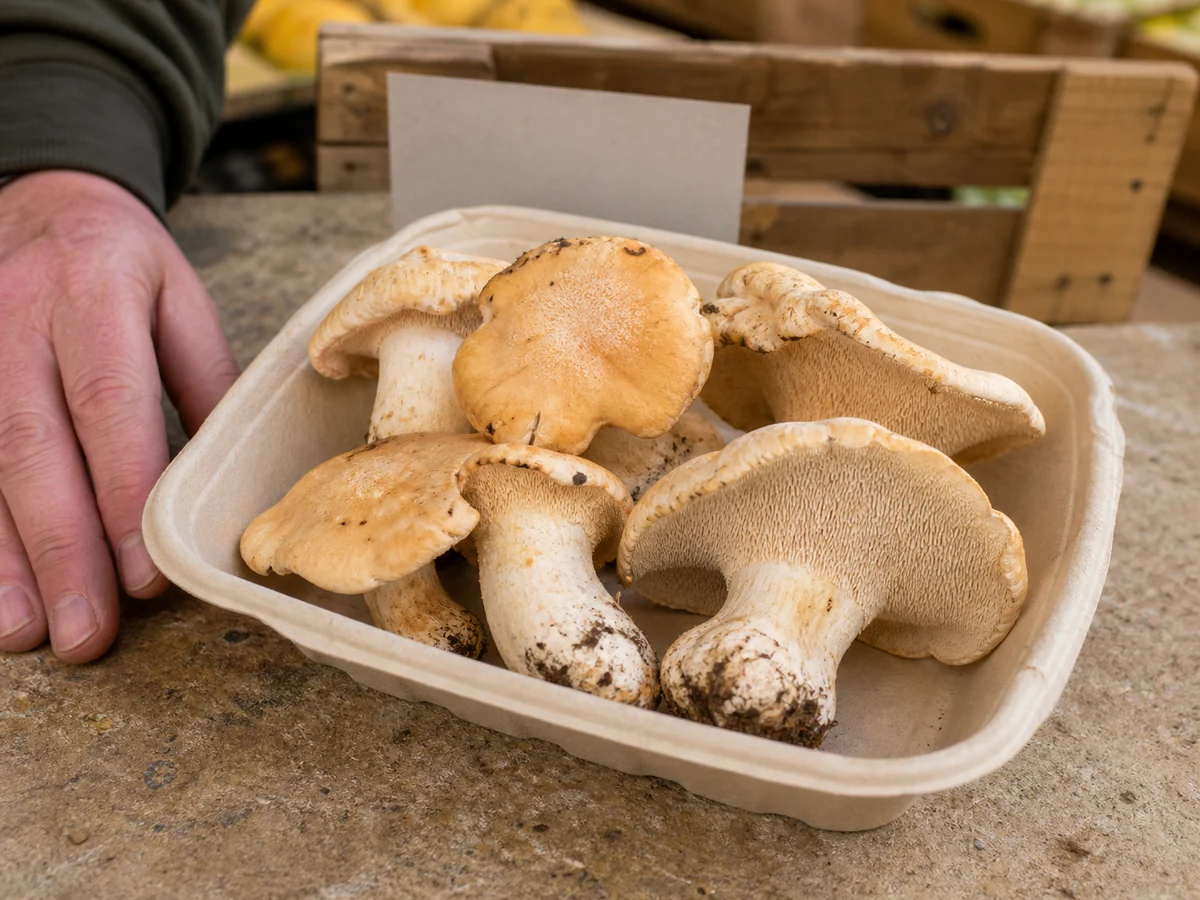
The source changes what you can verify. A whole paper punnet from a specialist seller may retain the label and every specimen, while a restaurant dish requires the kitchen to confirm the supplier and species before cooking makes inspection harder.
A gift should meet the same standard as a sale.
“My friend knows mushrooms” is not enough when you cannot identify the person, their regional experience, the collection site, or whether several species entered the basket.
- Use a specialist seller who can name the edible Hydnum species and identifier.
- Ask a restaurant whether the mushrooms came from a documented commercial supplier.
- Keep the label, receipt, or seller details until the meal is finished.
- Decline a mixed, pre-chopped, or anonymous wild batch when the answers stay vague.
Cooking cannot correct a species mistake. Heat may change texture and reduce ordinary microbial risk, but it cannot turn an unidentified wild mushroom into a verified edible one.
SafetyAre Oyster Mushrooms Safe to Eat During Pregnancy?The tooth-covered underside must survive inspection
The underside carries hundreds of soft, pale spines that release spores. In a fresh hedgehog mushroom, these teeth are distinct, point downward, and may continue a short distance onto the stem.
- Underside
- Pale brittle teeth rather than blade-like gills
- Cap
- Cream, buff, apricot, or orange-tan with an irregular margin
- Stem
- Usually solid and pale, sometimes off-center beneath the cap
- Handling
- Teeth detach easily when rubbed, packed tightly, or scrubbed
- Condition
- Firm tissue and mild odor, without slime, mold, or wet collapse
Teeth establish one useful anatomical feature, not the entire identity.
Other identity features also vary with age and weather, while bruising, larvae, broken edges, and packed debris can alter the specimen before it reaches the kitchen.

Inspect before vigorous cleaning. Turn over every cap, keep its stem attached, and look for a consistent batch rather than assuming that the most recognizable mushroom proves the identity of all the others.
A few detached teeth in a bag can be normal handling damage. Widespread crushing, wet matting, fermented odor, or specimens that differ in cap, stem, and underside give you a reason to stop and ask the seller, not a reason to trim harder.
Forest debris changes how hedgehog mushrooms are cleaned
Pine needles, leaf fragments, sand, and small insects can sit between the downward teeth. Remove dry debris while the surface is still easy to inspect, then use water only for material the brush and knife cannot lift.
Separate and turn
Keep each cap with its stem, turn the underside upward, and set any different-looking specimen aside before cleaning.
Brush while dry
Use a soft brush or clean towel to sweep from the stem toward the cap edge without grinding soil into the teeth.
Trim the dirty points
Cut away embedded soil at the stem base plus bruised, larval, or damaged tissue that cannot be cleaned soundly.
Rinse only when needed
Hold the verified mushroom briefly under cool running water, with no soap or detergent, and avoid soaking the porous flesh.
Dry and cook
Pat every piece dry with a clean towel and move it toward the pan instead of returning wet mushrooms to storage.
FDA advises rinsing produce under running water and cutting away damaged areas.
It also advises against soap or detergent on produce because residues can remain on food that absorbs water.

Reject any specimen with colored mold, sour or ammonia-like odor, slick slime, or large areas of translucent collapse. Also reject a batch when you discover a second mushroom type that the seller cannot resolve.
Tip
Clean identity and condition first | Washing is a surface-cleaning step. It does not prove the species, remove every contaminant from an unknown collection site, or restore a mushroom that is already spoiled.
- Removable needles or dry soil call for brushing and a brief rinse.
- One small firm bruise can be trimmed when the rest of the mushroom is sound.
- Tunnels with extensive larvae, wet softness, or internal decay end the food decision.
- Roadside, treated-landscape, industrial, or otherwise uncertain collection sites remain a source problem after washing.
Clean tools and hands before the mushrooms touch ready-to-eat ingredients.
If the same board held raw meat, poultry, seafood, or eggs, wash it with hot soapy water before using it for the cleaned mushrooms.
SafetyAre Pink Oyster Mushrooms Safe During Pregnancy?Cook for texture, then protect the leftovers
Cut thick stems and caps into pieces that can finish together. Hedgehog stems can stay dense after thin cap edges have browned, so check a stem piece for heat and tenderness before serving.
There is no official pregnancy temperature or universal cooking time for Hydnum. Cook the mushrooms completely in an uncrowded pan, soup, sauce, or casserole until every piece is steaming hot and tender, with no raw garnish reserved for color or crunch.
Older hedgehog mushrooms can develop bitterness, but flavor is not a safety test.
A bitter taste cannot identify the species, and a mild taste cannot clear an uncertain batch.
- Slice dense stems smaller than broad cap sections when their thickness differs.
- Cook in shallow batches when crowding leaves cool wet pieces beneath the top layer.
- Use a clean tasting utensil only after the batch is fully cooked.
- Serve a modest portion the first time you eat a correctly identified species.
- Refrigerate leftovers in shallow containers within two hours.
Prompt chilling matters because a correctly identified mushroom can still become an unsafe leftover. Keep the refrigerator at 40 F or below and reheat leftovers to 165 F, then discard a dish whose room-temperature history is uncertain.
Complete cooking and careful storage answer different risks. The pan addresses raw texture and many surface microbes, while refrigeration limits growth after the food leaves the heat.
What should happen after an uncertain serving?
Stop eating if the mushrooms were wild and their identity becomes uncertain.
Save an intact raw specimen when one remains, plus the package, seller details, photographs, meal time, amount eaten, cooking method, and a sealed portion of leftovers.
Warning
Do not wait for symptoms after an uncertain wild mushroom | In the United States, call Poison Control at 1-800-222-1222 for case-specific advice. Do not induce vomiting or use a household remedy unless a poison specialist or clinician gives that instruction.
Pregnancy also changes the response to possible foodborne illness. Contact the obstetric clinician promptly for fever with unusual fatigue or muscle aches after a suspect food, and seek advice for repeated vomiting, diarrhea, or signs of dehydration.
Breathing trouble, swelling of the face or throat, collapse, seizure, severe confusion, or inability to wake requires emergency services.
Do not drive yourself when weakness, fainting, confusion, or repeated vomiting makes travel unsafe.
A photo of the plated dish cannot replace the whole specimen, but it can preserve portion size and presentation. Poison specialists may use the retained mushroom and collection information while clinicians respond to the symptoms that are actually developing.
The practical answer stays narrow. A documented, sound edible Hydnum that is cleaned, cooked, and chilled correctly can fit the meal, while unresolved wild identity keeps the serving off the plate.
Sources & References
- A Field Guide to Edible Mushrooms of the Pacific Northwest, USDA Forest Service
- Hedgehog Mushroom, Missouri Department of Conservation
- Mushrooms of the National Forests in Alaska, USDA Forest Service
- Wild Mushroom Harvesting Guidance, Pennsylvania Department of Agriculture
- Safer Food Choices for Pregnant Women, CDC
- Cleaning, Food Safety for Moms-to-Be, FDA
- Food Safety at Home, FDA
- Symptoms of Listeria Infection, CDC
- Wild Mushroom Warning, National Capital Poison Center