
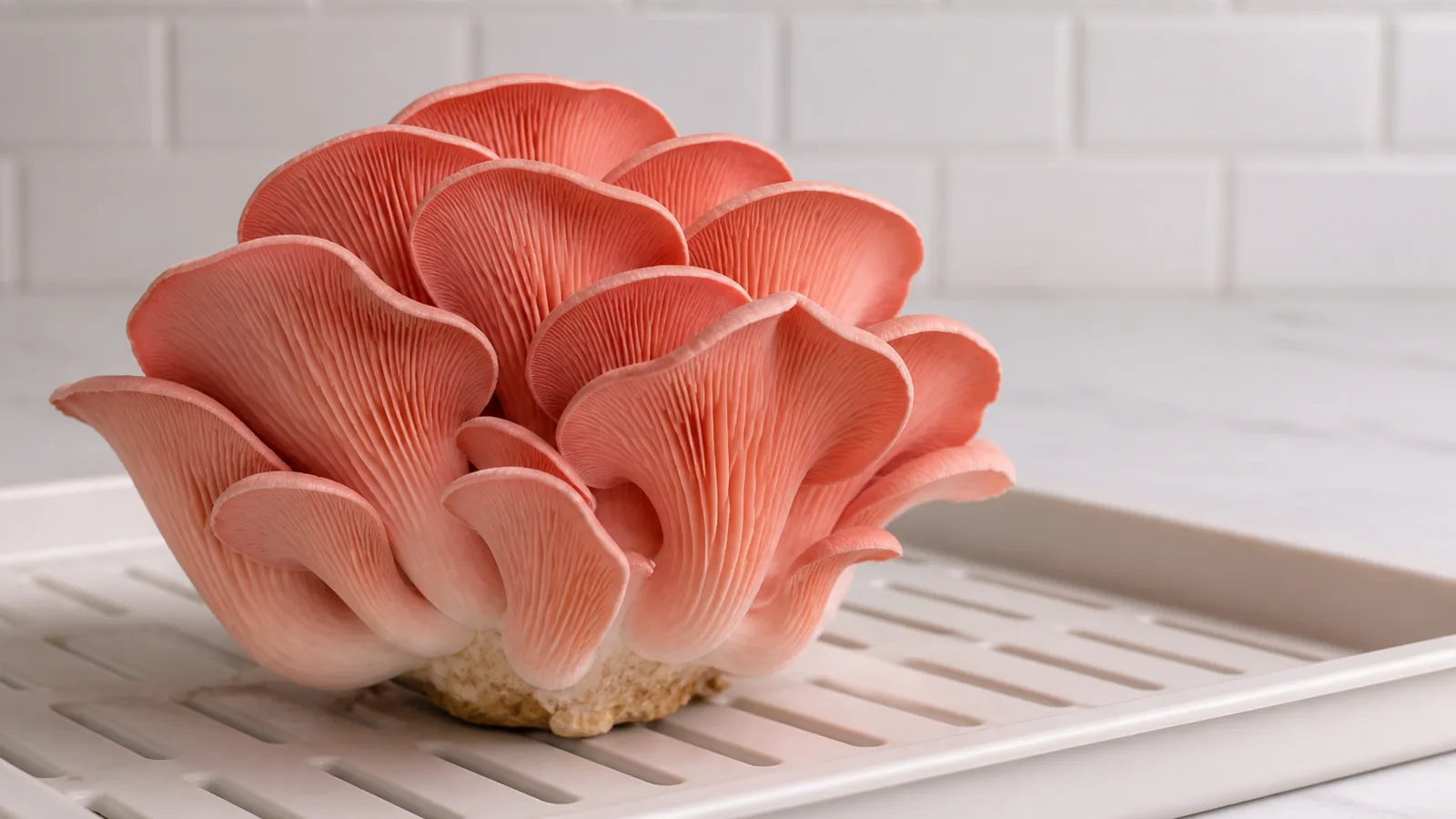
Fresh pink oyster mushrooms can fit a pregnancy meal when the product is traceable, the cluster is still firm and clean, and every piece is cooked through. Their bright color is memorable, but texture, smell, harvest timing, and storage decide whether the batch is usable.
This advice covers Pleurotus djamor.
It does not extend to a wild pink cluster, an unidentified grow, a supplement, or another oyster species that happens to share a fan shape.
Are pink oyster mushrooms safe during pregnancy?
Yes, a fresh cultivated batch can be reasonable as ordinary cooked food. No controlled human pregnancy study specific to Pleurotus djamor was identified, so the decision combines its established edibility with pregnancy food-safety controls.
Key takeaway
Use a labeled fresh cluster, reject deterioration before washing, cook the separated fans completely, and chill leftovers promptly.
That decision depends on condition and handling rather than the intensity of the pink color.

CDC recommends washed produce and the clean, separate, cook, and chill sequence during pregnancy. These controls reduce ordinary foodborne risk after the mushroom's identity and condition have already passed inspection.
This color does not prove freshness, and pale tissue does not automatically prove spoilage. Reject the batch for slime, sour odor, mold, wet collapse, or an unknown time outside refrigeration.
- Confirm Pleurotus djamor or a clear pink oyster product name.
- Check the harvest or package date.
- Keep the cluster cold and ventilated.
- Clean it shortly before cooking.
- Serve it hot and refrigerate leftovers within two hours.
The conditional yes covers food amounts rather than extracts or medicinal dosing.
A concentrated powder needs its own pregnancy evidence and product review.
SafetyAre Golden Oyster Mushrooms Safe During Pregnancy?What makes pink oyster a separate species?
Pink oyster is Pleurotus djamor, a tropical and subtropical oyster mushroom that forms overlapping fan-shaped caps in shades of salmon, coral, or vivid pink. University of Florida IFAS lists it separately from gray oyster and king oyster mushrooms.
| Market mushroom | Scientific name | Dominant visible form |
|---|---|---|
| Pink oyster | Pleurotus djamor | Delicate pink fans in a clustered rosette |
| Oyster mushroom | Pleurotus ostreatus | Gray to beige overlapping shelves |
| King oyster | Pleurotus eryngii | Thick upright white stem and smaller tan cap |
The scientific name matters because these structures change handling. Pink oyster's thin edges lose water and texture quickly, while a king oyster stem creates a much longer heat path.
This color can support an identification but cannot complete it.
Lighting, age, strain, and heat all change the pink, and several unrelated fungi can produce warm-colored caps.
A commercial label or known grow culture provides stronger evidence than an app result. The cultivated-food answer therefore stops when the cluster was found outdoors and nobody can document the species.
SafetyAre Hedgehog Mushrooms Safe During Pregnancy?How quickly does a pink oyster cluster lose quality?
Pink oyster is notably delicate after harvest.
Its thin cap margins can dry, curl, soften, and lose market quality faster than the dense body of a king oyster.
- Firmness
- Fans hold their shape when lifted
- Edge
- Thin but intact, without wet collapse or widespread crisp drying
- Surface
- Clean and dry, with no slime or colored mold
- Odor
- Mild and mushroom-like, never sour or fermented
- Storage
- Refrigerated promptly after harvest in a ventilated package
A fixed number of safe days would ignore harvest maturity, temperature, packaging, and handling. Use the date to estimate history, then inspect the mushroom that exists now.
Check the middle of the rosette because the outer fans can remain colorful after the crowded base has softened. Pull the cluster apart over a clean tray and inspect for wet pockets, trapped substrate, insects, and odor before rinsing.
A recently harvested cluster should feel light but resilient, with edges that bend before tearing into mush.
Widespread crisping shows moisture loss, while translucent wet tissue shows breakdown, and neither condition improves in the pan.
Ask a grower or retailer when the cluster was harvested and how it stayed cold during transport. A harvest date is useful only when refrigeration and package ventilation kept pace with this fast-changing mushroom.
Dry curled edges indicate water loss and declining quality, though a small dry margin alone is not the same as poisoning. Slime, sour odor, spreading soft spots, mold, or liquid pooling beneath the cluster requires discarding the whole affected portion.
Do not wash a cluster and store it wet for several more days.
Added moisture accelerates breakdown, so clean it only when the pan and the rest of the meal are ready.
Refrigeration slows change but cannot reverse it. A discounted cluster already losing structure is a poor pregnancy choice even when its remaining color looks dramatic.
Why does pink oyster lose color during cooking?
Pink oyster commonly fades from coral or magenta toward beige, tan, or light brown under heat. That visible change is normal and does not mean the cooked mushroom became unsafe.
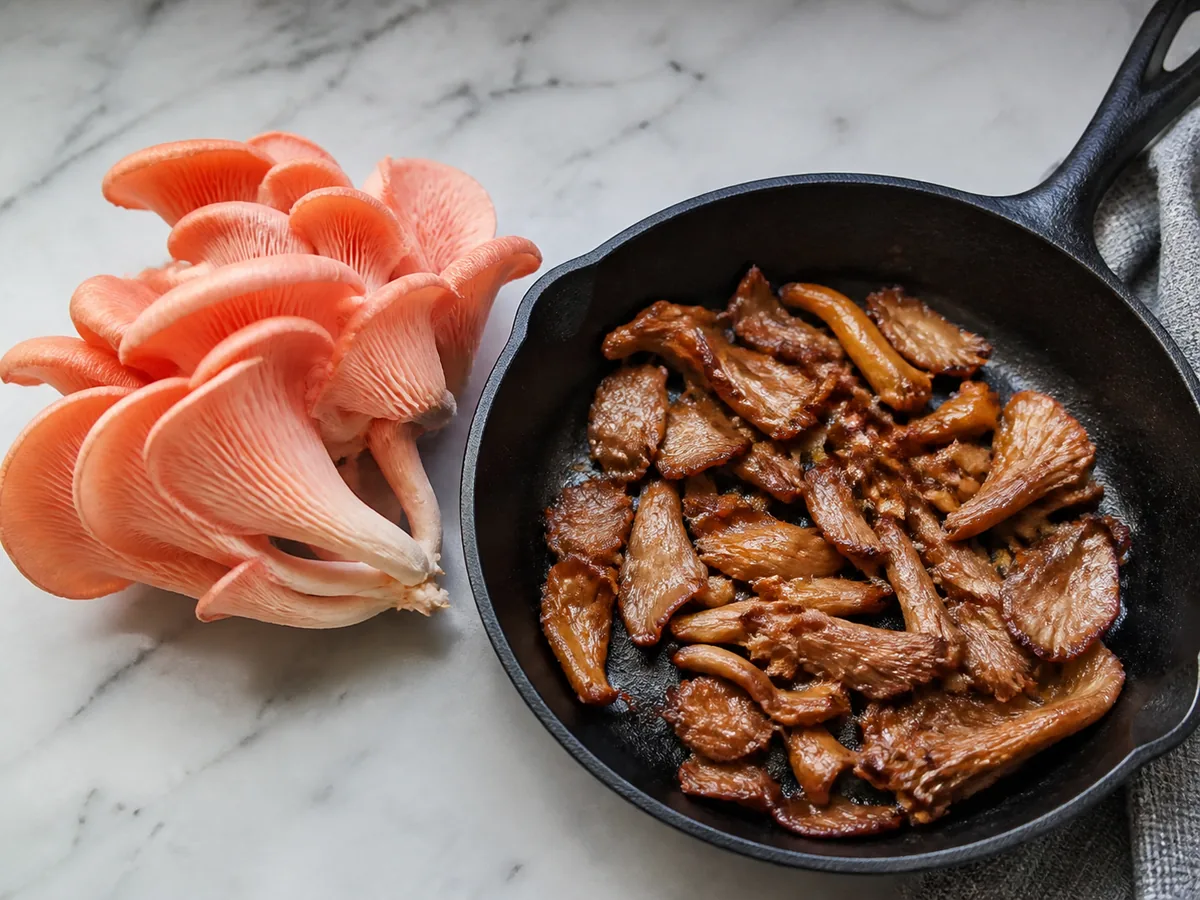
The important inspection happens before the mushrooms enter the pan.
Heat can alter pigment and soften sound tissue, but it cannot repair slime, mold, sour odor, or an unknown wild identity.
This preparation starts by separating the cluster and trimming any substrate before cleaning. Cook the fans in an uncrowded vessel until they are hot and tender, with no cool rubbery folds at the dense base.
Fading begins before every thick junction has necessarily softened. Stir and turn the fans through the wet stage, then inspect a central piece rather than stopping when the brightest pink disappears.
A soup or curry can hide the color transition, so use texture and heat at the thickest base instead.
Add the mushrooms early enough for every piece to cook rather than scattering raw pink fans over the finished bowl.
Do not shorten the cooking time to preserve the photograph-ready color. The visual novelty is less important than complete heat during pregnancy.
SafetyAre Oyster Mushrooms Safe to Eat During Pregnancy?Can a home grow-kit harvest fit the meal?
A labeled pink oyster kit can preserve species identity better than an unknown wild find, but home-grown does not mean automatically clean. The block, room, tools, hands, pets, and household sprays all affect the harvest environment.
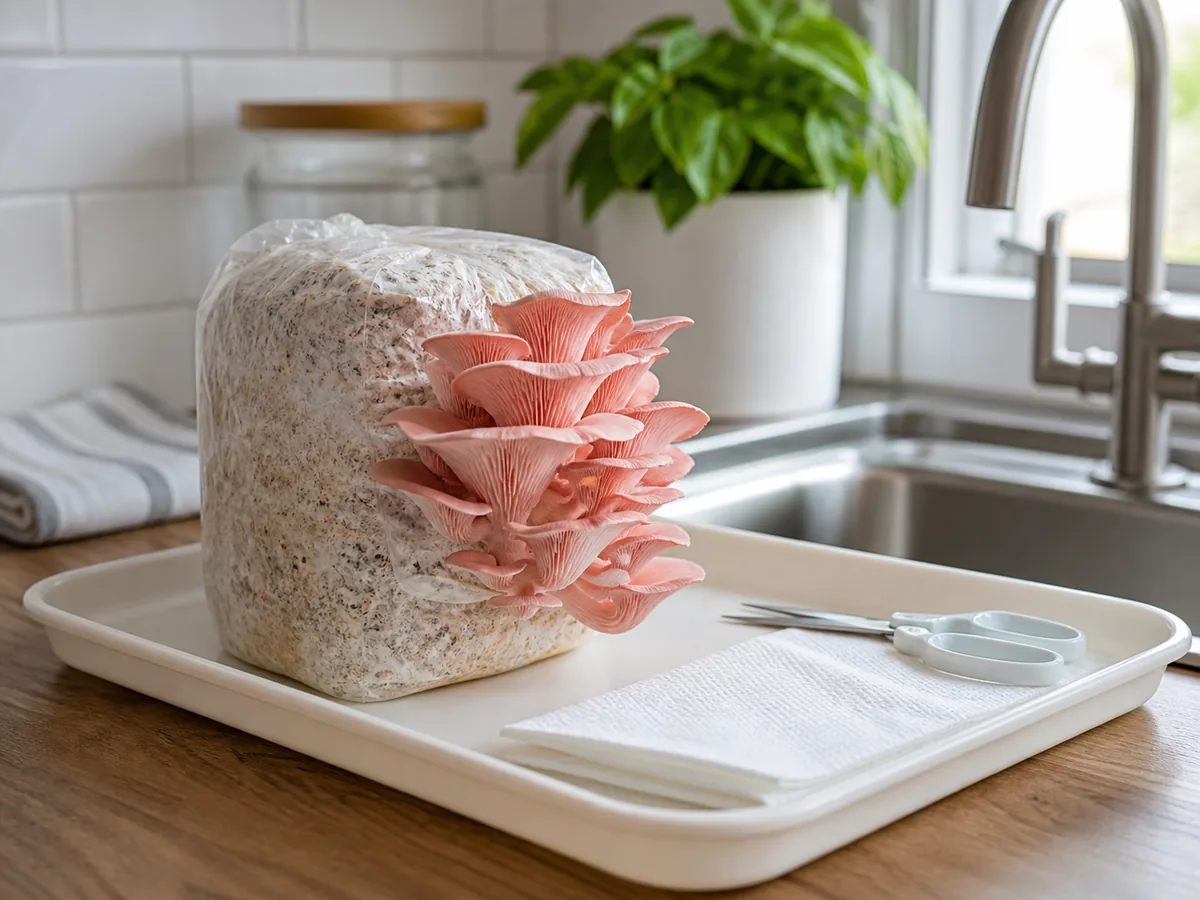
Harvest with clean hands and sanitized scissors into a clean food-safe tray.
Keep cut mushroom bases away from the damp outer bag and any surface used for potting soil, cleaners, or pet supplies.
Do not mist household cleaning products, pesticides, or fragrances near an exposed fruiting block. If a spray reaches the cluster and the product cannot be verified for food contact, discard the affected harvest instead of washing away an unknown exposure.
Harvest only intact fans that belong to the labeled culture. Unexplained growth with a different color, texture, or odor needs assessment from the kit producer before any part of that flush enters the kitchen.
Warning
Discard the harvest if the block carries spreading green, black, or orange mold, a rotten odor, insect infestation, sewage contact, or unknown pesticide or cleaning-spray exposure.
White fungal growth can be normal oyster mycelium, so color alone still needs context.
When you cannot distinguish the intended culture from contamination, ask the kit producer and do not eat the harvest while waiting.
Keep the first harvested cluster separate from older store-bought mushrooms so its source and storage history remain clear. If anyone becomes ill, that separation helps the clinician or poison specialist connect the correct batch to the meal.
Refrigerate the mushrooms immediately after harvest and cook them soon. A warm room that helped the tropical species fruit is not a safe storage environment for the picked cluster.
What should you do after a questionable serving?
Stop eating and document the meal time, amount, product source, harvest date, cooking method, storage history, and symptoms.
Preserve the package or kit label, photographs, remaining mushrooms, and a sealed portion of leftovers.
Contact the obstetric clinician promptly for fever, chills, repeated vomiting, diarrhea, or dehydration. If the mushrooms were wild or the culture identity is uncertain, call Poison Control in the United States at 1-800-222-1222 or the local poison service.
Do not induce vomiting or try to cancel the exposure with another food or supplement.
The correct response depends on the actual symptoms, pregnancy, and evidence attached to the batch.
Normal color fading after cooking does not explain illness, and feeling well immediately does not identify an uncertain wild mushroom. Let the clinician or poison specialist assess the complete history.