
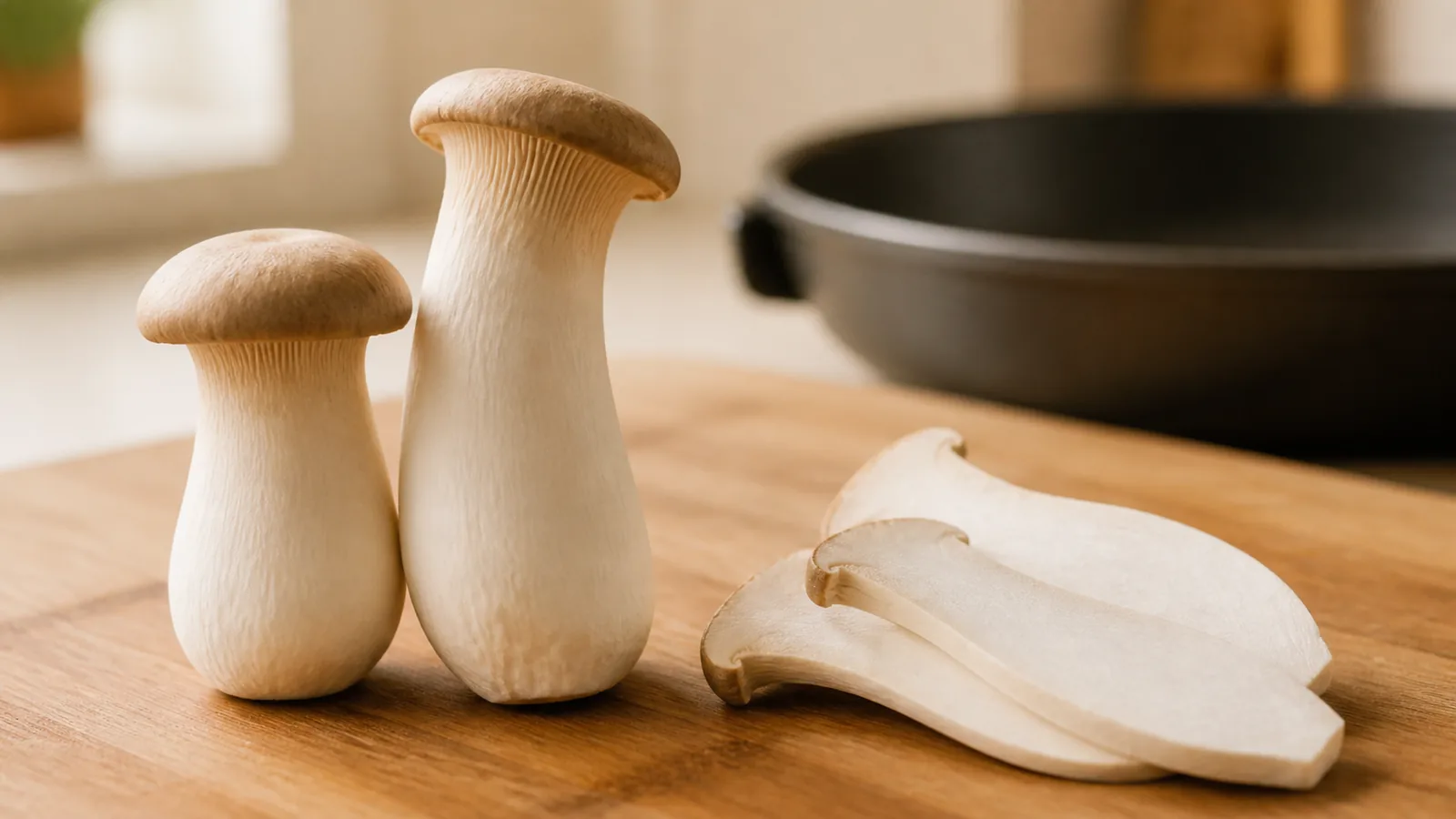
King oyster mushrooms can fit a pregnancy meal when they are fresh, commercially sourced, and cooked through to the center. Their thick stems make preparation more important than the small caps suggest.
This advice covers Pleurotus eryngii, also sold as king trumpet mushroom.
It applies to whole culinary mushrooms, not wild lookalikes, extracts, capsules, or multi-mushroom powders.
Can you eat king oyster mushrooms during pregnancy?
Yes, a sound commercial batch can be reasonable as ordinary cooked food. No human pregnancy study specific to Pleurotus eryngii was identified, so the judgment rests on established culinary use and general pregnancy food-safety controls.
| Form | Practical pregnancy decision |
|---|---|
| Thin lengthwise steak | Cook both faces until the center is hot and tender |
| Thick round | Use moderate heat long enough to reach the middle |
| Small cubes or shreds | Stir so every surface and center receives heat |
| Whole thick stem | Split it because surface browning can hide a cool core |
| Extract or capsule | Do not treat it as equivalent to cooked food |
The table reflects a physical cooking problem because the same mushroom can present a very different heat path after cutting.

CDC recommends washed produce plus clean, separate, cook, and chill practices during pregnancy. Those steps work best when the package already preserves the species, supplier, date, and storage history.
Choose firm dry mushrooms, clean them just before cooking, and serve them promptly. Reject slime, sour odor, mold, or a package with unexplained liquid rather than hoping heat will repair deterioration.
SafetyAre Golden Oyster Mushrooms Safe During Pregnancy?Which cut lets the thick stem cook evenly?
Cut direction changes how far heat must travel. A long thin steak exposes more interior than a thick crosswise round, while cubes and shreds shorten the distance further.
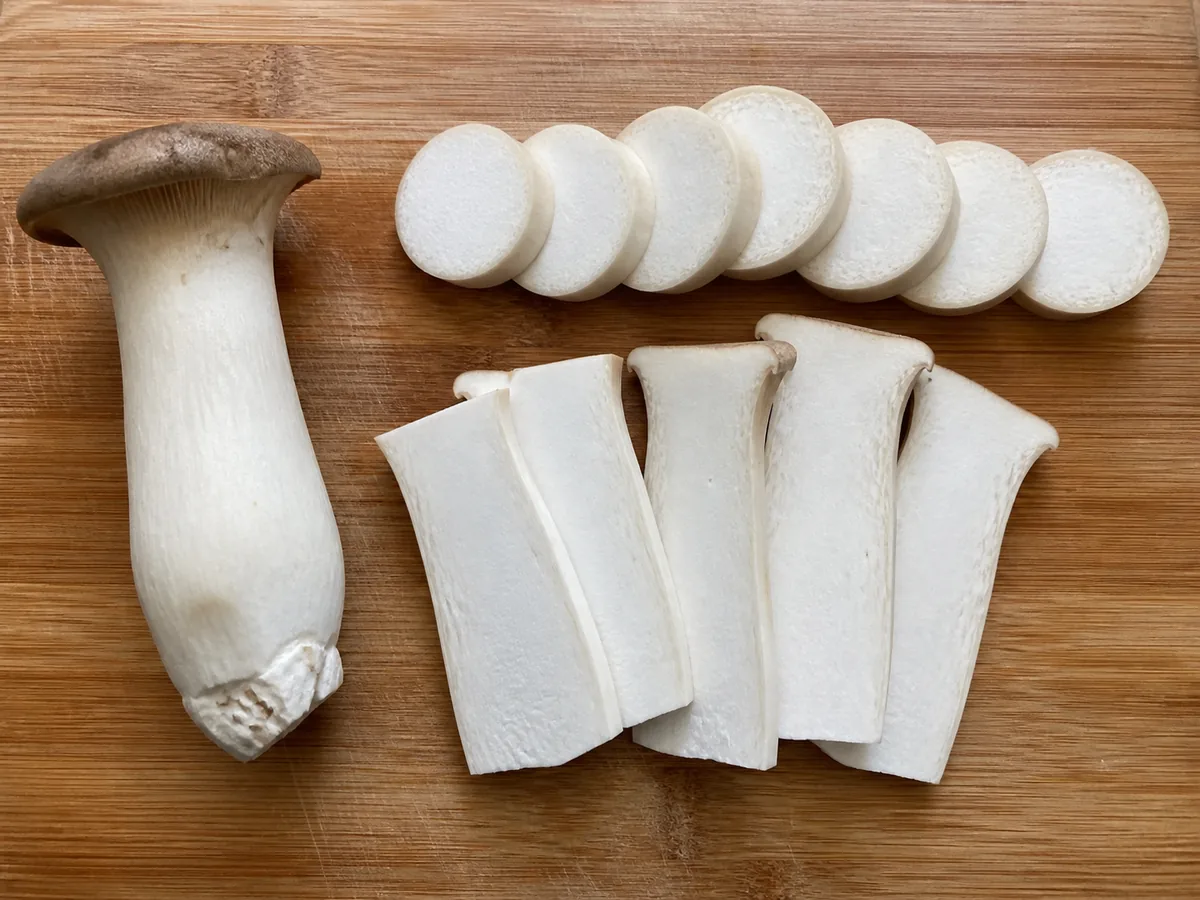
These cut shapes create distinct routes for heat to reach the center.
Score thick rounds lightly only as a cooking aid, not as decoration.
The cuts let heat enter from more directions and make texture easier to judge.
Use a pan that keeps pieces in one layer, then turn them so both faces heat. If the exterior browns before the middle softens, lower the heat and continue rather than serving the attractive surface early.
For thick restaurant-style steaks, ask whether the stem was split or precooked before the final sear.
Dark grill marks describe the surface, while resistance and temperature at the center describe whether the dense piece finished cooking.
Sauced cubes need the same attention because a glossy exterior can hide pieces cut twice as thick as their neighbors. Test one of the largest cubes before serving and return the batch to heat if the middle remains cool or chalky.
The center should be hot and tender throughout without a cool chalky core. No official source reviewed here supplies a species-specific pregnancy temperature, so do not turn a favorite recipe time into a medical threshold.
SafetyAre Hedgehog Mushrooms Safe During Pregnancy?What makes king oyster different from oyster mushroom?
King oyster is Pleurotus eryngii, while the clustered gray oyster mushroom is commonly Pleurotus ostreatus.
University of Florida IFAS lists them as separate edible species sold in grocery markets.
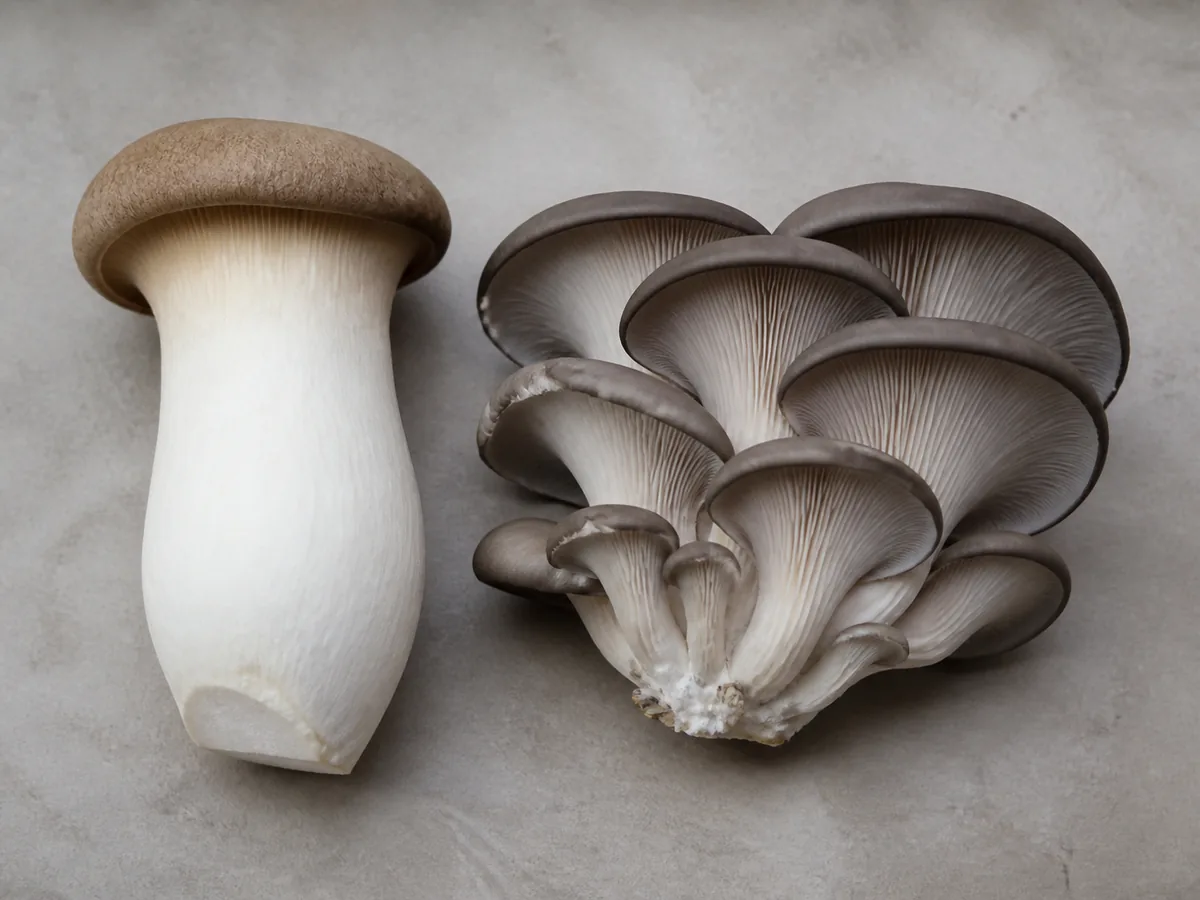
The field marks below keep those market mushrooms separate before their different structures reach the knife.
These differences explain why the pages remain separate even though all belong to Pleurotus. The king oyster's stem is the main edible structure, while ordinary oyster mushrooms demand more inspection around a crowded cluster base.
The name oyster still refers to shape, not shellfish.
A shellfish allergy does not automatically predict a reaction to Pleurotus eryngii, though a prior mushroom reaction is a reason to avoid another serving and seek personal advice.
A restaurant may call the mushroom king trumpet, trumpet royale, or eryngii. Ask for the ingredient and supplier when the menu name is decorative or when the dish arrives already sliced beyond recognition.
How should you buy and store king oyster mushrooms?
Which freshness cues matter most? Start with firm pale stems, dry caps, and clean cut ends.
A small amount of surface scuffing can be cosmetic, while slime, soft collapse, colored mold, sour odor, or wet brown tissue requires discarding the specimen.

Cut ends reveal what the smooth outside can hide.
Look for firm uniform tissue rather than spreading translucent patches or soft internal browning.
Condensation deserves context rather than an automatic verdict. A few droplets after a temperature change can be harmless, but pooled liquid with soft tissue or sour odor shows that the package has moved beyond a cosmetic issue.
Compare all mushrooms in the pack because one dry cap cannot clear a wet specimen underneath it. Remove the entire package from the meal when decay or mold touches several pieces and the boundary cannot be separated cleanly.
- Keep mushrooms refrigerated in their ventilated original pack or a paper bag.
- Avoid sealing wet mushrooms in an airtight container.
- Wash only shortly before cooking.
- Use the package date as context rather than a substitute for inspection.
- Chill cooked leftovers within two hours.
Refrigeration slows aging but does not reverse it. A mushroom that has become slimy or sour stays unsuitable even if a hot skillet could mask the odor for a few minutes.
FDA advises clean hands, produce, tools, and surfaces.
Use a clean board and knife, and keep raw soil or package liquid away from salads and other ready-to-eat foods.
After cutting, inspect the newly exposed interior before oil or sauce hides it. A clean dense white center supports normal condition, while wet cavities, spreading discoloration, or an off odor gives you a reason to discard the affected mushroom before it reaches the pan.
SafetyAre Oyster Mushrooms Safe to Eat During Pregnancy?Do king oyster extracts share the food verdict?
No. A cooked stem is a whole food, while an extract can change the dose, chemical profile, and frequency of exposure.
Pregnancy evidence for concentrated Pleurotus eryngii products is inadequate.
A label that promotes beta-glucans, immunity, energy, or daily wellness does not establish fetal or maternal safety.
An extraction ratio or milligram number can describe manufacturing without proving a pregnancy-tested exposure. Review must cover the exact ingredient list, daily amount, other mushroom species, and medicines rather than the front-label name alone.
Warning
Do not use king oyster capsules, tinctures, concentrated powders, or multi-mushroom blends during pregnancy unless the obstetric clinician and pharmacist have reviewed the exact product and dose.
Blends create an additional problem because every ingredient needs its own identity, amount, interaction review, and pregnancy evidence. A familiar mushroom name on the front cannot clear the undisclosed or minor ingredients behind it.
| Product | What remains unknown |
|---|---|
| Whole cooked mushroom | No direct species-specific pregnancy trial, but exposure resembles ordinary food |
| Culinary powder cooked into a dish | Source, amount, and complete heating must stay clear |
| Standardized extract | Concentration and pregnancy outcomes are not established |
| Multi-mushroom blend | Every species, dose, and interaction needs separate review |
Do not use a concentrated product to treat nausea, infection, glucose, blood pressure, or another pregnancy concern on the strength of animal or laboratory research. Those uses require clinical evidence that the food decision does not supply.
What should you do after a questionable serving?
Record the meal time, cut size, cooking method, product source, storage history, amount eaten, and symptom onset.
Keep the package, receipt, menu details, raw mushrooms, and a sealed portion of leftovers.
Cut size matters to the history because a thick undercooked stem creates a different question from a fully cooked thin slice. If several people ate the meal, record each portion and symptom timeline separately instead of combining them into one estimate.
Contact the obstetric clinician promptly for fever, chills, repeated vomiting, diarrhea, or signs of dehydration. Call Poison Control in the United States at 1-800-222-1222, or the local poison service, when the mushroom was wild, mislabeled, or uncertain.
- Mild stomach upset
- Stop the food and seek advice if symptoms persist or worsen
- Fever or flu-like illness
- Contact the obstetric clinician promptly
- Repeated vomiting or diarrhea
- Get advice before dehydration develops
- Wild or uncertain identity
- Contact Poison Control without waiting
- Breathing trouble, facial swelling, collapse, seizure, or inability to wake
- Call emergency services
Do not induce vomiting or take a new remedy unless a clinician directs it. The product history and symptoms should determine the response rather than the market name alone.