
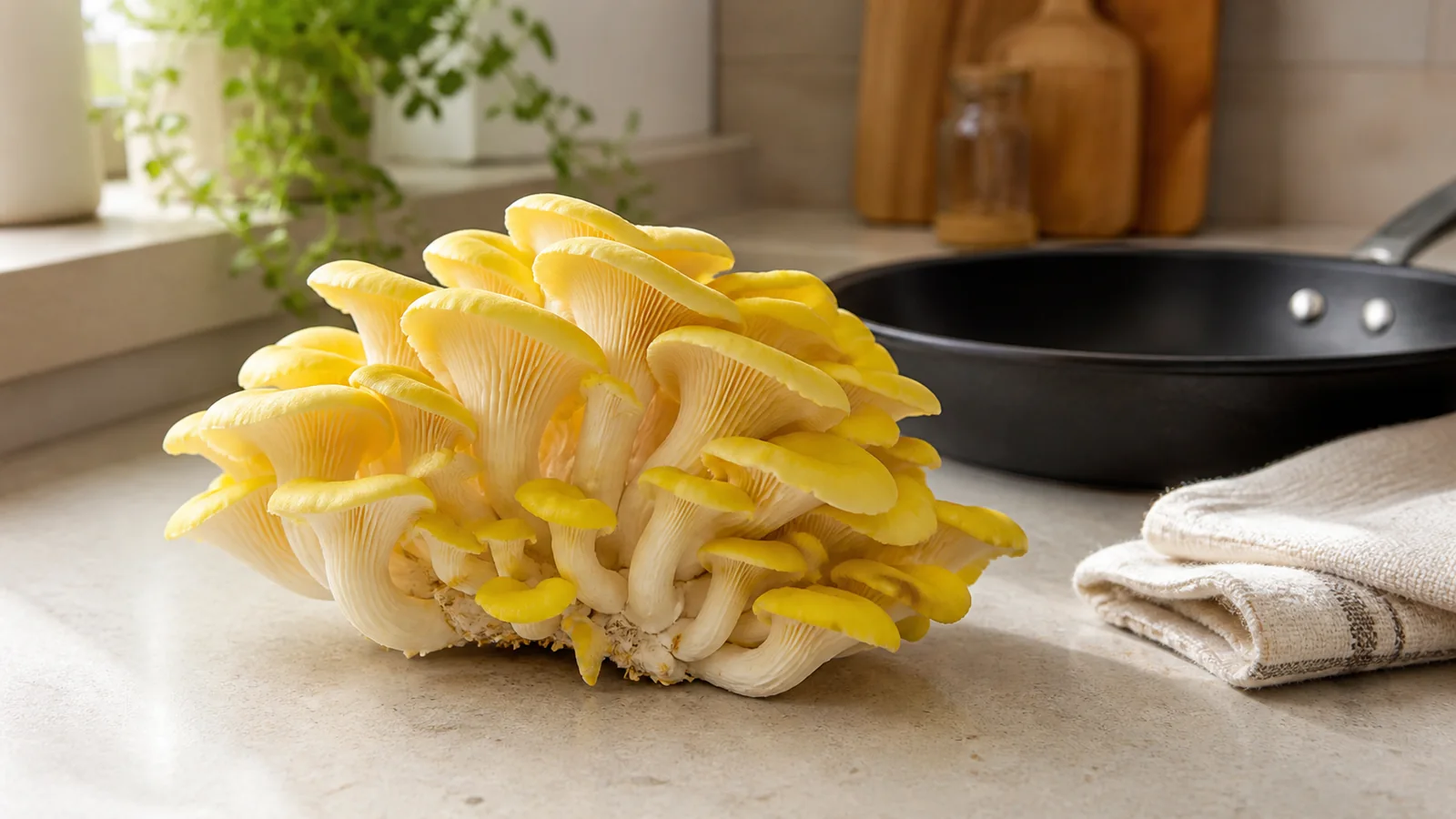
Fresh cultivated golden oyster mushrooms can fit a pregnancy meal when the package or grower identifies Pleurotus citrinopileatus, the cluster is firm and clean, and every piece is cooked through. A wild find, a deteriorating cluster, or a dish with no clear source falls outside that answer.
Because no pregnancy-specific clinical study establishes a special benefit or a species-specific guarantee, the practical decision rests on traceable identity, sound condition, clean handling, complete cooking, and prompt chilling.
Can golden oyster mushrooms fit a pregnancy meal?
Yes, a labeled cultivated batch can be a reasonable food during pregnancy. University of Florida IFAS identifies golden oyster as an edible Pleurotus species, while CDC pregnancy guidance supplies the controls that matter once the ingredient has been identified.
- Species
- Pleurotus citrinopileatus
- Source
- Labeled cultivated product or a clean, known grow culture
- Condition
- Firm dry caps, mild odor, and no slime or mold
- Preparation
- Washed under running water and cooked until hot and tender
- Storage
- Refrigerated promptly before and after cooking
Together, these facts form a chain in which a safe-looking cooking method cannot repair an unknown species and a correct label cannot rescue a spoiled cluster.

Pregnancy increases vulnerability to some foodborne infections, including Listeria. CDC recommends safer produce choices and the clean, separate, cook, and chill sequence rather than a special mushroom remedy.
- Buy a refrigerated cultivated product with a clear name and supplier.
- Reject damaged, slimy, moldy, or sour-smelling clusters before washing.
- Keep the raw mushrooms away from ready-to-eat food and clean utensils.
- Cook every cap and joined base completely, then serve the food hot.
- Chill leftovers within two hours, or within one hour when the air is above 90 F.
This conditional answer covers an ordinary food portion because powders, extracts, tinctures, and concentrated blends have different doses and do not inherit the meal verdict.
SafetyAre Hedgehog Mushrooms Safe During Pregnancy?What does golden oyster mean on a label?
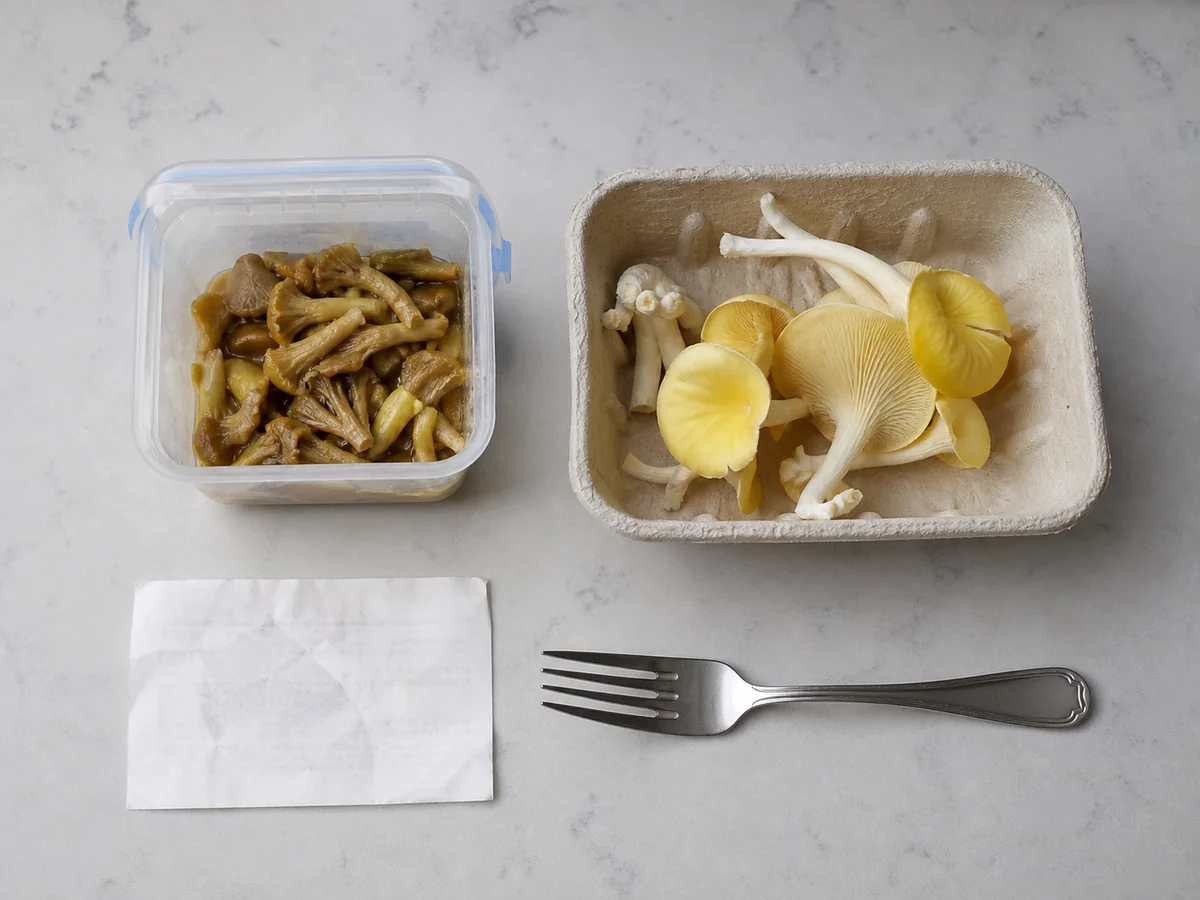
Golden oyster names Pleurotus citrinopileatus, a cultivated mushroom with lemon-yellow to golden caps arranged in dense clusters. The underside has pale gills that run down short stems toward a shared white base.
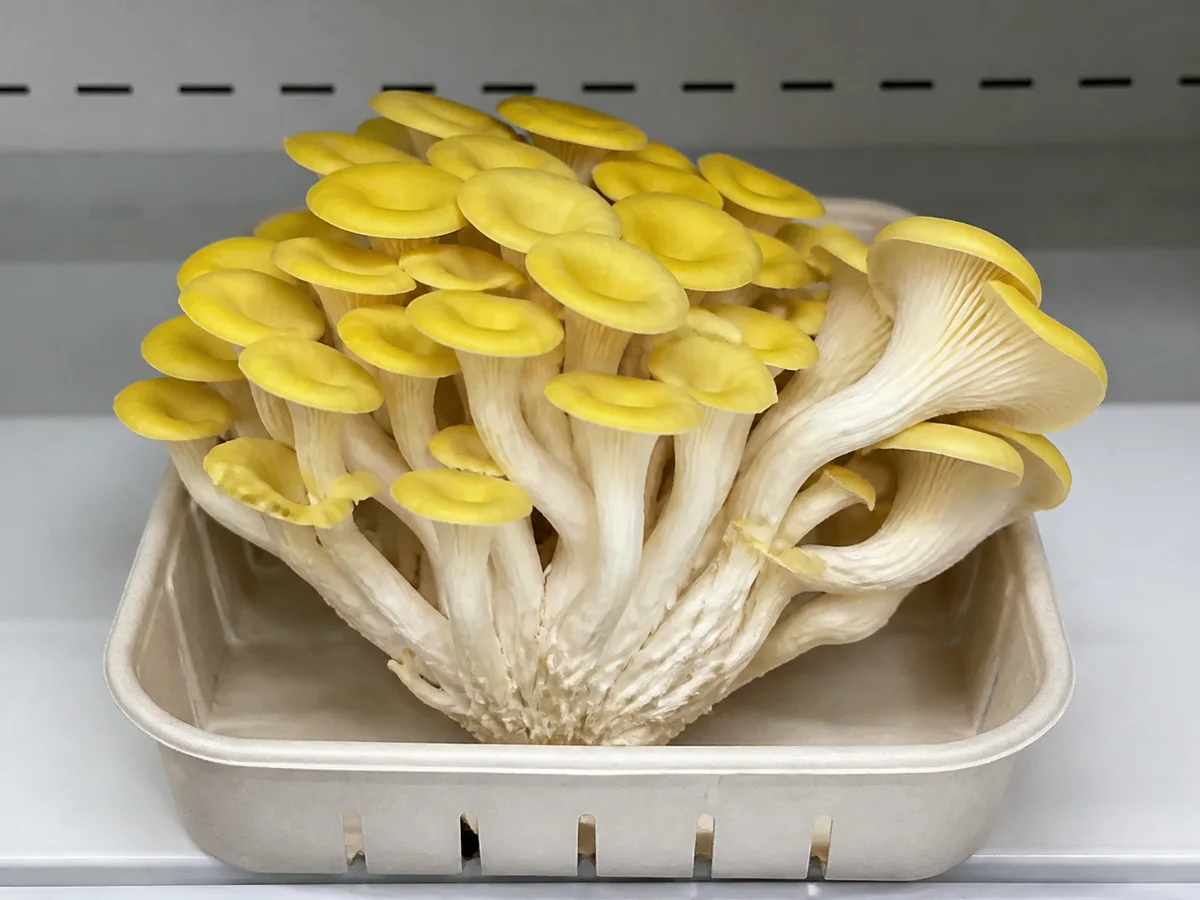
The yellow cap is useful context, but color cannot confirm the species by itself because lighting, age, handling, and strain change the shade while unrelated wild mushrooms can also be yellow.
| Market name | Scientific name | Form that changes handling |
|---|---|---|
| Golden oyster | Pleurotus citrinopileatus | Small yellow caps in a crowded cluster with a shared base |
| Oyster mushroom | Pleurotus ostreatus | Broader gray or beige fans in overlapping shelves |
| King oyster | Pleurotus eryngii | Thick upright stem with a smaller tan cap |
| Pink oyster | Pleurotus djamor | Delicate coral or pink fans in a rosette |
These mushrooms belong to the same genus, yet their market forms create different checks. Golden oyster needs close inspection around the crowded base, where substrate and moisture can hide beneath attractive caps.
A retail label that says golden oyster or Pleurotus citrinopileatus resolves the intended ingredient. A restaurant should be able to confirm that the dish uses cultivated golden oysters rather than a mixed or foraged batch.
Which sources belong in the pregnancy decision?
A sealed retail tray offers the clearest evidence because it preserves the product name, supplier, date, and condition, while a known grow kit preserves identity only when the harvest also has clean tools, an uncontaminated block, refrigeration, and normal kitchen handling.

Golden oyster has escaped cultivation and now fruits wild on dead hardwood in parts of eastern North America. That ecological success does not give a woodland cluster the supplier record of a cultivated product.
Warning
Skip a wild or gifted golden-yellow cluster during pregnancy unless a qualified regional expert has identified every intact specimen and the collection site is known. An app, cap color, or growth on wood cannot clear the meal.
That limit matters because cooking cannot correct a species mistake or measure contaminants from treated timber, a roadside, an industrial site, or an unknown dumping area.
| Source | Evidence you can check | Pregnancy decision |
|---|---|---|
| Sealed cultivated pack | Product name, supplier, date, intact cluster, cold condition | Use when fresh and cooked completely |
| Farmers market grower | Species, cultivated status, harvest date, storage history | Use when the answers and condition are clear |
| Labeled home grow kit | Known culture, clean block, harvest timing, household exposure | Use only when the flush is clean and promptly chilled |
| Restaurant dish | Supplier and cultivated species confirmed by the kitchen | Choose another dish when the answer is vague |
| Wild or anonymous gift | Expert identification, site history, and every intact specimen | Skip when any evidence is missing |
Do not mix mushrooms from different sources before inspection because keeping the package, grow-kit label, or original cluster separate makes any later exposure easier to assess.
SafetyAre Oyster Mushrooms Safe to Eat During Pregnancy?How can you tell whether the cluster is still usable?
Judge the whole cluster rather than the brightest cap. Sound golden oyster caps feel light and resilient, with dry to slightly velvety surfaces and a mild mushroom odor.
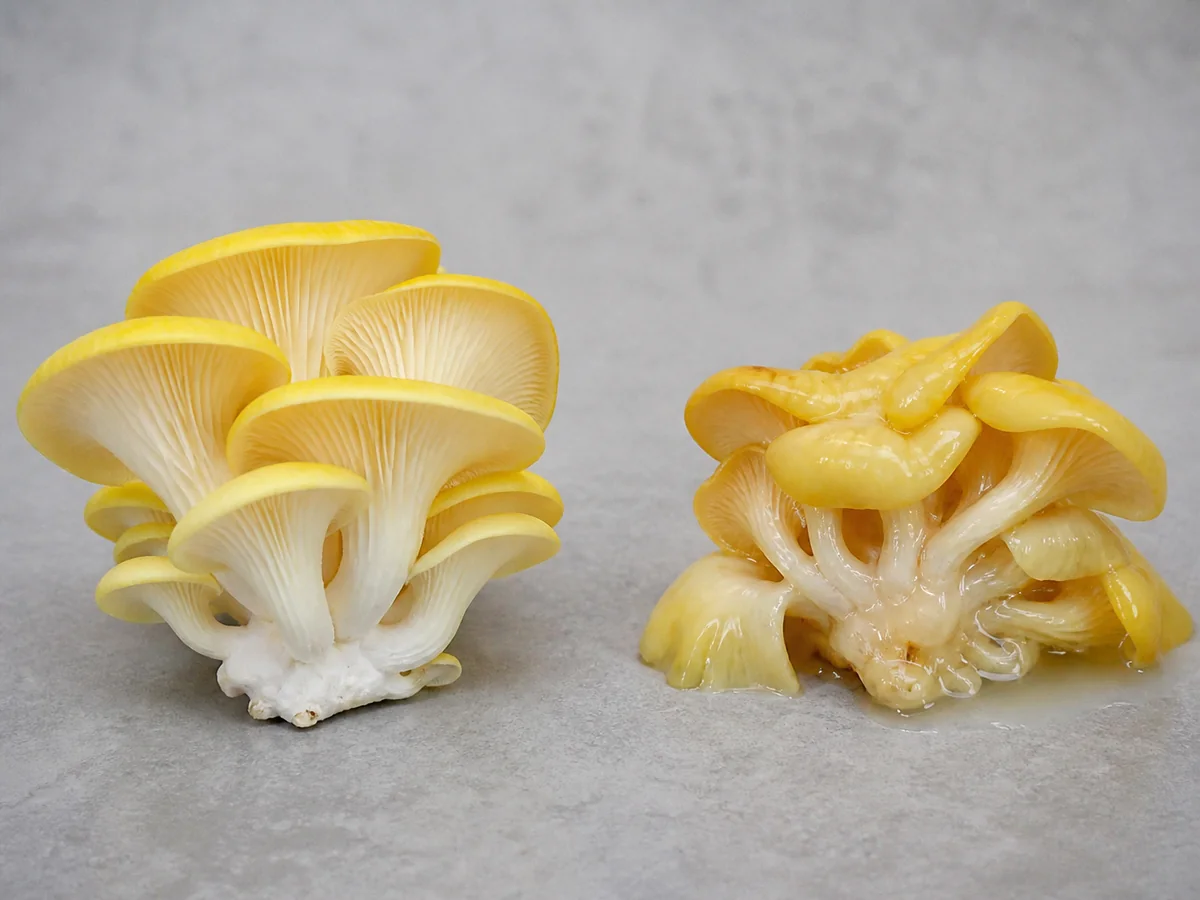
Thin edges can dry or crack as quality declines, but a small dry margin does not carry the same meaning as wet collapse. Slime, a sour or fermented odor, colored mold, pooled liquid, or widespread soft tissue ends the decision.
The shared base deserves more attention than the exposed cap tops, so separate two or three fans and look into the crowded center for trapped substrate, insects, condensation, or tissue that has turned translucent and soft.
Once the cluster is home, FDA advises storing mushrooms and other perishable produce in a clean refrigerator at 40 F or below. Cold storage slows deterioration, but it cannot reverse damage that began before purchase.
- Use the package or harvest date as history, not as a guarantee.
- Inspect the base after opening because the top view can hide moisture.
- Discard the affected cluster when mold threads through joined stems.
- Clean shortly before cooking rather than returning a wet cluster to storage.
Do not taste a raw piece to test freshness because texture, odor, package moisture, and the intact base provide the useful evidence before the pan is hot.
SafetyAre Pink Oyster Mushrooms Safe During Pregnancy?How should golden oyster mushrooms be cleaned?
Open the cluster first. Pull or cut the fans into manageable groups so you can see every joined base, then trim away attached substrate and damaged tissue.
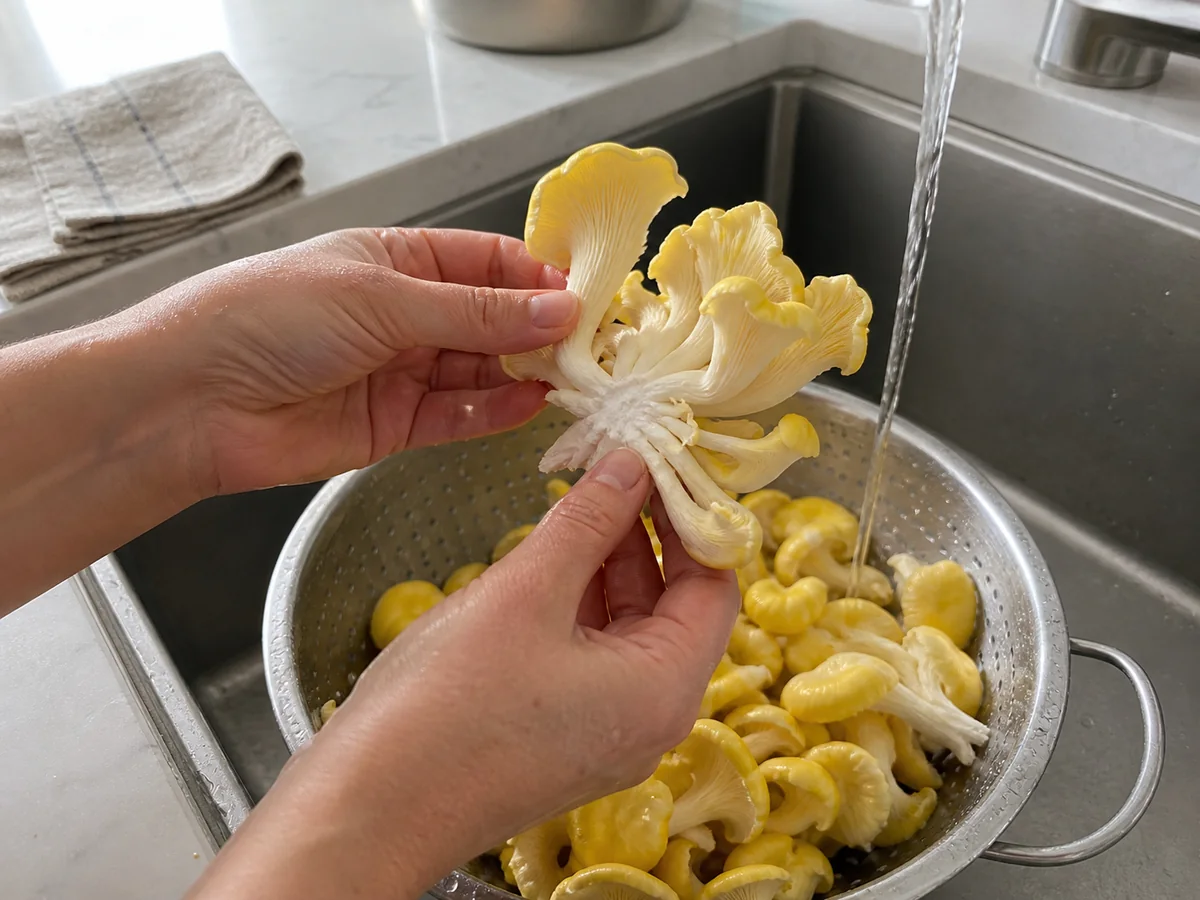
Rinse the pieces briefly under plain running water when visible debris remains, then pat them dry with a clean towel, but avoid soap, detergent, and commercial produce wash because FDA warns that porous produce can absorb residues.
Washing reduces surface bacteria but does not eliminate them. Complete cooking remains a separate control, and washing never repairs spoilage or an uncertain identity.
- Wash your hands and clean the board, knife, colander, and towel.
- Separate the caps at the shared base without crushing the thin edges.
- Trim substrate, discolored damage, and any tough dirty tissue.
- Rinse briefly under running water, with no soaking or soap.
- Dry the pieces and move them directly toward the pan.
Keep the cleaned mushrooms away from raw meat, poultry, seafood, eggs, and their utensils, so wash a reused board with hot soapy water before the mushrooms return to it.
The thin caps hold less water than a thick king oyster stem, but the joined base can trap enough moisture to steam unevenly. Drying after the rinse improves contact with the pan and makes cool wet pockets easier to avoid.
How should golden oyster mushrooms be cooked?
Divide large joined pieces so the thin cap edges and dense bases finish at nearly the same time. Cook them in an uncrowded skillet or another vessel that lets every piece contact heat rather than burying the central pieces beneath a wet pile.
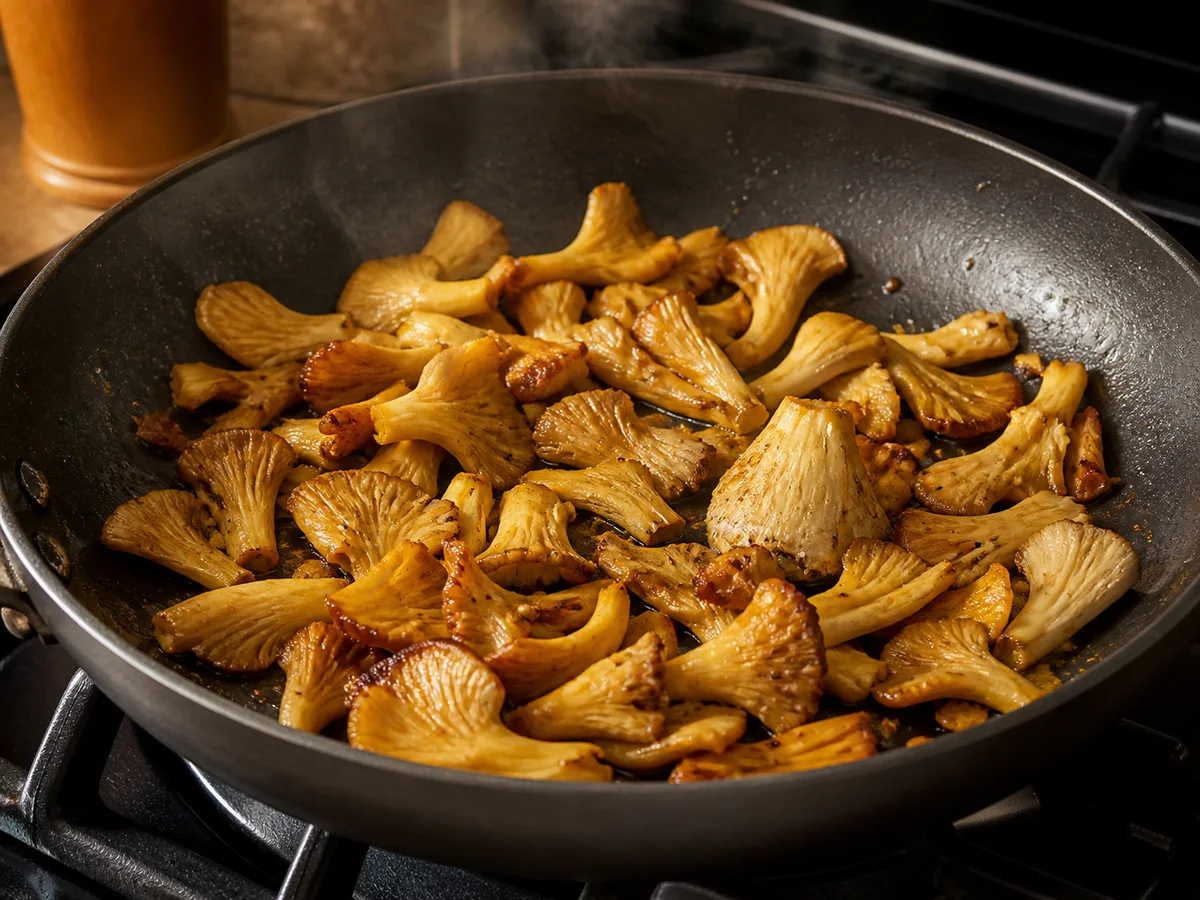
The mushrooms usually release moisture before they brown, so stir and turn them through that wet stage and check a base piece for tenderness and heat rather than stopping when the first delicate edge turns golden-brown.
There is no official Pleurotus citrinopileatus pregnancy temperature or universal minute count. The defensible standard is hot and tender throughout, with no cool rubbery folds and no raw caps scattered over the finished dish.
- Sauté in one or two shallow batches when the skillet is crowded.
- Add mushrooms early enough in a soup or sauce for every piece to cook.
- Stir from the bottom of a deep dish so dense base pieces reach the heat.
- Serve promptly instead of holding the cooked pan at room temperature.
- Divide leftovers into shallow containers and refrigerate within two hours.
Once the meal is finished, FDA advises reheating leftovers to 165 F and bringing leftover sauces, soups, and gravies to a boil. Reheat only the portion needed, then discard food with an uncertain cooling or holding history.
Raw golden oyster mushrooms stay outside this pregnancy decision because complete cooking reduces microbial risk and avoids treating a vivid raw cap as a safe garnish merely because the species is edible.
What should you do after a questionable serving?
Stop eating and write down the meal time, amount, source, cooking method, storage history, and symptom onset. Preserve the package, grow-kit label, receipt, photographs, raw mushrooms, and a sealed portion of leftovers when they can be stored without another exposure.
Contact the obstetric clinician for fever with unusual fatigue or muscle aches after a possibly contaminated food, and seek prompt advice for repeated vomiting or diarrhea because dehydration can become the immediate problem.
If the mushroom was wild or its identity remains uncertain, contact Poison Control in the United States at 1-800-222-1222 or the local poison service. Do not wait for symptoms, induce vomiting, or use a home remedy.
CDC notes that a person who ate a possibly contaminated food but feels well usually does not need automatic testing or treatment. Individual pregnancy history, an active recall, symptoms, and the evidence attached to the meal determine what the clinician recommends.
The yellow color does not diagnose the cause of an illness, while a careful record lets the obstetric clinician or poison specialist assess the actual food, timing, and symptoms without relying on color or guesswork.