
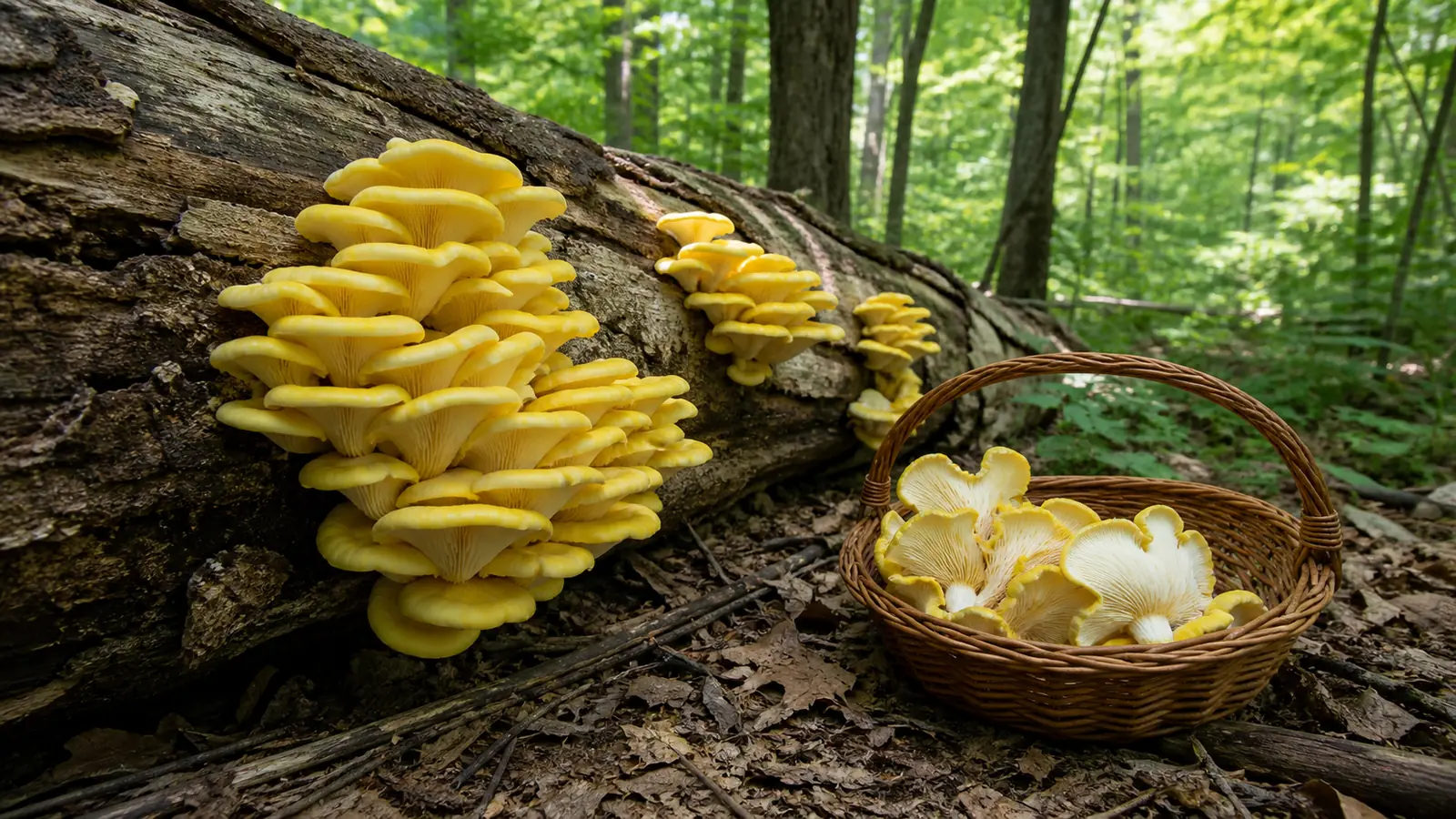
Most people arrive at this question having already tried a piece, because a bright yellow mushroom invites tasting in a way a gray one does not.
It was sharp and bitter and slightly peppery. That result is a reason to cook the mushrooms next time.
Can you eat golden oyster raw?
Safe, and unpleasant. Those are two different answers, and the safety half is the genus answer rather than anything specific to this species.
A great many people meet this species through a grow kit, which makes the tasting almost inevitable. A bag on a kitchen counter producing bright yellow clusters within a week invites a pinch off the edge in a way a supermarket punnet, bought already trimmed and chilled, never does.
The bitterness alarms people, and it should not.
Bitter compounds are common in fungi and mostly unrelated to toxicity, which is why a bitter bolete is a ruined dinner rather than a hospital visit. This is the same situation in a smaller key.
It is worth being precise about what bitterness does and does not tell you. It is not evidence of safety either, and there are bitter mushrooms that should never be eaten.
Taste is simply not the channel that carries that information about a wild mushroom, which is why identification comes first and the tasting note comes a very long way afterwards.
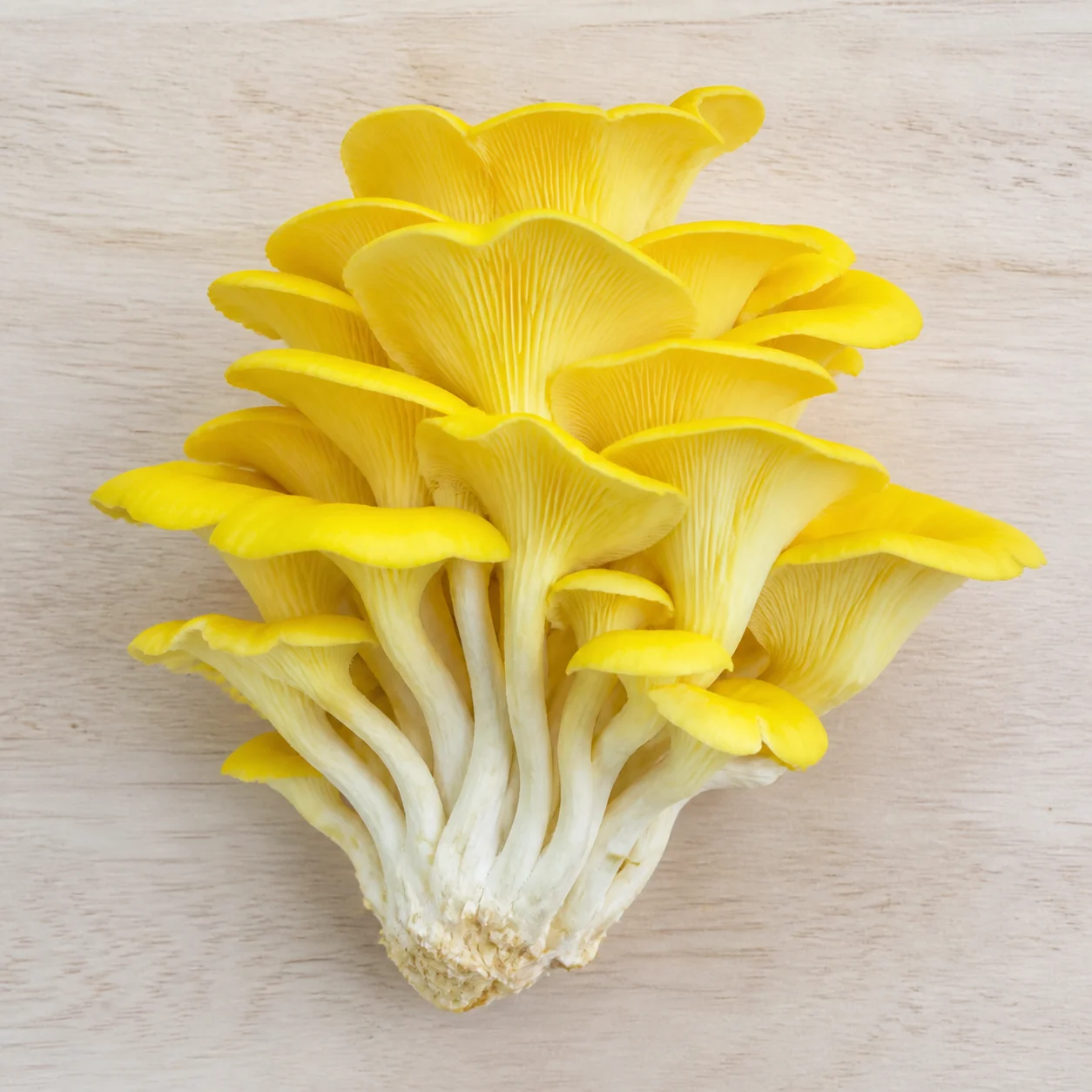
Why it tastes like that raw
Thin fans and a sharp flavor is a bad combination, because there is no texture reward to distract you from the taste.
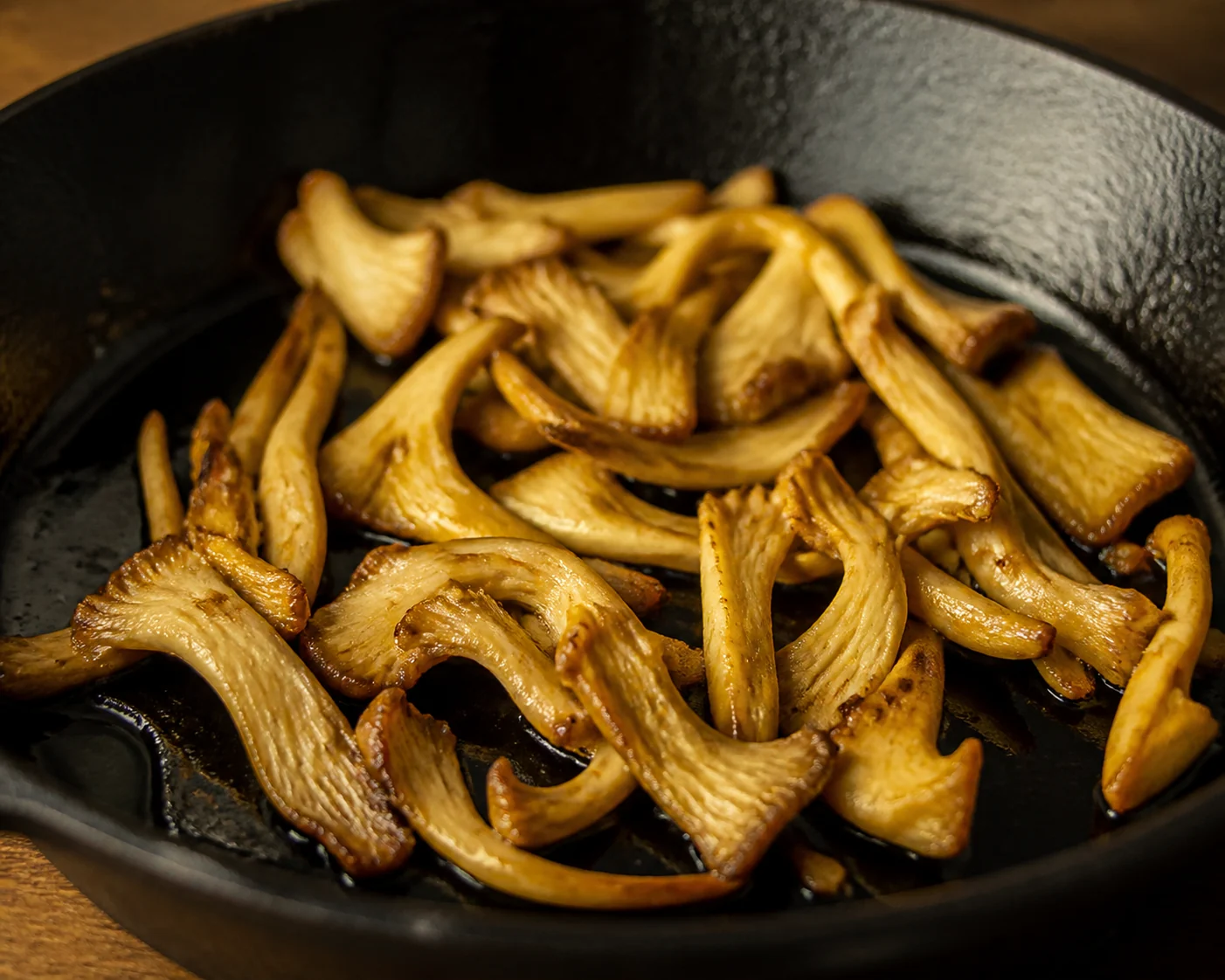
Cooking method matters more here than it does for a bland mushroom. A quick sear leaves some of the sharpness in place, where a longer cook in fat carries it all the way to the nutty end.
Anyone who tried golden oyster once and disliked it has usually undercooked it rather than found their limit. Heat does not mask that bitterness so much as convert it into the nutty character the species is known for.
The compounds responsible break down and reorganize with cooking, which is why the nutty character people describe is not present at all in the raw mushroom. It is created rather than released, in the same way a browned onion tastes of nothing a raw one contains.
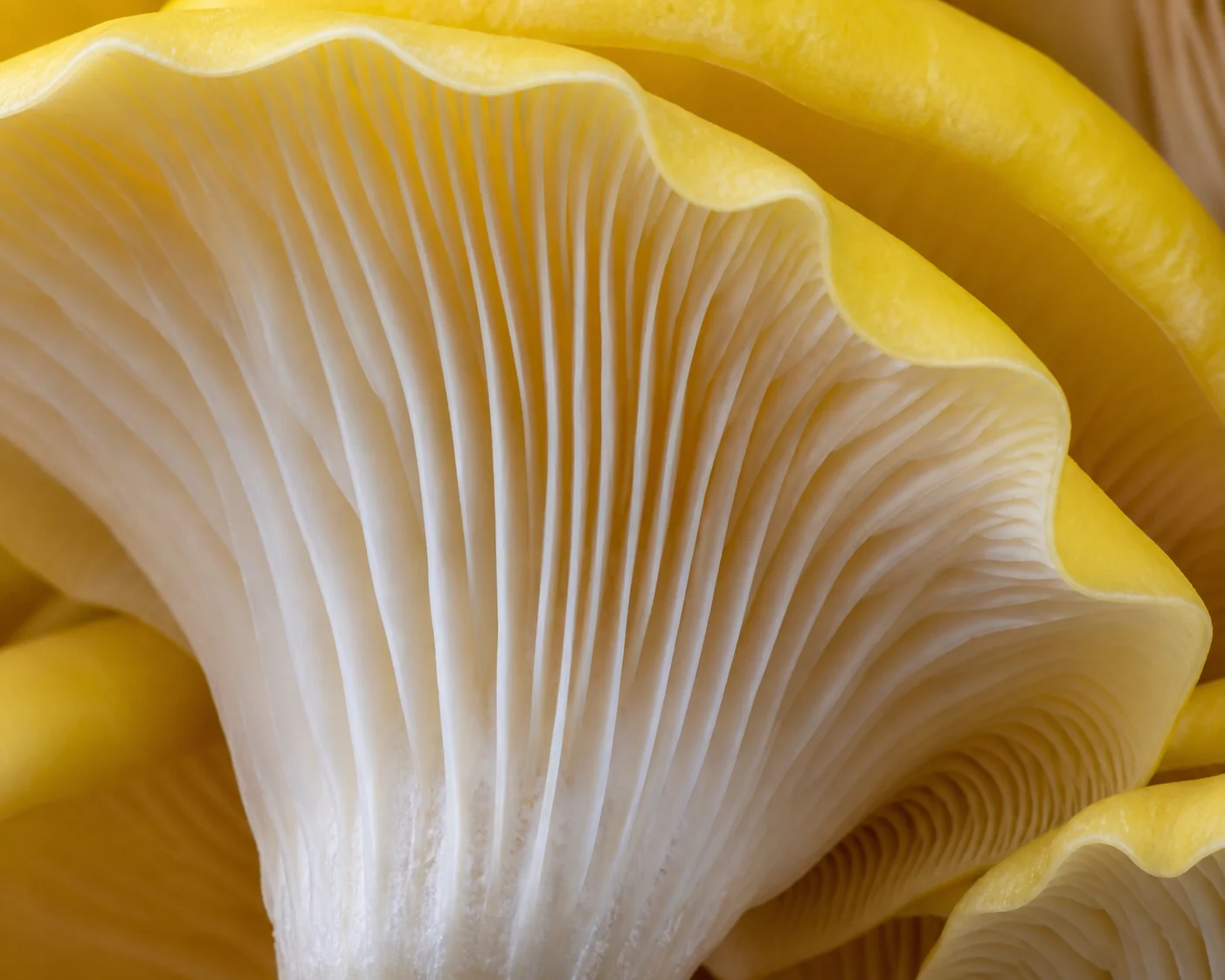
Preparation is only part of the decision. The source of the mushrooms matters too.
SafetyCan You Eat Beech Mushrooms Raw? Not Poisonous, Just BitterFinding them on a wild log
If you are in North America and you have found golden oysters growing wild, you have not misidentified them.
Note
This is the first cultivated fungus known to have gone feral in North America. Farmers began growing it there roughly twenty-five years ago, the first naturalized observation in the United States was recorded in 2012, and it has since spread to more than twenty-five states.
That timeline is unusually fast for a fungus.
A decade from first record to a quarter of the country is the kind of spread people associate with plants rather than mushrooms. It happened while almost nobody was looking for it.
Wood-rotting fungi were not generally thought to behave this way, which is part of why nobody acted sooner.
Most cultivated mushrooms need conditions a temperate wood does not provide, which is why nobody treated escaped spawn as a risk worth managing. Golden oyster turned out to be perfectly happy on dead hardwood across a large part of the continent.
Golden oysters appear to be displacing native fungal communities in their introduced range.
The 2025 finding that changed how the species is discussed
Before that study the spread was treated as a curiosity, and a fairly charming one at that. A cultivated mushroom escaping into the woods reads as harmless until somebody counts what is no longer fruiting on the same logs.
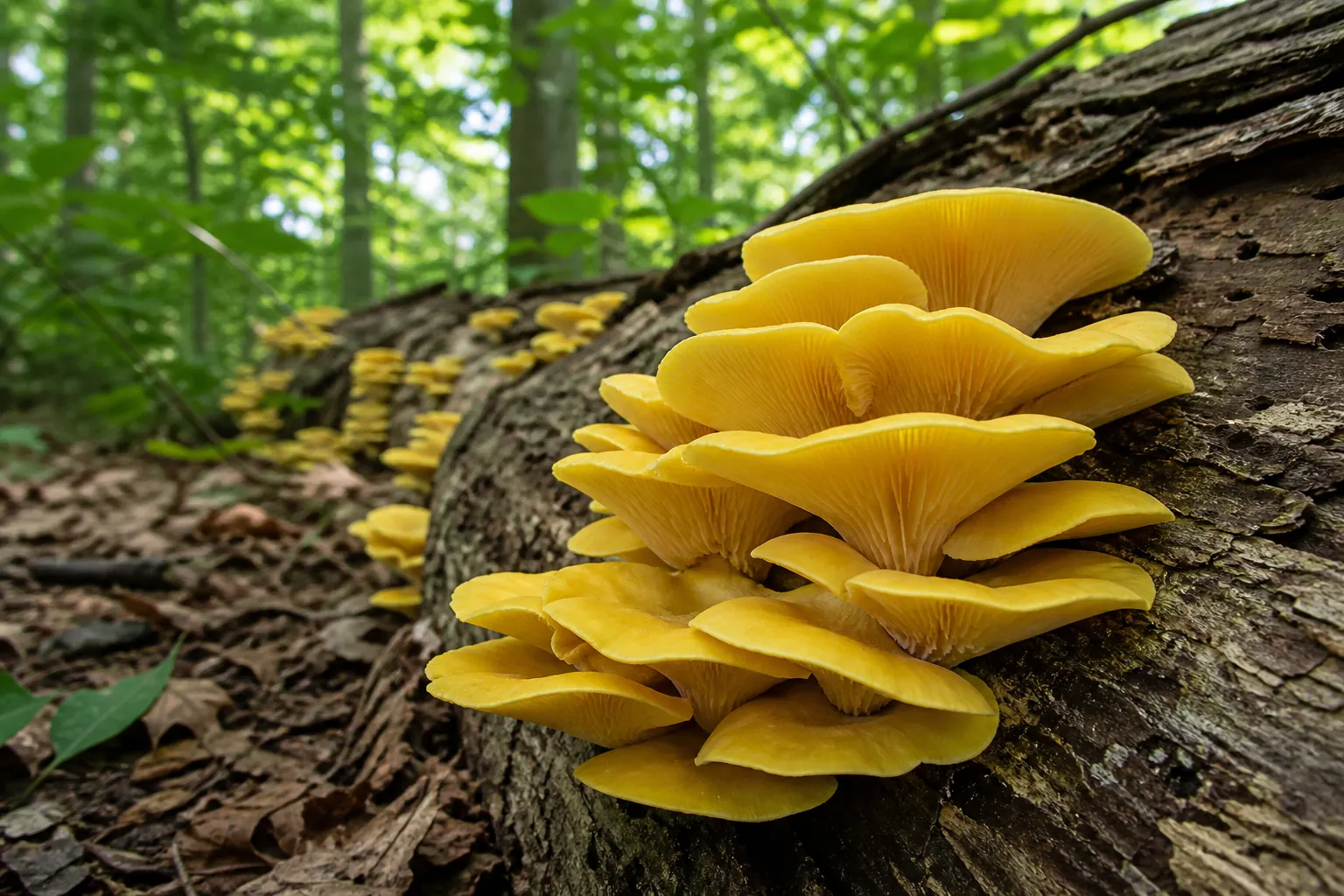
The practical upshot for a forager is small but real. A wild cluster is the same species as a grow-kit cluster and gets the same answer, so nothing above changes.
What changes is whether you should be pleased to find it.
Does picking them help
This gets asked constantly and deserves an honest answer rather than a flattering one.
- What the research found
- A 2025 study reported golden oysters appear to be displacing native fungal communities
- What harvesting removes
- The fruit bodies, which are the reproductive part
- What harvesting leaves
- The mycelium inside the wood, which is the organism
- What actually matters more
- Not dumping spent growing blocks outdoors, and not spreading spawn
- The honest summary
- Picking is not a control measure, and it is not making things worse either
Taking a cluster home does not remove the fungus from that log. The mycelium is inside the wood and will fruit again, so a picked log means a fed forager rather than a treated site.
That is worth knowing before anyone frames a foraging trip as conservation work.
It also cuts the other way, which is the part people miss. Harvesting is not accelerating the spread either, because the spores have already been released by the time a cluster is worth picking.
There is no version of this where a forager's basket is the deciding factor either way.
The part a home grower controls is upstream of all that. A spent block tipped onto a compost heap outdoors is how the escape happened in the first place, and it is still the main route.
Bagging spent substrate for household waste costs nothing and does more than a season of picking.
The same applies to sawdust spawn and inoculated dowels left over from a project. They stay viable far longer than most people assume, and a bag forgotten at the back of a shed is a colonization event waiting for someone to tidy the shed out onto a compost heap.
SafetyCan You Eat Beefsteak Polypore Raw? Yes, If You Slice It ThinHow the three oysters compare raw
Three oyster mushrooms have now been covered in this series, and their answers differ for three different reasons.
| Species | Safe raw | The real objection | What decides it |
|---|---|---|---|
| Gray oyster | Yes | You absorb little of what you paid for | Nutrition |
| Pink oyster | Yes | It has about a day before it turns | Freshness |
| Golden oyster | Yes | It tastes sharp and bitter | Flavor |
None of the three is a safety problem, which is the part worth carrying away.
They are all Pleurotus, they all lack heat-labile toxins, and the reason to cook each of them is different. None of the three reasons is fear.
What cooking changes
The flavor transformation is the reason to bother, and the color is the price.
| What changes | Raw | Cooked |
|---|---|---|
| Flavor | Spicy and bitter | Nutty and savory |
| Color | Vivid lemon yellow | Faded toward pale tan |
| Texture | Thin and limp | Crisp at the fan edges |
| Appeal | Novelty at best | The reason the species is grown |
The yellow fading disappoints people who grew it for the look. It is the same trade the pink oyster faces, and the answer is the same one.
Photograph the cluster before it goes in the pan, because that is the only version of the color you get to keep. Some yellow does survive a very brief sear on the thicker fans.
Treat that as a texture choice rather than a way to keep the color, because the pieces that stay bright are also the pieces that stay sharp.
None of that is difficult, and all of it is easier decided before the pan is hot. The last line matters most and costs least.
Cook them in a hot pan with room around the pieces
Taste a cooked piece before deciding you dislike the species
Judge golden oyster on a raw sliver
Tip a spent growing block outdoors
That last precaution also matters beyond the kitchen.
Note
Everything here assumes a cluster you can name. Golden oyster is distinctive, but a bright yellow cluster on wood is worth confirming before it reaches a plate in any state. Feral populations mean these now turn up in places no field guide printed twenty years ago would have predicted.
Sources & References
- Pleurotus citrinopileatus Records the species as spicy and bitter when raw with cooking producing a nutty flavor, and covers its cultivation and naturalization.
- A mushroom that escaped from kitchens could be harming North American wildlife, Science Reports that golden oyster is the first cultivated fungus known to have gone feral in North America, that the first naturalized US observation was in 2012 after cultivation began about a decade earlier, that it has spread to more than twenty-five states, and that a 2025 study found it appears to be displacing native fungal communities.