
Somewhere in the last ten minutes you probably read that beech mushrooms are fine raw. That answer leaves out the practical question of taste and preparation.
They will not hurt you. They will taste bitter enough to ruin whatever you put them in.
Can you eat beech mushrooms raw?
Technically yes and practically no, which is an unsatisfying answer that happens to be the true one.
Note
Raw shimeji are not poisonous, and every reference that discusses them says so. The same references are equally consistent about what comes next, which is that raw they are bitter and harder to digest, and that cooking removes both problems at once. The standard phrasing is that it is best to serve them cooked. That is a culinary instruction rather than a safety one, and it is still the right instruction.
That distinction matters because it changes what happens when you ignore it. Eating a raw beech mushroom is not a risk you are running, it is a dish you are spoiling.
Which is why the answer you probably found is defensible and useless at the same time.
A bare yes does not explain whether raw beech mushrooms are pleasant to eat or how preparation changes them. Bitterness does not appear anywhere in it, and neither does digestibility.
Those are the two things every cook who writes about this mushroom leads with.
It's not advisable. In addition to being bitter in their raw state, shimeji mushrooms are also harder to digest.
An ingredient reference, answering the same question
Two pages, the same question about the same mushroom, opposite answers. One of them mentions the taste and the other does not, and that is the whole difference between them.
It also recommends a ten minute soak in vinegar and water to remove bacteria and harmful organisms, which is worth pausing on. These are grown indoors on a sterile substrate in a sealed room, and the mushroom being soaked was not carrying the problem the soak is aimed at.
What a soak does reliably is waterlog them.
A mushroom that has absorbed water will steam in the pan rather than brown, so the advice that was supposed to make raw safer actively makes cooked worse. That is the shape of most of the raw-mushroom advice on the internet, solving a problem the ingredient did not have.
It helps to know what this mushroom actually is, because the name moves around.
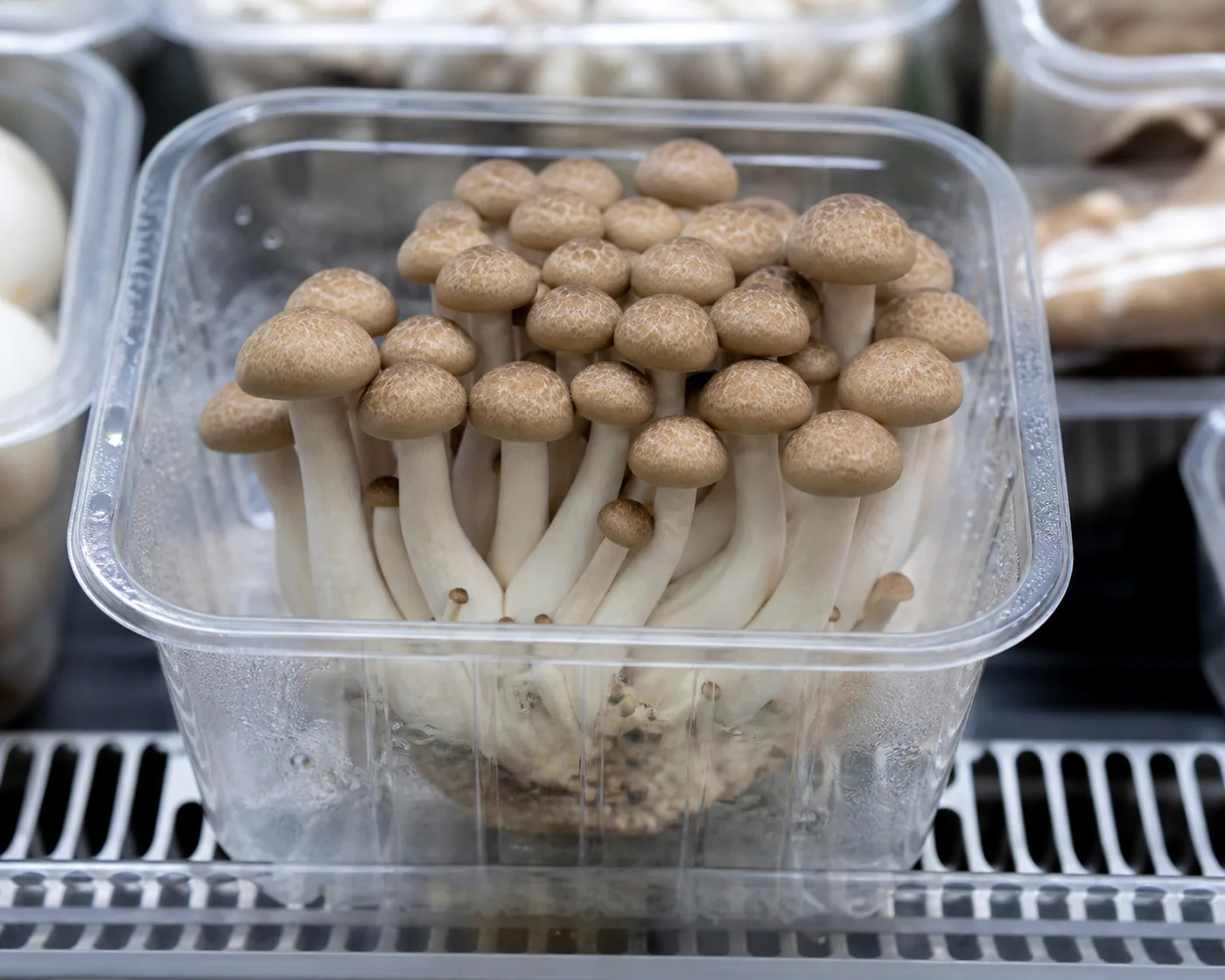
Beech mushroom, shimeji, buna-shimeji and bunapi all refer to Hypsizygus tessellatus, a cultivated species grown indoors in clusters and sold in small punnets. It reached most supermarkets recently enough that a lot of people are meeting it without any inherited idea of how it is used.
That is part of why the raw question comes up at all.
Nobody grew up being told what to do with these, so the pack gets opened and the contents get treated like whatever they most resemble, which is something you would scatter over a salad.
Why they taste bitter raw
The bitterness is not subtle, and it is not a matter of personal taste.
| Raw | Cooked | |
|---|---|---|
| Flavor | Distinctly bitter | Subtle and nutty |
| Texture | Firm and slightly squeaky | Tender with a light bite |
| Digestibility | Harder to digest | Broken down and easier |
| Effect on a dish | Dominates everything else | Sits underneath the other flavors |
Every row on that table moves in the same direction, which is genuinely unusual. Most mushrooms in this series give something up when they are cooked, and this one only improves.
That is worth saying plainly, because it removes the tension the question usually carries.
There is no argument for eating a beech mushroom raw. No texture is lost to the pan, no delicate flavor is driven off, and nothing about the raw state is preferable to the cooked one, so the only thing raw gets you is the bitterness.
The bitterness disappears rather than being covered up.
That is the part people get wrong when they try to rescue a raw preparation with dressing. Acid and salt will fight the bitterness and lose, where a few minutes of heat removes whatever is producing it.
Nobody writing about this bitterness names the compound behind it, and that is worth being honest about.
The references agree on the effect and none of them identify what causes it, which is a smaller gap than it sounds. Bitterness in fungi is common, it carries almost no information about safety in either direction, and in this mushroom it happens to be heat sensitive.
One other mushroom in this series is bitter, and the difference between them is instructive.
A hedgehog mushroom turns bitter with age, so a young one is sweet and an old one needs a parboil, and the fix there is a remedy applied to a specific problem. A beech mushroom is bitter at every age, in every specimen, from a controlled growing room where nothing varies.
That consistency is the useful part.
There is no such thing as a mild raw beech mushroom to go looking for, no picking rule that improves your odds, and no specimen worth tasting to check. The answer is the same for every punnet ever sold.
How long the heat actually needs
The good news is that the fix is short and hard to get wrong.
Three minutes takes the edge off and it is not where you want to stop. The moment worth waiting for is when the pan goes quiet, because that is the water finishing.
Until that point the mushrooms are steaming rather than frying, and those minutes are not buying you anything.
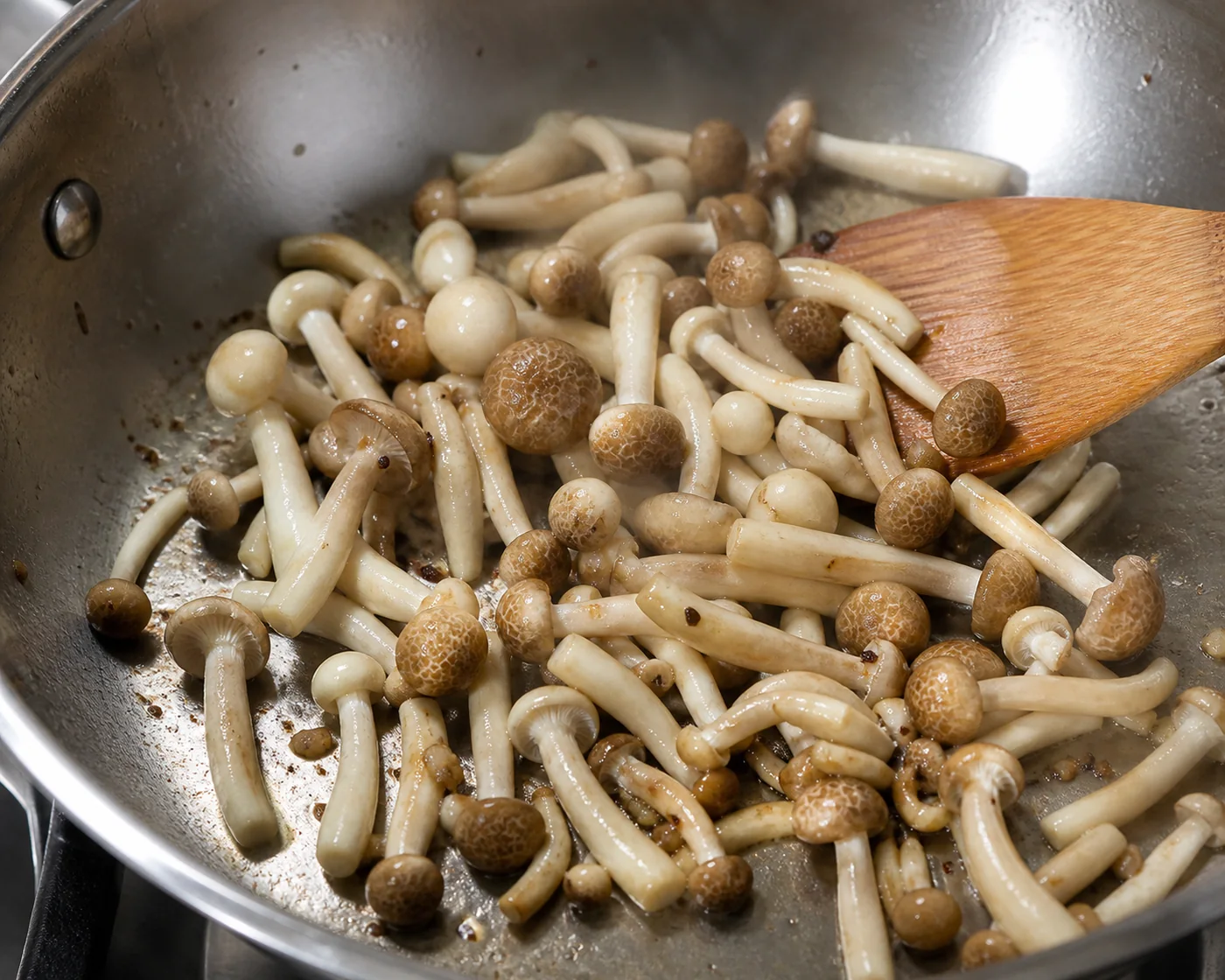
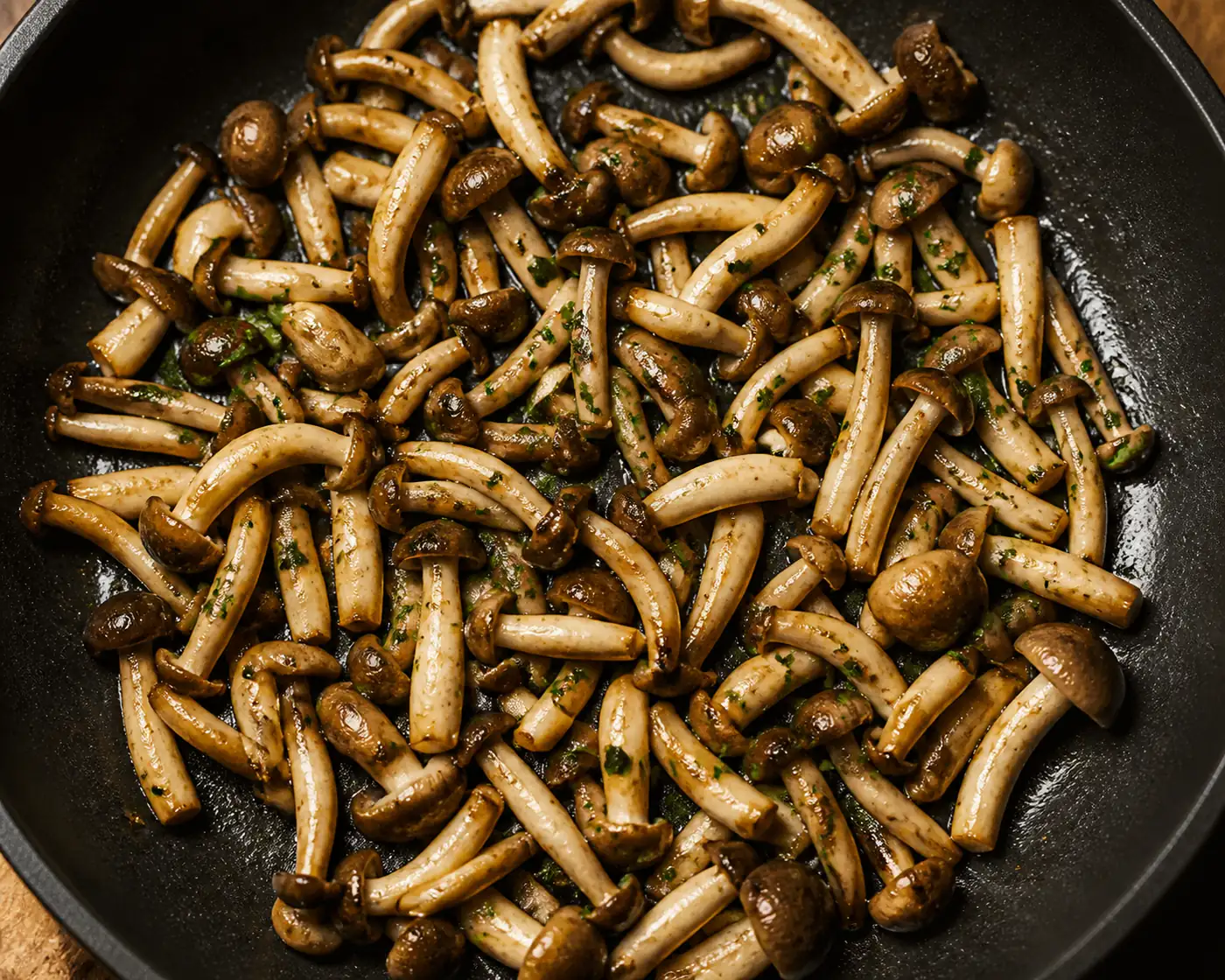
Everything that makes a cooked shimeji worth eating happens after the pan dries out. The nuttiness, the browning and the firm bite all arrive in the couple of minutes that follow, and none of them are available before it.
Crowding the pan is what stops that from happening.
A punnet tipped into a small pan releases more water than the heat can drive off, so the mushrooms sit in their own liquid and never get past the steaming stage. Either use a wide pan or cook them in two batches, which sounds fussy and takes less time than doing it once badly.
What they go into matters less than people expect.
These hold up in a stir fry, a broth, a pasta or under a piece of fish, and the reason is the same in each case, which is that they keep their shape and their bite while taking on whatever they are cooked in. A mushroom that collapses is a mushroom you have to plan around, and this is not one.
The water they carry is the only thing that constrains the method.
Like every cultivated mushroom they are mostly water, so anything that traps steam works against them. A lid, a crowded pan or a wet start all produce the same pale squeaky result, and an open pan with room in it produces the other one.
Overcooking is the risk you might expect, and it is not the one working against you here.
They hold their shape unusually well and take browning without collapsing, so the failure people run into is pulling them off while the pan is still wet. That is the version that tastes of very little and squeaks against your teeth.
Salt goes in at the end rather than the start.
Salting early pulls yet more water out of a mushroom that is already flooding the pan, which stretches out the steaming stage you are trying to get past. Once they have browned it does what you wanted it to do in the first place.
The other cluster in the same chiller
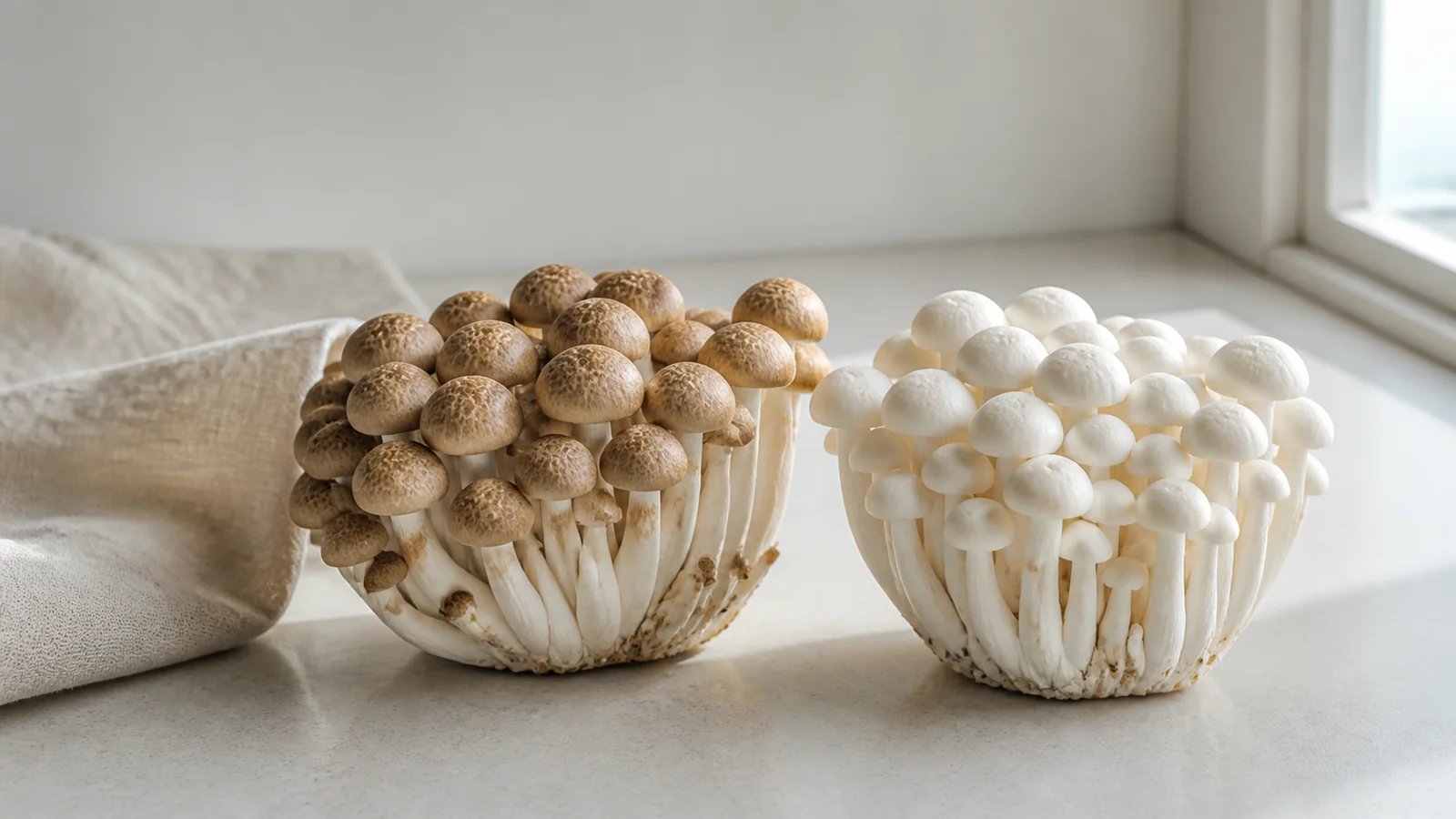
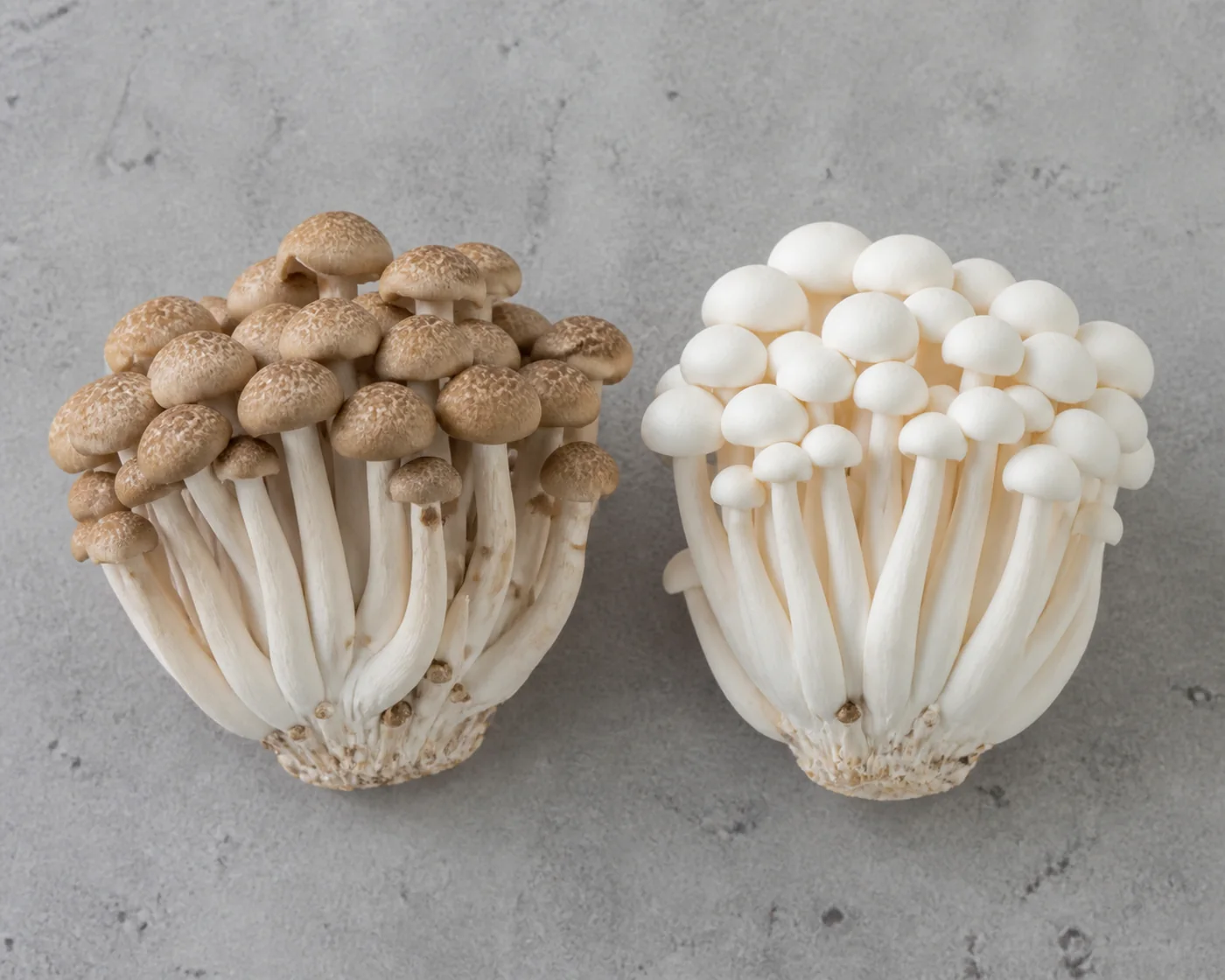
Two things sit beside beech mushrooms in the chiller and get mixed up with them. One is the other variety of the same species, and the other is a different species entirely.
The brown and white difference is real and small.
Both are the same species sold as two varieties, both need the same cooking, and the brown one carries slightly more of the bitterness. Somebody who has been served shimeji and found them mild was probably eating the white ones.
Both mix-ups are easy, and only the enoki one has consequences.
Those are a different species whose raw problem has nothing to do with flavor, resting on contamination in a long cold supply chain rather than on anything the mushroom makes. Two packs that look like cousins, and two completely unrelated reasons to put both of them in a pan.
Telling them apart takes one look at the caps.
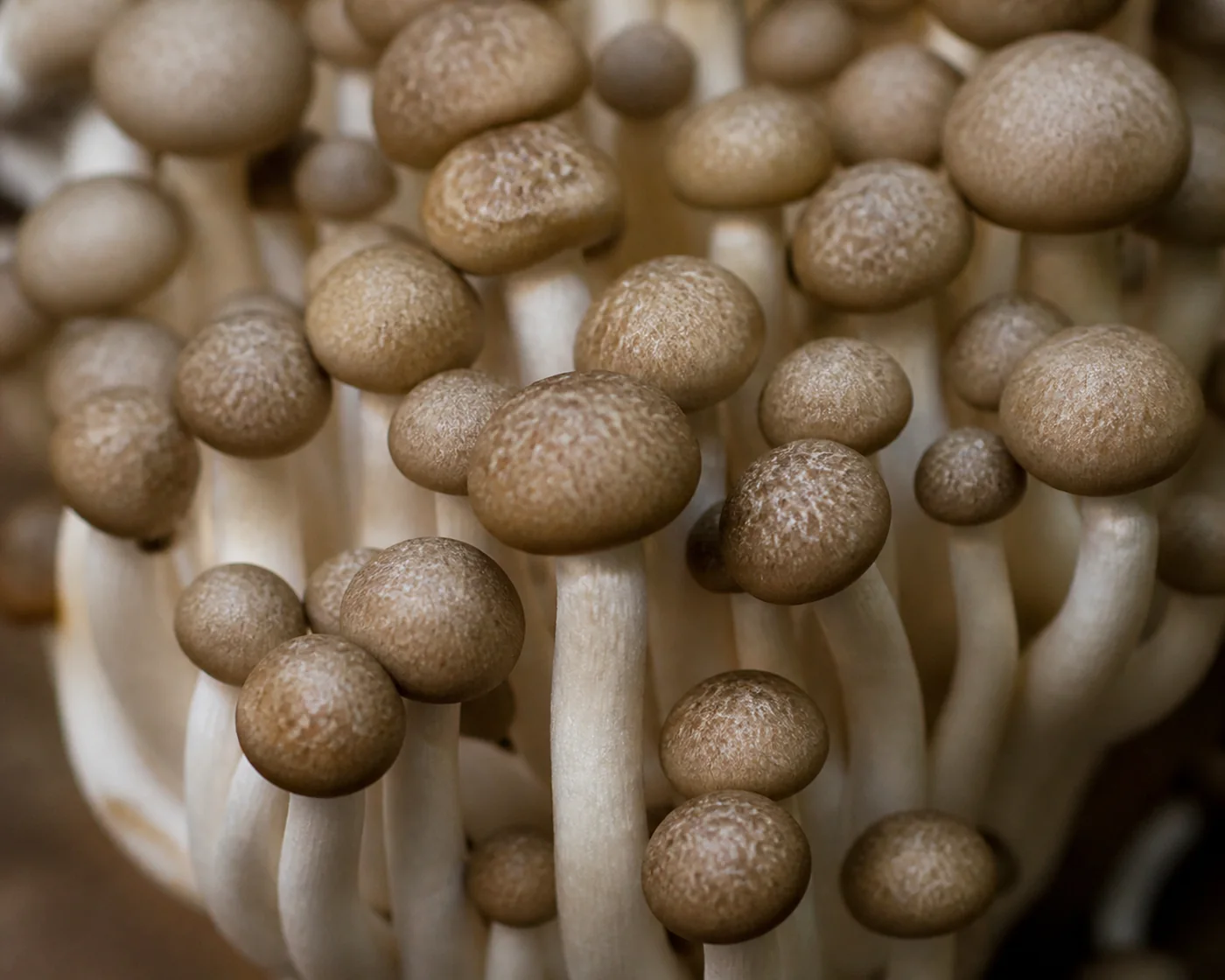
A beech mushroom cap is a rounded dome one to two centimeters across on a stem you could describe as short. An enoki cap is a pinhead on a stem several times longer, and once you have held both the packs stop looking similar at all.
The way they are grown explains the shape of the thing in the punnet.
They are raised indoors in bottles or bags of sterile substrate, fruiting as one dense cluster from a single block, which is why they arrive fused at the bottom and identical to each other. Nothing about the cluster is natural in the sense of a wild mushroom's growth, and nothing about it varies between punnets.
That is worth knowing because it settles a whole category of worry.
Cultivated packs do not have the soil and weather exposure of wild collections. Check the label and condition instead of assuming that a vinegar soak is needed.
What to do with the punnet you opened
There is one piece of preparation that matters and the pack does not mention it.
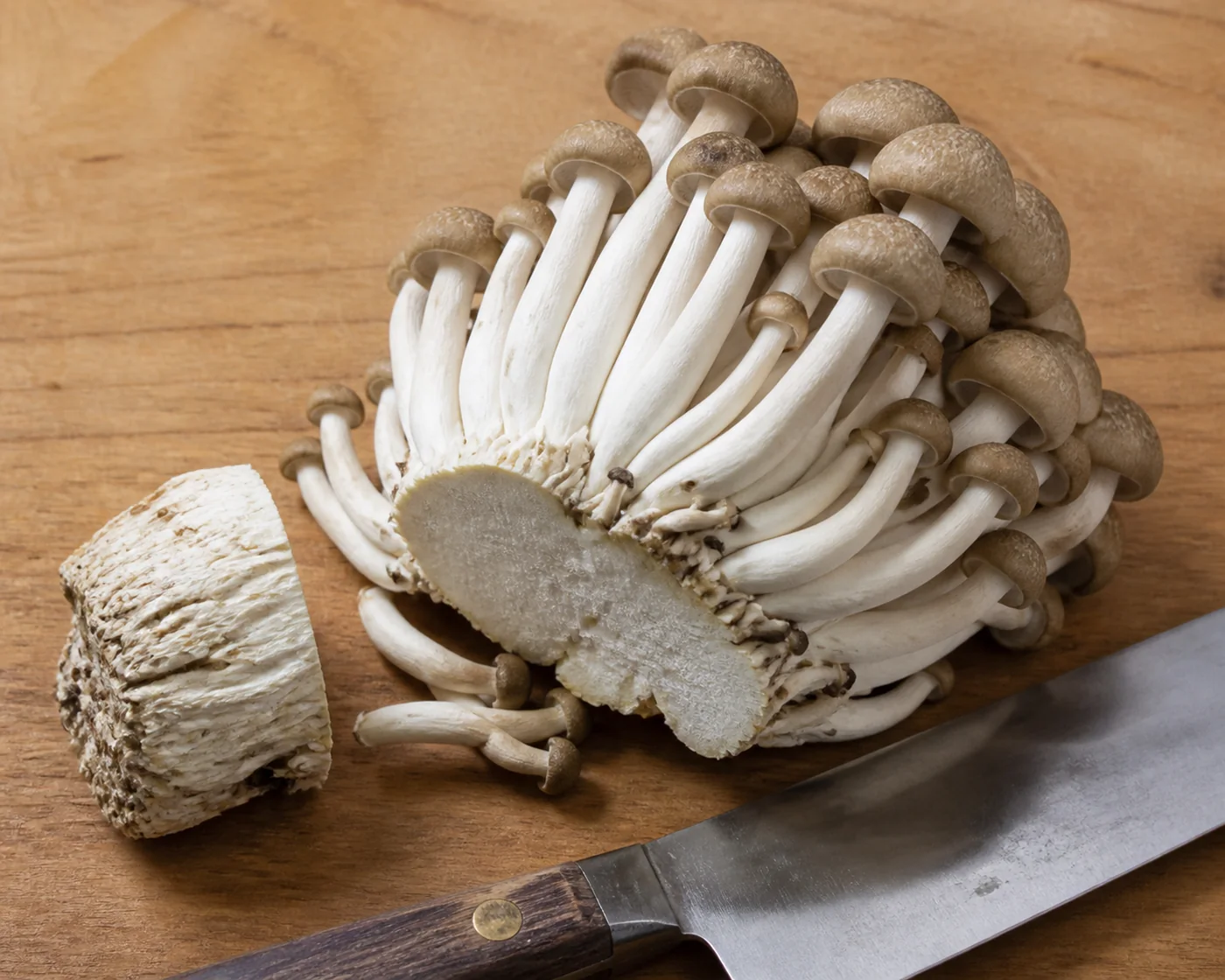
The base is a dense pale block where every stem is fused together, and it stays tough no matter how long it is cooked. Cutting about a centimeter above the bottom removes the whole thing and frees the mushrooms in a single movement.
People who skip the base usually conclude they do not like shimeji.
A cooked cluster with the base still on delivers a mouthful closer to cartilage than to mushroom, and it is far easier to blame the species than the knife. It is the most common preparation mistake with this ingredient by a distance.
The base itself is not entirely waste.
It is far too tough to serve and it still carries flavor, so it can go into a stock pot with the trimmings from everything else rather than into the bin. That is optional, and it is a better end for it than the food caddy.
Cleaning them is barely a step at all, and it is a wipe rather than a wash.
They are grown indoors on a sterile substrate rather than in soil, so there is no grit to work out and nothing to brush off. A wipe handles anything on the surface, and soaking only adds water that has to come back off in the pan.
Storage is where a punnet quietly dies.
Sealed plastic holds the moisture they release against them and they go slimy within a few days, where the same mushrooms in paper or an open punnet stay firm for a week. That is the same rule as every other mushroom in the chiller and it is worth repeating because the pack encourages the opposite.
A punnet lasts longer than most people assume.
Treated properly they stay firm for about a week, which is considerably longer than the delicate look of them suggests, and the cluster form helps because there is very little cut surface until you take the base off. Cutting the base is therefore the thing to do on the day you cook them rather than the day you buy them.
Freezing them raw is not worth it.
They come out of the freezer waterlogged and limp because the ice breaks the structure that made them worth buying. Cooking them first and freezing the result keeps the texture and gives you something you can drop straight into a broth.
Where it lands against the rest of the series
This is the only page in the series where the answer comes down purely to flavor. Everything else has a compound, an organism or an identification sitting behind it.
- Beech mushroom
- Bitter raw, and nothing else
- Enoki
- An outbreak record and a long cold supply chain
- Shiitake
- A documented reaction in a share of eaters
- Cremini
- Nothing at all, genuinely fine raw
- Morel
- Hydrazine compounds in the raw flesh
That makes this the cheapest mistake in the whole series to make.
A bitter raw mushroom can spoil the salad you intended to enjoy. Nobody ends up unwell, nobody has to check the base of a stem, and nothing needs identifying before dinner.
Which is exactly why the wrong answer travels so easily.
A technically edible mushroom can still be a poor choice for a raw salad. That is a quieter kind of wrong than this series usually deals with, and it is still worth correcting.
Cook them for five minutes and the question stops existing.
Sources & References
- The Complete Guide to Shimeji Mushrooms, GroCycle States that although raw shimeji are not poisonous they are bitter and it is best to serve them cooked, that cooking breaks down the proteins and other nutrients making them easier to digest, and gives a ten minute saute for its own dish.
- Shimeji Mushrooms, How to Find, Choose and Use, Diversivore Answers the raw question directly with the quoted line that it is not advisable because in addition to being bitter in their raw state shimeji are also harder to digest, states that they must be cooked and cook fairly quickly, and records the brown variety as slightly more bitter than the white.
- Can You Eat Beech Mushrooms Raw, Foraged It answers yes, never mentions bitterness or digestibility, and recommends a ten minute soak in vinegar and water.