
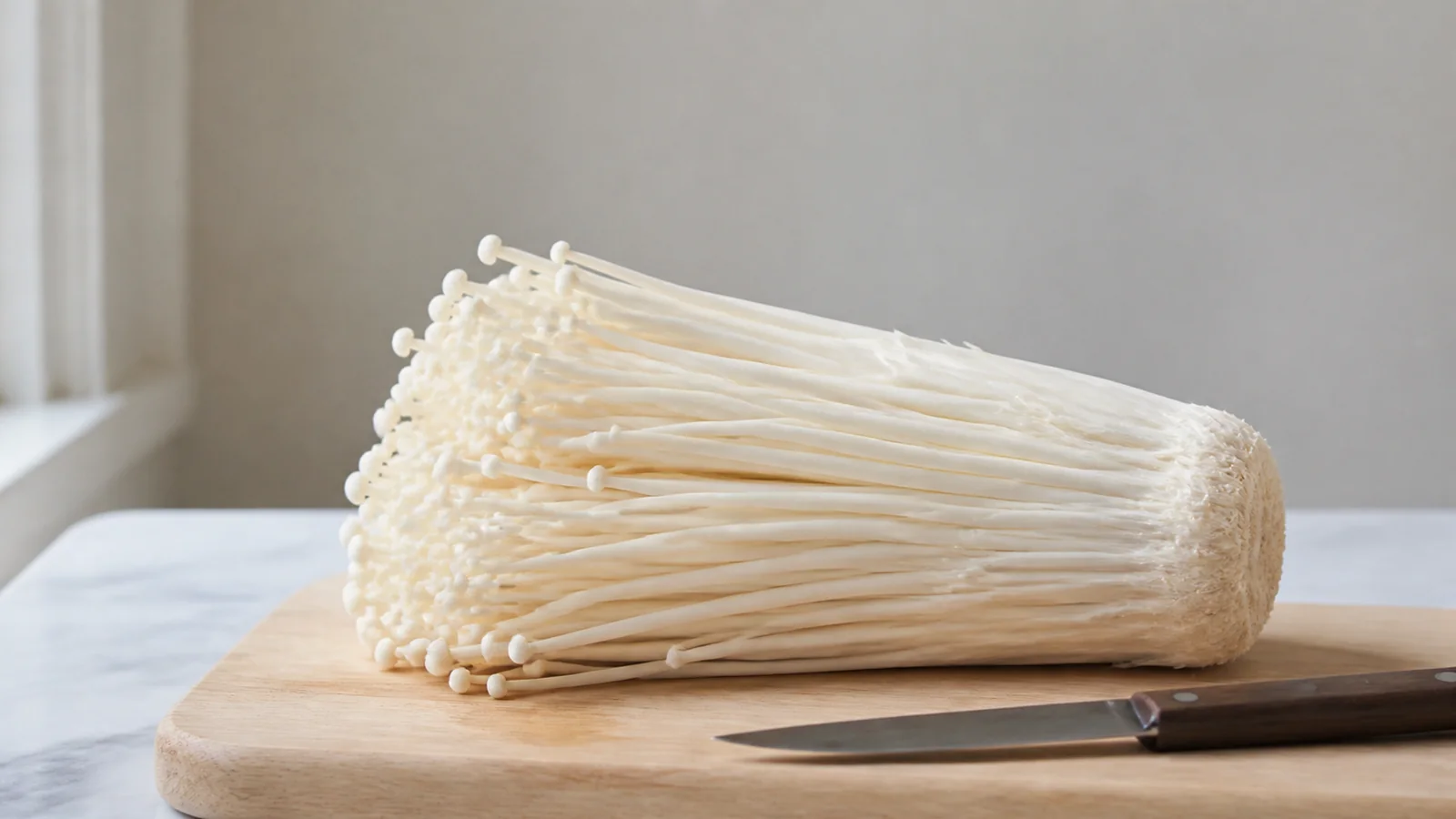
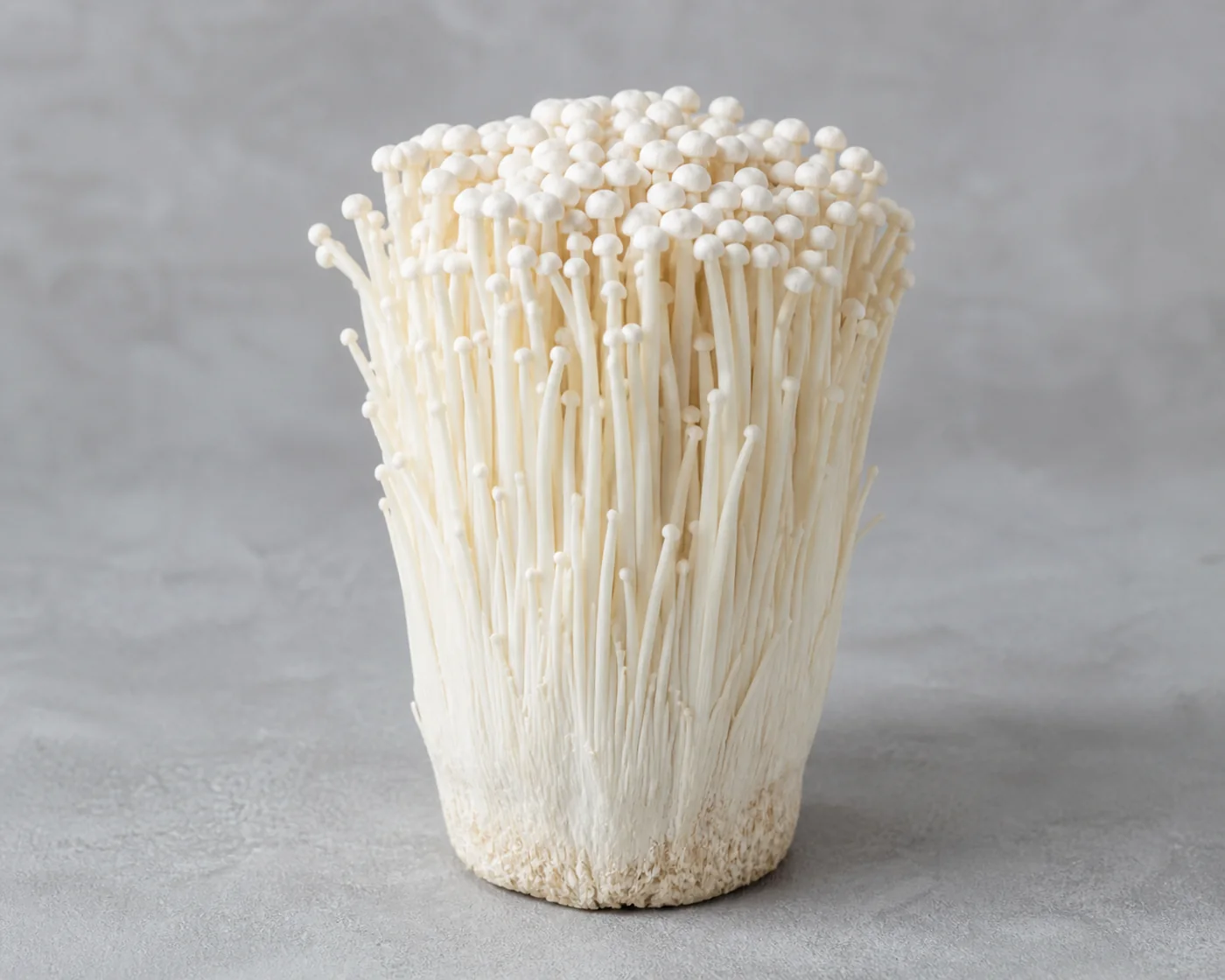
Enoki is the cleanest looking thing in the chiller. Long white stems, tiny caps, sealed in plastic, and nothing about the pack suggests it needs anything done to it.
That presentation is the problem, and the reason has nothing to do with the mushroom.
Can you eat enoki raw?
No, and the agent that makes this a real question is a bacterium rather than anything fungal.
Nothing on that list is about the fungus. Every other page in this series turns on something in the mushroom, and this one turns on what happened to it between the growing room and the shelf.
Why the danger is bacterial and not fungal
This is not a theoretical worry and it has a record with numbers attached. Two investigations have linked Listeria infections to enoki, and both are now closed.
Thirty one hospitalizations out of thirty six cases is the number that stops you. The cases that get counted are the ones severe enough to reach a laboratory, so that ratio says more about which infections get found than about anyone's odds, and it does say that when this goes wrong it goes wrong badly.
Four deaths and two pregnancy losses among those cases is not a sentence anyone expects to read about a chilled vegetable.
Treat cooking as an essential precaution. Most food safety advice is precautionary, and this one has thirty six counted cases behind it.
The second outbreak matters more than its five cases suggest.
Five cases is small next to thirty six, and what it establishes is that the first one was not a single bad supplier in a single year. The same product category came back three years later carrying the same organism.
Who the advice is actually aimed at
The advisory is more specific than most people repeat it as being.
- Named groups
- Pregnant people, anyone aged sixty five or older, and anyone immunocompromised
- What they are told
- Not to eat raw enoki at all
- Everyone else
- Cook it thoroughly, which is the same instruction with less urgency behind it
- Why pregnancy is named
- The infection can be mild in the parent and serious for the pregnancy
- The onset
- Days to weeks, which is nothing like the mushroom poisonings covered on this site
That last line is worth holding onto. If enoki made you ill you would probably never connect it to dinner, because listeriosis can take weeks to appear and nobody is still thinking about a salad from three weeks ago.
CDC advises people who are pregnant, aged 65 or older, or have a weakened immune system to not eat raw enoki mushrooms.
The advisory itself, from the second outbreak investigation
Read that closely and it is narrower than the version that circulates. It does not call enoki dangerous and it does not tell everyone to stop, it names three groups and gives them a stricter rule than the general one, which is how food safety advice is normally written.
It also means the usual reassurance about enoki does not work here.
People who have eaten raw enoki for years without trouble have not run an experiment. Contamination is a property of a batch rather than of the species, and the great majority of batches are clean, which is exactly why a clean run tells you nothing.
Why enoki in particular
Nothing about the fungus invites this.
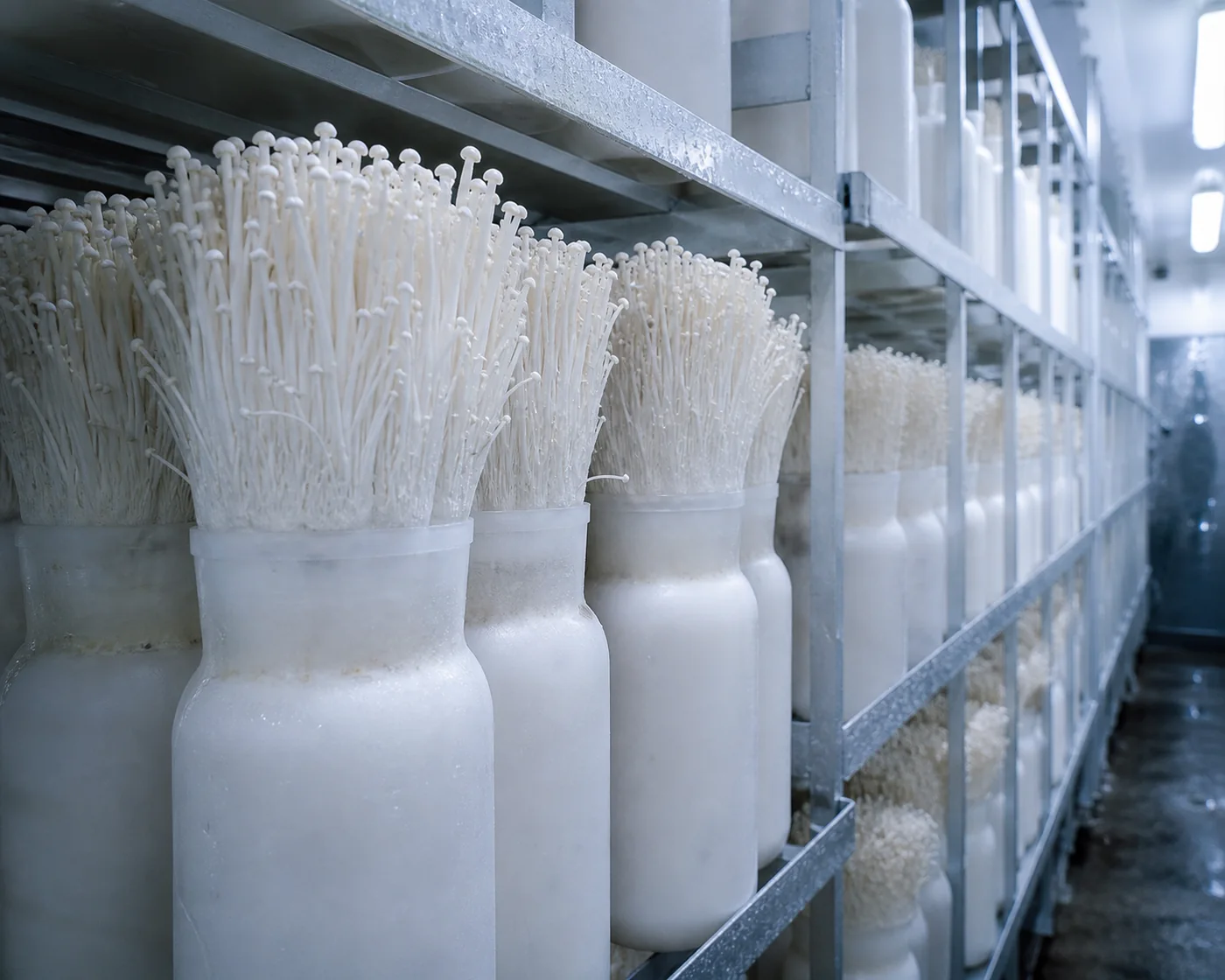
The way it is produced does, and the chain is short enough to follow from one end to the other. Every step of it happens cold, sealed and out of anyone's sight, which is unusual for something sold as fresh produce.
Tip
Enoki is grown in sealed bottles in cold dark rooms rather than in soil or on logs. It is harvested, packed and kept chilled all the way to the shelf, and it arrives looking spotless. Listeria is the food-borne organism that keeps growing at refrigerator temperature, so a long cold supply chain is the one environment that suits it, and the finished product looks so clean that cooking it feels unnecessary.
Compare that with the other cultivated species in the same chiller. Shiitake and oyster mushrooms are sold the same way, and their raw answers come from the mushroom rather than from the packaging.
The other tray in the same chiller is maitake, and it gives a third kind of answer. What maitake loses raw is the compounds it is bought for, which is a disappointment rather than an infection.
The source of the hazard matters when deciding how to handle a raw mushroom.
A raw shiitake can give you a rash because of something the mushroom makes, and raw enoki can give you listeriosis because of something that got onto it. Only one of those is fixed by choosing a better pack.
Rinsing the mushroom is not a substitute either.
Advice on Listeria points at heat rather than at washing, and a cold rinse in a domestic sink is about as likely to move the organism onto a chopping board as to take it off the mushroom.
The toxin in it is a much smaller story
There is a toxin in enoki and it is worth naming, mostly so that it can be put in proportion. It is called flammutoxin.
Injected and eaten are different routes, and the difference decides this one. A protein that does not survive digestion intact is not doing anything to you from a bowl of raw enoki, whatever it does through a needle.
It still turns up in warnings about raw enoki, usually without that distinction attached.
That is worth resisting, because an argument built on flammutoxin instead of on the outbreak record is a weaker case dressed in better sounding words. The reason to cook enoki is thirty six people in seventeen states.
The same species growing wild on a log is a separate question with a separate answer. Nothing on this page is about the orange-capped winter mushroom that fruits on dead wood, which arrives in nobody's chiller and has never appeared in an enoki outbreak investigation.
What cooking it actually takes
The good news is that this is a low bar. Enoki takes very little heat and holds its texture better than the thin stems suggest.
| Method | What it takes | What it is good for |
|---|---|---|
| Dropped into simmering broth | One to two minutes | Hot pots and soups, which is the traditional use |
| Stir fried | Two to three minutes over high heat | Keeping some bite |
| Blanched then dressed | About a minute in boiling water | The salad the raw version was going to be |
| Roasted in a bundle | Ten to fifteen minutes | Browning and a firmer texture |
| Added at the table | Under a minute in cooling broth | Not enough, and this is the common mistake |
The first row is how most of the world eats enoki, and it is not a compromise.
Hot pot, sukiyaki and miso all drop the enoki into liquid that is genuinely boiling. That is why the raw question mostly comes up outside the cuisines the mushroom belongs to.
That last row is where most raw enoki actually gets eaten. Dropping a handful into a bowl at the table looks like cooking and usually is not, because the broth has stopped being hot by the time it goes in.
The base comes off before any of this.
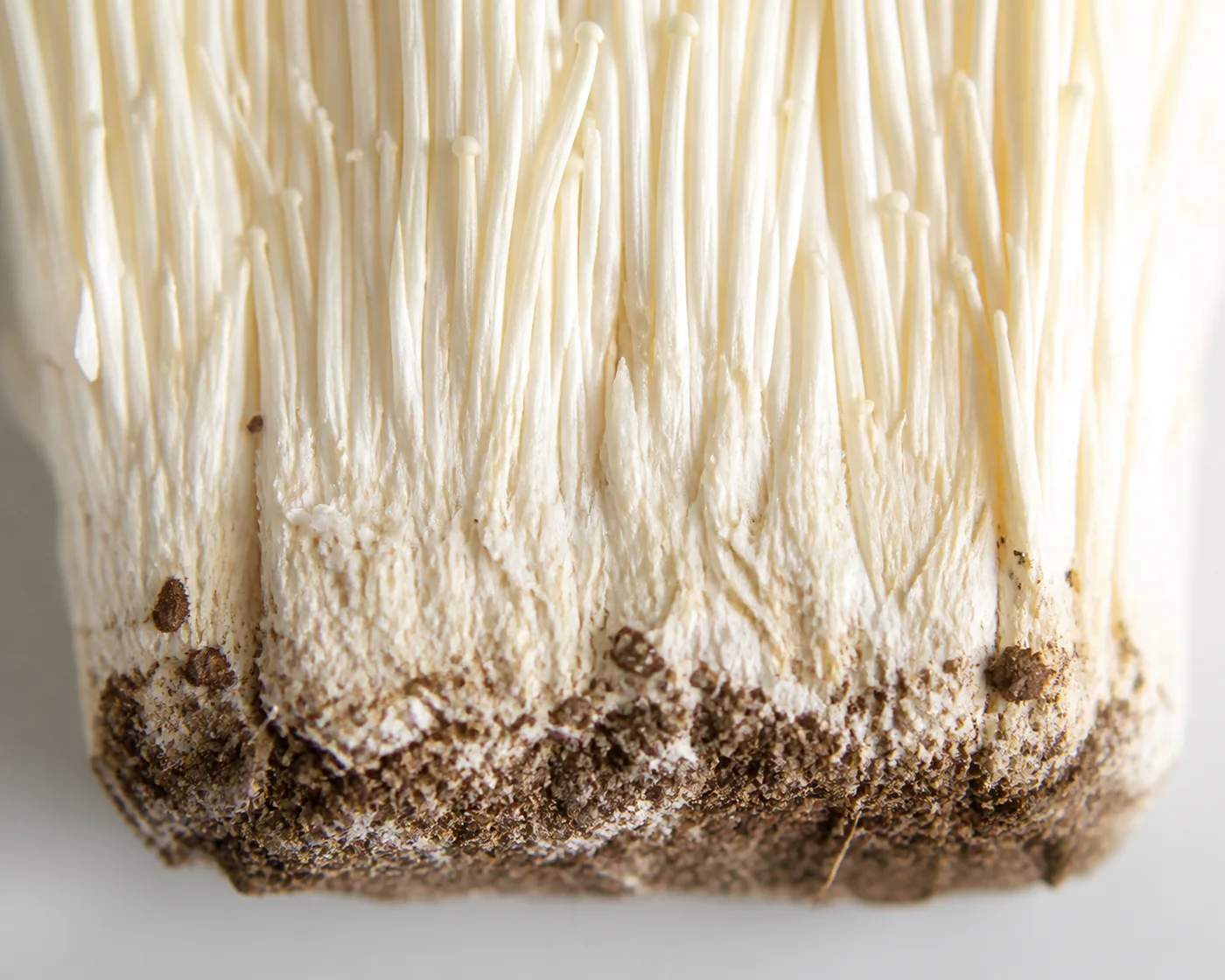
The fused pale block at the bottom holds the substrate the mushroom was grown in, and it is cut away and thrown out, which is the one piece of preparation the pack does not do for you. The rest of the bundle pulls apart with your fingers.

None of this makes enoki a difficult ingredient.
It makes it one that needs sixty seconds it very rarely gets, and the blanched salad is the version worth knowing, because a cold dressed bowl is what most people were reaching for when they asked the question.
Sources & References
- 2020 Outbreak of Listeria Infections Linked to Enoki Mushrooms, CDC The larger investigation. Records thirty six cases across seventeen states with specimens collected from 23 November 2016 to 13 December 2019, thirty one hospitalizations, four deaths and two pregnancy-associated cases with fetal loss, the trace to Green Co. LTD in the Republic of Korea, and the recalls by H&C Food Inc., Guan's Mushroom Co. and Sun Hong Foods, Inc.
- Outbreak of Listeria Infections Linked to Enoki Mushrooms, November 2022, CDC The second investigation, closed with five cases across four states and five hospitalizations. Carries the advice to cook enoki mushrooms thoroughly, the note that Listeria grows on refrigerated food and is easily killed by heat, and the advisory that people who are pregnant, aged 65 or older, or immunocompromised should not eat raw enoki mushrooms.
- Toxicity of the cardiotoxic protein flammutoxin, isolated from the edible mushroom Flammulina velutipes, PubMed The source for flammutoxin as a cardiotoxic and cytolytic protein of Flammulina velutipes, for its inactivation by heat, and for the finding that it is not toxic when absorbed orally.