
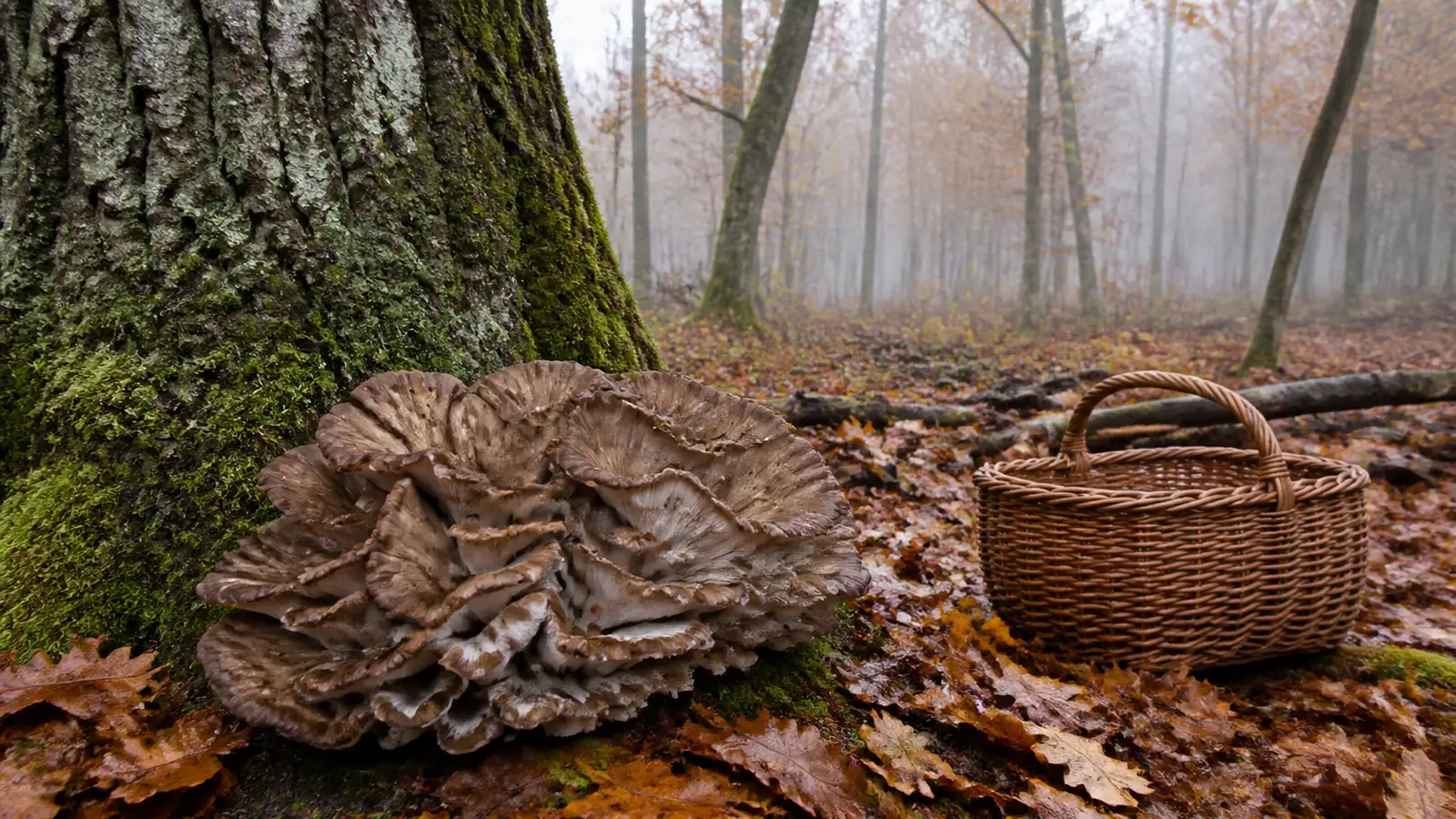
Maitake reaches people two ways. Someone finds a heavy cluster at the foot of an oak, and someone else picks up a plastic tray in a supermarket because the label mentions the immune system.
Both end up asking whether it has to be cooked. Nothing in maitake is going to poison either of them, which is exactly why the real answer gets missed.
Can you eat maitake raw?
No, and for once the reason has nothing to do with what the mushroom contains.
- Named toxins
- None for the species, which is part of why it is grown and sold in trays
- What references say
- Raw is possible, and the same references advise against raw wild mushrooms
- What raw costs
- The compounds it is bought for, which stay shut inside the cell wall
- Texture raw
- Dense and fibrous, with a core far tougher than the fronds
- What heat changes
- Chitin, which is the wall holding everything else in
That third line is what separates maitake from most of the species in this series. Elsewhere the reason to cook is a compound you want broken down, and here it is a wall you want opened.
The disagreement in the answers already out there is narrower than it looks.
One side says raw is technically possible, and the same sentence goes on to advise against eating any wild mushroom uncooked, which is a yes behaving exactly like a no.
Why raw wastes the reason most people buy it
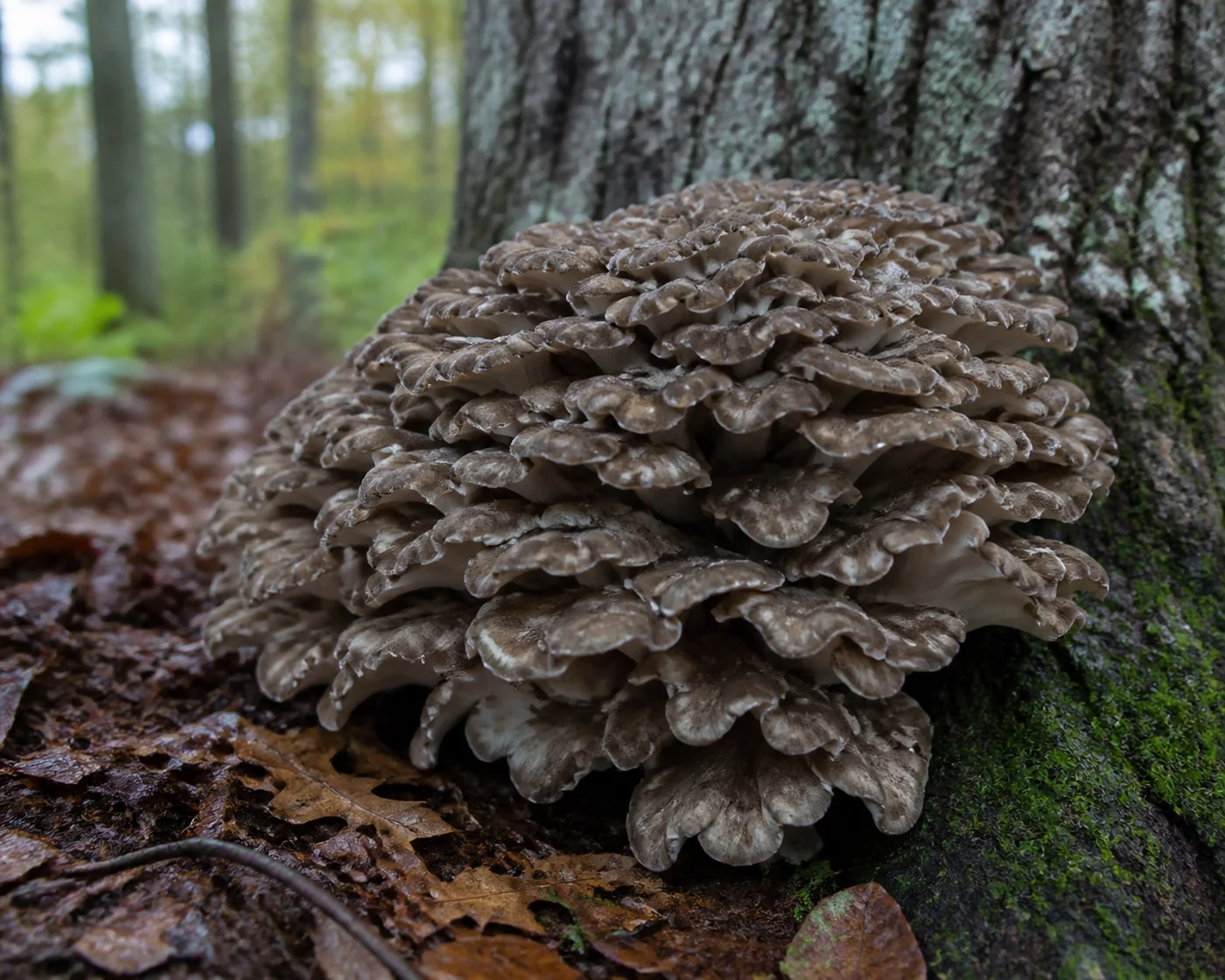
Maitake is bought and picked for beta-glucans, and beta-glucans do not sit loose in the flesh.
Chitin is close to the material an insect shell is built from, and human digestion has no enzyme for it. A raw cluster in a blender comes out the far end of you with its walls intact, carrying whatever was inside them.
Eating raw maitake gives you zero medicinal value, because those beta-glucans stay trapped inside incredibly rigid cell walls.
A cook writing about getting the compounds out of maitake
Zero is a strong word and it is better read as the shape of the claim than as a measurement. What is not in doubt is the direction, because nothing in a human gut opens a chitin wall and heat plainly does.
That is a different kind of failure from the one the rest of this series describes.
A raw morel is dangerous and a raw hedgehog tastes bad, and both of those are things you notice. Raw maitake tastes fine and does nothing, which is the only version of this problem that gives you no feedback at all.
The same argument runs under lion's mane and every other species sold for what it contains. Cooking is not an alternative to extraction, it is the cheapest form of it.
SafetyCan You Eat Beech Mushrooms Raw? Not Poisonous, Just BitterWhy the texture stops you before your stomach does
Long before any of that matters, raw maitake is unpleasant to chew.
Tip
A maitake cluster is two materials rather than one. The fronds are thin and cook down tender, while the pale branching core they grow out of stays dense enough that cooks describe it as meaty, which is why so many of them cut it away and keep it back for stock.
Raw, that core is closer to wet cork than to food. The fronds are more forgiving and still leave a fibrous mat in the mouth that refuses to break down.
- Fronds that tear easily and then chew like damp paper
- A core that resists a knife and your teeth in the same way
- No juice released, because nothing has opened yet
- A dry finish that makes the next mouthful worse
None of that is an argument for throwing the core away.
Cooked long and wet it gives a broth more body than the fronds ever will, so the part that is least edible raw turns into the part worth keeping back.
There is also the ordinary digestive point, which applies to any raw fungal food whatever the species.
References warn of a higher risk of food sensitivity from raw mushrooms and suggest starting with a small portion. That is a milder version of what puts people off shiitake uncooked, where the reaction is documented and specific.
Which clusters are worth carrying home
A maitake that is past it will not hurt you, and it will waste an hour of your evening.
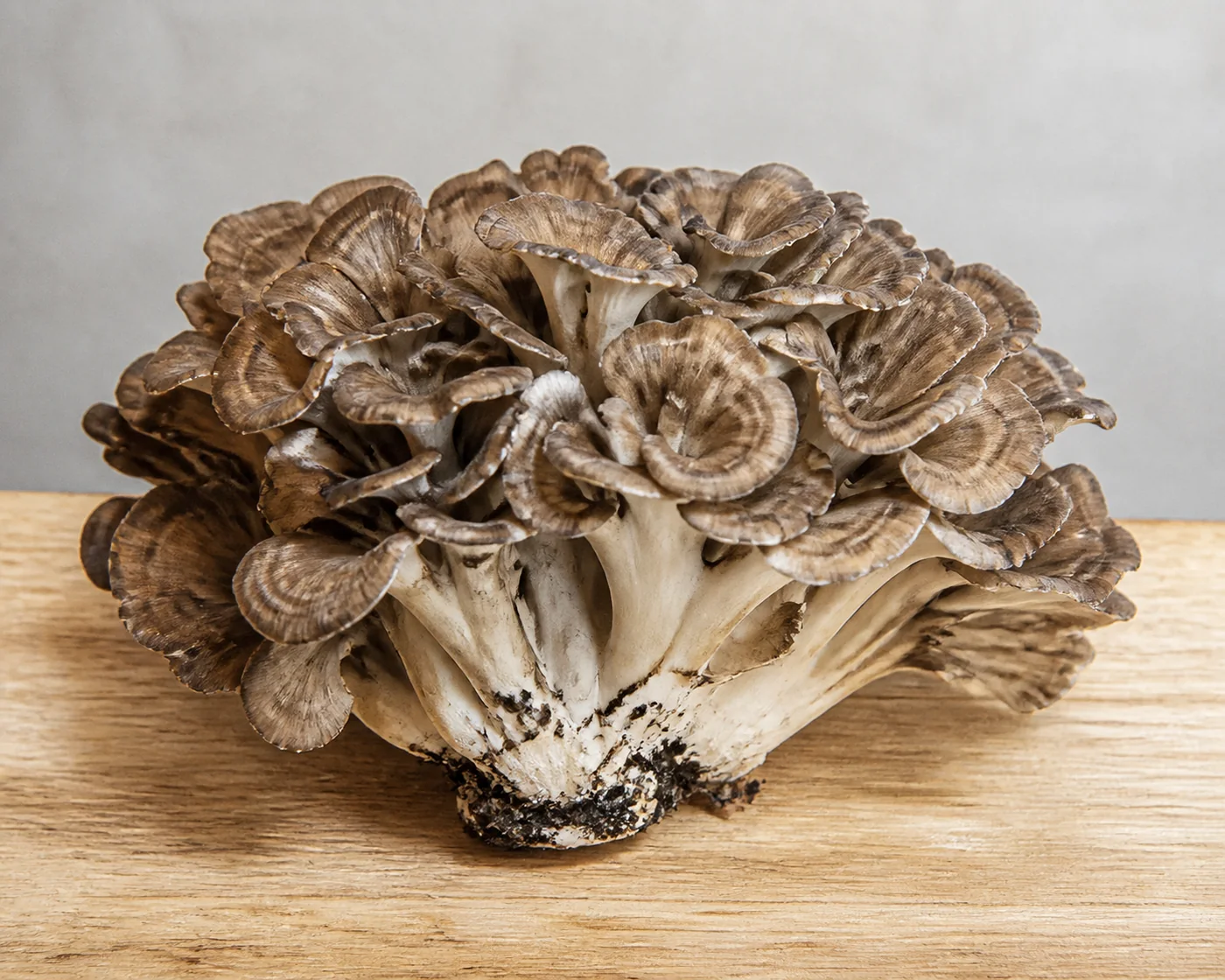
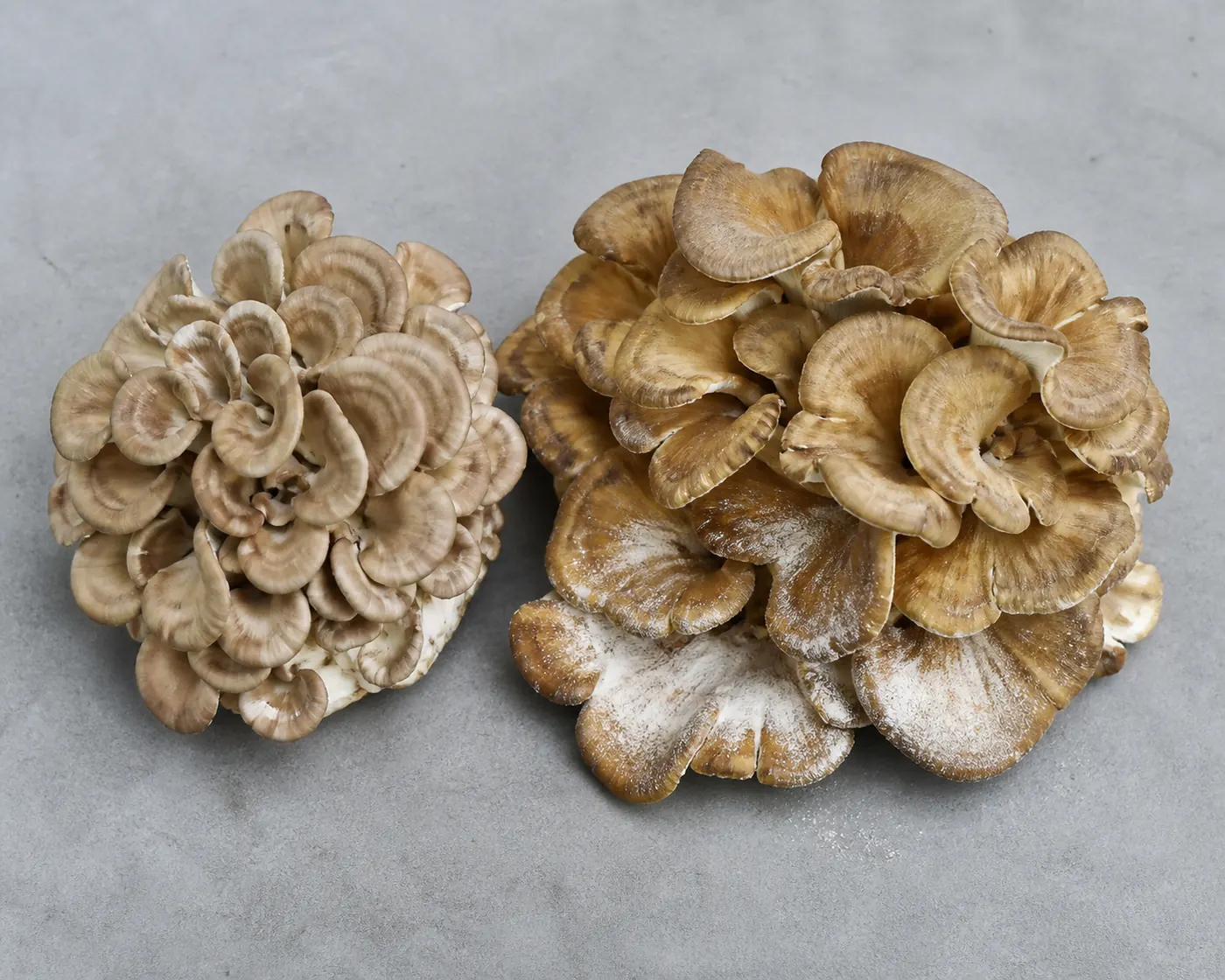
The spore dust is the clearest of those and the easiest to miss in low light. It settles on the fronds underneath, so a white bloom on the lower layer tells you more than the top of the cluster does.
How fast a cluster grows is what makes the timing awkward.
A cluster the size of a tennis ball can be a two-handed carry a fortnight later, so the window between worth taking and spored out is shorter than most people expect. Marking the tree matters more than marking the calendar, because maitake comes back to the same oak year after year.
Maitake keeps to a narrow season and a narrower position on the tree.
References put the fruiting at early September to late October, at the base of oaks and sometimes maple or elm, and it does not run further up the trunk. Anything in the same colors growing on a trunk above knee height is something else.
That something else is usually one of two polypores, and neither of them is dangerous.
The black-staining polypore builds the same overlapping rosettes in the same gray-brown, and it starts earlier in the year. Press the pore surface underneath and it turns black within a few minutes, which maitake never does.
Berkeley's polypore is the other one, thick-fleshed and cream rather than gray, and bigger than either.
So the price of getting this wrong is a tough dinner rather than a hospital visit, which is the story the whole page tells. Nothing in this corner of the woods is trying to hurt you, and that is exactly why the raw question gets waved through.
Which cooking method gets the most out of it
Not every method is trying to do the same thing, which is why the advice looks contradictory.
| Method | Reported timing | What it favors |
|---|---|---|
| Saute in pieces | About 4 minutes, then 2 more with seasoning | Speed |
| Roast for texture | 425F for 25 to 35 minutes, turned halfway | Browning and crisp edges |
| Roast for compounds | 20 minutes at 350F | Phenolics that higher heat is said to destroy |
| Simmer in broth | 30 minutes | The deepest reported extraction |
| Dry saute | Moisture off first, then 5 minutes a side | Texture rather than extraction |
The two roasting rows are not a mistake, and they are the most useful thing on the table. One number comes from people cooking for browning and the other from people cooking to keep what is inside, and they disagree by seventy five degrees.
Pick the row that matches what you want to keep and the contradiction disappears.
If maitake is dinner, roast it hot and stop reading here. If it is going into a broth for what it contains, the long wet simmer is the method with the reporting behind it, and the liquid is the part you keep.
That last point inverts the rule from most of this series. On oyster mushrooms and nearly everything else the cooking water is a throwaway, and here it is where the extraction ended up.
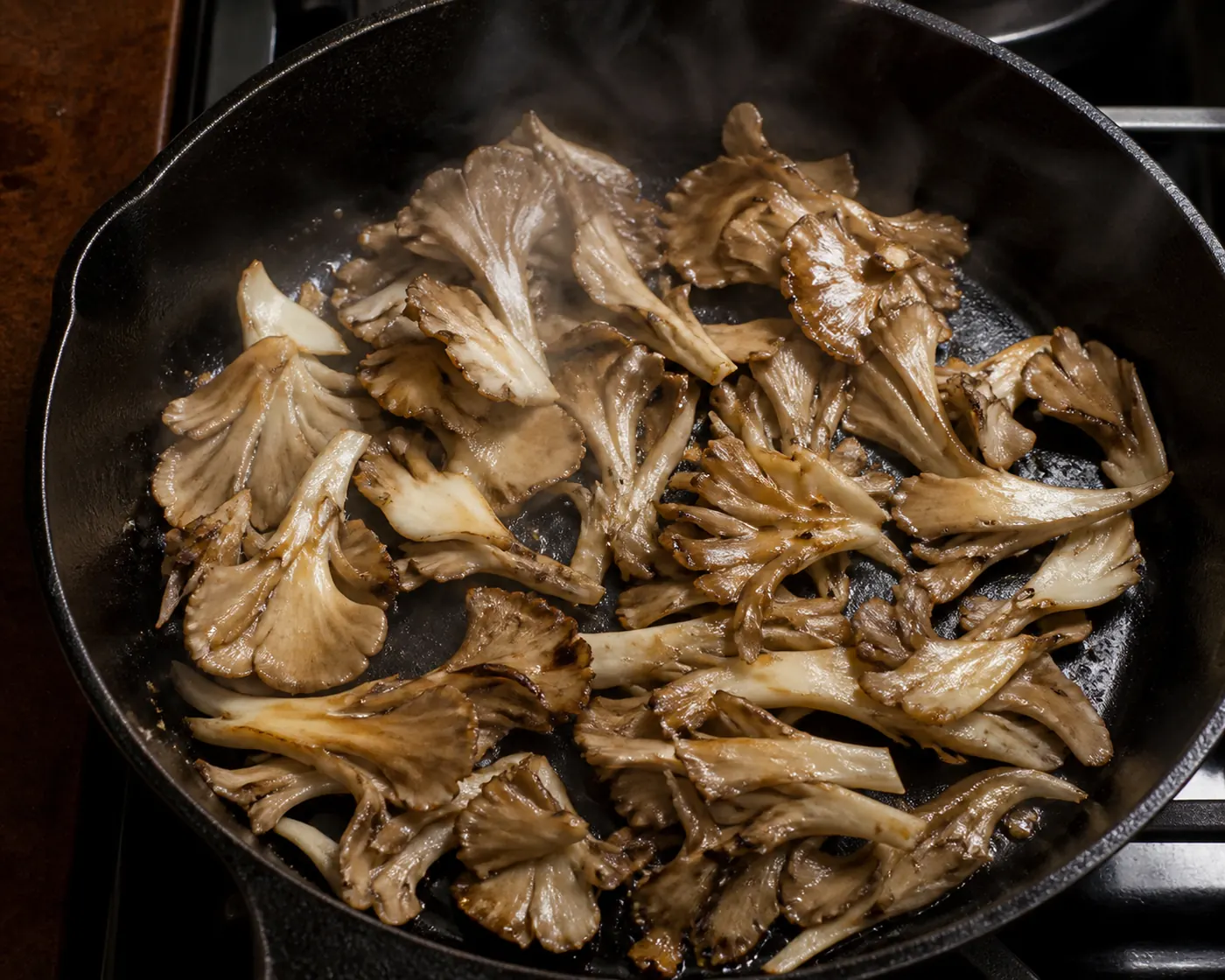
Cleaning it, and what a supermarket tray changes
Maitake is not usually buggy, which is a relief and also the reason the real problem gets underestimated.
The fronds grow overlapping and tightly packed, so leaf litter and grit end up sealed between the layers rather than sitting on the surface. Rinsing the outside of a whole cluster does nothing about it.
The soak is the step people argue about, and on a cluster this dense the argument mostly settles itself. Water that works into the layers comes back out in the pan, so a maitake that went in wet steams instead of browning.
That last row covers most people reading this. A cultivated tray skips the entire cleaning problem, and every other line on this page still holds, because the cell wall does not care where the mushroom grew.
The tray and the oak give you the same answer for the same reason.
Sources & References
- Preparing Hen of the Woods and Maitake Mushrooms, Mushroom Appreciation Answers the raw question directly, gives the food sensitivity caution, the tennis-ball starting size and one to three week growth, the spore dust and yellowing as age signs, the slice test for a cluster past prime, the embedded dirt problem and the cleaning method, and the saute, roasting and dry saute timings.
- How to Cook Maitake Without Wasting the Medicinal Compounds, Mushroom Health Hub Gives the chitin cell wall as the barrier, states that raw maitake delivers none of the beta-glucans, ranks wet cooking above dry heat for extraction, puts the thirty minute simmer at the top, and gives 350F rather than 425F as the roasting temperature when the aim is to keep the compounds.
- The Maitake Mushroom, Identification, Foraging and Lookalikes, Mushroom Appreciation Gives the early September to late October fruiting window, the oak base habitat with maple and elm as secondary hosts, the fact that it does not fruit further up the trunk, and the black-staining polypore and Berkeley's polypore as the two confusions.
- Black Staining Polypore, Mushroom Appreciation Records that it fruits earlier in the year than maitake, that the pore surface turns black when pressed and may take a few minutes to do so, and that it goes leathery and inedible with age rather than dangerous.