
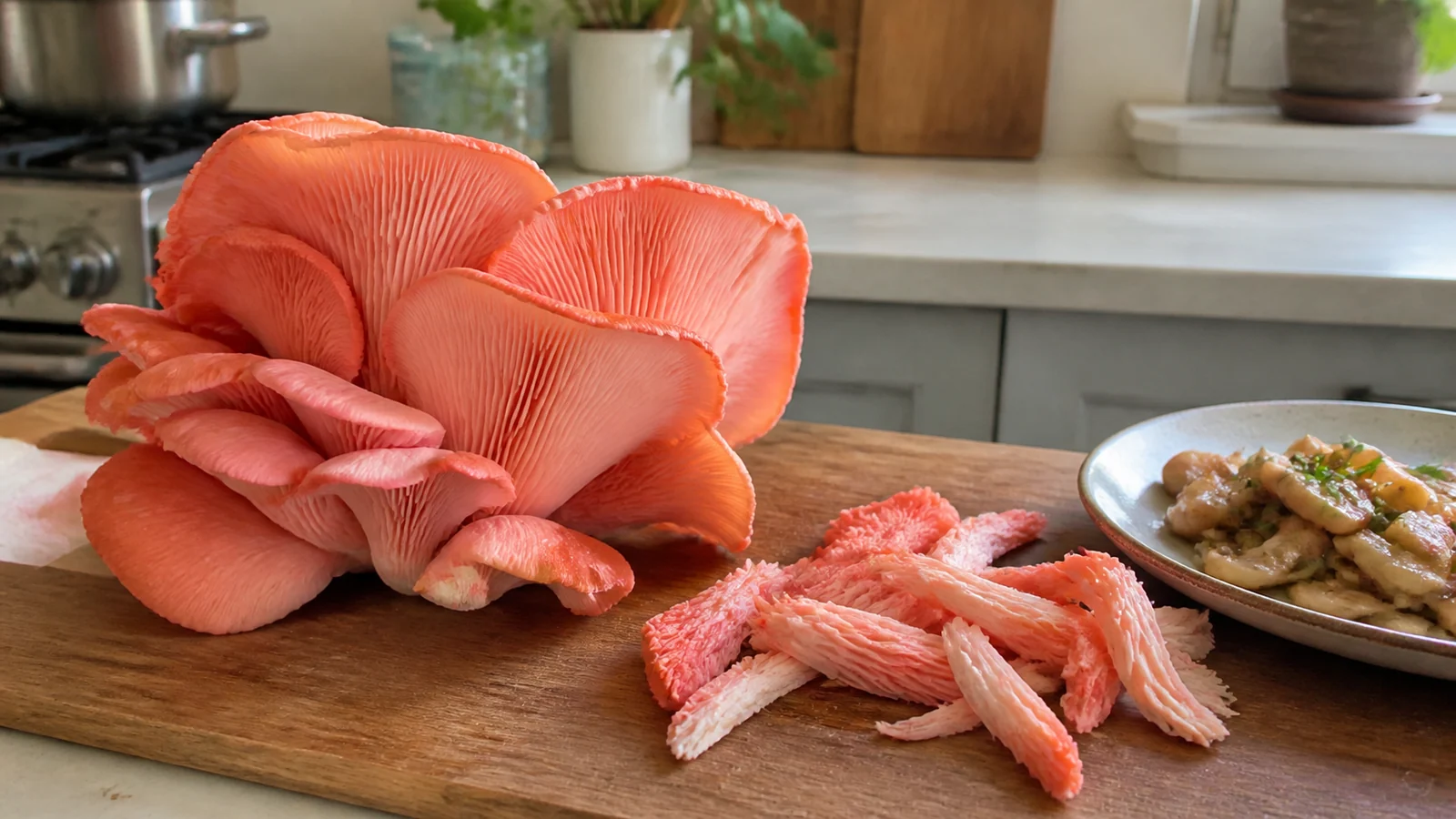
The species will not hurt you. The calendar might, and it moves faster here than for any other mushroom in this series.
Can you eat pink oyster raw?
Yes, as a species question. No, for most of the clusters people actually have in front of them.
Its gray relative shares those preparation considerations.

Why the clock is so short
About a day. That is the number, and it is the reason you almost never see this species on a supermarket shelf.
| Pink oyster | Gray oyster | |
|---|---|---|
| Useful shelf life | About a day | Several days refrigerated |
| Where you meet it | Home-grown or a market stall | Chilled supermarket shelf |
| Fan thickness | Thin and delicate | Firmer, more substantial |
| What goes first | Color and smell together | Texture, then smell |
It is a warm-climate species, grown fast and harvested very thin.
Speed is the whole design of it. A block goes from pinning to a full flush in days rather than weeks, and a mushroom that grows that quickly does not have much structure holding it together afterwards.
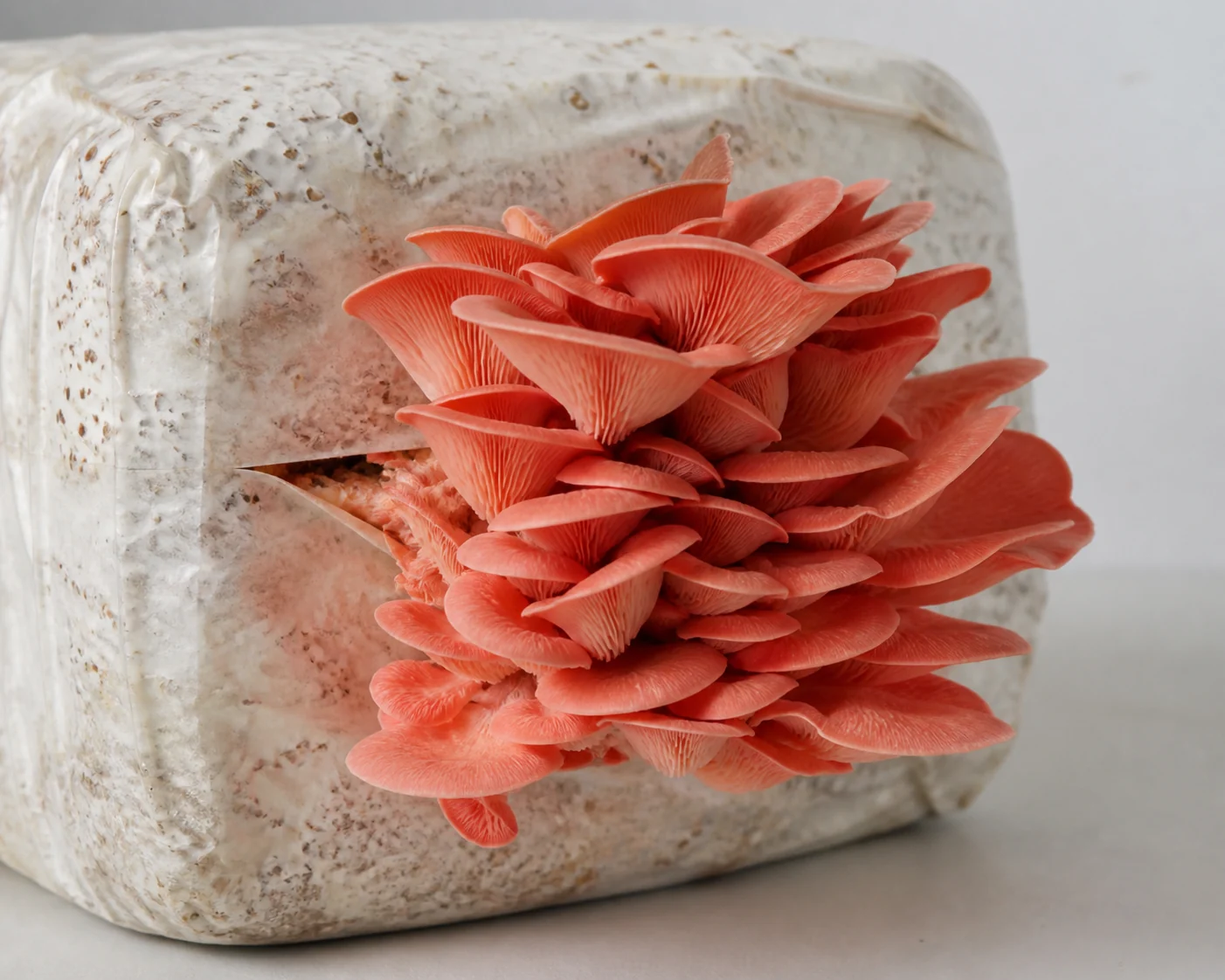
That is why the buying advice is unusual for a mushroom. Buy it the day you want it, or grow it and pick it an hour before the meal.
Anything else and you are cooking, whether you planned to or not.
Home growers have the easier time of it, which is worth saying because most people meeting this species are growing it.
A block in a kitchen produces more than one meal at a time, and the sensible pattern is to pick what the raw plate needs and leave the rest on the block until the next day. A fruiting cluster keeps far better attached to its substrate than harvested into a bag.
SafetyCan You Eat Beech Mushrooms Raw? Not Poisonous, Just BitterWhat the smell actually means
Past that window a pink oyster develops an unpleasant amine odor, sometimes described as urine-like, and it arrives quickly once it starts.
Warning
That smell is spoilage, not a species trait. It means bacterial breakdown has begun, and a raw preparation puts that directly on the plate with nothing between it and the person eating it. Cook it or bin it, and do not dress it and hope.
The smell test takes a second and settles the whole question. A fresh pink oyster smells faintly sweet and of very little else, and anything sharp, ammoniacal or fishy means the window has closed.
It has a shelf life of only about a day, quickly developing an unpleasant amine or urine-like odor after that time.
Why this species is rarely seen in supermarkets
No amount of rinsing or dressing reopens that window.
Amines are breakdown products, which is why the smell is the one people describe as chemical rather than as mushroomy. Once they are present the mushroom has already started coming apart, and heat at that point is damage control rather than cooking.
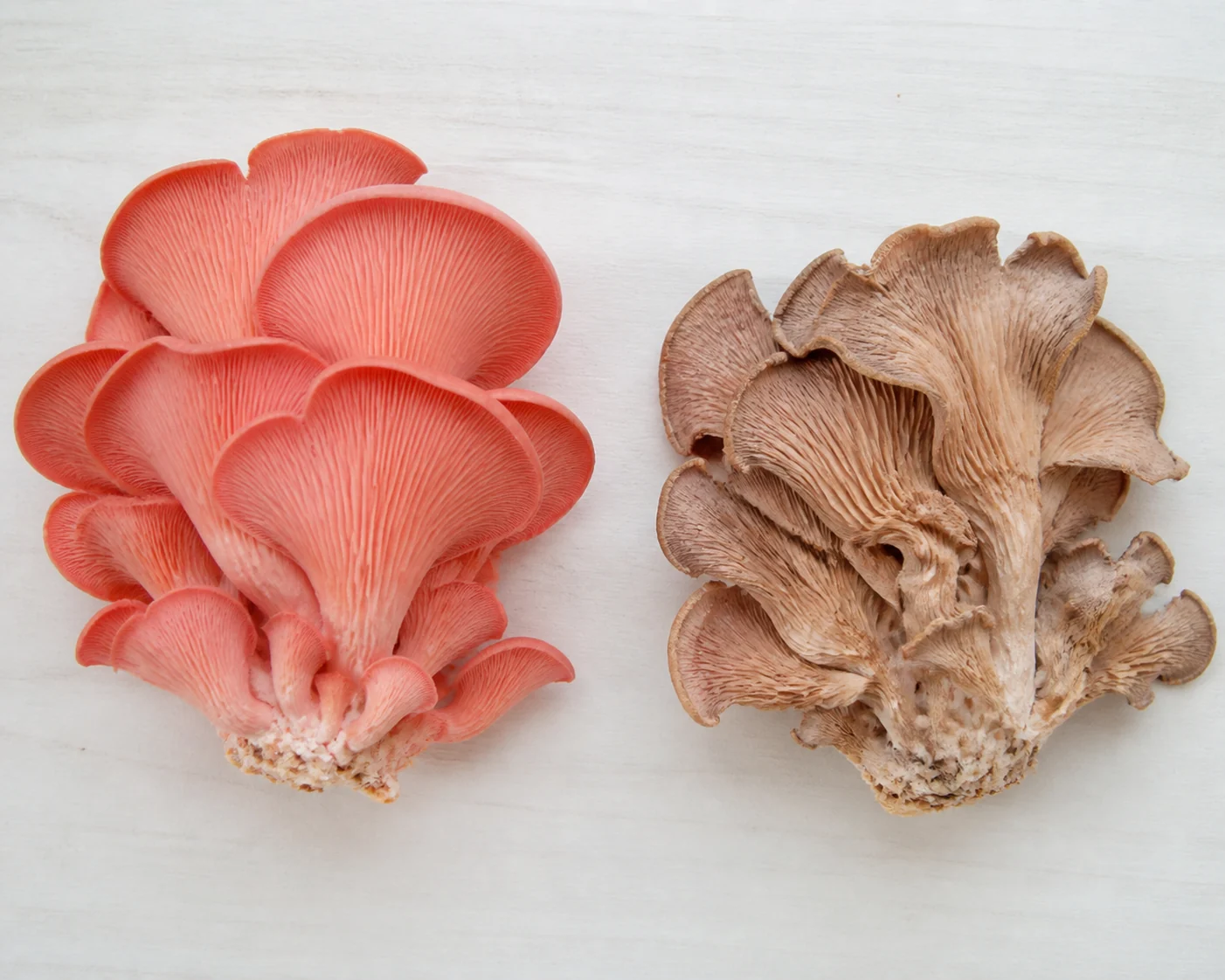
Color is the earlier warning of the two, and it beats the smell for usefulness.
The vivid salmon of a fresh cluster dulls toward beige-brown as it turns, which happens before the smell is obvious. If it looks tired it is tired, whatever your nose says.
Where pink oyster differs from the gray one
Treating it as an ordinary oyster mushroom is what gets people into trouble, and the differences all point the same way.
Two species are worth putting beside it for different reasons.
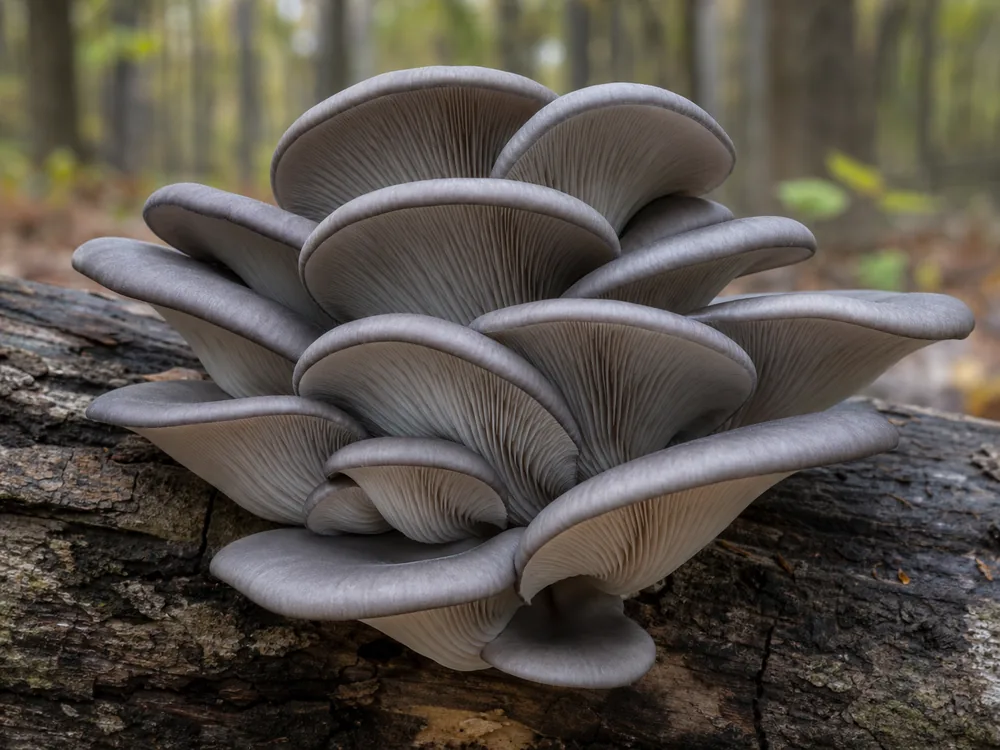 Autumn to winterGray oysterFirmer fans, keeps for days, the usual comparison
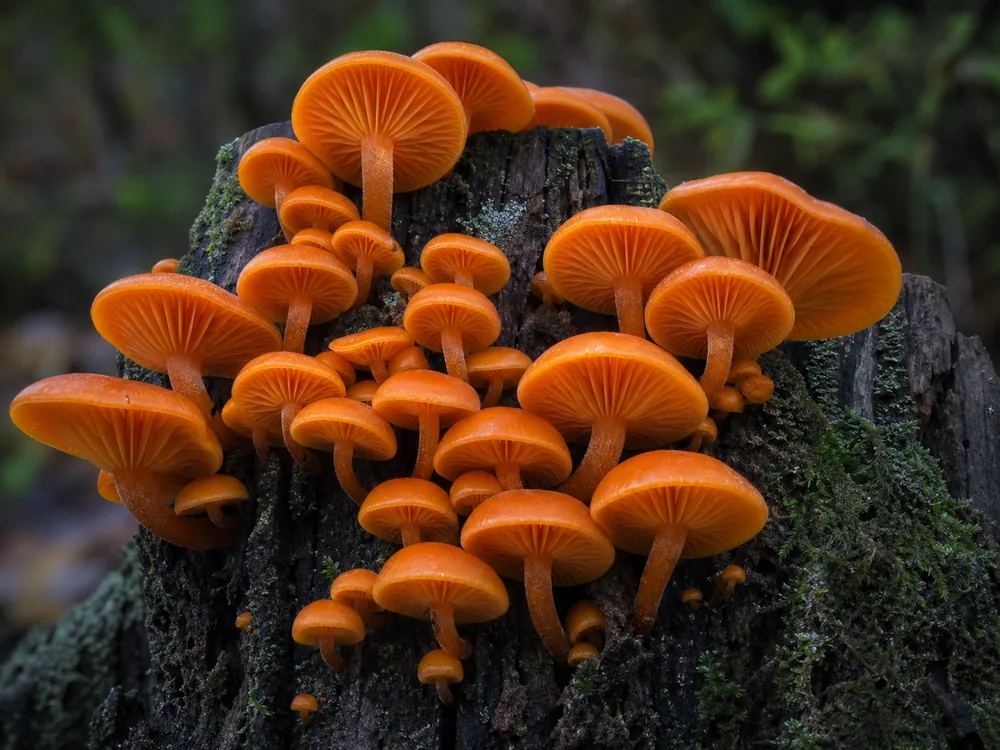 AutumnJack o'lanternOrange throughout, true gills, grows wild in clumps
The second card is there for anyone tempted to go looking for these in the woods. This is a cultivated species in most of the world outside the tropics, and an orange-toned wild cluster at a tree base is a different mushroom entirely.
Pink oyster is a tropical and subtropical mushroom by origin, which is why it behaves the way it does in a cool kitchen.
It is grown warm and fast, and it has none of the cold-weather structure that lets a gray oyster sit in a fridge for most of a week.
Refrigeration helps less than people expect, because a cold shelf is not the structure the mushroom is missing.
A cold shelf slows the decline without stopping it, and the fans are thin enough that they dry and curl at the edges while the middle is still turning. Paper rather than sealed plastic buys you hours rather than days.
The practical version is to shop or harvest around the meal rather than the other way round.
Nobody plans a Tuesday salad around a mushroom bought on Saturday, and this is the one species where that instinct is exactly right. Treat the cluster as the fixed point and the menu as the flexible one.
SafetyCan You Eat Beefsteak Polypore Raw? Yes, If You Slice It ThinIf you are serving it raw
The color is the point, so the handling is all about protecting it for as long as the plate takes. Everything below assumes a cluster that passed the smell test an hour ago.
- Serve the day it was picked or bought, not the day after
- Tear along the grain rather than slicing, which keeps the fans intact
- Dress at the table, since salt and acid collapse thin fans within minutes
- Keep them in paper on a cold shelf, never sealed in plastic

Dressing early ruins more raw plates than spoilage does. Salt draws water out of a fan that was already mostly water, and ten minutes is enough to turn a bright plate into a pink puddle.
So assemble it dry and dress it in front of whoever is eating it.
The same logic applies to anything acidic. Lemon does to the color what salt does to the structure, so a squeeze at the table keeps both, where a squeeze in the kitchen keeps neither.
Pick or buy on the day you plan to serve
Smell it before anything else happens
Serve raw anything that has faded toward beige
Dress it in the kitchen and carry it to the table
What cooking changes, and what it takes away
Being straight about this matters, because the color is usually why the mushroom was bought.
- The color
- Fades to beige with heat and does not come back
- The flavor
- Stronger cooked than the delicate raw fans suggest
- The margin
- Heat gives you room on a cluster that is a day past its best
- The texture
- Thin fans crisp at the edges rather than going rubbery
- The honest summary
- Cooking is the safer route and it costs you the thing you paid for
There is no way to keep both, and anyone telling you otherwise has not cooked them.
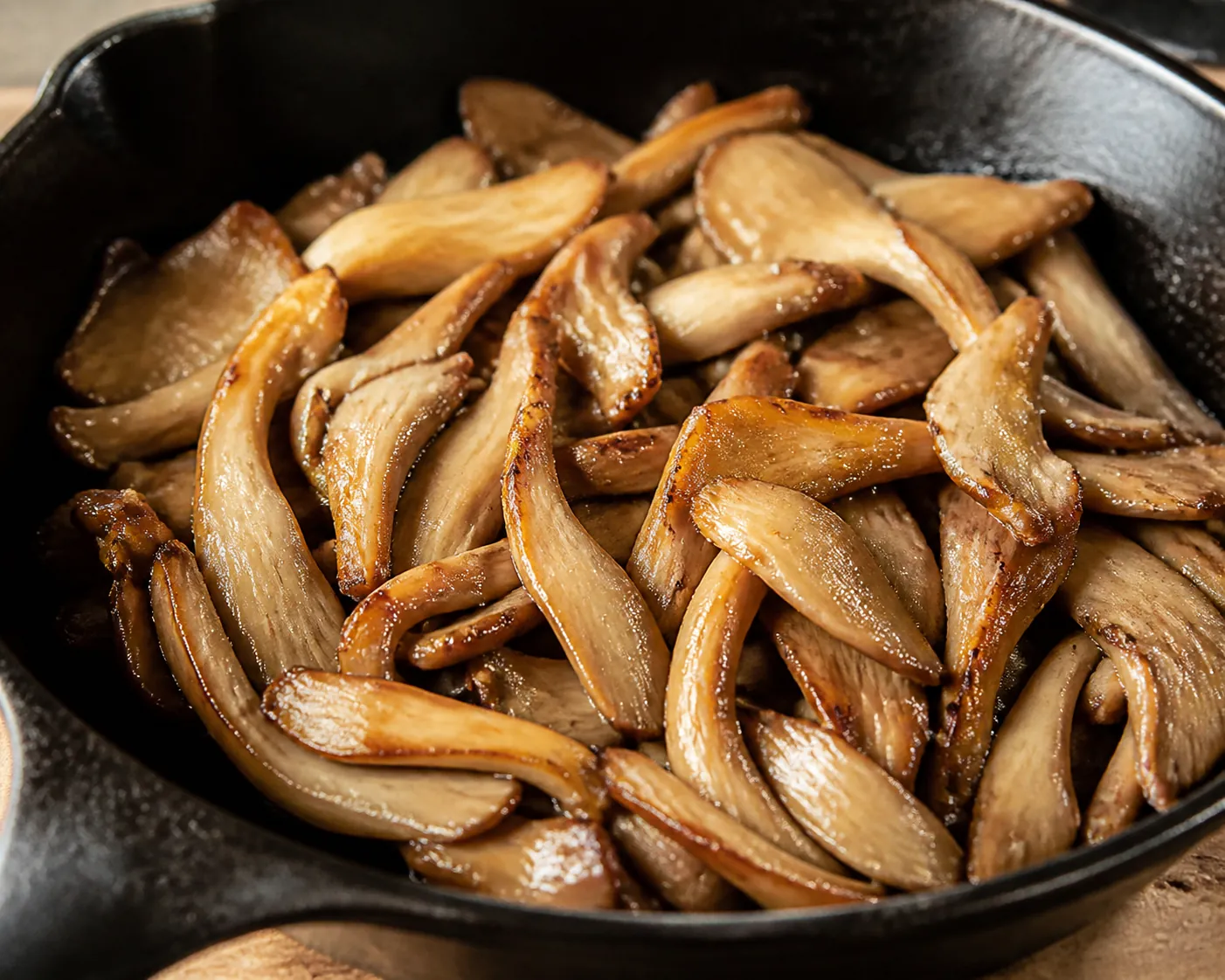
The pink is a pigment that heat destroys, so a cooked pink oyster looks like any other cooked oyster mushroom. What you get back is a stronger flavor and a mushroom that does not depend on having been picked this morning.
There is a middle route worth knowing about if the color matters that much.
A very brief sear leaves some color at the center of a thicker fan while cooking the edges, which is not a safety measure but is the closest thing to having both. Treat it as a texture choice on a fresh cluster rather than as a way to rescue an old one.
Nothing in the pan rescues a cluster that has already turned.
Heat kills what is growing on a spoiled mushroom without removing what it has already produced, which is the same reason nobody cooks fish that has gone off. The smell test comes first and the stove comes second, and no amount of butter changes that order.
Note
Everything here assumes a cultivated cluster whose identity is not in question. If you are looking at something pink on a log in a temperate wood, settle what it is before any of this applies.
Sources & References
- Pink Flamingo Oyster Mushrooms Information and Facts Records the shelf life of about a day and the unpleasant amine or urine-like odor that develops after it, and explains why the species is rarely found in supermarkets.
- Pink Oyster Mushroom, Pleurotus djamor Records wide consumption across Southeast Asia, South Asia, Central America and Brazil with no documented poisoning cases, the thermolabile lectins that may cause mild irritation raw, the recommendation to cook before consumption, and that the pink color fades when cooked.