
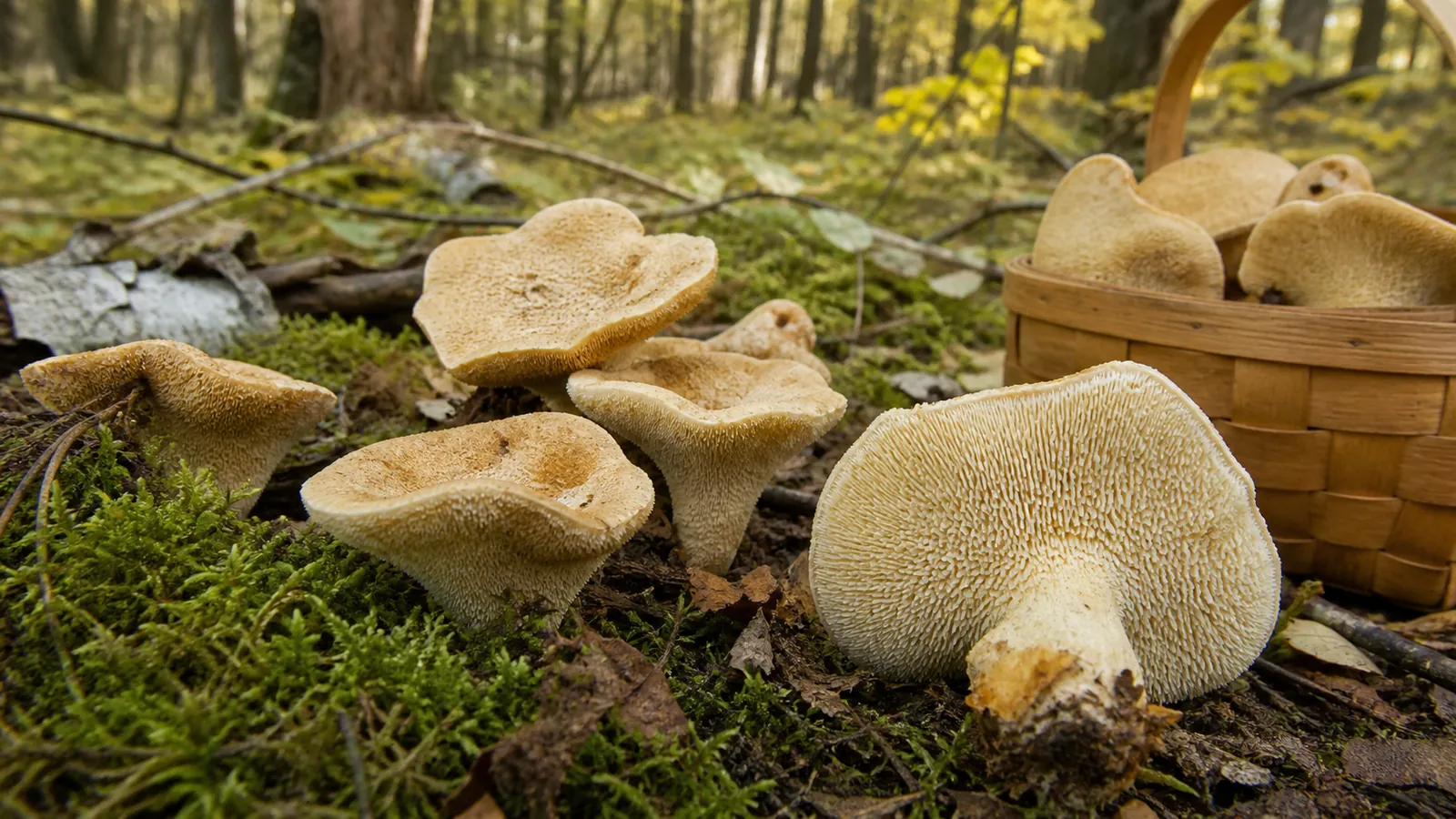
Hedgehogs get handed to beginners as one of the safest wild mushrooms there is. Then someone tries a raw sliver and it tastes bitter enough to make them doubt the whole identification.
Both things are true. The bitterness is real and it is not a warning.
Can you eat hedgehog mushroom raw?
No, and not because anything in it will hurt you.
The last line is the one worth carrying, because it explains why two people describe this mushroom completely differently. Someone who picked a young button in September and someone who picked a spreading cap in November are describing two different eating experiences, and both are describing hedgehogs.
All hedgehog mushrooms are edible in the basic sense. They are not toxic and will not kill you.
The position foraging references take on the group
That wording is deliberately unglamorous, and it is the right level of claim. No known toxic compounds is a statement about what has been looked for and not found, which is a strong position for a well-studied group and still not a promise about any individual stomach.
Bitterness in fungi carries almost no information about safety in either direction.
Plenty of harmless species are bitter and a few dangerous ones are bland, so a taste test settles nothing except whether you want to eat the thing. That is why the instruction is not to eat it raw even when it tastes fine.
Why age decides the taste
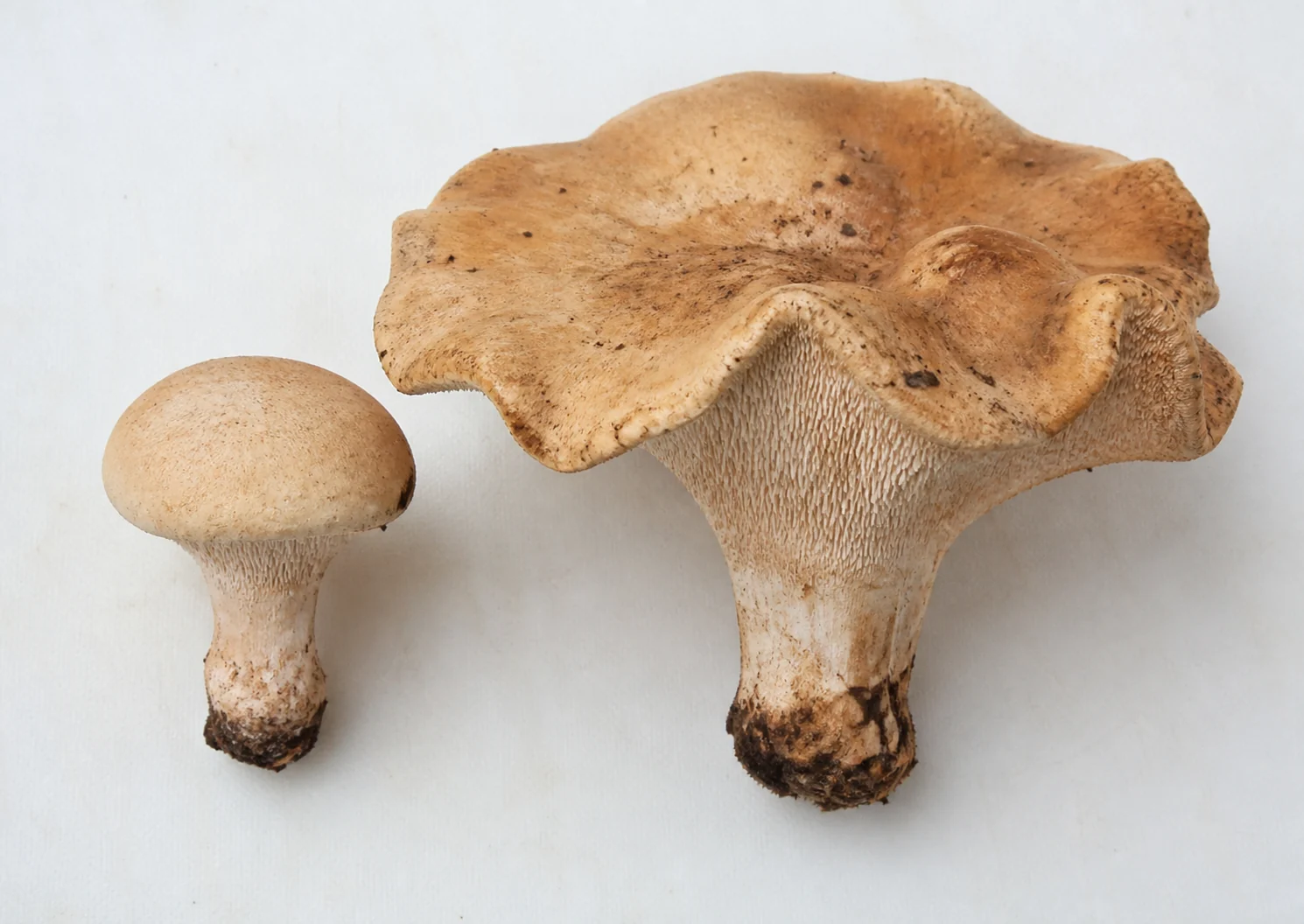
Young fruit bodies are described as sweet and nutty, which is not a phrase anyone has ever used about the large spreading ones.
- Young caps
- Sweet, nutty, and the ones references recommend
- Older caps
- Darkening, spreading, and slightly bitter
- The visible cue
- Color and cap shape shift before the taste does
- Size
- Medium and small are the reliable range
- What does not change
- The safety, which is the same at any age
Nothing about the older ones is unsafe, and that distinction gets lost constantly. A bitter hedgehog is a flavor problem with a known remedy, which is an entirely different category from a mushroom that has gone over or been misidentified in the basket.
The parboil that fixes a bitter one
This is the part most answers leave out, and it rescues about half of a typical basket.
The water carries the bitterness out, which is why it goes down the sink. That also means the parboil liquid is not stock, however good it looks, and pouring it into a pan undoes the entire exercise.

Firm young caps need none of that. Parboiling a good specimen costs texture for no gain, so the method belongs to the large ones rather than to the species.
Boiling works where a hot pan does not, and the method matters more here than the timing does.
The bitter compounds are water soluble, so they leave with the liquid rather than breaking down under heat. A long saute concentrates them instead, which is why someone who tried to cook the bitterness out of a big hedgehog usually made it worse rather than better, and then blamed the mushroom.
The teeth make identification easy
Turn one over and the question is mostly settled.
Tip
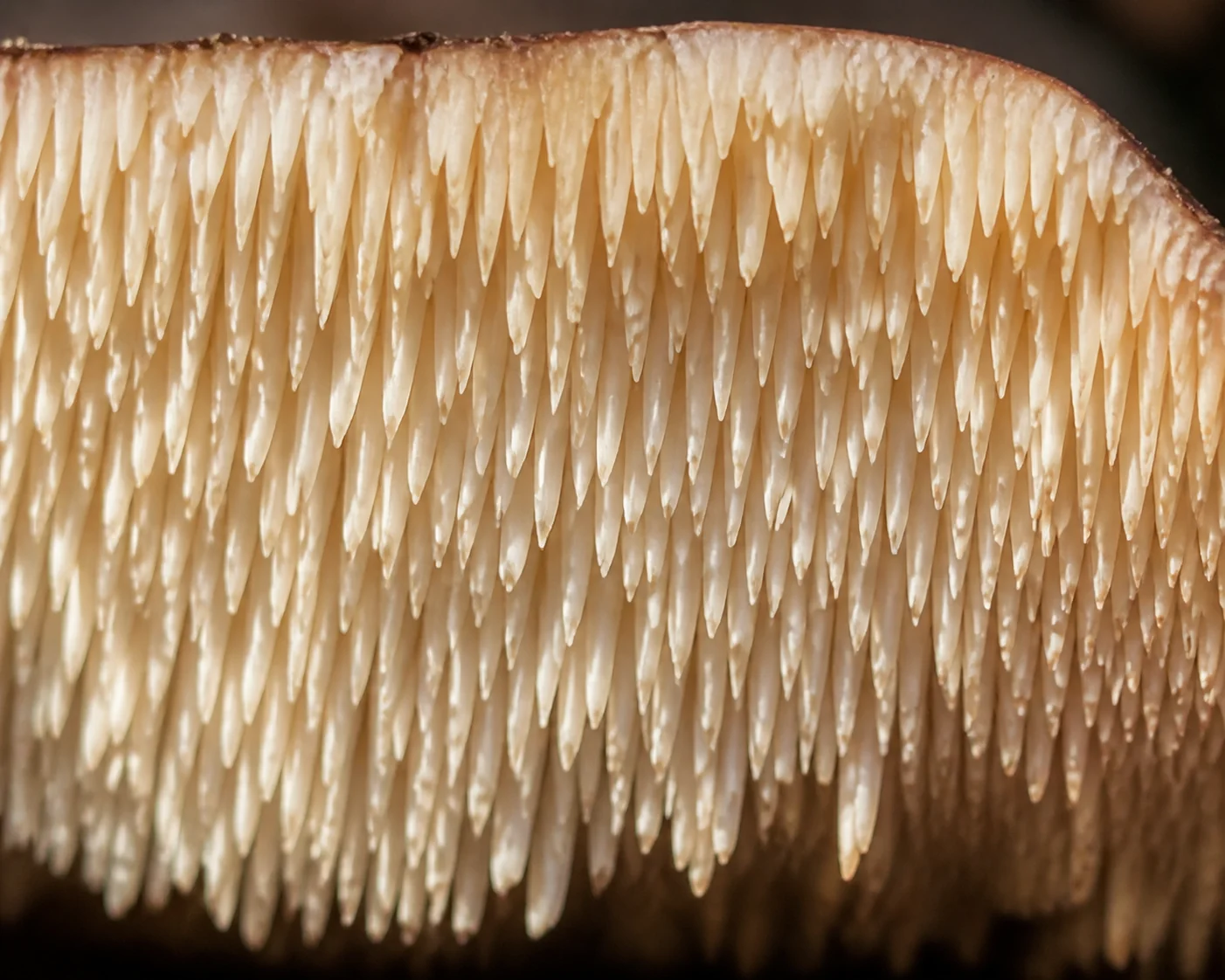
The underside carries thousands of small fragile spines rather than gills or pores, and they crumble if you rub them. Nothing dangerous growing in the same woodland has an underside like that, which is a large part of why this species gets recommended to beginners.
The fragility is itself a confirmation. Gills bend and pores stay put, where hedgehog teeth break off on a thumb and leave a scatter of pale crumbs.
- Buff to pale orange cap, often irregular and lobed rather than round
- Dense white flesh that does not change color when cut
- Spines running slightly down the stem
- Growing from soil in woodland rather than from wood
Several species share that underside and the answer covers all of them.
What used to be filed as one species is now several, separated by cap color, size and habitat, and a picker will meet more than one without noticing. Nothing on this page changes across those species, which is part of why the group is recommended rather than any single member of it.
SafetyCan You Eat Beefsteak Polypore Raw? Yes, If You Slice It ThinWhich ones to take and which to leave
The age rule turns into a picking rule, and it saves the parboiling for the ones that need it.
They also keep unusually well for a wild mushroom, which changes what a large pick is worth.
Dense white flesh holds up in a paper bag for several days where a thin-fleshed species would already be finished, so a heavy day in the woods does not force a whole evening standing at the stove afterwards.
They also dry well, which suits the large ones better than the pan does. A spreading cap that would want parboiling fresh can be sliced and dried instead, and the bitterness matters far less in a stock than on a plate.
The spine question comes up constantly and the answer is short. They soften in the pan along with everything else, so the whole fruit body goes into the dish and nothing needs scraping or trimming first, which is not true of the pored mushrooms a forager meets in the same wood.
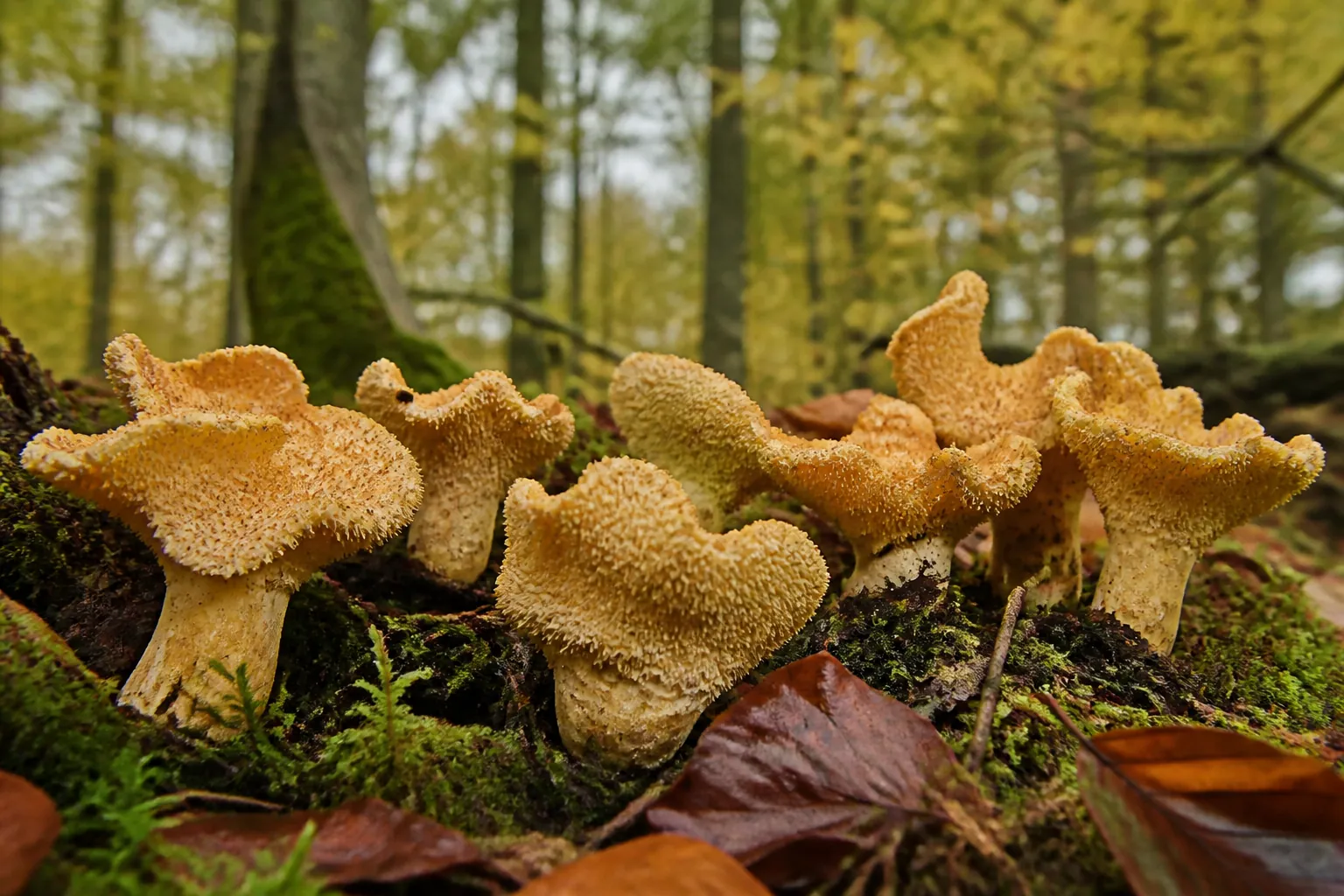
Late in the season the age problem solves itself in the wrong direction, and the caps say so before you taste anything.
A patch that produced perfect buttons in early autumn will be holding spreading, darkening caps a month later, so the same spot gives a different answer depending on when you get to it.
Going back early is worth more than any preparation trick, and habitat narrows the search further than the calendar does.
They fruit from soil in woodland rather than from wood, under both conifers and broadleaf trees. A patch that produced last year is the best predictor of where to look this year, because the mycelium is still there and the tree has not moved.
Hedgehogs also fruit in troops rather than singly, which is worth knowing before you stop at the first one. Finding one usually means finding a dozen within a few paces.
So the picking decision is rarely about whether to take a single specimen, and almost always about which of a scattered group are young enough to be worth the walk home.
How it compares with the wild edibles beside it
Hedgehogs turn up alongside species whose raw answers come from completely different places.
| Species | The raw objection | What fixes it |
|---|---|---|
| Hedgehog | Bitterness that grows with age | A ten to twenty minute parboil, water discarded |
| Chanterelle | Digestive upset with no named compound | Ordinary cooking |
| Porcini | Named proteins that resist digestion until heated | Thorough cooking |
| Morel | Hydrazine compounds in the raw flesh | Thorough cooking, and no shortcuts |
Only one row on that table describes a taste rather than a risk. That is the useful placement for a beginner, because a bitter hedgehog is a cooking question where a raw morel is not.
The two situations feel identical to someone new, because both begin with a bad taste, and they are not remotely alike.
One ends with a slightly disappointing dinner and the other ends with a genuine poisoning, and the fact that both start with an unpleasant taste is a coincidence rather than a pattern worth learning from.
Note
All of this assumes the toothed underside has been checked. It is an easy feature to confirm and an easy one to skip when a basket is filling quickly, and everything above depends on it.
Sources & References
- Hedgehog Mushroom, Hydnum repandum Records the species as having no known toxic compounds when correctly identified, describes the raw flesh as slightly bitter and the cooked flesh as mild and pleasant, and advises against eating it raw.
- Hedgehog mushroom, Galloway Wild Foods Records young fruit bodies as sweet and nutty and older ones as slightly bitter, gives the ten to twenty minute parboil with the water discarded as the remedy, and notes that the spines soften on cooking so the whole fruit body can be eaten.