
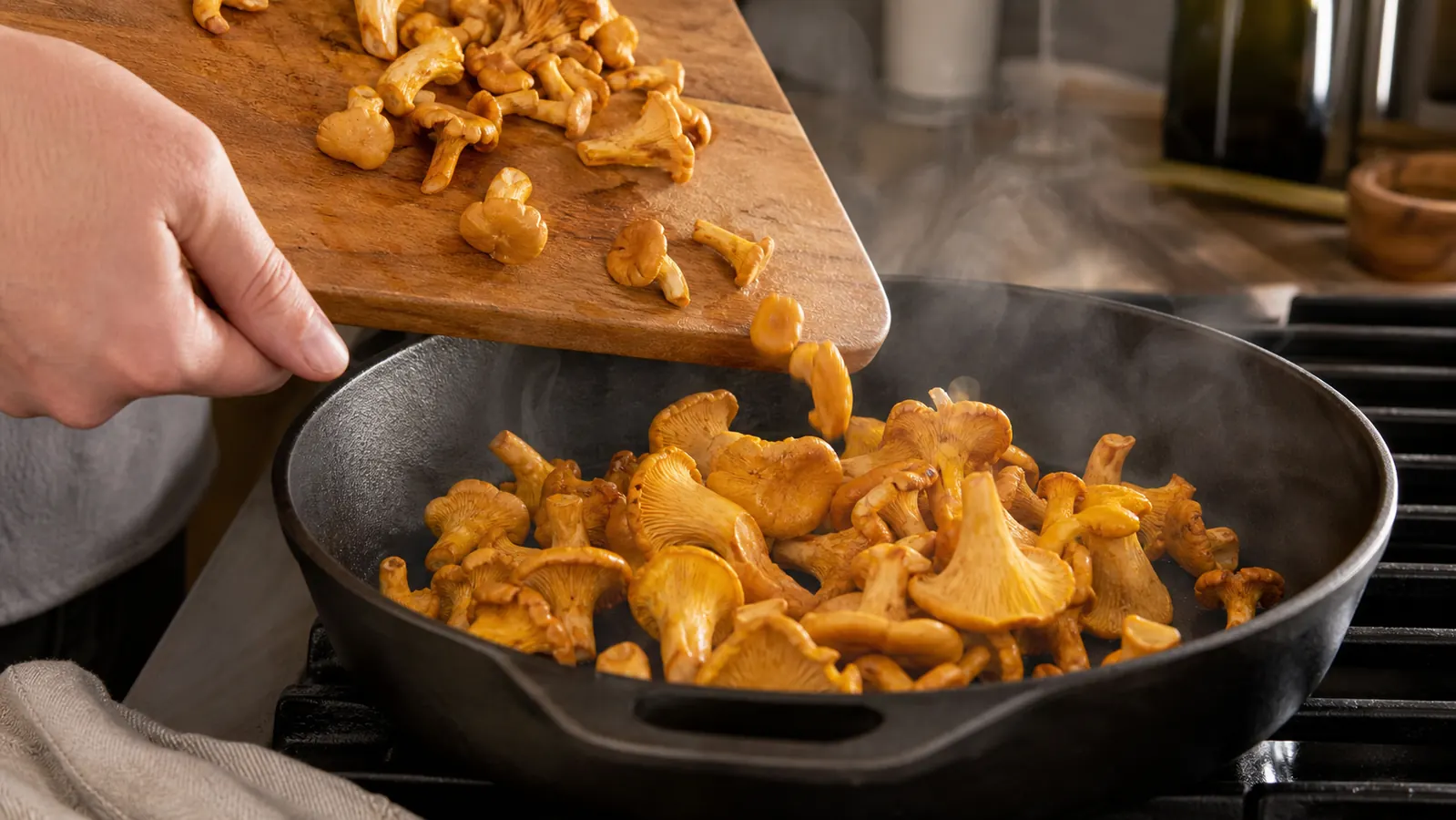
Chanterelles are fragrant wild mushrooms, but they belong in a hot pan rather than on a raw plate. Cooking and correct identification both matter.
Can you eat chanterelles raw?
We do not recommend eating chanterelles raw. They are far less risky than a truly toxic mushroom, but raw chanterelles can still upset your stomach and leave you feeling unwell.
Raw chanterelles are tough to digest, and sensitivity differs enough that one person may feel nothing while another develops cramps, nausea, or loose stools. Cooking every portion removes the need to predict who will react.
A symptom-free raw taste from someone else cannot establish that the next person or batch will be tolerated.
Cooking releases the apricot-like aroma and firms the texture that make chanterelles valuable in the kitchen. The raw mushroom tastes flatter and more rubbery, so avoiding it costs no culinary advantage.
Raw button mushrooms in a salad do not establish a serving rule for chanterelles because the species and wild source are different.
What should you do after eating one raw?
Stop eating the mushrooms and note how much was swallowed, when it happened, and whether anyone else shared the batch. Keep the remaining specimens refrigerated in a separate container because a later identification question may matter more than the raw preparation.
Recheck the underside, growth substrate, and clustering against the chanterelle and jack o'lantern comparison. If the identification is uncertain, contact a local poison center or medical professional promptly instead of assuming the symptoms will remain mild.
A person with repeated vomiting, severe abdominal pain, confusion, fainting, trouble breathing, or delayed illness needs urgent medical assessment. Do not induce vomiting or rely on a home remedy unless a medical professional gives that instruction.
A small raw taste from a confidently identified chanterelle may cause no reaction, but monitoring cannot turn an uncertain wild mushroom into a safe exposure.
SafetyFirst Aid for Mushroom Poisoning Starts With One CallRaw chanterelles can irritate the digestive system
A chanterelle holds a lot of water and a firm, almost rubbery flesh when raw. Your gut has a hard time breaking that down, and the result can be a heavy, queasy feeling for hours.
Age, digestive health, and portion size all influence how strongly someone reacts to raw chanterelles. A sliver may cause no symptoms in one guest and significant stomach trouble in another.
Children, older adults, and anyone with a sensitive stomach should receive only fully cooked chanterelles.
Digestive differences are why we always cook chanterelles.
- Raw chanterelles are hard to digest and can cause stomach upset.
- Some people react more strongly than others, with no warning.
- Heat breaks down the tough flesh so your body handles it better.
- Cooking releases their water and deepens the flavor.
Note
Chanterelles are not deadly the way some wild mushrooms are, but raw ones still make people feel sick. Treat cooking as a normal step, the same way you would with raw potatoes or dried beans.
Chanterelles are not poisonous in the same way as a toxic lookalike, but they remain a cooked food rather than a salad ingredient. Nausea, vomiting, severe cramps, confusion, or delayed mushroom poisoning symptoms need expert advice instead of watchful waiting.
Because alcohol, butter, and a rich meal can obscure the cause of nausea, keep a first chanterelle serving simple and limit wine so any reaction is easier to trace.
Cooking makes verified chanterelles easier to digest
Chanterelles cook best in two stages, because of all that water they hold. Rush them into butter too soon and they boil in their own juice and turn soggy.
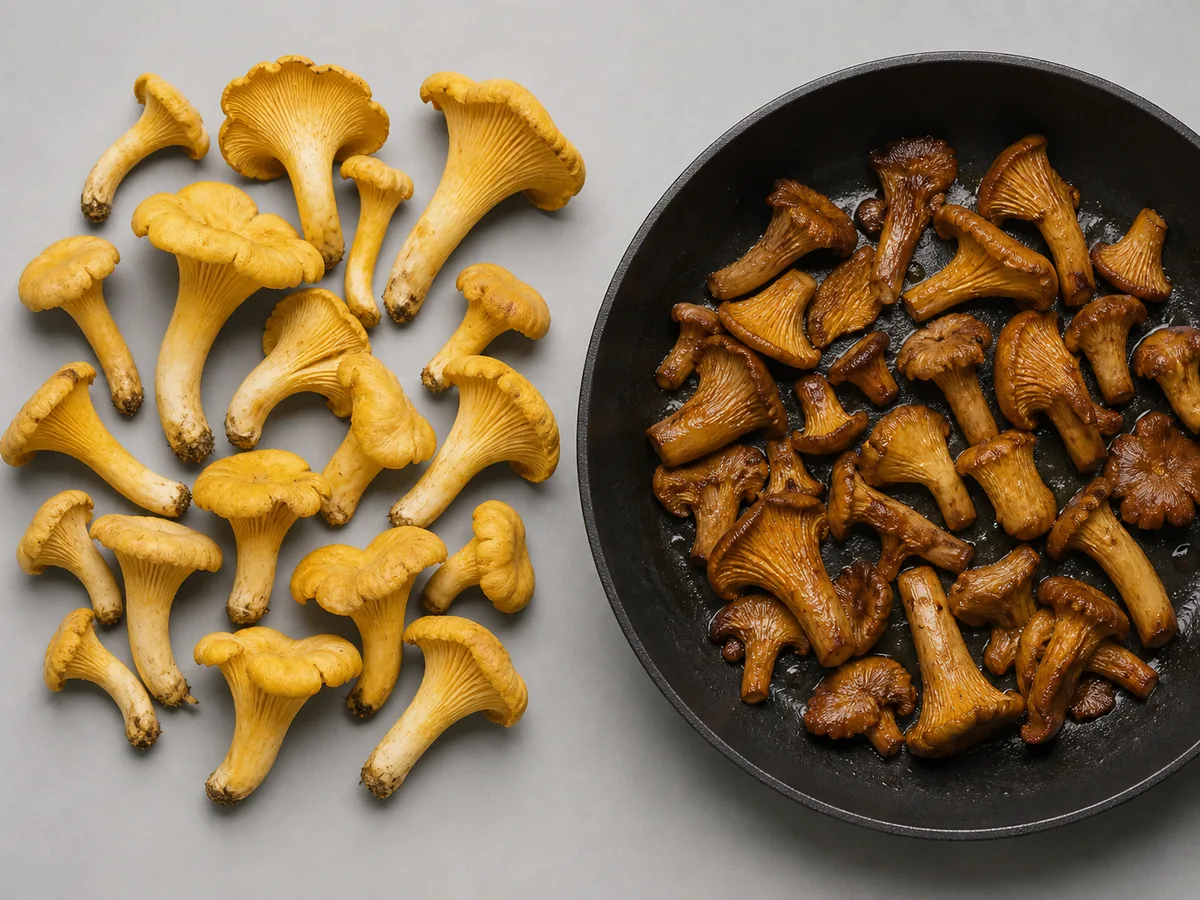
Begin with cleaned, sliced chanterelles in a hot dry pan, where the mushrooms release their stored water. Continue until the pooled liquid has steamed away and the pan looks nearly dry.
Removing that water before fat enters the pan prevents the wet, slippery texture that disappoints first-time cooks.
Add butter or oil only after the released water has disappeared, then continue cooking until the chanterelles are golden and tender. Salt near the end so it does not pull extra moisture into the early dry-saute stage.
The two-stage method produces a firm bite and browned flavor instead of a limp pile simmered in diluted butter.
Brush away dirt and wipe the caps, using a brief rinse only when grit cannot be removed dry because chanterelles absorb surface water. Trim bruised or slimy areas and cook the mushrooms promptly while their flesh remains firm.
A quick flash in the pan is not enough because the thickest pieces need time to heat through and soften at the center. Check a large piece before serving instead of judging the batch by browned edges alone.
Do not taste raw scraps or trimmings during preparation, even when the aroma becomes strong.
Cool cooked chanterelles promptly, refrigerate them in a covered container, and use them within a couple of days. Reheat the leftovers fully rather than leaving the dish warm on the counter, where ordinary food-safety problems can develop independently of the mushroom.
The cook-first rule covers most wild fungi, with raw morels requiring even stricter heating because their toxin risk exceeds that of raw chanterelles.
SafetyDeadly Mushrooms: The Most Lethal SpeciesHow can you tell the pan step is finished?
Watch the pan rather than relying only on a timer because wet mushrooms and crowded cookware release different amounts of water. The dry-saute stage is complete when pooled liquid has disappeared and a spoon drawn across the pan leaves a dry path for a moment.
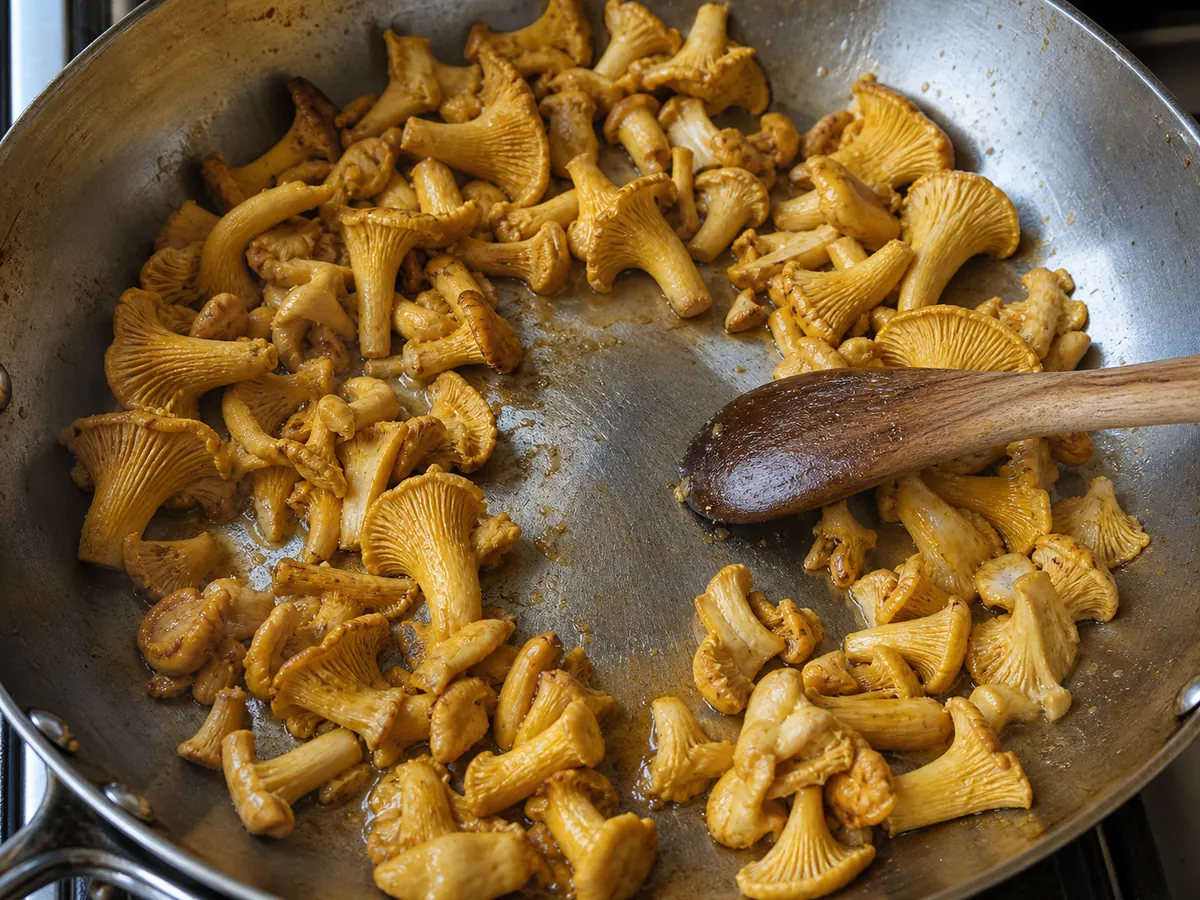
After adding fat, turn the pieces until their edges color and the thickest center becomes hot and tender rather than cool or rubbery. The sauteed chanterelle method uses the same visible cues for batches of different sizes.
Let a first portion cool briefly, then serve a modest amount so texture and personal tolerance can be judged without a heavy meal hiding the result.
How to be sure it is really a chanterelle
A true chanterelle carries blunt, forked ridges that run down the stem instead of thin true gills. These false gills look like shallow rounded folds and remain part of the cap flesh.
The chanterelle underside matters more than its golden cap color because blunt ridges support the identification while sharp gills contradict it.
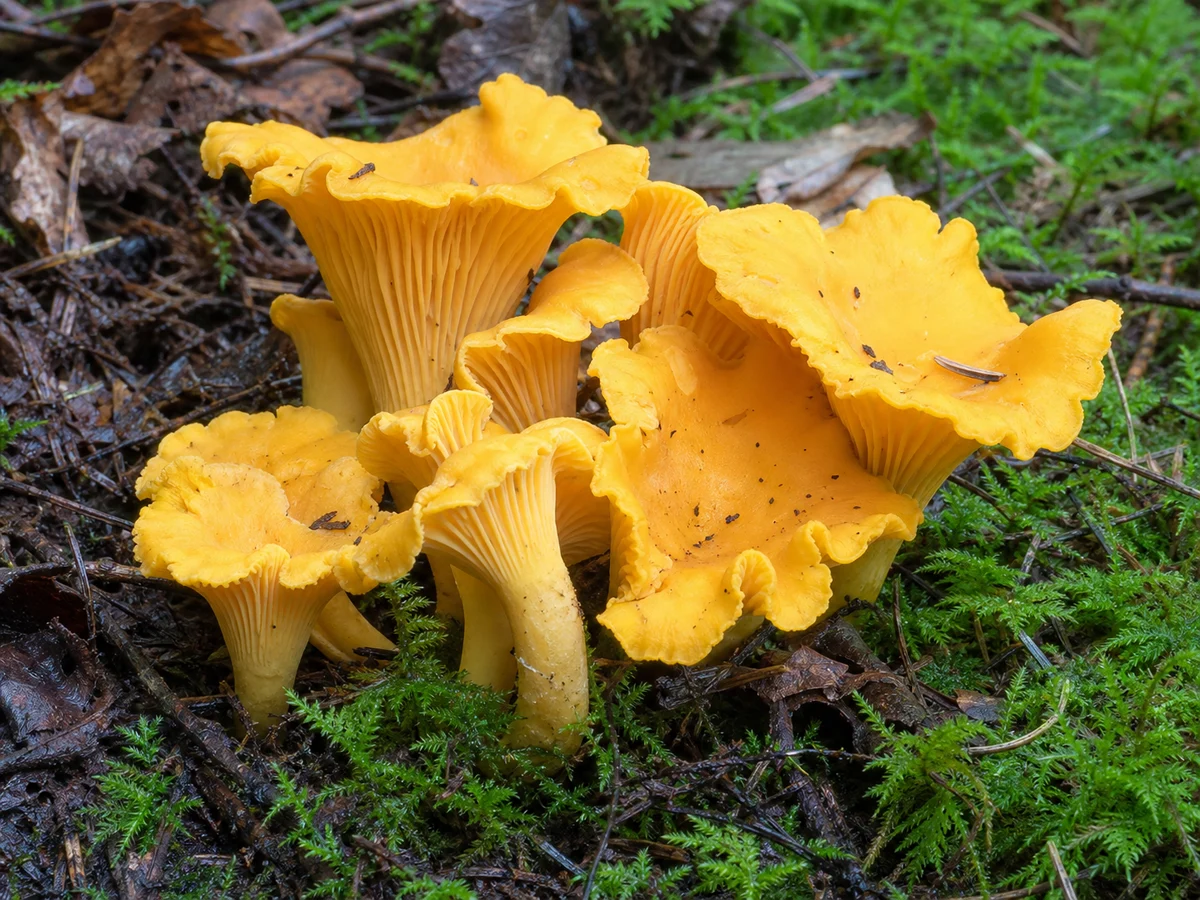
The toxic jack o'lantern has thin, sharp true gills that can be separated like blades. It usually fruits in dense clusters from wood or buried roots near a stump.
A chanterelle rises from soil alone or in a loose scatter, so both the underside and the growth substrate should agree.
Both mushrooms can be orange or yellow, which makes cap color unsuitable as the deciding feature. Check the ridges or gills, determine whether the specimen grows from wood, and examine its clustering.
A deeper orange tone may support a jack o'lantern suspicion, but color cannot clear a pale specimen for eating.
A spore print adds evidence after the underside and habitat checks, though chanterelle and jack o'lantern prints can both appear pale. Use the print to slow the comparison and document the specimen rather than expecting color alone to settle the pair.
Learn from an experienced local identifier when possible because photographs cannot reproduce the smell, ridge texture, or the way a mushroom attaches to the ground. Those physical observations help a beginner test the whole identification.
Never taste a wild mushroom to identify it because a toxic species can cause harm without providing a reliable answer, while structure, substrate, spores, and careful comparison supply safer evidence.
When two mushrooms look close, slow down and treat them as dangerous lookalikes until you are certain. Foraging safety rules come before raw-food questions, especially for a new forager.
Still, a jack o'lantern is only one of many risks. Other poisonous mushrooms can share a golden, brown, or pale cap, so color never clears a wild mushroom for the pan.
- Identification
- Confirm the ridges and substrate.
- Cooking
- Heat every piece through.