Scandinavian mushroom season centers on August through October, but latitude, forest type, recent rain, and wind move the useful window. Plan a small target set, verify access in the exact country and woodland, and sort every funnel chanterelle individually around deadly webcap habitat.
Mushroom foraging in Scandinavia is usually most productive from August through October, but the useful week moves with latitude, elevation, forest type, and recent weather. Denmark, Norway, and Sweden form Scandinavia in the strict geographic sense, while Finland belongs in this guide only as a clearly labeled Nordic comparison.
A reliable trip starts with three separate clocks.
Check the seasonal window, then the forest's retained moisture, then the current access rule for the exact place you plan to enter.
When is mushroom season in Scandinavia?
Official Danish and Finnish guidance places the broadest mushroom abundance between August and October. That range opens a scouting period, but it does not promise that a southern beech wood and a northern spruce forest will fruit together.
Warning
A productive date and a full basket do not identify any mushroom. Preserve every specimen intact, keep different species separate, and obtain qualified local confirmation before any food decision.
- Latitude changes soil warmth and frost timing, while elevation can make one valley and its upland forest behave like different regions. Coastal air may keep one woodland mild and damp as an inland site dries or freezes.
- Rain also has a sequence. One shower can darken the litter without wetting the root zone, while repeated rain followed by mild, calm days can leave moss, duff, and buried wood moist enough to support fruiting.
- Wind can close that window quickly. Exposed caps lose water, leaf litter dries from the surface down, and a promising forecast becomes a poor field day when the ground beneath the top layer remains dry.
Use the month to start watching, then let ground moisture and overnight temperatures decide whether to travel. A week with rain, stable mild nights, and limited drying wind earns a closer look than a wet afternoon after a long drought.

What forest types will you walk through?
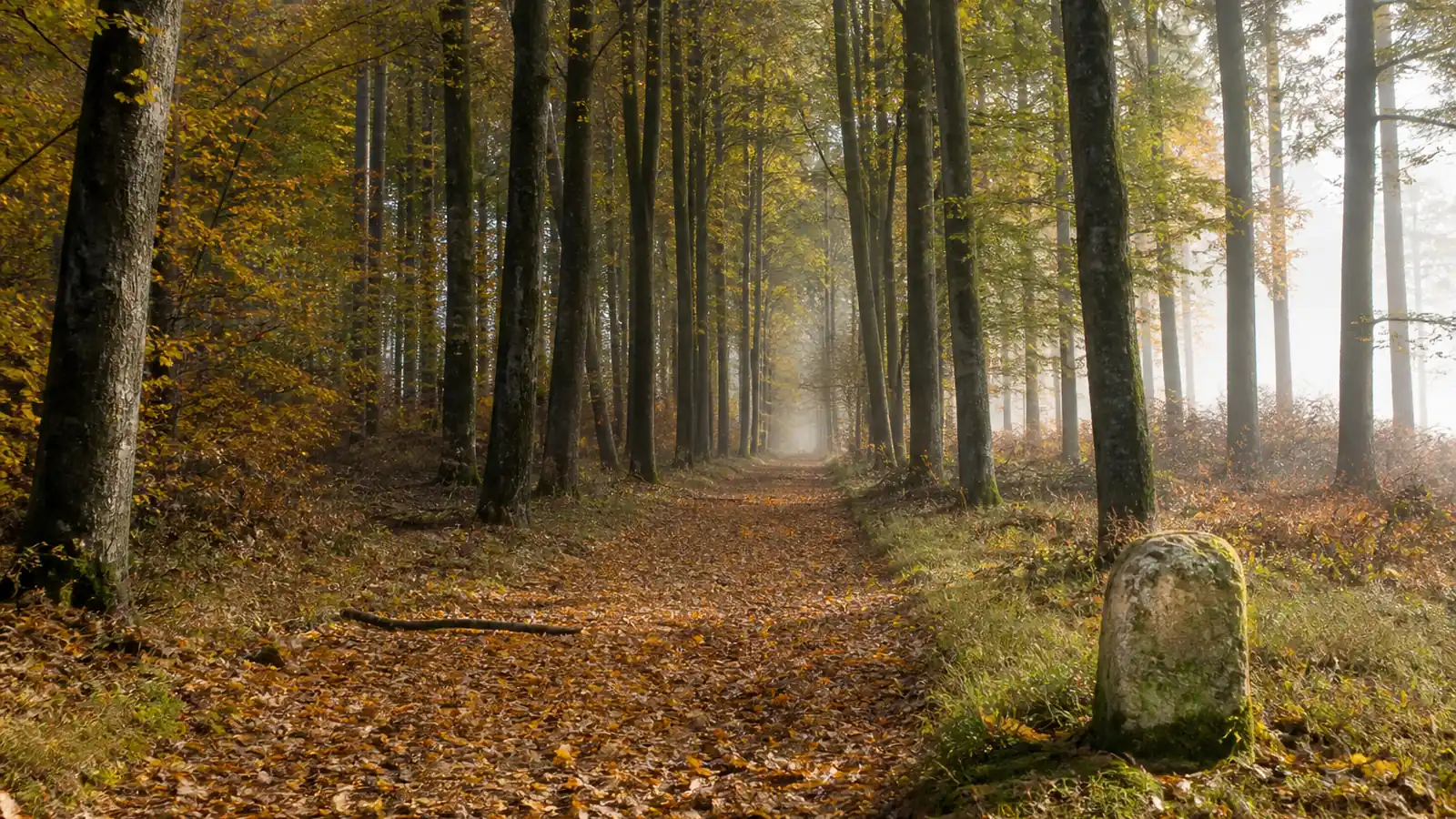
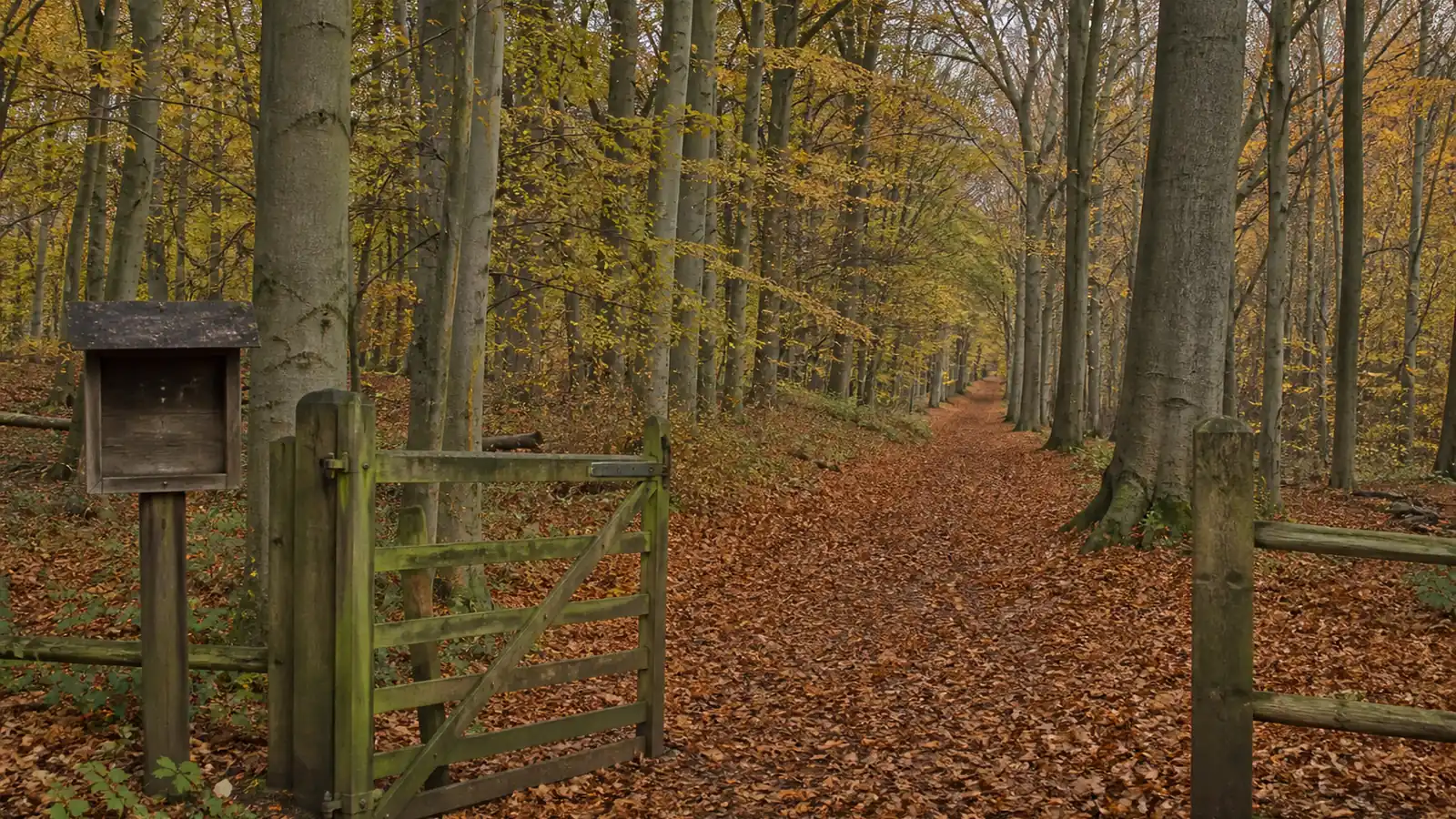
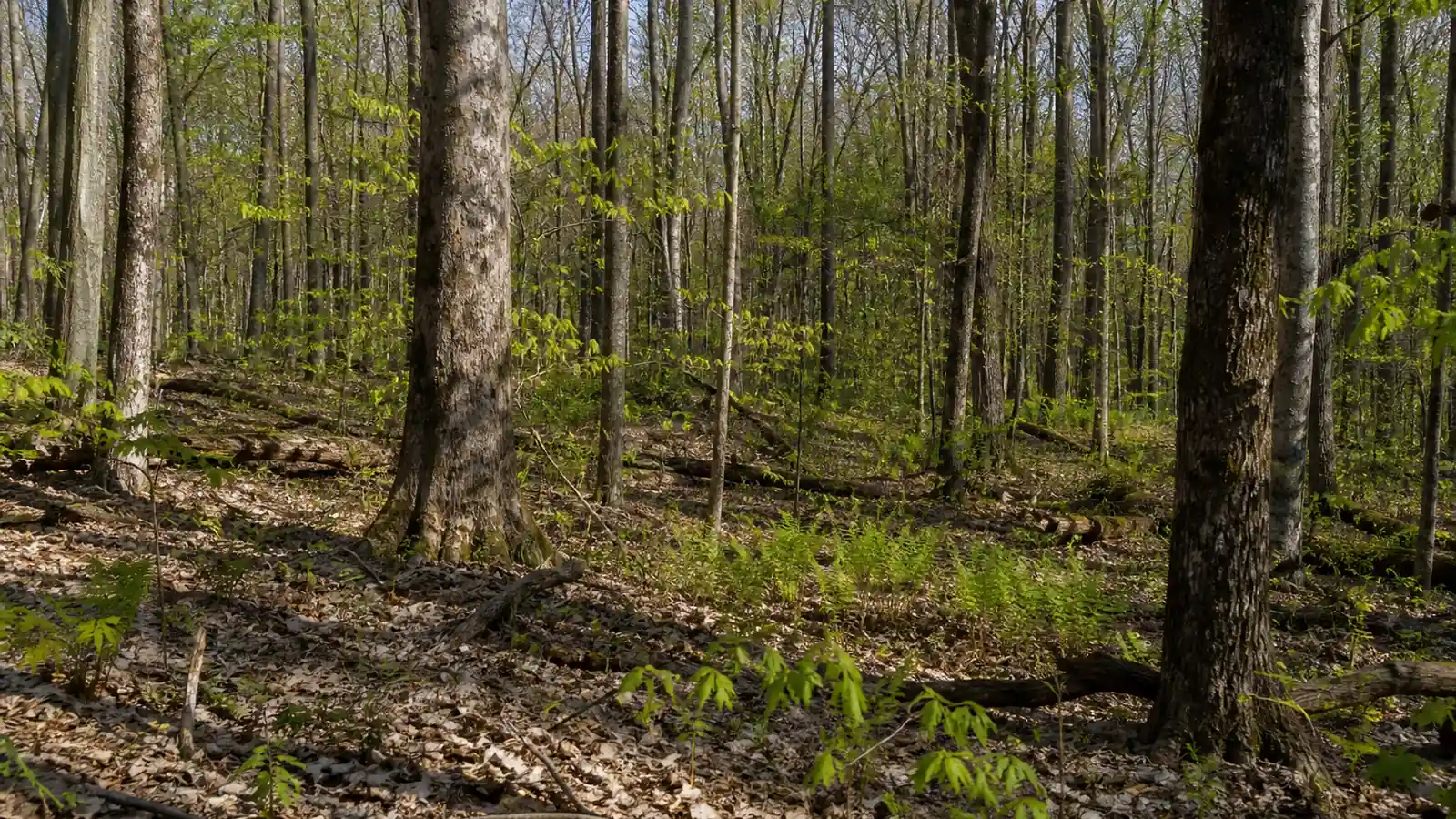
Southern Scandinavia includes beech and oak woodland, mixed forest, parks, and planted conifers.
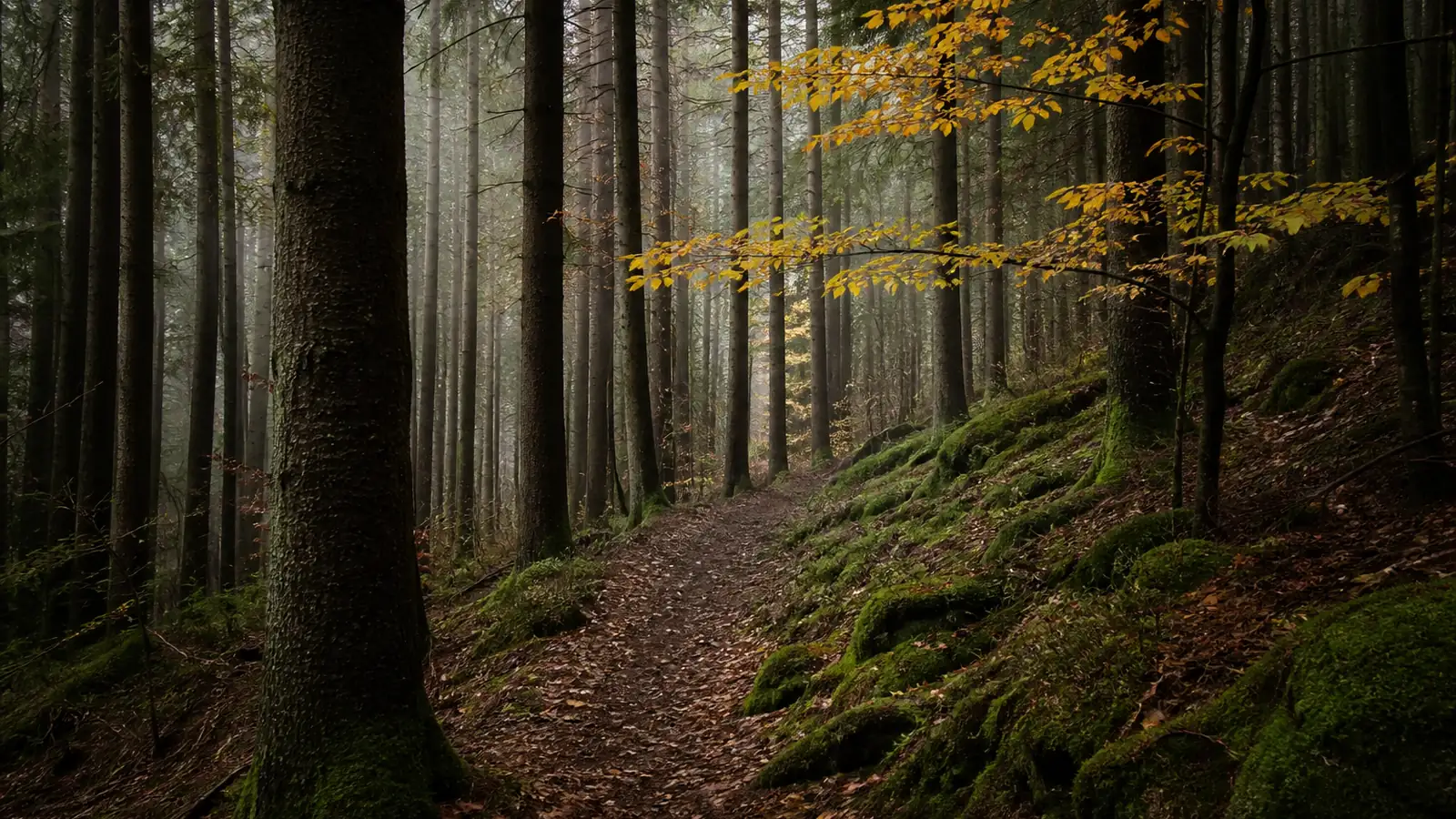
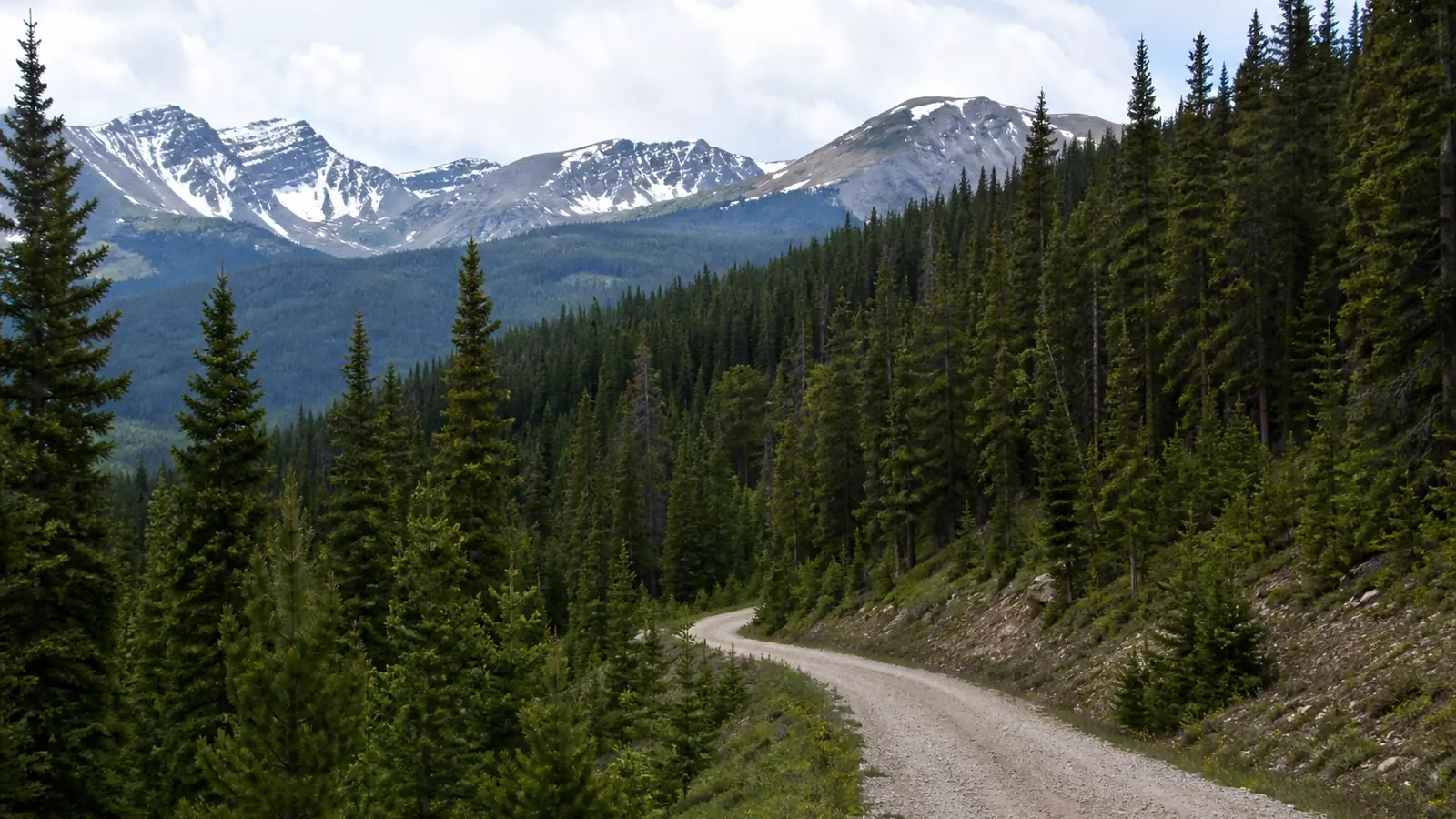
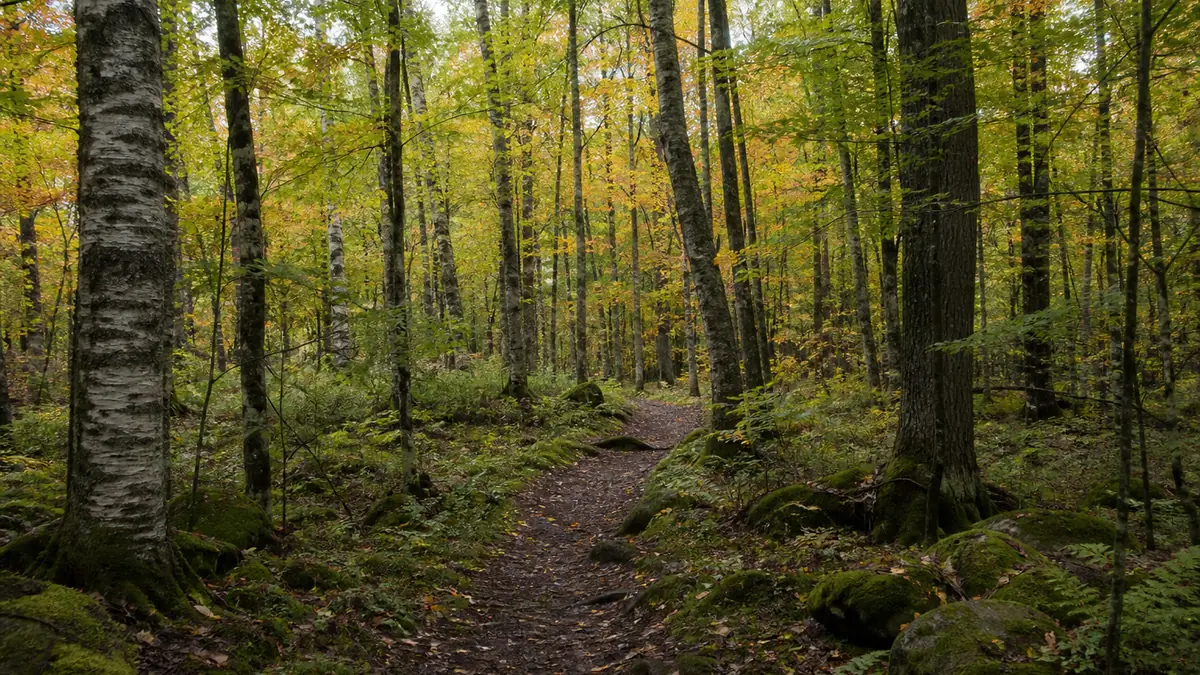
Farther north and higher in elevation, spruce, pine, and birch become more important clues, but no country border produces one uniform forest.
- Beech and oak litter
- Test the moisture below the leaves and record the nearest living trees
- Spruce and pine duff
- Compare sheltered moss with exposed needle beds before extending the walk
- Birch ground
- Keep the tree, soil, and complete mushroom together in the field record
- Buried wood
- Check attachment because a wood-growing fungus can appear to rise from soil
Tree partners do not prove identity, but they reduce random searching. Porcini and many other forest mushrooms form close relationships with particular trees, so a habitat record has value only when the candidate's full structure supports it.
Moss can preserve moisture after nearby ridges have dried. Dense conifer duff may also look damp on top while the mineral soil beneath it remains too dry, which is why a quick finger check under the surface matters.
Build a field loop around contrasts that can answer a question.
Compare a beech hollow with a windy ridge, or a mossy spruce edge with a dry pine stand, then stop when the ground conditions explain where the moisture went.
Change habitat before adding distance. Walking another five kilometers through the same dry forest repeats the same failed test, while a shaded depression or different tree community can reveal whether the local window is open.
Species that turn up right across this region are gathered in the European species list, which is the wider net behind the four targets below.

What edible mushrooms grow in Scandinavia?
A short target set is easier to learn than every edible name in a field guide. Chanterelle, porcini, hedgehog mushroom, and funnel chanterelle make a useful study set because each demands a different structural check.
The familiar yellow color of a chanterelle is not a test. Sharp true gills, growth from wood, unusual texture, or a different attachment can redirect the specimen toward another group even when the cap looks convincing from above.
A porcini-like bolete needs its complete pore surface and stem. Check color changes after handling or cutting, inspect the flesh, note the tree partner, and reject old material whose pores or texture no longer preserve useful characters.
Hedgehog mushrooms offer a distinctive toothed underside, but one feature still does not settle condition, contamination, or local edibility advice.
Keep the base, substrate, surrounding trees, and photographs with the specimen.
Funnel chanterelles are small and often collected in quantity, which changes the failure mode.
The danger is no longer one mistaken showpiece. It is one unrelated brown mushroom disappearing among dozens of thin stems and folded caps.
Each target keeps its own evidence standard. Never transfer confidence from an easy first character to a different species, and never let a productive patch lower the inspection standard.

How do you sort funnel chanterelles safely?
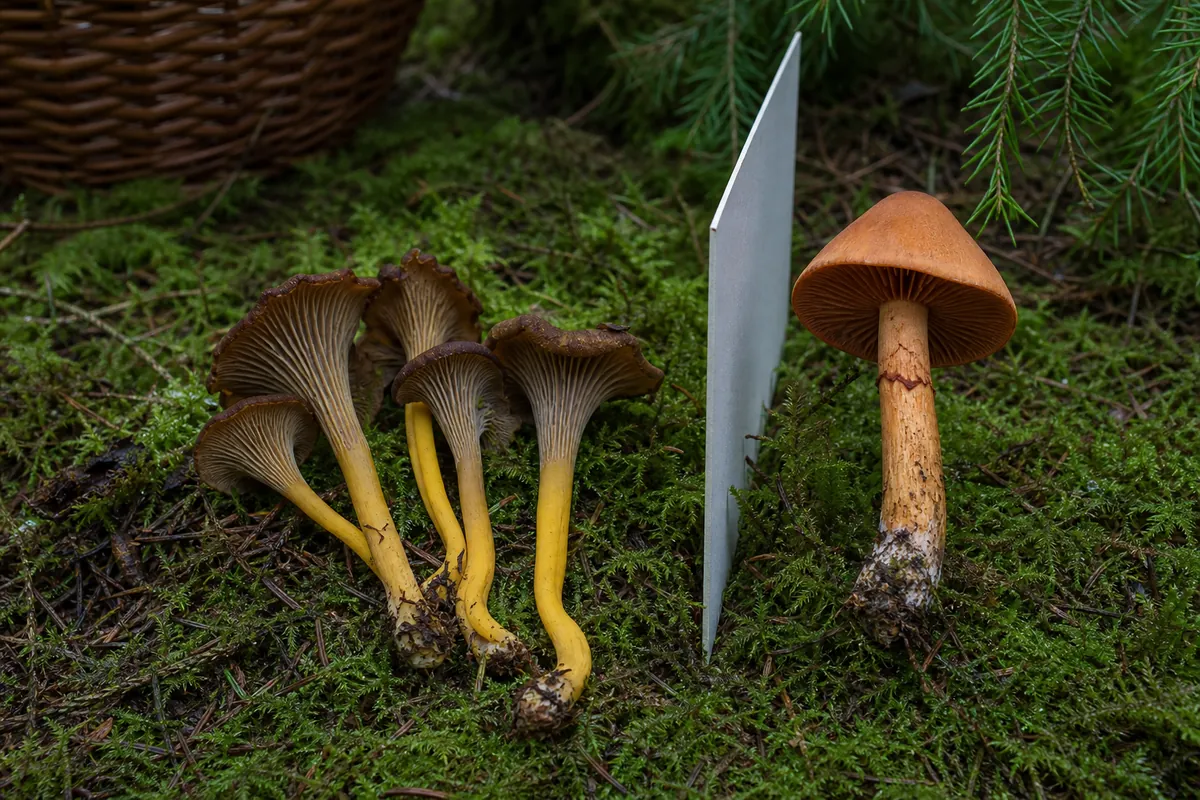
Norwegian Poison Information warns that deadly webcaps grow in the same habitat as funnel chanterelles and can be mixed into a collection.
The mushrooms do not need to look identical from every angle for this error to happen.
A deadly webcap can cause severe kidney damage in a very small amount. Symptoms may wait at least 36 hours, and kidney failure can develop several days after the meal, so feeling well that evening does not clear the exposure.
The safest control occurs before the basket becomes crowded.
Pick and inspect one candidate at a time, and place uncertain material in a separate evidence container that will never enter the food collection.
Do not sweep small mushrooms into a bag or trim away bases in the forest. Those shortcuts remove characters and allow fragments from different species to travel together.
One-by-one sorting is the control that matters because a later glance across a mixed pile cannot restore the identity of broken caps and detached stems. If the collection can no longer be matched specimen by specimen, leave it out of food.
Can you pick under the right of public access?
Sweden's right of public access allows moderate picking of wild mushrooms in many places, but protected species, nature reserves, national parks, gardens, planted areas, and local restrictions can change the answer. Access near homes also carries a duty not to disturb residents.
Norway likewise allows mushroom picking in open country.
The Norwegian Environment Agency still tells visitors to check the rules for protected areas and to respect homes, wildlife, livestock, and other users.
Denmark requires a narrower reading.
The Danish Nature Agency describes personal collection on state land in moderate quantities, while access in private woods is generally limited to roads and paths from 6 a.m. until sunset and requires distance from buildings.
- Read local signs, temporary closures, reserve rules, ownership terms, and commercial-use conditions. A custom in one country does not travel across the border with you.
- Keep the amount modest enough to inspect, separate, review, chill, and use without waste. A legal ceiling is not a collecting target.
- Exclude polluted roadside and industrial ground. Public access does not make every collection site suitable for food.
Verify the exact woodland before departure and check the entrance notice again on arrival. Save the official map or rule page offline when reception may be weak.

Why is Finland's false morel treated differently?
Finland is a Nordic country, but it is not part of Scandinavia under the strict geographic definition used here.
It belongs in the comparison because travelers often combine Finland with Denmark, Norway, and Sweden when planning a northern European mushroom trip.
Finnish everyman's rights allow berry and mushroom picking in many places, with limits around homes, gardens, cultivated fields, protected areas, and restricted zones. Luontoon also advises avoiding collection close to busy roads and industrial facilities because of contaminants.
The false morel creates a more important boundary. Finland is among the few countries where sale has been permitted under specific handling guidance, yet Finnish official sources still identify false morel among mushrooms capable of life-threatening poisoning.
Boiling recommendations do not remove every toxin residue, and vapor from preparation creates another exposure path. Traditional use therefore does not turn the mushroom into an appropriate beginner target.
Leave false morels out of a beginner food plan.
Photograph them in place, preserve location and habitat notes if study is lawful, and use the false morel comparison to understand why a brain-like cap and chambered interior need a separate assessment.
What checks run from forest floor to kitchen?
A safe collection preserves the link between mushroom, place, and evidence. The process begins before lifting a specimen and ends only after every uncertain or damaged mushroom has been excluded.
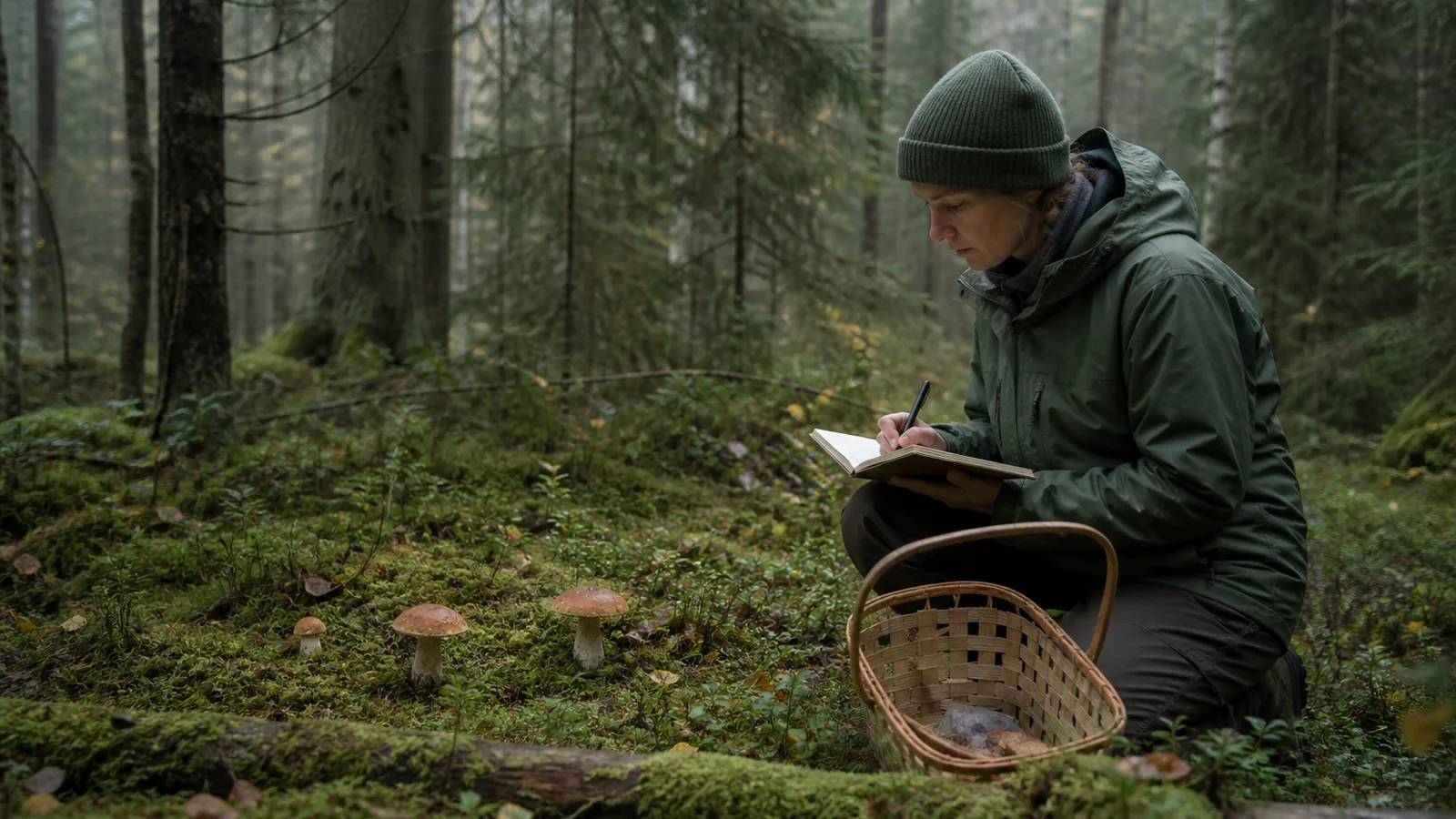
The basket carries evidence before it carries food.
A breathable container, paper separation, complete specimens, and field photographs give a qualified reviewer something defensible to assess.
Never use an identification app as the final authority. Norwegian Poison Information explicitly warns against using AI tools to decide whether a wild mushroom is safe to eat.
Cook only mushrooms that have been confirmed for that exact collection and that remain in sound condition. Cooking cannot correct uncertain identity, and it does not neutralize every mushroom toxin.

Where do you find country rules and poison contacts?
Save official access guidance and poison contacts before entering a forest with weak reception. If symptoms follow a wild-mushroom meal, contact the local poison service immediately and call the national emergency number for collapse, breathing difficulty, severe confusion, seizures, or another life-threatening condition.
Delayed symptoms need urgent advice even when the person feels better for a while.
- Preserve specimens, photographs, packaging, leftovers, and uncooked material.
- Record the preparation details, meal time, and first symptom time.
- Keep the names and contact details of everyone who ate the food.
Use the country you are physically in for both the access rule and the emergency call. Recheck official numbers before travel because services and contact details can change.
| Country | Broad access starting point | Check before collecting | Poison and emergency contact |
|---|---|---|---|
| Sweden | Moderate wild mushroom picking is commonly allowed under public access | Protected areas, protected species, homes, gardens, local signs, fire or hunting restrictions | Swedish Poisons Information 010-456 6700 for less urgent cases, 112 and ask for Poison Information in an emergency |
| Norway | Picking is commonly allowed in open country | Nature-reserve rules, homes, wildlife, livestock, local closures, and current notices | Norwegian Poison Information 22 59 13 00, emergency 113 |
| Denmark | State land permits moderate personal collection under current guidance | Private-wood access hours, roads and paths, distance from buildings, local quantity limits, and commercial permission | Giftlinjen 82 12 12 12, emergency 112 |
| Finland, Nordic comparison | Everyman's rights commonly allow mushroom picking in many places | Homes, gardens, fields, protected areas, roadsides, industrial ground, and local restrictions | HUS Poison Information 0800 147 111, emergency 112 |
Sources & References
- Swedish Environmental Protection Agency, Picking flowers, berries and mushrooms Swedish public-access and collection boundaries.
- Norwegian Environment Agency, Picking berries, mushrooms and plants Norwegian open-country access and protected-area checks.
- Helsenorge, Poisonous mushrooms Deadly species, funnel-chanterelle mixing, delayed symptoms, and poison response.
- Danish Nature Agency, Mushroom hunting Danish season, containers, personal collection, and private-wood access.
- Luontoon Finland, Berry and mushroom picking Finnish everyman's rights, season, restricted areas, and polluted-site guidance.
- Finnish Food Authority, Evaluating gyromitrin risks in false morels False-morel toxin persistence after recommended preparation.
- HUS, Poison Information Center Finnish poison contact and life-threatening mushroom list.
- Swedish Poisons Information Centre, English service Swedish poison-information and emergency contacts.
- Giftlinjen Denmark, About the poison hotline Danish nationwide poison-information service and contact.