
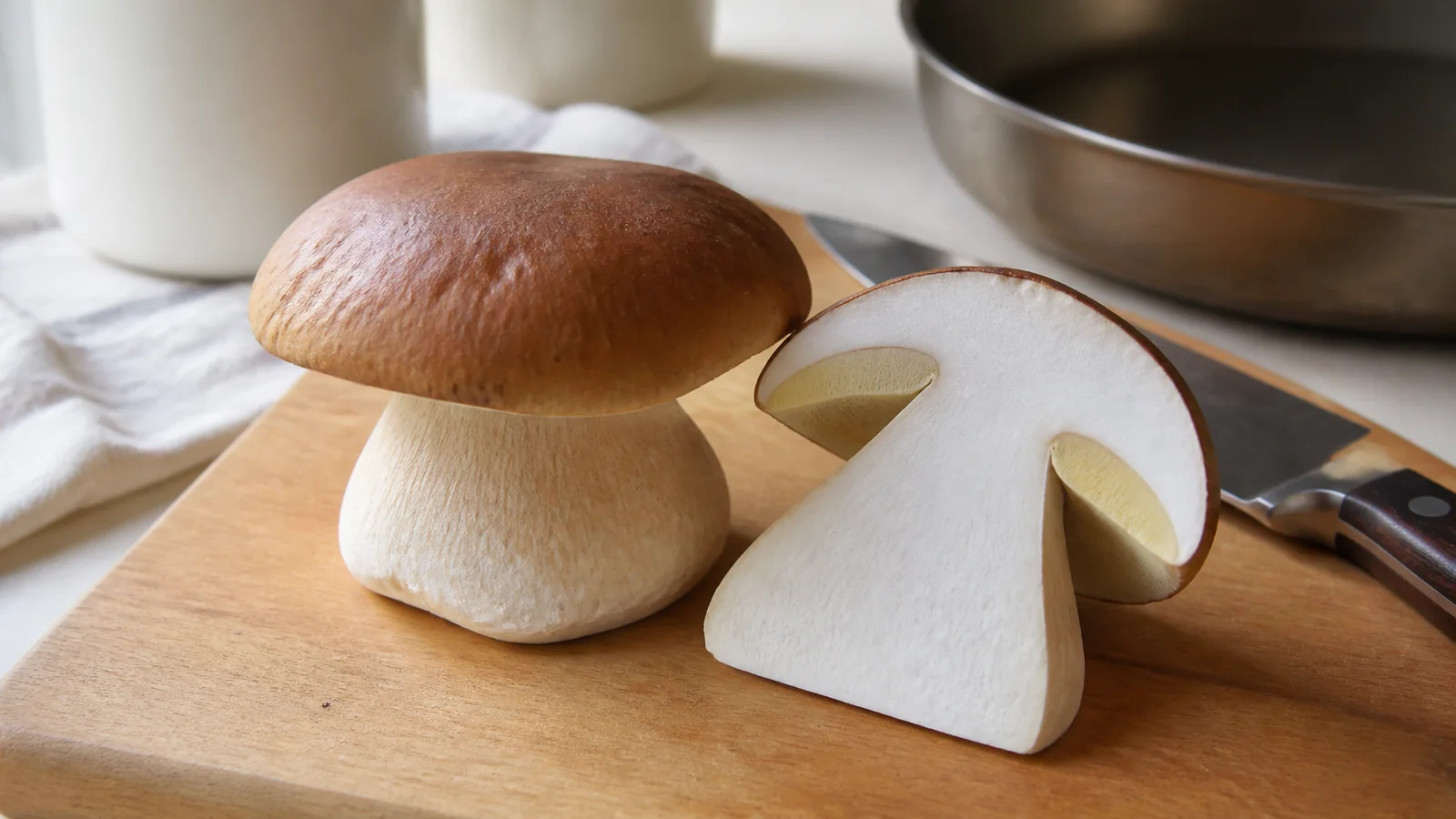
Yes, verified porcini can be a reasonable pregnancy food when the mushrooms are sound and every piece is thoroughly cooked. Skip raw shavings, an uncertain wild bolete, an anonymous dried mix, and any restaurant dish whose source or cooking method cannot be explained.
No controlled human pregnancy study specific to porcini was identified. The decision rests on the long culinary use of the Boletus edulis group, official pregnancy food-safety rules, documented problems in products sold as porcini, and the limits of mushroom identification after processing.
The useful question is not whether porcini appears on an edible list.
It is whether the exact fresh mushroom, dried packet, or plated portion still carries enough evidence to support that name.
How much proof does a porcini label provide?
Warning
Porcini should mean Boletus edulis or a verified edible member of its close species group. A menu word, brown cap, sponge-like underside, or imported package cannot prove that identity by itself, and cooking cannot rescue every poisonous mushroom mixed into the batch.
Porcini, cep, penny bun, and king bolete are culinary names associated with Boletus edulis. In real trade, porcini can also function as a broader category for similar edible boletes collected across several countries.
That broader use transfers the most important decision to the identifier, processor, importer, or restaurant. The farther the mushroom travels from a whole specimen, the more the buyer depends on that chain being accurate.
Hong Kong's Centre for Food Safety investigated two suspected poisoning cases involving four people who developed vomiting and nausea after eating products described as porcini.
The authority also reported European alerts in which dried porcini contained poisonous mushrooms.
Those incidents do not make verified Boletus edulis poisonous. They show that the product name is only as reliable as the mushrooms placed behind it.
A commercial source should preserve an intact package, supplier, lot or date, country of origin, and a clear mushroom name.
That record should extend to a restaurant, which should identify the product form and say whether the mushrooms were cooked from raw or rehydrated before they reached the plate.
Loose dried pieces from an unmarked market bin remove the lot and importer before you even inspect the mushroom. A forager's gift can remove the same evidence unless the person who identified every specimen is available to answer questions.
The source question matters more during pregnancy because vomiting and diarrhea can become a hydration problem quickly. It also matters because a poisonous mushroom remains poisonous even when a cook applies the correct technique for edible porcini.
When the sponge and cut flesh disagree
A likely porcini has pores beneath the cap rather than thin blade-like gills.
The young pore surface is pale, the stem is stout with fine pale netting, and the dense white flesh generally stays white when cut.
- Underside
- A sponge-like layer of tiny pores, not gills
- Stem
- Stout and solid with pale raised netting, especially toward the top
- Cut flesh
- White and firm without strong blue or red staining
- Whole specimen
- Cap, pore layer, stem, base, habitat, and condition all remain available
- Decision
- Every feature and a qualified regional identifier must agree
Those features form a pattern, not a shortcut. Pore color changes as a mushroom ages, stem netting can be faint, insects damage flesh, and regional porcini relatives do not all look identical.
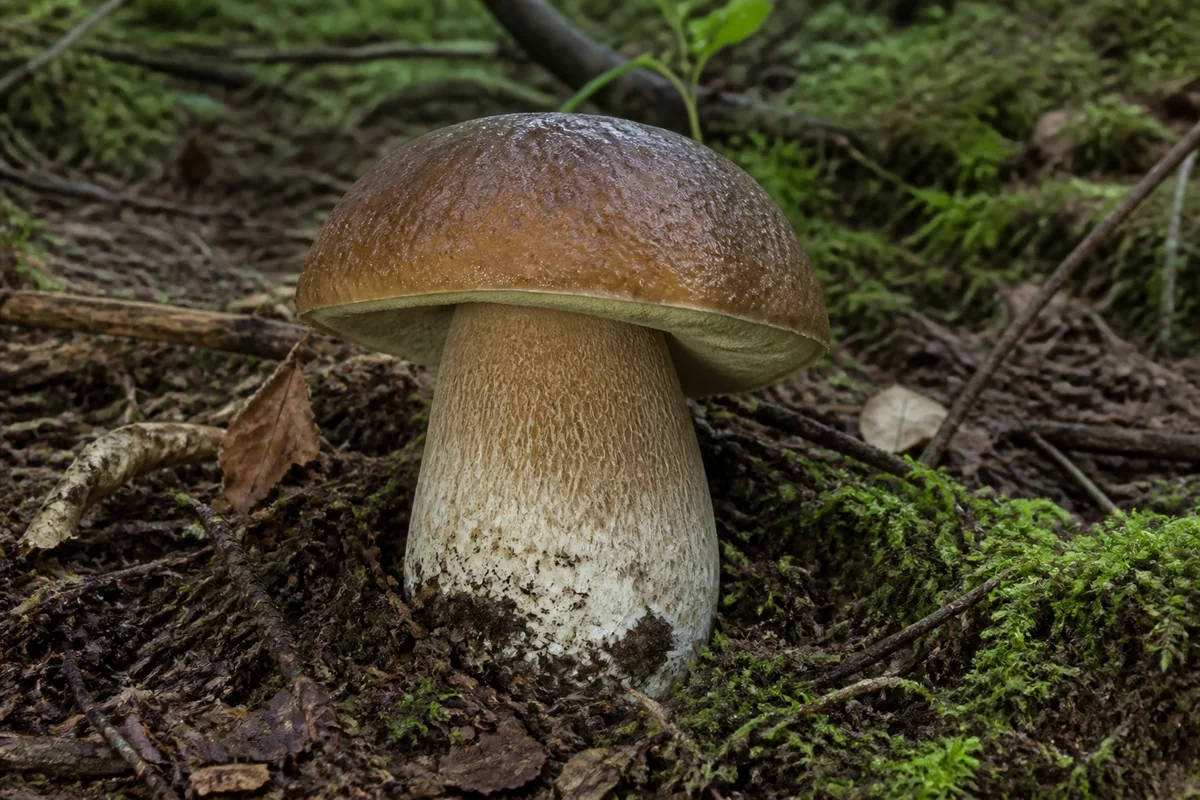
Red or orange pores should stop the food decision because they point outside the normal Boletus edulis pattern.
Strong blue staining, a red stem, a missing base, or flesh that changes unexpectedly also requires rejection or expert reassessment.

The bitter bolete can resemble porcini and ruin a dish without being the main poisoning concern. Other boletes can cause severe gastrointestinal illness, so an edible-looking sponge never clears a mixed basket.
Do not use a raw nibble as a pregnancy identification test.
Taste can expose you to an uncertain mushroom, and the absence of bitterness does not establish the species.
A photograph also loses texture, odor, the underside angle, the stem base, and the relationship between the mushroom and nearby trees. A qualified local identifier can examine those details and the regional confusion set before the mushroom enters food.
Check every fruit body separately because one correct porcini does not name the next cap.
Keep unlike or doubtful boletes out of the same bag so fragments cannot move into the accepted batch.
SafetyAre Hedgehog Mushrooms Safe During Pregnancy?Dry slices hide the mushroom that supplied them
Drying preserves flavor while removing the whole-body evidence that supports identification. A dark slice may show cap flesh and pores, but it rarely preserves the stem base, habitat, full pore color, cut reaction, or relationship among all features.
The problem is measurable rather than hypothetical.
Researchers used DNA sequencing on one commercial packet of dried Chinese porcini purchased in London and found three species. All three were previously unknown to science, which proves the packet name did not provide species-level identity but does not prove those three species were poisonous.
A later study inspected and DNA-barcoded nine dehydrated porcini products.
The researchers reported pieces with visible decay and examined mismatches between product labeling and the mushrooms inside.
That ranking shifts the burden from visible anatomy to the processor as the pieces become smaller and less recognizable.
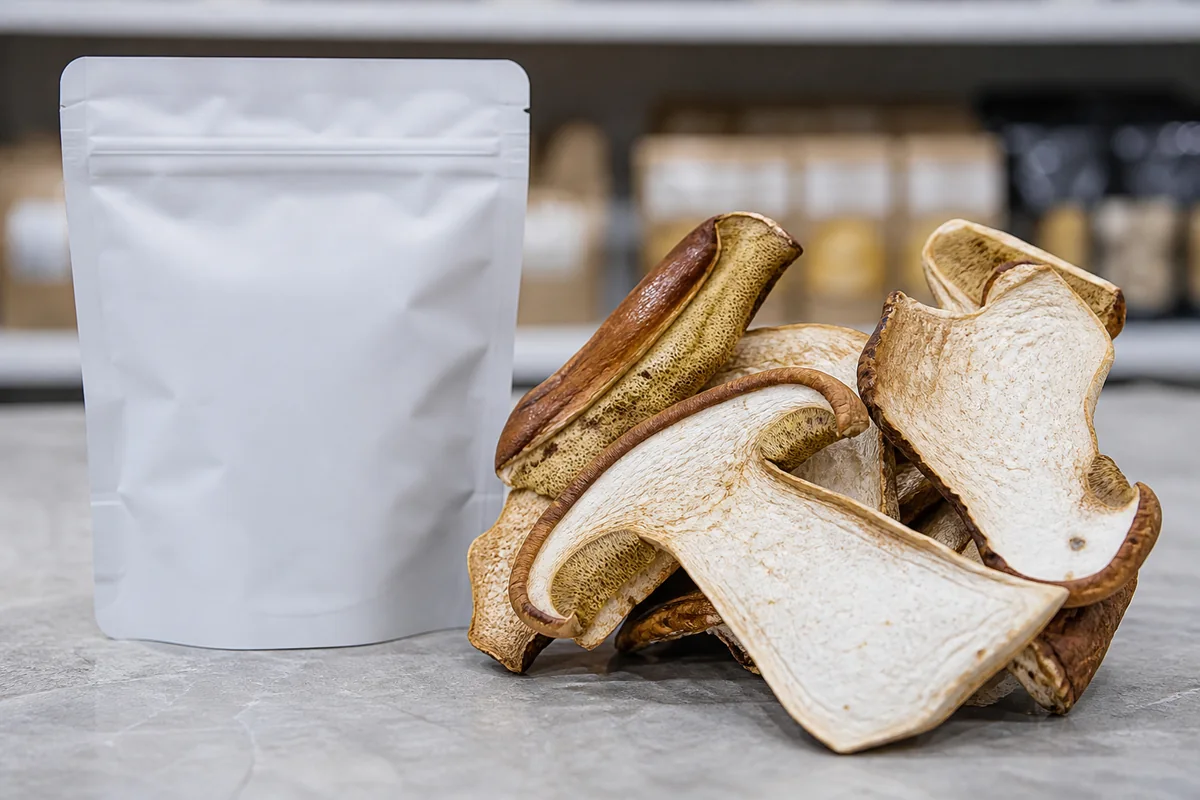
Choose an unopened package from a seller who can identify the processor and product origin. Prefer large recognizable slices over powder when both serve the same cooking job, since you can inspect the pieces for mold, decay, insects, unexpected colors, or a different pore structure.
Reject a package with moisture, a broken seal, musty or sour odor, visible mold, or pieces that do not resemble the rest. Price and imported origin do not correct a damaged product.
Keep the package until the meal has been eaten without a problem.
The lot, importer, and date can matter far more than a photograph of a dark cooked fragment if someone becomes ill.
Rehydration softens a dried mushroom but does not verify it. Lift the slices from their soaking liquid so grit stays behind, inspect them again, and complete a real cooking step.
Porcini powder deserves the strictest source rule because no household check can restore the missing anatomy. Use it only from an accountable food producer, and add it early enough that the powder cooks with the dish rather than dusting a finished plate.
SafetyAre Oyster Mushrooms Safe to Eat During Pregnancy?Cook the meal, not the name
Food authorities in Denmark advise against eating mushrooms raw because many can cause stomach pain or nausea. Regional health guidance from Piedmont specifically includes porcini in the Boletus edulis group among mushrooms that should be cooked.
That conservative rule matters more during pregnancy.
Raw carpaccio, uncooked shavings, and a garnish added after the heat is off leave the mushroom outside the complete clean, separate, cook, and chill path.
| Stage | What to do | What should stop the meal |
|---|---|---|
| Arrival | Confirm source, identity, package or identifier, and sound condition | Anonymous, mixed, slimy, moldy, or damaged batch |
| Cleaning | Inspect pores and flesh, trim damage, and rinse under cool running water | Soap, produce cleanser, or cleaning that hides decay |
| Preparation | Slice evenly and keep raw mushroom tools away from ready food | Whole thick pieces with unseen insect or spoiled areas |
| Cooking | Apply sustained heat to every piece until hot and tender throughout | Raw center, cold garnish, or a quick surface sear |
| Storage | Serve promptly or chill leftovers in a shallow covered container | Long room-temperature holding or an unknown storage history |
That preparation path begins with FDA produce guidance, which calls for running water rather than soap or detergent. A soft brush can release soil from the pores, but damaged, waterlogged, or insect-filled tissue should be cut away rather than scrubbed into acceptability.
Slice fresh caps and stems so the interior remains visible and pieces cook evenly.
For dried porcini, rehydrate first, leave sediment behind, and inspect the softened pieces before they reach the pan.
Use an uncrowded pan or a simmering dish that keeps every piece under sustained heat. The porcini should become hot and tender through the center, with no raw shaving held back for the finish.

No official source used here publishes one universal porcini time or internal temperature. Piece thickness, moisture, fresh or dried form, and cooking method change the path, so an invented number would create confidence the evidence does not support.
Start with a modest portion when the batch and preparation checks pass, especially if porcini is new to you.
Then keep other unfamiliar wild mushrooms out of the meal so a reaction can be connected to one ingredient.
At a restaurant, ask whether the porcini arrived fresh, dried, or powdered and whether it was cooked into the dish. Choose something else when the answer is only that porcini is edible or that the kitchen uses an expensive imported product.
Move leftovers into refrigeration promptly.
Thorough cooking completes the mushroom step, while careless holding can still create an ordinary food-safety problem.
What should you save after a suspect bolete meal?
Nausea, vomiting, abdominal pain, or diarrhea after a porcini-labeled meal warrants a call to Poison Control in the United States at 1-800-222-1222, or the local poison service. State the pregnancy during the first call and do not wait for another diner to become sick.
That timing helps the specialist but does not settle identity.
Some mushroom illnesses begin quickly, while symptoms starting eight hours or more after eating can signal a different and potentially serious syndrome.
So do not induce vomiting or use a home remedy unless a clinician directs it. Use emergency services for collapse, seizure, severe confusion, breathing trouble, inability to wake, or signs of severe dehydration.
Keep physical and documentary evidence because the cooked food may no longer resemble the original mushroom.
- Refrigerate uncooked specimens, cooked leftovers, dried pieces, soaking liquid, and trimmings in separate containers.
- Save the package, lot or date, receipt, seller or restaurant name, and country of origin.
- Keep habitat, whole-mushroom, underside, stem-base, and cut-flesh photographs from a foraged batch.
- Record the meal time, portion, preparation, and the onset of every symptom for each diner.
- Tell the specialist whether the product was fresh, dried, powdered, restaurant-prepared, gifted, or self-foraged.
A symptom-free companion does not clear the meal because portions and species fragments may differ. The safe endpoint is the assessment of a poison specialist or clinician who can use the timing, original product, cooking history, and pregnancy information together.
Sources & References
- Are Bolete Mushrooms Safe to Eat?, Hong Kong Centre for Food Safety
- What's for dinner? Undescribed species of porcini in a commercial packet, PeerJ
- It's what's inside that counts: DNA-barcoding of porcini commercial products, Food Control
- Poisonous mushrooms in Denmark, Danish Veterinary and Food Administration
- Mushroom safety recommendations, Regione Piemonte
- Safer Food Choices for Pregnant Women, CDC
- Selecting and Serving Produce Safely, FDA
- Wild Mushroom Warning, Poison Control