
Pink Oyster Substitute: What to Use and Why
Pink oyster mushrooms lose their color within about a minute of real heat, fading to gold or cream, and drying removes it too. That means a substitute never has to match the color, because the finished dish never shows it. What it has to match is thin flesh that tears into strips and crisps fast, and gray or pearl oyster does that in almost every case.
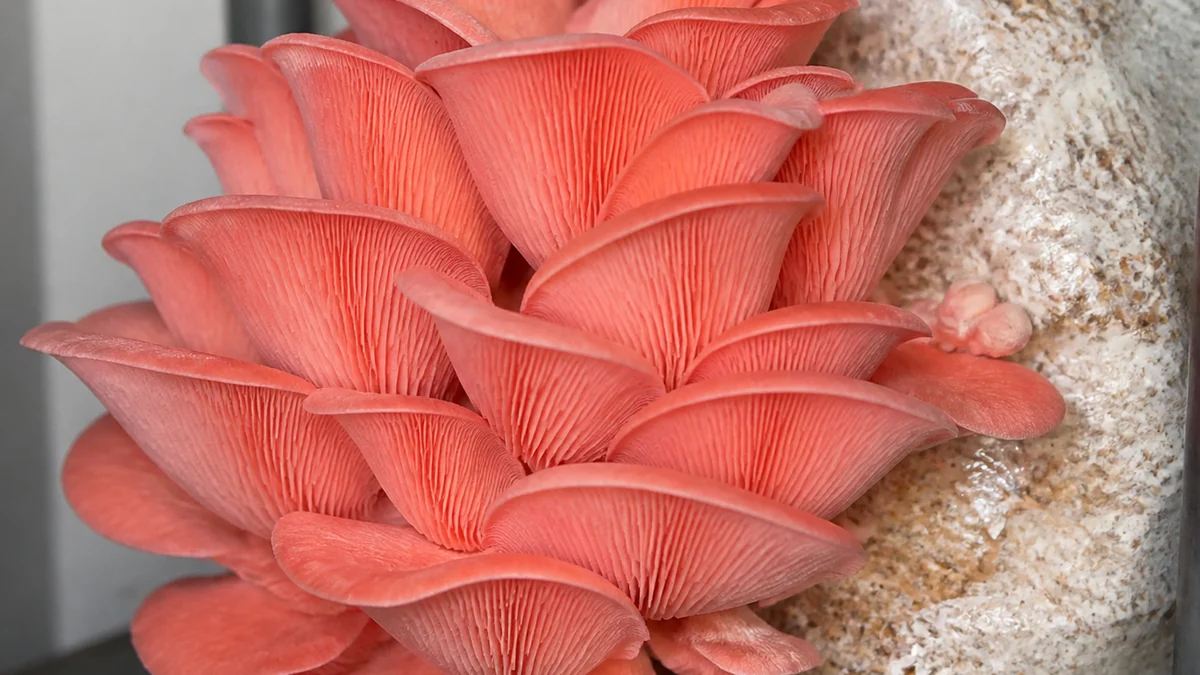
The closest overall match and the same genus. Tears into the same ragged strips, cooks in the same time, and the flavor gap is smaller than the color makes it look.
Better than any oyster if you are crisping. The frond structure browns harder and faster, though it does not behave like an oyster in a stir fry.
Meatier and thicker, so it browns rather than crisps. Use it for slices and steaks rather than for torn strips.
A flavor swap rather than a texture one. The right answer for anything simmered, where savory depth matters more than a crisp edge.
You bought them for the color, and about sixty seconds into the pan the color is gone.
That is not a cooking mistake, and it changes what a substitute has to do.
Do pink oyster mushrooms stay pink when cooked?
No, because the pink fades to gold, cream or gray within a minute of real heat.
Compare those properties before choosing a substitute. The first one is why the question is easier than it looks, and the third is why anybody is asking it.
The same thing happens in a dehydrator. Drying takes the color out along with the water, so dried pink oyster arrives as ordinary tan flakes.

What does survive is the smell, which sharpens as the color goes.
That aroma is the one property a substitute genuinely has to work at, and if you did get hold of some then cooking them well matters more than any choice on this page.
Three things go at once when the heat comes up. It is worth knowing which, because only one of them is a reason to buy a different mushroom:
- The pink, which shifts through salmon to gold and then to a plain cooked tan.
- Roughly two thirds of the volume, since thin flesh collapses fast.
- Any rawness in the smell, which is replaced by something sharper and more savory.
So what are you actually replacing?
Three different things, and only two of them can be substituted at all.
- Color
- Not substitutable, because it is absent from the finished dish either way.
- Texture
- Thin flesh that crisps fast at high heat. This is the real target.
- Flavor
- Mild and savory, noticeably sharper than a gray oyster.
- Availability
- Days rather than weeks, which is usually why you are reading this.
Color is the odd one out, and if you wanted a pink dish then no substitute fails you because the original would have failed you too.
Texture is what most people actually mean, and pink oysters are thin enough to tear into ragged strips, and they crisp at the edges before the middle goes soggy.
Flavor sits between the two. It is recognizably an oyster mushroom with more edge to it, and that gap is smaller than the color makes it look.
What should you use instead?
Gray oyster mushrooms, in almost every case. The other three are answers to narrower questions.
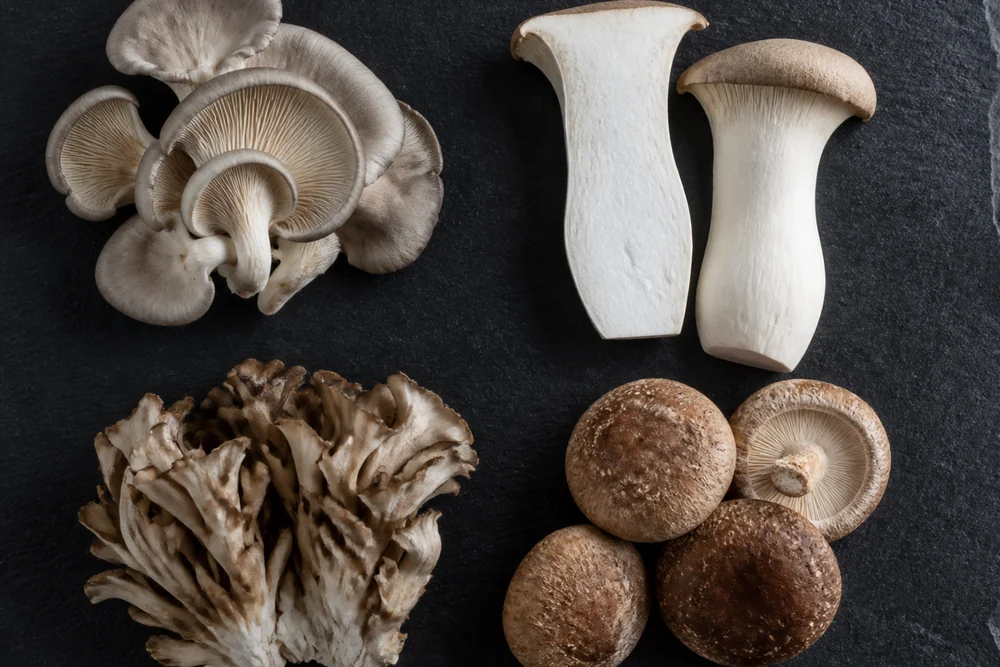
Four candidates, judged on what happens in the pan rather than on the shelf.
| Option | Texture match | Flavor match | Best for |
|---|---|---|---|
| Gray or pearl oyster | Very close | Close, milder | Almost everything |
| Maitake | Crisps better | Different, nuttier | Crisped strips |
| King oyster | Meatier, not thin | Milder still | Slices and steaks |
| Shiitake | Chewy, not crisp | Deeper, more savory | Anything simmered |
Read the table by the last column rather than the first. Three questions settle it:
- Are you crisping the edges, or cooking them into something wet?
- Do you need to tear the pieces, or are slices acceptable?
- Is the dish short and hot, or long and simmered?
Gray and pearl oysters are the same genus, tearing the same way and cooking in the same time, with a flavor difference small enough that most dishes will not report it.
Maitake beats them on one job and loses on the rest. It is not an oyster and does not behave like one in a stir fry, though its frond structure crisps harder than anything else on that table.
King oyster is the option people reach for and the least similar of the four. It is thick, dense and excellent, and none of those words describe a pink oyster.
One thing worth saying about the ranking. It assumes you can get all four, and in practice the gray oyster is also the one most likely to be on the shelf, which makes it the answer twice over.
Which substitute matches the texture?
Maitake for crisping, gray oyster for everything else.
The texture people want from pink oysters comes from three things together. Thin flesh, high heat and tearing rather than slicing, which exposes ragged edges that brown before the center collapses.
Tearing matters more than the species, because a sliced oyster mushroom and a torn one behave differently in the same pan.
The order of operations matters as much as the species:
- Tear rather than slice, so the edges are ragged and catch the heat.
- Get the pan properly hot before anything goes in.
- Cook in one layer, because a crowded pan steams and steamed mushrooms never crisp.
Dry the pan out first, as with any mushroom. Crowding produces steam and prevents browning, whatever substitute you choose.
Salt late here too. Salt pulls water out of thin flesh quickly, and a piece that releases its water before the pan is hot enough will steam rather than sear regardless of which of the four you bought.
Can you use dried instead of fresh?
For flavor yes, for texture no.
Dried pink oyster rehydrates soft. The cell structure that produced the crisp edge does not come back, so a rehydrated piece behaves like any other soft cooked mushroom.
Key takeaway
Treat dried pink oyster as a seasoning rather than as an ingredient. The soaking liquid carries real flavor into a stock, a risotto or a braise, and the pieces themselves are best chopped small rather than presented.
If the recipe wanted crisp strips, dried is the wrong purchase regardless of species. Drying them concentrates flavor and destroys texture, which is the correct trade for a soup and the wrong one for a garnish.
Why are they so hard to buy?
Because they spoil faster than a shop can sell them.
Pink oysters are among the most perishable cultivated mushrooms. Estimates of usable life run from a few days down to as little as twelve hours after harvest, and they bruise and dry out faster than a gray oyster does.
The color is part of the perishability problem rather than separate from it, since two days in a chilled cabinet costs some of the saturation that made the mushroom worth stocking in the first place.
That is a retail problem rather than a rarity problem. They grow quickly and easily, which is exactly why they are a favourite with small growers and almost absent from supermarket shelves.
The practical consequence is that a substitute is usually forced rather than chosen. If you want them reliably, growing them is the route most people end up taking, because a tropical oyster fruits fast and does not need a cold season.
What should you use in a specific dish?
By dish, because the ranking changes with the method.
Crisped strips as a bacon substitute want maitake first and a torn gray oyster second. Both reach the texture; the maitake gets there faster and browns harder.
A stir fry wants gray oyster, and cooking oyster mushrooms is the same short hot method either way. It cooks in the same time as the original, tears into the same shapes, and disappears into the dish exactly as the pink one would have.
Anything simmered wants shiitake instead. Once a mushroom spends twenty minutes in liquid, texture stops being the question and savory depth becomes it, and that is a job for shiitake rather than for an oyster.
Warning
One case genuinely has no substitute, and it also has no original. A raw pink garnish on a finished plate cannot be replaced by another mushroom, and it cannot be delivered by pink oysters either, because raw oyster mushrooms of any color are not worth eating.