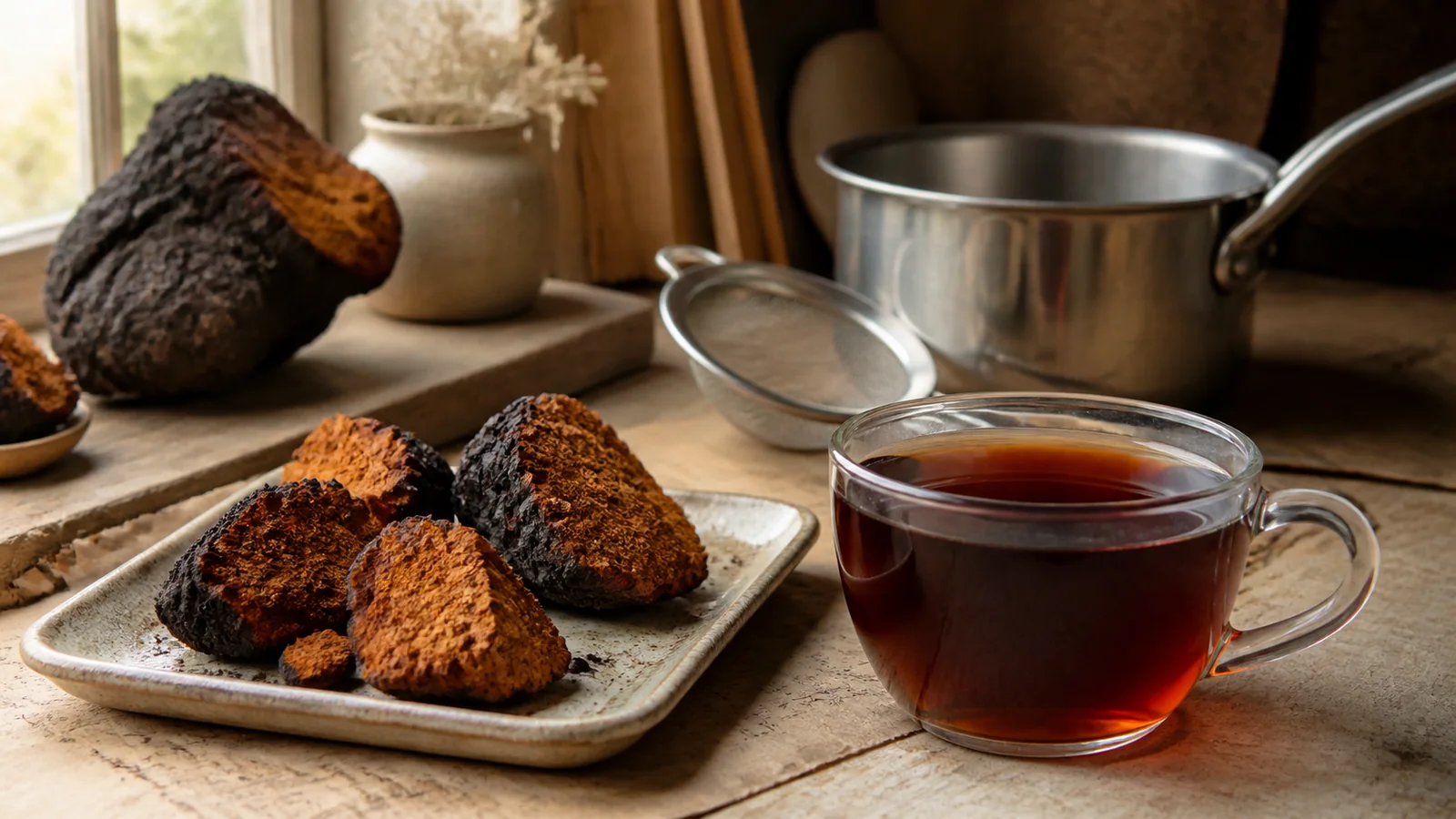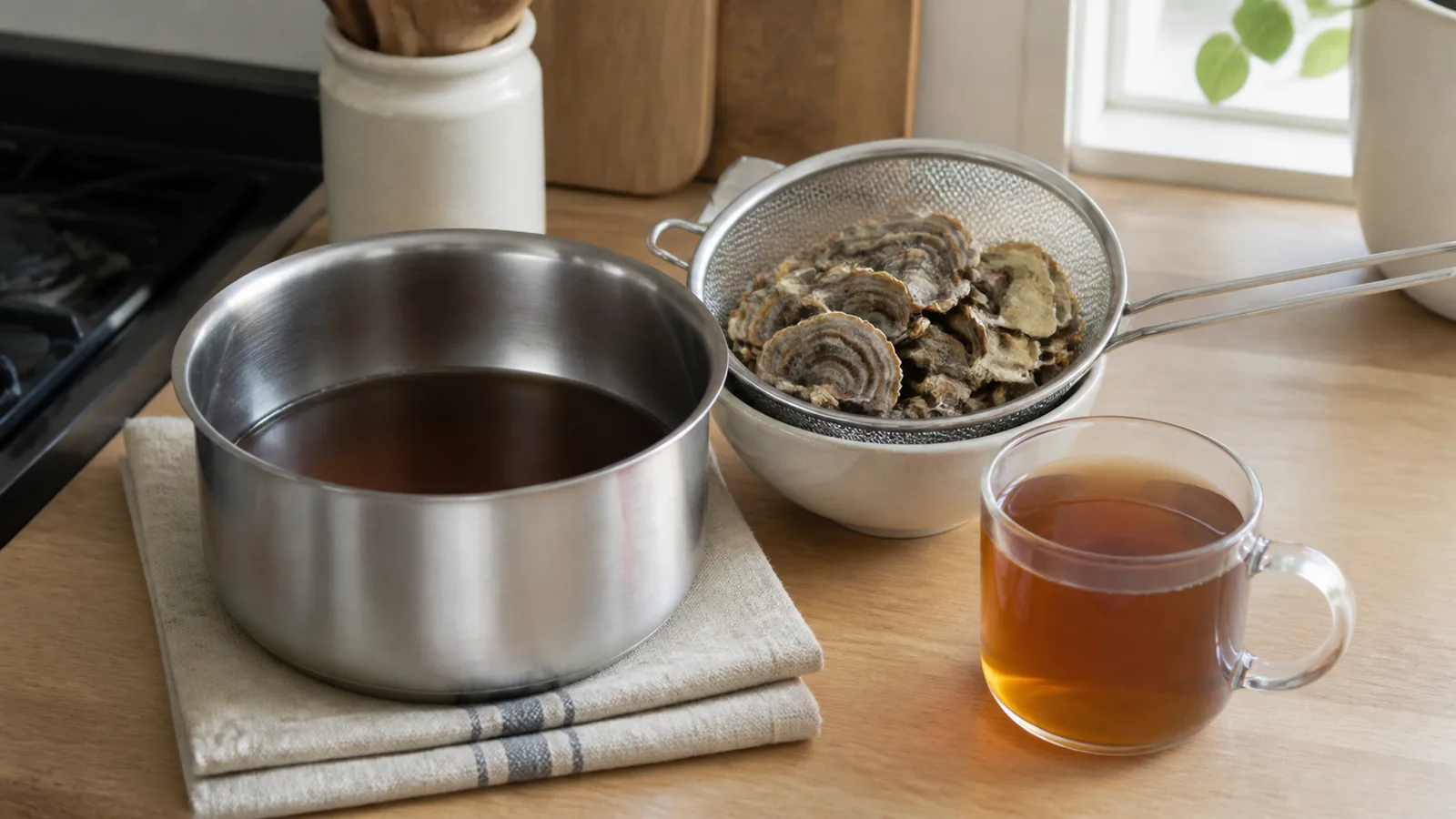
Use authenticated whole turkey tail as a water ingredient rather than a sauteed mushroom. Snip 5 grams of dried shelves into manageable pieces, simmer them gently in 500 milliliters of water for 45 to 60 minutes, watch the remaining volume, and strain out every leathery solid.
Turkey tail is too leathery to saute, roast, or serve like a fleshy mushroom. The practical kitchen method is to simmer authenticated fresh or dried shelves in water, strain out every solid piece, and use the liquid.
For a mild first batch, start with 5 grams of dried turkey tail and 500 milliliters of water. Snip the fans into manageable pieces, simmer gently for 45 to 60 minutes, then judge both the flavor and the water that remains.
This method applies to intact Trametes versicolor fruiting bodies. Powder, extracts, capsules, and wild finds each require a separate check before they reach the saucepan.
Which turkey tail form belongs in this method?
Use the simmer-and-strain method for a whole fruiting body that you can inspect.
Fresh shelves and clean dried pieces both qualify, but loose powder and concentrated products change what the cook can measure or remove.
| Form in the package | What it is | Kitchen action |
|---|---|---|
| Fresh whole shelves | Thin, flexible fruiting bodies with visible bands and a pore surface | Clean, snip, weigh, simmer, and strain |
| Dried whole pieces | Rigid or curled fruiting-body sections | Inspect, weigh, simmer, and strain |
| Whole-mushroom powder | Milled fungal material that stays suspended or settles as grit | Follow culinary label directions rather than the whole-piece method |
| Hot-water extract or capsule | A processed and potentially concentrated product | Follow the labeled serving instructions |
| Unlabeled powder or wild bracket | Material whose identity or condition cannot be verified | Keep it out of food |
Whole fruiting body is the useful kitchen identity. It lets you inspect the surface, weigh the dry material, see what went into the pot, and recover the solids afterward.
The front of a package may say turkey tail while the ingredient panel names fruiting body, mycelium, extract, or a blend. Those words describe physically different products, so the package directions outrank a general tea recipe whenever the material is processed.
Visible shelves should show both the banded upper face and the pale underside somewhere in the package or batch.
A bag filled only with uniform brown granules does not let you confirm that the contents are intact fruiting bodies simply because the product name is familiar.
The package gives you three details to check before cooking:
- The label names Trametes versicolor or an accepted former name such as Coriolus versicolor.
- The fungal part is stated as fruiting body when you expect visible shelves.
- The package is sold for tea or culinary preparation rather than as an unlabeled decorative specimen.
PSK is also not another name for dark turkey tail tea. It is a specific processed product studied in clinical settings, and a home saucepan cannot reproduce or measure it from color.
Former scientific names can appear on older field material and labels. Coriolus versicolor and Polyporus versicolor have been used for the same species, but a former name still needs a traceable producer and a declared fungal part.
Why turkey tail never becomes a sauteed mushroom
Turkey tail looks delicate because each fan is thin, but thin does not mean tender. Its fruiting body contains reinforced fungal tissue that stays tough after the surface has softened in hot water.
North Carolina State University describes the context as tough-fibrous and up to about 5 millimeters thick.
The same account records three kinds of hyphae in the tissue, including thick-walled skeletal and binding structures that help explain the persistent texture.
That structure separates turkey tail from a soft cap mushroom whose cells collapse readily under heat. Water moves through the thin bracket and carries soluble material away, but it does not reorganize the reinforced network into a tender bite.
The liquid is the cooked ingredient. The shelves are extraction material, not chewy garnish for noodles, rice, or soup.
A rolling boil drives off water faster without turning the resistant bracket into a tender mushroom.
The USDA Forest Service field guide classifies turkey tail as inedible in the ordinary field-guide sense. In this cooking context, that label describes why the solid is not served, even though people prepare the strained water as a decoction.
Fine mesh matters because thin cut edges can shed small fibers.
Let the strained liquid stand briefly when you see sediment, then pour the clearer portion without scraping the bottom of the vessel.

Clean the shelves without soaking in the debris
Inspect turkey tail while it is dry enough for surface defects to remain visible. Heat and dark liquid make insects, attached bark, and deteriorated patches harder to assess later.
Start at the attachment point, where a thin fan may carry splinters or a small plug of host wood. Trim that woody base instead of counting it as part of the weighed mushroom.
Use a soft brush on the banded upper surface and along the pore side.
The tiny openings underneath can hold grit, so work gently rather than crushing debris deeper into wet tissue.
Fresh shelves deserve a close look at overlapping contact points where moisture and insects can hide. Separate the fans enough to inspect those surfaces instead of washing an intact cluster as one solid mass.
Follow the condition of the batch:
- Keep clean, intact shelves with a mild mushroom or woody smell.
- Trim attached bark and visibly bruised margins with clean shears.
- Rinse briefly under cool running water only when brushing leaves grit behind.
- Discard pieces with fuzzy growth, a sour or musty odor, heavy insect tunneling, or a slimy surface.
A quick rinse cleans the surface, but a long soak loads the shelves with dirty water. Shake off the rinse and blot the material before weighing so retained water does not distort a fresh batch.
Dried shelves should return to a firm dry surface after a quick rinse and blot. If they already feel pliable from storage humidity, smell musty, or stick together in damp clumps, water did not create the problem and cooking will not correct it.
Washing cannot answer contamination questions about roadside collections or brackets growing from treated lumber, so do not use material exposed to vehicle residue, pesticides, paint, preservatives, or an unknown wood treatment.
Fresh cleaned shelves should move into the pot or into a separate drying process without sitting damp at room temperature. Drying and long-term storage require their own moisture control rather than an extra paragraph in tonight's cooking method.

Snip thin brackets while they are still flexible
Kitchen shears fit turkey tail better than the heavy knife used for a thick conk.
The blades can follow a thin fan on the board without asking you to push downward on a curled, unstable piece.
Cut or tear flexible shelves into pieces roughly the size of a thumbnail. That size exposes additional edges to water while keeping the solids large enough for a fine strainer to catch.
Uniformity matters more than hitting one exact dimension because a batch containing one whole fan and a pile of crumbs wets and strains unevenly.
- Best tool
- Clean kitchen shears for flexible shelves
- Useful size
- Roughly thumbnail-size pieces rather than dust
- Dry-material behavior
- Snaps or splinters when it no longer bends
- Straining result
- Visible pieces are easier to recover than fine powder
Stop reducing the size before you create dust. Grinding changes a strainable preparation into one that suspends particles, settles as sediment, and exposes you to airborne powder while processing.
Very dry turkey tail may break along its own curves instead of cutting cleanly. Place brittle pieces inside a clean towel before snapping them so fragments stay on the work surface rather than scattering across the kitchen.
Do not soften dry pieces by soaking them for hours before weighing.
If a short pre-wet is needed to keep brittle fragments controlled, use water already counted in the recipe and put both the soaking water and mushroom into the pot.
Fresh cultivated shelves are easier to portion before drying because their edges still flex. A grower can therefore cut a harvest early, but this does not change the need to identify the species and fungal part.
Weigh the prepared pieces after removing bark and debris.
A handful is a poor unit because one batch may contain broad fresh fans while another contains tightly curled dry fragments.

Simmer a measured decoction, then judge the water
Start with 5 grams of dried pieces and 500 milliliters of water for a mild batch. This is a practical kitchen starting point, not a medicinal dose, and fresh material cannot substitute gram for gram because it contains more water.
Put the mushroom and cool water into a small nonreactive saucepan together. The thin pieces begin wetting as the temperature rises, which makes the transition to a controlled simmer easier to observe.
Published hot-water preparation references span a wide range, roughly 20 to 120 minutes.
A 45-to-60-minute window gives a home cook enough time to work with small pieces while keeping taste and evaporation in view.
Time alone cannot describe the batch. Five grams simmered under a lid with 400 milliliters left will taste different from the same five grams boiled uncovered until only 200 milliliters remain.
A simple worked check makes that difference visible.
If 500 milliliters goes into the pot and 350 milliliters comes out, record the 150-milliliter loss before deciding whether to dilute the liquid or change the next batch.
Mark the starting water level with a quick visual reference or pour the finished liquid back into a measuring jug. If the pot loses water rapidly, lower the heat and add hot water before the pieces begin drying against the metal.
Taste a cooled spoonful near 45 minutes. Continue toward an hour when the liquid is still mild enough for its intended use, but stop earlier if evaporation has already concentrated it beyond that job.
Keep only one variable moving when you repeat the method. Change the dry weight, piece size, simmer time, or final volume separately so a better-tasting second batch tells you what actually improved.

Use the strained liquid where mild woodiness belongs
Turkey tail liquid is usually mild, earthy, and woody rather than sharply bitter.
Judge a cooled spoonful first because near-boiling water hides detail and can make any drink seem harsher than it is.
Dilution is the first correction for excessive strength. Adding water changes concentration predictably, while honey, juice, or strong spices can hide the problem without fixing it.
Ginger, a strip of citrus peel, or a cinnamon fragment can simmer during the final minutes for aroma. Add sweetener only after straining so you can taste the mushroom liquid on its own before changing it.
Use the finished liquid according to the dish:
- Drink a small warm portion plain or with ginger and citrus peel.
- Replace part of the water in a mushroom, vegetable, or chicken broth.
- Use a lighter batch for rice or congee, then adjust salt after the grain absorbs it.
- Freeze measured portions when a recipe needs less liquid than the batch produced.
Avoid reducing turkey tail liquid into a thick sauce until you have tasted its concentrated form. Reduction multiplies every woody or stale note and leaves little room to recover the rest of the dish.
Savory food also changes the meaning of a mild batch. A liquid that tastes thin on its own can still contribute depth after salt, browned vegetables, or another mushroom supplies the main flavor, so concentration should follow the dish rather than a desire for the darkest cup.
The strained pieces can make a lighter second batch when they still give color, aroma, and flavor.
Fresh water and a shorter sensory check are more useful than assuming the second simmer must copy the first one minute for minute.
Keep first and second batches separate until each has been tasted. Combining them immediately hides whether the second extraction added useful flavor or merely diluted the first.
Stop when the second liquid is nearly colorless and flavorless.
Continued heat cannot create useful kitchen flavor after the material has stopped giving it.
Cooking MushroomsHow to Cook Black Truffle Without Losing Its AromaPowder and extracts follow the label, not the saucepan
Whole-mushroom powder is dried fungal material milled into particles. A hot-water extract is liquid extraction material that has been concentrated and dried, so the two powders can look similar while representing different processing and concentration.
Read the full ingredient panel for fruiting body, mycelium, carrier grain, extract ratio, added herbs, sweeteners, and serving directions. The word turkey tail on the front does not settle any of those details.
Whole powder often clouds water because the original solids remain, whereas an instant extract may dissolve more readily after much of the insoluble material was removed, although additives can change that behavior.
Visible whole shelves
Use the measured simmer-and-strain methodYou can inspect, weigh, and remove the solid material.
Whole-mushroom powder
Use only when the label gives a culinary amountThe particles cannot be handled like intact strainable pieces.
Extract powder
Follow the product serving directionsProcessing and concentration have already changed the material.
Capsule or mixed blend
Keep the contents in their intended formatOpening a capsule into a pot does not turn it into a whole-mushroom recipe.
An extract ratio is not permission to improvise a dose. Products can differ in source material, solvent, concentration, and standardization even when two labels show the same species.
Health Canada's mushroom monograph separates dry powder from aqueous preparations such as extracts, decoctions, and infusions. That distinction supports reading the product form first rather than applying one spoon measure to everything brown and powdered.
Mycelium adds another fork because it is cultivated fungal tissue rather than the visible shelf used in this method.
Some products also include growth substrate, so the declared part and complete ingredient list determine whether a spoonful represents mushroom tissue alone.
PSK goes further beyond the kitchen method because it is a named processed product. The darkness of a homemade decoction cannot reveal a PSK amount, beta-glucan percentage, or clinical effect.
Questions about nutrient composition also require a defined material and analytical method. A whole fruiting body, cultured mycelium, and concentrated extract should not inherit one nutrition panel by association.
A pale pore surface is useful evidence, not permission
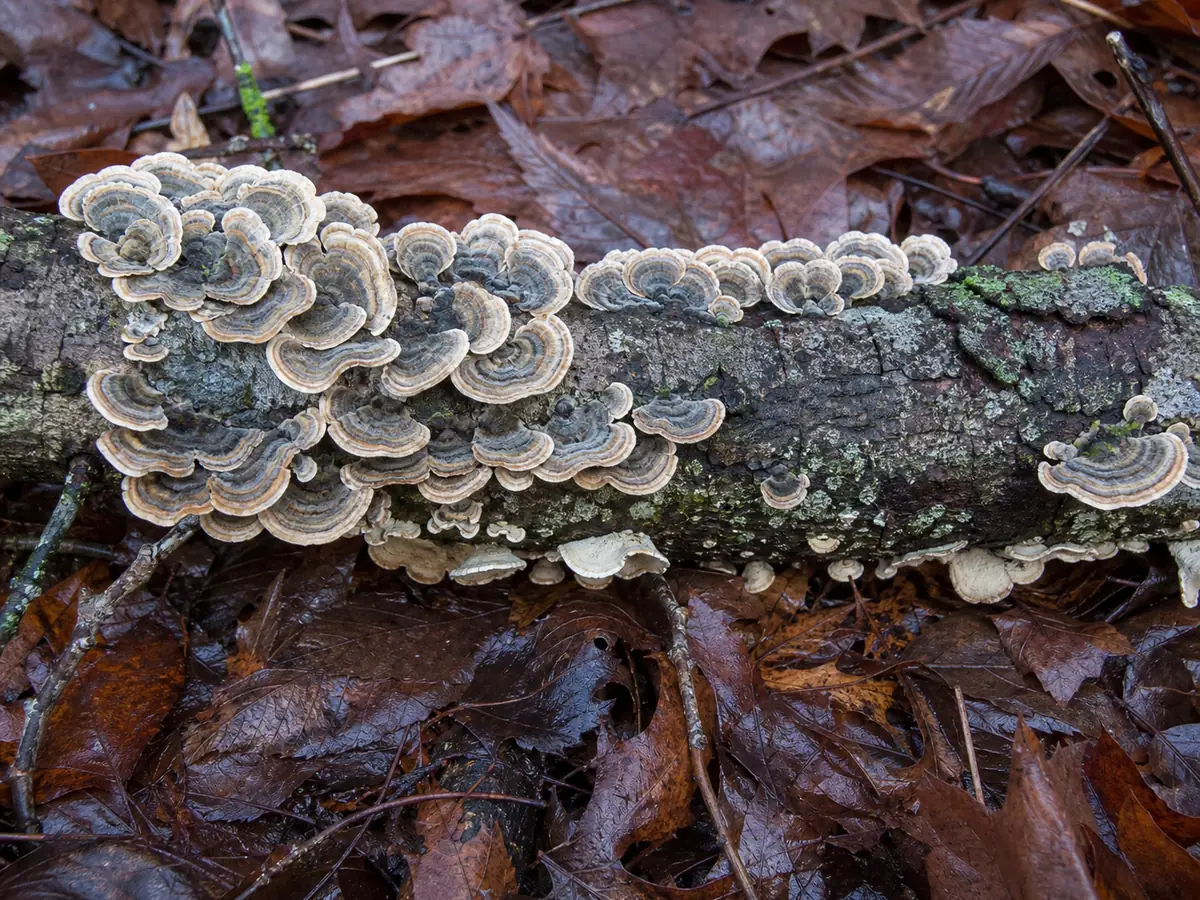
Authenticated Trametes versicolor has a cream to pale underside covered with true pores.
North Carolina State University records roughly four to five pores per millimeter, which means the openings are small but visible with close inspection or a hand lens.
The banded upper surface often alternates brown, gray, tan, cream, and other muted colors, with a finely hairy or velvety texture. Those bands explain the common name, but color alone cannot authenticate a cooking ingredient.
False turkey tail species in Stereum can show similar fans and color zones while lacking the same pore surface. Other Trametes species do have pores, so finding pores rejects a smooth-backed lookalike without completing a species identification.
A green cast on the upper bands can come from algae on an older damp specimen rather than from the mushroom's own pigment.
That condition also tells you the bracket has spent time exposed outdoors, which makes condition and contamination checks more important.
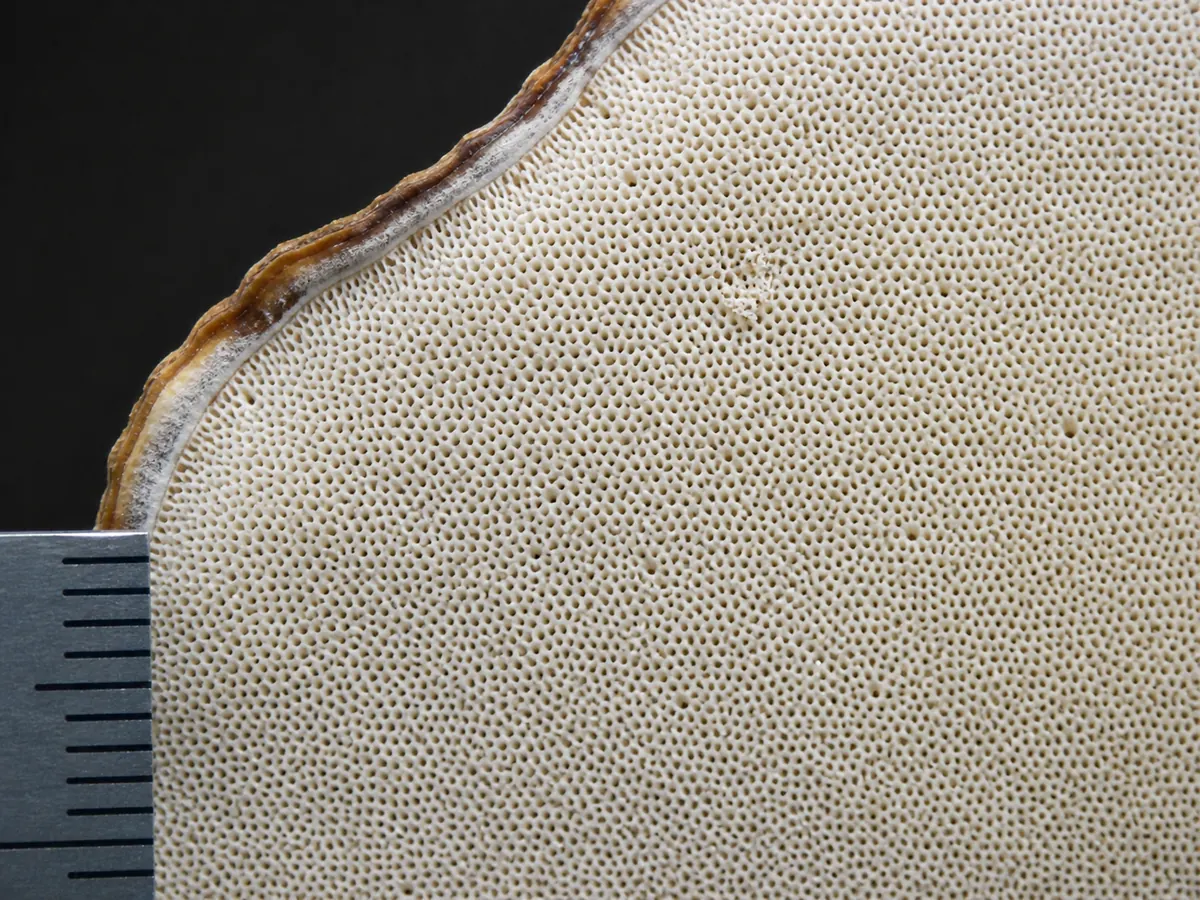
An identification needs the whole specimen, both surfaces, its attachment, substrate, condition, and local context. A powder has discarded nearly all of that visible evidence, while a cropped photograph may hide the underside completely.
Host wood contributes useful context but does not settle the name by itself. Turkey tail commonly grows on dead hardwood, yet multiple bracket fungi share that substrate and can overlap in the same forest.
Use a traceably labeled cultivated product when the goal is cooking. Keep a wild collection out of the pot until an experienced local identifier has examined the complete material and its habitat.
Note
A pale pore surface can rule out an obviously smooth-backed bracket, but it cannot turn this cooking method into a complete field-identification key.
Know when the kitchen decision ends
Discard material with fuzzy growth, slime, a sour odor, heavy insect damage, or exposure to treated wood and roadside contamination.
Boiling does not reverse spoilage or remove an unknown chemical treatment.

A mushroom allergy still matters after the shelves are strained because soluble material remains in the liquid. Stop use and seek urgent help for trouble breathing, facial swelling, faintness, or another severe reaction.
For a first ordinary food exposure, a small serving keeps the sensory and tolerance check bounded. That is not a treatment dose, and it does not override advice for someone whose health or medicines make the exposure more consequential.
Pregnancy, breastfeeding, cancer treatment, immune-modifying medicine, or serious chronic disease moves the question beyond ordinary cooking.
Bring the package to a clinician or pharmacist because a whole-shelf decoction and a concentrated extract do not create the same exposure.
Product variability is part of that conversation. The National Cancer Institute notes that mushroom supplement batches and brands may differ, which makes a clear label more useful than assuming every turkey tail product behaves alike.
The National Cancer Institute distinguishes turkey tail from PSK and states that neither is approved by the FDA to treat cancer or another medical condition in the United States. A darker decoction is not evidence of a treatment effect.
Warning
Do not use an unknown wild bracket, a deteriorated product, or a concentrated turkey tail preparation whose label you cannot interpret. Ask a clinician or pharmacist before use during pregnancy, breastfeeding, cancer treatment, immune-modifying therapy, or serious chronic illness.
The kitchen can establish weight, water, time, condition, and flavor. It cannot establish a clinical dose, replace prescribed care, or prove that a product will affect a disease.
Keep those evidence levels separate, and turkey tail becomes a manageable cooking material rather than a vague promise in a dark cup.
Sources & References
- Field Guide to Common Macrofungi in Eastern Forests USDA Forest Service reference used for the leathery bracket form, banded surface, pale pores, hardwood habitat, and identification caution.
- Trametes versicolor, Larry F. Grand Mycological Herbarium North Carolina State University reference used for tough-fibrous texture, thickness, hyphal structure, pore density, and habitat.
- Thanksgiving Mushrooms: The Turkey Tail UF/IFAS Extension reference used for the true turkey tail name and the existence of similar Trametes species.
- Mycomedicinals for Cancer University of Wisconsin clinical education reference used only for the broad published hot-water preparation range.
- Mushrooms Monograph Health Canada reference used to distinguish whole dry material, powder, decoction, infusion, and aqueous extract product forms.
- Medicinal Mushrooms PDQ National Cancer Institute reference used for PSK specificity, product variability, and the FDA treatment-approval boundary.