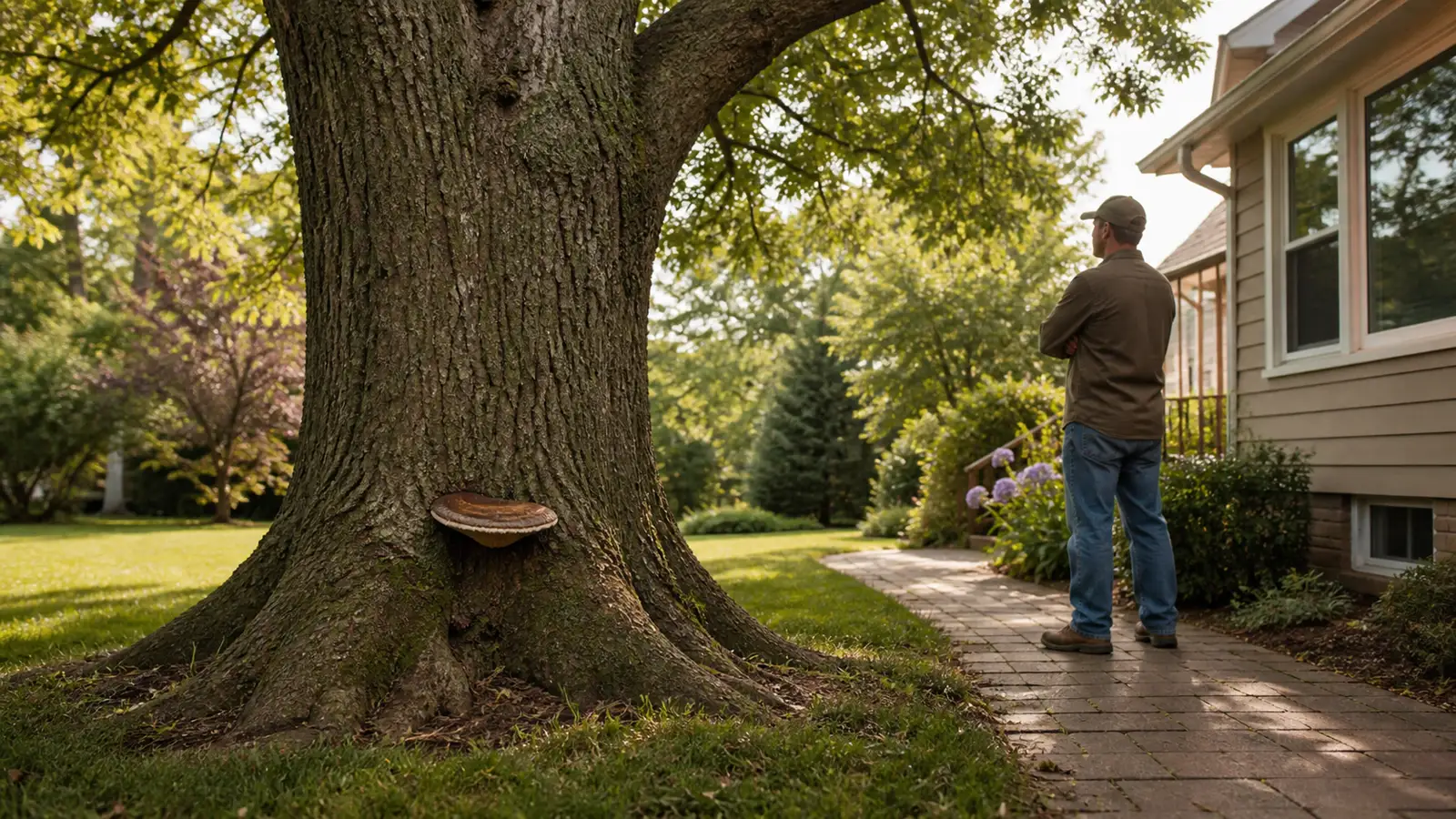
A mushroom attached to a trunk, root flare, or structural root is evidence that a fungus has colonized wood, but it does not prove the tree must be removed. Check what the tree could hit, preserve photographs, and arrange a qualified tree-risk assessment when structural defects or targets are present.
Keep people away after a sudden lean, root-plate movement, an active crack, or storm damage. Removing the mushroom cannot restore decayed wood.
A mushroom attached to a standing tree is evidence of fungal activity in wood, but it is not a death certificate. Treat a conk on the trunk or root flare as a reason to assess structural risk, especially when people, buildings, roads, or parked cars sit within falling distance.
The tree may keep a green crown for years while fungi weaken heartwood, roots, or the trunk base. The useful question is therefore not whether the leaves still look alive.
It is whether enough sound wood and roots remain to support the tree through wind, rain, and normal loading.
First Find Where the Fungus Is Fruiting
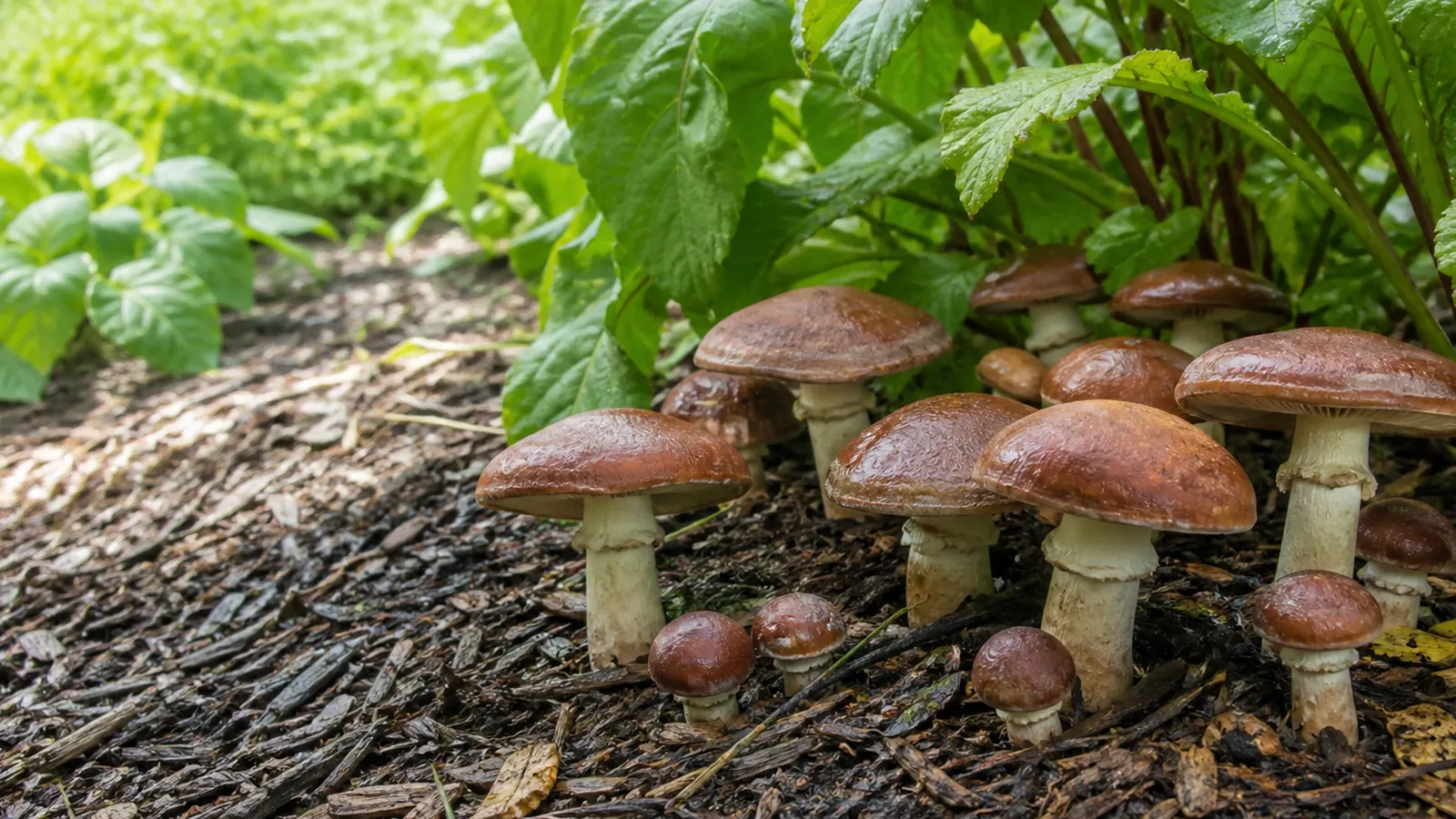
Mushrooms in lawn soil beneath a tree can belong to fungi living with roots or decomposing buried wood. A shelf, bracket, or cluster that emerges directly from bark, a wound, the root flare, or exposed roots points much more strongly to colonized wood.
That distinction changes the response. Soil mushrooms with no tree symptoms usually call for observation, while an attached fruiting body warrants photographs, a target check, and assessment by a qualified arborist.
Fruiting from a buried root can still appear several feet from the trunk. Gently move loose litter aside, but stop if finding the source would require cutting roots, digging into the root flare, or peeling bark.
A conk high on a dead branch says more about that branch than the whole root system. A cluster at the trunk base raises a different question because roots and the lower trunk carry nearly all of the tree's weight.
| Fruiting location | What it can mean | Immediate response |
|---|---|---|
| Soil beyond the root flare | Mycorrhizal partner, buried root, mulch, or other dead material | Observe the tree and record the patch without assuming trunk decay |
| Trunk wound or pruning cut | Fungus has access to wood behind the bark | Photograph attachment and inspect the crown and trunk |
| Root flare or exposed structural root | Decay may involve the high-load base or roots | Keep people away from the fall zone until risk is assessed when other warning signs exist |
| Dead branch or fallen log | Normal decomposition of dead wood | Manage the dead limb or log according to its location and use |
These locations look close together from a distance, so the next image keeps their attachment points separate.
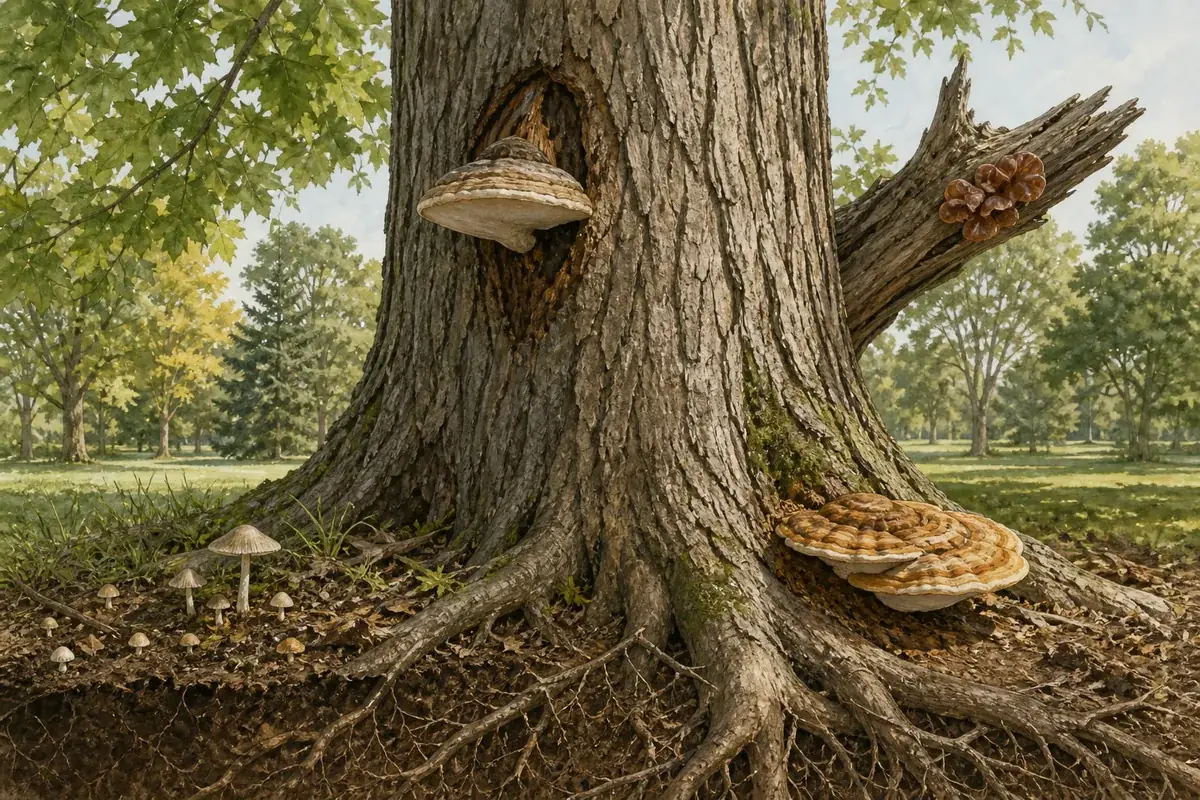
Do not pull the conk off before documenting it. The attachment point, underside, height, orientation, and growth pattern can help an arborist or mycologist narrow the decay process.
Repeat fruiting at the same wound also matters. Mark its height and compass side, then compare the location after the next wet season instead of relying on memory.
What the Fruiting Body Can and Cannot Reveal
A conk is the reproductive structure of a fungus whose feeding tissue is already inside or around the wood. Its visible size does not provide a reliable measurement of the cavity, decay column, or remaining wall thickness.
Different fungi break down different wood tissues. White-rot fungi digest lignin and cellulose, while brown-rot fungi leave brittle, brown, cube-like wood after removing much of the cellulose.
Heartwood decay can advance inside the nonliving center while the sapwood continues moving water. Sapwood and cambium damage can affect crown function sooner, but neither pattern can be mapped from foliage or conk shape alone.
Root decay is harder to see because soil hides both fungal spread and broken roots. Basal fruiting gains weight when it appears with root-plate movement, dead roots, thinning foliage, or a history of trenching.
The consequence is mechanical. Wood can lose strength before a cavity becomes obvious from outside, and healthy foliage does not restore that lost wood.

An arborist may use sounding, resistance drilling, sonic tomography, root-collar excavation, or other tools when a visual inspection cannot resolve the question. Each method has limits, so the test should follow a specific risk question rather than becoming a routine search for perfect certainty.
Sounding can locate differences in resonance but cannot measure every hidden defect. Drilling and tomography sample or model particular paths, so placement and interpretation matter as much as the instrument.
Note
A missing conk does not prove sound wood | Fruiting bodies can be seasonal, short-lived, removed, or absent even when decay is present. Old attachment scars and previous photographs remain useful evidence.
When the Tree Becomes an Immediate Hazard
Risk depends on both failure potential and what the tree could hit. A decayed tree in an unused woodland does not create the same exposure as the same tree over a bedroom, playground, power line, road, or busy path.
Look for changes that add weight to the fungal evidence. A new lean, soil lifting on one side, cracking sounds, a widening trunk crack, hanging limbs, recent root damage, and a suddenly thinning crown all justify prompt attention.
Compare the tree with its own earlier state rather than a neighboring species. A naturally leaning trunk may be stable, while a fresh gap at the soil line or newly exposed roots can indicate movement.
Weather changes the decision window. Saturated soil reduces root anchorage, leafed crowns catch more wind, and ice or wet snow adds load to branches that already contain decay.
The warning pattern becomes clearest when root movement, crown defects, and an occupied target appear in one view.
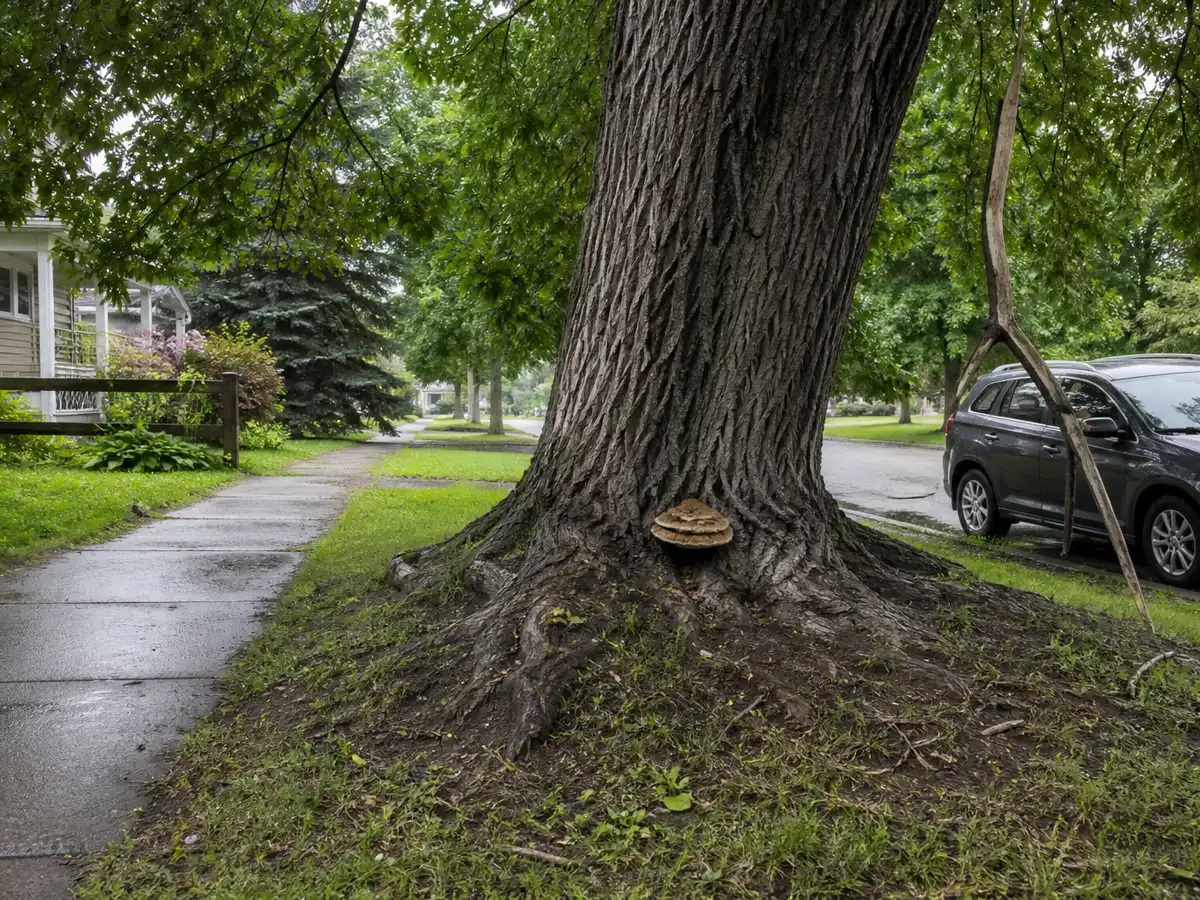
Because the combined scene shows both failure clues and an occupied target, use it to decide whether the area should remain open while help is arranged.
Warning
Restrict access when movement appears possible | Keep people and vehicles out of the potential fall area after a sudden lean, active root-plate lifting, a widening crack, or storm damage. Contact emergency services or the utility when public roads or energized lines are involved.
Do not enter the fall zone to take a better mushroom photograph after movement begins. A remote view is enough until the site is made safe.
Growing MushroomsHow Do You Build an Outdoor Mushroom Bed That Lasts?How an Arborist Separates Retention From Removal
Yes, some trees remain standing and functional for years after a conk appears. Survival and acceptable risk are separate decisions because a living crown can coexist with weakened structural wood.
Retention becomes more plausible when the defect is localized, enough sound wood remains, the root system is stable, targets can be moved, and monitoring can detect meaningful change. Removal becomes more likely when decay affects the base or major roots, defects combine, the tree has already shifted, or high-value targets cannot be protected.
Species, size, architecture, and exposure all modify that balance. A small ornamental tree over an empty bed presents different consequences from a massive tree over a house, even when both carry similar brackets.
Habitat value belongs in the decision too. Cavities and decaying wood can support birds, bats, insects, and fungi, so low-target trees may be retained or shortened when a competent assessment supports that option.
Localized defect and low exposure
Retain with a written inspection intervalThe tree may continue providing shade and habitat when the remaining structure and site use support retention
Uncertain extent near a target
Obtain an advanced assessmentA targeted test can answer whether enough supporting wood or roots remain
Movable target beneath the tree
Relocate the target and limit occupancyReducing exposure can lower risk without changing the tree
Severe base decay or active movement
Arrange controlled removalCombined structural evidence can make waiting an unacceptable gamble
A written assessment should make the decision traceable. It should identify:
- The defect and the part most likely to fail
- People, buildings, vehicles, utilities, or paths within reach
- The recommended work and the reason for it
- A reassessment interval tied to a specific change or weather event
Ask what observation would change the recommendation, because a useful monitoring plan needs a trigger rather than an annual photograph with no comparison point.
Ask whether the recommendation assumes current occupancy and weather exposure. Moving a bench, rerouting a path, or restricting parking can change the consequence side of risk without pretending the decay has disappeared.
Preserve Evidence Before the Site Visit
Start by preserving evidence and reducing exposure. Photograph the whole tree from several directions, then capture the mushroom top, underside, attachment point, nearby bark, root flare, crown, and anything the tree could strike.
Record the date, recent storms, first observed fruiting, previous removals, construction, grade changes, irrigation changes, and major pruning. Those events give the assessor a timeline that one visit cannot reconstruct.
Choose credentials for the actual question. General tree-care experience is useful, but a structural concern near a target calls for documented tree-risk training and a written, site-specific recommendation.
The documentation set below shows why one close photograph of the cap is not enough.
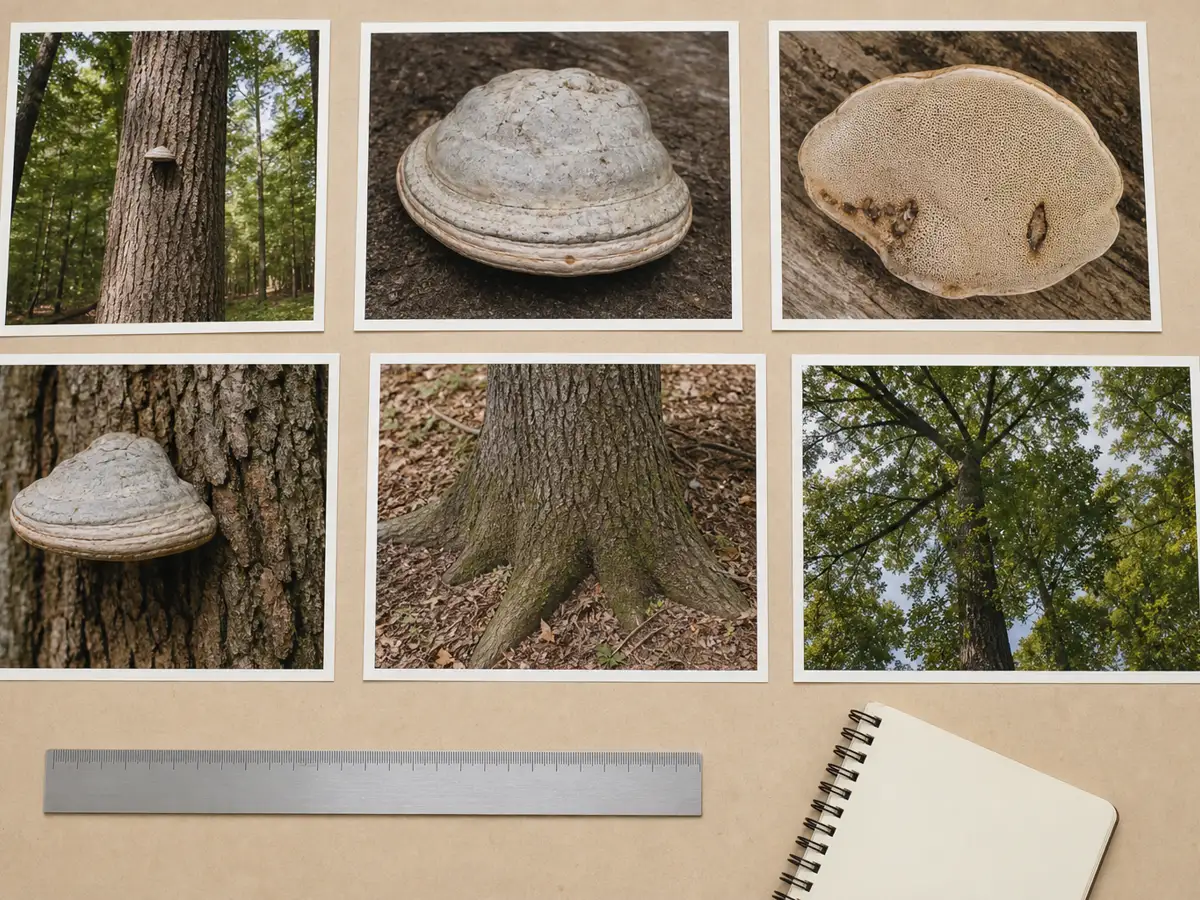
Removing the mushroom does not remove the fungus inside the wood. Painting wounds, filling cavities, or applying a lawn fungicide also cannot rebuild decayed tissue and may obscure evidence.
Avoid hiring from a photograph alone when the decision could remove a valuable tree or leave a serious target exposed. Photographs can triage urgency, but roots, loading, defects, and targets require the site.
Remove or retain the tree according to the risk assessment, not the presence of one cap. Removing only the fruiting body may reduce contact or preserve a specimen, but it does not stop established decay.
Pruning can reduce load when the defect and tree architecture support that choice. Excessive crown removal can create new wounds, weak regrowth, and stress, so the prescription needs to name which limbs are being reduced and why.
Cabling or bracing may support a particular branch union, but hardware does not cure root or trunk decay. It also creates an inspection obligation because the tree and hardware continue changing.
Stump grinding after removal addresses site use, not the fungus throughout every remaining root. New mushrooms from buried roots may still appear as that wood decomposes.
If removal is recommended, ask whether wildlife habitat can be retained as a shorter snag or downed log where targets permit. When the tree can stay, record the conk location and season, inspect after major storms, and repeat professional assessment at the interval set for that specific defect.
The useful verdict is specific to the site. A mushroom attached to living wood deserves attention, while the final decision depends on remaining structure, signs of change, and the people or property within reach.
Sources & References
- University of California Integrated Pest Management Decay indicators, targets, hazardous-tree warning signs, and professional assessment.
- International Society of Arboriculture Tree-risk assessment, targets, defects, and mitigation choices.
- University of Minnesota Extension Wood-decay fungi, conks, internal decay, and management limits.
- USDA Forest Service Decay types, fruiting bodies, wood strength, and field indicators.