
Orellanine poisoning is a delayed kidney emergency that may not announce itself until days after a wild-mushroom meal. Call Poison Control at 1-800-222-1222 in the United States for any suspected webcap ingestion, and call 911 for collapse, confusion, breathing trouble, seizure, or inability to wake the person.
| Time from meal | What may be happening | What the delay means |
|---|---|---|
| First hours | The person may feel normal or have vague stomach symptoms | Feeling well does not clear the exposure |
| About 2 to 20 days | Thirst, headache, nausea, flank or abdominal discomfort, and urination changes may emerge | Reconstruct the older mushroom meal and seek urgent testing |
| Established kidney injury | Urine output may fall, waste products and potassium may rise, and fluid balance may fail | Hospital monitoring and renal support may be needed |
| Following weeks or months | Kidney function may partly recover or remain severely impaired | Nephrology follow-up can continue long after the meal |
Orellanine injury can stay silent for days
The long quiet interval is the central clue.
Published reviews describe symptom onset from roughly two to twenty days after ingestion, although individual timing varies and cannot identify the toxin by itself. By then, the meal may seem unrelated to new thirst, fatigue, nausea, flank discomfort, or a change in urination.
Tell clinicians about every wild-mushroom meal during the preceding weeks, not just the last food eaten. A forgotten camping dinner or preserved batch can connect an otherwise unexplained acute kidney injury to the correct exposure.
This delay makes the organ at risk more important than dramatic early symptoms.
Reduced urine, inability to keep fluids down, faintness, confusion, swelling, shortness of breath, or severe weakness needs immediate medical assessment. A person who still urinates normally can also need urgent blood and urine tests when a credible webcap exposure exists.
Do not wait for back pain or complete urine stoppage because neither is required, and broader mushroom poisoning symptoms can appear outside the delayed renal pattern described here.
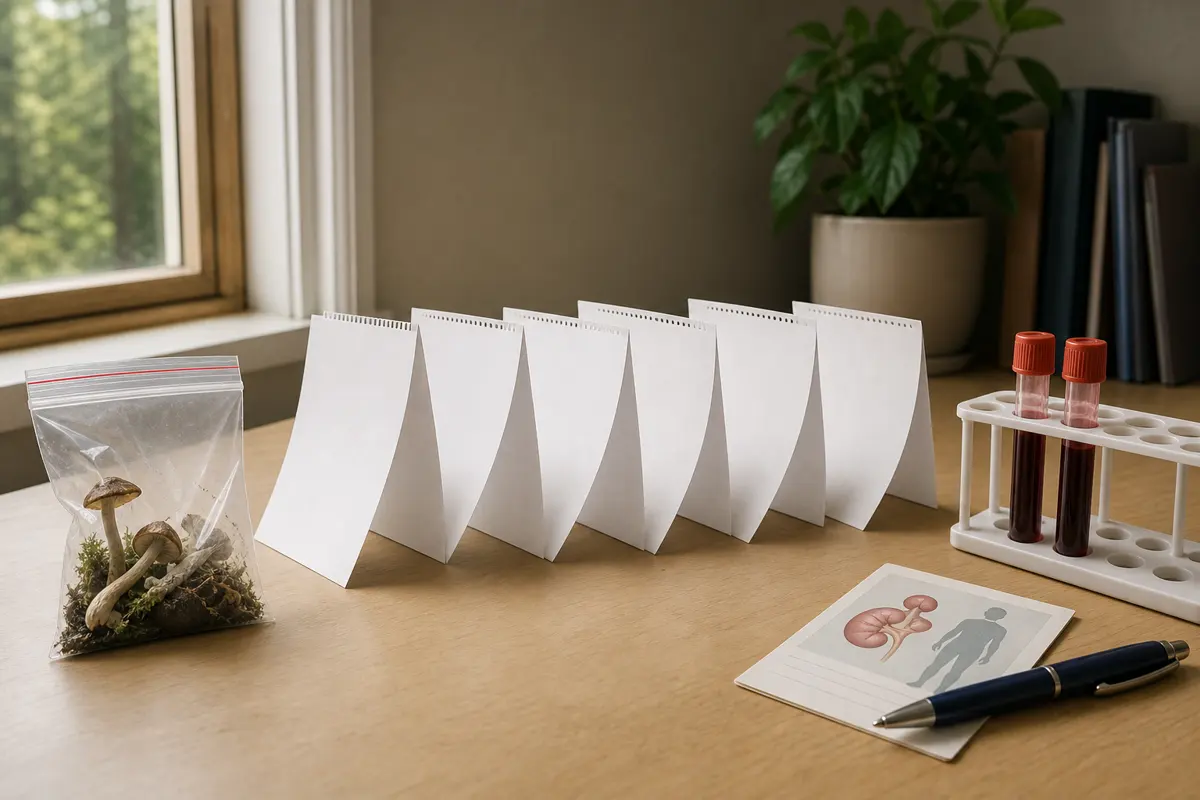
Which mushrooms carry the risk
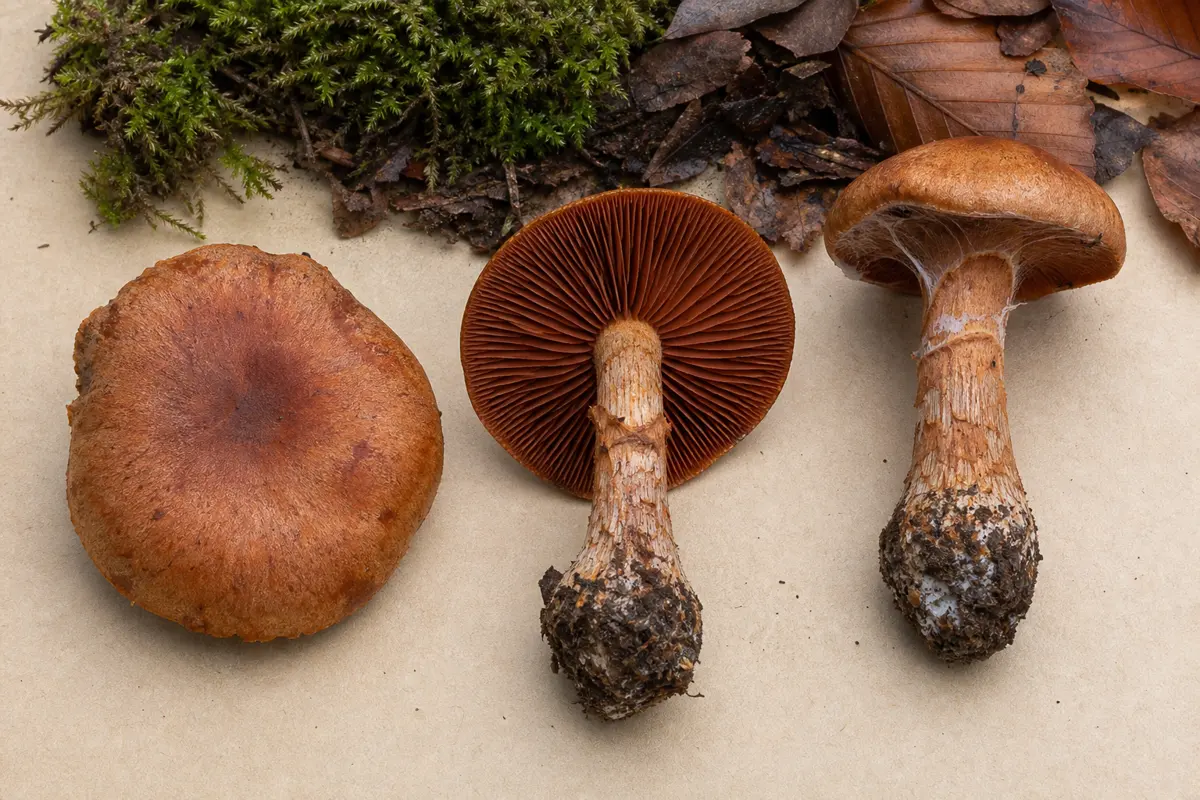
The best-known sources are Cortinarius orellanus and Cortinarius rubellus, poisonous webcaps found in parts of Europe and other northern regions. Related Cortinarius species have also been implicated or suspected, so the practical task is to preserve the whole collection for expert review rather than guess from one familiar name.
Webcaps are a large and difficult group.
Age, rain, handling, and light can change the cap and veil, while several harmless and harmful species can look broadly similar in a phone photograph. The deadly webcap profile supplies species-level context, but it cannot turn a partial specimen into a safe identification.
Preserve caps, gills, stems, and stem bases in separate paper containers, with each collection site labeled. Keep raw scraps, cooked leftovers, and field photographs because a mixed dish can contain more than one species.
Cooking is not an identification method and should not be treated as detoxification.
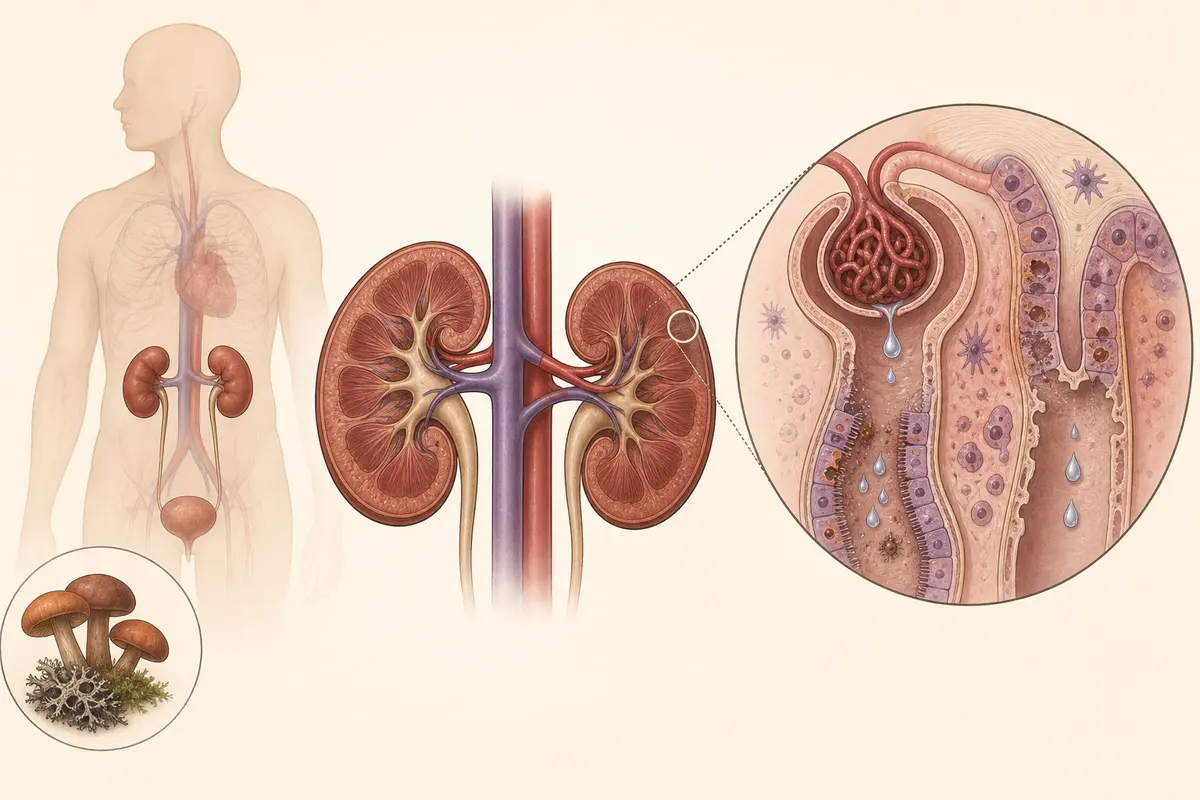
Kidney damage develops during the symptom-free interval
Orellanine injury is concentrated in the kidneys, especially the tubular structures that help filter blood and regulate water, salts, and acid balance. Experimental and clinical evidence points to oxidative injury and progressive tubular damage rather than a simple irritation that ends when vomiting stops.
- Primary organ
- Kidneys, with prominent tubular injury
- Hidden phase
- Cellular injury can develop before the person recognizes a renal symptom
- Functional result
- Filtration and control of fluid, potassium, and acid-base balance may deteriorate
- Clinical consequence
- A normal-feeling interval cannot substitute for kidney testing
The delay changes how evidence must be interpreted.
An exposure can be medically important even when nothing happened at the table, and an early nonspecific stomach upset may be absent or forgotten. Once kidney function declines, thirst or increased urination may give way to low output, swelling, weakness, nausea, or breathlessness.
Orellanine does not create the same dominant liver-failure sequence as amatoxin poisoning. That distinction helps organize monitoring, but a mixed basket or an uncertain species means clinicians may still assess more than one organ system.
This molecular explanation cannot predict one person's outcome.
Dose, species, individual susceptibility, delay to care, dehydration, other medicines, and prior kidney health can all influence the course. What matters at the bedside is the trajectory of kidney function and the complications it creates.
This is also why an early normal test needs context rather than celebration.
If testing occurred before kidney function changed, clinicians may repeat it after considering the meal date, suspected species, and current symptoms. A reassuring value becomes more useful when it remains stable across the relevant interval and the exposure assessment no longer supports orellanine.
What the symptom sequence can reveal
Early complaints are often nonspecific, which is why the meal history carries unusual weight. Thirst, dry mouth, headache, fatigue, nausea, vomiting, abdominal discomfort, and pain near the flanks may resemble dehydration, infection, or an unrelated stomach illness.
The urine pattern adds context but does not follow one script.
Some patients report frequent urination and intense thirst before kidney function worsens, while others present after urine output has already fallen. Oliguria means abnormally low output and anuria means essentially no output, but either term requires clinical measurement rather than a household guess.
Warning
New thirst, flank discomfort, vomiting, or urination changes days after eating an unidentified webcap needs urgent poison-center and medical assessment. Do not attempt to flush the toxin by forcing water.
Excess water can be dangerous when injured kidneys cannot remove it. Fluid advice must follow examination, blood chemistry, urine output, blood pressure, and signs of dehydration or overload.
Other findings can emerge as renal control fails.
High potassium may disturb heart rhythm, acid can accumulate, and retained fluid may cause swelling or breathing difficulty. Uremia, the buildup of waste products, can contribute to nausea, itching, drowsiness, confusion, or other neurological changes.
None of these late findings is necessary before the exposure deserves attention.
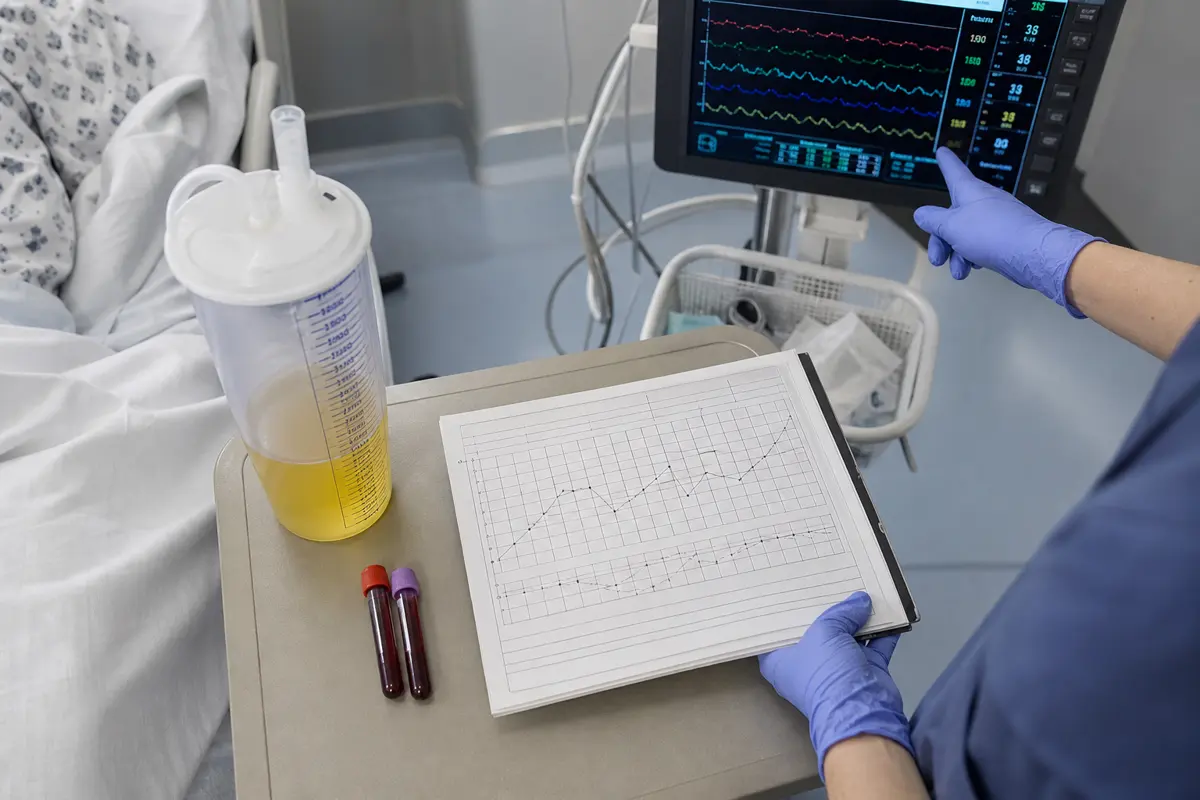
What clinicians test and trend
The first evaluation combines exposure history with kidney function, electrolytes, hydration, blood pressure, and measured urine output. Creatinine and urea help describe filtration, while potassium, bicarbonate, sodium, calcium, and other results show complications the kidneys normally regulate.
This single result is a starting point rather than a complete forecast.
Creatinine can continue rising after presentation, and its meaning depends partly on baseline kidney function, muscle mass, hydration, and the pace of change. Serial measurements reveal whether injury is stabilizing, improving, or advancing.
A previous creatinine result can establish whether the apparent decline is new, but the absence of an old result does not make the current change benign. Clinicians combine the present value with urine volume, fluid balance, potassium, acid-base status, and the direction of repeat tests.
Urine output needs the same context because a person may still pass urine while filtration worsens.
A measured fall in output, increasing swelling, breathlessness, confusion, or persistent nausea can show that the kidneys are no longer controlling fluid and waste safely.
Urinalysis may show evidence of tubular damage or help clinicians examine other causes of acute kidney injury. Imaging can assess obstruction or anatomy, but a normal scan does not rule out toxic tubular injury.
Clinicians also review medicines, supplements, infections, heat exposure, dehydration, and existing kidney disease. These alternatives can coexist with a mushroom exposure and may change which treatments are safe.
The mushroom name supports the diagnosis but does not replace the renal workup.
These alternatives can follow different courses because dehydration may improve as circulation and fluid balance are corrected while obstruction can require imaging and a procedure. Clinicians compare that response with urine findings, laboratory trends, and the exposure clock before assigning toxic tubular injury.
This does not make a biopsy automatic.
Nephrologists may consider kidney tissue when the diagnosis remains uncertain or the result could change management, but the procedure has risks and may not identify a mushroom species. A convincing meal history, expert specimen assessment, and compatible clinical course can sometimes provide the needed explanation without it.
How hospital treatment supports the kidneys
There is no established antidote proven to reverse orellanine kidney injury after a person becomes ill. Hospital care therefore focuses on stabilizing the patient, preventing avoidable additional injury, managing fluid and electrolyte problems, and involving nephrology and toxicology early.
Treatment is adjusted to the person's actual fluid state.
Someone depleted by vomiting may need carefully monitored replacement, while someone retaining fluid may need a different approach. Clinicians also stop or avoid medicines that could add kidney stress when medically appropriate.
Dialysis supports the body when the kidneys cannot safely control potassium, acid, fluid, or uremic complications. It should not be described as a home-style toxin cleanse or a guarantee that kidney function will return.
This decision follows physiology, not the mushroom's reputation.
Dialysis timing therefore depends on dangerous complications and the whole examination rather than creatinine alone. A rising laboratory number prompts attention, but severe potassium disturbance, acid buildup, fluid in the lungs, or uremic effects can make support urgent.
Once dialysis begins, the team continues looking for renal recovery.
Urine output, chemistry between treatments, and the body's ability to maintain balance help show whether support can be reduced. Stopping or continuing dialysis is a medical decision made from repeated evidence, not from the number of days since the meal.
Some patients need temporary dialysis while renal function recovers and others remain dialysis-dependent or undergo kidney transplantation, so early specialist involvement preserves options for access, monitoring, and referral if the course worsens.
Unproven remedies can delay that care or add further kidney injury. Follow the poison center and hospital team rather than taking diuretics, herbal products, high-dose supplements, or another person's prescription.

How retained evidence changes the diagnosis
Write a separate line for each diner with the meal date, approximate portion, first symptom, urination changes, and current condition. People sharing a pan can receive different doses, so one unaffected diner does not clear the food.
Photos should show more than the cap.
Include the underside, entire stem, intact base, mushrooms at several ages, surrounding trees, and the substrate. Keep original image files because timestamps and location data may help reconstruct a collection made weeks earlier.
Store raw and cooked material separately and label it without tasting. During mushroom poisoning first aid, never delay transport to improve a specimen collection, and refrigerate food evidence only when poison specialists advise it.
This evidence can narrow the syndrome and alert other diners, but treatment does not wait for a mycologist's final species determination. Give the poison team the evidence available now and state clearly what is missing.
An old calendar entry, receipt, message thread, or photograph can recover the missing date.
The date should be tied to a place and meal rather than written as a free-floating guess. Collection coordinates, travel history, restaurant or market details, and messages between diners can distinguish one mushroom exposure from another event during the long silent interval.
For that exposure timeline, ask when thirst, fatigue, headache, flank discomfort, nausea, and urine changes first appeared.
That order helps clinicians compare the exposure clock with dehydration, infection, obstruction, medicine effects, and other causes of acute kidney injury. It also shows whether several diners developed compatible problems on different days after the same collection.
These previous laboratory records add a second timeline.
A recent normal creatinine can support a new decline, while known chronic kidney disease changes the baseline and the reserve available during acute injury. Neither record proves orellanine exposure, but both make serial results easier to interpret.
An identifier may examine spore color, cap and stem tissues, veil remnants, odor, habitat, and microscopic structures. These features help separate similar webcaps, but toxin testing is specialized and may not be available quickly enough to guide initial care.
That negative evidence has limits.
A discarded stem base or a photograph taken only from above can remove the character that would have narrowed the name. Clinicians should hear exactly what material is missing rather than receive a confident identification built from an incomplete specimen.
What recovery and long-term follow-up involve
Orellanine outcomes range from substantial renal recovery to persistent chronic kidney disease, long-term dialysis, transplantation, and death. No article can turn the initial creatinine value or symptom day into a personal prediction.
Published follow-up shows why discharge is not the end of the case.
Kidney function may improve slowly over weeks or months, and residual impairment can remain even after dialysis stops. Nephrology follow-up may track filtration, electrolytes, urine protein, blood pressure, anemia, fluid status, and medication safety.
Transplant evaluation does not mean transplantation is certain.
It gives specialists time to assess irreversible injury, overall health, support needs, and the likelihood of renal recovery while dialysis maintains the patient. When native kidney function returns sufficiently, transplantation may no longer be needed, but persistent failure can make it the durable option.
Recovery also changes daily decisions.
The medical team may give limits for salt, fluid, activity, over-the-counter pain medicines, supplements, or contrast studies based on current kidney function. Those instructions belong to the individual patient because the safe choice changes as renal function changes.
Reduced urine, swelling, breathlessness, fainting, confusion, persistent vomiting, chest symptoms, or new severe weakness after discharge requires prompt reassessment. A scheduled appointment is not a reason to wait through a new emergency sign.
The emotional timeline can be long as well.
Families may need help understanding that a meal eaten days earlier caused an illness that lasts months. Clear records of the species assessment, hospital course, and follow-up plan make future care safer.
Which safeguards prevent another exposure
Avoid eating a webcap unless a qualified identification process has established the exact edible species from complete, fresh material and the local guidance supports consumption. For many collectors, the safer decision is to leave the entire difficult genus off the menu.
Separate every candidate species in the field.
One unknown webcap in a mixed basket can defeat the later evidence trail, and chopping or cooking removes features an identifier needs. Keep uncertain mushrooms away from food, children, pets, cutting boards, and containers used for edible collections.
Cooking, drying, freezing, or tasting a tiny amount cannot establish safety. The control that matters is correct identification before any mushroom enters the kitchen.
Prevention also preserves response evidence.
Teach every collector in the group to stop the basket when a specimen conflicts with the intended species. Quiet disagreement at the sorting table is valuable because it prevents uncertainty from becoming an invisible ingredient.
Collection notes, whole specimens, and a clear meal record give poison specialists a usable starting point if symptoms appear long after everyone stopped thinking about dinner.
Sources & References
- Human and Experimental Toxicology of Orellanine Review of delayed kidney injury, diagnosis, prognosis, and treatment.
- Long-Term Clinical Outcome for Patients Poisoned by Orellanine Long-term outcomes in 28 documented deadly webcap poisonings.
- Mushroom Toxicity, StatPearls Clinical overview of mushroom toxidromes and emergency management.