
Possible amatoxin exposure is an emergency even when the person feels well. Call Poison Control in the United States at 1-800-222-1222 and seek emergency evaluation after a plausible wild-mushroom ingestion, because waiting for symptoms can surrender the hours when treatment has the most options.
Suspected amatoxin exposure is an emergency
An amatoxin case often begins without a dramatic clue at the table because the mushroom may taste ordinary, several diners may finish the meal, and everyone can remain comfortable through the first part of the night.
That quiet interval is why the exposure history matters before the symptom list. Tell the poison specialist when the mushrooms were eaten, who ate them, how much each person ate, whether several species shared the dish, and where the mushrooms came from.
Delayed gastrointestinal illness after a wild-mushroom meal is especially concerning.
CDC reports describe abdominal pain, nausea, vomiting, and diarrhea commonly beginning more than six hours after amatoxin ingestion. Some patients have no laboratory evidence of liver injury during the earliest gastrointestinal symptoms, so an apparently limited stomach illness can still be the opening phase of a lethal poisoning.
A delay shorter or longer than six hours cannot prove or exclude amatoxin because meal size, individual response, mixed species, an uncertain eating time, and earlier symptoms from another mushroom can blur the pattern.
The safe decision for every diner is based on plausible exposure plus consequences, not on reaching photographic certainty. A complete specimen can help later, but nobody should postpone the call while searching the woods, consulting an app, or waiting for a social-media identification.
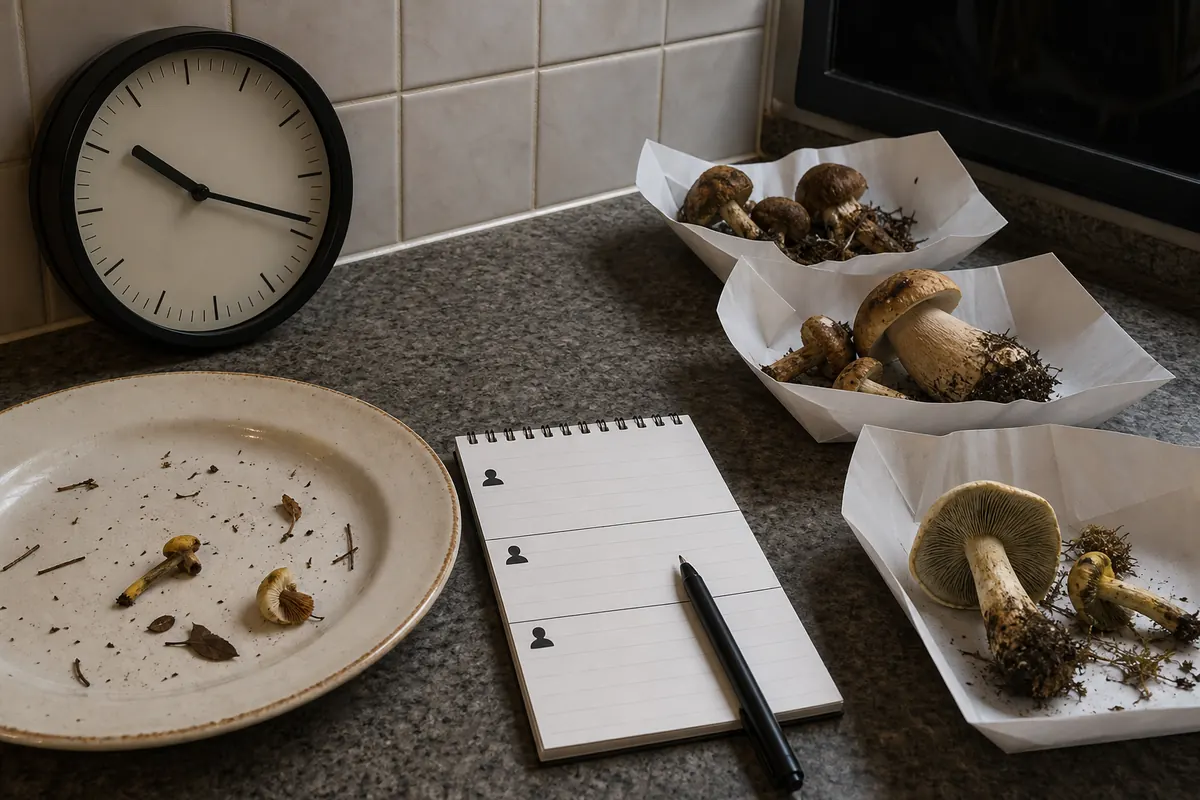
Every diner needs a separate line in the record because a shared dish does not create identical doses. A person who ate one cap may remain well while another who ate several becomes ill, and the absence of symptoms in one person does not clear the others.
Children, older adults, pregnant patients, and people with existing liver or kidney disease need those facts reported immediately because they can change monitoring, fluid management, and the clinical margin for complications even though they do not identify the toxin.
SafetyCan Inkcap Mushrooms Make Alcohol Dangerous?Which mushrooms can contain amatoxins
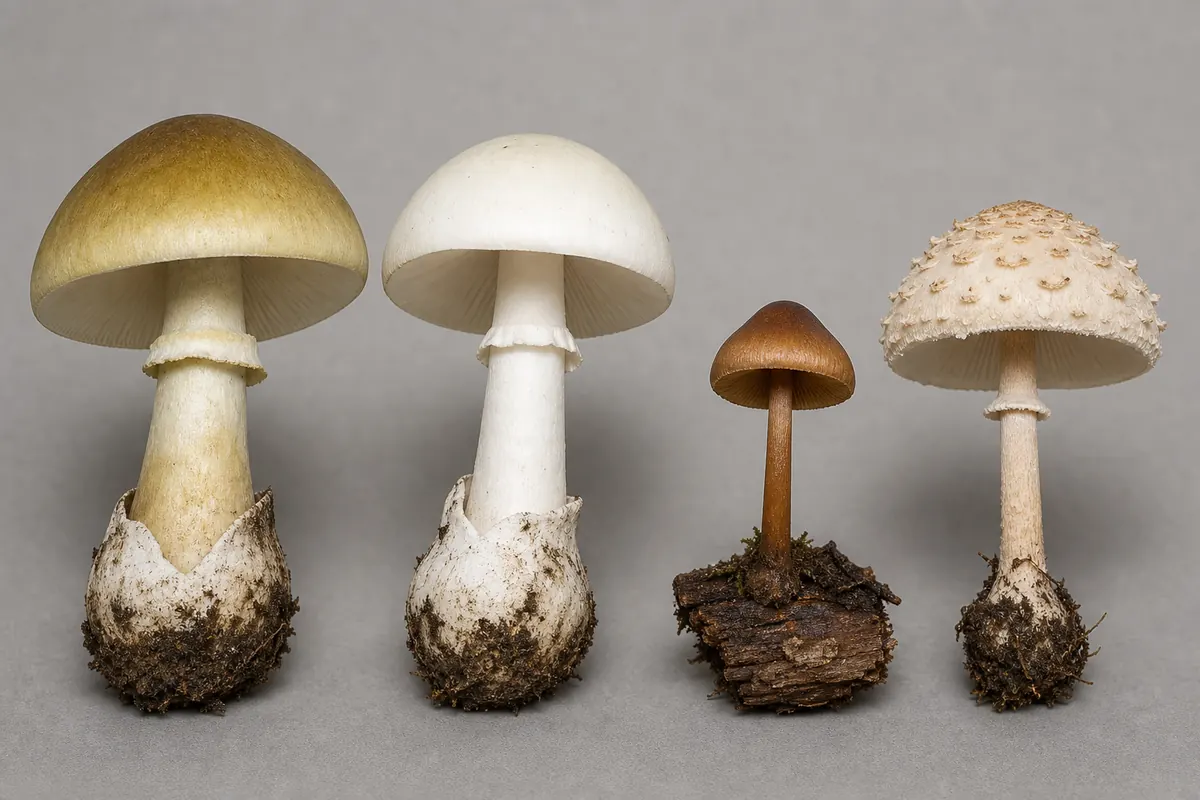
The death cap, Amanita phalloides, is the best-known amatoxin mushroom, while destroying angels include several white Amanita species. In North America, the exact destroying-angel species varies by region, which is one reason a generic white-mushroom label is not enough.
- Death caps
- Olive, yellow-green, or brownish caps can occur with white gills, a ring, and a saclike volva at the stem base
- Destroying angels
- Several mostly white Amanita species combine white gills with a ring and basal volva
- Galerina risk
- Galerina marginata and related small brown mushrooms can fruit on wood and contain amatoxins
- Lepiota risk
- Some small lepiotoid mushrooms also contain amatoxins despite looking unlike a death cap
The mushroom field error often begins when the entire stem base is left underground, where a volva can be torn away during picking, hidden by soil, or cut off for a clean basket before anyone photographs it.
Small brown mushrooms create a different failure. Galerina marginata can grow on buried or visible wood and may enter a collection intended for edible wood-loving species, while small toxic Lepiota can be mistaken for parasol-like mushrooms.
Do not reduce the threat to one cap color or one genus.
Amatoxin identification requires the whole specimen, including cap, gills, ring when present, complete stem base, substrate, and nearby habitat. Spore evidence and microscopy may help a qualified identifier, but neither treatment nor the emergency call should wait for a final Latin name.
Cooking does not create a safety test because a mushroom that was fried, boiled, frozen, dried, or preserved can still present an amatoxin risk, and tasting a small amount is not a controlled exposure.
The meal may also contain fragments that no longer resemble the collected specimen. Keep raw leftovers, cooked leftovers, cleaning scraps, and clear photographs separated and labeled because each may answer a different identification question.
Amatoxin blocks the proteins liver cells need
Alpha-amanitin is the amatoxin most often discussed in severe human poisoning, reaching the liver after gastrointestinal absorption and interfering with RNA polymerase II, an enzyme cells need to produce messenger RNA.
Without normal messenger RNA production, affected cells cannot maintain protein synthesis. Hepatocytes carry much of the injury because the liver receives absorbed material from the gut and actively handles compounds circulating in the blood.
The cellular injury begins before jaundice or confusion makes liver failure visible.
Some toxin can move between the liver, bile, intestine, and bloodstream. This circulation helps explain why toxicologists may consider repeated gastrointestinal decontamination in selected cases, but that decision belongs in a hospital because aspiration risk, timing, bowel function, and the patient's condition matter.
Amatoxin does not produce a simple relationship between stomach pain and liver damage because vomiting reflects the gastrointestinal phase, while clotting abnormalities, falling glucose, rising liver enzymes, acid-base changes, kidney injury, and altered mental state reveal consequences the patient cannot assess at home.
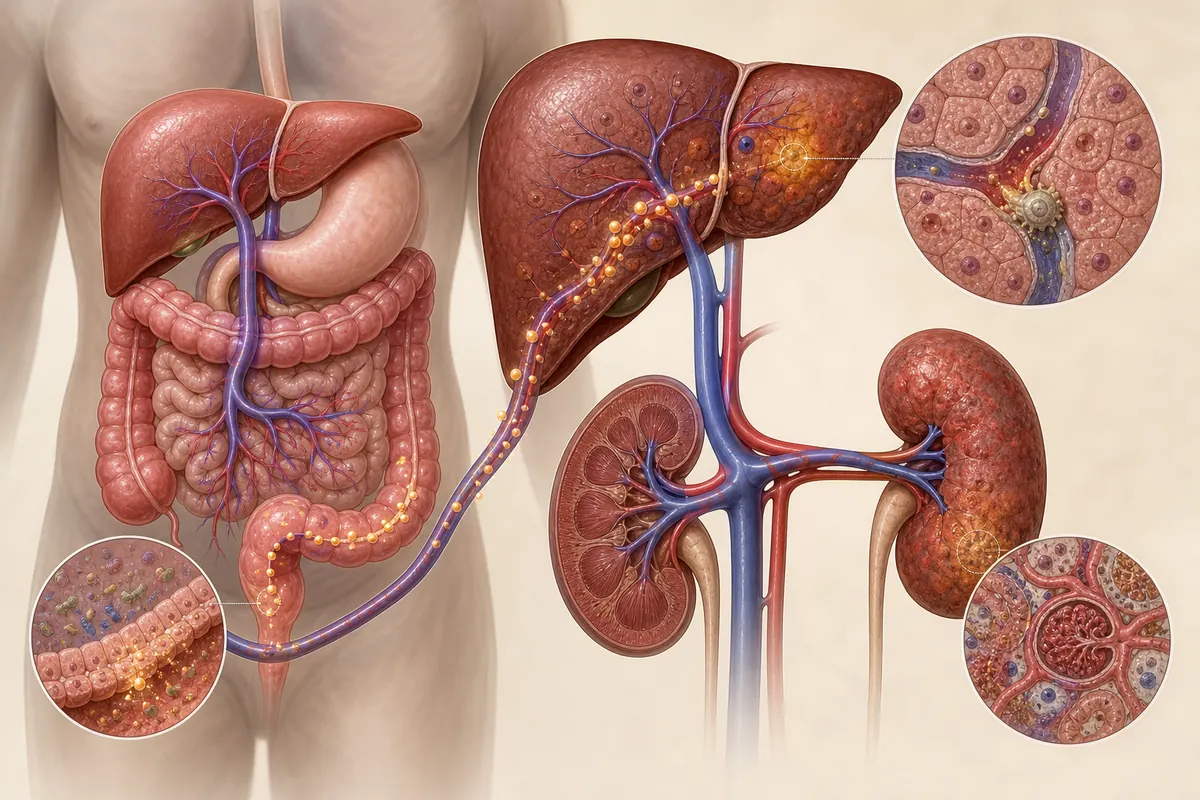
Fluid loss adds a second problem. Repeated watery diarrhea and vomiting can reduce circulation, disturb sodium and potassium, and worsen kidney stress while the toxin continues injuring the liver.
Replacing fluid is necessary but not sufficient because a patient can look less dehydrated after intravenous fluids and still have worsening hepatic injury after the stomach symptoms settle.
The quiet second phase can hide worsening liver injury
The classic amatoxin course is described in phases because the patient's experience and the organ injury do not move together. Real cases vary, but the sequence explains why discharge based only on symptom relief can be dangerous.
The latent phase often lasts six to 24 hours after the meal, while the person feels normal as the toxin is absorbed and cellular injury begins.
The gastrointestinal phase brings abdominal pain, nausea, repeated vomiting, and profuse watery diarrhea. Severe fluid and electrolyte losses can dominate the immediate picture even when the first liver tests are normal or only beginning to change.
The apparent recovery phase may start as vomiting and diarrhea ease. During roughly the next day, the patient may ask to go home while aminotransferases rise and the liver's ability to make clotting proteins declines.
Warning
Feeling better after delayed vomiting and diarrhea does not show that amatoxin has cleared. Continue emergency observation and serial laboratory testing until the treating toxicology and liver teams decide the risk has resolved.
The organ-failure phase can develop over the following two to six days as worsening jaundice, abnormal clotting, low blood sugar, acidosis, kidney failure, confusion, bleeding, and circulatory instability signal fulminant hepatic failure.
These windows overlap and should never be used as a home diagnostic chart. They help clinicians organize risk when combined with the exposure, examination, laboratory trends, mushroom evidence, and response to treatment.
A mixed-mushroom meal can produce early symptoms from an irritant before amatoxin's delayed phase, so report every species that might have entered the pan because the early illness does not cancel the later risk.
SafetyGyromitrin Poisoning: Why False Morels Can Trigger SeizuresWhat clinicians monitor repeatedly
One normal result soon after ingestion cannot close an amatoxin case. The medical team establishes a baseline, repeats testing on a schedule guided by toxicology, and looks at direction and rate of change rather than a single number.
Aminotransferases such as AST and ALT rise when liver cells are injured, and their movement helps show progression even though the largest number alone does not measure whether the liver can still perform its essential work.
Clotting tests, especially prothrombin time and INR, help assess hepatic synthetic function. A worsening INR can indicate that the liver is failing to produce clotting factors, and bleeding risk may rise as the illness advances.
Blood glucose deserves repeated attention because severe liver failure can impair glucose regulation, and a falling value can accompany confusion or deterioration that requires immediate clinical management.
Bilirubin contributes to the picture when jaundice develops, while creatinine and urine output help track kidney involvement. Electrolytes, blood gas measurements, lactate, blood pressure, mental state, and urine production show how the whole body is tolerating the injury.
The important word across AST, INR, bilirubin, and creatinine is trend.
Consider a patient whose vomiting stops after intravenous fluids while AST, ALT, and INR rise on the next two draws. The improved stomach symptoms describe one organ system, while the laboratory direction shows that hepatic injury is still moving forward.
A second patient may have severe diarrhea but stable liver tests through the observation period, leaving the treating team to combine serial evidence, timing, mushroom identification, and clinical status before ending amatoxin monitoring.
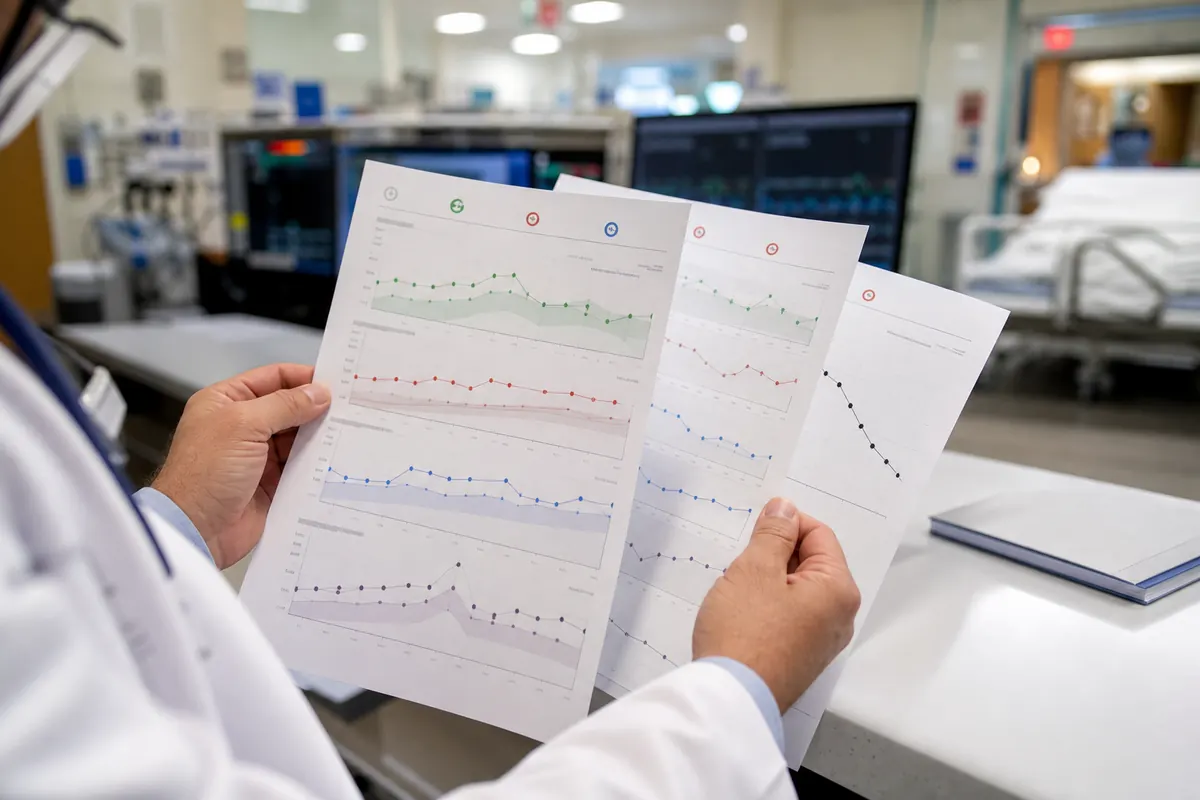
Altered mental state is not simply another lab value. New confusion, unusual sleepiness, agitation, inability to follow instructions, or reduced consciousness can mark hepatic encephalopathy or another critical complication and needs immediate escalation.
Clinicians also follow acid-base status and circulation because severe liver failure affects more than the liver, making the combined trajectory more useful than a checklist completed once.
How hospitals manage amatoxin poisoning
There is no single FDA-approved amatoxin antidote and no universally standardized regimen. CDC's current outbreak report emphasizes early identification and treatment while acknowledging that evidence and access differ among proposed therapies.
Immediate management begins with poison-center or medical-toxicology consultation, stabilization, fluid and electrolyte replacement, and serial assessment, while airway protection, blood pressure support, glucose management, and treatment of complications become priorities in critical illness.
Gastrointestinal decontamination may be considered when timing and clinical condition make it appropriate. Activated charcoal is a medical intervention, not a household remedy, because aspiration, repeated dosing, bowel obstruction, and altered consciousness all affect whether it is safe.
Specialists may consider therapies such as intravenous silibinin or N-acetylcysteine within a broader plan, but evidence is not a guaranteed antidote and choices must account for availability, timing, severity, contraindications, and the patient's changing condition.
Penicillin has also appeared in historical treatment regimens, but no reader should attempt to select or obtain a drug from an article. The useful action is early transport to a hospital that can consult toxicology and liver specialists.
Supportive care is active treatment.
Replacing losses, correcting glucose and electrolytes, monitoring coagulation, treating kidney complications, preventing aspiration, and recognizing cerebral or circulatory deterioration can preserve the patient while the liver's course becomes clearer.
Early communication with a transplant center matters when laboratory and clinical signs point toward acute liver failure because transfer and evaluation take time and should begin before every conventional option has failed.
No home method can reproduce this monitoring. Inducing vomiting, drinking alcohol, taking leftover medicine, using herbal products, or trying an online detox can delay care, add liver stress, create aspiration risk, or obscure the clinical picture.
Call 911 for collapse, seizure, severe confusion, breathing difficulty, or inability to wake the patient, while Poison Control can coordinate immediate next steps for other suspected exposures.
SafetyMuscarine Poisoning: Why Sweating and Salivation Start FastHow mushroom evidence changes the case
Treatment begins from clinical risk, but good mushroom evidence can refine that risk. Preserve evidence without handling it more than necessary and without sending anyone back to the collection site before the patient reaches care.
Photograph an intact specimen from above, below, and the side with its complete stem base beside a scale object, then add the substrate, nearby tree, grouping pattern, and known place and time of collection.
Keep specimens in paper rather than sealing damp mushrooms in plastic. Label raw mushrooms, cooked leftovers, cleaning scraps, and material from vomit separately, and keep them away from food preparation areas.
Do not combine fragments from different baskets.
A mycologist may be able to identify a complete mushroom while finding only suggestive characters in cooked pieces. Conversely, a cooked fragment may establish that a suspect species entered the meal even when the remaining raw mushrooms came from a different collection.
The meal record should name every ingredient and preparation step so clinicians can compare mushroom exposure with foodborne illness, medication, alcohol, or another cause without assuming one explanation excludes the others.
Tell clinicians whether several people shared the dish and whether anyone ate a different portion. A person who only tasted the sauce may have a different exposure from someone who ate several caps, while a child or pet may have eaten a raw specimen before cooking.
Professional identification supports care but does not replace it, and a negative guess from an incomplete photograph cannot reverse the significance of delayed gastrointestinal illness and worsening liver tests.
What recovery and liver failure can look like
Outcomes range from recovery with monitoring and supportive care to fulminant liver failure, transplantation, and death. No article can calculate an individual's outcome from the mushroom count or the first laboratory panel.
CDC's northern California investigation covering November 2025 through March 2026 identified 39 amatoxin cases. Thirty-two patients recovered, three received liver transplants, and four died, showing the full range within one documented outbreak.
Those figures describe the outbreak rather than a personal forecast.
Severity can reflect the species and toxin amount, portion eaten, delay before care, gastrointestinal fluid loss, age, existing illness, and the liver and kidney trajectory. Identification uncertainty also matters because an estimated cap count may not correspond to toxin dose.
Some patients stabilize after early treatment while others decline despite aggressive care, which is why transplant specialists use established clinical criteria and repeated evidence rather than waiting for a single dramatic moment.
Kidney injury can accompany hepatic failure through several pathways, including dehydration, poor circulation, direct toxic effects, and multiorgan illness. Dialysis can support kidney function and manage complications, but it does not mean the liver problem has been solved.
Recovery also requires follow-up for liver and kidney tests, medications, nutrition, activity, and mental health, especially when the exposure was intentional or involved a family meal with severe outcomes.
The psychological aftermath deserves direct attention because survivors and families may face guilt, fear, or grief. The treating team can connect them with appropriate support without turning the medical investigation into blame.
What prevents the next amatoxin exposure
Prevention begins before the basket mixes. Keep every uncertain species separate, retain complete specimens, and never let abundance or a familiar cooking method substitute for species-level identification.
Do not serve a wild mushroom to other people until all required field characters support the identification, because a guest cannot consent meaningfully when the collector is unsure or has discarded the stem base.
Children and pets should not have access to sorting surfaces, compost, yard mushrooms, or field bags. A single raw mushroom can create an exposure whose identity is harder to establish after it has been chewed or scattered.
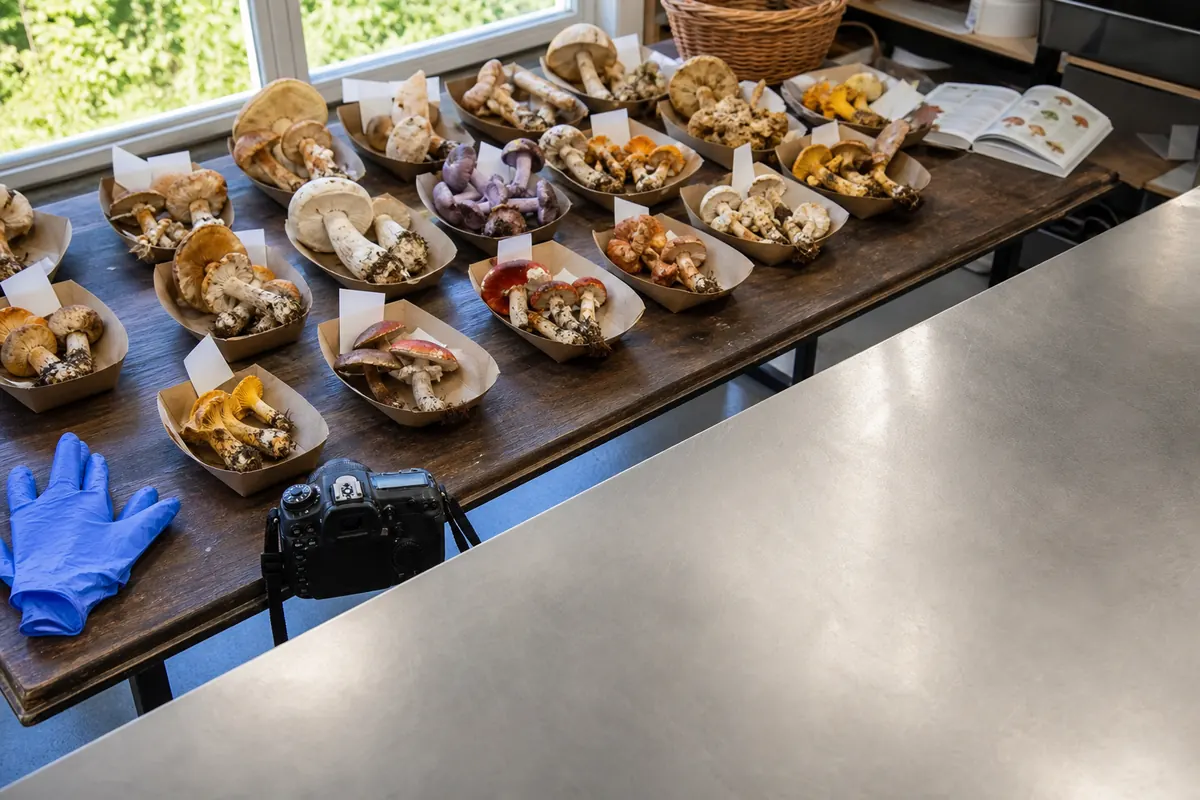
Cooking, soaking, drying, freezing, pickling, and tasting do not establish safety because the effective control is correct identification and exclusion from food.
Keep one uncooked specimen from each eaten species in a labeled paper container in the refrigerator for a short period after the meal. This is evidence for an emergency, not permission to eat a mushroom that remains uncertain.
| Failure point | Why it matters | Safer control |
|---|---|---|
| Stem base cut off in the field | A volva or basal structure can be lost | Collect one complete specimen for identification |
| Several species mixed in one basket | Fragments and spores become hard to assign | Separate each species in paper before transport |
| Confidence based on cap color | Death caps and destroying angels vary in appearance | Use the complete set of field characters and regional expertise |
| Delayed symptoms dismissed as food poisoning | The latent period is characteristic of serious risk | Report the wild-mushroom meal immediately |
| Improvement after diarrhea | Liver injury can worsen during apparent recovery | Continue observation and serial testing until medically cleared |
| Leftovers discarded | Toxicologists lose identification evidence | Preserve labeled raw and cooked material without delaying care |
Sources & References
- CDC MMWR, Amanita Species Mushroom Poisonings, Northern California, 2025 to 2026 Current outbreak outcomes, amatoxin mechanism, clinical phases, and treatment limitations.
- CDC MMWR, Amanita phalloides Mushroom Poisonings, Northern California, 2016 Latency, false recovery, organ-failure phase, and early supportive care.
- NCBI Bookshelf, Mushroom Toxicity Toxidrome evaluation, laboratory categories, specialist consultation, and hospital treatment context.