
Muscarine poisoning can turn a wild-mushroom meal into a wet, slow-pulse emergency within minutes. Call Poison Control at 1-800-222-1222 in the United States when sweating, tearing, drooling, vomiting, pinpoint pupils, wheezing, or an unusually slow heartbeat appear together, and call 911 for breathing difficulty, collapse, seizure, or inability to wake the person.
Sweating and salivation define the muscarine pattern
The strongest clue is a cluster of wet parasympathetic signs rather than vomiting alone, with sweat soaking clothing as tears and saliva increase, pupils constrict, the bowel and bladder become active, and the pulse or blood pressure falls.
Symptoms often begin between 15 minutes and two hours after ingestion. That rapid onset helps organize the differential, but timing cannot prove the toxin because gastrointestinal irritants, mixed meals, pesticides, medicines, and other exposures can overlap.
Breathing and circulation set the urgency.
Muscarine can increase bronchial secretions and tighten airways while slowing the heart, so a person who is wheezing, struggling to clear saliva, faint, blue around the lips, or difficult to wake needs emergency services rather than transport by an unmonitored private car.
Record the meal time and first symptom while help is being arranged. Note whether the face is flushed or pale, the skin is dry or soaked, pupils look small, and the person can speak normally without stopping for breath.
While recording that timeline, do not make the patient walk around to test severity, and position them as emergency dispatch directs without giving food or drink to someone with impaired alertness or inducing vomiting.
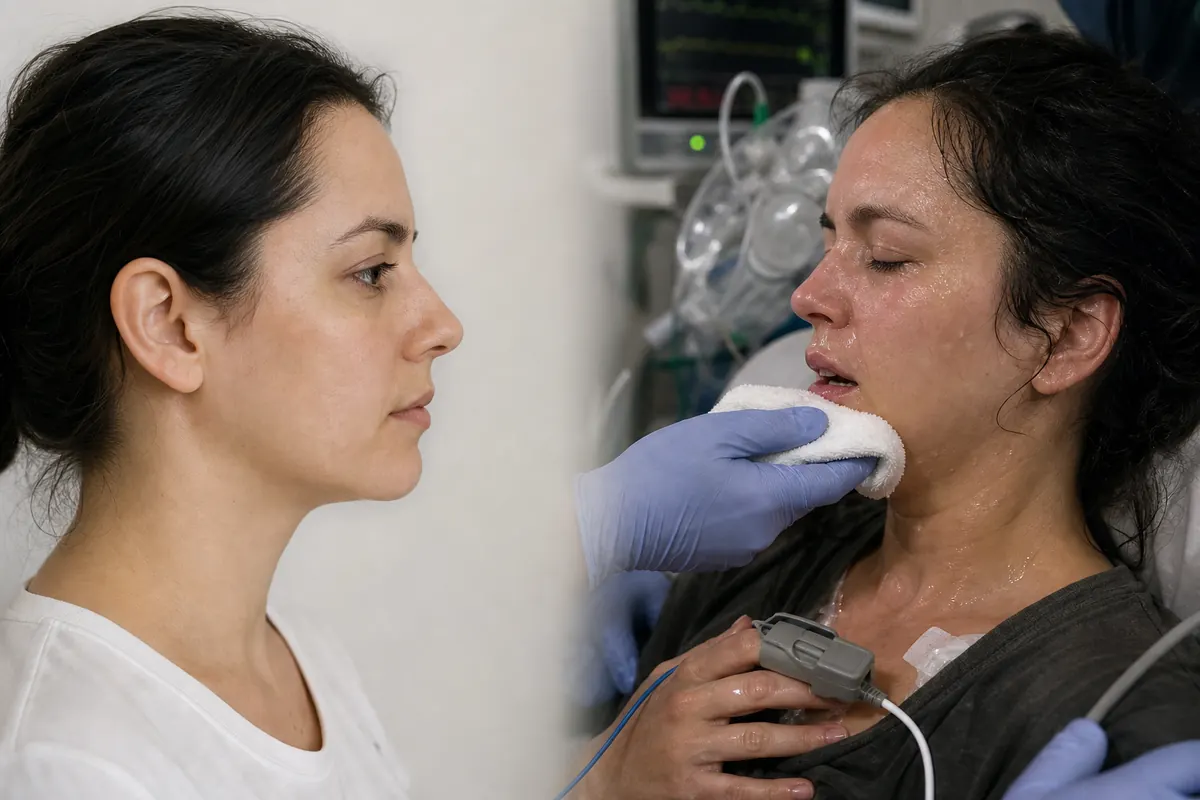
Every diner needs a separate timeline because one person may have only cramps while another develops secretions and bradycardia from the same dish.
Warning
Do not wait for every symptom in a mnemonic. Breathing difficulty, collapse, severe weakness, confusion, or a very slow pulse after a wild-mushroom meal warrants immediate emergency care.
The toxin name does not identify the mushroom
Muscarine was first isolated from Amanita muscaria, the fly agaric, which gave the toxin its name. Yet fly agaric usually causes a different neurological syndrome driven mainly by ibotenic acid and muscimol because its muscarine concentration is generally too low for the classic cholinergic presentation.
Clinically important muscarine poisoning more often follows ingestion of species in Inocybe, Inosperma, Clitocybe, and related groups. These mushrooms can be small, pale, tan, or brown and may lack the dramatic colors people associate with poisonous fungi.
That correction changes the evidence search.
Do not look only for a red cap with white spots when the patient is sweating and drooling. Preserve small fibrous-capped mushrooms, pale funnel-shaped mushrooms, fragments, cleaning scraps, and photographs of the original collection.
Because some muscarine-containing groups are difficult to identify from a casual photograph, cap fibers, gill attachment, odor, spore characters, habitat, and microscopy may matter even as the clinical team treats before the final name is available.
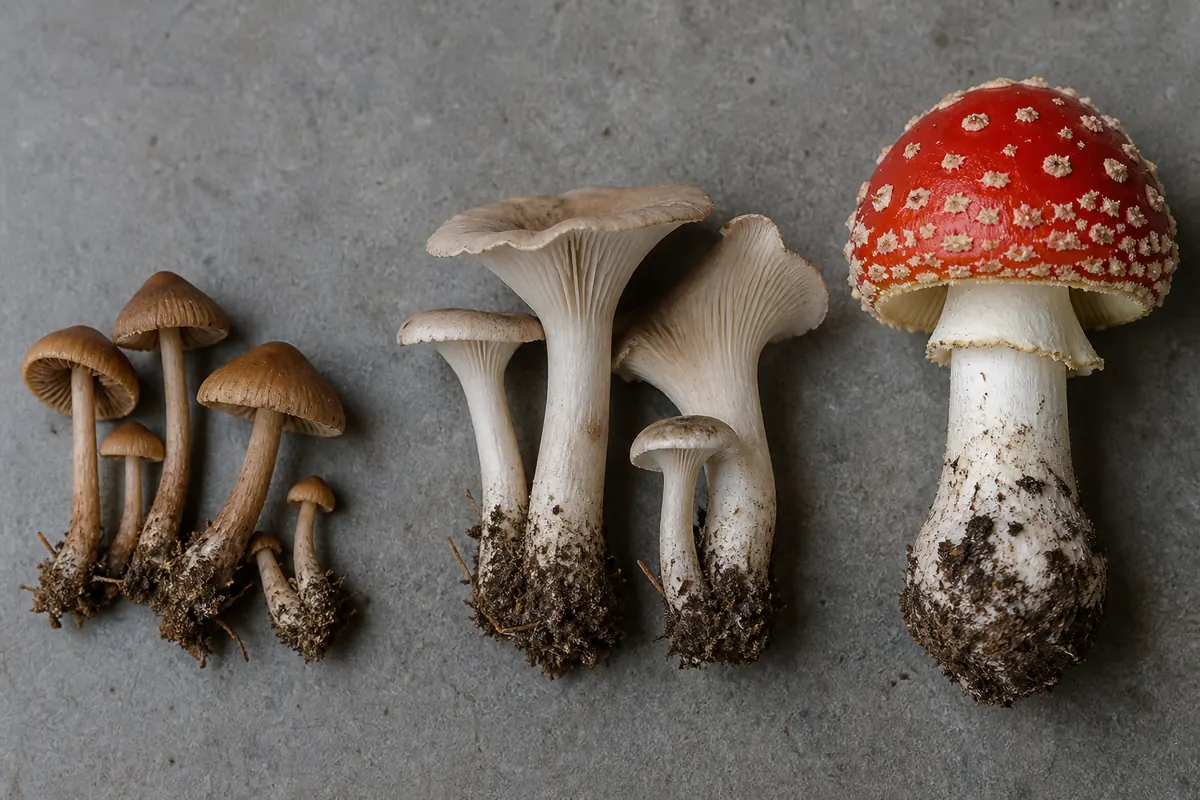
The common name of a collected mushroom is weak evidence because regional names can refer to several species. Give the identifier the complete specimen and collection context rather than asking whether a nickname is edible.
Cooking cannot verify identity or serve as a toxin assay because a thoroughly cooked unknown mushroom can still cause poisoning even when the meal tasted normal.
How muscarine changes body signals
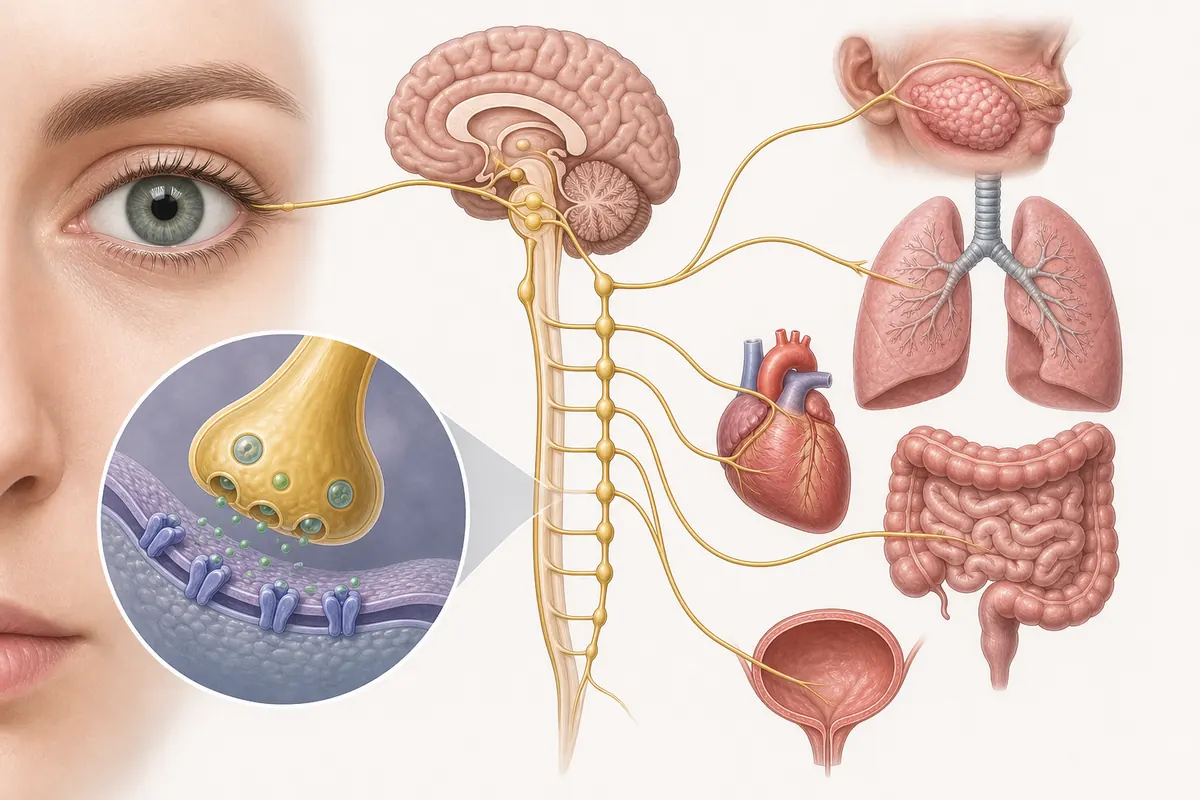
Muscarine activates muscarinic acetylcholine receptors in the peripheral autonomic nervous system. The result resembles excessive parasympathetic signaling across glands, smooth muscle, the heart, eyes, gastrointestinal tract, and bladder.
- Glands
- Saliva, tears, sweat, and airway secretions increase
- Eyes
- Pupils can constrict and vision may blur
- Heart
- The pulse may slow and blood pressure may fall
- Lungs
- Bronchial secretions and bronchospasm can impair breathing
- Gut and bladder
- Cramping, vomiting, diarrhea, and urinary urgency can occur
Because the signs connect through one mechanism, sweating with drooling, pinpoint pupils, and bradycardia carries more diagnostic weight than any one feature viewed alone.
Muscarine crosses into the brain poorly compared with several other mushroom toxins. Profound hallucinations, marked agitation, alternating sedation, or seizures therefore push clinicians to consider another toxin, a mixed ingestion, low oxygen, severe circulatory compromise, or a separate medical problem.
Poor brain penetration does not make muscarine harmless.
Airway flooding, bronchospasm, bradycardia, and hypotension are peripheral effects that can become critical without a primarily neurological syndrome. Older adults and people with heart or lung disease may have less reserve when those effects arrive together.
Fluid loss through vomiting, diarrhea, and sweating may worsen weakness and blood pressure even while secretions remain excessive in the mouth and lungs.
Muscarine acts directly at muscarinic receptors rather than blocking acetylcholinesterase. That distinction matters clinically because pesticide poisonings can include additional nicotinic effects such as muscle twitching, weakness, or paralysis and may require a different antidote strategy.
A patient does not need to display the full physiology lesson before receiving care because the bedside priority remains oxygen, secretions, circulation, and the possibility of another exposure while the mechanism guides monitoring.
What the symptom pattern looks like
Early nausea or cramping may be followed quickly by sweating, tearing, salivation, vomiting, and diarrhea. The order varies, so clinicians listen for simultaneous body systems rather than requiring a fixed sequence.
| Body system | Possible muscarine effect | Why it matters |
|---|---|---|
| Eyes | Pinpoint pupils, blurred vision, tearing | Supports the cholinergic cluster |
| Mouth and glands | Heavy saliva and sweating | Can become difficult to manage when weakness develops |
| Lungs | Wheeze, bronchospasm, bronchial secretions | May threaten oxygenation and airway clearance |
| Heart and vessels | Slow pulse, low blood pressure, faintness | Can reduce circulation and require monitored treatment |
| Stomach and bowel | Cramps, vomiting, diarrhea | Causes fluid and electrolyte loss |
| Bladder | Urgency or increased urination | Adds to the peripheral muscarinic pattern |
No single sign is required in every patient, so a normal pupil photograph does not clear severe secretions and bradycardia while vomiting without the broader wet pattern may point toward a different mushroom syndrome.
The patient's symptom pattern can change over a short interval.
A patient who is talking normally at the first call may later struggle with secretions or become faint as the heart rate and blood pressure fall. Keep the person under direct observation and report changes instead of assuming rapid onset means rapid resolution.
Because home pulse devices and watches can be wrong during movement or poor circulation, report the displayed number and symptoms but let emergency clinicians confirm rhythm and perfusion.
Temperature also deserves attention because profuse sweating can cool the skin while exertion, anxiety, clothing, or another toxin changes the core temperature. A casual touch cannot replace a measured value or the rest of the examination.
The amount eaten does not translate neatly into severity when caps differ in size and maturity and a sauce distributes fragments unevenly among diners from a collection with uncertain species and toxin concentrations.
Children can become dehydrated quickly and may not describe blurred vision or chest symptoms clearly. Pets have different emergency pathways, so contact a veterinarian or animal poison service rather than applying human advice.
SafetyCan Inkcap Mushrooms Make Alcohol Dangerous?What can mimic muscarine poisoning
Simple gastrointestinal irritants can cause nausea, cramps, vomiting, and diarrhea within hours without the full wet pattern, although a mixed basket can still place both syndromes in one meal.
Amatoxin poisoning usually has a longer symptom-free interval before severe gastrointestinal illness and later liver injury. Early onset lowers that specific suspicion but cannot erase it when several unidentified species were cooked together.
Fly agaric intoxication is another naming trap.
Ibotenic acid and muscimol more often cause central effects such as confusion, agitation, altered perception, poor coordination, sedation, or seizures. Those features differ from a predominantly peripheral wet syndrome, although real patients may not fit a textbook category.
Because organophosphate or carbamate pesticides can produce a similar cholinergic toxidrome, tell clinicians about farm chemicals, pest-control products, contaminated clothing, workplace exposure, and people who became ill without eating the mushrooms.
Certain medicines and medical conditions can slow the pulse, lower blood pressure, produce diarrhea, or increase secretions. Bring the medication list and describe pre-existing symptoms so the team can compare the baseline with the post-meal change.
| Pattern | Typical emphasis | Key uncertainty |
|---|---|---|
| Muscarine | Rapid wet secretions, miosis, gut activity, bradycardia | Mushroom species may remain unknown |
| Gastrointestinal irritant | Early vomiting, cramps, diarrhea | Mixed mushrooms can add another toxin |
| Amatoxin | Delayed gastrointestinal phase followed by liver injury | Early symptoms from a second species can mask the delay |
| Muscimol or ibotenic acid | Altered behavior, coordination, alertness, or seizures | Products and mixed ingestions may contain other compounds |
| Pesticide cholinergic toxicity | Similar wet syndrome plus exposure history | Mushroom meal may be coincidental |
This differential prevents both false reassurance when early vomiting seems ordinary and a guessed mushroom name from hiding a non-mushroom exposure.
Absence of a classic sign carries limited weight when pupils were checked after light conditions changed, a slow pulse recovered before arrival, or secretions were wiped away, so the witness timeline belongs beside the current examination.
That gap is evidence about timing, not noise to discard after the patient reaches care.
What evidence to collect during the call
Write down the eating time, first symptom, order of new signs, and current breathing and alertness. Add each diner's portion and symptoms on a separate line, including anyone who still feels well.
Describe the wet signs literally by reporting pooling saliva, soaked clothing, small pupils, wheezing, or an unusually low pulse reading instead of saying only that the patient looks poisoned.
Photograph complete leftover mushrooms from the cap, underside, side, and stem base. Include a scale object and preserve separate paper containers for each suspected species without delaying transport.
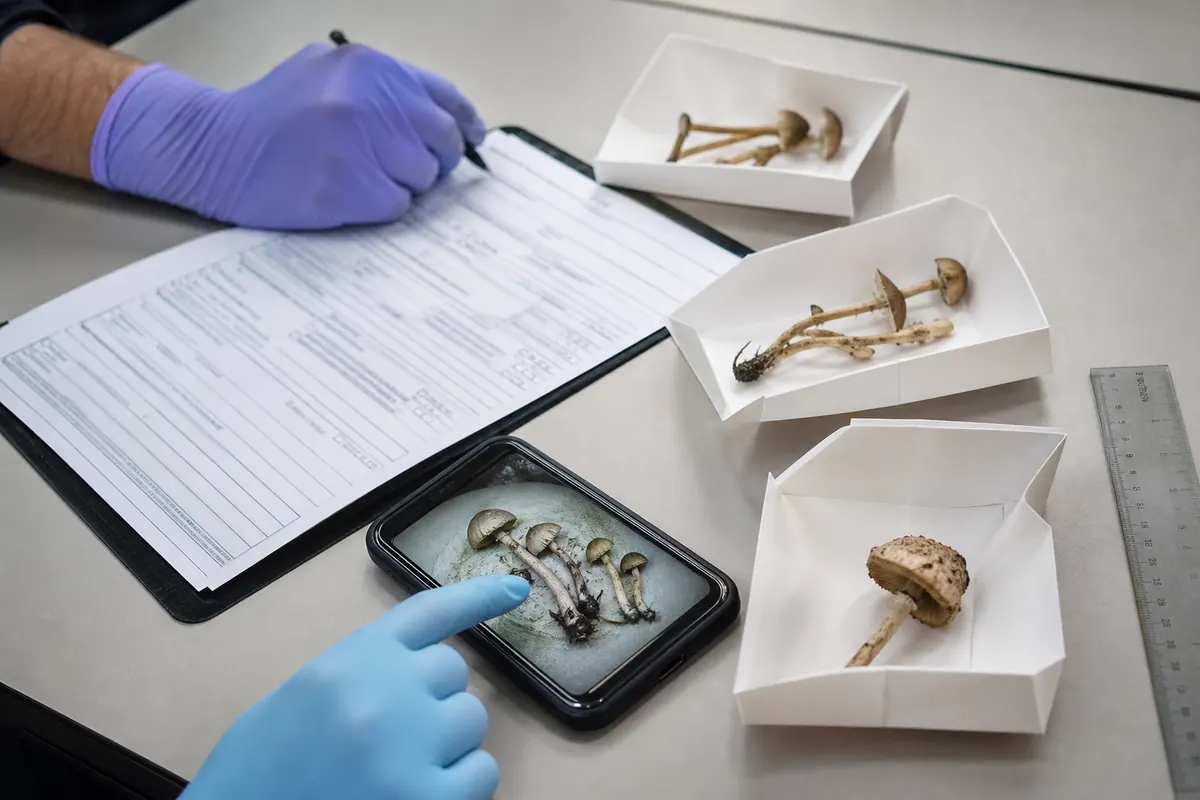
Keep cooked leftovers, raw scraps, packaging, receipts, and field photographs without tasting another specimen, asking someone else to test the meal, or returning to the site while the exposed person waits.
This report should include alcohol, medicines, recreational products, supplements, possible pesticide contact, and relevant heart, lung, kidney, pregnancy, or allergy history because these details can change diagnosis and treatment.
Repeat the breathing, alertness, pulse, and secretion observations closely while help is coming because one early snapshot can miss a worsening airway or falling blood pressure.
Give every measurement a time and method. A watch pulse, home blood-pressure cuff, or phone photograph may add context, but an uncertain number should be reported as uncertain rather than converted into a precise medical claim.
Co-diners need separate records even when they shared one pan because portion size, species mix, and individual illness can differ.
Someone who remains well can still preserve the remaining food and describe the collection, while the symptomatic person receives care. That division keeps evidence work from delaying transport or asking an exposed person to handle more mushrooms.
Follow dispatch instructions about positioning and transport. Do not give food, drink, activated charcoal, anti-diarrheal medicine, or another person's prescription unless the treating professional directs it.
SafetyGyromitrin Poisoning: Why False Morels Can Trigger SeizuresHow clinicians treat the cholinergic syndrome
Hospital care begins with airway, breathing, circulation, oxygenation, cardiac rhythm, blood pressure, temperature, hydration, and mental status, which guide suction, respiratory support, intravenous access, and correction of fluid or electrolyte problems.
Supportive care is the foundation.
Atropine is an antimuscarinic medicine that clinicians may use when muscarinic effects threaten breathing or circulation. It can reduce secretions and oppose bradycardia, but the treatment goal and repeat assessment matter more than a number copied from a webpage.
Atropine is not a home antidote.
Because the wrong dose or use in the wrong syndrome can cause rapid heartbeat, overheating, urinary retention, confusion, or other anticholinergic effects, medical teams select treatment from the patient's secretions, oxygenation, pulse, blood pressure, age, co-exposures, and response.
This monitoring may include an electrocardiogram, repeat vital signs, glucose, electrolytes, kidney function, and consequences of vomiting or diarrhea. Broader testing depends on whether the history suggests delayed toxins, pesticide exposure, organ injury, or another diagnosis.
Improvement after atropine can support the treatment plan but cannot identify the mushroom because other cholinergic exposures may respond and a mixed ingestion can leave risks after secretions and pulse improve.
Repeated examination guards against treating the monitor instead of the patient. A faster pulse alone is not the endpoint when wheezing, low oxygen, poor perfusion, altered alertness, or continuing fluid loss remains.

Gastrointestinal decontamination belongs to a poison specialist because altered alertness and heavy secretions can increase aspiration risk, so activated charcoal should never be improvised at home.
The mushroom identifier refines exposure risk while the medical team treats the syndrome already present, so neither role should wait for the other to finish.
How long muscarine poisoning lasts
Many muscarine cases improve over several hours with appropriate supportive care, and published reports describe a generally self-limited course. That usual pattern cannot promise a discharge time for a specific patient.
Heavy secretions, bronchospasm, low oxygen, marked bradycardia, hypotension, dehydration, older age, underlying disease, delayed care, or a mixed meal with a later-acting toxin can extend observation and treatment.
That improvement must include more than less nausea.
This assessment looks for controlled airway secretions, stable breathing, pulse and blood pressure, adequate hydration, normalizing findings, and no plausible delayed syndrome because the observation period follows the whole exposure rather than muscarine's common duration alone.
This is why recurrent symptoms after initial improvement should be reported immediately. Do not assume the first response to treatment proves the basket contained only one species.
This observation period lets the team compare onset with retained specimens and every diner's course, so a delayed laboratory abnormality or neurological sign in one person prompts reconsideration of the shared meal.
This care matters because severe outcomes, though uncommon, have been reported when parasympathetic effects cause major respiratory or circulatory compromise. Their low frequency is not a reason to wait at home.
After discharge, follow instructions about hydration, medicines, activity, and return precautions because new breathing trouble, fainting, persistent vomiting, reduced urination, confusion, or delayed jaundice needs renewed assessment.
Which safeguards prevent another exposure
Avoid eating small wild mushrooms unless a qualified identification process supports the exact species from complete material. Size, pale color, a pleasant odor, or growth in a familiar lawn does not establish edibility.
This prevention starts by keeping collections separated because one paper container per candidate preserves cap, gills, stem base, habitat notes, and the ability to remove an uncertain group before cooking.
Do not let an app result or one matching photograph override contradictory anatomy. Small fibrous and funnel-shaped mushrooms often require characters that a top-down phone image cannot show.
Guests should know exactly what wild species is being served and who identified it, so never serve a mixed dish when the collector cannot account for every mushroom in the pan.
Cooking cannot turn an unidentified mushroom into a verified edible species. Retain one complete uncooked specimen from each eaten species in a labeled paper container for short-term emergency evidence.
Sources & References
- Cholinergic Mushroom Poisoning With Detection of Muscarine in Urine Source genera, cholinergic signs, clinical course, supportive care, and atropine context.
- NCBI Bookshelf, Mushroom Toxicity Differential toxidromes, evaluation, and clinician-directed treatment.
- DailyMed, Atropine Sulfate Injection Antimuscarinic pharmacology and medical-use context.