
Ibotenic acid and muscimol poisoning can shift a person from vomiting, agitation, distorted perception, and poor coordination into profound drowsiness or coma. Call Poison Control at 1-800-222-1222 in the United States for any suspected fly agaric or panther cap ingestion, and call 911 for seizure, collapse, breathing trouble, severe confusion, violent behavior, or inability to wake the person.
| Current state | Possible signs | Immediate concern |
|---|---|---|
| Excited | Agitation, confusion, shouting, hallucination-like behavior, tremor, or uncontrolled movement | Falls, trauma, overheating, and unsafe restraint |
| Poorly coordinated | Staggering, slurred speech, weakness, myoclonus, or repeated vomiting | Aspiration, head injury, and rapid decline |
| Depressed | Deep sleepiness, slow response, snoring or irregular breathing, or coma | Loss of airway protection and low oxygen |
| Changing | Alternation between excitation and sedation | A brief calm period may not mean recovery |
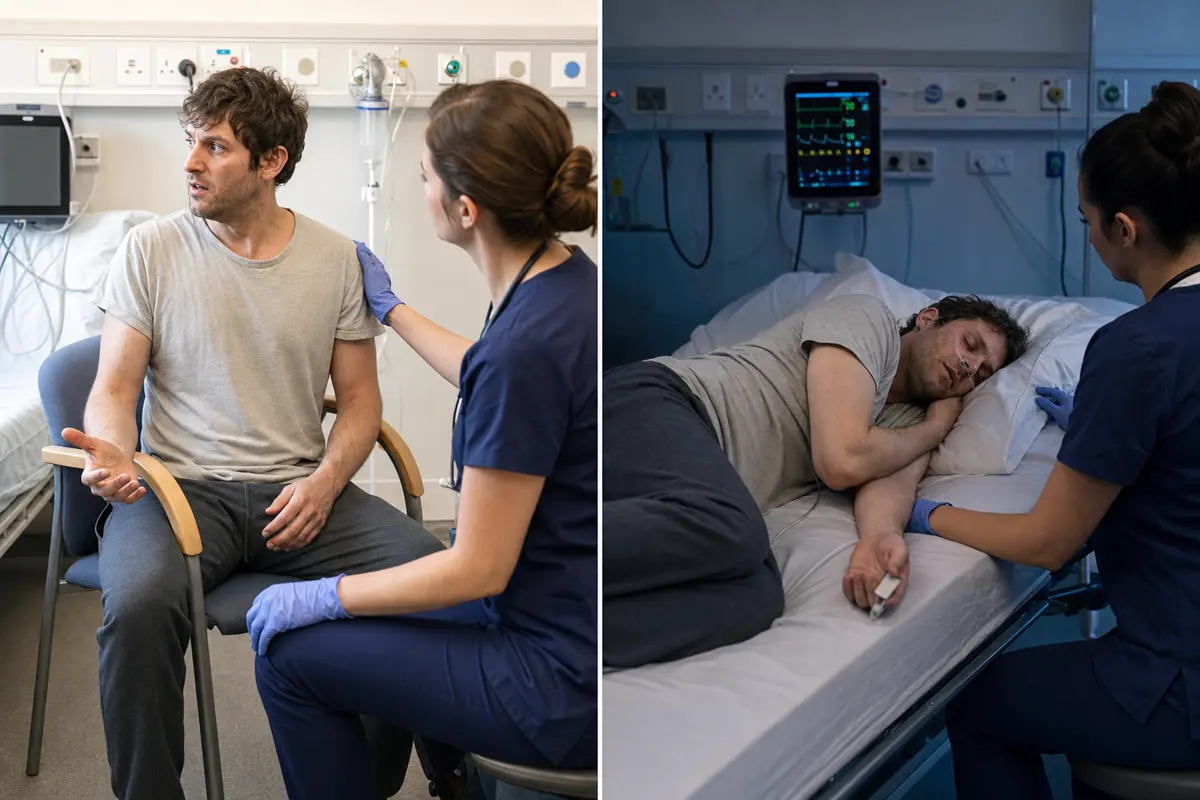
Agitation and sedation can alternate during poisoning
The most useful clue is unstable central nervous system function rather than hallucinations alone.
In a 34-case poison-center series, affected patients showed gastrointestinal upset, central excitation, central depression, or combinations of those states. All but one symptomatic person developed effects within six hours, yet the exact onset cannot identify the toxin by itself.
This is why breathing and alertness need continuous observation while help is arranged.
A person who was restless can become difficult to wake, lose protective airway reflexes, or vomit while sedated. Place them only as emergency dispatch directs, remove nearby hazards, and do not give food, drink, alcohol, supplements, or another person's medicine.
That excited behavior also needs a safety plan.
This means reducing noise and crowding, keeping the person away from traffic, stairs, water, fire, and sharp objects, and avoiding a struggle unless immediate physical danger leaves no alternative. Trained responders can manage agitation while watching circulation, temperature, and breathing.
These safety steps are easier to coordinate when observations are reported literally to dispatch.
Report whether the person answers their name, follows one instruction, keeps falling asleep, walks without support, vomits while drowsy, or pauses between breaths. Those details are more useful than saying only that the person is high or acting strange.
Which mushrooms and products create the exposure
The best-known source is fly agaric, Amanita muscaria, with a red, orange, yellow, or faded cap that may carry pale veil patches. Rain, age, and handling can remove the famous white warts, so a clean cap does not rule it out.
Warning
Do not use a red cap, white spots, or one phone photograph as a safety decision. Preserve the cap, gills, stem, ring, bulbous base, universal-veil remnants, habitat, and several ages of the collection.
The panther cap, Amanita pantherina, can produce the same toxin pair and may cause a more severe syndrome. In the poison-center series, panther cap cases had more gastrointestinal symptoms, excitation, and depression than fly agaric cases, although the sample was small and cannot predict an individual outcome.
Related Amanita species may also contain ibotenic acid and muscimol.
Cap color, veil patches, stem rings, and bulb structure vary across species and regions, so the identifier needs complete material. A dried cap or powder has lost many of the features that would have narrowed the source.
Commercial gummies, extracts, and powders add another layer of uncertainty.
A label may not prove the actual compounds, concentration, batch consistency, or absence of other drugs. Bring the package, receipt, batch details, photographs, and remaining product while clinicians treat the syndrome already present.
Keep the original container rather than transferring gummies, powder, or liquid into an unlabeled bag. Lot numbers, ingredient panels, purchase records, and photographs of the intact package can help poison specialists determine whether other people may hold the same product.
The marketing name is evidence, not a chemical analysis.
A product described as Amanita or muscimol may contain a different concentration than expected, another psychoactive substance, or contaminants that change the clinical picture. Clinicians therefore treat measured breathing, circulation, temperature, glucose, behavior, and co-exposure evidence while specialized testing is considered.
Record how many pieces or measured spoonfuls were available before use and how many remain, but do not ask an impaired person to reconstruct a precise dose.
Witnesses can describe the package, time, sequence, alcohol, medicines, and other products without arguing with the patient about memory during agitation. That information helps the team widen the differential when the label and observed syndrome do not agree.
These product and mushroom preparation details matter even when the species appears confirmed.
Record whether caps were fresh, dried, boiled, baked, powdered, or mixed into a drink, and whether cooking liquid was consumed. These facts help estimate exposure and identify other people who may have received a concentrated portion without turning the recipe into a dose calculation.

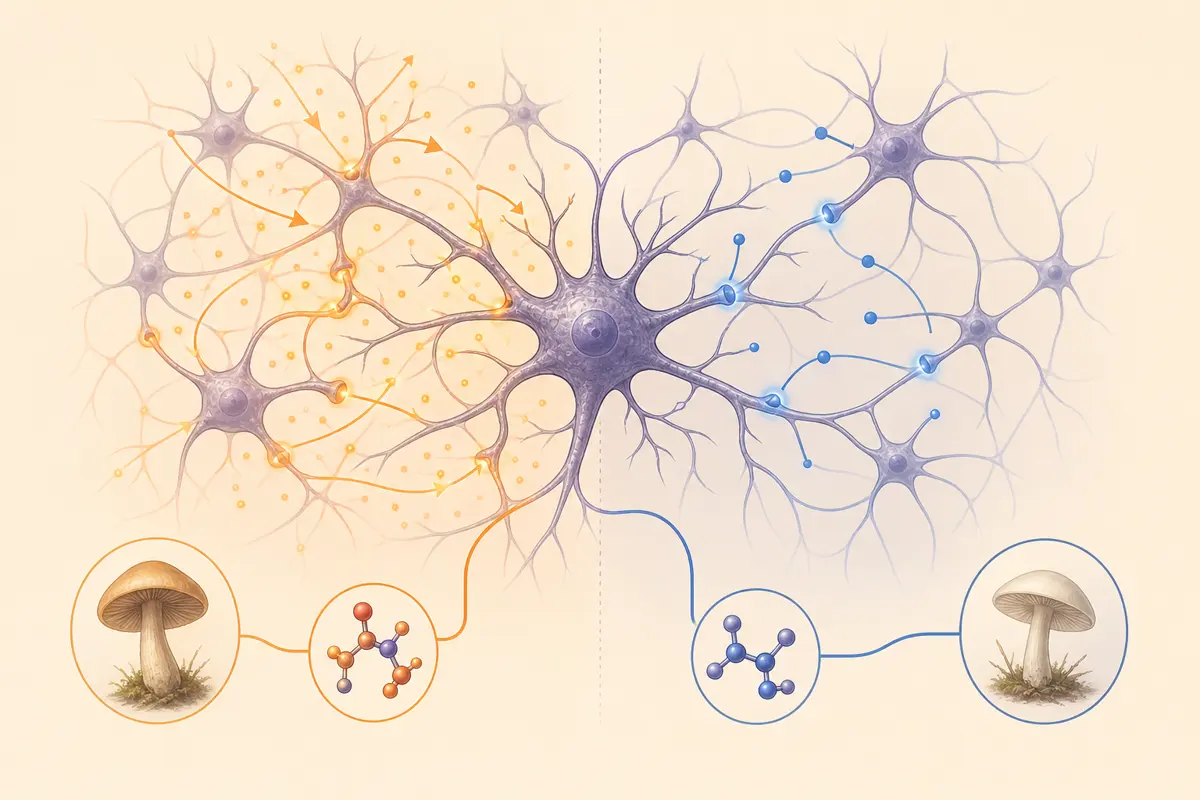
Ibotenic acid and muscimol push brain signaling in different directions
Ibotenic acid is an excitatory amino-acid toxin that acts at glutamate receptors. Excess excitatory signaling helps explain agitation, abnormal movement, perceptual disturbance, and neurological instability.
Muscimol acts mainly as an agonist at GABA-A receptors.
GABA is a major inhibitory signal in the brain, so strong muscimol effects can produce drowsiness, reduced responsiveness, impaired coordination, and coma. Ibotenic acid can also decarboxylate into muscimol, linking the two compounds chemically without creating a predictable dose ratio in a wild mushroom.
This mixed presentation is not a contradiction.
Different compounds, absorption times, concentrations, metabolism, and brain regions can shape the observed state. Food, alcohol, medicines, age, and illness can further change how quickly a person becomes excited or sedated.
This receptor model explains direction, not a fixed sequence.
Muscimol's inhibitory action can dominate in one patient while ibotenic-acid-associated excitation is more visible in another, and the balance may change during observation. Clinicians therefore treat the airway, behavior, temperature, and circulation they can measure instead of inferring a toxin ratio from symptoms.
This central mechanism also corrects a common naming error.
Although muscarine was first isolated from fly agaric, clinically important muscarine poisoning usually comes from other mushrooms and produces a peripheral wet syndrome with sweating, salivation, tearing, pinpoint pupils, airway secretions, and slow pulse. Fly agaric's characteristic neurobehavioral syndrome is driven mainly by ibotenic acid and muscimol.
What the clinical sequence can look like
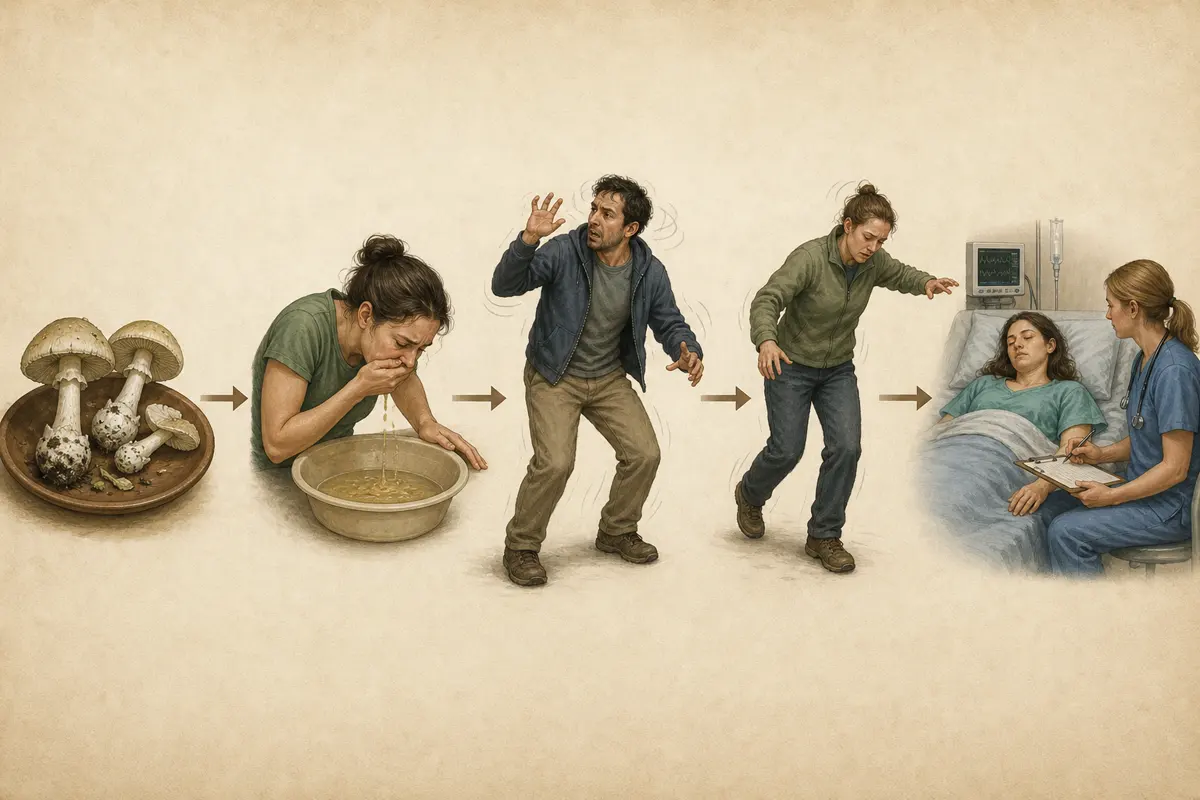
Nausea, vomiting, abdominal discomfort, dizziness, and weakness may arrive before or alongside neurological changes. Gastrointestinal symptoms are not required, and their absence does not make a confused or sedated patient safe.
- Perception
- Visual or auditory distortion, altered sense of time, or dreamlike behavior may occur
- Movement
- Ataxia, tremor, jerking, myoclonus, or inability to walk safely can occur
- Behavior
- Agitation, fear, combativeness, laughter, shouting, or disorientation may appear
- Depression
- Lethargy, unresponsiveness, irregular breathing, or coma can follow
- Memory
- The person may remember little of the episode
That order is variable.
Some patients move from gastrointestinal illness into agitation and then sleepiness, while others present already depressed or alternate repeatedly. A calm interval after restraint, vomiting, or exhaustion cannot be assumed to mark toxin clearance.
The 34-case series found that many symptomatic courses lasted less than 24 hours, but five patients were intubated and one child with panther cap exposure spent three days in intensive care. Separate case reports document profound coma, serious cardiopulmonary complications, and rare death.
These common outcomes must not erase severe exceptions.
Children may deteriorate after a small-looking bite because portion size is large relative to body size, and older adults may have less respiratory or cardiovascular reserve. Intentional high-dose use and concentrated products create additional uncertainty.
What separates this syndrome from lookalikes
Alcohol, sedatives, cannabis, stimulants, anticholinergic plants, psychiatric illness, low glucose, infection, head injury, and other mushroom toxins can overlap with part of the presentation. Clinicians need the full exposure history because several causes can coexist.
These compounds usually produce a relatively rapid central syndrome.
Amatoxin poisoning more often begins after a longer quiet interval with severe gastrointestinal illness and later liver injury. Early neurological symptoms lower that specific fit but do not clear an unidentified mixed basket.
Muscarine produces a different body-system cluster.
Heavy secretions, sweating, tearing, diarrhea, pinpoint pupils, wheezing, and bradycardia point toward peripheral muscarinic activation, while alternating agitation and coma point toward central neurotoxicity. Real cases can contain atypical signs or multiple species, so the contrast guides assessment rather than declaring a species.
Psilocybin-containing mushrooms can produce altered perception, anxiety, and sympathetic effects, but profound alternating sedation, repeated vomiting, and Amanita evidence change the concern. Unknown retail products may contain several psychoactive ingredients and should never be classified from branding alone.
Trauma can become a second diagnosis.
A confused person may fall, strike the head, wander into cold or heat, or aspirate vomit before anyone recognizes poisoning. Report any missing time, bruising, wet clothing, or witnessed fall so clinicians do not attribute every abnormal sign to the toxin.
What clinicians monitor repeatedly
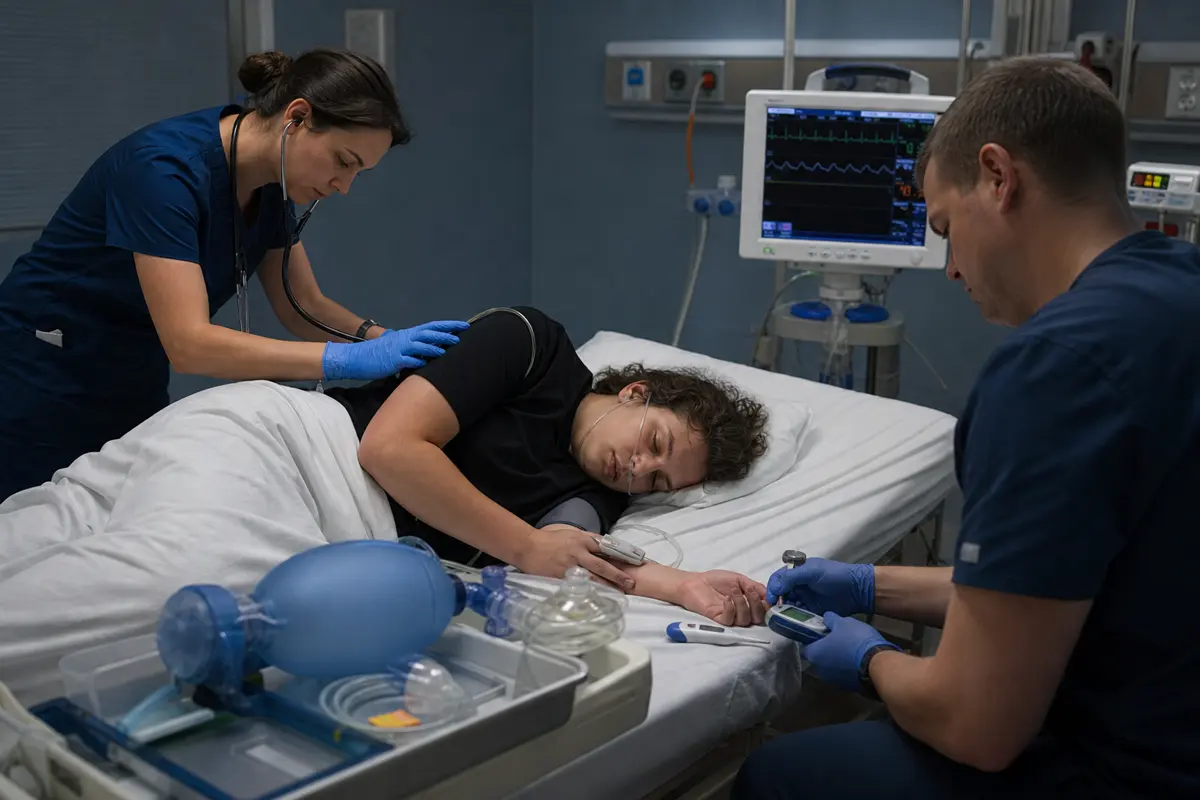
Emergency teams begin with airway, breathing, circulation, oxygenation, temperature, glucose, mental status, and a focused neurological examination. They repeat those observations because the dominant state can change quickly.
Airway reflexes matter more than whether the person appears peacefully asleep.
Snoring, gurgling, irregular breathing, vomiting without waking, blue lips, or falling oxygen can signal obstruction or aspiration. A deeply sedated patient may need suction, oxygen, positioning, or a protected airway.
Agitation creates a different monitoring problem.
Temperature, pulse, blood pressure, hydration, and muscle activity can worsen during prolonged struggling or abnormal movement. A low-stimulation environment and trained staff reduce injury while medical causes such as low glucose or co-exposure are checked.
This laboratory testing follows the case rather than one mandatory panel.
This may include electrolytes, kidney function, acid-base status, muscle injury, alcohol or drug exposure, and consequences of vomiting. Imaging is considered when trauma, another neurological emergency, or an unexplained prolonged state remains plausible.
This evaluation can include an electrocardiogram when pulse abnormalities, co-ingestants, or severe illness are present. Urine and blood toxin testing is specialized and may not return in time to direct immediate care.
These neurological trends become clearer when witnesses contribute.
Someone who saw the person before ingestion can describe baseline speech, coordination, sleep pattern, medicines, and mental health, then identify what changed first. Video recorded before care may help when safe and respectful, but filming must never delay emergency action or provoke an agitated patient.
SafetyGyromitrin Poisoning: Why False Morels Can Trigger SeizuresHow hospital care supports recovery
There is no specific antidote that reverses the full ibotenic acid and muscimol syndrome. Treatment protects the patient while the toxins are metabolized and complications are identified.
This makes the room itself part of care.
This involves reducing noise, bright stimulation, crowding, and physical hazards to lessen escalation. Clinicians may use benzodiazepines for dangerous agitation or seizures, but drug choice, dose, route, and repeat treatment require monitoring because additional sedation can threaten breathing.
This support sometimes makes airway protection the decisive intervention.
Intubation does not remove the toxin, but it can protect breathing and prevent aspiration during profound coma, uncontrollable agitation, or repeated vomiting. The team then reassesses neurological recovery as sedating medicines and mushroom effects wear off.
Fluids, anti-nausea treatment, temperature management, glucose correction, and treatment of trauma or muscle injury are selected from measured needs. A person with stable hydration and one with repeated vomiting should not receive the same automatic plan.
This decontamination decision belongs to poison specialists.
Activated charcoal may be considered in selected recent ingestions when the airway is safe, but a drowsy or vomiting person has substantial aspiration risk. Never improvise charcoal, gastric emptying, or forced fluids at home.
Physical restraint can also cause harm.
If immediate restraint is unavoidable for safety, trained responders monitor position, breathing, circulation, and temperature. Family members should clear hazards, step back, and follow dispatch instead of pinning a struggling person face down.
How evidence and outcome are assessed
Bring complete mushrooms, raw fragments, cooked food, dried material, vomited fragments when safely collectable, packaging, and original photographs. Label each item with the collection, preparation, and ingestion time without delaying transport.
This evidence needs a separate timeline for every exposed person.
Include estimated amount, reason for ingestion, alcohol, medicines, recreational substances, first symptom, behavioral changes, vomiting, periods of sleep, injuries, and treatment. One unaffected diner does not clear the batch because dose and susceptibility differ.
The poison-center case series offers a useful center without defining the edges.
Of 34 identified cases, 25 were symptomatic, most symptomatic courses were under 24 hours, and no deaths occurred in that series. Panther cap exposures were more often symptomatic, and several patients needed airway protection.
Those numbers describe one poison-center series rather than a personal forecast. The sample was small, exposure amounts were uncertain, and referral patterns can concentrate more serious cases, so clinicians use the series to frame possibilities while following the patient in front of them.
The species contrast is also a clue rather than a bedside rule. Complete mushroom evidence may strengthen concern about panther cap, but breathing, alertness, temperature, injury, and repeated examination still determine the immediate level of care.
These other reports show why observation remains individualized.
Profound coma can reverse fully with support, yet serious cardiopulmonary arrest and death have been reported. Outcome depends on dose, species, preparation, co-exposures, aspiration, trauma, delay to care, and underlying health.
Discharge requires more than waking up.
Clinicians look for stable breathing and circulation, safe coordination, clear and sustained alertness, controlled vomiting, normalizing temperature and glucose, and no untreated injury or delayed co-exposure concern. New confusion, collapse, repeated vomiting, breathing trouble, or recurrent profound sleepiness after discharge needs urgent reassessment.
This handoff can be complicated by temporary amnesia or exhaustion.
A responsible adult should receive the written return precautions, remove access to remaining mushrooms or products, and prevent driving, swimming, climbing, or alcohol use until the treating team says normal activity is safe. Persistent behavioral change beyond the expected observation period needs medical review rather than being dismissed as part of the experience.
Which safeguards prevent another exposure
Never let the cultural familiarity of fly agaric substitute for identification and toxicology. A mushroom depicted in games, stories, or online videos can still cause coma and require ventilation.
Keep complete Amanita specimens away from food, children, pets, and recreational products.
This means an uncertain cap should not be dried, powdered, boiled, or baked as a household safety experiment because preparation changes chemistry and concentration without measuring the final dose. Dry material also removes field context and can be mistaken for an ordinary supplement.
Online products deserve the same evidence standard.
Save packaging, lot information, purchase record, and remaining contents, and do not rely on marketing terms to identify the active ingredient. A product sold as a mushroom edible may require a broader toxicology evaluation than a confirmed wild specimen.
That final safeguard is a clear refusal point.
When the stem base is missing, veil features conflict, the product source is uncertain, or no qualified identifier can confirm the material, keep it out of the body rather than testing it through a small dose.
Sources & References
- Toxicity of Muscimol and Ibotenic Acid Containing Mushrooms Reported to a Regional Poison Control Center A 34-case series describing onset, excitation, depression, and airway support.
- Two Cases of Severe Amanita Muscaria Poisoning Including a Fatality Severe clinical courses and the limits of assuming uncomplicated recovery.
- Burst Suppression Electroencephalogram With Amanita Pantherina Poisoning A documented reversible coma associated with panther cap poisoning.