
Gyromitrin poisoning can begin with vomiting and progress to confusion, seizures, metabolic disturbance, or liver injury after exposure to certain false morels. Call Poison Control at 1-800-222-1222 in the United States after a suspected meal or cooking-vapor exposure, and call 911 for seizure, collapse, breathing trouble, severe confusion, or inability to wake the person.
Which exposure needs immediate action
Start with what happened, when it happened, and who was exposed.
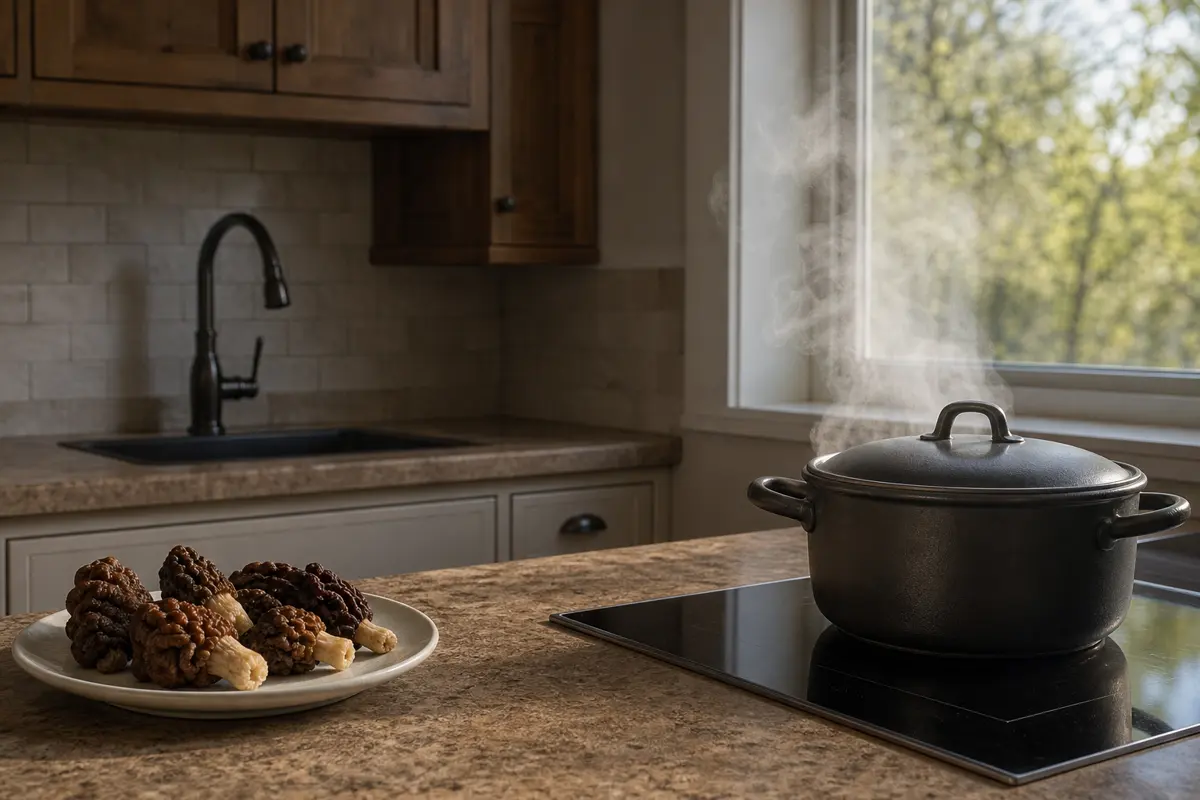
Record the collection location, meal time, preparation steps, first symptom, and whether anyone remained in a poorly ventilated kitchen while the mushrooms boiled or dried. Give every diner and cook a separate timeline because inhaled and swallowed doses can differ.
Symptoms often wait several hours rather than appearing with the first bite. That delay can make the meal seem less relevant just as vomiting, headache, dizziness, weakness, or abdominal pain begins.
This neurological change raises the stakes immediately.
Confusion, unusual sleepiness, agitation, tremor, poor coordination, seizure, or loss of consciousness requires emergency assessment. Persistent vomiting also matters because dehydration and electrolyte loss can amplify metabolic and circulatory problems.
Do not induce vomiting or give food, alcohol, herbal products, or vitamin supplements unless a poison specialist directs care. Move away from active cooking vapor without entering an unsafe space, and follow dispatch instructions for positioning a person with altered alertness.
False morels create an unpredictable exposure
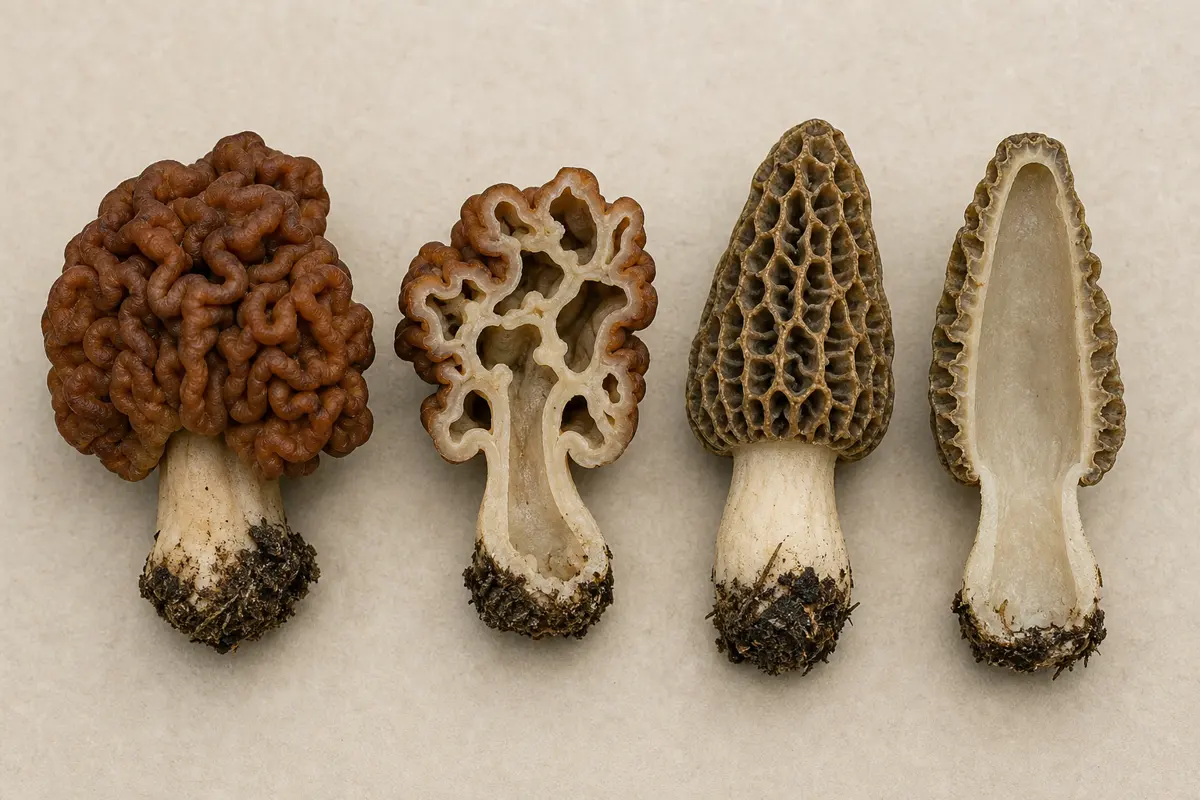
Gyromitrin is associated especially with Gyromitra esculenta and some related false morels, but geography, species, age, drying, storage, and individual specimens make toxin presence and concentration uneven across the group.
- Cap
- Often wrinkled, folded, lobed, or brainlike rather than evenly pitted
- Interior
- Chambers or cottony tissue may occur, depending on species and maturity
- Attachment
- Cap-to-stem structure varies and must be examined through a full specimen
- Evidence
- Habitat, substrate, season, spore characters, and microscopy may be needed
The broad false morel group includes fungi that overlap in casual appearance, so a name applied from one cap photograph is not a toxin test. Complete anatomy and local expertise still matter.
True morels usually have a pitted, honeycomb-like cap and a characteristic cap attachment, yet the shortcut that hollow means safe can fail when the specimen is damaged, immature, or misunderstood. The false morel and morel comparison is useful before a meal, not as permission to taste an uncertain find.
A prior meal without illness proves only that no recognized poisoning followed that particular exposure.
It cannot measure the toxin in a new collection or account for a different portion, preparation, diner, or vapor concentration. That variability is why family tradition and repeated personal experience do not establish a reliable detoxification method.
The body converts gyromitrin into a hydrazine toxin
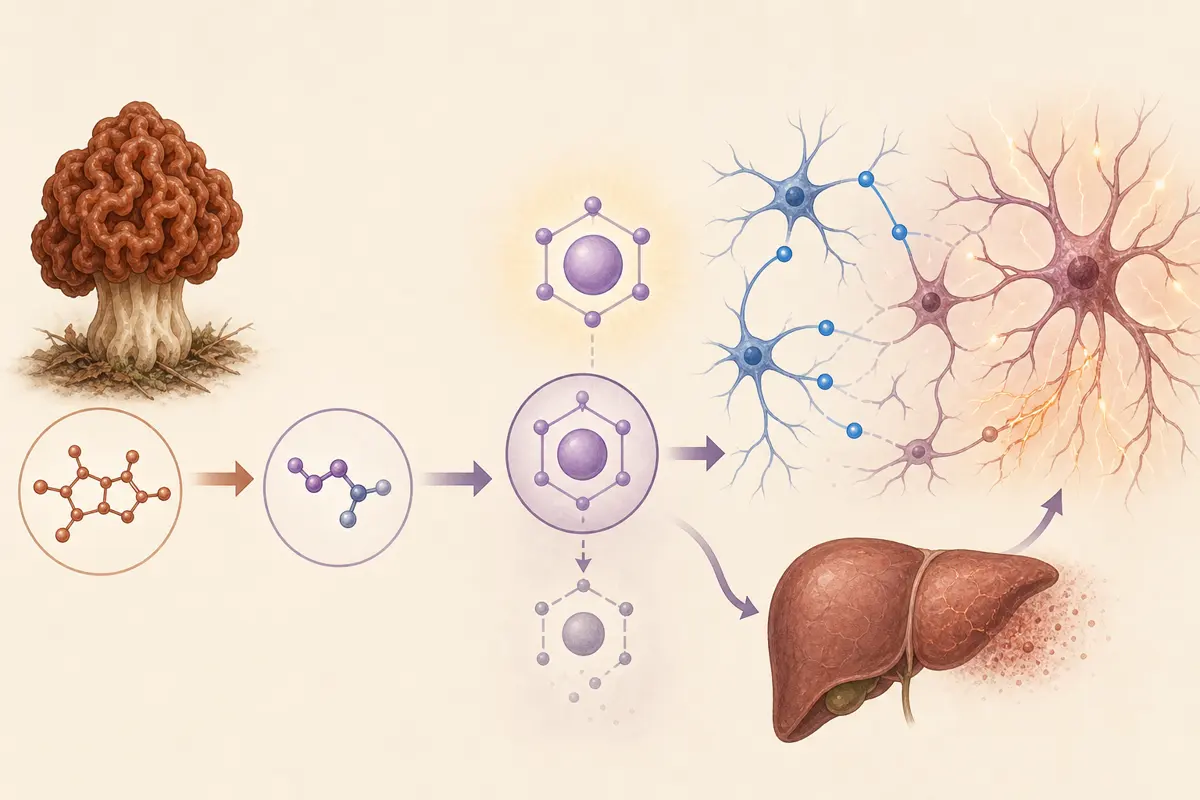
Gyromitrin can break down into monomethylhydrazine, often abbreviated MMH, a volatile hydrazine compound related to chemicals used in rocket propellants. The comparison describes chemistry, not the dose or outcome of one meal.
The vitamin B6 pathway connects the chemistry to treatment decisions.
When inhibitory GABA signaling falls, the brain becomes more vulnerable to uncontrolled electrical activity. This does not mean an exposed person should swallow household vitamin tablets because hospital treatment uses clinical assessment, appropriate formulation, monitored delivery, and seizure support.
The liver helps process the toxin and may sustain oxidative injury.
A person can therefore improve neurologically while liver tests still require observation, or present mainly with gastrointestinal illness without a seizure. The mechanism defines possible hazards rather than a checklist every patient must complete.
Metabolic effects can include low blood sugar and acid-base disturbance, especially in severe cases. These changes can worsen weakness, confusion, and seizure risk, so clinicians measure them rather than infer them from appearance.
What the symptom clock can show
The interval between exposure and illness is often measured in hours, but published cases do not follow one exact clock. Dose, route, food, preparation, and individual metabolism can shift the sequence.
| Phase | Possible findings | What changes the response |
|---|---|---|
| Silent interval | No symptoms after the meal or kitchen exposure | Preserve the history rather than declaring the mushroom safe |
| Early illness | Nausea, vomiting, diarrhea, abdominal pain, headache, dizziness, weakness | Call the poison center and assess hydration and alertness |
| Neurological escalation | Confusion, agitation, tremor, poor coordination, seizure, coma | Emergency airway and seizure care |
| Organ and metabolic injury | Abnormal glucose, acid-base disturbance, rising liver tests, jaundice | Serial laboratory monitoring and critical care when severe |
These gastrointestinal symptoms can dominate the first presentation.
Their severity does not reliably predict whether neurological or hepatic complications will follow, so the team watches the patient's course and the exposure details. A quiet interval after vomiting improves is not proof that the toxin's effects are finished.
Very early symptoms or a much longer delay may suggest another mushroom toxin, foodborne illness, pesticide, medicine, or mixed exposure. The amatoxin poisoning guide describes a different delayed liver-failure pattern, but unidentified mixed baskets can blur boundaries.
Each affected person needs independent assessment.
One cook may inhale vapor, one diner may eat a concentrated portion, and another may remain well. Group averages can hide the person whose alertness, glucose, or liver function is worsening.
The differential remains wider than one toxin.
Foodborne infection, gastroenteritis, carbon monoxide, pesticides, medicines, and other mushroom syndromes can overlap with part of the presentation. Clinicians use the cooking history, shared exposure pattern, neurological examination, laboratory trend, and retained specimens to test these alternatives rather than choosing a diagnosis from cap shape alone.
This timing can be especially informative for people who did not eat.
When a person who only worked near the boiling pot becomes ill, the detail supports an airborne kitchen exposure and changes who else needs assessment. It still cannot quantify the inhaled dose or prove that every diner's illness has the same cause.
SafetyCan Inkcap Mushrooms Make Alcohol Dangerous?Why boiling and drying do not prove safety
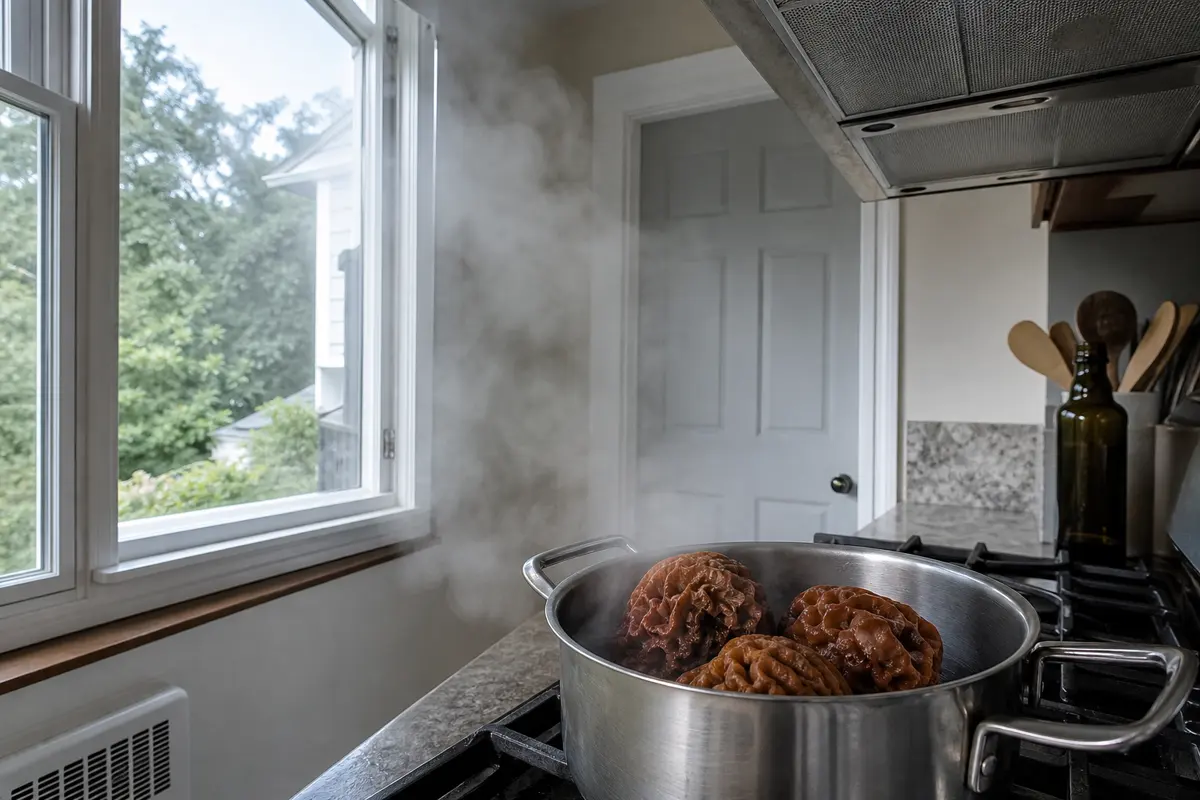
MMH is volatile, so heating can move some toxin from the mushroom into the air and cooking water. That fact is sometimes turned into a home detoxification promise that the evidence cannot support.
Warning
Do not boil, rinse, dry, or repeatedly cook an unidentified false morel as a safety experiment. Vapor can expose people nearby, discarded liquid can create another hazard, and the toxin remaining in the food is not measured.
This preparation changes exposure rather than certifying safety.
Ventilation, mushroom size, chopping, temperature, time, water volume, repeated heating, storage, and starting toxin concentration can all vary. A traditional method may reduce toxin in some circumstances without making every species, batch, kitchen, or diner predictably safe.
That uncertainty also applies to drying.
Volatile material may decrease, yet residual toxin and later handling remain unmeasured in a household. Rehydrating or cooking dried false morels can again release vapor.
Smell and taste cannot reveal the remaining dose.
The safest response to a suspected toxic collection is to stop preparation, prevent further exposure, preserve evidence if it can be done safely, and contact the poison center. Do not ask another person or pet to test the batch.
What clinicians test and monitor
Emergency evaluation begins with airway, breathing, circulation, temperature, oxygenation, mental status, and a glucose measurement. Repeated neurological examinations help detect a patient moving from weakness or dizziness toward agitation or seizure.
Blood testing may include electrolytes, kidney function, glucose, acid-base status, blood count, and liver markers. Clinicians can repeat aminotransferases, bilirubin, clotting measures, and glucose because liver injury may evolve after the first sample.
This normal panel has a timestamp.
It does not erase a credible exposure when drawn before the expected complication or while symptoms are changing. Trends establish whether metabolic stress and liver injury are resolving, stable, or advancing.
Clotting tests add information that aminotransferases cannot provide alone.
Rising liver enzymes indicate cell injury, while impaired clotting, low glucose, jaundice, or altered mental status can signal loss of liver function. The distinction helps clinicians decide when routine observation must become intensive support or specialist referral.
An electrocardiogram and continuous monitoring may be appropriate when severe vomiting, electrolyte changes, altered consciousness, or treatment could affect heart rhythm. Urine output and fluid balance also show whether dehydration or organ dysfunction is developing.
Every neurological change needs a time beside it so the team can compare alertness, speech, coordination, tremor, seizure activity, temperature, glucose, and treatment response on one sequence.
Low glucose can worsen confusion or seizure risk and may need immediate correction, but one corrected reading does not close the toxicology assessment. Repeated results show whether instability returns while vomiting, reduced intake, or liver dysfunction continues.
Acid-base results give another view of physiological stress.
Persistent acidosis after circulation and seizures are addressed can signal continuing metabolic trouble, while improvement supports the direction of care. Clinicians interpret that trend beside breathing, perfusion, electrolytes, temperature, kidney function, and the exposure history.
The exposure history also separates co-diners by portion and symptom clock because a well person who ate less and an ill cook who only inhaled vapor answer different toxicology questions. Those individual records give the mushroom identifier and poison team a clearer batch history without using either person as a simple control.
This identification evidence supports stabilization but does not delay it.
Clinicians may consult a medical toxicologist, poison center, and mushroom identifier while treating the syndrome already present. Testing for gyromitrin or MMH is not a routine rapid bedside test, so the history and clinical course carry substantial weight.
SafetyMuscarine Poisoning: Why Sweating and Salivation Start FastHow hospital treatment addresses the syndrome
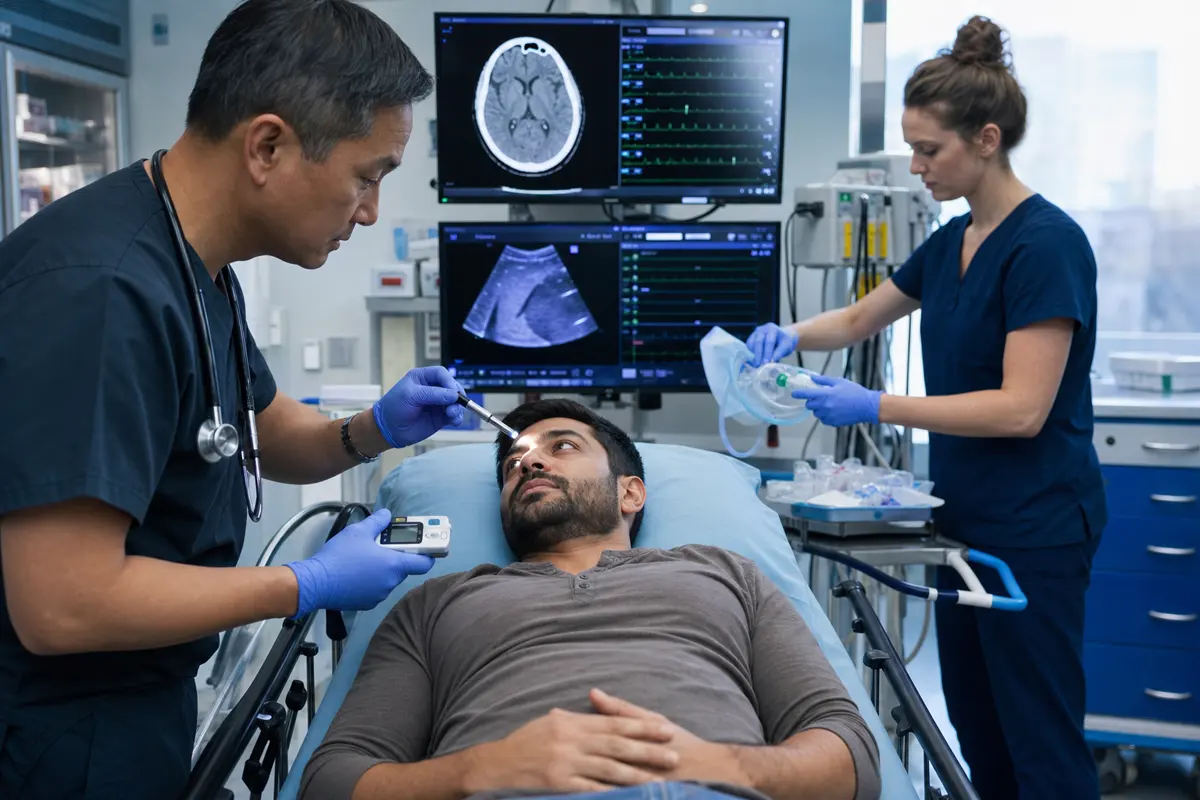
Care first protects oxygen delivery, circulation, glucose, temperature, and the airway. Intravenous access, carefully selected fluids, electrolyte correction, anti-nausea treatment, and respiratory support depend on the patient's examination and laboratory results.
These seizures require immediate medical control.
Clinicians use standard seizure measures and may administer pyridoxine because the toxin disrupts vitamin B6-dependent inhibitory signaling. The formulation, route, dose, repeat treatment, and monitoring belong to emergency and toxicology professionals, not to a home protocol.
This targeted rationale does not replace supportive care.
A patient with prolonged seizure may need airway protection, temperature management, repeated glucose and acid-base checks, and intensive monitoring. Liver dysfunction can require additional critical care and specialist involvement.
Activated charcoal or other decontamination is a poison-specialist decision based on timing, alertness, vomiting, and aspiration risk. It should never be improvised after a seizure or in someone who cannot protect the airway.
This response to one medicine cannot identify the mushroom.
Other poisonings can cause seizures, and a mixed collection can add delayed risks after neurological control. The team continues the full exposure assessment even when the most visible symptom improves.
Temperature and muscle injury may also need attention after a prolonged seizure.
Repeated convulsions can generate heat, acid, and muscle breakdown that add kidney and circulation stress beyond the original toxin. Hospital monitoring separates those consequences from the direct gyromitrin effects and treats both.
How evidence and recovery are assessed
Bring raw specimens, cooked leftovers, drying material, packaging, photographs, and the recipe or preparation sequence, including whether anyone tasted a raw piece, ate leftovers on another day, or handled dried material. State whether windows or exhaust fans were used, who entered the kitchen during heating, and how long each person remained in the room.
Keep food and field collections in separate labeled containers.
Build a separate exposure line for each diner and each person who remained near the stove. Record the portion, preparation, meal time, first symptom, and whether the person ate the solids, consumed cooking liquid, or only breathed steam from the pot.
That separation matters because a cook with no meal exposure may still support an inhalation route, while an unaffected diner does not prove the batch was safe. Portions can contain different toxin amounts, and people may have spent very different lengths of time in the kitchen.
Compare the timelines before combining them into one household story. Similar illness after a shared dish supports a common ingestion, but earlier symptoms in the cook or symptoms in someone who tasted only broth can change which material and preparation step deserve the closest review.
Preparation details then test whether the shared exposure came from food, vapor, or both.
The preparation record should name each boil, water change, drying period, reheating step, and ventilation condition without treating any step as detoxification. Investigators need those details to reconstruct exposure, not to certify the recipe for later use.
Medication and alcohol histories belong beside the food record because sedatives, stimulants, diabetes medicines, and other exposures can change mental status, glucose, or seizure risk. Clinicians can then separate competing causes while continuing serial neurological and liver assessment.
Leftovers can start a later exposure clock.
Ask whether anyone became ill after handling leftovers on another day. A second meal can create a second onset clock, which prevents clinicians from forcing every symptom onto the first serving.
Photograph the cap surface, underside, full stem, lengthwise section, substrate, and nearby trees without delaying care. A cross-section can preserve details that collapse when a mushroom dries.
This recovery varies with dose and severity.
This outcome range includes many reported exposures that resolve after gastrointestinal illness and supportive care, while severe cases can involve seizures, coma, liver failure, or death. Published case series cannot predict the outcome of an individual patient.
That is why the duration of vomiting is not the sole recovery marker.
Clinicians also look for stable alertness, no recurrent seizure, normalizing glucose and acid-base balance, adequate hydration, and a liver trend that no longer suggests progression. This broader endpoint prevents a quieter complication from being missed after nausea improves.
Discharge depends on stable neurological status, hydration, metabolic results, and an appropriate period of liver observation. New confusion, recurrent vomiting, seizure, jaundice, dark urine, unusual bleeding, or severe weakness after leaving care needs prompt reassessment.
This meal history should remain in the record even after symptoms improve.
It helps future clinicians interpret delayed liver tests and alerts public-health or poison specialists when several people shared the same collection.
Which safeguards prevent another exposure
Do not serve a wrinkled spring mushroom until every specimen has been identified from complete anatomy by a qualified local process. Sort individuals rather than declaring an entire basket safe from the best-looking cap.
This means keeping suspected Gyromitra out of the kitchen.
This prevents both eating exposure and concentrated cooking vapor. Children, guests, and pets should not enter a preparation area used for an uncertain mushroom.
Use several characters when distinguishing true and false morels, including cap texture, attachment, internal structure, stem, habitat, and season. Reject a specimen when one important feature conflicts, even if the rest of the batch seems familiar.
This comparison should use whole mushrooms rather than loose cap photographs.
Cutting one representative lengthwise can reveal attachment and internal structure, while keeping the remaining specimen intact preserves features for an identifier. Never make the cut specimen a taste test.
Retain one complete uncooked example from each wild species served, labeled with date and location. That small habit preserves evidence without asking anyone to recreate the exposure.
Warning
No household boiling or drying routine measures the toxin left in a false morel. The reliable safety decision is to exclude an uncertain or gyromitrin-associated mushroom from food preparation.
Sources & References
- A 19-Year Assessment of Gyromitrin-Containing Mushroom Poisonings in Michigan Case-series evidence on symptoms, liver injury, neurological effects, and treatment.
- The Most Dreadful Mushroom Toxins: A Review Review of gyromitrin metabolism, oral and inhalation exposure, and clinical effects.
- Gyromitra Mushroom Toxicity, StatPearls Clinical toxicology overview for Gyromitra exposure and supportive care.